
Features
High Jinks at BIA; votes via wage increase; condemnable imports

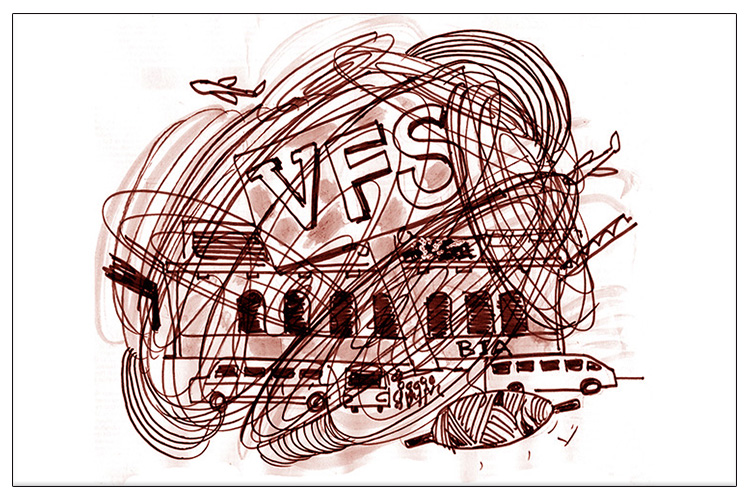
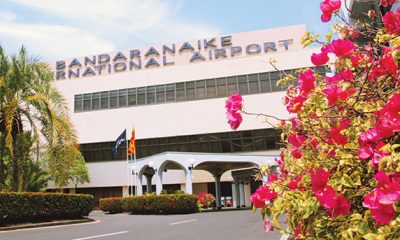
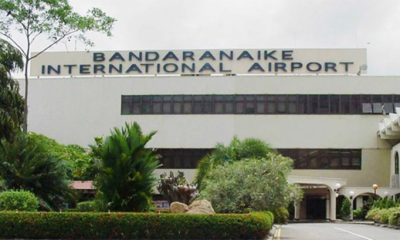
 Incomprehensible; unbelievable, near impossible the way things are done in Free Sri Lanka. Ludicrous too, if you can muster laughter when seeing deplorable and tragic happenings. This was Cassandra’s feelings when she understood what the young local traveller was ranting about in the crowded Katunayake International Airport on Wednesday 1 May. The video of it went viral; TV News picked it up; then explanations were given in The Island of Friday 3 May.
It may all be sorted out by the time you read Cass’ Cry, but this sort of unbelievable act on the part of our government should be highlighted even after the news goes stale. The fracas at the airport and later revelation was that: “In September 2023, the Cabinet of Ministers approved the appointment of an authorised agent for online visa submissions. Sri Lanka switched to a platform operated by the foreign firms IVS–CBS and VFS Global in mid-April from the electronic travel authorisation system operated by the Department of Immigration and Emigration.”
Now here comes the question WHY? Why the switch from the local authorised department to a foreign ‘organisation’, in other words privatisation? The visa granting operation was running smoothly with Sri Lankan emigration/immigration officials anning desks. It is said they processed clients rapidly with no delays. The video that recorded the passenger’s diatribe showed long queues and congestion. A person said the foreign company had advanced technology. The sensible solution would have been for our visa processing department to acquire the technology and train its officers to use it.
The worst is that the visa fee from incoming persons was increased from $50 to 75 with an additional charge. It was said this extra amount was going to the foreign company that was slyly brought in. Not only was Sri Lanka losing on this visa granting business but the increase surely will reduce our earnings consequent to tourists not coming and others stymied by the increased fee.
Cass smelt that stinking rat that moves among Ministers and gnaws in government departments: that rat which is illegal earnings, bribes, commissions et al. Was someone or some bodies making money on this deal which transferred a money making venture of and for the government to a foreign firm to make more money and carry it away.
Cass heard what Minister of Tourism – Harin Fernando – and Minister of Shipping, Aviation, Ports – Nimal S de Silva had to say. They passed the buck “This matter is not under my ministry”; “I am unaware of it”; “Does not come under my purview”; though that precise term was not used – not in their limited vocabs. But they were in the Cabinet that said OK to this move.
Cass cannot bear to think that a money-making venture destined for our country was coolly palmed off to a foreign outfit and no one would have been the wiser if not for that civic-minded, national-feeling young traveller. In these times of such economic difficulty where people are actually starving and children riddled with malnutrition, anyone who makes money through corruption, more especially government Ministers and MPs and officials, should be mercilessly made to pay for their crimes.
The above was written soon after the traveller at the BIA ranted against the delay in issuing visas by the new foreign company/companies in charge; i.e. May 3.
A banker’s nephew gave Cass a positive picture of the change of visa issuing officers. She was perplexed. A Parliament debate ensued; activists spoke; a highly condemning video was sent to Cass. Then came Tuesday 7 May The Island with the editor writing the lead article on Visa muddle, reinforced in much stronger terms by Dr Upul Wijayawardhana in his article headlined Idiocy of new visa arrangements. I sincerely respect The Island editor’s opinions and expressed views. I found Dr UW suspected hanky-panky or to say it in Cass’ crass way – letting the country go to pot to get money into private pockets. This was her first reaction to the TV news of the shouting traveller.
We now know he is Attorney-at-law Sandaru Kumarasinghe, whose Russian girlfriend was initially refused a visa. He is, Cass believes, an expat who comes home to SL on holiday. The Ministry of Public Security was quick to pounce on him, threatening to take him to court. He made a statement to the Katunayake police.
In this whole mess, which may be proved sordid and illicit money making with great damage to the country and its tourism sector which was earning most needed foreign exchange, Cass’ attention is now focused on Mr Sandaru Kumarasinghe. Is it a punishable crime to express doubt and disapproval loudly in a public place like the Katunayake Airport? He only spoke to all and sundry with not even a hint of violence. Don’t parliamentarians act violently in the chamber that should see respectable behaviour and decorum? This incident highlights the usual political reaction: kill the messenger and hide the greater sins. This person brought up front the diabolical change of visa processing by foreign outfits with damage ensuing to bankrupt Sri Lanka; bankrupted by politicians.
Votes before anything else, country included
Elections are still in the future; not one date specified but all attention of every politician is on winning votes. Lots of goodies are promised, even given already. To Cass the worst is President Ranil Wickremasinghe going to a May Day rally of tea plantation workers and announcing their salary will be increased to Rs.1,700 per day. By whose leave did he make this promise? Did he consult the managers of the country’s tea industry before he made this promise? Did he consider at all expense against profits?
Cass remembers the consternation created among estate superintendents, managers, agency houses et al when workers daily wage was raised to Rs 1,000. Tea was thriving then, markets were good and foreign exchange was earned for the country by the plantations. But the fear was that with increase of payments to labour, earning profits may not be possible. Then came the elected SLPP Prez, G. Rajapaksa, who with his ban on chemical agriculture products dealt a grievous blow to the tea industry along with a near death swipe to rice farmers, vegetable growers and others in agriculture.
When that disaster was met, overcoming it attempted and money earned, there gallops gallant Ranil (actually helicopters) Gotabaya’s successor Prez of the same SLPP Party, to please the estate workers. Their salaries raised a hefty 70% with not a thought to how the plantation sector will run. The Planters’ Association threatened legal action; certainly not in retaliation but to save the industry as a foreign exchange earner for the good of the country after it was bankrupted by governments and politicians.
And the mighty RW’s reactionary order? All hands, meaning lawyers and the judiciary, to save the workers and give them their Rs.1,700, never mind the country getting further mired in poverty and debt.
One cannot comprehend how matters work in this island which was reputed to be Paradise. The snake named Vice is far too active. The apple of votes is too tempting to politicians so they even lose their senses. I and Me before Country!
Imports that stink (of corruption)
Cassandra fell back in horror when her domestic brought home from a Keels outlet Bombay or big onions the size of small coconuts and devilish red in colour. Phoned two friends and was assured that was the kind available all over, imported from India. In addition to their humongous size, they tasted nothing like the real Sri Lankan big onion; rather did its addition to a cutlet mixture give it a watery, glutinous texture.
Cass remembers very clearly about three or four weeks ago seeing open lorries filled with bags of big onions, clearly seen and said to be from Jaffna which had a bumper crop. Where did all those onions go so this country had to import this commodity? She also recalls seeing vegetables and items such as onions being collected by machine-operated large spades as they were rotten, in collecting centres like Dambulla.
For goodness sake why import? Why spend precious foreign exchange (FE) on things such as onions. People can manage for a while without these items. Didn’t we do this to a largish extent when Sirimavo B’s government banned imports in a bid to save FE and our outside reserves rose?
Cass’s functioning brain tells her that artificial shortages are created; imports brought over from India – whatever their quality – and we are forced to buy suspect eggs, nonedible rice and now big enormous onions. Why? There lies the pivotal point. To enrich unscrupulous parasitic traders, dubious and duplicitous importers and unpatriotic hyenas in high posts in the government bureaucracy who are encouraged and facilitated by rapacious, totally unpatriotic MPs and Cabinet Ministers. A most heinous crime at this juncture when the bankrupt country is trying to rise up, at least ensure further loans through pleasing IMF supervisors after debt restructuring.
A usual criminal kills one or more individuals and harms a family. Those in the import racket of bringing below grade stuff from India harm the majority of the people and the country itself. And all for money earned easy and fast. Such inhuman ghouls should be skinned and their carcasses strung along the inner road leading to Parliament. This should-be-given punishment is spelt out by Cass notwithstanding the fact she spreads metta each night and early morning. The crimes mentioned, though economic and not blood-letting nor maiming humans, are heinous. Thus punishments must be horrific too.










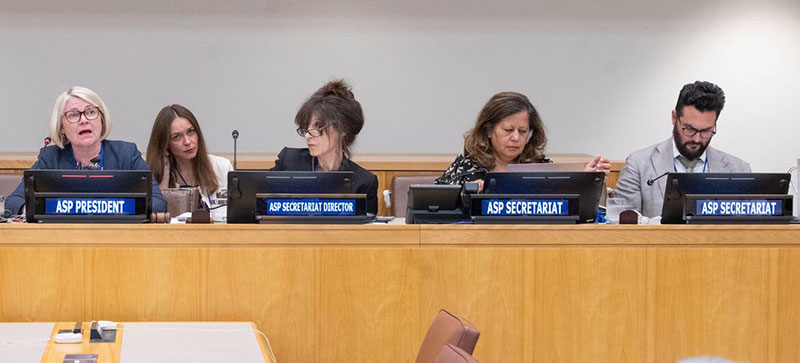
 US Secretary of State Marco Rubio’s warning to the International Criminal Court (ICC) was stark: ‘Either the ICC will end its threats, or we will end the ICC.’ It followed US central administration accusations that the court was unfairly targeting Americans on the basis of trumped-up war crimes charges.
However, a new plethora of sanctions has been clamped on the ICC by the US, which in turn has spurred accusations by sections of the world that the latter has unleashed an ‘assault’ on the international legal order.
What some of the sanctions would mean for the ICC was outlined by Rubio: ‘We will ban transactions with this rogue court, cutting off their resources and crippling their ability to operate against us.’
The ICC has shown consistency of purpose over the years. Despite some operational constraints it has indicted a large number of political strongmen from around the world, accused of war crimes and other governance excesses that come under its purview. Two such recent figures are: Russian President Vladimir Putin and Israeli Prime Minister Benjamin Netanyahu.
Rather than enjoy a mere nominal presence in the world community, the ICC has proved its effectiveness by detaining and bringing to justice scores of VIP politicians and others of their ilk who have been found guilty of human rights abuses and kindred excesses that come within the terms of reference of the ICC.
Accordingly, the international justice system would be stymied considerably as a result of the ICC being dis-empowered, particularly financially. Needless to say, potential and real perpetrators of the species of crime coming under the jurisdiction of the ICC would stand to gain most from such anarchic tendencies. That is, political repression globally would be enabled to enjoy a new lease of life.
A detailing of the types of crime coming under the purview of the ICC provides an idea of what it would cost the international community if the ICC’s operations are gravely hampered. They are mainly: genocide, war crimes, crimes against humanity and the crime of aggression.
That is, the part of the world to be worst affected would be the global South, since the latter is awash with the mentioned crimes. Needless to say, a chronically-disaffected South will sooner rather than later undermine the well being of the world dangerously. The world is already being put through these paces.
At the time of writing, ‘illegal migrants’ from the South, for example, are aggravating many a Western economy’s woes, besides creating for them acute law and order issues. The fact that these migrants’ presence goes on to become a virtual test of the migrant receiving states’ ability to forge domestic social inclusion in the face of jingoistic protests by mainly white supremacist groups is evidence of the latter. As is known, the US, to take just one example, has been up against this crisis for quite a while.
Accordingly, it will be in the best interests of the West if ‘illegal’ migrant arrivals on their shores are stemmed. If the socio-political and economic problems assailing the South are effectively managed through North-South collaborative, ‘trouble-shooting’ efforts the causes leading to ‘illegal’ migration and connected issues could be resolved at source as it were. For, it is the aggravation of the South’s material questions that lays the basis for the emergence of repressive and anti-democratic regimes in the hemisphere.
Until such time that the aforementioned issues in North-South relations are visited afresh and addressed urgently, a vibrantly functioning ICC would be needed. For, the latter would prove a deterrent to Southern political and military strongmen, highly prone to power abuse and like excesses, from coming into being in the wake of the South’s chronic material woes and the wars and conflicts that result from them.
It stands to reason then that the US would be acting in its own interests by enabling the ICC to perpetuate its mandate without hindrance. For a crop of issues that impinges negatively on internal law and order would be defused.
Meanwhile, there needs to be a meeting of minds among the rest of the West to put back in place a North-South dialogue process aimed at reducing some of the economic pressures that are weighing on the South.
Since economics usually drives politics it will be in the interests of the world community to scrutinizingly re-visit North-South issues of the past and put in place economic relief packages for Southern publics that would enable them to tide over their material hardships rather than permit the latter to aggravate into social disaffection and eventually armed militancy. It is the latter juncture that paves the way for the emergence of authoritarian rulers in the South who then go on to be a blight on their publics.
Accordingly, the Southern-based global development thinking of the past that envisaged a more equitable world economic order needs to be seen as an urgent need. That is, NAM’s international development paradigms need to be resuscitated to the extent possible.
It is unlikely that rightist governments of the West, such as the current Republican administration in the US, would find these projects feasible, but democratic states of Europe, led by perhaps the UK, are likely to think otherwise. For it would not be beneficial for the democratic world to be having on their hands repressive governments in the South who would be gravitating towards the major military and economic actors of the South, such as Iran and North Korea, who tend to be in constant power struggles with the West.
However, until such time that the mentioned, pro-people initiatives are given serious thought the ICC would need to be enabled by the international community to be in place comfortably and carry on with its mandate of bringing repressive rulers to book. Besides the ICC should pave the way for the peoples of the developing world to enjoy some substantial respite from the political repression and even terror which tend to be their lot.
Meanwhile, the wars of West Asia are relentlessly aggravating the economic hardships of people everywhere, driving the point home to enlightened sections that there is no alternative to peacemaking. A challenge is to convert the US under President Trump to this line of thinking.

 This week, I give you five simple, time-tested homemade remedies that help reduce the appearance of blemishes, control excess shine and leave your skin feeling softer and smoother.
The Honey and Lemon Brightening Dab:
For stubborn blemish marks, this is a classic. Mix one teaspoon of pure bee honey with three to four drops of fresh lemon juice. Apply gently, only on the affected spots, and leave for 10 minutes before rinsing with lukewarm water. While honey soothes and softens, lemon helps to brighten naturally. Use twice a week in the evening.
Besan and Rose Water Oil-Control Pack:
An ideal remedy to combat shine, especially on the T-zone. Take two teaspoons of besan (gram flour) and mix with sufficient rose water to form a smooth paste. Add a pinch of turmeric for its antiseptic goodness. Apply evenly, keep for 15 minutes and wash off. It absorbs excess oil without over-drying, leaving a beautiful matte finish.
Aloe Vera and Cucumber Ice Soother:
Blend fresh aloe vera gel with the juice of a grated cucumber and freeze the mixture in an ice tray. Each morning, wrap one cube in a soft muslin cloth and gently rub over a cleansed face for 30 seconds. It calms, tightens pores and imparts a baby-soft smoothness.
Oatmeal and Curd Gentle Polish:
Roughness and old blemish marks need gentle exfoliation. Combine one tablespoon of finely powdered oatmeal with one tablespoon of fresh curd (yoghurt). Massage very gently, in circular motions, for one minute, leave for five minutes and rinse. It removes dead cells and unveils softer, clearer skin.
Multani Mitti and Green Tea Magic Mask:
Brew some green tea and allow it to cool completely. Mix one and a half teaspoons of Multani Mitti (Fuller’s Earth) with the tea water to make a fine paste. Apply for 10 to 12 minutes – do not let it dry and crack completely – and wash off. It draws out impurities, fades blemishes and bestows a fresh, shine-free glow.
A Gentle Reminder:
As with any natural remedy, always do a patch test on your inner arm first. For those with oily or combination skin, avoid heavy coconut oil application and harsh scrubbing, as they tend to aggravate shine and blemishes.

 Dream of performing on a world stage? Well, here is your unique, golden opportunity!
The World Championships of Performing Arts (WCOPA) — the one and only official “Talent Olympics” — is the world’s premier global platform for aspiring singers, dancers, actors, models, instrumentalists, etc., to compete, shine and be discovered!
And, yes, this world stage is open to YOU, Sri Lankans living in Sri Lanka and overseas!
Held annually in glittering Las Vegas, WCOPA brings together over 70 countries, all competing for Gold, Silver and Bronze Medals, just like the traditional Olympics.

Lakisha Bernard: Will represent Team Sri Lanka at WCOPA 2027
Outstanding performers vie for the coveted titles of Junior and Senior Grand Champion Performer of the World, with winners and standout participants awarded over $500,000 in scholarships, cash awards and prizes to catapult their education and careers!
Sri Lanka is already making waves! At WCOPA 2026, Natharie Wickramasinghe, representing Team Sri Lanka, made the nation proud by winning a Bronze Medal in the Ethnic/Folklore Dance category!

Lakisha: Accomplished freelance Model and Fashion Design graduate
Recruitment for this prestigious competition is handled through a system of scouts and licensed National Directors — and this is where our very own Chris Rajendra, now based in Las Vegas, and National Director for Team Sri Lanka, comes into the scene.
If you are a singer, dancer, actor, model, instrumentalist — if you have talent burning inside you — contact Chris Rajendra today for registration and, who knows, you may find yourself in Las Vegas, and proudly draped in the Sri Lankan flag, at WCOPA 2027!
The contact address is: Chris Rajendra, wcopa.nationaldirector.sl@gmail.com
or chris.rajendra@gmail.com
Meanwhile, a star is born for 2027, in the form of Lakisha Bernard who is all set to represent Team Sri Lanka at WCOPA 2027.
Originally hailing from the sun-drenched coastal city of Colombo and now carving out her creative career in Canada, 22-year-old Lakisha is stepping into the international spotlight.
This accomplished freelance Model and Fashion Design graduate has officially been appointed as the Team Sri Lanka Promoter for Canada as she prepares to represent Team Sri Lanka at WCOPA in Las Vegas.
Lakisha brings a unique blend of high-fashion sensibility, captivating camera presence and expert garment design to the Team.
Having built her career, from local college shoots to high-glamour concepts, Lakisha’s inspiring journey embodies the true spirit of cultural bridge-building and creative resilience, bringing immense pride and recognition to Sri Lanka on the global stage.
WCOPA 2027 will be held at the legendary Westgate Hotel & Casino, Las Vegas, from 12th to 20th July – the very same iconic arena where the late, great Elvis Presley himself performed!
Your moment is now. Your stage is Las Vegas, so hurry and contact Chris Rajendra.

Showers or thundershowers will occur at most parts of the island

Prison rules to be revised over monks’ attire

AC President recuses himself from hearing prison attire case pertaining to Gnanasara Thera

Court orders steps to obtain INTERPOL Red Notice against Basil

CID informs Fort Magistrate’s Court investigation into money laundering case against Namal completed

No force used to make Gnanasara Thera wear prison garb – Prisons

‘Dates have the highest sugar content to fight Coronavirus’

Sunday Island 27 December – Headlines

#SundayIsland 17th December – Headlines

Sunday Island – 28th March

Sunday Island Headlines – 21 March

Sunday Island – 21st February – Headlines
-

 News6 days ago
NDB fraud Rs 60mn more than reported
-

 News6 days ago
Removing monk’s robes matter for Sangha to decide: Mahanayake Theras
-

 News4 days ago
Sri Lanka escalates anti-graft drive with Shiranthi’s jailing
-
 News5 days ago
NPP govt. reminded of its responsibilities as US warship leaves Colombo
-

 Latest News5 days ago
Farhan, Sadaqat help Pakistan ace 183 chase to go 1-0 up
-
 News6 days ago
BHC, Colombo: “LTTE remains a proscribed org. in the UK”
-

 Latest News3 days ago
Farhan and Sadaqat help Pakistan seal series in style
-
 News4 days ago
Iranian ships stranded, Lanka fears US sanctions