
Sports
A piece of Sri Lanka’s rugby history which can produce goosebumps


by A Special Sports Correspondent
At a time when Sri Lanka is getting ready to face challenges at the upcoming Asian Rugby Tournament’s Division 1 Segment our minds run back to the times when these islanders were competing against the best teams in Asia.
Just for the record Sri Lanka is now forced to work its way up from the Division 1 segment and qualify for a slot among the best four teams who are playing in a segment known as the ‘Asia Rugby Championship’. Currently the teams in that group- which can be billed as the best four teams of Asia- comprises South Korea, Hong Kong China, Malaysia and United Arab Emirates (UAE). On a sarcastic note, I’m sure Sri Lanka remembers playing in this division and not being disgraced; even though they went down fighting on some occasions. There were also many victories in this division for Sri Lanka which produced sweet memories for the rugby loving islanders.
The years which this writer wants to recall are 2005 and 2006 and Sri Lanka’s best players were put through their paces by New Zealand born Coach George Simpkins; who was contracted as the national coach till the World Cup Qualifiers ended. He was given a contract by Sri Lanka Rugby which was at that time headed by former national player Priyantha Ekanayake. Luckily for Sri Lanka rugby there was no rift between the Kandy ‘elite’ and the Colombo ‘camp’. Hence national rugby didn’t suffer. Whatever challenges that cropped up as national assignments were fed with the best resources.
This was a time when Sri Lanka had players like skipper Sajith Mallikarachchi, Viraj Prashantha, Kishore Jehan, Pavithra Fernando, Dilanka Wijesekare, Dushanth Lewke, Amjad Buksh, Fazil Marija, Pradeep Liyanage, Sanjeewa Jayasinghe, Chamara Vithanage, Thushara Silva, J.Ranaweera, Dilan Ekanayake, Rajith Jayasundara, Anuradha Dharmatilake, Asanga Rodrigo, Anuranga Walpola, M.Sherifdeen, Dhanushka Perera, Zulki Hamid, Rajiv Ganapathy and D. Pushpakumra to name a few. More players were inserted to the squad as Sri Lanka gained momentum and experience in facing this world cup qualifying challenge. The first assignment for Sri Lanka was against Thailand and it was an ‘away’ match; played in the hot and humid village called Suphan Buri; which is 150 km away from Bangkok. Just a few kilo metres away from Suphan Buri is ‘Kanchana Buri’ where some parts of the film ‘Bridge on the River Kwai’ was filmed.
This was also the time when most of the players in the squad were at their peak; having played about a decade of rugby at senior level. The players were training mostly at CR&FC and this writer remembers hooker Viraj Prashantha making a kind of statement while casually bumping into me in the form of “If we cannot beat Thailand after all these training sessions, then we might never be capable of achieving such a feat in this lifetime”. In other words, the players were oozing with confidence and their body language said it all.
The man who made the change was Simpkin. The players were taught to think, eat and train like professionals; even though there not one among them who was even a semi professional at that time baring the pint-sized Silva who was employed in the Army. Silva was also a serious football player and much faith was placed on him to man the last line of defence as full back.
The match was scheduled at 3 pm and the heat was killing. Sri Lanka struggled hard to cross the Thailand goal line and when no one could Marija sliced through the defence using individual brilliance. The scores were deadlocked 38 all at one time in the second half and the host team was threatening to spoil Sri Lanka’s hopes, but the islanders won the contest 48-38 in the end.
Sri Lanka’s next challenge was in Colombo and the team they had to face was Singapore, which at that time was an outfit that was ‘respected’ and feared. The match was scheduled at 2 pm and the aggressive style that the Lankans played their rugby in and the scorching heat that prevailed were too much for Singapore. Sri Lanka won 43-17.
Simpkin by this time had convinced the players to cut down on the quantity of rice they consumed. Healthy eating, extended hours in the gym plus the focus on the goal (which was looking at participation at the international stage) lifted the thinking of the players a few notches up. Everyone knew that playing in an actual world cup was out of the question, but doing well at the ‘qualifiers’ and seeing what distance the side would go produced enough fuel to keep the players motivated.
The next challenge was against Kazakhstan which was a two-leg match with the first game scheduled in the freezing mountain city of ‘Almaty’. The Sri Lankans were given a hard time starting from preparations and the place given to the visitors to warm up was a defunct basketball court. The conditions were too cold for Sri Lanka and the result was a 25-19 defeat; Sri Lanka was beaten, but still was in with a chance when they hosted the rematch because the deference in points was just six. Simpkin worked the players in the gym and field and he drilled the thought into the players’ minds that this assignment could be successful if they thought rugby was an ‘endurance game’. Many running drills were added to the training schedule. So, Sri Lanka was going to play running rugby and avoid unwanted contact with the opposition; research done on the Kazakhstan players showed that the majority of them were mine workers and hard as rocks. This is the advantage of having a foreigner as coach who knows the opposition as much as his own chargers. Within the first quarter of the game, played at Longden Place, when the Kazakhstan players could not take the beating, they got from the smaller made Sri Lankans, they got into a fisticuff with the host players and the game was stopped for a few minutes. The Sri Lankans chose to be beaten and bruised in the brawl and chose to be focus on the game. The rest was history and Sri Lanka ran out worthy winners with a score of 24-12 in the second game.
The next assignment, however tough, had to be faced and done with. Hong Kong was a tower of strength in the Asian circuit and always proved a hurdle that Sri Lanka never could clear. To make matters worse the match was arranged to be played on a turf comprising artificial grass. After a physical game the Sri Lankans went down fighting 45-14; bowing out of the running in the world cup qualifiers. In the remaining games Japan beat Hong Kong. South Korea got the better of Hong Kong in their encounter. Japan was the only team in the 2007 world cup representing ‘Oceania/Asia after their success in the ‘qualifiers’. Back at home, New Zealand rugby legend- who was here to coach a club side- was quoted in a local newspaper saying ‘Sri Lanka got excited for no reason. Everyone knew that only Japan was going to make it to the world cup from Asia’. But for the entire rugby fraternity at home thought that what its national team achieved was remarkable!
So, this is a small piece of the proud history Sri Lanka boasts in rugby. This is a side which locked horns with the best of Asia. Sri Lanka needs to work its way up from Division 1 and slot itself in its rightful group which is the ‘Asia Rugby Championship’.


The official appointment letters for the members of the newly established “Cricket Transformation Committee” (CTC) were handed over on Monday (04) by the Minister of Youth Affairs and Sports, Sunil Kumara Gamage.
The following members received their letters of appointment at the Ministry premises:
Sidath Wettimuny
Thushira Radella
Prakash Schaffter
Ms. Avanthi Colombage
The Ministry also noted that veteran cricketers Roshan Mahanama and Kumar Sangakkara, who are key members of the committee, are currently overseas. Their official appointments will be formalised immediately upon their arrival in Sri Lanka.
The Cricket Transformation Committee has been mandated to oversee the administration and drive structural reforms within Sri Lanka Cricket (SLC) in accordance with the powers vested in the Minister under the Sports Act No. 25 of 1973.
Latest News
Rohit and Rickelton power Mumbai Indians to crucial win over rock-bottom Lucknow Super Giants

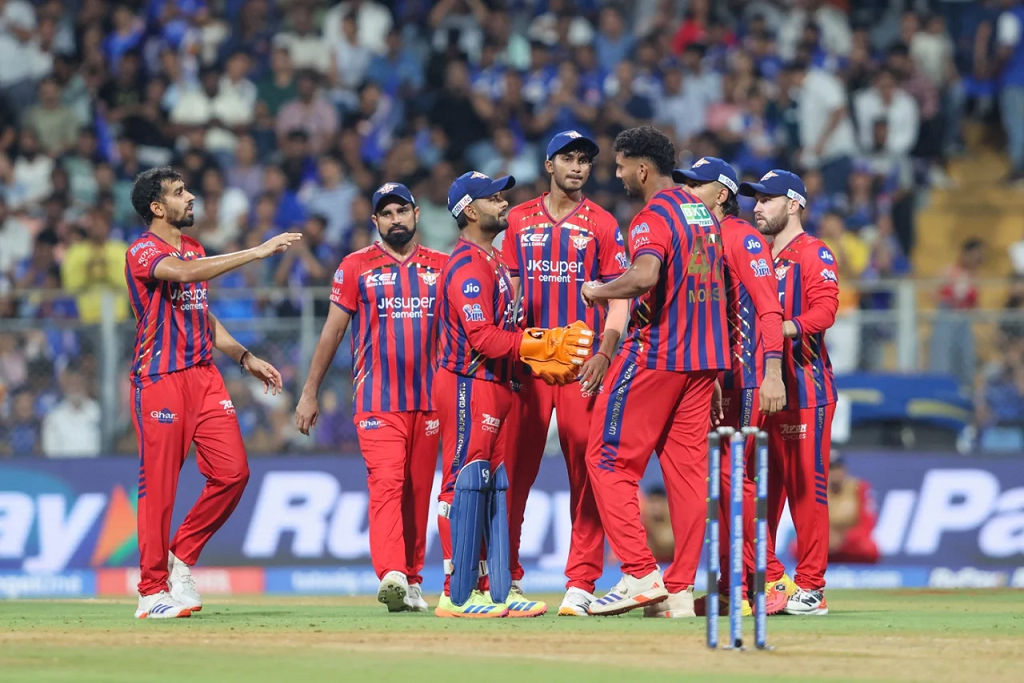
There were smiles at last for Mumbai Imdians (MI) on a night that hadn’t looked promising when Nicholas Pooran’s fireworks – 63 off 21 – threatened to run them down.
From looking set to concede 250, MI limited the damage, conceding just one boundary in the last three overs – to restrict Lucknow Super Giants (LSG) to 228. Then, Ryan Rickelton and the returning Rohit Sharma – fit again after five games on the sidelines due to a hamstring injury – turned in an exhilarating batting display to help MI raze their target down in just 18.4 overs.
This was the highest successful chase at the Wankhede Stadium, bettering the 220 MI had chased down against Kolkata Knight Riders to win their season-opener.
Rickelton, who struck 123 not out in his previous innings at the Wankhede last week against Sunrisers Hyderabad, made 83 off 32 in a 143-run opening stand. Rohit, who raised his half-century in 27 balls, made 84 off 44. By the time he was out mistiming an attempted pick-up shot over short fine leg, MI’s equation had come down to 52 off 36.
In the end, MI overturned a sequence of three straight losses; LSG, meanwhile, slumped to their sixth straight loss, which left them firmly rooted to the bottom of the points table.
He got off the mark with a streaky slash over the leaping slip fielder. Then, he was beaten off consecutive Mohsin Khan deliveries in the fourth over. It didn’t get any easier when he just about managed to squeeze out a pinpoint yorker from Prince Yadav in an excellent fifth over that went for just six. And then the floodgates opened.
A frazzled Avesh Khan disappeared for 4, 4, 6, 6 in a poor first over as MI ended the powerplay 71 for 0. By then, Rohit was imperiously flicking full-tosses, backing away and dispatching length balls over cover and slicing them wide of point.
M Siddharth, LSG’s impact sub, then came under Rohit’s wheel – feeding him deliveries into his swinging arc. He launched one of these over long-on to bring up his half-century off 27 balls. The landmark was merely incidental because, by now, Rohit was in his zone.
Even Mohammed Shami wasn’t spared; at one point he was left staring at the pitch, wondering what he’d done wrong. A well-executed bumper was mercilessly pulled to the backward square leg boundary. And then he went full and straight and ended up bowling a low full toss – almost yorker-length – that was shovelled for a leg-side six. Rohit’s knock ended when he swept Siddharth straight to short fine leg in the 14th over.
Rickelton’s first six came in the second over, a no-fuss, no-look pick-up six over square leg, and the big hits just kept coming. He lofted Shami through the line over long-off, and put away full-tosses from Avesh and Siddharth, depositing them behind square on the leg side. Rickelton charged to his half-century off just 22 balls, with 40 of those runs coming in boundaries.
Rickelton took a particular liking to Siddharth, who kept floating them up in trying to swerve his arm ball away from his hitting arc. His second over, the ninth of the innings, got picked away for 23. Rickelton’s party ended a couple of overs later when he fell to Mohsin after having hit him for two sixes in the same over. An attempt to go over cover was hit flat to the man at the edge of the ring. By then, the openers had added 143.
That this was a big chase was primarily down to Pooran. Promoted to No. 3, from where he had scored a majority of his 524 runs last season, he hit three sixes off Will Jacks in the fifth over – all on the leg side – to kickstart his innings.
The ferocity of his ball-striking made you wonder if this was the same batter who had struggled for any kind of batting rhythm through this season – coming into this game, his strike rate of 81.18 was the lowest among all batters who had faced at least 50 balls this season.
He had hit four sixes combined in eight games. He hit twice as many on Monday alone, in an incredible exhibition of clean, fearless hitting. He raised his fifty off 16 balls – with a strike over long-off off Deepak Chahar – and looked good for plenty more until a Corbin Bosch bouncer got big on him. One brought two as Bosch also had the set Mitch Marsh pull one straight to deep midwicket.
Reprieved even before he was off the mark – an inside-edge didn’t carry to Rickelton – Rishabh Pant couldn’t capitalise as he was soon dismissed for 15. Then, debutant Akshat Raghuwanshi – who replaced Mukul Choudhary in LSG’s XI – walloped his first ball for six before being dismissed by Raghu Sharma for his first IPL wicket.
At one point, LSG were staring at the possibility of having to summon a batter as their Impact Player because they kept losing wickets. Himmat Singh was reprieved on 2 when Jasprit Bumrah got him to edge to the keeper off a no-ball. He went on to finish unbeaten on 40 off 31, and Aiden Markram, pushed back to No. 5, on 31 off 25.
Yet, with the last five overs going for just 53, there was a sense LSG left a few runs out there. As it turned out, it’s possible even those extra runs may have not been enough against a rampant MI line-up.
Brief scores:
Mumbai Indians 229 for 4 in 18.4 overs (Ryan Rickelton 83, Rohit Sharma 84, Tilak Varma 11, Suryakumar Yadav 12, Naman Dhir 23*, Will Jacks 10*; Mohammed Shami 1-53, Moshin Khan 1-47, Manimaran Siddharth 2-47) beat Lucknow Super Giants 228 for 5 in 20 overs (Mitchell Marsh 44, Josh Inglis 13, Nicholas Pooran 63, Rishabh Pant 15, Aiden Markram 31*, Akshat Raguwanshi 11, Himmat Singh 40*; AM Ghazanfar 1-50, Will Jacks 1-34, Corbin Bosch 2-20, Bosch 2-20, Raghu Sharma 1-36) by six wickets
[Cricinfo]
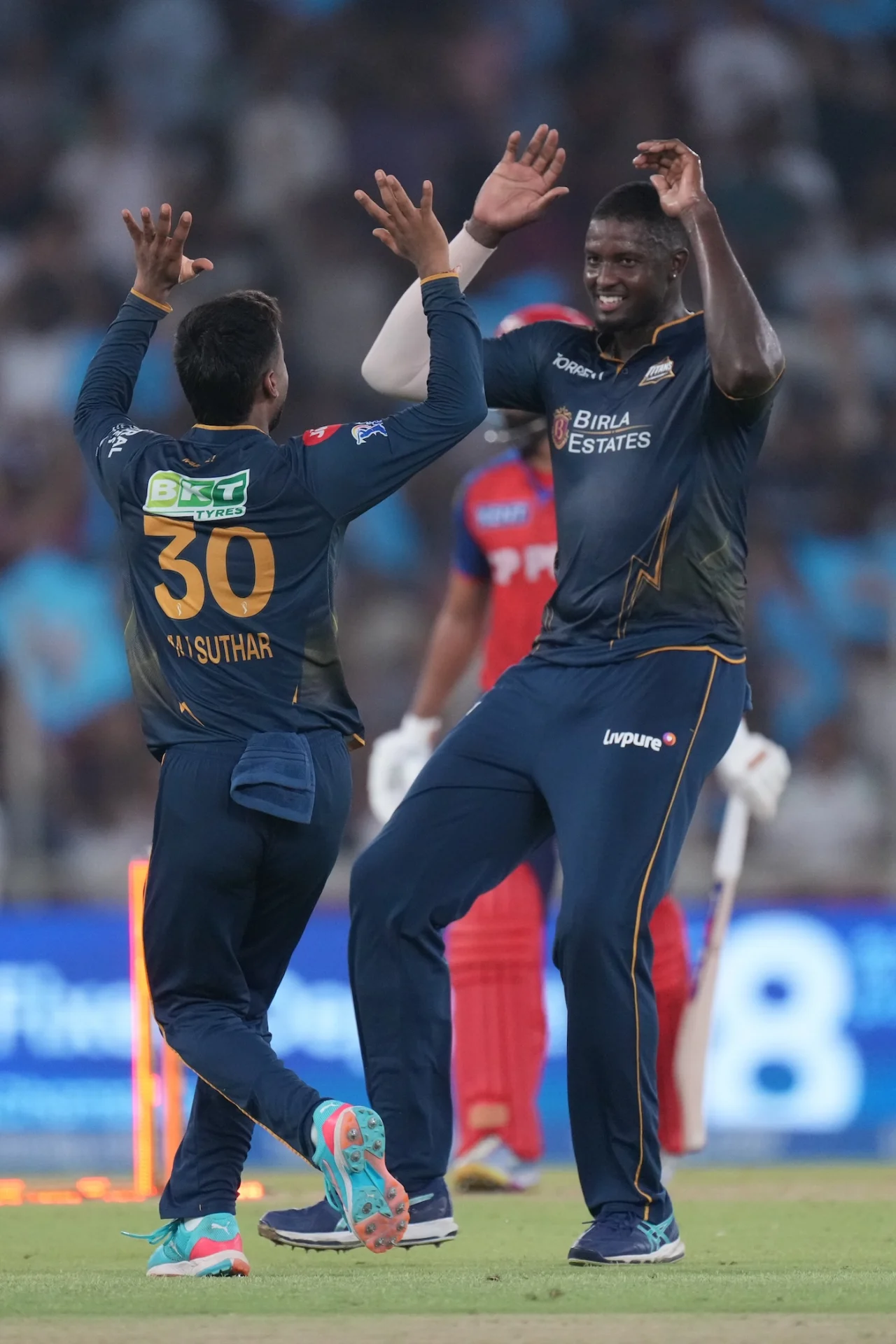
The top half of the IPL 2026 points table is an utter logjam.Punjab Kings (PBKS), unbeaten through their first seven games, have now lost two in a row. And the team that beat them on Sunday night, Gujarat Titans (GT) have won three in a row. All around the IPL, teams that had led secure lives in the top four have endured setbacks over the last few days.
And so the big squeeze. PBKS remain at No. 1, but they’re only one point above GT at No. 5.
GT, however, are the only team in the top five with a negative net run rate (NRR). This may have something to do with their style of play: they rely on their bowlers to ensure their batters don’t have to score at the frenetic rates of some other teams, but that means their margins of victory tend to be less emphatic.
On Sunday, their margin was wafer-thin – one ball remaining – despite the fact that they dominated virtually from start to finish. Their Test-match pace trio of Mohammed Siraj, Kagiso Rabada amd Jason Holder bowled hard lengths on a pitch that offered steep bounce and plentiful seam movement from those lengths, and reduced PBKS to 47 for 5. Suryansh Shedge and Marcus Stoinis ensured that PBKS recovered to post 163 for 9, but this was still very much a GT kind of target, perfect for their style of top-order play.
A measured half-century from B Sai Sudarsan laid the perfect platform, but GT’s scoring rate remained somewhere in the region of their original required rate right through their chase. And suddenly, they ended up needing 11 off the final over. Washington Sundar sealed victory with a penultimate-ball six, but on another day, this could have so easily been the story of GT sleepwalking to defeat.
But the major story was this: for the third match in a row, GT pulled off the trademark GT victory. Straightjacketing their oppositions with the ball, and chasing down sub-170 targets with significant contributions from one or two of their top three.
This was a black-soil pitch with a healthy covering of grass, and it was evident from ball one that it would reward bowlers who hammered away on hard lengths. Ball one from Siraj almost produced a chance, with extra bounce leading to a miscued pull from Priyansh Arya that fell just out of reach of Jos Buttler, who had chased from his spot behind the stumps to the edge of the 30-yard circle at backward square leg. Ball two produced the first wicket: a bit of width for Arya to free his arms, but extra bounce once more to take away his control and bring about a slice to deep third.
Siraj struck again with his next ball, going slightly fuller, getting a bit of swing into the left-handed Cooper Connolly to produce an inside-edge to the wicketkeeper.
Rabada matched Siraj’s excellence from the other end, as the two bowled three overs each in the powerplay, beating the bat multiple times as Prabhsimran Singh and Shreyas Iyer struggled to match their usual rates of scoring. Then, Rabada bowled an outstanding sixth over, which included the wicket of Prabhsimran with a 152kph length ball that cramped him for room on the on-the-up punch, and four straight dots to Nehal Wadhera, including one that zipped past the edge and a bouncer that zipped past the helmet. A wicket maiden completed PBKS’ least productive powerplay since the start of IPL 2025: 35 for 3.
There’s no better resource on a trampoline pitch than a towering fast bowler. Holder is four inches taller than the 6’3″ Rabada, and he immediately got in the act in the seventh over, finding Wadhera’s edge with a hard-length ball slanted across him. And when he nipped a back-of-a-length ball back into Shreyas and bowled him off the inside edge in the ninth over, PBKS were five down and in all kinds of strife.
In GT’s previous game against Royal Challengers Bengaluru (RCB), the left-arm spinner Manav Suthar didn’t bowl a ball. Given the help the quicks were getting on Sunday, GT may have felt inclined to repeat this, but a wayward 13th over from the left-arm seamer Arshad Khan, which went for 16, may have prompted them to bring on Suthar for the 14th.
And Suthar bowled one of the more forgettable overs of the season. Bowlers often get taken to the cleaners in the IPL even when they bowl reasonably good balls, but this was just an old-fashioned bad over: after starting with a single, he sent down two slot balls, a wide full-toss, a wide long-hop, and another full-toss. Shedge took ruthless toll, going 6, 6, 4, 4, 6. Twenty-seven off that over, and PBKS were suddenly looking at a decent total.
That over was the centrepiece of a 79-run partnership between Shedge and Stoinis. Shedge, who was at one stage batting on 13 off 14 balls, rushed to a 24-ball half-century. He then flicked Rabada for a nonchalant six in the 16th over before falling to Rabada’s extra bounce, caught behind for 57 off 29.
Stoinis held the key to a big finish for PBKS, but Holder forced a miscue out of him with an into-the-pitch cutter from around the wicket in the 18th over. When he followed up with an inducker to bowl Xavier Bartlett comprehensively, PBKS were eight down with 13 balls remaining.
Marco Jansen hit Rashid Khan for a six and four in the final over to haul PBKS past 160, but it wasn’t quite the magnitude of finish they may have hoped for. Only 45 came off their last five overs.
This was an innings of many delectable shots: the high-elbow drive through the covers off Bartlett in the first over, the hooked six over fine leg off Jansen in the sixth, and expert riding of the bounce to cut and carve the ball behind point. But there wasn’t a whole lot of intent to force the pace off balls that weren’t in his hitting zones.
And all of GT’s batters played pretty much this way, with the caveat that this was still an awkward pitch to bat on. Jos Buttler picked off a trademark scooped six over short fine leg, but his 26 consumed 22 balls. Nishant Sindhu, making his IPL debut, fell for 15 off 11. Washington scored 16 off his first 14 balls.
And so, it came to a situation where, after Sai Sudharsan and Impact Player Rahul Tewatia fell in the 15th and 17th overs, GT suddenly came under a bit of pressure.
But with 11 to get off the final over, they found a way to push through. Arshad flicked an almost-perfect Stoinis yorker for four, and then, with three to get off two balls, Washington coolly stepped across his stumps and scooped a full-toss over the fine leg boundary to take GT over the line.
Brief scores:
Gujarat Titans 167 for 6 in 19.5 overs (Sai Sudharsan 57, Jos Buttler 26, Nishant Sindhu 15, Washington Sundar 40*; Arshdeep Singh 2-24, Marco Jansen 1-33, Vyjayakumar Vyshak 2-31, Marcus Stoinis 1-26) beat Punjab Kings 163 for 9 in 20 overs (Prabhsimran Singh 15, Shreyas Iyer 19, Suryansh Shedge 57, Marcus Stoinis 40, Marco Jansen 20; Mohammed Siraj 2-28, Kagiso Rabada 2-22, Jason Holder 4-24, Rashid Khan 1-32) by four wickets
[Cricinfo]

Minister of Health of the Russian Federation attends the Sri Lanka–Russia Medical Forum

Members of Sri Lanka Cricket Transformation Committee Officially Appointed

Three prison guards arrested following the death of an inmate

Showers or thundershowers will occur at most places of the island after 1.00 pm.

CJ urged to inquire into AKD’s remarks on May 25 court verdict

ITAK MPs representing East take their woes to Canadian HC

‘Dates have the highest sugar content to fight Coronavirus’

Sunday Island 27 December – Headlines

#SundayIsland 17th December – Headlines

Sunday Island – 28th March

Sunday Island Headlines – 21 March

Sunday Island – 21st February – Headlines
-

 News7 days ago
Treasury chief’s citizenship details sought from Australia
-

 News6 days ago
Rooftop Solar at Crossroads as Sri Lanka Shifts to Distributed Energy Future
-
 News5 days ago
“Three-in-one blood pressure pill can significantly reduce risk of recurrent strokes”
-

 News7 days ago
Central Province one before last in AL results
-

 Sports7 days ago
Well done AKD!
-

 News2 days ago
USD 3.7 bn H’tota refinery: China won’t launch project without bigger local market share
-

 News5 days ago
Alarm raised over plan to share Lanka’s biometric data with blacklisted Indian firm
-

 News3 days ago
Easter Sunday Case: Ex-SIS Chief concealed intel, former Defence Secy tells court