
Business
Yemen’s Houthis say they attacked two more vessels in the Red Sea


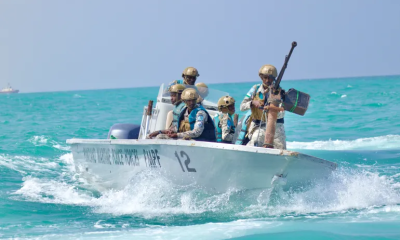
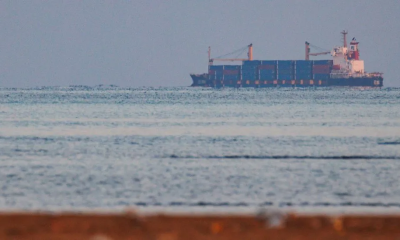
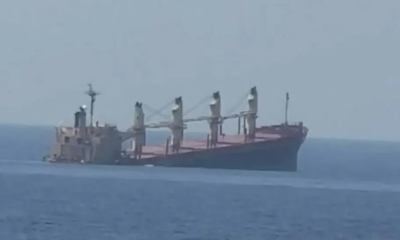
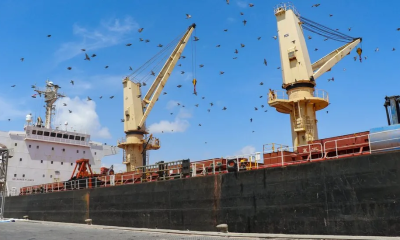
Yemen’s Houthi rebels say they launched a drone attack targeting two cargo vessels in the Red Sea, the latest in a series of assaults that have disrupted maritime trade as freight companies seek to avoid the area.
Houthi spokesperson Yahya Sarea on Monday identified the vessels as the MSC Clara and Norwegian-owned Swan Atlantic, and said the attacks were carried out after their crews failed to respond to calls from the group.
The Swan Atlantic’s owner said the ship had been struck by an unidentified object but none of the crew was hurt.
The MSC Clara is a Panama-flagged vessel, according to LSEG data. Details of the attack on the vessel were not immediately clear.
The Iran-backed Houthis have attacked numerous vessels over recent weeks, saying they are targeting vessels in the Red Sea with links to Israel in protest at its military offensive against Hamas in Gaza. The group has warned against sailing towards the area.
The attacks have caused concerns about the impact on the passage of oil, grain and other goods on what is an important global trade route, and have pushed up the cost of insuring and shipping goods through the Red Sea.
All of the Swan Atlantic’s systems were operating normally although the water tank had been damaged in the attack, said Oystein Elgan, chief executive of owner Inventor Chemical Tankers. Inventor Chemical Tankers had no Israeli ties, Elgan said.
The vessel’s operator, Uni-Tankers, said the attack had caused a small fire which the crew brought under control, and that the ship, carrying vegetable oils, continued to Reunion Island.
A British maritime authority said it had received a report of a vessel that “experienced an explosion” on its port side in an attack 24 nautical miles north west of Yemen’s Mokha port. The vessel and crew were reported safe, it said in an advisory. The incident described by the United Kingdom Maritime Trade Operations (UKMTO) advisory was similar to the attack on the Swan Atlantic.
The UKMTO said in a separate advisory it had received a report of a vessel 24 nautical miles southeast of Mokha as being approached by a craft with several armed personnel onboard. Warning shots were fired from the vessel and the craft with the armed personnel on board changed course, the advisory said.
The UKMTO authority said in other advisories it had received reports of an incident 63 nautical miles northwest of Djibouti and another incident in the vicinity of the Bab Al Mandab strait, 30 nautical miles south of the port Mokha.
The Houthis, who rule much of Yemen, have pledged to continue carrying out attacks until Israel halts its assault on Gaza. However, in an initial indication of possible moderation, the group said on Saturday that real steps to ease the humanitarian crisis in Gaza would contribute to “reducing the escalation”.
The threat risks disturbing the global economy. Several shipping companies have announced they will suspend all journeys through the Red Sea due to the attacks.
About 40 percent of international trade passes through the narrow strait between Yemen and northeast Africa, which leads northwards to the Red Sea, Israel’s southern port facilities and the Suez Canal.
The increased threat has caused shipping insurance costs to jump by tens of thousands of dollars a day and raised oil prices.
Oil major BP temporarily paused all transit through the Red Sea citing security concerns. The alternative route for ships avoiding the Suez Canal is to take the much longer trip around Africa.
The US announced last week that it was in talks with other countries to set up a task force to protect the trade route. An Italian source on Monday reported that the country is considering joining a naval coalition to patrol the Red Sea.
(Aljazeera)










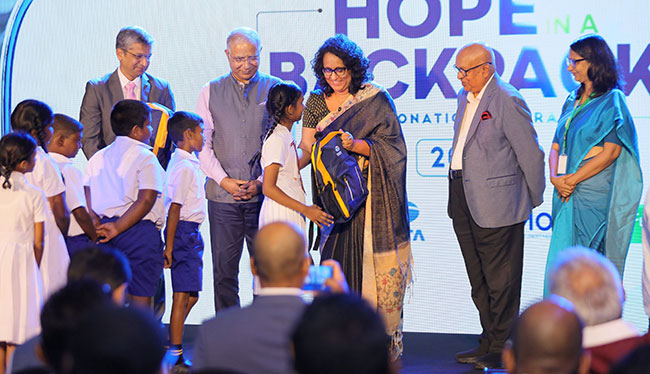
The Tata Group, in partnership with ChildFund and DIMO, has successfully implemented a humanitarian education support initiative for disaster-affected schoolchildren in Sri Lanka, reaffirming its commitment to helping communities recover from the impacts of Cyclone Ditwah and the subsequent floods.
Following a formal request for support from Sri Lanka, an on-ground assessment was conducted in December 2025. Recognizing the urgent need, several Tata companies joined forces to implement the response program.
As part of this initiative, the ‘Hope in a Backpack’ programme, which provides disaster-affected children with essential educational supplies, was launched by the Tata Group at Taj Samudra, Colombo, in the presence of the Chief Guest, Hon. Prime Minister Dr. Harini Amarasuriya; the Guest of Honour, Hon. Indian High Commissioner Santhosh Jha; Ranjith Pandithage, Chairman of DIMO; Chacko Thomas, Group Chief Sustainability Officer, Tata Sons; and Aditi Ghosh, Country Director, ChildFund.
This initiative is part of DIMO’s Social and Community Pillar, under the project theme ‘Lassana Hetak,’ which focuses on giving the future generation a helping hand towards a better future.
This collective effort was further strengthened by volunteers from Tata and DIMO, who actively mobilized on the ground to pack, distribute, and support affected communities. During the proceedings, specially invited schoolchildren received the backpacks with essential supplies as well.
Commenting on the partnership, Ranjith Pandithage, Chairman of DIMO, said: “DIMO is proud to collaborate on this meaningful initiative alongside the Tata Group and ChildFund as the local implementation and logistics partner. Our relationship with Tata spans more than six decades and has been built on a shared commitment to ethical business practices, trust, and creating lasting value for the communities we serve. These values have shaped our partnership over the years, extending beyond business to initiatives that make a meaningful difference in people’s lives.”
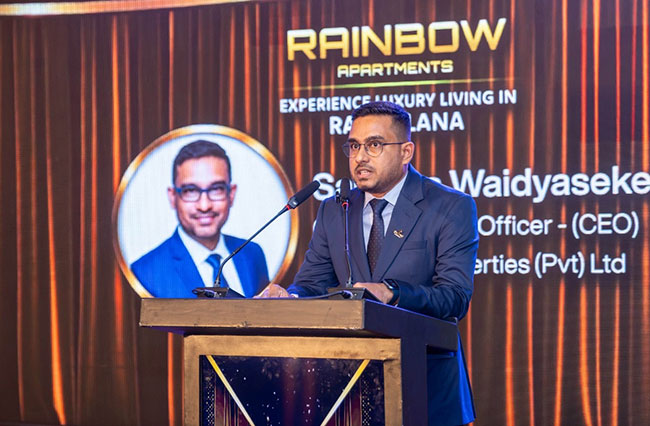
NovaNest Properties (Pvt) Ltd has officially launched Rainbow Apartments, a new residential development in Ratmalana. The announcement was made at an official launch event held at the Shangri-La Hotel, Colombo, marking the company’s latest addition to Sri Lanka’s growing apartment market.
The development is designed to cater to homebuyers seeking modern urban living, as well as investors looking for long-term value. Rainbow Apartments is located in Ratmalana, an area of increasing residential interest, and benefits from the suburb’s established social infrastructure, proximity to major transportation links, and accessibility to Colombo.
The project reflects NovaNest Properties’ commitment to delivering quality residential developments that combine contemporary design with practical living. Intended to satisfy the evolving lifestyle demands of today’s homeowners, Rainbow Apartments features thoughtfully designed living spaces supported by modern amenities. These include two infinity pools, a gym, fully functional workspaces, a mini theatre, stylish cafés, a mini-mart, and a children’s daycare. Additionally, it features a full time medical centre backed by Nawaloka Hospitals PLC Colombo, with a 24-hour ambulance service.
Commenting on the launch, the Chief Executive Officer of NovaNest Properties (Pvt) Ltd, Samitha Waidyasekera, said, “Today’s buyers are looking beyond square footage. In addition to providing long-term value, they want homes that are close to the places where they work, learn, and spend their time. With that shift in mind, Rainbow Apartments was created to bring together a strategic location, thoughtful design, and quality construction in a way that will continue to meet buyers’ needs for years to come. Through our promise of ‘Luxury Beyond Expectations,’ we are committed to delivering an elevated lifestyle experience that combines comfort, convenience, and modern living.

To open sustainable energy projects to all investors
Ceylon Energy hosted Energize 2026, a global forum featuring experts from Hubbell, CTC Global, and Aclara Technologies, to discuss advanced transmission, smart grids, and digital energy infrastructure. The event’s centerpiece was the launch of Apollo Energy (Delaware USA) – a new investment platform that connects individual, corporate, and institutional investors with curated, high-yield renewable energy and infrastructure projects in Sri Lanka and the region. Founder Madu Fernando emphasized the platform aligns with the company’s vision of “Lighting People’s Lives” by democratizing access to sustainable energy investments, unlocking new funding, and fostering innovation. The initiative complements Ceylon Energy’s broader mission to drive industry collaboration, technology adoption, and a resilient energy ecosystem
The workshop featured resource personnel representing Ceylon Energy’s strategic global alliances, including Hubbell Power Systems, CTC Global, and Aclara Technologies. The experts shared their knowledge on advanced transmission and distribution technologies, smart grid solutions, digital infrastructure, and innovations that are shaping energy systems across the world. The event attracted a diverse audience comprising engineers, utility professionals, investors, financial institutions, business leaders, and other stakeholders from across the energy sector. A key highlight of Energize 2026 was the insightful panel discussion titled “Shaping the Future of Energy,” which brought together renowned global industry experts to discuss the opportunities and challenges in building resilient and technology-driven energy systems.

Lithuania warns Lankans against falling into job offer scams

NPP government here to stay, says Lal Kantha

Dengue cases surpass 72,000 as death toll rises to 49

Tales of Mystery and Suspense 10 Casino for Sale

WPC signs MoU with NGO to implement an Early Childhood Education (ECE) Programme

Suspect arrested over shooting at police after grabbing weapon from them, has security background

‘Dates have the highest sugar content to fight Coronavirus’

Sunday Island 27 December – Headlines

#SundayIsland 17th December – Headlines

Sunday Island – 28th March

Sunday Island Headlines – 21 March

Sunday Island – 21st February – Headlines
-

 News7 days ago
Herath warns prospective migrant workers not to get fleeced by racketeers
-

 Features5 days ago
Prison riots and politics: NPP’s biggest challenge and Sri Lanka’s biggest opportunity
-

 Editorial6 days ago
What’s the world coming to?
-

 Foreign News7 days ago
Tensions erupt in Indian state after 11-year-old raped and murdered
-
 Features2 days ago
Dirty Money
-

 Editorial5 days ago
Much ado about crime: Fish or cut bait
-

 Features5 days ago
More on Saudi Arabia: ARAMCO and beyond
-

 Latest News3 days ago
Oil prices hit 1-month high as US-Iran attacks dim Strait of Hormuz outlook