
Life style
Yasmine Gooneratne


BY Rajiva Wijesinha
A year has passed since the death of one of our most distinguished academics who was also a very good friend. I did not write about her then, for I was busy with looking after a contemporary of hers who was visiting from Canada. But I have kept thinking that I should record elements of our friendship since she was by far the Sri Lankan academic in the field of English to whom I felt closest. We never however worked together, for she had been in Australia for many years when I first joined Peradeniya, and the story I heard about her departure was from Tissa Jayatilleka, who was very much a votary of Ashley Halpe who headed the Deparment when I taught there.
The story went that there had been what both sides considered bad faith with regard to the Chair of English. But it was in fact well after Ashley had got it that Yasmine emigrated, in the climate of worry about academic freedom engendered by the higher education reforms of Mrs Bandaranaike’s second government. It may be remembered that they had brought all universities under one umbrella, with different campuses, and Kelaniya had become the centre for English, with only language teaching units even at Peradeniya.
Yasmine had by then moved to Australia, where she soon established herself as a leading scholar, in time receiving several honours from the Australian government. And she became a star in the field of Commonwealth Literature Studies, and a much revered participant at meetings of the Association for Commonwealth Literature and Language Studies.
I first met her at an ACLALS meeting in Singapore in 1986, when she invited me for lunch with the friends with whom she was staying. But I believe we had been in correspondence previously, for she had followed what I had begun doing at the British Council, in particular my promotion of Sri Lankan Writing in English along with the British concerns of the Council. And her great friend Lakshmi de Silva, who was one of the most devoted fans of the programmes I put on, kept her informed of what we were doing.
So she asked me, having heard of the dramatized readings I had put on, most spectacularly of Dickens and Kipling with Richard de Zoysa bringing their characters to life, whether I would launch her book Relative Merits at the Council with such readings. This was a memoir of her family, and it had delightful set pieces which lent themselves to the dramatic reading that Richard and my other great mainstay, Yolande Abeywira, were capable of.
We had a lovely programme, using the old ebony furniture from home that I had used for Dickens, and with masses of flowers from the Council gardens, which set the scene splendidly. We did it when Yasmine and her husband Brendon were in Colombo, and the programme was an enormous success, so that Yasmine expressed herself ever afterwards as being in debt to me. But in fact it was I who was grateful, for she helped me to make clear how important our products were within the great tradition of English writing.
She and I kept in touch in the years that followed, and I loved seeing her on her visits here and also at various conferences, in Canterbury and in Jamaica and also here, for ACLALS met in Colombo in 1995. That was the year the English Association decided to showcase our writers in English, and decided on three volumes, to celebrate fiction and poetry and drama.
I am not sure to whom we entrusted the last, and it never saw the light of day. That was perhaps no great loss for there was not much that was remarkable in that field, but I was very sad that the writers we had asked to describe our novelists and short story writers, for the volume I was in charge of, produced hardly anything by the required time. I think only mine, on Punyakante Wijenaike, was ready, and that had in the end to be published in a subsequent issue of Navasilu, the journal of the English Association.
But it was poetry that we were keenest on, for we had so many excellent poets. This volume we had entrusted to Neloufer de Mel, but she had to be constantly badgered, so that she in turn badgered her writers. And finally the book did come out in time for the ACLALS Conference, but to my surprise most of our critics simply slated the poets, and it was only my piece on Anne Ranasinghe that did justice to the living writers.
What was most embarrassing was the piece on Yasmine Gooneratne, though with her customary insouciance she simply remarked that she knew the writer, a Peradeniya don, could not write; she now realized, she said, that she could not read either.
That was typical of the wry sense of humour she evinced about everything, and talking to her about the vagaries of our English Departments was great fun. She was very fond of Lakshmi de Silva, though found her devotion to D C R A Goonetilleke odd, for he was an odd man. But she got on well with him, while she could still be uptight about Ashley Halpe. And though she agreed once to have him invited to an event she was to feature in, her husband Brendon, who was made of sterner stuff, told me that there was still resentment about how he had acted over the chair many years earlier, and it was best they should not meet.
Though I still do not know what happened, and who was hard done by, I had to respect this diffidence. But I knew resentment went deep, and Yasmine more than enunciated this when, in her first novel, A Change of Skies, which came out in 1991, she caricatured the Halpes. There had been an article about them which called them the von Trapps of Sri Lanka, after the family in ‘The Sound of Music’ and she lampooned them wickedly if entertainingly in the novel. I could see then that it was perhaps unwise to think of bringing them together.
Yasmine published two more novels over the years that followed. The first was called The Pleasures of Conquest and explored the impact of colonialism from different angles, beginning with the taking up by an American of a masseur who then returns to Sri Lanka as a guru. Her next novel, The Sweet and Simple Kind, is a critique of Sri Lanka and its politics, though there is also lyricism in her description of university life at Peradeniya, where she studied and then taught. Later on she developed the political satire of this novel in Rannygazoo, which she sent me in electronic form before she died. She wanted comments, but I find reading on a computer difficult and was waiting for a hard copy she said she would lend me, but that was not to be.
She was back in Sri Lanka then, having left Australia after her retirement. She and Brendon had a flat in Colombo initially, but they had also bought an estate bungalow which he wanted to turn into a writer’s retreat, having been to the Rockefeller Centre at Bellagio which is a blissful experience. The place, which he called Pemberley, in honour of Yasmine’s devotion to Jane Austen, was not far from Sabaragamuwa University, and he asked me if I could arrange a literary conference there so that their international invitees could get funding for their visit for the inauguration.
That was in 1999 and the conference duly took place and its proceedings were published by the Sabaragamuwa University Press which I had set up, mainly for textbooks for the students but also for such initiatives. And I still recall the splendour of the opening of Pemberley, for which the Australian High Commissioner Peter Rowe, who had become a great friend, came up, spending the night before at the Belihuloya Resthouse where we had dinner, along with Nirmali Hettiarachchi, a mainstay of early programmes at Belihuloya, and my former student Walter Perera, who went on to teach at Peradeniya.
That was an idyllic day, and then we had the conference, with a starring role for Meenakshi Mukherjee, doyenne of Commonwealth Studies in India, whom I had met when she was a resident in Bellagio in May 1993 when I was there. And she had been a marvellous host at a conference at Jawaharlal Nehru University in Delhi in 1997, just before I joined Belihuloya, so I was delighted to be able to put her and her husband Sujit up at Lakmahal after the Conference. Sadly I never saw them after that, for though I was often in Delhi they had retired to Hyderabad.
Though the Gooneratnes planned to spend much time at Pemberley, Brendon also bought a wonderful house in Colombo, a short distance away from Lakmahal, and I saw them there off and on over the years. I also once had lunch with Yasmine at Pemberley, for it was on the way to Diyatalawa, where while I was at Sabaragamuwa I coordinated the degree course of the Military Academy. I still recall the sheer joy of that meeting, from which I had to drag myself away for my teaching commitments.
I saw the Gooneratnes quite often over the next decade. They would drop in frequently on my father, of whom they were both very fond, and Yasmine made him the most beautiful sampler to celebrate his 90th birthday, yet another instance of her varied talent.
And I was deeply touched when I was one of the few guests Brendon invited to celebrate his 75th, or perhaps it was his 80th, birthday. This was at Ceytra House, the old mansion in Bagatelle Road which he had bought, a much better setting for them than the apartment they had initially got in Queen’s Road. These were both near to Lakmahal, within walking distance, and though I never went to the apartment I was at Ceytra House on and off in those years.
Both my father and I were both invited to the wedding of their son but that was in Kandy and by then my father could not travel far. But I went, and stayed with Derrick and Ayra Nugawela, who also attended. I remember the event best because, finding a massive queue at the lunch buffet, I decided to start with the desserts and found there Ena’s cousin Arjuna Aluvihare, the best UGC Chairman we have had, who had had the same idea.
The bride was the daughter of a niece of Ena who was known as Goatie. Though she was not part of the inner circle, she was there with me on the day Ena died, and I was holding her hand. Another niece, Chitty, born a Ratwatte, who had been with us on trips, had noticed that Ena was dying and could not bear to stay, but fortunately Goatie had not and so I was not alone.
There was a child of the marriage, but it was not a happy one, and then the son died. Brendon was shattered, and could not stop crying when I went to condole, though Yasmine was more stoic. Fortunately their daughter Devika proved a tower of strength to them at this time and thereafter.
When Covid struck they isolated themselves in the Haputale hills, with elaborate protocols when the situation eased, for they wanted to be absolutely sure that visitors would not bring any infection. I planned once to visit them but some crisis intervened and I could not make it, and then Brendon died. He had contracted a different infection but in the Haputale hospital he was exposed to covid and the complications proved too much.
I think they did not come to Colombo for some time so I could not condole in person. I had realized over the years how very close they were, and I do not think Yasmine could have done as much as she did without his support. But he too was an intellectual in his own right, and though a doctor had worked with her on historical writing, in particular a sensitive biography of Sir John D’Oyly, who had associated with the Sinhala poet Gajaman Nona.
But perhaps the most important element in their relationship was that noted by Yasmine in the appreciation she penned, when having expanded on his other qualities she wrote that she loved him most because, as Jane in the William books had said, he made life so exciting.
Yasmine Gooneratne stayed in touch by email over the next couple of years after Brendon died though once again an attempt to see her at Haputale failed, as covid virulence varied. Then, when finally she and Devika moved back to Colombo, I was asked to drop in at their house in Bagatelle Road, but it was some time before we could fix a date and time when she was free and I could leave the house.
But the wait was worth it for we had the most delightful conversation over a sumptuous tea that she had prepared for me, eating hardly anything herself. Devika tactfully stayed away, so we could talk, though she dropped into the room for a bit before going out.
We talked about everything, ACLALS conferences all over the world, the launch of Relative Merits at the British Council, her time at Peradeniya as both student and then lecturer, changes in Sri Lankan academic standards and the joy she had experienced in Haputale when there was just the family together during the corona restrictions. She had adjusted to Brendon’s death though it was clear she still missed him, but she was also deeply grateful to Devika for the care she took of her.
She told me about her latest novel, and wondered if she should publish it. It was political and it seemed she had put into it a number of active politicians including, she seemed to suggest, my cousin Ranil who had by now become President even though he had not been voted into Parliament at the 2020 General Election.
An earlier novel, The Sweet and Simple Kind, had veered towards politics in its conclusion, with the preposterous antics of its heroine Latha’s cousin and his step-mother, whom she had called Moira Wijesinha. Latha eventually marries the younger brother who, with his sister Tsunami, are estranged from their power hungry sibling and Moira, who rises ever higher after the death of her husband, in a scarcely disguised reference to the ascent of Mrs Bandaranaike.
The new novel, called Rannygazoo, took up the tale with Moira by now Prime Minister, but unfortunately Yasmine did not have a hard copy. She emailed me a soft copy and asked for my views, but I find reading on a computer difficult and could not manage a full novel.
She said she would pass on a hard copy when she got it from Haputale but alas that did not happen. I had hoped to drop in again, but before I could my friend Nirmali Hettiarachchi called to say Devika had rung her to say Yasmine was in hospital. We went to see her, but she was not conscious and it was clear she would not survive and we knew this was the last time we would see her.
But it is not the figure in hospital that I remember, but the vibrant personality that still continued to shine through at that last tea together in the grand drawing room at Ceytra House, the suitable setting Brendon had found for her for their retirement to Sri Lanka, a pendant to the verdant beauty of Pemberley. And there still remains Rannygazoo, which I shall try to read online, to revive memories of mordant wit and great joy in life.

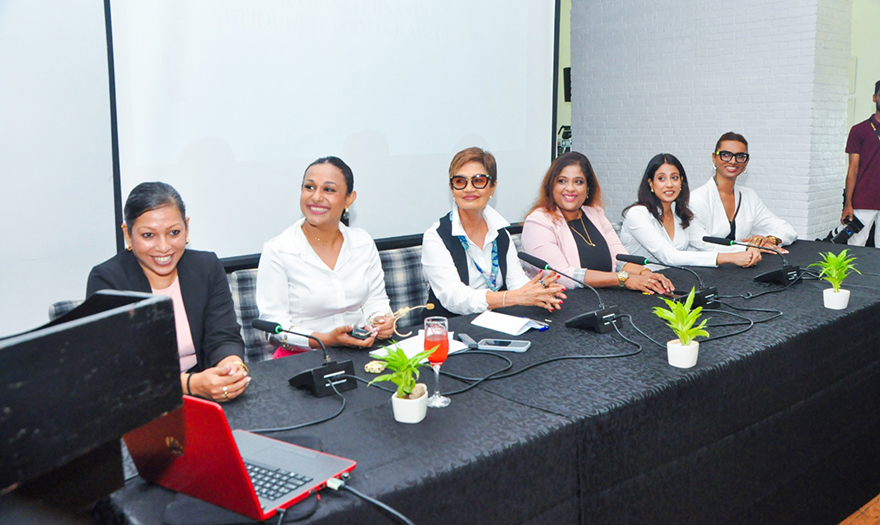
Ramani Fenando’s new Image and Etiquette Academy
In a world where first impressions speak before words, Sri Lanka’s beauty icon Ramani Fernando has taken a bold step beyond the salon chair to shape confidence from within. Her newly launched Etiquette and Image Academy is designed to refine not only appearance, but presence, poise and personal power.
Step into a space where confidence meets sophistication, Ramani Fernando Academy is redefining how Sri Lankans approach personal branding ,offering a unique blend of ettiquette, style and communication mastery.
Her newly launched personal branding and EtiquetteAcademy was unveiled in a simple ceremony at the Galle Face hotel. This marks a bold and timely step into the realm of confidence leadership, presence and modern social grace.
Colombo’s social elite, corporate leaders, fashion insiders and longtime clients gathered in celebration of a vision that seeks to shape not just appearance but cofidence building.
Ramani, in her opening speech, said “our courses are carefully designed to meet with international standards, ensuring participants recieve training that meets both local and global expectations.
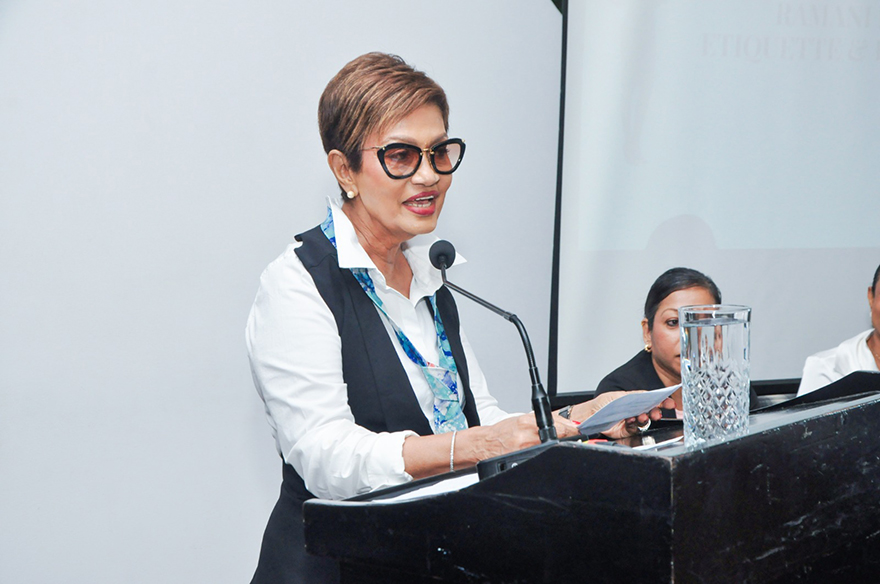
Ramani Fernando – shaping confidence
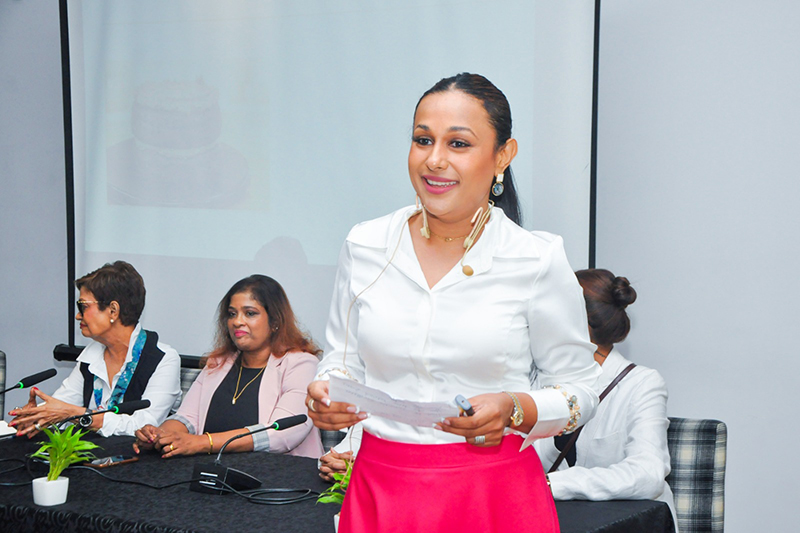
Professional face of etiquette training
Faith Launders who is the Director of Etiquette and Protocol in the Academy pointed out this personal branding and etiquette programmes will help participants cultivate grace, confidence and refined personal style through expert guidance. A former Miss Sri Lanka beauty queen, with experience in aviation, will contribute a creative and professional lens to the Academy’s curriculam.
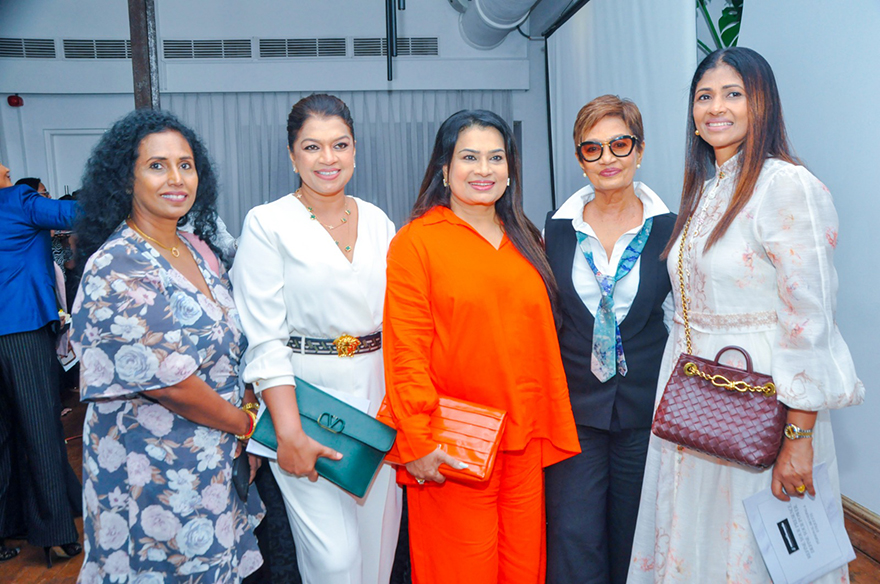
Invitees from the world of fashion gathered to celebrate the occasion
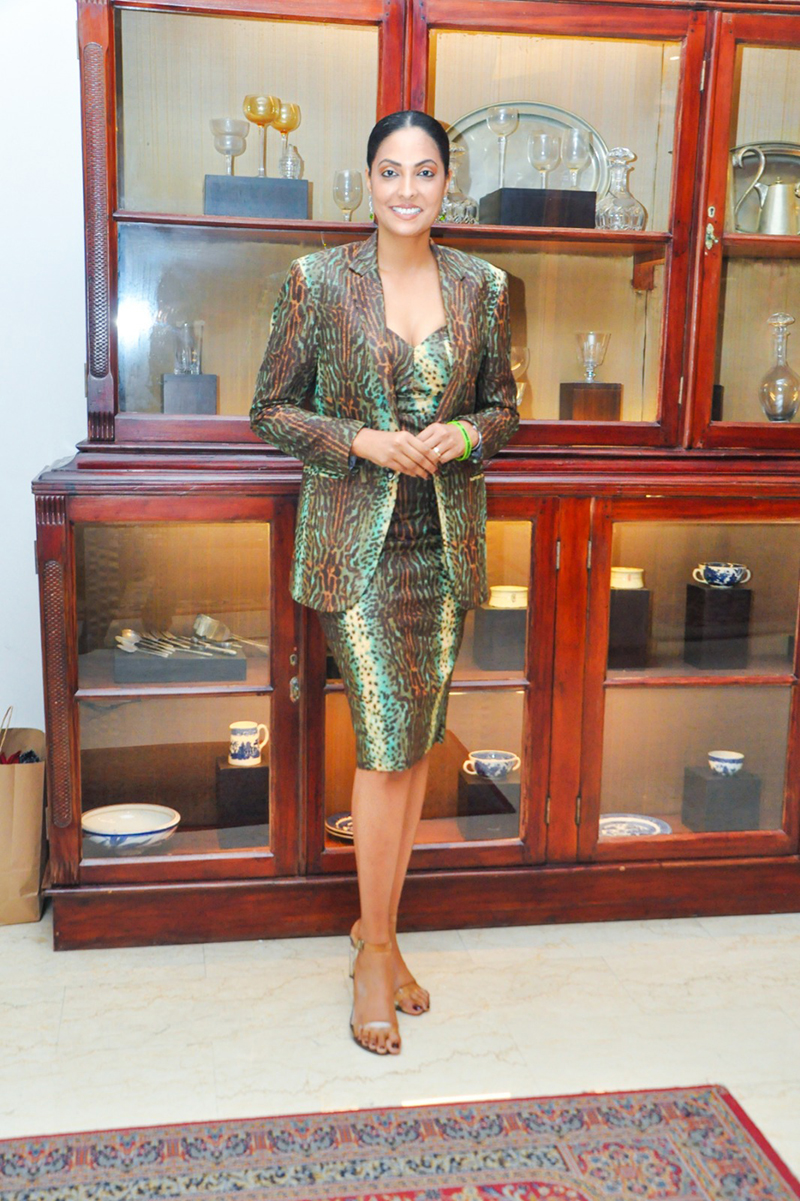
Carolyn Jurie

Chalana at the helm of beauty
She brings professionalism, poise and a strong commitment to cultivate confidence and promote refined social skills among students. Known for her approachable style and inspiring presence, she strives to create an inclusive learning space where students can transform into confident individuals to navigate life with dignity and elegance.
For decades, Ramani has been a transformative force in Sri Lanka’s beauty industry.
and now this venture signals a natural evolution from external refinement to the art of personal distinction.
The programme blends traditional etiquette with contemporary relevance, offering personal branding and professional image building both in social and corporate etiquette. These are some of the programmes:
= Communication skills and body language, grooming, style and wardrobe alignment.
= Digital image and social media conduct.
= Platforms or in social events the ability to command attention with confidence has to become an important tool.
In today’s hyper connected world, impressions are formed in seconds often long before a handshake, whether in boardrooms, diplomatic circles or in the media.
The teaching staff consists of industry experts trainers amd adminitrators led by othe senior professionals
The Managing Director, Lakmini Lenagala, Training and Administrative Manager, Ramono, Navaratnarajah, Personal Assistant, Merisha Aserappa and Chalana Munasinghe are all industry professionals who have experience, theoretical knowledge and practical skills.
They are experienced instructors with hands on expertise in grooming, etiquette, image building and communication.
While the vision of the Personal Branding and Etiquette Academy belongs to Ramani Fernando, its strength lies in the collective expertise of the professionals who bring the programmes to life.
By bringing together specialists from diverse fields, the Academy offers participants a rare opportunity to refine every dimension of their public and private persona under one roof.
Sessions cover skin care, hair, make up, wardrobe planning and colour coordination.
Communication and public speaking recognising that presence is also conveyed though voice and expression, the Academy offers training in articulation tones, posture and body language.
The training also includes table manners, event conduct, professional courtesy and cross cultural awareness. This Etiquette Academy us designed for both women and men offering guidance on grooming, communication, professional conduct and social confidence.
The Academy acts as a transformative space – one that equips individuals not merely to succeed but to stand out with authencity and grace. The institution reflects Ramani Fernando’s belief that true elegance is a way of being not simply a way of dressing!.
By Zanita Careem
Pix by Thushara Athapatu
World Wildlife Day 2026:
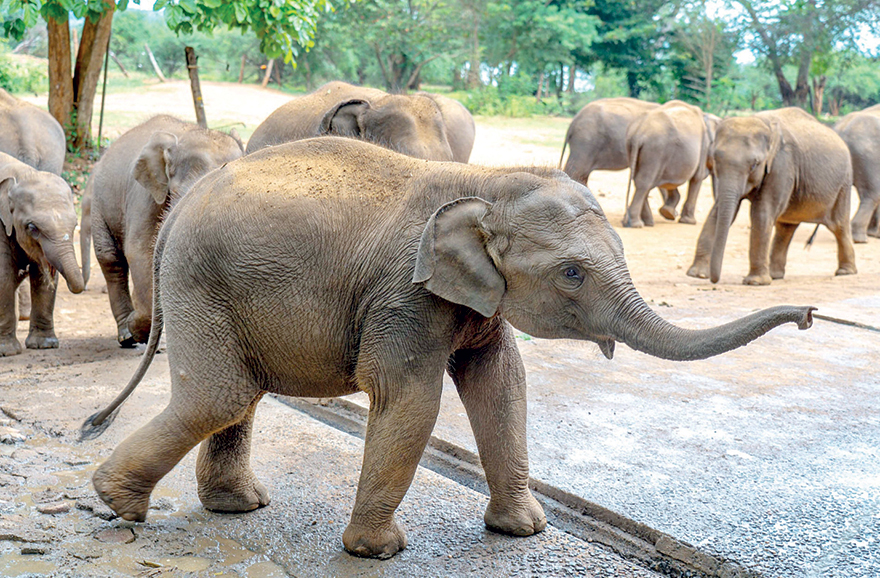
He arrived at the Elephant Transit Home in Udawalawe on March 23, 2024, barely eight months old. Kalo had spent an unknown number of days trapped at the bottom of an abandoned well near Galenbidunuwewa in Sri Lanka’s Anuradhapura District, separated from the herd he had lost. When wildlife officers from the Department of Wildlife Conservation pulled him out, they found a frightened calf, but also something else: resilience.
Today, nearly two years after his rescue, Kalo is no longer the fragile elephant calf who arrived at the Transit Home alone. He is growing steadily, eating well, and has fully integrated into a group of calves preparing for eventual release. His progress is measured not only in size, but in behaviour like social bonding, herd interaction, and independent foraging skills that will determine his readiness for life beyond human protection. Since his arrival, Kalo has grown from 125 kilograms to over 300 kilograms. The wounds he sustained before rescue have fully healed, and he is no longer on any specific medical treatment instead routine management only. He is, by every measure, active, playful, and thriving.
The Elephant Transit Home, also known as Ath Athuru Sevana, has operated within Udawalawe National Park since 1995. It is not an orphanage in the traditional sense. There are no rides, no performances, no human dependency. Human contact is limited strictly to feeding and veterinary care. The rest of the time, the calves are left to bond with one another.
That philosophy is intentional. Elephants are deeply social animals, and calves that grow too attached to humans struggle to survive in the wild. The daily play, the hierarchy, and the formation of peer bonds are all part of a structured rehabilitation process designed to prepare them for rewilding.
Since its establishment, more than 200 orphaned elephants have passed through the Elephant Transit Home. Over 100 have been successfully released back into the wild. In July 2025 alone, six young elephants were returned to Udawalawe National Park during the facility’s 26th release. If all continues as planned, Kalo will follow that path in 2029.
On May 8, 2024, less than two months after Kalo’s rescue, Sun Siyam Pasikudah formalised its long-term commitment to his care through the CarePhant initiative under Sun Siyam Care. The resort pledged ongoing monthly contributions to support Kalo’s nutrition, veterinary care, and daily rehabilitation needs through to his planned release.
Sun Siyam Care is the group’s overarching sustainability programme that integrates environmental stewardship, biodiversity conservation, community engagement, and long-term socio-economic value creation across all Sun Siyam Resorts in the Maldives and Sri Lanka. Through Sun Siyam Care, we invest in initiatives that protect marine and terrestrial ecosystems, reduce waste and single-use plastics, improve resource efficiency, support renewable energy and local sourcing, and promote awareness and participation among guests and communities alike. Kalo’s journey from rescue to rewilding is one example of how Sun Siyam Care extends beyond hospitality, connecting responsible tourism with meaningful environmental and wildlife conservation impact.
“We are delighted to embark on the CarePhant project and become stewards of Kalo’s well-being. Sri Lanka’s elephants are not just a conservation issue; they are part of the living identity of this island, and we feel a genuine responsibility to play our part in protecting them,” said Arshed Refai, General Manager, Sun Siyam Pasikudah.
For Chaminda Upul Kumara, Sustainability Project Manager at Sun Siyam Resorts, the commitment reflects the deeper purpose of Sun Siyam Care. “Conservation is not a single moment. It is a process that requires patience and consistency. With Kalo, we committed to being part of that journey from rescue to release. Every month of support is an investment in his return to the wild,” said Upul.
In the month that marks World Wildlife Day, observed on 03rd March, Kalo’s story serves as a reminder that conservation is not abstract. It is individual. It is long term. And it depends on partnerships between public institutions and responsible private sector actors. In a landscape where habitat loss and human–elephant conflict continue to threaten Sri Lanka’s wild elephant population, sustained commitments like CarePhant demonstrate how responsible tourism can contribute to tangible, measurable conservation outcomes.
Sun Siyam Pasikudah, which holds Travelife Gold Certification and operates under the broader Sun Siyam Care sustainability framework, integrates conservation, local sourcing, and community engagement into its daily operations. The CarePhant project builds on that foundation by linking responsible hospitality directly to wildlife protection.
Three years from now, in 2029, Kalo is expected to walk beyond the protective boundaries of the Elephant Transit Home and into Udawalawe National Park as a young wild elephant. Every veterinary check, every month of nutritional support, and every bond formed within his herd brings him closer to that moment.
“When Kalo walks back into the forest in 2029, it will mark the completion of a journey that began in crisis but was sustained through commitment,” added Arshed Refai. “We are proud that Sun Siyam Care is part of that long-term promise.”
Until then, Kalo continues doing what young elephants at Ath Athuru Sevana are meant to do: growing, learning, and preparing quietly for a life in the wild.

The High Commission of the Islamic Republic of Pakistan and the Pakistani community based in Sri Lanka celebrated the 86th National Day of Pakistan with traditional flavour and resolve to make Pakistan a strong, vibrant and progressive democratic welfare state.
The day commemorates a defining moment that led the foundation for the creation of Pakistan.
The ceremony commenced with the raising of their national flag, fluttering proudly against the morning sky, symbolising faith, unity and discipline, the ideals upon which the nation was built. Dignitaries, members of the diplomatic corps, community leaders and guests gathered in silence as the national anthem resonated creating an atmosphere charged with emotion and national pride .
Cultural elegance added a distinctive charm to the occasion, with traditional attire and warm exchanges reflecting the rich heritage of Pakistan. Guests were later invited to partake in light refreshments, providing an opportunity for cordial interacton and celebration.
Acting High Commissioner of Pakistan, Zunaira Latif unfurled the Pakistani flag to the tune of Pakistan’s national anthem in a ceremony held at the Pakistan High Commission
The National Day of Pakistan is celebrated on 23rd March every year in remembrance of the historic 1940 resolution passed in Lahore, calling for a separate homeland for Muslims of the subcontinent that ultimately led to the creation of Pakistan on August 14, 1947.
Special messages by the President and the Prime Minister of Pakistan were readout, in which both the leaders highlighted the importance of the day and paid tributes to Quaid-e-Azam Muhammad Ali Jinnah.
The Acting High Commissioner of Pakistan in her message on the occasion said that Pakistan and Sri Lanka continue to maintain their traditionally close and mutually beneficial relations, based on mutual respect and trust. She said that the strength of the Pakistan – Sri Lanka relationship lies in diversified engagement in many fields such as trade, defence, science, culture, and education. She also extended sincere greetings and best wishes on behalf of the government and people of Pakistan to the government and people of Sri Lanka.

365 US service members injured since start of Iran war – Pentagon

World Cup 2026: Italy’s football chief resigns after qualifying failure

Iran says it downed two US jets as search for one pilot continues

Showers above75 mm are likely at some places in the Central, Sabaragamuwa, Uva, North-central and Eastern provinces after 1.00 p.m.

Artemis II crew take ‘spectacular’ image of Earth

White House to ask Congress for record-breaking $1.5 trillion defence budget

‘Dates have the highest sugar content to fight Coronavirus’

Sunday Island 27 December – Headlines

#SundayIsland 17th December – Headlines

Sunday Island – 28th March

Sunday Island Headlines – 21 March

Sunday Island – 21st February – Headlines
-

 News4 days ago
Tariff shock from 01 April as power costs climb across the board
-

 News2 days ago
2025 GCE AL: 62% qualify for Uni entrance; results of 111 suspended
-
 News5 days ago
Inquiry into female employee’s complaint: Retired HC Judge’s recommendations ignored
-

 Features6 days ago
When seabed goes dark: The Persian Gulf, cable sabotage, and race for space-based monopoly
-

 Features5 days ago
New arithmetic of conflict: How the drone revolution is inverting economics of war
-

 Business3 days ago
Hour of reckoning comes for SL’s power sector
-

 Editorial2 days ago
Search for Easter Sunday terror mastermind
-

 Sports5 days ago
Sri Lanka’s 1996 World Cup heroes to play exhibition match in Kuala Lumpur