
Latest News
World Cup head to head: India vs Australia

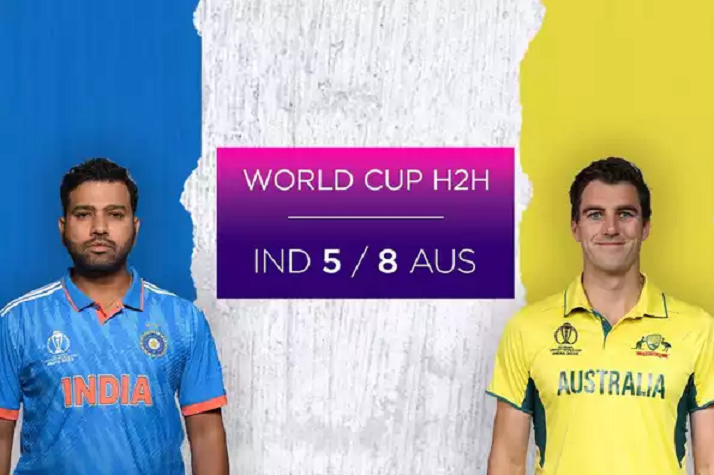
13th June 1983: Trevor Chapell masterclass helps Australia overwhelm India
The first-ever match-up between the two teams came up only in the third edition of the tournament. It was a strange co-incidence that both teams came into the match with underdog status. India’s record in the previous two tournaments was abysmal while Australia themselves were trying to recover during the ‘post-Packer’ phase which had robbed them of several star players. In the era of 60-over games, this match didn’t quite leave up to its billing.
Batting first, Australia rode on the brilliance of Trevor Chappell, who made a fine 110. He was well supported by captain Kim Hughes (52) and Graeme Yallop (66) as they finished with an imposing total of 320 for 9, this despite Kapil Dev coming up with career-best figures of 5 for 43. India were never in the chase and only a swashbuckling 27-ball 40 from Dev saved them from falling to a two-digit score. They were bundled out for 158, losing the contest by a whopping 162-run margin. The highs of beating West Indies and Zimbabwe in the first two matches had come crashing down.
20th June 1983: Binny stars as India gain semis berth
Having been mauled when the two teams met a week back in Nottingham, India extracted sweet revenge with an equally convincing 118-run win at Chelmsford, which also helped them qualify for the semi-finals of the mega tournament. Opting to bat first, India rode on the combined contributions of the entire batting order – with nine batsmen reaching double figures as they posted a respectable 247 on the board, despite being bowled out with 26 balls to spare.
Five batsmen crossed 20, but none could top Yashpal Sharma’s 40. For the bowling side, Rodney Hogg and Jeff Thomson took three wickets each. Chasing 248, Australia collapsed from 46 for 1 to 78 for 7 and with that their hopes of qualifying to the semis were in tatters. Roger Binny was the star performer, finishing with four wickets and so did Madan Lal. India had not only emphatically beaten Australia, but they were through to their maiden World Cup semi-final.
9th October 1987: The Chenauk classic:
One year before the 1987 classic World Cup game between India and Australia, Chepauk had hosted the now famous tied Test. As the defending champions and playing at home for the first time in a World Cup match, India were the obvious favourites, but up against them were the steely Australians. Asked to bat first, the visitors rode on the back of a fine opening partnership worth 110 from David Boon and Geoff Marsh, with the latter going on and scoring a hundred. Dean Jones chipped in with a quick 39 and the eventual total got a two-run boost at the break after India captain, Kapil Dev, acceded to Australian claims that a shot from Jones, which was actually a six was erroneously declared as a four.
India were in no mood to give up though and at one stage were bossing the game, having reached 202 for 2 after 35 overs. The match though turned on its head as Craig McDermott came back to strike four times, his victims being NS Sidhu, Dilip Vengsarkar, Mohammed Azharuddin and Ravi Shastri. The ice cool Steve Waugh then held his nerve to dismiss Maninder Singh in the final over, with India ironically 2 runs short of the target.
22nd October 1987: All-round Azharuddin steers India home
India exacted sweet revenge for their opening Chennai debacle with a comprehensive 56-run win in New Delhi. Asked to bat first by Australia, India found several contributors with Sunil Gavaskar, NS Sidhu and Dilip Vengsarkar, all going past the half-century mark. Mohammed Azharuddin then provided the icing on the cake, making a 45-ball unbeaten 54 as India finished at an imposing 289 for 6. Australia started well in the chase with the iconic opening pair of David Boon and Geoff Marsh adding 88 for the first wicket. But the dismissal of Boon, for 62, derailed the chase and Allan Border’s men never really recovered, despite Steve Waugh’s battling 42. He was one of Azharuddin’s three victims as Australia eventually folded for 233.
1st March 1992: India lose a thriller at the Gabba
The rain rule, under which the 1992 World Cup was played, has had many nodding in disapproval and India became one of its earliest victims, having lost three overs in the chase for just two runs. Rain stopped play with India at 45 for 1 in the 17th over and when play resumed – the original target of 238 from 50 overs was reduced to 236 off 47 overs. Mohammed Azharuddin led a spirited chase, making a fine 93 and Sanjay Manjrekar made a rapid 42-ball 47.
However, both were dismissed run-out and it was left to Kiran More to score the 13 needed off the last over. He cheekily lapped the first two balls from Tom Moody to the long leg fence, but fell while trying to repeat it for a third time. Manoj Prabhakar ran himself out while trying a single off the penultimate ball and it left Javagal Srinath with the task of scoring four runs from the last ball.
The ace Indian pacer hoisted Moody wide of long-on but didn’t have the power to clear the long straight boundaries of Gabba. Steve Waugh, normally the coolest Aussie under pressure, fumbled with the catch, but recovered quickly to throw it back to the keeper – Boon whipped the bails off and found Venkatapathi Raju well short, as he was going back for the match-tying third run. India had lost the match by one run. Earlier, Dean Jones’ sparkling 90 had helped the hosts pile up 237 on the board, despite contrasting figures of 3 for 41 by both Kapil Dev and Manoj Prabhakar.
27th February 1996: Another cliffhanger, another win for Australia
The Wankhede turned up in full force to see an epic clash, to watch legends in action and finally to see Sachin Tendulkar ride India to victory. They got to see a bit of everything, but even a masterclass from Sachin Tendulkar wasn’t enough to give India a win. Batting first, Australia rode on a sensational 126 from Mark Waugh as they posted 258 on the board. When he was the fourth wicket to fall with the score on 232, his team looked poised for a big score, only for India to stage a fine comeback, taking the last six wickets for 26 runs.
The reply started shakily and India were two down in no time. It was then followed by a thrilling counter-attack, as Tendulkar dominated half-century partnerships with both Azharuddin and Manjrekar. It needed a cheeky wide from Mark Waugh to end Tendulkar’s dominance on 90 and that ended India’s fight, despite Manjrekar’s gutsy knock of 62. Eventually, India were bowled out for 242, 16 runs short of the target with Damien Fleming taking 5 for 36.
June 4th 1999: McGarth leaves India done and dusted
India’s chase of a stiff 283 target was all but over in 44 balls. The cream of their batting – which included Sachin Tendulkar, Saurav Ganguly, Rahul Dravid and Mohammed Azharuddin – were back in the hut with only 17 on the board. Ajay Jadeja made a century and Robin Singh chipped in with 75, but the damage had already been done and India fell short by a huge 77-run margin at the Kennington Oval. Asked to bat first under dark skies, Australians were welcomed to the crease by the sun which came out and Mark Waugh ensured that he cashed in on the gift. The elegant right-hander top-scored with 83 and found plenty of support down the order as Australia racked up a massive score on the board.
February 15th 2003: Australia pulverize abject India
An Australia v India World Cup has never been as one-sided as this one. Sample this, India were blown away for just 125, despite Sachin Tendulkar’s 36 and it was chased down with nine wickets and 166 balls to spare. India called correctly and that’s the only thing that went their way in Centurion. Brett Lee and Jason Gillespie took three wickets apiece to cripple India’s middle-order and only Harbhajan Singh’s feisty 28 let India get to the three-figure mark. Adam Gilchrist and Matthew Hayden then added 100 runs for the opening wicket to ensure that the victory was a mere formality.
March 23rd 2003: Ruthless Ponting decimates India
India won the crucial toss in the final of the 2003 World Cup and inexplicably asked Australia to bat first on a placid looking track. Perhaps, the wounds of Centurion hadn’t healed and Ricky Ponting and his team didn’t need a second invitation to make merry. Adam Gilchrist started the run-fest, making a 48-ball 57 and then Ricky Ponting took over. The Australian captain blasted a 121-ball 140*, one of the highlight innings of the tournament and together with Damien Martyn (84-ball 88*) added 234 runs for the third wicket as Australia finished with 359 for two.
The seeds of India’s nervousness were sowed in the first over with Zaheer Khan spraying wides and no-balls in a 15-run over and it ended with boundaries being splattered all over the Bull-ring. India’s chase depended largely on Sachin Tendulkar, but the master’s duel with Glenn McGrath was short-lived, the Aussie speedster sending the maestro back in the first over. Virender Sehwag’s 82 and some rain gave India hope, but they were snuffed up rather quickly as Australia marched to a comprehensive 125-run win at Johannesburg and back-to-back World titles.
24th March 2011: India stop Australia’s title winning run
There was plenty on offer ahead of India’s quarter-final clash against Australia at Ahmedabad. As co-hosts and with a team that never had been that strong, India were one of the perennial favourites and they were up against a team that was gunning for an unprecedented fourth straight world title. Australia were a team that was on the wane, but with the experience of winning three titles on the trot, it was a team that couldn’t be underestimated.
As such a quarter-final clash between two heavyweights was a tad too early in the tournament. Batting first, Ricky Ponting brought back memories of Johannesburg with a well-crafted hundred. Giving him good support was Brad Haddin (53), while David Hussey added the finishing touches with a 26-ball 38.
The target of 261 wasn’t daunting but in a winners-take-all game, it was challenging. Sachin Tendulkar and Gautam Gambhir led the chase with aplomb, but when MS Dhoni was dismissed in the 38th over with the score reading 190, it was left to Yuvraj Singh to guide the team from choppy waters. He found an excellent hand in Suresh Raina and the pair added an unbeaten 72-run stand for the sixth wicket to take India home. The loss ended Australia’s World Cup hegemony and further strengthened India’s position as the leading contender.
26th March 2015: Smith pilots Australia to another World Cup final
Steven Smith took over the controls from Ricky Ponting and India were on a hiding for nothing as they surrendered their defence of the World Cup crown with a massive 95-run loss at the Sydney Cricket Ground. Nothing much went right for the men in blue once they lost the toss. Smith (105) and Aaron Finch (81) added 182 runs for the second wicket and the rest of the order chipped in nicely with useful twenties as the hosts finished at 328 for 7 – a match-winning total in most 50-over contests.
India did stay in the hunt as their openers, Shikhar Dhawan and Rohit Sharma, added 76 runs from 77 balls, but it all went downhill once the pair was broken. MS Dhoni fought a lonely battle with 65, but it was clear that even the normally composed Indian skipper had given up the chase. Eventually, India were bundled out for 233 to bow out of the tournament.
9th June 2019: India produce a statement win
Opting to bat, it was an emphatic batting performance from India at the Kennington Oval. They scored just 41 runs off the first ten overs but ensured that they didn’t lose a single wicket in that phase. That laid the platform for the two-time champions to post a massive total on the board. Shikhar Dhawan top-scored with a terrific ton, Rohit Sharma and Virat Kohli notched up their respective fifties and that was followed by cameos from Haridk Pandya, MS Dhoni and KL Rahul. India finished on 352 for five – the highest-ever World Cup total against Australia.
In reply, the defending champions got off to a cautious start. A mix-up between Aaron Finch and David Warner resulted in the former’s dismissal. Warner and Steve Smith recorded their fifties but they never really threatened to take the game away from their opponents. The arrival of Glenn Maxwell increased Australia’s run-rate as he hit a flurry of boundaries but Bhuvneshwar Kumar pegged them back by dismissing Smith and Marcus Stoinis in the same over. Maxwell perished to Yuzvendra Chahal in the very next over. Alex Carey struck a 25-ball fifty but the Aussies kept losing wickets and ended up falling short of the target by 36 runs with Jasprit Bumrah and Bhuvneshwar picking three wickets apiece.
8th October 2023: Ruthless India start on a winning note
India started their 2023 World Cup hunt at home on the right note with a 6-wicket win over five-time champions Australia at the MA Chidambaram Stadium in Chennai. Pat Cummins won the toss and had no hesitation to bat first. On a slow and dry pitch, India played three spinners and reaped the benefits as they bowled out the Australians for 199. There were a few starts with Steven Smith and David Warner making 40s, but none of the starts were converted into a big score.
Everyone who bowled on that day took wickets for India, with Jasprit Bumrah and Kuldeep Yadav taking 2 each. A 200-run chase should have been straightforward, but India lost Rohit Sharma, Ishan Kishan and Shreyas Iyer, all for ducks as they slipped to 2 for 3. Australia smelt blood and could’ve taken further control had Mitchell Marsh not grassed a simple chance off Virat Kohli, when India’s score read 20. It proved to be a costly miss as Kohli teamed up with KL Rahul to add 164 for the 4th wicket. Rahul’s takedown of Adam Zampa was the talking point going further in the tournament. Kohli fell for 85, but KL Rahul took India past the line, fittingly hitting the winning six to remain unbeaten on 97.








Latest News
Heavy showers above 100 mm are likely at some places in the Western, Sabaragamuwa, Southern, Central, and North-western provinces and in Anuradhapura district.

WEATHER FORECAST FOR 14 OCTOBER 2026
Issued at 05.30 a.m. on 14 October 2026 by the Department of Meteorology
Due to a low-level atmospheric disturbance persisting in the Bay of Bengal near Sri Lanka, cloudy skies and increased rainfall are expected to continue over the island.
Misty conditions can be expected at some places in the Sabaragamuwa, Central and Uva provinces during the early hours of the morning.
Showers or thundershowers will occur at times in the Northern, Eastern, Southern and Western provinces. Showers or thundershowers will occur in other parts of the island after 1.00 p.m.
Heavy showers above 100 mm are likely at some places in the Western, Sabaragamuwa, Southern, Central, and North-western provinces and in Anuradhapura district while fairly heavy showers above 75 mm are likely at some places in other areas of the island.
The general public is kindly requested to take adequate precautions to minimize damage caused by temporary localized strong winds and lightning during thundershowers.

Missiles and drones have been intercepted over Riyadh after the Saudi-led coalition fighting in Yemen struck a fuel depot near the Houthi-controlled capital, Sanaa, its spokesperson says.
Maj Gen Turki al-Maliki said several projectiles targeting the Saudi capital and other cities were intercepted after the coalition carried out a strike on the Yemen Petroleum Company’s al-Sabaha facility on Tuesday night.
The Houthis warned they would target the airport and Aramco refinery in Saudi Arabia’s capital, Riyadh, and Aramco’s headquarters in the eastern city of Dammam.
Al-Maliki later said missiles targeting cities including Dammam had been intercepted, while shrapnel had fallen in a residential area in Dhahran.
It came as the Saudi cabinet, chaired by Crown Prince Mohammed bin Salman, said the Iran-backed group would “bear the consequences” of its recent deadly attacks on the kingdom.
Thirteen people were killed when a missile hit King Khalid International Airport in Riyadh on Saturday, while another person was killed in a similar attack there the following day.
On Tuesday, the coalition said its forces had destroyed three drones north of Riyadh.
The Houthis have said they are targeting airports, oil and gas facilities, and military bases in Saudi Arabia with missiles and drones in response to deadly Saudi strikes on territory that they control in western Yemen, including Sanaa.
The Saudi-led coalition has been providing air support for Yemeni pro-government forces mounting an offensive on Yemen’s Red Sea coast and several other front lines.

A correspondent for AFP news agency reported that queues formed at petrol stations in Sanaa on Tuesday afternoon following the coalition’s warning of an impending operation against the al-Sabaha oil facility, with many residents worried about shortages.
The Yemen Petroleum Company, which is run by the Houthis, issued a statement that sought to reassure them, saying the facility “does not contain any stock of petroleum products”.
The company also said it had “taken all necessary precautionary measures to address any emergency, ensuring the stability of the supply situation and the continued meeting of citizens’ needs in a normal manner”.
After al-Maliki confirmed the strike, first reported by Houthi media, explosions were heard over Riyadh and other Saudi cities, with al-Maliki reporting four missiles and two drones had been intercepted near the capital.
Yemen has been devastated by a civil war that began in 2014, when the Houthis ousted the internationally-recognised government from Sanaa. The conflict escalated in 2015, after the Saudi-led coalition of Arab states intervened in an attempt to restore the government’s rule.
A four-year-old informal ceasefire began to unravel in July, when the Houthis announced a “maritime embargo” against Saudi Arabia and began missile and drone attacks on Saudi airports, oil facilities and tankers in the Red Sea.
The Houthis said they were retaliating for what they call a Saudi blockade of their territory, as well as an air strike on Sanaa airport that they blamed on the kingdom.
The conflict escalated in September after the Houthis seized part of Yemen’s south-western Red Sea coast near the Bab al-Mandab Strait, a chokepoint for global shipping. Their advance contributed to a rise in oil prices following six months of war between the US, Israel and Iran.
US President Donald Trump said on Truth Social on Tuesday the Houthis were “behaving very badly… and purposefully trying to drive up Oil Prices”.
Speaking to reporters, he did not answer a question on whether he’d made a decision to help the Saudis retaliate against them, but said he “might” ask Turkish President Tayyip Erdogan to intervene.
Last week, pro-government forces said they had regained control of territory overlooking Bab al-Mandab after launching a major counter-offensive with the support of Saudi air strikes.
Hundreds of people have reportedly been killed in Yemen since August. The UN’s human rights office says they include at least 54 civilians, half of them children.
More than 216,000 people have also been displaced across the country, and suspected cholera cases have tripled in three weeks, rising from 217 to 647, according to the UN.
[BBC]
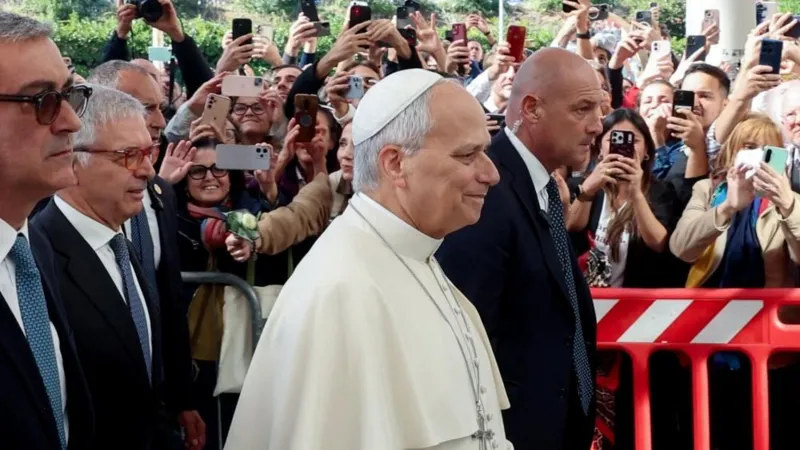
Pope Leo XIV has been diagnosed with lung cancer but had successful surgery to remove a lower lobe of his right lung, the Vatican has said in a medical bulletin.
The 71-year-old underwent a 90 minute surgery on Tuesday at Rome’s Gemelli Hospital and was subsequently diagnosed with lung adenocarcinoma.
“After the operation, the Pope awoke normally and returned after a brief period of observation to his room on the 10th floor,” the Vatican said in a statement.
The lump was first detected during what the Vatican has described as “routine checks”.
Earlier, large crowds gathered outside the hospital to greet the Pope, with some waiting for several hours.
They cheered greetings and well wishes as he passed, while he waved and smiled back through the lowered back window of his car.
He was then met by staff on the hospital steps. “I’m sorry,” one of them commiserated, to which the Pope gave a smile and a shrug. “We’re here for you,” he was assured.
In its statement, the Vatican said the whole lower lobe of the Pope’s right lung was removed “to ensure the procedure was radical”.
A Vatican source told Agence France-Presse news agency further tests were being carried out to see if there was any sign the cancer had spread.
It was Leo XIV himself who on Sunday announced news of his operation to the world, speaking from the balcony in St Peter’s Square after delivering the traditional Angelus blessing.
He said the nodule, or growth, on his lung was “contained” and had been found “at a very early stage”, but that doctors had advised him to have it removed.
Gemelli’s thoracic surgery team operated on the Pope, whose schedule has already been cleared until 20 October to give him time to recover.
Nodules are quite common and not necessarily cancerous, but after it was examined the medical team confirmed it was pulmonary adenocarcinoma, “as suspected by pre-operative tests”, the Vatican said.
The Vatican has stressed that the pontiff, who is generally thought to be fit, had no symptoms of infection or illness.

Cardinal Kikuchi Tarcisio Isao of Tokyo wrote on social media that he’d had an audience with Pope Leo on Monday, and said the pontiff felt “nothing wrong” physically.
He said the Pope had decided to check in for surgery as soon as possible because he was due to travel to Latin America in early November, and was keen to stick to that plan.
The trip is particularly significant because it includes a visit to Peru, where the pontiff was a missionary and then a Bishop for many years.
Despite all the reassurances, the news has shaken Catholics all over the world.
“Am I worried? Yes, because I certainly wasn’t expecting anything like this,” Vatican Secretary of State Cardinal Parolin told journalists on Tuesday.
He agreed that the news was like a “bolt from the blue”, but said the cardinals had been struck by the Pope’s “serenity” and were confident in his recovery.
Outside Gemelli Hospital, which has treated several popes and is home to a large statue of John Paul II, a few Catholics lingered after the pontiff was admitted.
Carla had come specially, wanting to be close.
“He seems calm, so we are calm too – even though illness is always unpleasant,” she told the BBC. “We will wait here and pray.”
[BBC]

Heavy showers above 100 mm are likely at some places in the Western, Sabaragamuwa, Southern, Central, and North-western provinces and in Anuradhapura district.

Sri Lanka, India caught in US-Iran ship crisis

Namal further remanded

IMF projects Lankan economic growth to moderate amidst mounting global uncertainties

Major Gen Pushpakumara assumes command of 56 Infantry Division

Dickwella axed, Bandara earns maiden Test call up

‘Dates have the highest sugar content to fight Coronavirus’

Sunday Island 27 December – Headlines

#SundayIsland 17th December – Headlines

Sunday Island – 28th March

Sunday Island Headlines – 21 March

Sunday Island – 21st February – Headlines
-

 Features6 days ago
The Sri Lankan who made Scottish history
-

 Sports6 days ago
Nissanka absence opens door for Sri Lanka’s young guns
-

 News5 days ago
NDB fraud Rs 60mn more than reported
-

 News5 days ago
Removing monk’s robes matter for Sangha to decide: Mahanayake Theras
-
 News6 days ago
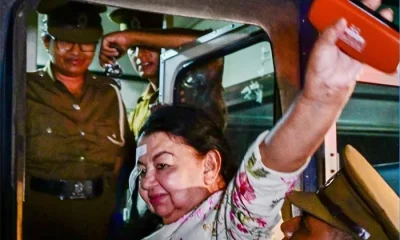
Shiranthi R remanded until 13 Oct.
-

 Features6 days ago
Future of Sri Lanka’s state university system: Should it be shut down and reopened?
-

 News3 days ago
Sri Lanka escalates anti-graft drive with Shiranthi’s jailing
-
 Latest News4 days ago
Farhan, Sadaqat help Pakistan ace 183 chase to go 1-0 up