
Business
Where were the women?

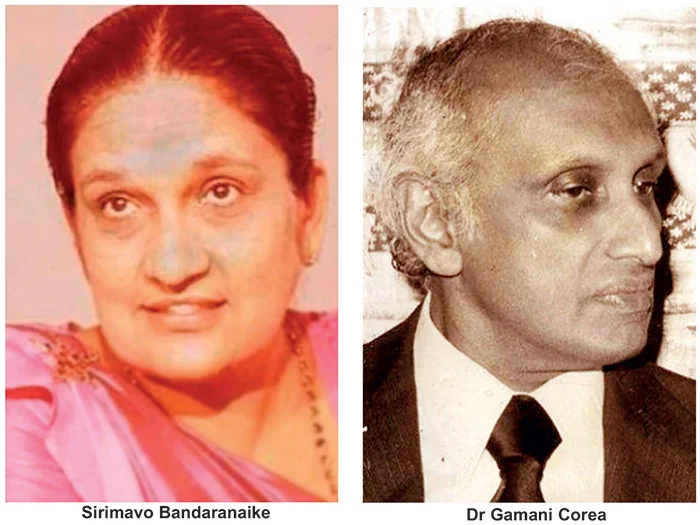
It’s been 70 years since the Bandung Conference brought leaders of Asian and African countries together in a collective effort to forefront anti-colonial and anti-imperial struggles. Twenty-nine Asian and African countries attended and the 1955 conference symbolised a ‘new spirit of solidarity of the Third World’ . The conference underscored two principles of Third World politics – decolonisation and development – and led to the establishment of the Non-Aligned Movement (NAM) and an alternative conversation on how the world should be ordered including a proposal for a New International Economic Order (NIEO).
It was a time when Sri Lanka punched significantly above her weight – Mrs Sirimavo Bandaranaike was an acknowledged leader of NAM, Dr Gamani Corea pushed for more favourable trade terms for the global south from his position as the Secretary of UNCTAD, and Ambassador Shirley Amerasinghe pushed against international competition to acquire the resources of the sea bed and was a key player in the International Law of the Sea conferences. It was a time when the themes of the Bandung conference, economic cooperation, respect for fundamental human rights and the principles of the UN Charter, promotion of world peace and recognition of the equality of all races and the equality of all nations large and small, framed the discussions between nations.
Today we live in a world that is experiencing economic, ecological and geo-political crises, and where the above themes of Bandung have been sidelined if not completely obliterated. Many global south countries are deeply entrenched in debt, world peace is wilfully ignored, and genocidal actions and structural violence proliferate from Burma to Palestine. It is also a world in which limiting global warming to 1.5° Celsius is no longer possible and the consequences of climate change presents an existential crisis. It is a time where the revival of the “Bandung spirit” should provide a resonance that can inspire and inform the foreign policies and international relations of small states like Sri Lanka.
A two-day conference in Colombo, organised by IDEAS in collaboration with the BCIS and Yukthi on the 2nd and 3rd of June 2025 at the BCIS in Colombo, will bring together thinkers from Latin America, Africa and Asia to share what the Bandung spirit can portend for the world going forward. BCIS and partners will also organise a series of events leading up to the conference, and following it, to keep the spirit of Bandung at the forefront of our thinking.
In this article I ask the question famously raised by Cynthia Enloe in her writings on international relations –where were the women? It seems like there were NO female delegates at the conference . And even though the 10 points of the Bandung Declaration reiterated the principles of the UN Charter and set a standard for international relations’ and that championed coexistence instead of co-destruction, it did not explicitly refer to women’s rights. Neither this lack of representation nor the omission of women’s rights from the agenda or outcome of the conference meant that women were missing from anti-colonial and anti-imperial struggles that underscored the Bandung spirit – far from it.
In the first half of the 20th century, starting before Bandung, different constellations of national and international women’s organisations planned and implemented three conferences that foreshadowed the rise of women’s international solidarity in Asia and Africa and could have, as some commentators have argued, informed the emerging pan-Asian and Afro-Asian movement for anti-imperialist regional cooperation symbolized by Bandung.
In 1949 the Conference of the Women of Asia was held in Beijing, China, hosted by the Women’s International Democratic Federation (WIDF) together with the All-China Women’s Democratic Federation and Mahila Atma Rakshi Samiti (MARS) or Women’s Self-Defense Committee from West Bengal, India; in 1958 the Asian-African Conference of Women was held in Colombo, Ceylon (Sri Lanka), under the aegis of five national women’s organizations from Indonesia, India, Pakistan, Burma, and Sri Lanka; and in 1961 Afro-Asian Women’s Conference was held in Cairo, Egypt, organized by the Afro-Asian Peoples’ Solidarity Organization (AAPSO) with strong support from the Non-Aligned Movement, including Gamel Abdel Nasser’s government in Egypt.
Not only did the 1949 conference precede Bandung but it took place well before the now familiar United Nations World Conferences on Women, the first of which was held in Mexico City in 1975 ushering in the UN Decade for Women. The early 20th century gatherings of women from Africa and Asia were the outcome of what was a long-standing critique by women from the colonised countries of Western feminism and the development of solidarity along common issues faced by women in the global south
There were several strands to the agenda and demands of global south women at this point in history. A social reform agenda demanded better access for women to education, health care, and social welfare and sought to “modernise” cultural and religious practices. In some ways this agenda mirrored the agitation by nationalist reformers in societies that were demanding decolonisation who saw education and freedom for women, and monogamy, as markers of modernity and development, They strived to create the “enlightened” woman, a partner for the “bourgeois man”, who negated everything that was considered ‘backward’ in the traditions of the colonised societies. The concept of the “new woman” became eagerly adopted, albeit with regional variations, from Egypt to Japan, China to Korea While the ‘new woman’ image at one level reflected characteristics of the emancipated women of Europe and the USA, and the demand for education allowed women from the bourgeois classes to come out of their homes and into various professions and social work, there was also an underlying conservative emphasis on traditional ideals of the woman as wife and mother, reinforcing women’s role as care givers despite the quest for legal equality.
A second strand of feminist agitation In the early 20th century comprised a nationalist and state agenda that sought equal rights for women in independent nations and women’s full participation in public life. As women became more educated their demands also stretched to obtaining voting rights. This agitation was fuelled as the growing feminist literature of the women’s movement (books, journals and magazines) began catering to the educated and literate ‘new’ woman and reported the efforts for women’s emancipation in different parts of the world. So women in Asia and Africa were able to access information about suffragist and feminist struggles in Europe and by the early decades of the 20th century women in China, India, Japan and Sri Lanka were agitating for women’s suffrage in their countries, organising demonstrations and storming the legislature when voting rights were not granted.
What has received the least attention however in the historic accounts has been that strand of feminist organising that sought to restructure the economy as well as social relations and cultural and political practices to enfranchise all women. These feminist movements tended to push their change agenda beyond the nationalist struggles even after formal independence was granted. They recognised that economic pressures from imperial powers and the national propertied classes and business lobbies weakened the political will of governments to institute reforms. Colonial forms of ownership of the means of production continued under the new decolonised systems. They mobilised peasant women and landless migrants in urban areas with the aim of building a movement led by rural, peasant, working class and middle class women. Their activism was based on anti-imperialism, mass-based organising, a membership dominated by rural women and anti-capitalism. It was this strand of feminist analysis and thinking that dominated the first of the international conferences that was held in Beijing in 1949. Some commentators have argued that this ideological stance of the first pan-Asian women’s conference informed the emerging pan-Asian and Afro-Asian movement for anti-imperialist regional cooperation symbolized by Bandung.
(Ms Priyanthi Fernando is the Executive Director of the Bandaranaike Centre for International Studies. The views expressed in this article are her own.)
(To be continued)
by Priyanthi Fernando

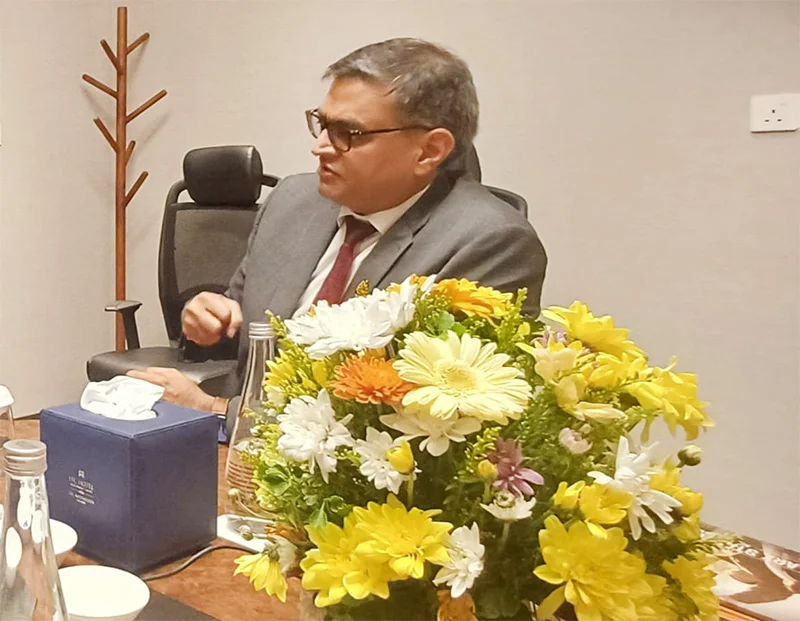
Sri Lanka’s renewable energy sector is poised for a significant investment surge as the International Solar Alliance (ISA) moves to operationalise a comprehensive Country Partnership Strategy (CPS), positioning the island as a key emerging hub for solar deployment and green financing in South Asia.
A high-level ISA delegation led by Director General Ashish Khanna is currently in Colombo (April 6–9), engaging with policymakers, multilateral lenders, and private sector stakeholders to fast-track a pipeline of solar projects exceeding 4 gigawatts (GW) under the Renewable Energy Project Development Plan (2025–2030).
From Policy to Projects: Unlocking Capital Flows
At the heart of the mission is a decisive shift from policy frameworks to bankable project execution. The CPS outlines a multi-year roadmap aimed at mobilising private capital, strengthening regulatory systems, and accelerating project approvals—long seen as a bottleneck in Sri Lanka’s energy sector.
Energy Minister Eng. Kumara Jayakody emphasised that the strategy provides “clarity across the solar value chain,” particularly in investment mobilisation and regulatory alignment. For investors, this signals reduced risk and improved predictability—two critical factors for scaling infrastructure financing.
Industry analysts note that Sri Lanka’s solar ambitions could unlock billions of dollars in investments over the next decade, especially as global funds pivot toward climate-aligned assets in emerging markets.
A key commercial opportunity emerging from the ISA mission is the focus on floating solar projects and battery energy storage systems (BESS). These segments are expected to attract both foreign direct investment (FDI) and technology partnerships.
Floating solar, in particular, offers Sri Lanka a competitive advantage due to its extensive reservoir network. Coupled with battery storage integration, it enhances grid stability—an essential requirement as renewable penetration increases.
The mission includes a dedicated Floating Solar Workshop aimed at accelerating project readiness, indicating near-term opportunities for engineering firms, developers, and financiers.
University-Industry Linkages to Drive Green Jobs
A landmark Memorandum of Understanding (MoU) to establish a Solar Technology Application Resource Centre (STAR-C) at the University of Moratuwa is expected to strengthen local technical capacity and innovation.
Beyond academia, the initiative is designed to support testing, certification, and workforce development—critical for creating a domestic solar ecosystem. This move aligns with broader efforts to localise value chains and reduce dependence on imported expertise.
Khanna highlighted that the STAR-C would play a pivotal role in job creation and skills development, reinforcing the economic multiplier effect of renewable energy investments.
Sri Lanka’s push toward solar is also driven by macroeconomic imperatives. With global fossil fuel prices remaining volatile, the country’s heavy reliance on imports has strained public finances.
Solar energy, which has already surpassed 1 GW in installed capacity, is expected to contribute nearly 75% of emissions reductions under Sri Lanka’s Nationally Determined Contributions (NDC 3.0) for 2026–2035.
More importantly, it offers a pathway to reduce foreign exchange outflows and enhance energy security—key priorities as the country navigates post-crisis economic recovery.

DevPro Guarantee Limited (DevPro) and Affno Virtual Market (Pvt) Limited (AVM) recently entered into a partnership to launch a cloud-based Software-as-a-Service (SaaS) digital marketplace platform “Green Tape Agri Exchange’ to uplift smallholder farmers/ producers in the spice value chain by connecting them with end buyers.
Smallholder farmers are the backbone of Sri Lanka’s agriculture sector, managing nearly 80% of the nation’s farmland and producing about 80% of nation’s food production. They are essential to food security, rural employment, and economic stability. However, poverty among smallholder farmers is a persistent rural crisis. Recent studies have highlighted the depth of this issue with approximately 82% of the country’s poor being concentrated in rural areas where agriculture remains the primary livelihood.
Due to inefficient marketing systems – poor market access, inadequate storage facilities and a lack of information on market prices – smallholder farmers often receive less than the optimal market prices which considerably limit their ability to expand operations, improve productivity and achieve scale.
Speaking on the partnership, DevPro’s Executive Director Chamindry Saparamadu said ‘as an organization committed to building a sustainable agriculture sector, we are pleased to collaborate with AVM to explore means to address market barriers through digital innovation. Our ultimate objective is to empower smallholder farmers and strengthen the local economy by creating a transparent and sustainable supply chain’. The CEO/ Managing Director of AVM Suren Kannangara said ‘we are excited to partner with DevPro to digitally transform the agricultural value chain. Green Tape Agri Exchange represents a scalable, data-driven model to digitize fragmented markets, improving price discovery, reducing intermediaries, and creating predictable, quality-driven market access for both farmers and buyers.
Business
Nestlé brands NESCAFÉ and MAGGI triumph at SLIM-KANTAR People’s Awards 2026 for fifth consecutive year
Nestlé’s household favourites continued their winning streak at the SLIMKANTAR People’s Awards 2026, taking home two awards this year. NESCAFÉ was voted People’s Hot Beverage Brand of the Year while MAGGI emerged as the joint-winner for People’s Snack Brand of the Year respectively for the fifth consecutive year. Organized by the Sri Lanka Institute of Marketing (SLIM), the SLIM-KANTAR People’s Awards is widely considered as one of the most prestigious awards ceremonies in the country, rewarding brands and personalities that are closest to the hearts of Sri Lankans.
Loved by Sri Lankans for its distinct aroma and rich taste, NESCAFÉ is made with the goodness of 100% pure coffee beans to create great coffee experiences that make life better. Made using Sri Lankan spices and the finest ingredients, the tasty goodness of MAGGI noodles has been a household favourite by Sri Lankans for over 40 years.
Sharing his thoughts, Bernie Stefan, Chairman and Managing Director of Nestlé Lanka said “The People’s Awards hold special meaning for us as they are shaped entirely by consumer choice. Being recognised for the fifth consecutive year for NESCAFÉ as Hot Beverage Brand of the Year and MAGGI as Snack Brand of the Year reflects the enduring trust Sri Lankan consumers place in our brands – trust that has been built over generations during our 120‑year journey in Sri Lanka. This recognition belongs to our teams, whose commitment to quality and understanding local tastes continues to earn the confidence of consumers. We are grateful for this continued support and remain focused on serving Sri Lankan households with tasty and nutritious products”.
Guided by its purpose of ‘unlocking the power of food to enhance quality of life for everyone, today and for generations to come’, Nestlé Lanka has been enriching Sri Lankan lives for 120 years, nourishing generations with tasty, and nutritious products across the country. The company remains committed to supporting healthier families, empowered communities, and a greener planet. Nestlé Lanka manufactures over 90% of its products locally at its state‑of‑the‑art factory in Kurunegala, upholding the highest standards of safety and quality.

Trump announces two-week ceasefire as Iran agrees to reopen Hormuz Strait

Yashasvi Jaiswal powers Royals past Mumbai Indians in 11-over thrash

Showers will occur at several places in the Western, Sabaragamuwa, Southern and North-western provinces and in Kandy, Nuwara-Eliya and Monaragala districts after 1.00 p.m.

The Sun is directly overhead Warakapola, Aranayaka, Gampola, Bibile, Inginiyagala, and Akkaraipattu at about 12:12 noon today (08)

AKD admits import of substandard coal, blames technicalities and supplier

‘Sri Lanka – China relations: Community with a Shared Future’ launched

‘Dates have the highest sugar content to fight Coronavirus’

Sunday Island 27 December – Headlines

#SundayIsland 17th December – Headlines

Sunday Island – 28th March

Sunday Island Headlines – 21 March

Sunday Island – 21st February – Headlines
-

 Features3 days ago
Ranjith Siyambalapitiya turns custodian of a rare living collection
-
 News6 days ago
2025 GCE AL: 62% qualify for Uni entrance; results of 111 suspended
-

 News3 days ago
Global ‘Walk for Peace’ to be held in Lanka
-

 Editorial6 days ago
Search for Easter Sunday terror mastermind
-
 Opinion5 days ago
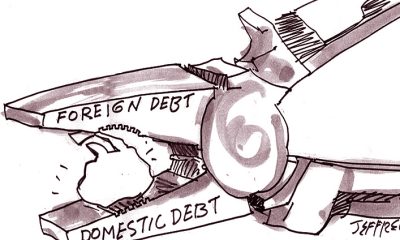
Hidden truth of Sri Lanka’s debt story: The untold narrative behind the report
-

 News1 day ago
Lankan-origin actress Subashini found dead in India
-

 Opinion6 days ago
Is there hope for Palestine?
-

 Features5 days ago
The Ramadan War