
Editorial
When incompetence fuels crisis


Wednesday 29th June, 2022
What was feared has come to pass; the country has run out of oil to all intents and purposes. But the government’s lame excuses are not in short supply. It says it will restore the oil supply on 10 July, and until such time fuel will be issued only for essential services. What guarantee is there that enough dollars will be raised within the next two weeks for fuel imports? Are we being made to wait for Godot? It is very likely that on 09 July the government will ask for two more weeks to make fuel available.
Now that the government has closed the country owing to its inability to make fuel available, the question is whether it has any moral right to stay in power. Its leaders have only demonstrated their incompetence and shamelessness. If they continue to be in power, they will inflict far worse damage on the country. They are already conducting a fire sale of state assets, and all out to deprive the country of its energy sovereignty; they have invited multinational oil companies to commence operations here. Some of them will laugh all the way to foreign banks.
President Gotabaya Rajapaksa is reported to have ordered that dollars be released for fuel imports urgently. Whom is he trying to fool? He cannot be unaware that there aren’t enough dollars for fuel purchases. Is he trying to deflect criticism by issuing such directives? The SLPP government bankrupted the country by stealing public funds, slashing taxes, granting massive pay hikes to some categories of public sector workers, throwing money around in the name of pandemic relief, and using forex reserves to defend the rupee in vain, despite repeated warnings from the Central Bank and the Finance Ministry officials. Various rackets such as the sugar tax scam have also taken their toll on the economy. The country is therefore without enough dollars to pay for essential imports including fuel, and there is no way either the Central Bank or the Finance Ministry could find foreign currency for fuel imports in a hurry simply because the President asks them to do so. Perhaps, the only way to pay for fuel imports immediately is to make the corrupt government politicians who have helped themselves to public funds, all these years, return part of their ill-gotten wealth hidden overseas.
SJB MP Champika Ranawaka has flayed the government for the fuel crisis. He has said the country’s image will have to be repaired before foreign assistance is sought. It will not be possible to overcome the present crisis so long as failed politicians continue to be in top posts, he has said. One cannot but agree with him. He is one of the few Opposition members capable of strategic thinking although he was a member of the failed yahapalana government. He has said he is willing to be actively involved in crisis management if a truly multi-party, interim government is formed with a timeframe set for a general election. He would have been able to take over the Power and Energy Ministry if the SJB had accepted the President’s offer to form a government, last month. He and other SJB MPs should have brought pressure to bear on their leader Sajith Premadasa to form a caretaker government together with other parties. They should do so, at least now. A new interim government may not be able to contain the crisis overnight, but it will help prevent the likes of Basil Rajapaksa from manipulating ministers to compass his ends. Prime Minister Ranil Wickremesinghe is at the mercy of the Rajapaksa family, which controls the SLPP. The incumbent administration is a collective of self-seeking strange bedfellows who are willing to further the interests of the Rajapaksa family; the sooner it is got rid of, the better. That will be half the battle in managing the crisis.
Meanwhile, the government ought to find ways and means of holding racketeers at bay to ensure that fuel to be imported will be dispensed in an equitable manner. It has to devise a rationing system to prevent hoarding. Otherwise, a part of the next fuel shipment will also end up on the black market via hoarders’ dens, and the ordinary people will be left without petrol, diesel or kerosene.



Thursday 1st Junuary, 2026
The CID arrested EPDP leader and former minister Douglas Devananda last Thursday in connection with an ongoing investigation into a pistol issued to him by the Army way back in 2001 allegedly ending up in the underworld. It has claimed that information elicited from Makandure Madush, a notorious criminal, led the police to the weapon hidden in a shrub in Weliweriya.
Devananda is one of the battle-scarred ex-Tiger combatants who courageously stood up to the LTTE and helped defeat it. He survived several assassination attempts, including one inside the Kalutara Prison. Devananda’s predicament has gladdened the hearts of pro-LTTE groups beyond measure, as evident from their social media posts.
The pistol in question was reportedly issued to Devananda at the height of LTTE terror; Madush was arrested in 2019 and killed in October 2020, while in police custody. Curiously, the serial number of the weapon remained intact while it was in the underworld.
Madush is long dead, and there is no way the CID’s claims about the firearm at issue can be checked. The CID, which is under two members of the Retired Police Collective of the JVP/NPP, has become the JVP’s rottweiler. The police are all out to protect the interests of the JVP/NPP government; they suddenly ran out of breathalysers when a government MP caused a road accident the other day. A policeman, assaulted by a government MP and his backers recently for conducting a raid on a cannabis plantation, was arrested and interdicted! The police have not arrested a deputy minister and an NPP mayor, charged with fraud.
Now that the CID is busy probing Devananda’s pistol, let it be urged to launch an investigation into thousands of weapons issued by the Defence Ministry to politicians in the second JPV uprising in the late 1980s, and the arms seized by the JVP during that period.
In January 2019, the then Defence Secretary Hemasiri Fernando disclosed that about 4,700 9mm pistols and revolvers had been licensed, but there was no information about those who had obtained them and, worse, some individuals possessed as many as 15 small firearms each! In 2023, the then State Minister of Defence Premitha Bandara Tennakoon revealed in Parliament that the defence authorities had issued about 700 firearms to 154 politicians in the late 1980s, when the JVP went on a killing spree, but none of them had been returned. This figure, we believe, is a gross underestimate.
The National Commission against the Proliferation of Illicit Small Arms, appointed by President Chandrika Bandaranaike Kumaratunga in 2004, dealt extensively with the issue of illegal weapons in circulation in Sri Lanka, as we pointed out in a previous editorial comment. Its survey report contains valuable information, which, however, needs to be updated. Defence authorities should study this document thoroughly and commission a fresh survey on illicit firearms.
The police must go all out to find the illegal firearms used by the JVP during its second uprising. Most of the JVP’s arms caches have not been traced. SJB MP Dayasiri Jayasekara told Parliament on 27 February 2025 that more than 2,000 firearms seized by the JVP between 1987 and 1989 had not been recovered. One may recall that the JVP attacked several police stations and military camps and grabbed many weapons. In April 1987, it seized the arsenal of the Pallekele army camp. Now that the JVP-led NPP has formed a government and launched a campaign to eliminate gun violence, the Defence Ministry and the CID may be able to ascertain information about the firearms used by the JVP in the late 1980s.
Hardly a day passes without incidents of gun violence. Two shooting incidents were reported from the Western Province yesterday. The proliferation of illicit firearms in Sri Lanka can be attributed to several key factors, according to researchers; they include gunrunning, illegal operations carried out by rogue elements in the police and the armed forces, local arms manufacturing, and criminals gaining access to arms caches of the LTTE and the weapons that went missing in the late 1980s.
The police produced 12 suspects before the Colombo Chief Magistrate on March 22, 2019, for having supplied weapons retrieved from some buried LTTE arms caches in Kilinochchi to criminal gangs elsewhere. The LTTE seized firearms from the police, the armed forces and the rival militant groups like the EPDP. It is incumbent upon the police to make a serious effort to trace all illegal firearms. Let that be their New Year resolution.

Wednesday 31st December, 2025
The health sector has long been free from the clutches of the likes of Keheliya Rambukwella and his bureaucratic lackeys, but it continues to be plagued by various rackets and frauds, as evident from the shocking Ondansetron scandal. The corrupt survive regime changes and continue their sordid operations, enabling politicians and officials to enrich themselves at the expense of patients.
The National Medicines Regulatory Authority (NMRA) has become a metaphor for serious lapses and malpractices. No wonder this country is a dumping ground for substandard and falsified medicines. The absence of proper drug testing facilities has benefited corrupt officials and their political masters alike. Hence successive governments have chosen to allow the status quo to remain while bellowing rhetoric and promising to safeguard patients’ rights and eliminate corruption.
The issue of poor-quality and unsafe drugs has become overpoliticised in this country. The Opposition uses it as a bludgeon to beat the government in power and gain some political mileage. During its Opposition days, the JVP/NPP would bash the then rulers for endangering the lives of patients by allowing substandard or fake drugs to be imported. Today, the boot is on the other foot; those who were accused of striking corrupt pharmaceutical deals are taking up the cudgels for the rights of the sick and inveighing against the JVP/NPP politicians and their loyalists. Partisan politics has thus eclipsed the real issues that need to be addressed to eliminate bribery and corruption in the health sector and ensure drug safety.
The need is not for rhetoric and moral grandstanding. A respected medical professional analyses the issue of poor-quality drugs in Sri Lanka, in an article published on the opposite page today. He has pointed out what needs to be done urgently to find a solution. Dr. B. J. C. Perera has stressed the need for a state-of-the-art laboratory to test medicines. He says drugs must be tested properly before they are released for use, besides being subjected to proper random post-marketing surveillance. At present, the health authorities have to go by manufacturers’ own certification in granting approval for imported pharmaceuticals. There are many other medical professionals, academics and other experts who have studied the issue at hand and provided valuable insights. One can only hope that the government will care to ascertain their views and take steps to ensure drug safety.
Meanwhile, another scandal in the health sector has come to light. Dr. Rukshan Bellana has claimed that he was removed as Deputy Director of the National Hospital of Sri Lanka (NHSL), Colombo, recently, because he sought to have a reagent racket probed by the Commission to Investigate Allegations of Bribery or Corruption and the CID. Stocks of substandard or contaminated reagents have been procured at the expense of the state coffers for the NHSL laboratory, Dr. Bellana has alleged. This serious allegation must be probed thoroughly.
There is more to the reagent issue than the fraudulent procurement practices. Calls for a pricing formula for reagents to prevent the suppliers from keeping the prices of those products unconscionably high have been ignored. It must be made mandatory for the import prices of all reagents to be revealed so that massive profit margins cannot be kept at the expense of the public. Successive governments have allowed importers to increase the prices of reagents according to their whims and fancies and drive the cost of testing up. Health sector trade unions have alleged that corrupt practices among politicians and officials who control the procurement process are also responsible for the extremely high prices of reagents.
The health sector is a swamp that must be drained as a national priority without further delay if the interests of patients are to be safeguarded. The JVP/NPP, came to power, claiming that the country had been under a 76-year curse and promising to break it. But going by the sheer number of corrupt deals reported from various public institutions, the politicisation of state institutions, especially the police, and the government’s despicable efforts to appoint one of its cronies as the Auditor General, one wonders whether the ‘curse’ has been extended by one year.
If the government is serious about eliminating corruption in state-run health institutions, first of all, it should develop a proper understanding of the multi-faceted nature of the issue. Only a special probe, presidential or parliamentary, will help grasp its enormity and determine how best to tackle it.
Tuesday 30th December, 2025
Sri Lanka Customs is on cloud nine, boasting that it has set a revenue record. It says it has raised more than Rs. 2,497 million, which is in excess of the targets set by the government for the current year. An increase in state revenue is certainly a very positive development, but how that goal has been achieved should be revealed to the public.
There have been exponential tax increases and they have enabled the government to boost its revenue significantly. The Customs Department has been able to meet its revenue targets thanks to the lifting of restrictions on vehicle imports after a lapse of several years and tax hikes. The Customs has admitted that taxes on imported vehicles have amounted to about Rs. 870 billion in 2025. Thus, one can argue that vehicle imports have created a revenue bubble, which may not last long. An increase in the Customs’ revenue has come at the expense of the rupee, which is depreciating. So, there is no cause for celebration, and the government has to tread cautiously.
Spokesman for the Customs Chandana Punchihewa, addressing the media yesterday, blamed cargo clearance delays on a container backlog created by Cyclone Ditwah. Extreme weather events no doubt cause delays in ports, but in this country port delays occur even during long spells of fine weather. Protracted delays in the Colombo Port, in January 2025, led to the release of 323 red-flagged containers without Customs inspection. What they carried is anybody’s guess.
Excuses are of no use where port delays are concerned. Delays ruin ports, for they drive away major shipping lines. It has been reported that several international shipping lines have opted to bypass the Colombo Port, which is facing escalating congestion due to various factors related mainly to capacity and efficiency—not adverse weather as such. The Customs cannot absolve itself of responsibility for this sorry state of affairs in the Colombo Port, which has also been facing strategic neglect.
As we argued in a previous comment on port congestion, the Ports Authority, the government and the Customs must formulate a strategy to eliminate delays. If the Customs cannot cope with the situation, the Coast Guard personnel can be called in to help clear cargo; they are qualified to handle such tasks. The government ought to take cognisance of formidable challenges Sri Lanka faces from the other ports in the region, especially India’s newly built Vizhinjam port, which is becoming a major attraction for international shippers who are averse to delays. In global logistics, shipping lines place very high value on on-time delivery, reliability and efficient operations.
The government must make a serious effort to enhance the efficiency and capacity of the Colombo Port to retain the transshipment traffic historically routed via Colombo. There is a strong possibility of shipping lines rerouting feeder services away from Colombo to Vizhinjam, adversely impacting Colombo’s network role, as we have said previously, quoting shipping experts.
Vizhinjam has several key advantages over Colombo. It advertises itself as a deep-water port with a 24 m natural draft, which enables it to accommodate ultra-large container vessels without dredging; its proximity to the main east–west shipping route helps vessels to call without significant deviation, reducing voyage time and costs. Automation, modern cranes, faster turnaround times, enhanced operational efficiency and attractiveness to shipping lines are other advantages India’s new port has over Colombo.
Sri Lanka Customs may brag about its ‘revenue record’, but it must not lose sight of the need to enhance its productivity in view of challenges from other ports in the region to Colombo. It should reveal how it is going to meet the revenue targets set by the government when vehicle imports decrease, causing the current revenue bubble to burst.

Zohran Mamdani sworn in as New York City mayor

In pictures: New Year welcomed around the world

Foreign warships commended for their assistance during weather disaster in Sri Lanka

Machu Picchu train crash leaves one dead and dozens injured

I invite you to step into 2026 with renewed energy, hope, and determination – PM

Fairly heavy showers about 75 mm are likely at some places in the Central and Uva provinces and in Batticaloa and Ampara districts

‘Dates have the highest sugar content to fight Coronavirus’

Sunday Island 27 December – Headlines

#SundayIsland 17th December – Headlines

Sunday Island – 28th March

Sunday Island Headlines – 21 March

Sunday Island – 21st February – Headlines
-
 News7 days ago
Street vendors banned from Kandy City
-

 Sports4 days ago
Gurusinha’s Boxing Day hundred celebrated in Melbourne
-
 News2 days ago
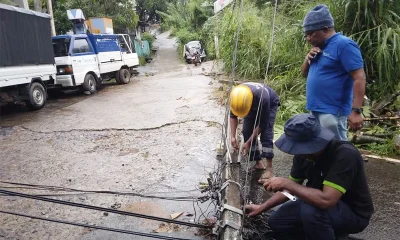
Leading the Nation’s Connectivity Recovery Amid Unprecedented Challenges
-

 News7 days ago
Lankan aircrew fly daring UN Medevac in hostile conditions in Africa
-

 Sports5 days ago
Time to close the Dickwella chapter
-

 Features3 days ago
It’s all over for Maxi Rozairo
-

 Features7 days ago
Rethinking post-disaster urban planning: Lessons from Peradeniya
-

 Opinion7 days ago
Are we reading the sky wrong?