
Editorial
What will the New Year bring?


This being the last issue for 2023, we take the opportunity of wishing all our readers a very Happy New Year. But not even the most optimistic among us would say that all Sri Lanka’s troubles have been packed up in the old kit-bag and there is reason to “smile, smile, smile” as the New Year beckons. The aragalaya-fuelled trauma of the previous year that loaded the worst ever travails in our contemporary history on the backs of the people had, no doubt, tailed off in the year now passing.
But the end of miles-long fuel queues, ever present search for cooking gas and a host of woes that made 2022, the last months of the Gotabaya Rajapaksa presidency, and one that saw the banishing of the Rajapaksas to a perceived political wilderness did not play out this year as may have been expected. Many termites are now crawling out of the woodwork, looking at the elections that must be held next year.
The people are very well aware that the respite they won in 2023 was largely due to the country not servicing its debt and falling back on repayment of its domestic and international obligations. Although our rulers trumpet that inflation is down to a single digit, any housewife stepping into a market knows all too well that the cost of living is unbearable.
True, upscale restaurants and the big hotels are crowded by the affluent not lacking in this so-called democratic socialist republic of ours. That has always been the case given the grave income disparities that have beset this island before and after Independence. Our notorious penchant for ‘clean suit, empty pocket’ lifestyle has been widely on display with the capital city of a country that not long ago declared itself bankrupt when Colombo was lavishly decorated with power guzzling illuminations. And this while tens of thousands of domestic electrical connections have been disconnected due to non-settlement of bills.
We step into the New Year with trepidation knowing that with the increased value added tax (VAT) hard-pressed domestic budgets are going to be further burdened. A small carrot has been dangled before the people saying that the unseasonal rainfall of an unusual magnitude, enabling the Ceylon Electricity Board to generate much of the country’s power requirements with hydro resources that have bult-up in the power generating reservoirs, may enable some respite to hard-pressed consumers.
But most would await the formal announcement or the receipt of the next bill before heaving a sigh of relief. We are now in an IMF program demanding the end of the country’s habitual financial profligacy and decades of deficit budgeting. A respected economist is on record describing the 2024 budget which passed through all its stages last November and December as a “fairy tale.” The rulers have provided good reason over the years for the country to accept this proposition.
President Ranil Wickremesinghe is on firm record that due elections will be held as constitutionally mandated next year. But he is playing his hand very close to his chest on which election will come first – presidential or parliamentary. As is well known, then Prime Minister Wickremesinghe was elected by Parliament, or rather its pohottuwa majority, to serve out Gotabaya Rajapaksas balance term.
This ends in November and a new president must be elected by then. For this to be possible, the election machinery must begin to move by September with an election declared, nominations called and received etc. But Wickremesinghe holds the power of dissolving the incumbent Parliament at any time he wishes although its term extends to August 2025.
Predictions on what he may or may not do abound. There are those who say that holding a parliamentary election while he is enthroned in the presidency will be a distinct advantage for the UNP which Wickremesinghe is committed to revive. This after he led it to zero elected seats, including his own, at the last election.
But there are many other considerations. Among them, will RW be a runner for an elected presidency? He has yet made no formal announcement but the wide perception countrywide is that he will seek an elected term. The Rajapaksa party which elected Wickremesinghe to office is not saying that Ranil is their candidate at the next presidential election.
Yet it insisted at their recent convention in Colombo that they will run a candidate stopping short of naming him or her. The pohottuwa says it is considering business tycoon Dhammika Perera, 59, it brought into on its national list to Parliament in 2022 succeeding Basil Rajapaksa. Perera, whose DP (Dhammika and Priscilla) Education is reaching out countrywide to a claimed over million young people given a free information technology (IT) education, has indicated interest and is projecting himself through newspaper advertising of his pet project.
He retains a very low profile in Parliament having hardly spoken there after entering the legislature. He served a brief two months as investment promotion minister since his 2022 entry to Parliament and has since been a barely visible backbencher.
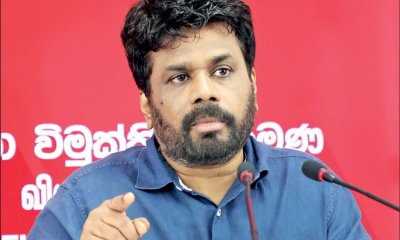
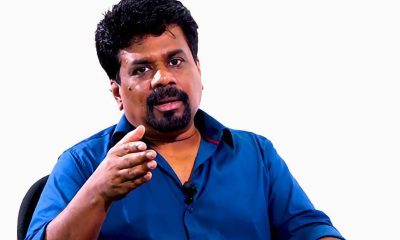
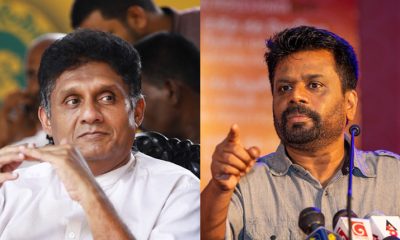
In terms of whatever opinion polls that exist, the JVP’s Anura Kumara Dissanayake, leading the National People’s Power (NPP) seems to be the leading contender with Sajith Premadasa trailing him. But as is well know, such polls are only as good as their sample cross section of the population and cannot be considered reliable indicators. Remember Mahinda Rajapaksa engineered a constitutional amendment in 2010 to enable a third term for himself and lost the 2015 presidential election to the common opposition candidate Maithripala Sirisena. It’s early days yet and much can happen.









Wednesday 8th April, 2026
It is ironic that the JVP-NPP government is now defending tainted ministers and downplaying corruption in the Parliament it came to power promising to clean up. A few weeks ago, it vehemently denied the allegation that more than a dozen coal shipments obtained from a new supplier for the Norochcholai power plant were substandard. Having realised the futility of defending the indefensible, it chose to eat its words. However, it kept on claiming that the low-quality coal had not affected power generation. Now, it has had to admit that the low-grade coal imports have led to a huge drop in electricity generation at the Norochcholai power plant. However, it claims that there have been no irregularities in the coal procurement process! It has thus craftily conceded some points to defend its main argument that the integrity of its members is above reproach.
President Anura Kumara Dissanayake yesterday admitted in Parliament that low-quality coal had adversely impacted electricity generation. Assuring that the additional costs would not be passed on to the public, he claimed that the price of the first shipment of coal had effectively dropped from USD 98 per tonne to around USD 68 per tonne after penalties were imposed on the supplier. This cannot be cited in extenuation of the offences of supplying and procuring low-quality coal. The quality of coal was so low that all coal stocks should have been rejected in keeping with the tender guidelines. Instead, the government allowed the errant supplier to dump dirty coal here after paying penalties! Even if the penalties have led to a coal price reduction, as the President has claimed, more than 1.2 million litres of diesel have to be burnt daily to meet the electricity generation shortfall caused by the use of low-quality coal at Norochcholai, according to Convener of the United Trade Union Force, Ananda Palitha, a former Ceylon Petroleum Corporation worker.
Although President Dissanayake has said the additional costs arising from low-quality coal will be recovered from the supplier and they would not be passed on to electricity consumers, electricity tariffs have already been increased, and it is feared that another power price hike is in the pipeline. Diesel stocks meant for transport and agricultural purposes are being diverted for power generation. The Opposition yesterday claimed that unofficial power shedding was already on because it was not feasible to burn diesel to produce power to meet the Norochcholai generation shortfall. Power and energy experts have warned that official power cuts will be imposed after the upcoming traditional New Year.
It can also be argued that the government has raised colossal amounts of funds at the expense of the public to absorb losses caused by the coal scam. It has resorted to price gouging. It is accused of having jacked up the prices of fuel stocks procured before the eruption of the Iran war. The Opposition says the government has increased the price of old LGP stocks. The people are without any defence when their government orders them to stand and deliver.
While addressing Parliament, President Dissanayake also sought to defend his friend, Energy Minister Kumara Jayakody the Opposition is all out to oust over the fraudulent coal procurement. A no-faith motion against Jayakody is scheduled to be taken up in Parliament on 10 April. The President laid the blame for the low-quality coal imports solely at the doorstop of the supplier. True, that company must be held accountable for violating the tender guidelines and fined. But the government cannot absolve itself of the blame for the coal scam. It postponed the commencement of the bidding process and changed the tender criteria in favour of the errant company, as the Opposition has revealed in Parliament, holding Minister Jayakody accountable for the corrupt coal deal.
A future government is bound to have the coal scam probed thoroughly, and the JVP/NPP big guns involved in it will have to face legal action when they lose their hold on power. They will have a lot to answer for. Former ministers have been imprisoned for misusing fuel allowances.
Tuesday 7th April, 2026
Water cuts are currently on in some parts of the Colombo District due to the prevailing dry spell. Initially, some suburbs of Colombo were left without water for as long as 24 hours at a stretch, and people protested. Subsequently, the durations of water cuts were reduced. However, people were seen protesting in some areas yesterday as well. The situation is likely to take a turn for the worse throughout the country unless the reservoir catchments receive sufficient rain.
Sri Lanka’s water problem is far more serious than it looks. It is worsening rapidly due to climate change, which disrupts the global water cycle, causing floods and droughts often in the same regions at different times of the year. The acceleration of evaporation due to global warming takes its toll on the snowpack, shifting rainfall patterns the world over, adversely impacting fresh water supplies to billions of people. Hence the need for Sri Lanka to address the water issues related to climate change, as a national priority, and formulate a comprehensive mitigation strategy urgently.
Experts have stressed the need to build the country’s resilience against drought while taking action to conserve and manage water resources efficiently. Among the urgent measures they have called for are fixing leaks in the mains, promoting water-efficient irrigation systems, appliances and industrial processes through incentives and regulation, and, most of all, rainwater harvesting.
Prerequisites for building national resilience against drought include substantial investment in desalination technology mainly for the benefit of the coastal communities, restoring wetlands, forests and watersheds to facilitate the natural water flow that replenishes underground aquifers. Unfortunately, successive governments have allowed the encroachment on wetlands, forests and other such ecologically sensitive areas. The fate of the Muthurajawela wetland may serve as an example. Climatologists and agricultural scientists have pointed out the need to grow drought-resistant crops and adopt smarter agricultural practices, as farming is believed to account for about 70% of freshwater use across the globe. The situation must be more or less the same here.
Climate change mitigation strategies are resource-intensive and heavily policy driven. A chronic lack of vision and capacity of successive governments and state officials has stood in the way of preparing the country for the challenges from climate change and even the adoption of relatively simple and less resource-intensive methods to help the public overcome their water woes. Their failure to develop rainwater harvesting as a national policy is a case in point. It is high time they focused more on rainwater harvesting, which is technically feasible here, given Sri Lanka’s high rainfall, averaging about 2,000 mm annually, according to the Department of Census and Statistics. Even if a faction of this rainfall can be captured properly, that will help supplement domestic and agricultural water supplies significantly, experts have pointed out. Every rooftop can be turned into an effective catchment area for capturing rainwater, which can be stored to reduce the stress caused by the use of treated water for cleaning, gardening, toilet flushing, etc., to the mains.
There has been a proposal that rainwater harvesting be made mandatory in new buildings, private, public or commercial, by requiring them to have water harvesting systems. Sri Lanka can learn how to enforce rainwater harvesting effectively from countries, such as Germany, India, China, Pakistan and Thailand. It, too, encourages such systems, but that has to be done vigorously through public awareness campaigns, incentives, soft loan schemes, etc. An added advantage of rainwater harvesting is that excess stormwater can be used to recharge wells and replenish aquifers, especially in the dry zone. Such systems will also help improve urban drainage.
Lanka Rainwater Harvesting Forum, a collective of government and non-government institutions, including the National Water Supplies and Drainage Board, has been on a mission to raise public awareness and assist in rainwater harvesting. It will be of tremendous help to launch a national rainwater harvesting programme.
Sri Lankans have evinced a keen interest in the country’s energy security vis-a-vis the West Asian conflict, and the resultant global oil supply disruptions and massive price increases. These days, much is also being spoken about energy conservation. This no doubt is a positive development. However, the country’s long-term water security is no less important and warrants the attention of the public, politicians and policymakers alike.

Monday 6th April, 2026
Seven years have almost elapsed since the 2019 Easter Sunday carnage, but there are still no answers to some vital questions about the tragedy that shook the world. Several schools of thought have emerged on the mastermind/s behind the 2019 terror strikes. It is being claimed in some quarters that the terror attacks were carried out by National Thowheed Jamaat (NTJ) leader Zahran Hashim and his followers at the behest of Islamic State (IS), which was suffering severe setbacks at the time. This argument has not found favour with others who think that some foreign powers were behind the terror attacks or the handlers of the suicide bombers were on a mission to facilitate the return of the Rajapaksas to power by stoking fears about national security among the people. These allegations, counter allegations, arguments and counterarguments have given rise to various conspiracy theories which have obfuscated the main issue.
There is hardly anything that politicians spare in their quest for power, and they have made the most of many tragedies, from the rape and murder of Premawathi Manamperi during the 1971 counterinsurgency operations against the JVP to the Easter Sunday carnage. The countless extrajudicial killings during the second JVP uprising and the civilian deaths during the Eelam war are issues that politicians have flogged hard to advance their political agendas. The SLPP came to power, promising to uncover the truth about the Easter Sunday carnage, but reneged on its pledge. The JVP/NPP made a solemn pledge to bring the masterminds behind the terror attacks to justice expeditiously, and secured the support of the campaigners for justice, but its promise also remains unfulfilled although it has been in power for nearly one and a half years.
Those who are seeking justice are confused. They first pinned their hopes on the SLPP and backed it in elections. After being ensconced in power, the SLPP insisted that NTJ leader Hashim or Moulavi Nauffer had masterminded the terror strikes; they cited FBI reports, etc., to bolster their claim. Those seeking justice then accused the SLPP of having masterminded the terror attacks to capture power. Now, the leaders of the JVP/NPP who, as Opposition MPs thundered in Parliament, blaming Islamic extremists for the carnage, and urged some Muslim politicians to put the genie back into the bottle, have changed their tune. They have held their immediate predecessors responsible for the terror attacks and are in overdrive, trying to prove their claim.
Partisan politics have stood in the way of efforts to find out the masterminds behind the Easter Sunday terror attacks. There has been a call for a fresh, thorough probe into the carnage, based on the findings of the Presidential Commission of Inquiry (PCOI) which probed it. This, in our view, is a sensible suggestion. Prejudices and political affiliations of some lead investigators have tainted the integrity of the ongoing probe. An investigation must be free from the influence of those who are trying to cover up their own lapses that led to the terror attacks or to settle political scores. The police have impartial, capable officers and they must be entrusted with the task of investigating the 2019 terror strikes.
Meanwhile, Opposition and SJB Leader Sajith Premadasa, in his Easter Sunday message, has said that delivering justice for the victims of the 2019 terror attacks remains a fundamental responsibility of the state. He has lamented that it is a grave failure as a nation that justice has not yet been delivered to those killed, injured and affected by the Easter Sunday terror attacks. What he says is true, but there is no way he and other SJB MPs who were members of the UNP-led Yahapalana government can absolve themselves of the blame for that dysfunctional regime’s failure to prevent the Easter Sunday carnage. They were in the Yahapalana Cabinet. The PCOI report says, “The government, including President Sirisena and Prime Minister [Ranil Wickremesinghe] is accountable for the tragedy” (p. 471). In other words, the PCOI has held all members of the Yahapalana government, including those who are currently in the SJB, accountable for the carnage. The JVP propped up that failed government which could not protect national security.
The former members of the Yahapalana government and others who won elections by promising to serve justice to the Easter Sunday terror victims should now cast their politics aside and make a concerted effort to have the carnage thoroughly investigated and clear doubts in the public mind.

Trump announces two-week ceasefire as Iran agrees to reopen Hormuz Strait

Yashasvi Jaiswal powers Royals past Mumbai Indians in 11-over thrash

Showers will occur at several places in the Western, Sabaragamuwa, Southern and North-western provinces and in Kandy, Nuwara-Eliya and Monaragala districts after 1.00 p.m.

The Sun is directly overhead Warakapola, Aranayaka, Gampola, Bibile, Inginiyagala, and Akkaraipattu at about 12:12 noon today (08)

AKD admits import of substandard coal, blames technicalities and supplier

‘Sri Lanka – China relations: Community with a Shared Future’ launched

‘Dates have the highest sugar content to fight Coronavirus’

Sunday Island 27 December – Headlines

#SundayIsland 17th December – Headlines

Sunday Island – 28th March

Sunday Island Headlines – 21 March

Sunday Island – 21st February – Headlines
-

 Features3 days ago
Ranjith Siyambalapitiya turns custodian of a rare living collection
-

 News6 days ago
2025 GCE AL: 62% qualify for Uni entrance; results of 111 suspended
-

 News3 days ago
Global ‘Walk for Peace’ to be held in Lanka
-

 Editorial6 days ago
Search for Easter Sunday terror mastermind
-
 Opinion5 days ago
Hidden truth of Sri Lanka’s debt story: The untold narrative behind the report
-

 News1 day ago
Lankan-origin actress Subashini found dead in India
-

 Opinion6 days ago
Is there hope for Palestine?
-

 Features5 days ago
The Ramadan War