
News
WEF: Climate finance pivotal to alleviating harm from South Asia’s extreme heat


The World Economic Forum said in a report last week that Climate finance is pivotal to alleviating harm from South Asia’s extreme heat as weather phenomena casting a long shadow over the region’s future.
It said: In the sweltering streets of South Asia, where temperatures soar to staggering heights, heat waves are not merely weather phenomena but existential threats, casting a long shadow over the region’s future. Recently, temperatures have soared as high as 52 degrees Celsius in Pakistan and India, emphasizing the severity of the situation.
As climate change accelerates, South Asia finds itself at the forefront of a battle against rising temperatures, with heat waves wreaking havoc on lives, livelihoods and ecosystems. From the ancient ruins of Mohenjo Daro in Pakistan to the modern hustle of Delhi, India, no corner of the subcontinent is immune to the scorching embrace of extreme heat.
However, the most vulnerable populations, those who have least contributed to climate change, bear the heaviest burden. Among these vulnerable groups, the impacts are even more severe for female-headed households, children, persons with disabilities, Indigenous Peoples, ethnic minorities, landless tenants, migrant workers, displaced persons, sexual and gender minorities, older people and other socially marginalized communities.
The Intergovernmental Panel on Climate Change’s Sixth Assessment Report emphasizes urgency – that climate risks are escalating faster than anticipated. The report highlights how 3.6 billion people live in highly vulnerable areas, with low-income countries and small island developing states disproportionately affected. Despite contributing minimal emissions, these regions suffer the most, with death rates from extreme weather events 15 times higher than in less vulnerable areas.
In South Asia, extreme heat has forced thousands of schools to close, widening the education gap for children from low-income families. This disruption compounds previous school closures during the COVID-19 pandemic, increasing dropout risks and negatively impacting human capital development.
Certain occupational groups, such as construction workers, transport drivers, farmers and fishermen, face disproportionate heat impacts, affecting their livelihoods, reducing income and posing serious health risks.
Additionally, an exceptionally warm April and May event occurred, with only a 3% probability of occurring in any given year, roughly once every 30 years. Climate change has made these extreme temperatures about 45 times more likely and 0.85 degrees Celsius hotter compared with previous decades.
Delivering adequate climate finance and establishing an effective’ loss and damage’ fund are crucial in addressing climate change impacts in South Asia, including heat waves. Despite over $700 million pledged to the Loss and Damage Fund at the 2023 United Nations Climate Change Conference (COP28), questions persist regarding the transparency and effectiveness of fund disbursement. Urgent action is needed to ensure climate finance reaches those most vulnerable, especially at the grassroots level.
While the establishment of the fund is a positive step, significant uncertainty remains about the timing and distribution of promised funds. Effective mechanisms are required to ensure wealthier countries fulfil their obligations to support developing nations in managing climate change consequences.
It is imperative to implement systems that facilitate efficient fund distribution and hold those responsible for providing assistance to communities most affected by heat waves and other climate-related disasters in South Asia accountable.
In light of these challenges, it is crucial to employ targeted strategies that utilize climate finance effectively to manage heat stress and mitigate the devastating impacts of heat waves in South Asia.




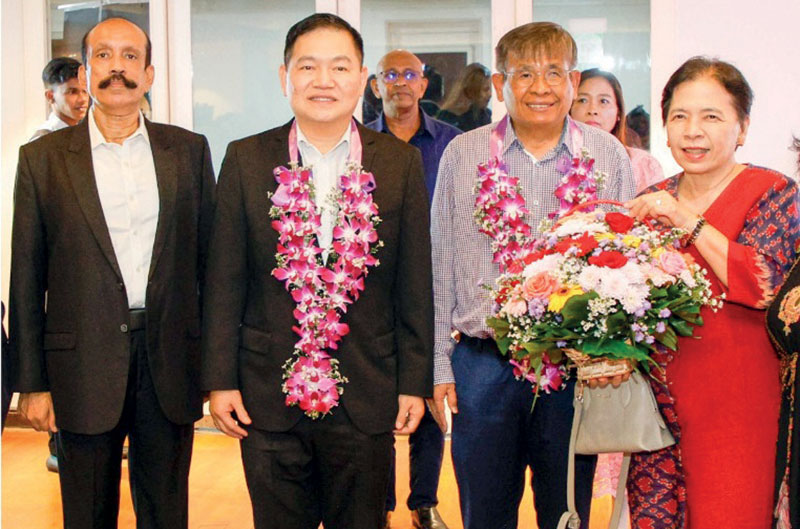
British India Hotels Managing Director K. Jayakumar has been unanimously elected president of the Sri Lanka-Thailand Society at its 29th Annual General Meeting held at the Grand Oriental Hotel, Colombo recently.
The AGM was attended by Thai Ambassador to Sri Lanka Paitoon Mahapannaporn, members of the Society and other distinguished guests.
Sri Lanka and Thailand are marking 70 years of diplomatic relations this year, with the Society continuing to promote cultural, religious and economic ties and strengthen people-to-people links between the two countries.
During his previous tenure, Jayakumar said the Society had launched its website to improve access to information on its activities and programmes while continuing its engagement with the Sri Lanka Thai Temple in Colombo.
Its community initiatives included donating more than 30 maternity kits to expectant mothers receiving treatment at Mihintale Hospital during the Poson period and providing financial assistance to families affected by Cyclone Ditwah.
The Society also facilitated the participation of Thai Embassy staff in the Mihintale Aloka Pooja and donated miniature Buddhist replicas through the Embassy.
Jayakumar said the Society planned to donate a dialysis machine to a suitable hospital and continue its initiative to facilitate the temporary ordination of Sri Lankans as Buddhist monks in Thailand.
Plans are also underway to support school rugby by bringing in a retired Thai coach to train players and coaches, while expanding membership to 500 by next year.
The AGM coincided with celebrations marking the longstanding friendship between the two countries, including the Excellence Grand Thai Night held at the hotel.
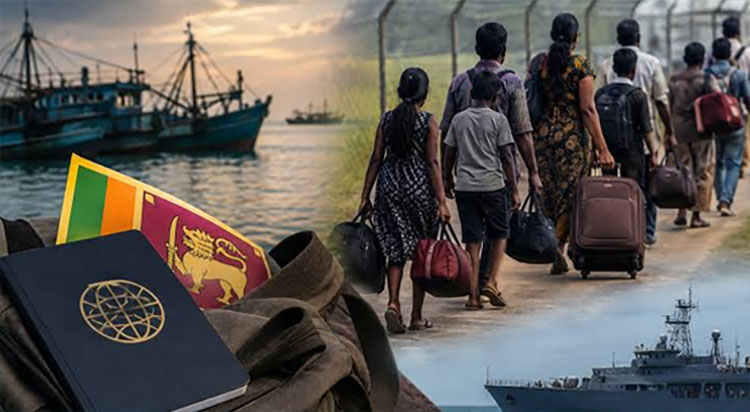
Tamil Nadu State Government Minister for Non Resident Tamils Welfare K. Thennarasu on Thursday inaugurated a library built at a cost of INR 20 lakh at Sri Lankan Tamils Rehabilitation Camp at Thappathi in Thoothukudi district, reported The Hindu.
The Hindu report said: Following the inauguration, Thennarasu inspected the 300 houses being constructed at the camp at a cost INR 20.62 crore.
Thoothukudi District Collector Vishu Mahajan, Director of Non-Residents Tamils Welfare Board R. Sadheesh and other officials were present at the event.
During his visit, the residents of Thappathi camp urged the Minister to take steps to facilitate the grant of Indian citizenship to Sri Lankan Tamils living in rehabilitation camps across Tamil Nadu.
Thappathi camp president K. Ananthraj submitted a petition to the Minister. In the petition, the residents highlighted that they had been living as refugees in 103 locations across Tamil Nadu for the past 36 years. They urged the government to take steps to facilitate the grant of Indian citizenship to them and issue passports to enable them to travel from India to other countries.
They further sought the government to construct houses for all families in the camps and enable them to purchase houses and lands in their own names. They also sought steps to extend the Chief Minister’s health insurance scheme to them, establish playgrounds and provide sports equipment in all camps.
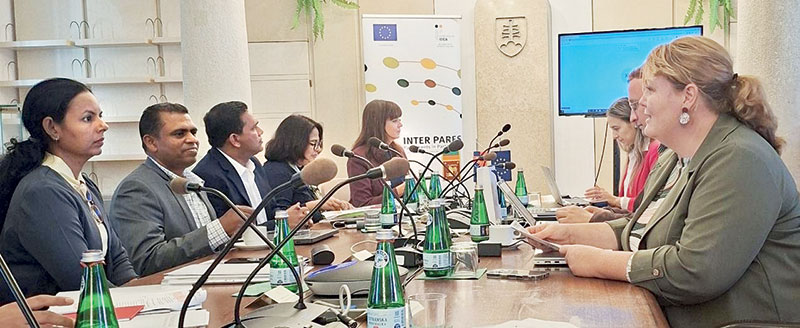
A delegation from the Sri Lankan Parliament participated in a peer-to-peer training programme on parliamentary research, artificial intelligence (AI) and legislative foresight held at the National Council of the Slovak Republic in Bratislava from September 29 to October 2.
The programme, titled ‘Evidence, Innovation, and Foresight in Parliamentary Research’, was conducted under the Inter Pares Partnership with the Parliament of Sri Lanka and focused on strengthening the Parliamentary Research Division.
The delegation was headed by Kushani Rohanadeera, Secretary General of Parliament, and comprised Siyath Ahemed, Librarian; Mohammed Ajiwadeen, Senior Research Officer; Tekshila Erandathi Lokuge, Senior Research Officer; Nishan Wickramasingha Mohottige, Systems Analyst; and Sachinie Gunasekara, Deputy Principal Officer.
The training provided opportunities to exchange experiences with research services of several European parliaments, with discussions covering research workflows, quality assurance, development of accessible research products, digital knowledge management, AI and foresight methodologies.
Particular attention was given to the secure and responsible use of AI in legislative research. Participants examined issues including AI governance, data protection, confidentiality, accuracy, political neutrality and human oversight.
Practical sessions also demonstrated the potential use of AI for evidence gathering, document comparison, summarisation and knowledge management.
The programme also focused on legislative foresight, including horizon scanning, identifying emerging trends and developing scenarios to help parliamentary researchers assess future challenges and the long-term implications of public policies.
During the visit, the delegation met the Secretary General and senior officials of the National Council of the Slovak Republic and visited the Speaker’s Gallery and the National Museum.
The programme also involved expert contributors and partner parliaments from Czechia, Hungary, Austria, Italy, Lithuania and the United States Congressional Research Service.
The Parliament of Sri Lanka thanked the National Council of the Slovak Republic, International IDEA and the Inter Pares Partnership for facilitating the capacity-building programme.

Behind the runway Ramani Fernando and CFW

Comeuppance for some, lessons for others

Jayakumar unanimously elected Sri Lanka-Thailand Society president

Lankan refugees in Tamil Nadu seek citizenship, passports

30 Eggs, Bawa’s Breudher Pan and a Culinary Who Did It?

When Spies Go Rogue

‘Dates have the highest sugar content to fight Coronavirus’

Sunday Island 27 December – Headlines

#SundayIsland 17th December – Headlines

Sunday Island – 28th March

Sunday Island Headlines – 21 March

Sunday Island – 21st February – Headlines
-

 News6 days ago
Geneva takes up Sallay’s case and govt. ignores opportunity to answer accusations
-

 News7 days ago
Nearly 20 Iranian tankers stranded off Lanka amid US sanctions
-

 Features5 days ago
Preventing grievances from becoming communal
-

 Sports3 days ago
Nissanka absence opens door for Sri Lanka’s young guns
-

 Features3 days ago
The Sri Lankan who made Scottish history
-

 News4 days ago
Gnansara Thera to be assigned to prison printing section: Officials
-

 Features6 days ago
Sri Lanka Cricket Bill: Governance reform is not yet a cricket strategy
-

 News7 days ago
Lanka enters new phase of prosecutions as hurdles clear