
News
Vote on Second Reading of Budget today: Rebel MPs ratchet up pressure on SLPP


… Govt. confident of mustering majority
by Shamindra Ferdinando
Dissident SLPP MPs yesterday (20) asked the ruling party whether it would back what it called President Ranil Wickremesinghe’s deplorable revenue proposals when Parliament vote on the Second Reading of the Budget is held today (21).
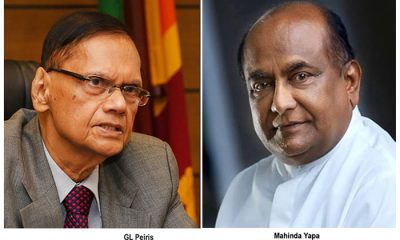
The rebel group said that the move to privatise even the profit-making enterprises, such as Sri Lanka Insurance and SLT and the increase of Value Added Tax (VAT) from 15% to 18 with effect from January 01, 2024 would worsen the economic crisis, rebel spokesperson and former minister Prof. G.L. Peiris said.
Referring to parliamentarian Namal Rajapaksa’s criticism of the Budget presented by President Ranil Wickremesinghe in his capacity as the Finance Minister on Nov 13, the top rebel spokesperson urged key SLPPers not to skip the vote. The former External Affairs Minister said that the SLPP’s stand today would help the public to ascertain the situation on the ground.
At the onset of the briefing, the former top law academic said that the approval for the Budget would entirely depend on the SLPP, the largest single political party in the current Parliament.
The debate on the Second Reading of the Budget that commenced on Nov 14 would be concluded today and the vote on the Second Reading of the Budget held at 6 pm, Prof. Peiris said.
The Committee Stage debate, or the Third Reading debate on the Budget, is scheduled to begin tomorrow (23) and will continue until December 13. The vote on the Third Reading of the 2024 Budget is scheduled to be held on December 13 at 6 pm.
Prof. Peiris insisted that the SLPP couldn’t under any circumstances vote for Wickremesinghe’s Budget as the key proposals were contrary to its policies.
The SLPP voted for Wickremesinghe’s interim Budget for 2023 presented on Sept. 2, 2022, a day after IMF announced it would provide a loan of USD 2.9 bn to be released over a period of four years. Sri Lanka received the first tranche of the loan in Sept 2023. Since then the facility has been suspended.
Of 225 MPs, 115 voted for Wickremesinghe’s interim Budget and two MPs of the All Ceylon Tamil Congress (ACTC) voted against, whereas the main Opposition Samagi Jana Balawegaya (SJB) and other political parties, including the JVP, abstained.
Political sources said that though there had been differences between President Wickremesinghe and the SLPP over the non-appointment of more of its members to the Cabinet, the party would definitely back the Budget. Sources pointed out that both State Ministers of Finance were SLPPers, Shehan Semasinghe and Ranjith Siyambalapitiya and there was no question over those serving the Cabinet and the party voting for the Budget. The group included three member MEP parliamentary group consisting of Premier Dinesh Gunawardena, State Minister Sisira Jayakody and National List MP Yadamini Gunawardena.
Sources said that the government was confident of a comfortable victory though attempts were being made to cause turmoil.
SLPP lawmaker Anura Priyadarshana Yapa yesterday told The Island that the country is in such a desperate situation political parties have to sensibly ascertain the situation. “We’ll decide tomorrow of our stand,” the former minister said. Yapa’s group consists of MPs John Seneviratne, Dr. Sudarshini Fernandopulle and Priyankara Jayaratne.







… alleges Prez trying to control judiciary
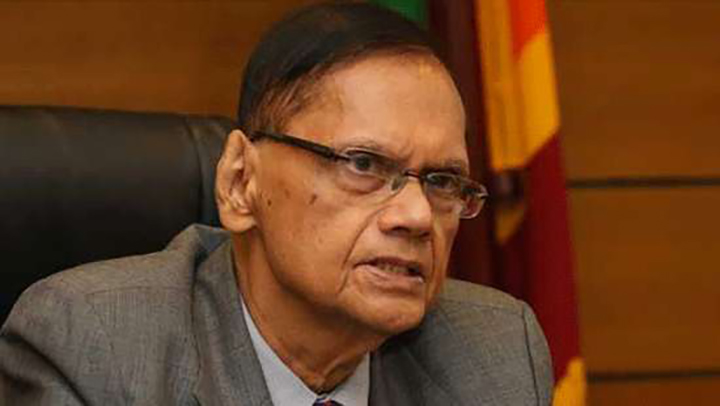
Opposition grouping ‘Mahajana Handa’ has accused President Anura Kumara Dissanayake of trying to exercise control over the judiciary by appointing a sitting High Court judge as Additional Secretary to the Justice and National Integration Ministry.
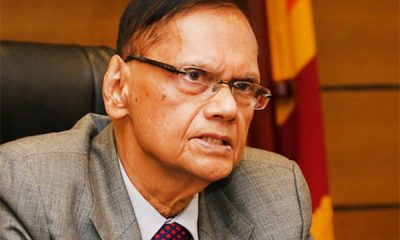
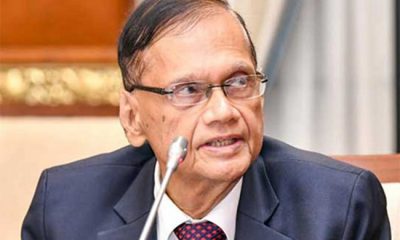
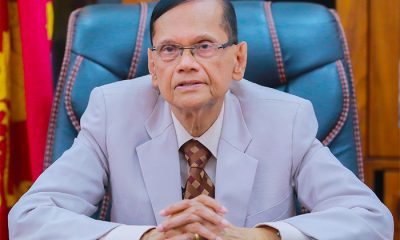
Addressing the media at Dr. N. M. Perera Centre, Punchi Borella, on Tuesday (20) top Opposition spokesman and former External Affairs Minister Prof. G. L. Peiris warned the High Court judge D.M.D.C. Bandara’s appointment was nothing but a direct executive intervention in the judiciary.
Responding to The Island queries, Prof Peiris asked how the government could compel courts to deal with a sitting judge who functioned as Secretary to the Justice and National Integration Ministry.
Prof. Peiris explained that the latest move by the Executive should be examined taking into consideration the attacks on Attorney General Parinda Ranasinghe Jr, PC., the deliberate delaying of the appointment of Auditor General and the controversy over the process of promotions of Judicial Officers, Judges of the High Court and the Court of Appeal in Sri Lanka. Prof. Peiris pointed out that the Bar Association of Sri Lanka (BASL) had raised those controversial promotions with President Anura Kumara Dissanayake.
D.M.D.C. Bandara, Senior Assistant Secretary, Judicial Service Commission, was among altogether 18 High Court judges appointed by President Dissanayake in early Sept this year. The group consisted of 17 Special Class Judicial Officers and a Senior State Counsel serving in the Attorney General’s Department.
Referring to a recent meeting ‘Mahajana Handa’ representatives, including him had with the Mahanayake theras of the Asgiriya and Malwatta Chapters in Kandy, Prof. Peiris said that they had received the blessings of the Mahanayakes to go ahead with what he called a programme of action meant to address major issues.
Prof. Peiris said they would initiate talks with other like-minded political parties and groups in this regard soon. Referring a protest held at the Hulftsdorp on Wednesday (21) demanding the removal of the AG Ranasinghe, Prof. Peiris emphasized that the government’s hand in that demonstration was very clear. President Ranil Wickremesinghe appointed him as the AG in July 2024 with the unanimous backing of the Constitutional Council.
Prof. Peiris said that action was yet to be initiated to appoint new civil society representatives to the Constitutional Council. That issue hadn’t received sufficient public attention, Prof. Peiris said, urging President Dissanayake to come down from his high horse.
Asked whether the President could appoint a sitting judge as an Additional Secretary to a Ministry without consulting the Chief Justice and President of the High Court Judges Association, sources familiar with the issues at hand said that certain appointments could be made on secondment. However, that has to follow the proper procedure, sources said.
The Island sought a response from the Justice and National Integration Ministry to the accusations made by Prof. Peiris on behalf of ‘Mahajana Handa,’ but did not receive one until this edition went to press.
By Shamindra Ferdinando ✍️
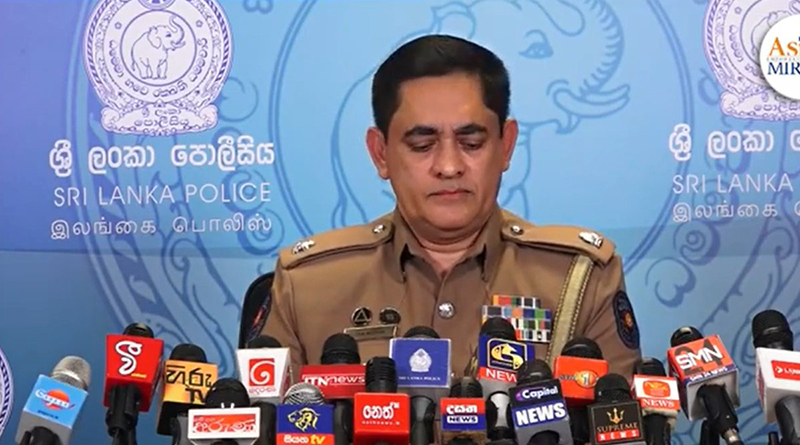
The largest narcotics haul in Sri Lanka’s history was seized last year, according to Police Media Spokesperson and Assistant Superintendent of Police F.U. Wootler.
Addressing a media briefing at the Department of Government Information at Narahenpita on Wednesday (22), ASP Wootler said nationwide operations carried out under Operation Ratama Ekata had helped curb the spread of illicit drugs.
He said police taken into custory 10,871 kilos of heroin, cannabis, ice, hashish and cocaine in 2024, while seizures rose sharply to 23,692 kilograms and 307 grams in 2025.
by Norman Palihawadane ✍️
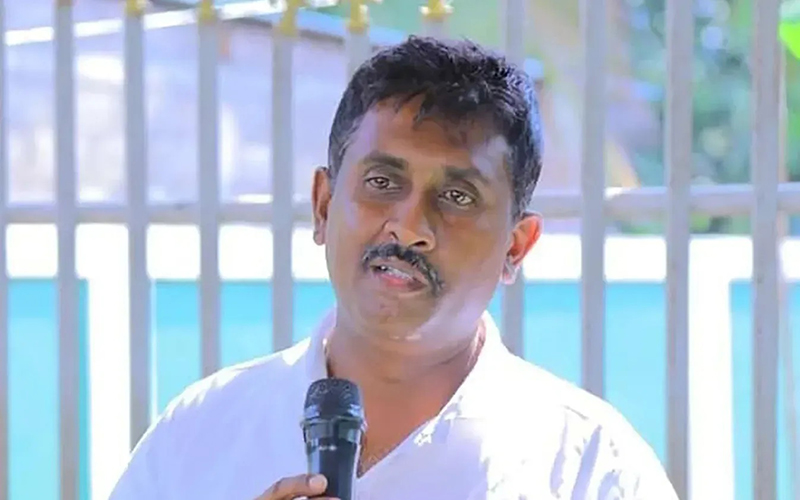
The Electricity Consumers’ Association has raised serious concerns over the consultation process for the proposed National Electricity Policy, describing it as inadequate and legally questionable.National Secretary of the Association, Sanjeewa Dhammika, said he had been given only 30 minutes to present his views on the policy at a meeting held on Wednesday (21) at the Ministry of Power and Energy.
He said that although six members had been appointed to the National Policy Committee, only three were present at the meeting, casting doubt on the credibility and seriousness of the process.
Dhammika also criticised the absence of Dr. Tilak Siyambalapitiya, who is widely reported to have drafted the policy, from the committee meeting.
“He wrote the policy and then walked away. We didn’t even get a chance to question him,” Dhammika said.
He alleged that the consultation lacked proper notice and planning, noting that he had been informed only by a phone call the previous evening and asked to attend the meeting the following morning.
“This is not how public views should be obtained on a national policy. It should have been done well in advance, in a systematic and transparent manner. It wasn’t even communicated to the media,” he said.
Comparing the process to the public consultation mechanisms used by the Public Utilities Commission of Sri Lanka (PUCSL), Dhammika described the exercise as a “makeshift, token process.”
He also raised concerns over the composition of the committee, stating that the inclusion of a retired senior official of the Ceylon Electricity Board—whom he said bears responsibility for the current state of the power sector and continues to favour coal power while opposing renewable energy—was a serious issue.
According to Dhammika, the proposed National Electricity Policy has been drafted in violation of existing laws.
“Under the current law, the authority to determine electricity tariffs lies with the Public Utilities Commission of Sri Lanka. Through this new policy, there is an attempt to remove those powers from the Commission,” he alleged.
He warned that the policy centralises key decision-making powers—including licensing, power plant acquisitions, power infrastructure development, and renewable energy decisions—into the hands of a few individuals, calling it a high-risk approach.
“This is similar to how the Education Act was distorted under the guise of education reforms. It is shocking to see whether this is what the government calls a progressive new law,” he said.
The Electricity Consumers’ Association strongly opposes the formulation of the policy, with Dhammika describing it as “one of the most failed initiatives seen in recent times.”
He said that if implemented in such a haphazard way, the policy would result in higher electricity bills for low-consumption users, while high-consumption users would benefit from reductions of approximately 38% to 45%.
Dhammika also alleged that the policy discourages the solar power industry and promotes a diesel- and coal-dependent energy model driven by vested interests aligned with oil-based power generation.
By Anuradha Hiripitiyage ✍️

Vampire film Sinners breaks Oscar nominations record

Showers will occur at times in the Northern, North-central, North-western,Eastern and Uva provinces and in Matale and Nuwara-Eliya districts

Opposition slams sitting HC judge’s appointment as Justice Ministry Additional Secretary

Largest narcotics haul in SL history seized last year: Police Spokesman

Power policy consultation ‘sham’, say consumers

JVP stunted Lanka’s progress by opposing education reforms: SJB

‘Dates have the highest sugar content to fight Coronavirus’

Sunday Island 27 December – Headlines

#SundayIsland 17th December – Headlines

Sunday Island – 28th March

Sunday Island Headlines – 21 March

Sunday Island – 21st February – Headlines
-

 Editorial5 days ago
Illusory rule of law
-
 News6 days ago
UNDP’s assessment confirms widespread economic fallout from Cyclone Ditwah
-

 Editorial6 days ago
Crime and cops
-
 Features5 days ago
Daydreams on a winter’s day
-
 Features5 days ago
Surprise move of both the Minister and myself from Agriculture to Education
-

 Features4 days ago
Extended mind thesis:A Buddhist perspective
-

 Features5 days ago
The Story of Furniture in Sri Lanka
-

 Opinion3 days ago
American rulers’ hatred for Venezuela and its leaders