
Foreign News
Venezuela’s abducted leader, Nicolas Maduro, and wife appear in NYC court


Venezuelan President Nicholas Maduro, recently abducted with his wife by US special forces from his home, has appeared in a federal courtroom in New York City for a hearing on alleged ‘narcoterrorism’ and other charges.
Maduro and his wife, Cilia Flores, were brought before US District Judge Alvin K Hellerstein at 12pm (17:00 GMT) on Monday for a brief legal proceeding that kicks off a long legal battle over whether they can face trial in the United States.
Handcuffed and wearing blue jail uniforms, Maduro and his wife were led into the court by officers, and both put on headsets to hear the English-language proceeding as it was translated into Spanish.
Maduro pleaded not guilty, telling the judge, “I was kidnapped. I am innocent and a decent man, the president of my country.”
Across the street from the court, the police separated a small but growing group of protesters from about a dozen pro-intervention demonstrators, including one man who pulled a Venezuelan flag away from those protesting the US abduction.
The left-wing leader, his wife, son and three others could face life in prison if convicted of working with drug cartels to facilitate the shipment of thousands of tonnes of cocaine into the country. Some observers say there is no evidence linking Maduro to cartels.
Maduro’s lawyers said they will contest the legality of his arrest, arguing he is immune from prosecution as a sovereign head of a foreign state, though he is not recognised as Venezuela’s legitimate leader by the US and other nations.
Flores also pleaded not guilty to US charges against her during the arraignment. Hellerstein ordered the Venezuelan leader to appear in court for a hearing on March 17.

Near the end of the hearing, Maduro’s lawyer, Barry J Pollack, said his client “is head of a sovereign state and entitled to the privilege” that the status ensures.
Pollack said there were “questions about the legality of his military abduction”, and there will be “voluminous” pretrial filings to address those legal challenges.
Earlier, images showed the pair being led handcuffed and under heavy guard from a helicopter en route from a detention facility to the court, two days after they were forcibly removed from Caracas in a brazen US special forces operation.
At an emergency session of the United Nations Security Council earlier on Monday, Secretary-General Antonio Guterres expressed concern that Washington’s capture of Maduro violated international law.
“I remain deeply concerned that rules of international law have not been respected with regard to the 3 January military action. The Charter enshrines the prohibition of the threat or use of force against the territorial integrity or political independence of any state,” Guterres said, referring to the UN’s founding document.
“The maintenance of international peace and security depends on the continued commitment of all member states to adhere to all the provisions of the Charter.”
Samuel Moncada, Venezuela’s ambassador to the UN, accused the US of carrying out an illegal armed attack against his country.
Venezuela was subjected to bombing, destruction of civilian infrastructure, the loss of civilian and military lives, and the “kidnapping” of Maduro and his wife, Moncada said.
The abduction of a sitting head of state breached a core norm of international law, the personal immunity of leaders in office, he added, warning that such actions set a dangerous precedent for all countries.
Russia and China, Venezuela’s most powerful allies, strongly condemned Maduro’s abduction and called for his release.
US allies France and Colombia also notably voiced concern, saying Washington’s military operation had undermined international law.
The US ambassador to the UN, Mike Waltz, defended Maduro’s abduction, describing it as a “law enforcement operation”.
“The United States arrested a narcotrafficker who is now going to stand trial in the United States,” Waltz said.
Waltz accused Maduro of being “responsible for attacks against the people of the United States, for destabilising the Western Hemisphere, and illegitimately repressing the people of Venezuela”.
All eyes are on Venezuela’s response to the swiftly moving events after US President Donald Trump said late on Sunday that the US is “in charge” of the South American nation, which has the world’s largest oil reserves.
Vice President Delcy Rodriguez, meanwhile, was officially sworn in as interim president on Monday.
Rodriguez, a 56-year-old labour lawyer known for close connections to the private sector and her devotion to the governing party, was sworn in by her brother, Jorge, who is the head of the National Assembly legislature.
Delcy Rodriguez initially took a defiant stand against the seizure of the president, in what some observers labelled a return to “US gunboat diplomacy”. But she has now offered to colaborate with Washington.
One analyst said that Venezuela’s opposition appreciates the US intervention to remove Maduro from power, but is alarmed by Trump’s comments about US plans to “run” Venezuela, apparently with members of his government.
“Trump doesn’t recognise the decision of the Venezuelan people. We are not a colony of the US. We are an independent country,” Jose Manuel Puente, a professor at the Instituto de Estudios Superiores de Administracion, a private university in Caracas, told Al Jazeera.
“We want to initiate a transition to democracy, to rebuild the institutions, to rebuild the economy, to rebuild the oil sector. And we don’t see that from Trump until now.”
Venezuela’s National Assembly opened on Monday with lawmakers chanting “Let’s go, Nico!” as they denounced his abduction.
“The president of the United States, Mr Trump, claims to be the prosecutor, the judge, and the policeman of the world,” senior lawmaker Fernando Soto Rojas told the assembly. “We say, you will not succeed, and we will ultimately deploy all our solidarity so that our legitimate president, Nicolas Maduro, returns victorious to Miraflores”, the presidential palace, he added.
Rodriguez has served as Maduro’s vice president since 2018, overseeing much of Venezuela’s oil dependent economy and its feared intelligence service, and was next in the presidential line of succession.
She is part of a band of senior officials in Maduro’s administration who now appear to control Venezuela, even as Trump and other US officials say they will pressure the government to fall in line with their vision for the oil-rich nation.
On Sunday, some 2,000 Maduro supporters, including rifle-wielding men on motorcycles, rallied in Caracas with crowds shouting and waving Venezuelan flags. The Venezuelan military, loyal to Maduro, announced it recognised Rodriguez and urged calm.
The White House indicated on Sunday that it does not want regime change, only Maduro’s removal and a pliant new government that will enable US companies to exploit the country’s oil reserves, even if the government is filled with his former associates.
[Aljazeera]

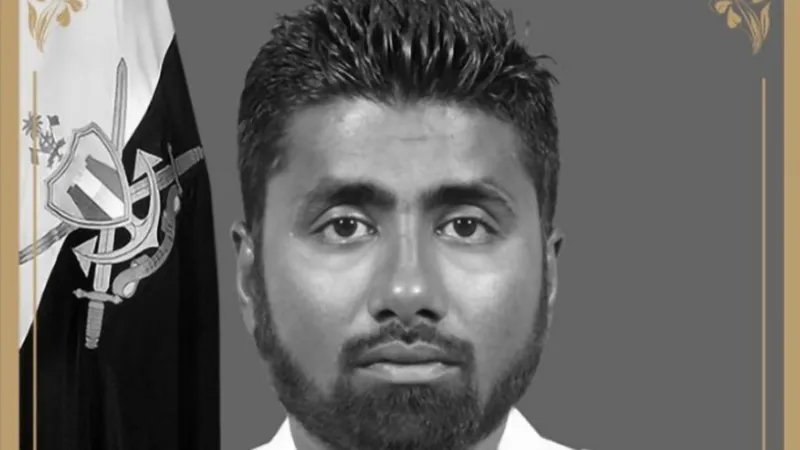
A rescue diver has died while searching for the bodies of a group of Italians who died in a scuba-diving accident in the Maldives.
Staff Sgt Mohamed Mahdhee was taken to hospital in critical condition and later succumbed to his injuries, a government spokesman told the BBC on Saturday.
Five Italians died while attempting to explore caves at a depth of around 50m (164ft) on Thursday. So far, the body of one of them is thought to have been recovered, in a cave at a depth of around 60m (197ft).
The incident is believed to be the worst single diving accident in the tiny Indian Ocean nation, a popular tourist destination because of its string of coral islands.
Maldivian President Mohamed Muizzu travelled to Vaavu Atoll on Saturday to observe the search operations.
“Eight rescue divers went into the water today. When they surfaced, they realised Mahdhee didn’t come up,” Mohamed Hossain Shareef, a Maldivian government spokesman told the BBC.
The other divers immediately went into the water again and they found Mahdhee had blacked out.
The Maldives military has described the operation as very high risk, with unfavourable weather conditions.
Italian Foreign Minister Antonio Tajani sent condolences: “These days of grief for Italy are compounded by the news that one of your brave soldiers… died while attempting to dive to reach the bodies of our fellow Italians.”
“This tragedy unites Italy and the Maldives in grief and respect for the victims,” he added.
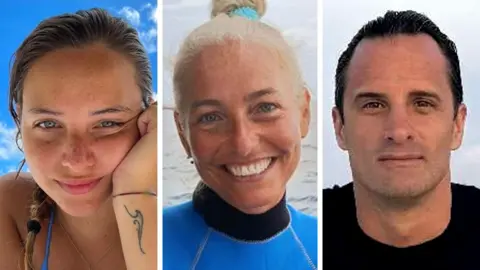
Four of the Italian divers were part of a University of Genoa team, including professor of ecology Monica Montefalcone, her daughter and two researchers. The fifth was a boat operations manager and diving instructor.
The five entered the water at Vaavu Atoll on Thursday morning, local media said, and were reported missing when they failed to resurface later on.
Police said the weather was rough in the area, about 100km (62 miles) south of the capital, Male. A yellow warning was issued for passenger boats and fishermen.
Shareef said recreational scuba divers were only allowed to dive up to a depth of 30m and it was not clear why the Italians went into a cave that’s 60m under water.
Italy’s foreign ministry said earlier that another 20 Italian nationals aboard the Duke of York yacht, from which the five divers took off, were unharmed and receiving assistance from the Embassy of Italy in Colombo, Sri Lanka
[BBC]
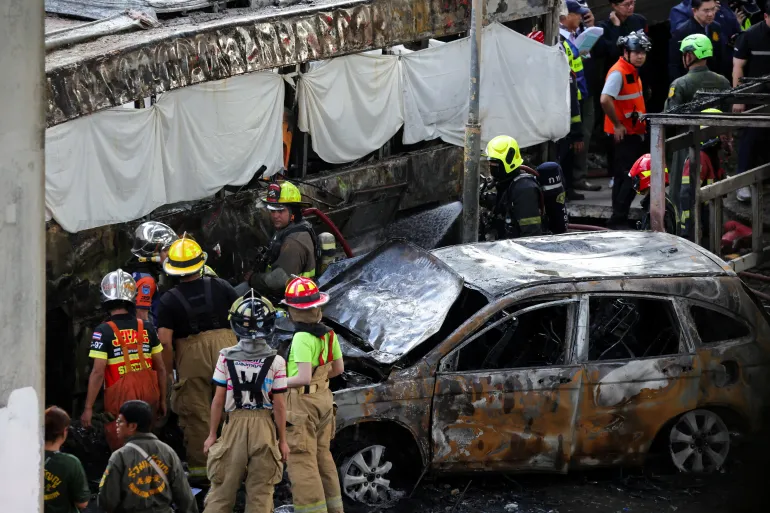
At least eight people have been killed, and dozens injured, after a freight train crashed into a public bus in Thailand’s capital.
Flames engulfed the bus and nearby vehicles near an airport rail link station in the centre of Bangkok Saturday afternoon.
The city’s emergency services Erawan Medical Center confirmed the number of deaths, while Bangkok police chief Urumporn Koondejsumrit told AFP news agency at least 35 people were injured.
Speaking to reporters at the scene, Deputy Transport Minister Siripong Angkasakulkiat said that all the bodies were found on the bus. It was not yet clear how many people were on board in total.
Prime Minister Anutin Charnvirakul ordered an investigation into the crash, according to a statement from his office.
Al Jazeera’s Tony Cheng, reporting from Bangkok, said the crash unfolded around 3:40pm local time (08:40 GMT), when the bus appeared to get stuck on an intersection with the rail line after the safety barriers descended.
As the freight train rammed into the stationary bus and continued travelling, it dragged several nearby vehicles along with it before the bus burst into flames.
Siripong would not confirm whether the bus had stopped on the railway track or discuss reports that the barriers may not have lowered properly, saying the matter still needs to be investigated.
Firefighters and rescue crews were dispatched to pull people from the wreckage and battle the flames as motorcyclists and passersby attempted to redirect traffic.
The fire has since been brought under control.
[Aljazeera]
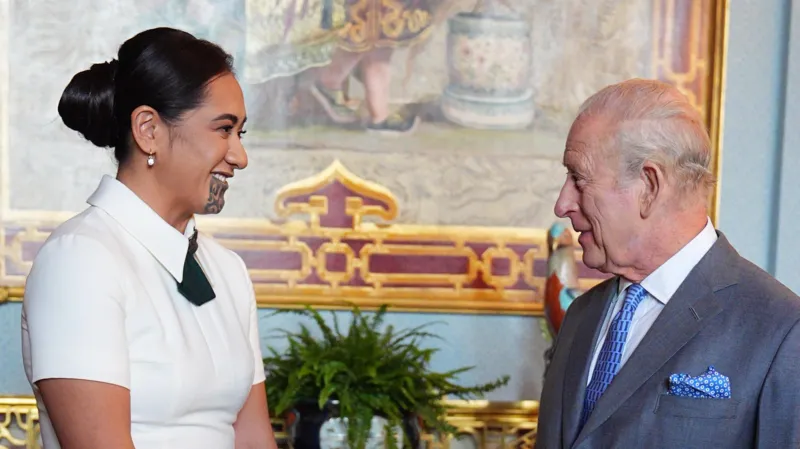
New Zealand’s Māori Queen Te Arikinui Kuini Nga Wai hono i te po has met King Charles III at Buckingham Palace.
The meeting with the British monarch was Te Arikinui’s first since she became queen in 2024, following the death of her father, Kiingi Tuheitia.
The visit marks a near 200-year relationship between the indigenous peoples of New Zealand and the crown, formalised in the Treaty of Waitangi, one of New Zealand’s founding documents.
A spokesperson for the queen says the two discussed the former king’s death in what was a “heartfelt” discussion, as well as the strengthening of their relationship.
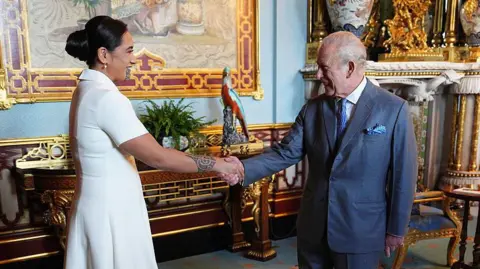
Earlier this week, the Māori queen was also welcomed by Prince William to Windsor Castle.
In a post on Instagram, Prince William acknowledged the visit, saying, “it was a pleasure to meet with the Queen.”
A statement released after the meeting from the Kīngitanga said the Māori queen discussed a range of global topics with Prince William.
“Te Arikinui affirmed her belief in the power of indigenous knowledge and intergenerational stewardship to help solve the world’s environmental and social challenges.”
Te Arikinui was crowned in 2024 after the death of her father – becoming only the second Māori queen, the first being her grandmother, Te Arikinui Dame Te Atairangikaahu.
The Māori monarchy dates back to the 19th Century, when different Māori tribes decided to create a unifying figure similar to that of a European monarch in order to try to prevent the widespread loss of land to New Zealand’s British colonisers and to preserve Māori culture. It is a largely ceremonial and symbolic role.
[BBC]

Fighter jet crews parachute safely after collision at US air show

WHO declares Ebola outbreak in DR Congo an international emergency

Trump warns ‘clock is ticking’ for Iran as peace progress stalls

Axar, Ashutosh, Starc keep Delhi Capitals’ playoffs hopes alive

Venkatesh, Rasikh take Royal Challengers Bengaluru into IPL 2026 playoffs

Showers will occur at times in the Western, Sabaragamuwa, Central, North-western and Northern provinces and in Anuradhapura, Galle and Matara districts

‘Dates have the highest sugar content to fight Coronavirus’

Sunday Island 27 December – Headlines

#SundayIsland 17th December – Headlines

Sunday Island – 28th March

Sunday Island Headlines – 21 March

Sunday Island – 21st February – Headlines
-
 News5 days ago
Ex-SriLankan CEO’s death: Controversy surrounds execution of bail bond
-
 Features1 day ago
Sri Lankan Airlines Airbus Scandal and the Death of Kapila Chandrasena and my Brother Rajeewa
-
Features6 days ago
High Stakes in Pursuing corruption cases
-
 Features6 days ago
When University systems fail:Supreme Court’s landmark intervention in sexual harassment case
-
 News2 days ago
Lanka’s eligibility to draw next IMF tranche of USD 700 mn hinges on ‘restoration of cost-recovery pricing for electricity and fuel’
-
 Midweek Review5 days ago
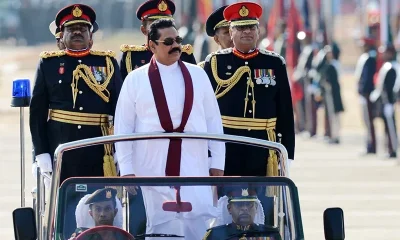
A victory that can never be forgotten
-
 Features3 days ago
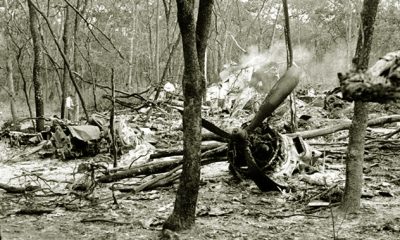
Mysterious Death of United Nations Secretary General Hammarskjöld
-
 Opinion4 days ago
Electricity tariffs have skyrocketed: Can further increases be prevented?