
Business
Varun Wijewardane appointed business head, Uber Eats


Uber Eats, the leading food delivery app announced the appointment of Varun Wijewardane as the General Manager of Uber Eats, Sri Lanka. In his role as the head of business, he will oversee the operations of the Uber Eats platform in the island nation.
With this appointment, Varun will return to his home country Sri Lanka, where he was born and raised before moving to Australia. Varun joined Uber’s retail business in 2021 and has most recently worked as the Head of Commercial for Independent Retail bringing groceries and alcohol on to the platform across Australia and New Zealand.
Prior to Uber, he worked as a management consultant with a focus on commercial strategy and execution across the Australian retail industry. He also worked at Newcrest Mining, where he spent time managing teams on the ground in Australia, Papua New Guinea, and Fiji.
Commenting on the appointment Saskia de Jongh, Vice President, Delivery APAC said, “Varun is the perfect choice to lead Uber Eats as it embarks on the next phase of its growth in Sri Lanka. During his time at Uber, he has shown himself to be a hands-on leader and excellent collaborator, with a track record of delighting customers and expanding the business. At Uber, we are committed to providing opportunities for employees to grow their careers – Varun’s appointment is a demonstration of that. I am very excited to see Varun return to his country of birth and lead Uber Eats as it continues to give Sri Lankans access to almost anything at the press of a button.”
Varun Wijewardane, General Manager, Uber Eats Sri Lanka added, “I am excited to return home to take on this new role and lead the Uber Eats business through our next phase of growth in Sri Lanka. As the country reimagines its future following a period of crisis, we have ambitious goals to deliver on for our customers, merchants and delivery partners who have made Uber Eats the leading delivery app in the island. I am looking forward to working with the team in Sri Lanka to bring the best of Uber Eats to the communities in which we operate.”
Since its launch in 2018, Uber Eats has emerged as the most loved food and grocery delivery platform in Sri Lanka. Having scaled to 6 cities, the company has unlocked earning opportunities for hundreds of thousands of couriers and merchants, and made food and grocery delivery convenient and hassle-free for customers. Last year, Uber Eats completed 24 million deliveries and remains invested in bringing the best of Uber Eats to Sri Lanka. In March 2023, Uber Eats onboarded 100 locally-manufactured, custom-designed electric cycles for delivery, after becoming the first platform to introduce cycle deliveries last year. This was part of the company’s global mission to be a zero-emissions platform by 2040. During the recent economic crisis, Uber Eats donated $ 200,000 to the Sri Lanka Red Cross to deliver life-saving medicines and food rations to most-impacted families.














The Asian Development Bank (ADB) has announced a financial support package to help its developing member countries (DMCs) mitigate the economic and financial impacts resulting from the conflict in the Middle East.
“ADB will deliver rapid, flexible, and scalable assistance to help countries manage immediate pressures and strengthen long-term resilience, notably fast-disbursing budget support and trade and supply chain finance to secure the import of essential goods, now including oil,” said ADB President Masato Kanda. “This builds on our strong track record of supporting Asia and the Pacific through periods of global uncertainty.”
ADB has ample resources to safeguard existing and planned operations, while expanding emergency support in line with DMC needs, including utilizing its countercyclical lending buffer.
The bank is closely monitoring global market developments and their potential implications for economies across Asia and the Pacific, particularly regarding energy price volatility, inflationary pressures, and external account balances.
The latest ADB analysis indicates that disruptions to shipping routes have already increased costs and delivery times, while supply risks extend beyond energy to key industrial inputs such as petrochemicals and fertilizers, with serious implications for agriculture and food production. Tourism- and remittance-dependent economies face compounding vulnerabilities beyond these initial shocks. Furthermore, the conflict is increasing uncertainty and tightening financial conditions across the region, putting pressure on currencies and capital flows.
In response, ADB is ready to deploy timely financial and technical support to help DMCs manage risks, maintain macroeconomic stability, and protect vulnerable populations. There are two main components to ADB’s intervention. The first is fast-disbursing budget support to help DMCs facing heightened fiscal pressures, notably the use of the bank’s Countercyclical Support Facility to help governments stabilize their economies and mitigate the impact of shocks on the lives and livelihoods of those most at risk.
The second is ADB’s Trade and Supply Chain Finance Program (TSCFP), which supports the private sector to ensure critical imports, including energy and food, continue to flow. The bank has decided to reactivate support for oil imports under the program on an exceptional basis for this limited period. This decision acknowledges that economies and people across the region are being severely affected by the rapid surge in oil prices and supply chain disruptions.
ADB has begun discussions with all severely affected DMCs on possible immediate support and will continue to work closely with governments, development partners, and the private sector to ensure coordinated and effective responses to maintain economic stability and protect the poor and most vulnerable.
ADB is a leading multilateral development bank supporting sustainable, inclusive, and resilient growth across Asia and the Pacific. Working with its members and partners to solve complex challenges together, ADB harnesses innovative financial tools and strategic partnerships to transform lives, build quality infrastructure, and safeguard our planet. Founded in 1966, ADB is owned by 69 members—50 from the region.

Global GIS (Pvt) Ltd, the pioneer of geospatial positioning solutions in Sri Lanka, celebrated its 12th year of successful operations with the grand opening of its new spacious 3-story head office building at 6th Lane, Pagoda Road, Nugegoda. The grand opening was followed by a series of religious events held at the new premises.
“As the pioneer in geospatial solutions in Sri Lanka, we are delighted to be celebrating this significant milestone in our journey by relocating to a more spacious premises warranted by the growth that we have been experiencing over the years. Furthermore, we have designed the new head office premises to add more value to our customers in terms of training, capacity building, and product demonstrations with a state-of-the-art auditorium,” stated Nishshanka De Silva, Registered Licensed Surveyor, Managing Director – Global GIS (Pvt) Ltd.
“This milestone serves as a testament to our dedication to innovation, leadership, and excellence. With our experience, our team of dedicated staff, and with the support of our long-standing partners, we are committed to providing our expertise in line with international best practices in the geospatial services industry,” he added.
“Global GIS operates a high-precision CORS (Continuously Operating Reference Stations) network that covers Sri Lanka, with strategically positioned GPS/GNSS receivers providing users with high-accuracy positioning data in real time”.

For merchants:UPI provides access to a large, digitally savvy customer base, improves cash management, reduces dependence on physical currency and enhances operational efficiency
For travellers:UPI offers the convenience of real-time payments, transparent exchange rates, and a familiar, secure payment experience
NPCI International Payments Limited (NIPL), the international arm of the National Payments Corporation of India (NPCI), has reaffirmed its commitment to expanding Unified Payments Interface (UPI) merchant acceptance in Sri Lanka. The initiative aims to enhance cross-border payment experiences for Indian tourists, support Sri Lanka’s growing digital economy, and further strengthen the deep economic and cultural ties between India and Sri Lanka.
UPI, India’s real-time, account-to-account payment system, enables instant and secure transactions through mobile applications. Processing over 20 billion financial transactions monthly, it has emerged as one of the world’s most advanced digital payment infrastructures. With over 700 million UPI QR- touch points across India, its open, interoperable architecture and strong security framework allows it to integrate seamlessly with international payment ecosystems, including Sri Lanka’s LankaQR infrastructure.
India has consistently remained Sri Lanka’s leading source for tourism. Over 4,16,000 Indian tourists visited the island in 2024, and this number grew to 5,31,000 in 2025, accounting for the highest share of total international arrivals. With this year-on-year growth, the need for seamless and reliable payment solutions has become even more crucial. Indian visitors travel to Sri Lanka for leisure, weddings, shopping, and spiritual tourism, highlighting the importance of smooth, secure, and convenient payment options throughout their journey.
Through the collaboration between NPCI International and LankaPay, Indian tourists can make digital payments across Sri Lanka by simply scanning LankaQR using their preferred UPI-enabled mobile applications, minimising the need to carry or exchange physical cash. UPI payments are now enabled at leading establishments including Cinnamon Hotels, Taj Hotels, Barista, Keells Supermarket and Odel, amongst others.To support this growing corridor, NIPL has been actively engaging with key stakeholders in Sri Lanka, including the Central Bank of Sri Lanka, acquiring banks, and key merchants, to scale UPI acceptance in line with Sri Lanka’s domestic payment framework.
This integration has significant advantages for both merchants and customers. For travellers, UPI offers the convenience of real-time payments directly from their Indian bank accounts, transparent exchange rates, and a familiar, secure payment experience. For Sri Lankan merchants, it provides access to a large, digitally savvy customer base, improved cash management, and reduced reliance on physical currency, driving greater operational efficiency.
Ritesh Shukla, MD & CEO, NPCI International, said, “NPCI International is committed to building trusted, interoperable payment corridors that bring countries closer through technology. Our engagement in Sri Lanka reflects a shared vision to enhance digital payment acceptance, simplify travel and commerce for millions of people, and create value for local businesses and the wider economy. Through our partnership with LankaPay, we are advancing seamless, secure, and real-time transactions that strengthens the economic partnership between India and Sri Lanka.”
As UPI adoption progresses, NIPL will continue working closely with Sri Lankan regulators, ecosystem players, and merchants to extend acceptance across high-frequency sectors such as hospitality, retail, tourism, and essential services. Recognized by the IMF as the world’s largest real-time payment system, powering 49% of global instant payments, UPI presents a significant opportunity for Sri Lankan merchant to elevate the travel experience for Indian visitors, boosting economic activity and enhancing cross-border commerce between the two nations.

Presidential Suite at Sri Jayewardenepura General Hospital opened to the public

Cabinet Sub-Committee appointed to streamline the Public Service meets for the second time

PSL 2026: Teams allowed to submit two XIs and pick one after toss

Japan Premier League [JPL], building cricket from the ground up

Showers may occur at a few places in the Sabaragamuwa province and in Galle, Matara, Kalutara and Nuwara-Eliya districts in the evening

Energy Minister indicted on corruption charges ahead of no-faith motion against him

‘Dates have the highest sugar content to fight Coronavirus’

Sunday Island 27 December – Headlines

#SundayIsland 17th December – Headlines

Sunday Island – 28th March

Sunday Island Headlines – 21 March

Sunday Island – 21st February – Headlines
-

 News3 days ago
Senior citizens above 70 years to receive March allowances on Thursday (26)
-

 Features5 days ago
Trincomalee oil tank farm: An engineering marvel
-
 News16 hours ago
Energy Minister indicted on corruption charges ahead of no-faith motion against him
-

 News2 days ago
US dodges question on AKD’s claim SL denied permission for military aircraft to land
-

 Features5 days ago
The scientist who was finally heard
-

 Business2 days ago
Dialog Unveils Dialog Play Mini with Netflix and Apple TV
-

 News3 days ago
CEB Engineers warn public to be prepared for power cuts after New Year
-
 News3 days ago
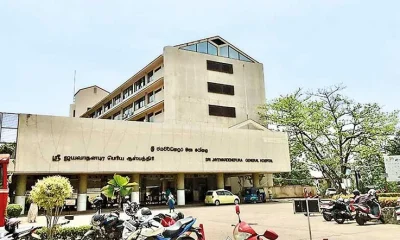
Japanese boost to Sri J’pura Hospital, an outright gift from Tokyo during JRJ rule