
Foreign News
US House votes to authorise Biden impeachment inquiry

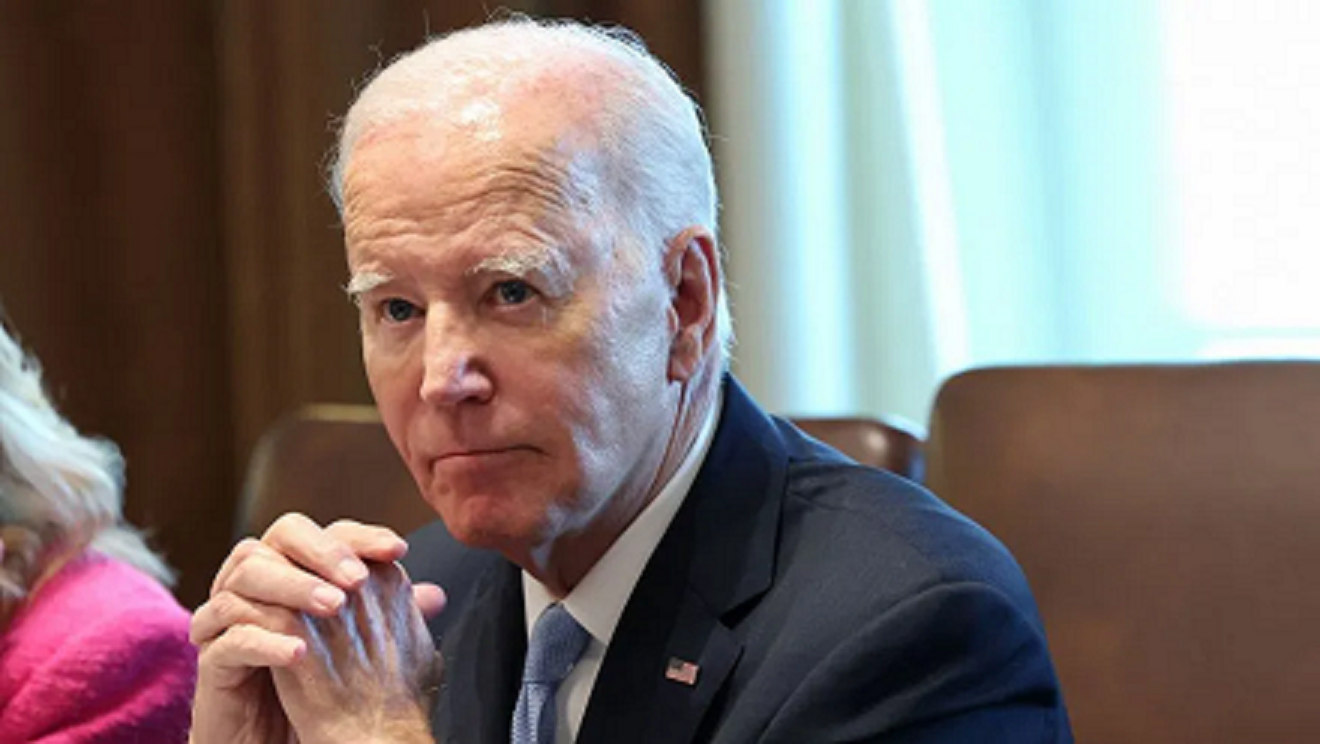
The US House of Representatives has voted to formalise its impeachment inquiry into President Joe Biden.
Lawmakers voted along party lines to back a resolution that Republicans say will give them more power to gather evidence and enforce legal demands.
Three Republican-led House committees allege bribery and corruption during Mr Biden’s tenure as vice-president but they have yet to present evidence of wrongdoing, and Mr Biden says his opponents are “attacking me with lies”.
The lower chamber of Congress, which Republicans control by a slim eight-seat margin, approved the inquiry on Wednesday afternoon by a vote of 221 to 212. Voting to authorise an inquiry is not the same as voting for impeachment, but it advances the likelihood that the House will eventually seek to impeach Mr Biden.
In a statement, House Speaker Mike Johnson said the chamber “will not prejudge the investigation’s outcome” but “the evidentiary record is impossible to ignore”.
A formal impeachment investigation, that leads to a House vote and a Senate trial, could represent a major headache for the president in the midst of an election year.But, even if the House ultimately opts to impeach the president, the Democrat-controlled Senate is all but certain to acquit him.
“The American people need their leaders in Congress to take action on important priorities for the nation and world,” Mr Biden said in a statement following the vote. “Instead of doing their job on the urgent work that needs to be done, they are choosing to waste time on this baseless political stunt that even Republicans in Congress admit is not supported by facts.”
In an animated debate ahead of the vote, Oklahoma Republican Tom Cole said his colleagues had been left with no choice but to bring the measure. He said it was a “sad day for myself, the institution and the American people” and accused the White House of “stonewalling” the impeachment inquiry.
But Democrats expressed irritation over what they have dismissed as “an extreme political stunt”.
Jamie Raskin of Maryland said the investigation “isn’t a whodunit, it’s a what is it. It’s like an Agatha Christie novel, where the mystery is – what’s the crime?” he added.
Ex-Speaker Kevin McCarthy launched the inquiry in September and said Republicans had unearthed a “culture of corruption” surrounding Mr Biden.
Republicans have held one hearing related to the inquiry, during which two expert witnesses called by Republicans said there was not yet enough evidence to impeach the president.
The oversight committee claims the Biden family and its business associates received more than $24m (£19m) from foreign sources in China, Kazakhstan, Romania, Russia and Ukraine between 2014 and 2019.
Committee chairman James Comer has alleged that Mr Biden’s relatives – in particular his son, Hunter – sold access to the then-vice-president and influence-peddled off “the Biden brand”. He has further alleged that the president “spoke, dined, and developed relationships with” his son’s business partners.
Following Wednesday’s vote, Mr Comer told reporters that unanimous Republican backing for the inquiry sent a “strong message” to the administration. “We have a simple question that a majority of Americans have – what did the Biden family do to get millions?” he said.
Before and during his presidency, Mr Biden has said that he never talked business with Hunter Biden or his associates and that his son made no money off unethical overseas ventures.
The White House has also pushed back on the claim it is refusing to co-operate and criticised the inquiry on Wednesday as an abuse of power by House Republicans.
Hunter Biden has long been viewed by Republicans as the greatest political liability for his father. If they are able to link his business dealings and personal conduct to the president, and perhaps even if they are not, it has the potential to damage the elder Mr Biden’s standing with American voters.
As Mr Biden, 81, gears up for re-election, he is likely to face off against Donald Trump, 77, a twice-impeached former president and the current Republican front-runner, in the November 2024 general election.
Mr Trump, who has vowed retribution against his political opponents, has urged his Capitol Hill allies to move quickly to impeach his successor.
(BBC)













Seven students and a teacher have been killed in Bangladesh after a landslide hit a girls’ school inside a refugee camp
The Islamic study centre in the coastal city of Cox’s Bazar was buried by mud and debris on Wednesday afternoon, sparking frantic search and rescue efforts. It is unclear how many people were inside the school.
The country has been battered by monsoon rains since Sunday, with several deadly landslides reported in Cox’s Bazar.
More than one million Rohingya people live there in what is the world’s largest refugee settlement, having fled a deadly military crackdown in Myanmar.
Rescuers pulled 13 people from the mud that engulfed their school hut, eight of whom died, the Refugee Relief and Repatriation Commissioner Mohammed Mizanur Rahman said.
“Some of them are seven, eight, 11 or 12 years old,” Panna Akhter, a local district officer, told BBC Bangla.
The other five children were taken to hospital for treatment.

Earlier, officials said other landslides had killed at least eight Rohingya refugees, including five children, since Sunday.
Thousands of Rohingya, one of Myanmar’s many ethnic minorities, were killed and more than 700,000 fled to neighbouring Bangladesh during an army crackdown in Myanmar in 2017
The group, which is primarily Muslim, are denied citizenship by the government of Myanmar, a Buddhist-majority country.
Many face poor living conditions in Bangladesh, living in makeshift homes of tarpaulin and bamboo on steep hillsides.
More rain is forecast for the coming days, with authorities issuing warnings for more landslides and floods, and evacuating families in high risk areas.
(BBC)

Pakistan is searching for a Boeing cargo aircraft missing over the Arabian Sea with five crew members on board.
The Karachi-bound 737-400 plane operated by a Pakistani carrier took off from Sharjah in the United Arab Emirates and lost contact with air traffic control about 9:18pm (16:18 GMT) on Tuesday after reporting a navigational system fault, the Pakistan Airports Authority said.
Minutes later, data from Flightradar24, a global flight-tracking service, showed the plane losing nearly 1,525 metres (5,000ft) of altitude in less than a minute before climbing about 1,830 metres (6,000ft) in the next 30 seconds. It then entered a final, near-vertical descent from a height of 11,140 metres (36,550ft).
Its last transmitted position placed it at 335 metres (1,100ft), descending at 22,400 feet per minute, or about 400 kilometres per hour. All contact was lost about 155 nautical miles (287km or 178 miles) west of Karachi.
Security sources told Al Jazeera a Pakistani navy ship, a merchant vessel operated by the Pakistan National Shipping Corporation and two navy aircraft are taking part in the search.
No wreckage or survivors have been found so far.
“We continue to pray, earnestly, for the safety of our colleagues,” K2 Airways, the Karachi-based private cargo airline that operated the flight, said in a statement on Wednesday, adding that it was fully cooperating with authorities on the search.
It was the only plane in the K2 Airways fleet.
If a crash is confirmed, the incident would mark Pakistan’s first major civilian air disaster since May 2020 when a Pakistan International Airlines plane crashed short of the runway in Karachi, killing 97 of the 99 people on board.
The 27-year-old K2 Airways’ 737-400 has flown for six operators.
Delivered to Russia’s Aeroflot as a passenger aircraft in 1999, it later flew for Garuda Indonesia before being converted into a freighter in 2012 for Belgium’s TNT Airways.
Aircraft tracking records show it was withdrawn from service in June 2023 and parked in France for about 10 months.
Irish company AerCap reactivated the aircraft in April 2024 before placing it back into storage, first in Jakarta and later in Karachi, where it remained for nearly six months before entering service with K2 Airways in December 2024.
In a statement, Pakistani Prime Minister Shehbaz Sharif expressed grief over the incident and offered his sympathies to the families of the missing crew members.
(Aljazeera)

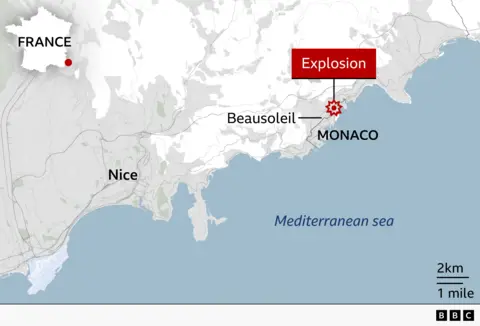
The woman suspected of carrying out a parcel bombing in Monaco which injured a sanctioned Ukrainian multi-millionaire and his family has been found dead, Ukraine’s security service (SBU) has said.
A cross-border manhunt had been launched for Anastasiia Berezovska, a Ukrainian woman who officials believed had fled the wealthy city-state after planting the bomb in the entrance hall of an apartment building on 29 June.
The 39-year-old’s body was found with gunshot wounds to the head, according to the SBU.
Two people including a current officer within Ukraine’s Ministry of Defence (MoD) have been detained on suspicion of murder.
Berezovska arrived in Ukraine two days after the attack on 1 July, the SBU said in its statement, citing law enforcement sources.
There, she communicated with her family and two men – a former law enforcement officer and a current officer in the MoD’s main intelligence directorate.
The two men were investigated as possible accomplices in the Monaco attack based on information that they “repeatedly transferred funds” to Berezovska’s “crypto and bank accounts”.
The intelligence officer subsequently confessed to Berezovska’s murder and said he had done so with “another suspect”, the agency said.
It continued: “During the search of the former law enforcement officer’s home, a basement room resembling a torture chamber was found.
“Both suspects were detained on suspicion of committing murder with premeditation by a group of individuals.”
An investigation is ongoing with the “personal assistance” of the head of the intelligence directorate Oleg Ivashchenko.
Monaco’s deputy prosecutor Morgan Raymond said Berezovska had spent days casing out the residence and was “disguised as a man” during the attack last Monday.
Three people were injured, two of them seriously, when a package exploded just as they entered the building shortly after 21:00 local time (19:00 GMT).
Berezovska was believed to have fled in a hire car to Italy and onwards to Germany – where special forces searched an apartment rented by a 39-year-old Ukrainian woman “currently on the run” in the central state of Hesse on Thursday, police said.
The SBU said Ukrainian authorities had shared all available information with officials in Monaco, with who its prosecutor general was in “close co-operation”.
Law enforcement authorities were working to identify “other suspects” in the attack, it added.

Authorities in Monaco have not confirmed the victims’ identities, but local media reported Vadym Yermolaiev, his partner and his 13-year-old son had been targeted.
Yermolaiev, a real estate developer, was named the 39th richest Ukrainian by Forbes magazine in 2020 with a reported fortune of $230m (£173.8m).
He has major interests are in wine and alcohol in Crimea, which Russia illegally annexed in 2014, and has been the subject of sanctions imposed by the government in Kyiv since 2023.
He is a Cypriot citizen, having renounced his Ukrainian citizenship in 2019, and has been living in Monaco.

Several spells of showers will occur in the Western and Sabaragamuwa provinces and in Galle, Matara, Kandy and Nuwara-Eliya districts

Prison officers urge Justice Minister to protect their colleague who opened fire

Negombo Prison riot: Ensuring protection of prisoners fundamental responsibility of the state – UN

Govt. considers banning or restricting social media for children under 16: PM

Brandix donates vital ECG machine to Mirigama Base Hospital Emergency Care Unit

High-scoring draw gives West Indies rare series win

‘Dates have the highest sugar content to fight Coronavirus’

Sunday Island 27 December – Headlines

#SundayIsland 17th December – Headlines

Sunday Island – 28th March

Sunday Island Headlines – 21 March

Sunday Island – 21st February – Headlines
-

 News4 days ago
Singapore-based Buddhist monk marks nearly four decades of humanitarian service
-

 News6 days ago
CIABOC to question Harak Kata on Rs. 200 mn bribery allegation
-

 News5 days ago
Freedom 250: US Embassy celebrates America’s 250th Independence Day through magic of American cinema
-

 News6 days ago
SLAF conducts successful rescue mission under UN command in Central African Republic
-

 News3 days ago
AI concerned over proposed SL military deployment in Haiti
-

 Business6 days ago
‘Dialog Air Fibre powers a new era of Ultra Fast Home WiFi’
-

 News6 days ago
UNEP support pledged to strengthen Sri Lanka’s Environmental Priorities
-

 Midweek Review1 day ago
Unexpected focus on ‘pieces of tin’ worn by military men