
Sports
Undergraduate Supuna eyes TT ‘crown’

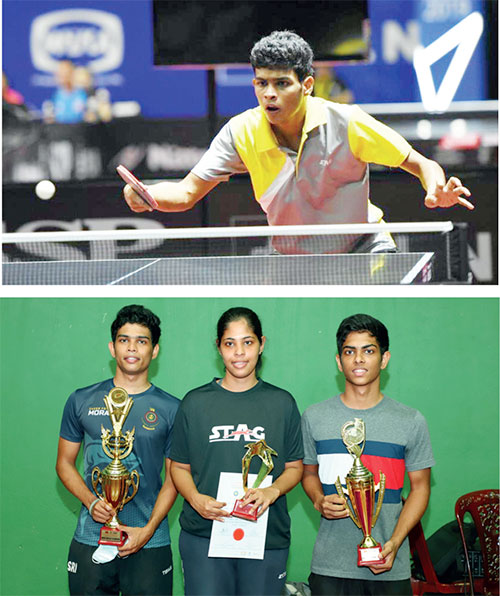
The Warusawithana ‘table tennis family’: From left Supuna, Erandhi and Hiruna
by A Special Sports Correspondent
Table tennis player Supuna Warusawithana stole the show at the recently concluded Kegalla District Open Ranking Tournament when he won the men’s singles open and the achievement helped him set his sight to pursue more glory in the sport this year.
What’s special about Supuna is that he comes from a family that has so much involvement in table tennis. His sister Erandhi and younger brother Hiruna are also competitive table tennis players and have won honours in the sport at national level. There was a time when all three were in the national table tennis pool.
However all eyes are on Supuna who is playing well and has his eyes set on reaching the number one ranking in the men’s singles; a feat he achieved before the curtains fell on the sport as a result of the first wave of the Covid 19 pandemic. He is at present ranked fourth in the men’s singles.
Getting there will be hard and Supuna knows that. There is the challenge posed by players like Senura Silva, Krishan Wickremeratne and Chameera Ginige. That’s what makes the table tennis men’s singles event so exciting and doesn’t allow room for complacency in the playing careers of any of these four players.
Supuna is a ‘brain’ and is studying for a Information Technology degree at the University of Moratuwa. He is one player who balanced his studies and sports and reached some stability in life. “I love to continue playing table tennis, but I have realised that only education would secure my future. So my main goal in life is to complete my degree and find suitable employment,” said the 23-year-old player who had his school education at Dharmasoka Ambalangoda and Ananda College Colombo. For the record he obtained nine As at the O’ Level Examination and an A and two Bs at the A’ Level Examination studying mathematics.
As a result of playing table tennis at national level he said he received the expected recognition at the university. “My table tennis back ground gave me that advantage at the university,” said Supuna.
Like all other players Supuna too was affected by the Corona pandemic because it affected his studies and playing table tennis. But like all other players he too was so glad to return to competition when the Table Tennis Association of Sri Lanka conducted three tournaments this year. He also contested the Kegalle District Maheepala Herath Challenge Tournament and the Open Ranking Tournament held at Mount Lavinia and reached the quarter finals and semi finals respectively in the men’s open singles.
At the international scene he dazzled at the 2013 Junior South Asian Championships (Silver in the team event), 2014 South Asian Championships (Bronze in the team event) and 2016 South Asian Championships (Gold in the team event). “Sri Lanka can win a medal at the Commonwealth Games. I have hopes there too,” said Supuna.
Among the blessings he has to follow the sport he counts the supports he receives from his parents Sumudu (dad) and Nipunika (mom). “They’ve never set goals for me, but have given me all the support which is what I need,” he reflected.
It sometimes isn’t easy to play without outside pressure when so many members of one’s family and close relations have had links in table tennis. Apart from his siblings his dad Sumudu (School level), Grandfather Chandradeera (School level) and his uncle Kumudu (national level) were also involved in the racket sport.
But now the focus is on these three children from the same family who have done Ambalangoda proud. There have been occasions when Supuna has partnered his elder sister Erandhi in the mixed doubles. But he shares much more in the sport with his younger brother Hiruna (who schools at Ananda College) who is his partner in the men’s doubles event. “When I play with my brother the left hand right hand combination we produce comes in handy. We both play an attacking game and we share the same ideas in the sport. My sister is a defensive players and that’s her style of playing. There are times when we three practice together and prepare for tournaments. We have a table tennis table at home,” said Supuna.
It is with much love and appreciation that he remembered his coaches N.H Perera (who coached him at Ananda College), Upul Samantha and Chathura Dushan (who coached him at Dharmasoka Ambalangoda) and Nishan Perera who is his present private coach.
He said that he never stopped playing table tennis even close to examinations. But he said that when he does feel stressed out from all his activities he goes on a hike to the mountains with his friends.
One little area where he would like to improve is ‘training in the gym’ because Sri Lanka table tennis players don’t have a huge gym culture like with most of the players in the rest of the world. “I know it’s important to spend the hours in the gym, but the best of Sri Lanka’s players keep winning without the gym workouts,” he said. He said that he also doesn’t follow a special diet despite being a national player.
Supuna would soon complete his degree and if all goes well he might reach the number one ranking this year and also become the national singles champion. The journey ahead for him in sport is hard, but achieving his dreams wouldn’t be that challenging with his brother and sister cheering him on and offering him all the assistance.

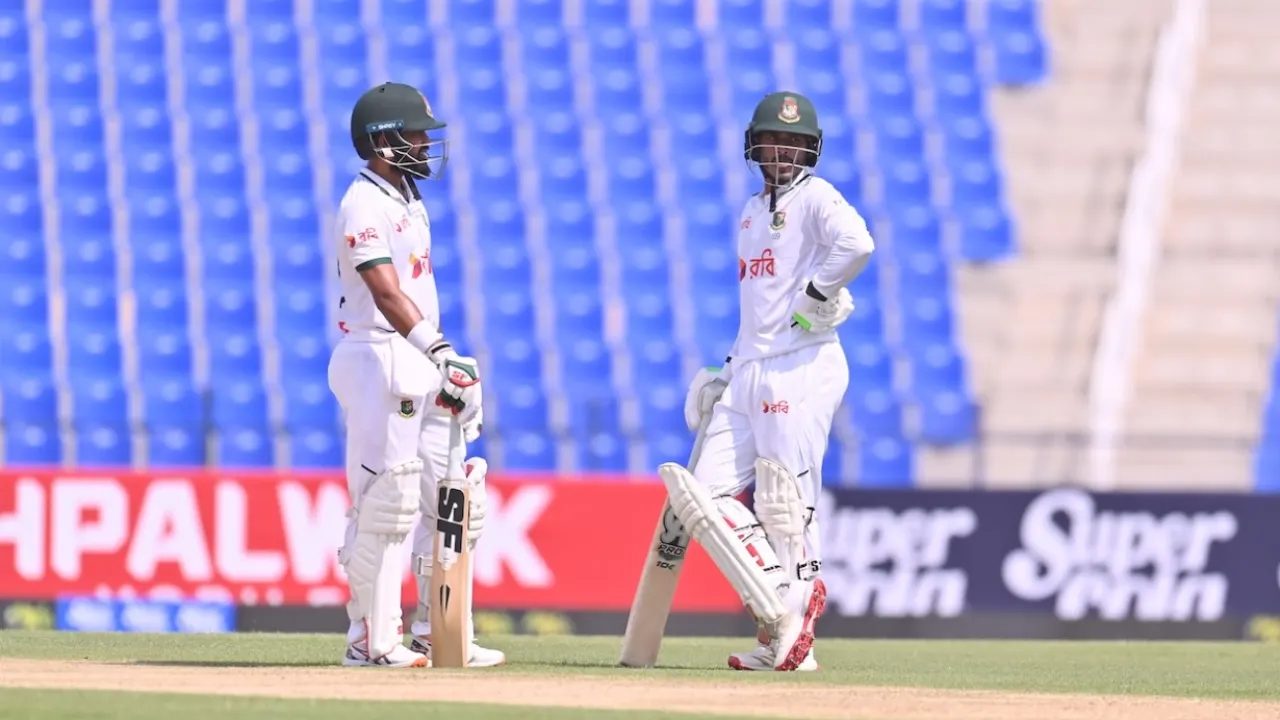
Afghanistan’s pace attack fought back late in the day as Bangladesh went to stumps on 317 for eight on day one in Abu Dhabi.
Mohammad Saleem, Yamin Ahmadzai and Ismat Alam combined to take seven out of the eight wickets that fell on the day. For Bangladesh, Shadman Islam, Tanzid Hassan and Litton Das made fifties.
Saleem targeted the shorter length after lunch, while Ahmadzai found success pitching the ball fuller. Ismat, meanwhile, bowled within himself and was rewarded with the wickets of both set batters Tanzid and Mehidy Hasan Miraz as he drew errors from each.
Tanzid was Bangladesh’s enforcer earlier in the day, hitting eight fours and four sixes in his 71-ball 83 in the first session. He looked set to get to a century in the first session, only for Ismat to thwart his charge.
Later, Shadman Islam and Litton Das struck fifties on either side of Bangladesh’s mini collapse. They lost three wickets for just four runs after they were 221 for two in the second session.
Bangladesh 317 for 8 in 84 overs (Shadman Islam 67, Tanzid Hasan 83, Litton Das 53; Yahmin Ahmadzal 2-62 , Mohmmad Saleem 3-70, Ismat Alam 2-20) vs Afghanistan
[Cricinfo]

Sri Lanka won the toss and chose to bat first in the first T20I against Pakistan being played in Rawalpindi.
Sri Lanka XI: Kusal Mendis (capt & wk), Lahiru Udara (wk), Kamil Mishara, Kamindu Mendis, Sahan Arachchige, Dasun Shanaka, Dunith Wellalage, Maheesh Theekshana, Dushmantha Chameera, Eshan Malinga, Nuwan Thushara
Pakistan XI: Sahibzada Farhan (capt), Saim Ayub, Maaz Sadaqat, Fakhar Zaman, Hasan Nawaz, Khawaja Nafay (wk), Shadab Khan, Muhammed Imran, Razaullah, Naseem Shah, Abrar Ahmed
Latest News
Sutherland and Litchfield lead Australia to quick and convincing win in ODI series opener

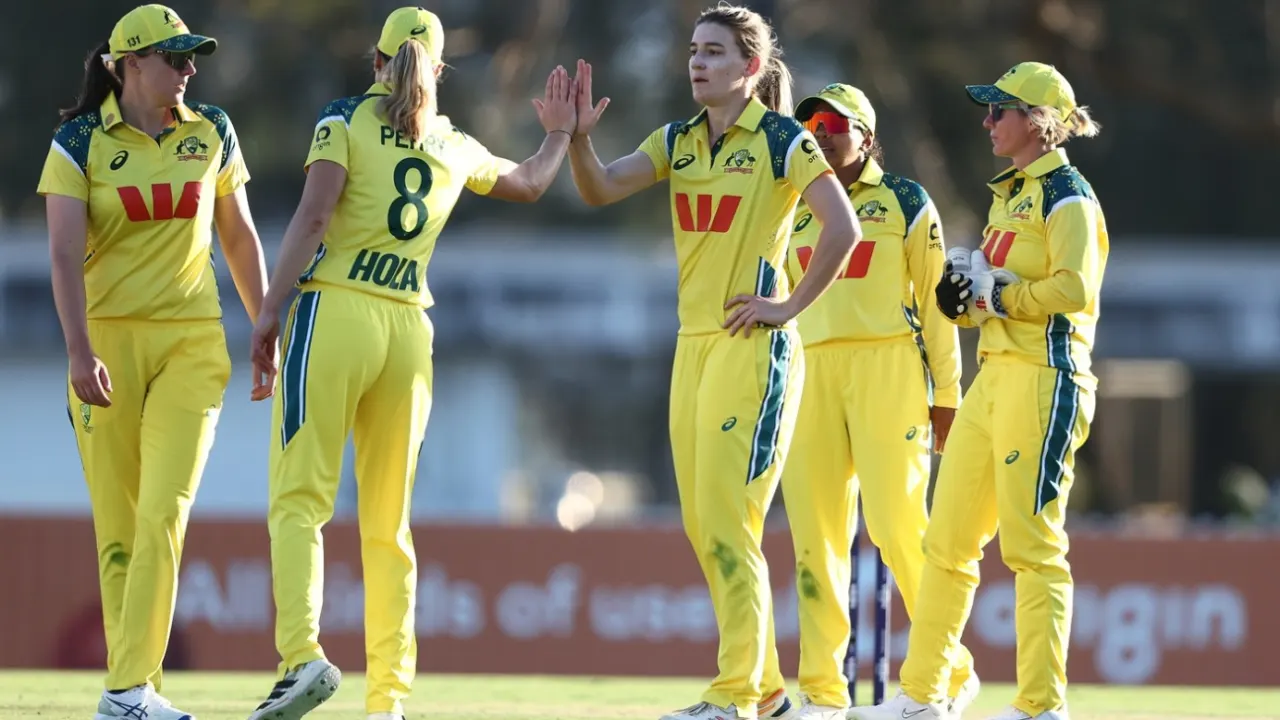
Bangladesh’s second visit to Australia and their first women’s ODI in the country began on a disappointing note as Australia ran out quick and convincing victors.
Annabel Sutherland showed why she is regarded as one of the most versatile fast-bowling allrounders in the world by taking 4 for 30. She kept the batters on their toes by varying the lengths and speeds as Bangladesh were bowled out for 166. Phoebe Litchfield’s swift 77 helped Australia canter home with 24.2 overs and seven wickets to spare to take a 1-0 lead in the three-match series.
The win meant Australia extended their unbeaten record in ODIs at the Allan Border Field in Brisbane to 22 games.
Bangladesh might have put up an even lower total if not for an intent-filled innings from Ritu Moni. Batting at No. 7, she hit two fours in her first four balls following a phase where Bangladesh scored only 35 in about 15 overs.
Asked to bat first, Bangladesh were stung first ball when Megan Schutt got one off a length to hoop in big to have Fargana Hoque caught at slip. In her next over, Schutt trapped the other opener Sarmin Sultana lbw to become only the third Australia woman to 150 ODI wickets.
When Sutherland’s bouncer cramped Sharmin Akhter for room, leaving her unable to get any control on the pull, Bangladesh were truly under the cosh, having lost three wickets inside the first powerplay.
That soon became 48 for 4, which prompted captain Nigar Sultana, perhaps Bangladesh’s best batter, to go into a shell. She hardly looked to score from that point and was happy to defend and merely prevent further wickets from falling.
The ploy was evident from the fact that Nigar didn’t put Sutherland under pressure when she bowled three successive no-balls in the 12th over. What’s more, unaware of the free hit on offer, she ducked under a short ball as well. Shorna Akter, too, curtailed her aggressive instincts to support her captain.
Bangladesh crawled at three runs per over through the middle phase before Tahlia McGrath had Nigar caught behind for 29 off 83 balls. Nigar perhaps half-referred to her own innings when, after the game, she said that Bangladesh “need to be cautious against the new ball and get the intent right”.
As soon as she fell, Moni and Shorna started to put back the pressure on Australia’s spinners. Moni fetched a couple of sweeps from outside off to hit them through midwicket. Shorna also used her feet more frequently.
Moni looked good to score her second half-century in ODIs but was hampered by cramps. That hindered her running, and eventually she was run-out for 45 off 63 balls. Sutherland was generous with her use of the back-of-the-hand slower ones from then on to keep the rest of the batters on a leash.
Australia were never going to be challenged in a paltry chase of 167, and Georgia Voll and Litchfield hit five fours in the first five overs of the chase to get them going.
That is when Bangladesh found another performer of note. Seventeen-year-old Habiba Islam, on ODI debut, bowled a sharp bouncer which got rid of Voll. Habiba, who made her T20I debut against India in 2024 as a 15-year-old, got the ball to nibble around at high pace. While her first spell was expensive, she returned in the middle overs to get Beth Mooney caught brilliantly at midwicket. She bowled the length ball outside leg and got it to move in late, and Mooney could only spoon it to Fargana, who ran in from the circle and completed a diving catch.
But between these two bits of celebration for Habiba and Bangladesh, Litchfield had almost killed the chase. She moved around the crease to hit Marufa Aklter for three successive fours in the seventh over of the chase, and then muscled Habiba over mid-on for the only six in the match.
She played her trademark reverse sweep off Nahida Akter and soon got to fifty off just 35 balls. Her second-wicket stand with Ellyse Perry was worth 89 off 67 balls with Perry contributing only 15 off 23. Until the time Litchfield stepped out and drove Rabeya Khan straight to cover, it looked as if she would complete a century even with so few runs to get.
Scores:
Australia Women 168 for 3 in 25.4 overs (Phoebe Litchfield 77, Ellyse Perry 26*, Annabel Sutherland 25*; Habiba Islam 2-36) beat Bangladesh Women 166 in 49.4 overs (Sharmin Akhter 24, Nigar Sultana 29, Shorna Akter 21, Ritu Moni 45; Megan Schutt 2-19, Ammabel Sutherland 4-30) by seven wickets
[Cricinfo]

Afghanistan fast bowlers hit back after Bangladesh’s strong start

Sri Lanka chose to bat first in Rawalpindi

Sutherland and Litchfield lead Australia to quick and convincing win in ODI series opener

USS Tulsa departs Colombo

Appointments for 1,540 Grama Niladhari Officers

Trump says US will not strike Iran before midterm elections

‘Dates have the highest sugar content to fight Coronavirus’

Sunday Island 27 December – Headlines

#SundayIsland 17th December – Headlines

Sunday Island – 28th March

Sunday Island Headlines – 21 March

Sunday Island – 21st February – Headlines
-

 Features6 days ago
The first woman in the foreign service or Ceylon Overseas Service it was then called
-

 News5 days ago
Geneva takes up Sallay’s case and govt. ignores opportunity to answer accusations
-

 Editorial7 days ago
Fuelling discontent and protest
-

 Foreign News6 days ago
Ten injured after car crashes into rugby supporters in Australia
-

 News6 days ago
Nearly 20 Iranian tankers stranded off Lanka amid US sanctions
-

 Latest News7 days ago
Tharindu Rathnayake, bowlers secure Asian Games Bronze for Sri Lanka
-

 Features5 days ago
Sri Lanka Cricket Bill: Governance reform is not yet a cricket strategy
-

 Features4 days ago
Preventing grievances from becoming communal