
Features
Serving as MR’s Deputy Finance Minister and the travel the job entailed

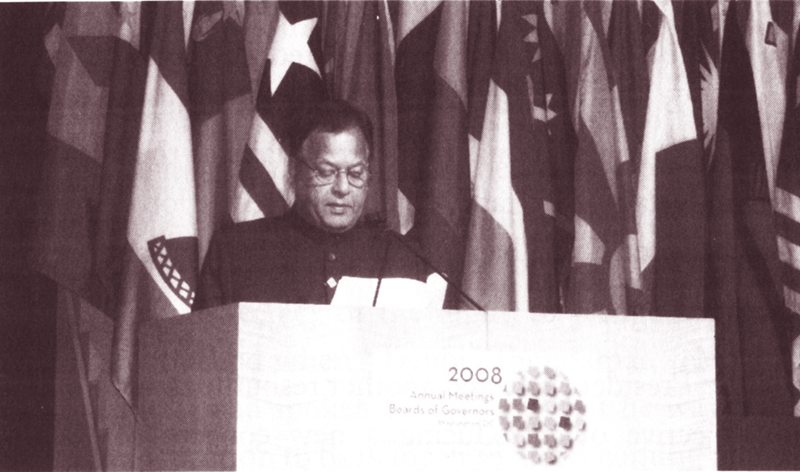
The two week delay in declaring the results of the Kandy district elections upset all the plans of MR to reconstitute his Cabinet. I was aware that he had reserved the slot of Education Minister for me particularly at the urging of his secretary Lalith Weeratunga, Sunimal Fernando and PB Jayasundera. MR phoned me to ask when the rescheduled mini election in Kandy would be held. But due to delays he had to go ahead and appoint his Cabinet with Bandula Gunawardena as the Minister of Education.
Sunimal Fernando told me that he had remonstrated with MR to no avail. By the time I came to Colombo the new Cabinet had already been installed and I was asked to function from the Ministry of Finance as MR’s deputy. He was too embarrassed to tell me of this suggestion himself and had deputed PB Jayasundera to convince me. PB told me that he was facing a difficulty as he had no one to handle international monetary affairs as the President could not undertake that task which involved a lot of foreign travel. I agreed and went back to the Treasury but not for too long.
Very soon the President effected another reshuffle of his Cabinet with the objective of introducing a new concept of “Senior Ministers” at the urging of PB Jayasundera. Several ministers who were senior in age and tenure in Parliament were appointed senior ministers in respect of a clutch of subjects which they were expected to oversee. Leading this group was Ratnasiri Wickremanayake, the former Prime Minister and included the leaders of the left parties – DEW Gunasekera, Tissa Vitarane and Athauda Seneviratne. I was appointed the Senior Minister (of International Monetary Cooperation).
Many of the seniors led by Ratnasiri were not happy with this arrangement as they had no departments under them. But I was the exception in that I continued to function with the Treasury within the offices of the Ministry of Finance. When the Attorney General was tasked to look into the grievances of the senior minsters regarding the powers wielded by them I told him that I had no difficulty with that arrangement. MR telephoned to thank me for my observations and added, ominously, that these ad hoc arrangements will alienate his powerful ministers from him for which he will have to pay a heavy price some day. But he rarely went against the advice of his officials even though his political instincts told him otherwise.
International Monetary Cooperation
As Senior Minister I continued the work I had begun as the Minister of Finance in 2004-2005 with almost the same staff members working under the stewardship of PB Jayasundera. By now PB had become an indispensable cog in the Rajapaksa machine and his word was law in the Finance Ministry and the Central Bank. President Rajapaksa would swear by him. The Governor of the Central Bank was Nivard Cabraal who too was a close confidant of MR. They kept him well informed of the activities in the financial sector.
In turn MR and Gotabaya were grateful that all the demands of the armed services were funded without demur during the Northern war due to the skill and commitment of the officials in the Treasury. The activities of the Tamil diaspora which was carrying on a hostile campaign spilled over to our negotiations with the IMF and World Bank. Their lobbyists were constantly calling for the curtailing of economic assistance to Sri Lanka. Canada was particularly problematic. It had been one of our major partners in development assistance during the Sirimavo and JRJ years. But due to diaspora lobbyists and our inefficient Foreign Service this aid had been reduced to a trickle even at a time when Canada was stepping up its funding for Third World countries.
Since I had studied in a Canadian University I was a regular invitee for social events organized by the Canadian High Commission here. So I could sense the embarrassment of their representatives when they had to follow the obviously biased “line” which was embodied in their instructions from home. The close links we had with CIDA (Canadian International Development Association) and the Canadian “think tanks” had been snapped. There were similar signals from the Scandinavian countries which were our strong development partners in the days gone by.
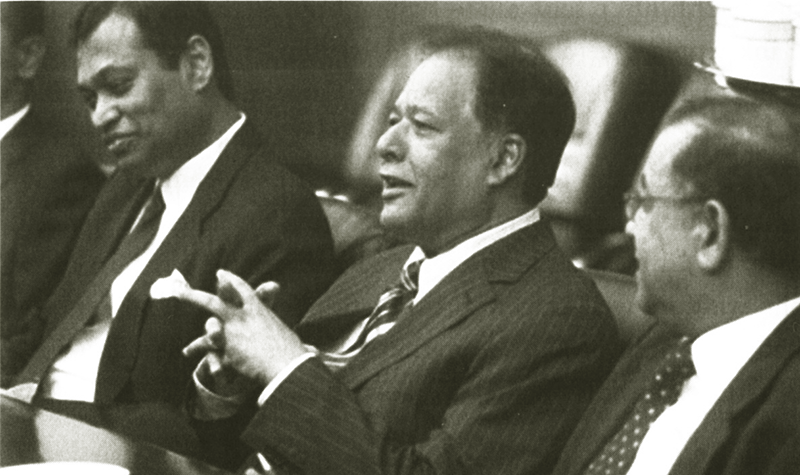
At a meeting with the head of China Import and Export Bank
As Senior Minister I resumed my role which began in 2004 as chief interlocutor with the global financial institutions. This meant that I had a busy travel schedule to facilitate my interactions with the multilateral organizations like IMF, World Bank and ADB. In addition I undertook visits to promote bilateral assistance. These were mostly to donor countries like India, China, Japan, UK and USA. In all these countries we established good relations with the leaders and staff of Central Banks and Export-Import banks [Exim banks] which dealt with the details of financial assistance.
In addition I had to accompany the President or Prime Minister on his state visits since many of the bilateral issues discussed pertained to economic affairs. I can recall such visits to China [Beijing, Shanghai, Guandong] South Korea [Seoul], Russia [St. Petersburg] and Japan [Tokyo]. These state tours involved much more ceremonial than our matter of fact discussions with foreign financial authorities during my bilateral working visits. Then the only other Sri Lankan participants were drawn from our missions in those host countries.
They were officers who had handled economic subjects on our behalf. One of our sad discoveries was that many of our Ambassadors did not get personally involved in these matters and preferred to delegate such tasks to a senior officer in his office. In time the quality of such supporting staff declined and we had to bear the brunt of even the “donkey work” which is usually delegated to the embassy. To make matters worse senior positions in the embassies had been mostly assigned to political appointees who were not competent to help us.
However since we had our own officials and Central Bank officers in our delegation we could get by even though we had to burn midnight oil. Many were the major development projects that we had successfully negotiated. Now when I drive past some of those land mark infrastructure projects I recall how a few of us sat across a table in a distant land to begin the discussion on the manner of funding that project as a first step in getting it off the ground.
St. Petersburg
One of the most interesting of these state visits with MR was to St. Petersburg, cradle of the Russian revolution which was later renamed Leningrad by the Soviet regime. This was the capital of the Romanov Czars and their aristocratic coterie before the Russian revolution of 1917. The rulers occupied the Winter Palace which was stormed by the revolutionary workers led by the Bolsheviks with Lenin as their leader. Lenin had arrived in a sealed train arranged for him by the Germans who thought that he would help in destabilizing their enemy – Czar Nicholas who was waging a war against them.
Lenin arrived at the Finland station in Petersburg and making use of the abysmal living conditions of the workers, peasants and the ill equipped Russian army and navy, raised the “banner of revolt “which led to the fall of the monarchy and the elimination of the Romanovs. It was a model of the politicization of violence which historians attribute to Leon Trotsky’s establishment of the Red Army and its conquest of the distant territories and their integration with the new state of “Socialist Soviets”. Today the Winter Palace by the river Neva is a museum and we were lucky to be given a guided tour of it by the museum director. We also visited the Hermitage to view a fabulous collection of impressionist art which could only be rivaled by the paintings exhibited in the Orangerie in Paris. The military and artistic elite under the Czars looked to France as a beacon of modern art and culture. Indeed many of them spoke French as their second language as testified by the large number of Russian exiles in Paris. They tended to congregate in Paris 15 which is full of Orthodox churches, cafes, clubs, art houses and restaurants serving Russian cuisine so beloved of the emigre “White Russians”.
My secretary in UNESCO Paris, Nadia came from an emigre Russian family and she directed me to their best eateries and cultural events in Paris 15. The heyday of Russian ballet was in Petersburg from which emerged Diaghalev the manager of the Ballet Russe and his temperamental protege the dancer Nijinsky. In the St. Petersburg harbour we could see the “Aurora” the legendary ship of the sailors who refused to fire on the workers led by Lenin and instead trained their guns on the Czarists.
The harbour and the city figures also in one of the most harrowing, as well as heroic, events in the history of Russia namely the siege of Petersburg [or then Leningrad] by the Nazi army. This ruthless blockade deprived the citizens of basic amenities including food. Finally they were forced to survive on two slices of bread a day. There is a monument to commemorate this event in which the centre piece is a glass case showing two slices of bread. We went there in the bitter cold but could not but be moved by the sacrifices and heroism of the Soviet people and the Communist party.
The harbour in Petersburg was the main sea port of the Russians of that time. Even today it is an important opening to western Europe and the Scandinavian countries with Finland as its closest neighbour. The earliest tea traders in Russia imported Ceylon tea through this harbour. The major importer of tea in Petersburg whose company distributed it to the rest of Russia from the time of the Czars, had his office in the city. He entertained our Presidential team at a magnificent lunch in the top ranking old hotel in the capital.
It was a grand example of the old times when fabulous meals were served to the elite with no expenses spared. The building was in baroque style and the interior decor had all the opulence of Czarist times. But while the lunch was going on there was a conspiracy being hatched by the Presidents PA and confidante Sajin Vas Gunawardene with the cautious support of Nivard Cabraal against our Ambassador to Russia and President’s cousin Udayanga Weeratunga – all unknown to MR.
Beijing
In addition to state visits with the President, I had to undertake several visits to Beijing to expedite the release of funds for Chinese supported projects in Sri Lanka. Though the general impression is that China forced us to take loans the truth is far from that. The Chinese Import and Export Bank which oversaw the funding was always cautioning the local counterparts to undertake detailed feasibility studies before projects were submitted to them. While the local sponsors were calling for quick action the Exim Bank usually held back till they finished their own investigations.
Another problem was that our initial estimates were understated to make for easy acceptance by our authorities. Half way through the implementation of the project, cost estimates had to be revised and the amount of the loan revised upwards. This entailed delays and interruption of work. The politicians who pressed for those projects then complained of delays and urged the Finance Ministry to expedite their negotiations with the Chinese Bank. MR was always urging PB Jayasundera to expedite the funding of his projects. PB in turn would call for quickening the release of funds. This often took me to Beijing because due to protocol the Bank would give a Ministerial delegation preference.
We were lucky to have the late Kirthi Amunugama as our Ambassador in Beijing at that time. He was always knocking at the door of the Bank’s Chairman to accommodate us. This system worked well and it took me on several visits to Beijing to claim preference in meeting Chinese authorities. Hotel Beijing was our port of call and we were well known to the staff including the barbers who had been in the business from the early days of the revolution and boasted of cutting the hair of leaders like Chou En Lai and Deng Hsiao Ping.
Beijing outside the official circuit is quite different and offers many rare experiences. One is a drive round the new ring road with a view of the newly developed areas leading to the Olympic village with its famous “Bird’s Nest” National Stadium and large assembly halls. Another view is of the new buildings erected for the Beijing Olympics. I was invited for the Beijing Olympics together with DM Jayaratne, the then Prime Minister. It was an architectural wonder in addition to being an event which was enacted with pin point precision.
Earlier global media had cast doubt on China’s ability to mount such a major event. But all that was dispelled from the spectacular opening to the ceremonial ending. A large number of iconic buildings were erected and after the Olympics they were used for state business. One such meeting in a spectacular new conference complex was held to launch the “Belt and Road initiative” by Xi Jinping. I attended it with Ranil who was then Prime Minister.
There we had a meeting with Aung San Suu Kyi who was the leader of the Myanmar delegation. While chatting I asked her about my Trinity schoolmate Micheal Aung who with his brother, both Christians, were sent by their father to study in Kandy. She only remembered that they had been in the Burmese administration many years ago. I also told her about the “Burmese Rest” in Trincomalee street close to Trinity which hosted Burmese pilgrims who had come to worship at the Temple of the Tooth. She was an amiable lady with a slight British accent, who had been thrust into Burmese politics in order to safeguard the heritage of her father Aung San, a national hero who had been murdered by reactionary elements.
(This volume is available at the Vijitha Yapa Bookshop)
(Excerpted from volume 3 of the Sarath Amunugama autobiography)

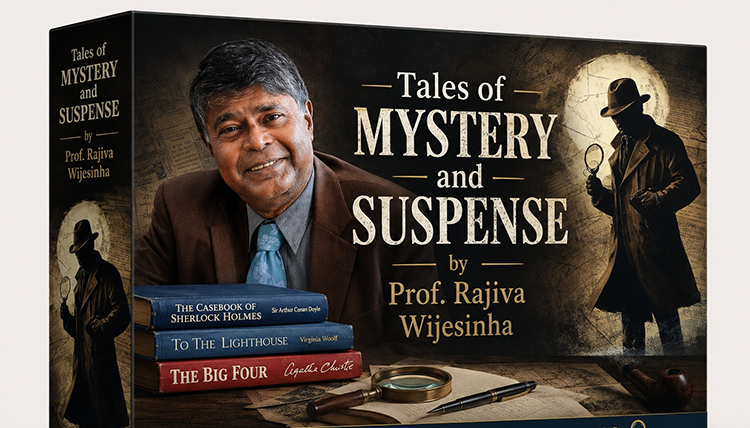
Tales of Mystery and Suspense 3
The murder, in a private dining room in the house, is of a financier with whom the government was negotiating a loan. When this seemed difficult the Minister of Home Affairs agreed to lead discussions, since he had known Mr Oissel the financier when they were young. Hence the private dinner, but when the Minister stepped out for a vote, Oissel was shot just as the Division Bell rang.
The Brahms and Simon detective novels, the first of which I wrote about last week, were amongst several books by the pair that Robert Scoble gave me when I was in Australia towards the end of last year. Amongst them was another thriller of a very different sort, though that too was written and set between the wars.
Called The Division Bell Mystery, it was set in the House of Commons, the first such book I believe, and was by Ellen Wilkinson, a Labour MP who became Minister of Education in Attlee’s government after the war, having served previously as Parliamentary Private Secretary to several ministers. Her hero Robert West is also a PPS, but a conservative, and his Minister, of Home Affairs, is an old style aristocrat, not much loved by the less orthodox Prime Minister, who nevertheless needs his support on many occasions.
The murder, in a private dining room in the house, is of a financier with whom the government was negotiating a loan. When this seemed difficult the Minister of Home Affairs agreed to lead discussions, since he had known Mr Oissel the financier when they were young. Hence the private dinner, but when the Minister stepped out for a vote, Oissel was shot just as the Division Bell rang.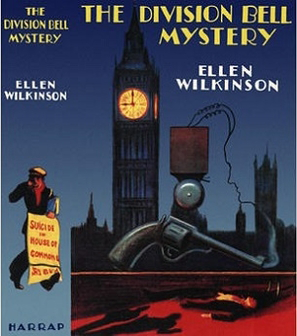
West was just outside the door when the shot was heard, and when he opened it saw only the dead body with a revolver beside it. The assumption that this was suicide was however challenged by Oissel’s grand-daughter Annette, who was his heir, on the grounds that he would never have killed himself. But her view was given greater credence by the Inspector put in charge of the case who said there were no burn marks on the body which would have been the case had Oissel fired the pistol himself.
Matters are complicated by the fact that Oissel’s flat had been burgled while he was at dinner, and Jenks the policeman allocated to him, who had served the Home Secretary and seemed more acceptable to Oissel than someone from the Security Service, had been killed. Matters get even more complicated when Annette says her grand-father’s notebook in which he wrote his secrets in cipher was missing.
That was found in Jenks’ pocket, and then a photographer came to West to say he had been asked by Jenks to photograph this. More worryingly for West, he finds in the Home Secretary’s drawer a few pages from the notebook with what appears to be an interpretation of the cipher.
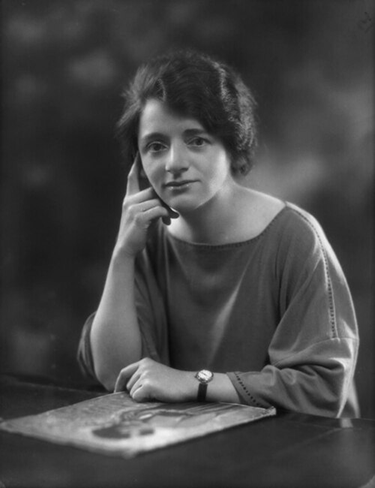
Ellen
Overwhelmed by all this he confides in a recently created peer who knows all about the business world, who insists that they leave the house party at which they had met over dinner and discuss the matter with the Prime Minister who promptly summons the Home Secretary.
But the Home Secretary had gone to Scotland to launch a ship over the weekend, so the meeting could take place only on the morning of the Monday, when difficult questions were expected on the adjournment motion. He admits at the meeting that he had got Jenks to take the notebook, and also that he knew the code since it had been created by him and Oissel when they were young.
He thought he should resign, and even contemplated suicide, but the Prime Minister told him that that would be even worse for the government, and that he should go home to bed. The Prime Minister said that he himself would handle the question, which he did with aplomb, insisting that confidentiality was needed until the inquest. What had happened would be made clear then, he declared, leaving West and Inspector Blackit and Lord Dalbeattie what seemed the impossible task of solving the murder.
Dalbeattie had suggested that West ask a female Labour MP who was very fond of him to get what information she could from the staff. That there was some involvement there had become clear when West, going back late one night to collect a briefcase he had left in a dining room, found someone lurking in the dark in the corridor outside the private rooms. Room J, where the murder had happened, was meant to be guarded throughout by a policeman, but he had left the room having felt dizzy, and it seemed that his coffee had been drugged. West’s sudden appearance however had prevented anyone else getting into the room.
Dalbeattie decides to recreate the scene of the murder and has a dinner party in Room J on the Tuesday night, inviting West and Annette and the society hostess at whose house he had met, and also Patrick Kinnaird, an MP who was engaged to Annette, as well as the Permanent Secretary to the Home Ministry.
After coffee Inspector Blackit comes in with Grace, the Labour MP who had got the confidence of the staff, and a journalist who had also been helpful, and just as they say they think they are on the track the division bell rings. Grace jumps up and tells the Inspector that that provides the solution and they get a ladder, and sure enough find the revolver in the space where the bell is. Directed at the place where Oissel had sat, it had been primed to go off with the ringing of the bell. The waiter who had helped to set things up made clear who the murderer had been.
The reason for the murder and the confused motives of all those involved made for a fascinatingly intricate mix. But also impressive in the book were the descriptions of the isolation possible in the crowded premises of the house, the forceful characterization of the members – Grace based on the writer, the society hostess based on Nancy Astor, the first female MP – and the laid back nature of senior politicians which West realized had to change in the brave new world of high finance.

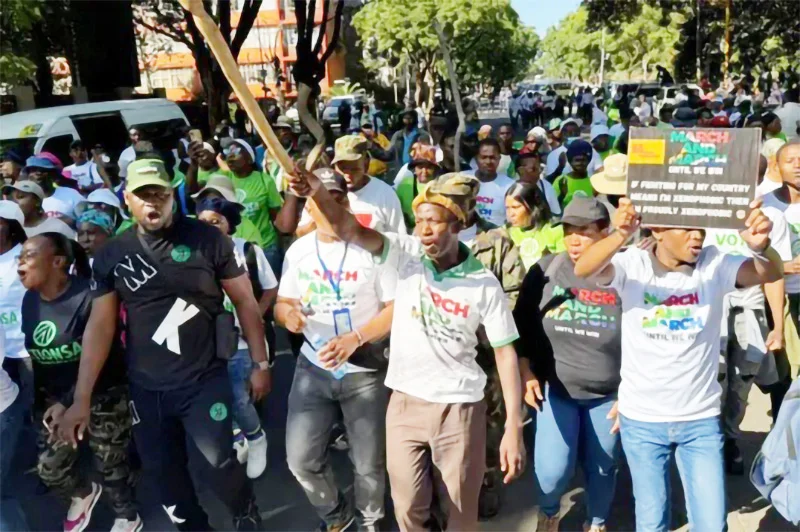
 The current outbreak of anti-immigrant protests in Durban, South Africa is bound to have taken many a subscriber to value-based politics or political idealism quite by surprise. After all, this is evidence that despite the historic accomplishments of nation-builders of the stature of the late President Nelson Mandela it cannot be taken for granted that identity politics, including racism in its worst forms, is no more in South Africa.
At the time of this writing details are scarce on the substantive root causes of the protests but it could very well be that economic grievances, particularly on the part of the majority community in South Africa, are contributing considerably to the disaffection. Shrinking employment and material prospects are likely to figure majorly among the factors igniting the unrest.
Fortunately, the local authorities in Durban are losing no time in calling for peaceful co-existence among the relevant communities and are pointing to the vital importance of stepping-up national integration processes. Apparently, immigrants in sizable numbers from neighbouring countries are present in Durban. However, international TV footage of the protests quoted some local authorities as saying that the majority of the immigrants in some centres that housed them were not illegal migrants and had the documents that entitle them to be in Durban.
In the Durban protests the world has fresh proof of the socially divisive consequences of the gathering globe-wide economic disaffection, touched off particularly by the continuing crisis in West Asia. Going ahead, the world would need to brace for increasing identity-based unrest of the kind it is just witnessing in South Africa.
Considering that the material lot of ordinary people everywhere could only aggravate progressively, with the US and Iran showing no signs of negotiating an end to their confrontation any time soon, it will be left to the more democratic and progressive sections of the world community to initiate positive measures collectively to bring a measure of relief to the discontented.
The swiftness with which such relief will be provided would depend crucially on the importance those sections taking up these undertakings attach to value-based politics as opposed to Realpolitik of power politics.
Going by these yardsticks, Italy could be considered to be moving in the right direction. Recently Italy came to the fore in initiating the collective named, ‘Rome Coalition for Food Security and Access to Fertilizer’, which has as one of its aims the swift provision of fertilizer to economically weak African countries.
In a recent statement Italian Minister of Foreign Affairs and International Cooperation, Antonio Tajani, said that a principal aim of the project was to ensure that the farmers of Africa gained easy access to fertilizer, considering that food security is a growing concern among some of Africa’s economically vulnerable countries.
The statement went on to mention that some 30 countries hailing from the Mediterranean region, the Middle East, the Balkans as well as the FAO had been invited to join the coalition. The venture is far-seeing in that food security is main among the reasons for social discontent which in turn could degenerate into endemic political turmoil and bloodshed. Separatist violence and geographical fragmentation of countries wouldn’t be too far behind these developments, as Africa itself has often proved.
It is hoped that more G7 countries would take the cue from Italy and do what they could to ease the hardships of economically distressed countries, particularly of the global South. In these efforts they would need to break rank with the US, which is today brutally indifferent to the consequences of its policy of making ‘America First’, come what may.
Going by current developments, the Trump administration seems to be blithely oblivious to the wider, deleterious effects of its policy course in West Asia. Besides rendering Iran militarily and otherwise impotent nothing else seems to matter to Washington, as regards West Asia. This is policy short-sightedness of an extreme kind. After all, right now West Asia could be said to be sitting on the proverbial powder keg.
On the other hand, Iran is not giving the world the impression that it is doing anything constructive to get out of the policy straitjacket that it wove for itself decades ago. Rather than enter into a policy of ‘live and let live’ in relation to Israel in particular and initiate a process of reconciliation with the latter, it has chosen to operate within policy parameters that continue to damn Israel. This has put Israel always on the ‘defensive’ so to speak and prevented the opening up of space for meaningful dialogue.
That said, Israel is obliged to explore the possibilities of entering into a negotiatory process with the Arab-Islamic world that could lead to a de-escalation of tensions and bloodshed. It cannot continue to look at its neighbours through lenses that distort them as archetypal enemies who should be ‘wiped off completely from the face of the earth.’
In other words, the need is urgent for Realpolitik to give way to value-based politicks. Italy is beginning to prove that the latter approach could be pursued with some success. May be the EU and the UK could throw their weight behind these initiatives as well and establish that international politics could be refashioned on the basis of humane, civilized norms. The UN would need to be fully supportive of these moves and prove an organizational nucleus of the operations that follow.
In fact the time is ripe for people of conscience to collectively stand up on the side of peace and say ‘No’ to war and violence. Organizations such as the ICRC, the WHO and Medicines Sans Frontiers have already taken up this call. Referring to the widespread destruction of health facilities and their dehumanizing results these organizations have said, among other things, that ‘This is not a failure of the law. It is a failure of political will.’
True, ‘failure of political will’ among those powers that matter accounts for the runaway, uncontrollable nature of war and destruction in contemporary times, but more fundamentally it is a failure of the human conscience. It could very well be that the phenomenal levels to which violence and war have been unleashed today have had the effect of deadening consciences. This is a matter for urgent study and wide discussion.

 I would describe Indunil Kaushalya Dissanayaka as innovative and creative, and she operates under the name of Cuteefly.
Indunil always comes up with something novel to celebrate special occasions, and she does it with candles … and that’s her profession.
She was in the spotlight when she created a happening scene, with candles, for Christmas, Sinhala and Tamil New Year, and Valentine’s Day.
As lanterns light up Sri Lanka for Vesak, the Colombo-based candle maker is quietly turning wax and wick into little pieces of the festival.

Candles reflecting Vesak themes
Her candles reflect Vesak themes – light, peace, remembrance, giving, etc., to enable you to fill your Vesak celebration with devotion and beauty.
Among her Vesak creations is a lotus-shaped soy candle, scented with sandalwood, lavender, etc., meant to burn during this Vesak Poya Day.

Indunil Kaushalya Dissanayaka: Customers
praise her for her creativity
These handcrafted Vesak candles are perfect for offering at the temple, she says.
What makes her creations so novel is that they come in different shapes, scents, themes, and all are handmade.
What’s more, her customers have heaped praise on her for her creativity.
According to Indunil, her creations are perfect as a thoughtful gift … to bring beauty, unity, and light into every moment.
Says Indunil: “Our beautifully handcrafted Unity candles are designed with premium detail and love, making them perfect for celebrations, gifts, and meaningful occasions.”
Cuteefly, says Indunil, is available online.
Readers could contact Indunil on 0778506066 for more details.
He Facebook Page is: Cuteefly.

Handmade with love

Let us dispel the roots of greed, hatred, and delusion, and transform our lives into a nobel period that brings peace and serenity – PM

Prime Minister and United Nations Resident Coordinator discuss post-Ditwah recovery and humanitarian cooperation

Further embrace the values of Buddhism founded upon non-violence, compassion and boundless loving-kindness towards all living beings – President

Showers will occur at times in the Western, Sabaragamuwa and North-western provinces and in Galle, Matara, Kandy and Nuwara-Eliya districts

IMF urges Lanka not to meddle with exchange rate

Court orders arrest of Basil in Rs. 7.8m poll funds case

‘Dates have the highest sugar content to fight Coronavirus’

Sunday Island 27 December – Headlines

#SundayIsland 17th December – Headlines

Sunday Island – 28th March

Sunday Island Headlines – 21 March

Sunday Island – 21st February – Headlines
-

 News6 days ago
All-New GRAVITE launches at LKR 6.99 Mn
-
 Features6 days ago
The NPP’s pivot to the past
-
 News5 days ago
Police probe underway to ascertain links between criminals deported from UAE and local politicians
-
 News4 days ago
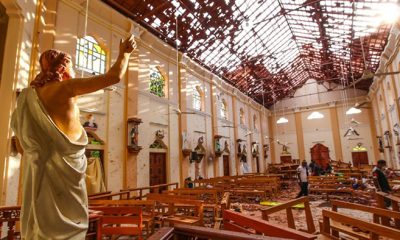
Easter Sunday carnage: Court told Maulana’s statement cannot be accepted without cross-examination
-
 Features6 days ago
End of Peacekeeping
-
 Opinion4 days ago
Undermining the democratic political framework
-
 News7 days ago
Ampara District special Coordination Committee meeting chaired by the President
-

 News4 days ago
UK passport holder hiding here wants to have deportation order rescinded to leave without blemish