
Latest News
Trump says Putin talks ‘don’t go anywhere’ as he imposes new sanctions

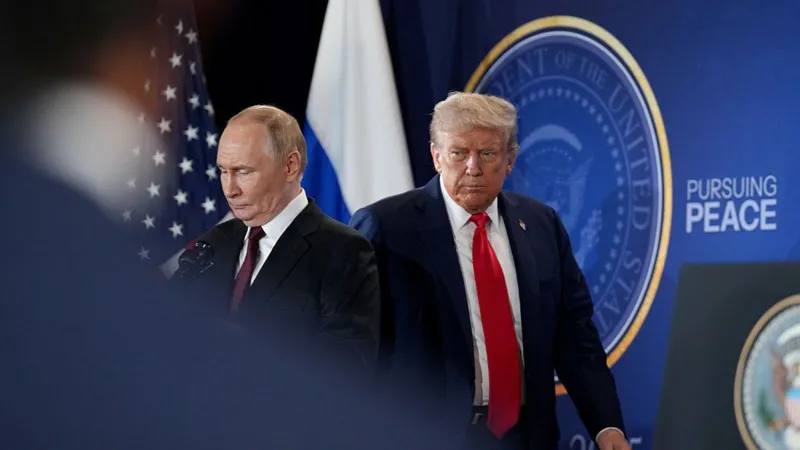
The US has announced new sanctions targeting Russia’s two largest oil companies – Rosneft and Lukoil – in an effort to pressure Moscow to negotiate a peace deal in Ukraine.
“Every time I speak to Vladimir, I have good conversations and then they don’t go anywhere. They just don’t go anywhere,” President Donald Trump said, after a meeting with Nato Secretary-General Mark Rutte to discuss peace negotiations.
The sanctions announcement came one day after Trump said a meeting planned with Russian President Vladimir Putin in Budapest would be shelved indefinitely.
Earlier Wednesday, Russia unleashed an intense bombardment on Ukraine that killed at least seven people, including children.
US Treasury Secretary Scott Bessent said the new sanctions were needed due to “Putin’s refusal to end this senseless war”. He said these oil companies fund the Kremlin’s “war machine”.
“Now is the time to stop the killing and for an immediate ceasefire,” Bessent said in a statement.
Speaking alongside Rutte in the Oval Office on Wednesday, Trump criticised Putin for not being serious about making peace and said he hoped that the sanctions would help force a breakthrough.
“I just felt it was time. We waited a long time,” Trump said.
He called the sanctions package “tremendous”, and added that he hoped they could be swiftly withdrawn if Russia agrees to stop the war.
Rutte also praised the move, saying it was “putting more pressure” on Putin.
“You have to put pressure, and that is just what he did today,” Rutte said.
The move comes as key differences between US and Russian proposals for peace became increasingly clear this week. Trump has indicated that a key sticking point has been Moscow’s refusal to cease fighting along the current front line.
Last week, the UK slapped a similar sanctions package on Rosneft and Lukoil.
“There is no place for Russian oil on global markets,” UK Chancellor Rachel Reeves said while announcing the move.
Responding to the UK, Russia’s embassy in London said targeting its country’s major energy companies would disrupt global fuel supplies and drive up costs worldwide.
It also said the sanctions would have “a detrimental impact on the energy security” of developing and underdeveloped countries, adding “pressure only complicates peaceful dialogue and leads to further escalation”.
The two Russian oil firms export 3.1 million barrels of oil per day. Rosneft is responsible for nearly half of all Russian oil production, which makes up 6% of the global output, according to estimates from the UK government.
Oil and gas are Russia’s biggest exports, and Moscow’s biggest customers include China, India and Turkey. Trump has also urged these countries to halt purchases of Russian oil in a bid to put economic pressure on the Kremlin.
Trump’s move was praised by UK Foreign Secretary Yvette Cooper, who said the US sanctions are “strongly welcome”.
EU Commission President Ursula Von der Leyen posted on X that she spoke by phone to Bessent on Wednesday about “Russia’s lack of commitment to the peace process”.
She also praised a new sanctions package approved by the European Union on Wednesday, which includes a ban on Russian liquefied natural gas imports.
“With the imminent adoption of the EU’s 19th package, this is a clear signal from both sides of the Atlantic that we will keep up collective pressure on the aggressor,” she wrote.
Earlier this year, the UK and US also sanctioned major Russian energy companies Gazprom Neft and Surgutneftegas.
At the White House, Rutte was expected to discuss a 12-point plan formulated by European NATO allies and Kyiv, which would see the current front lines frozen, a return of deported children as well as a prisoner exchange between the two warring countries.
The plan also includes a war recovery fund for Ukraine, as well as security pathways and a clear pathway for Ukraine to join the EU, as well as increased military aid to Kyiv and economic pressure on Moscow.
Earlier this week, Trump said he did not want a “wasted meeting” with Putin in Budapest, and suggested a main point of contention is Moscow’s refusal to cease fighting along the current front lines of the war.
He last met with Putin in Alaska for a summit the White House hoped would lead to the end of the conflict. Instead, the fighting has continued.
A preparatory meeting between US Secretary of State Marco Rubio and Russian Foreign Minister Sergei Lavrov was also shelved. The meeting this week was no longer “necessary” after a “productive” call, the White House said.
Trump has repeatedly endorsed proposals to freeze the fighting along current frontlines.
“Let it be cut the way it is,” he said on Monday. “I said: cut and stop at the battle line. Go home. Stop fighting, stop killing people.”
Russia has pushed back against that idea, with Kremlin spokesperson Dmitry Peskov saying that “the consistency of Russia’s position doesn’t change” – a reference to its desire for Ukrainian troops to leave the Donbas region in Ukraine’s east.
On Wednesday, Trump also pushed back against reporting in the Wall Street Journal that the US had approved Ukrainian long-range missile strikes into Russia, calling it “fake news”.
Ukrainian President Volodomyr Zelensky has expressed a desire for the US to supply long-range US Tomahawk missiles to his forces and suggested that the threat of their introduction to the war theatre may bring Russia to the negotiating table.
[BBC]

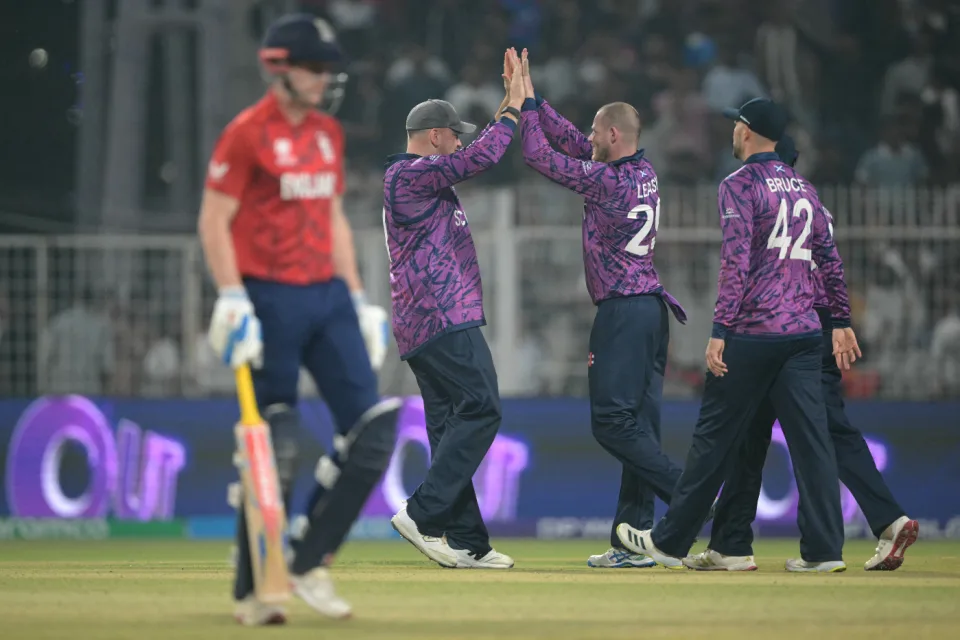
In any other context, this would be an ideal palate-cleanser for England as they reset their campaign and cast their eyes forward to next week’s Super Eights in Sri Lanka. Saturday’s five wicket win over Scotland has put Harry Brook’s team on the brink of progression, alongside the Group C leaders West Indies, and it would take perhaps the most embarrassing defeat in their international history for that to fail to come to pass.
But, in the context of what we’ve witnessed of England’s campaign so far, is anyone willing, categorically, to rule it out? Not after the sensational scenes that the Azzurri set in motion in Mumbai last week, they won’t.
If England’s anxieties had been all too apparent in their last-ball victory over Nepal, then Italy’s clinical dismembering of the same opponents four days later showcased an entirely different mindset. Their joy was infectious: simply to be part of the conversation at their first cricket World Cup was one thing, but to flood the occasion with talent, optimism and courage was quite another.
By the end of that ten wicket win, with the Mosca brothers accelerating over the finish line with a combined haul of nine sixes in 76 balls, Italy were playing with a freedom and focus that England simply haven’t been able to locate since the Ashes went south in December.
Twenty-four hours earlier, England themselves had slipped to a meek defeat against West Indies, after which Brook declared his batters had been “too careful” . But as he’s been demonstrating all winter long – including with his impetuous dismissal against Scotland – that boundary between aggression and recklessness remains hard for the skipper and his team to locate.
What an irony it would be, then, if Italy’s willingness to “run towards the danger” proves their best means to close the gap on their illustrious opponents. On paper, it is clearly not a fair contest, and a big-game performance from one of England’s big guns could yet leave us wondering what all the fuss has been about: between Phil Salt, Jos Buttler and Brook himself, there are at least three batters who have yet to produce the statement performance that we all know lurks within them.
It certainly shouldn’t require the sort of lion-hearted, backs-to-the-wall qualification bid that has come to epitomise England’s football World Cup clashes with Italy. If Brook emerges in a bloodied headband, Paul Ince-style, to grind his team to their target, they might as well pack their bags and call it quits now. But so much of England’s long winter campaign has been played in the head. Right now, they seem a little stuck inside their own thoughts.
Whether it’s symptom or cause remains to be seen, but Jos Butter’s displays so far in this tournament have been rather anodyne. His first two innings, against Nepal and West Indies, produced a pair of 20s that ended at precisely the moment that he usually seizes control, and though he reached 4000 T20I runs against Scotland, he didn’t get past the second over. At the age of 35, this may be his last realistic chance to drive England deep into a World Cup campaign. The good news is that he should have plenty time left in the tournament to find his best form. The bad news for England will come if he can’t locate it.
High-quality legspin has been a vital weapon in the tournament to date, and no player was more important to Italy’s stunning win over Nepal than their own such weapon, Crishan Kalugamage. His figures of 3 for 18 not only ripped the heart out of Nepal’s batting, they came just days after England’s mighty Adil Rashid had been beasted by the same opponents at a rate of 14 an over, on one of the worst days out of his 17-year career. In a game where his team have nothing to lose, but against opponents whose anxieties against spin have been a defining feature of their performances, the stage is his to give it a rip and see what happens.
Despite their nervy displays so far, England’s team remains broadly settled. Jamie Overton for Luke Wood has been their only change to date, and Overton’s form suggests he’ll continue. The reserves – Wood, Josh Tongue, Ben Duckett and Rehan Ahmed – were the only players to attend optional training on Sunday.
England: (probable) Phil Salt, Jos Buttler (wk), Jacob Bethell, Tom Banton, Harry Brook (capt), Sam Curran, Will Jacks, Liam Dawson, Jamie Overton, Jofra Archer, Adil Rashid
Harry Manenti’s first outing as captain, in the wake Wayne Madsen’s shoulder dislocation, could not have gone more swimmingly against Nepal. With Madsen still hors de combat, he will lead his team once more.
Italy: (probable) Anthony Mosca, Justin Mosca, JJ Smuts, Marcus Campopiano, Harry Manenti (capt), Ben Manenti, Grant Stewart, Gian-Piero Meade (wk), Jaspreet Singh, Crishan Kalugamage, Ali Hasan
[Cricinfo]
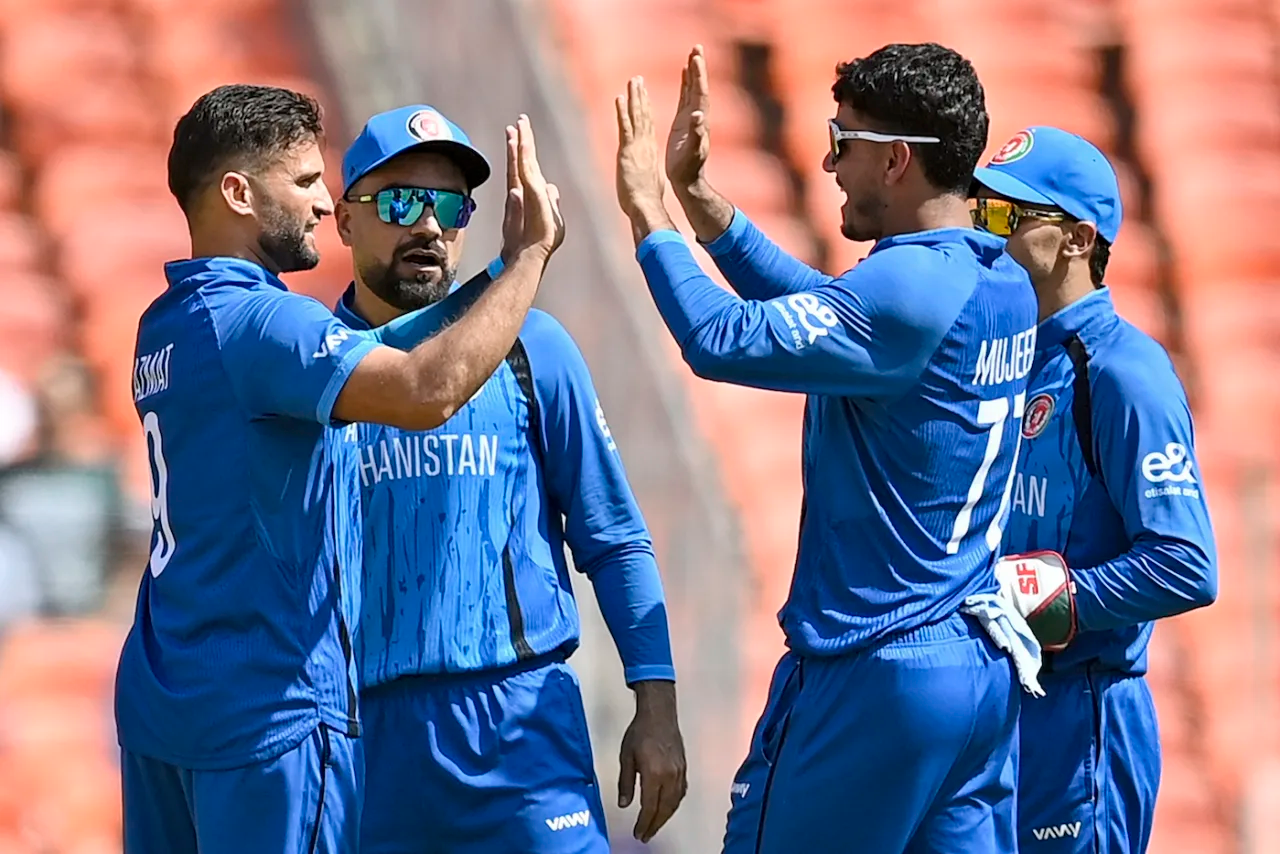
How do you lift yourself after a soul-crushing defeat? Because Afghanistan need to do exactly that after going down to South Africa in the double Super Over in Ahmedabad. It was their second defeat in as many games, and even though they are the favourites for their remaining two group games – against UAE and Canada – their T20 World Cup campaign is hanging by the thinnest thread of hope.
Afghanistan have an 11-3 win-loss record against UAE, their opponents for Monday’s day game in Delhi. But a New Zealand win over Canada the following day is enough to knock them out.
UAE must be feeling confident after their win over Canada. It came in Delhi, where they play their remaining two group games as well. But they too rely heavily on Canada beating New Zealand. If New Zealand beat Canada, which is more likely, UAE will have to pull off a series of miracles. They will have to beat Afghanistan and then South Africa, who have been unbeaten so far. And they will have to do so by such margins that their net run rate goes above New Zealand’s. That gap, at the moment, is huge.
So, how do Afghanistan and UAE proceed? Perhaps, as players often say, by taking one game at a time.
Ibrahim Zadran is a perfect foil for the attacking Rahmanullah Gurbaz. While the role of the anchor in T20 cricket is diminishing every second, things are different at T20 World Cups. Moreover, Zadran has upped his intent of late. Two of his four 50-plus scores since October came at a strike rate of more than 150. However, he has managed only 22 runs off as many balls in two outings so far. Afghanistan expect much more from him.
Born in Bihar, graduated from Jamia Millia Islamia and now playing for UAE, Sohaib Khan showed against Canada how destructive he can be. His 29-ball 51, laden with four fours and four sixes, turned UAE’s fortunes around. But this was not the first time his hitting prowesses were on display. At the Rising Stars Asia Cup in November, he had smashed 63 off41 balls against India A in Doha. In that game, he had taken 24 runs off eight balls against Suyash Sharma. Can he repeat those heroics on Monday?
Both teams are likely to go with unchanged XIs.
Afghanistan (probable): Rahmanullah Gurbaz (wk), Ibrahim Zadran, Gulbadin Naib, Sediqullah Atal, Darwish Rasooli, Azmatullah Omarzai, Mohammad Nabi, Rashid Khan (capt), Mujeeb Ur Rahman, Noor Ahmad, Fazalhaq Farooqi
UAE (probable): Aryansh Sharma (wk), Muhammad Waseem (capt), Alishan Sharafu, Mayank Kumar, Harshit Kaushik, Sohaib Khan, Muhammad Arfan, Muhammad Farooq, Haider Ali, Junaid Siddique, Muhammad Jawadullah
[Cricinfo]
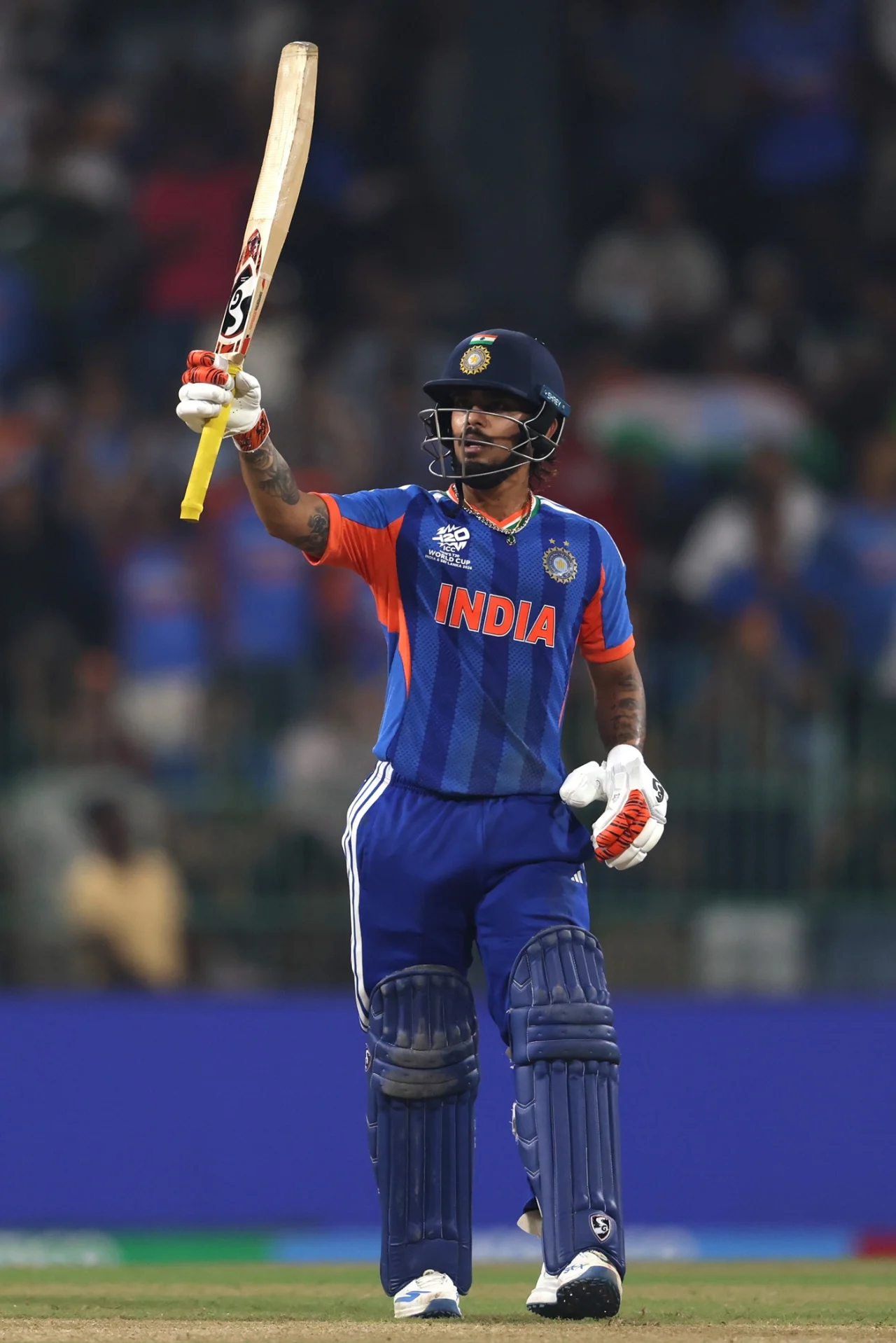
A sensational 77 off 40 balls from Ishan Kishan on a slow, spin-friendly pitch helped India make it 8-1 against Pakistan in T20 World Cups and seal their place in the Super Eights. The surface at the R Premadasa Stadium was so tacky that Pakistan bowled 18 overs of spin after sticking India in, but Kishan rose above the conditions to take India to what looked like 30 above par. With three wickets in the first two overs, Hardik Pandya and Jasprit Bumrah vindicated that feeling as India registered their biggest T20I win against Pakistan.
The impact of Kishan’s innings – after Salman Agha opened the bowling to get Abhishek Sharma for a duck – was clear from plain numbers. The rest of the India innings, including extras, managed just 98 off 80 balls, which was much closer to being representative of the conditions. As was Pakistan’s innings, which went at over a run a ball only thanks to Usman Khan’s 44 off 34.
It is a no-brainer to bowl offspin against two left-hand openers on a slow surface, but the choice of the bowler was surprising: Agha, and not Saim Ayub. Even with the new ball, turn and lack of pace was obvious, resulting in one run off first five balls and a second duck in two innings for Abhishek in his World Cup career.
This is only the second month of the year, and nothing rode on this match in terms of progression in the tournament, but this is an early contender of the innings of the year just because of how much better Kishan was than the average better on this surface. Shaheen Shah Afridi had the right idea to bowl into the surface even with the new ball, but the quick hands and low height of Kishan turned the first ball into a dismissive pull over forward square leg for a six. Then he hit Agha over mid-on against the turn.
A lot of focus has been around Usman Tariq, but Pakistan’s main spinner for long has been Abrar Ahmed with his mix of offbreaks and carrom balls. Kishan didn’t let him settle, sweeping him first ball for six.
Despite the first over ending at 1 for 1, Kishan owned the powerplay, taking India to 52 for 1, which was absolutely essential before the field spread out. The easing of field restrictions didn’t matter to Kishan, who steered the first ball after the powerplay for four. Then he hit Abrar right over his head. Then drove him over extra-cover. The second of these fours brought up his fifty in just 27 balls.
Curiously, despite having an offspinner and two mystery spinners who can turn the ball away from the left-hander, Pakistan went to Shadab Khan’s legspin against two left-hand batters in the eighth over, and paid with 17 runs. By the time Ayub dismissed Kishan, one ball after a reverse-pull for four, he had scored 77 out of 88 in 8.4 overs.
Suryakumar Yadav and Tilak Varma seemed content to play within themselves, the first sign that India knew Kishan had done something special and all they needed to do was preserve their position. They added 38 off 33, including a first-ball four off Tariq, but when they decided to go again in the 15th over, Ayub proved to be a difficult proposition. He got Tilak on the sweep, Hardik for a golden duck, and nearly bowled Shivam Dube with the hat-trick ball. The amount of turn he got indicated India were still ahead in the game.
It was the return of Abrar and Afridi in the 18th and 20th overs that gave India the opportunity to achieve a final kick. Dube and Rinku Singh took the opportunity with 27 off 17 and 11 off 4. Between them, Afridi, Abrar and Shadab went for 86 in six overs, poor returns for the surface.He might have scored a golden duck in trying to impose himself on the game, but with the ball Hardik was meticulous. No driving length, no room, three dots, and out came the low-percentage pull for a four-ball duck for Sahibzada Farhan, Bumrah cashed in on the pressure of a first-over wicket maiden with swing and hard lengths to send back Ayub and Agha. Babar Azam missed a slog sweep off Axar Patel to make it 34 for 4 in 4.5 overs.The game was all but over but Usman Khan kept Pakistan interested with the innings that came closest to Kishan’s in terms of ease. He hit Pandya for a six and then took 27 off 15 balls from Axar with two inside-out fours and two through straight long-off after charging him. However, Axar had his own back when he saw Usman coming, fired one in, and fittingly Kishan was there to practically seal the win for India. Only formalities remained thereafter
Brief scores:
India 175 for 7 in 20 overs (Ishan Kishan 77, Tilak Varma 25, Suryakumar Yadav 32, Shivam Dube 27, Rinku Singh 11*; Salman Agha 1-10, Shaheen Shah Afridi 1-31, Saim Ayub 3-25, Usman Tariq 1-24) beat Pakistan 114 in 18 overs (Usman Khan 44, Shadab Khan 14, Faheem Ashraf 10, Shaheen Shah Afridi 23*; Hardik Pndya 2-16, Jasprit Bumrah 2-17, Varun Chakravarthy 2-17, Axar Patel 2-29, Kuldeep Yadav 1-14, Tilak Varma 1-11) by 61 runs
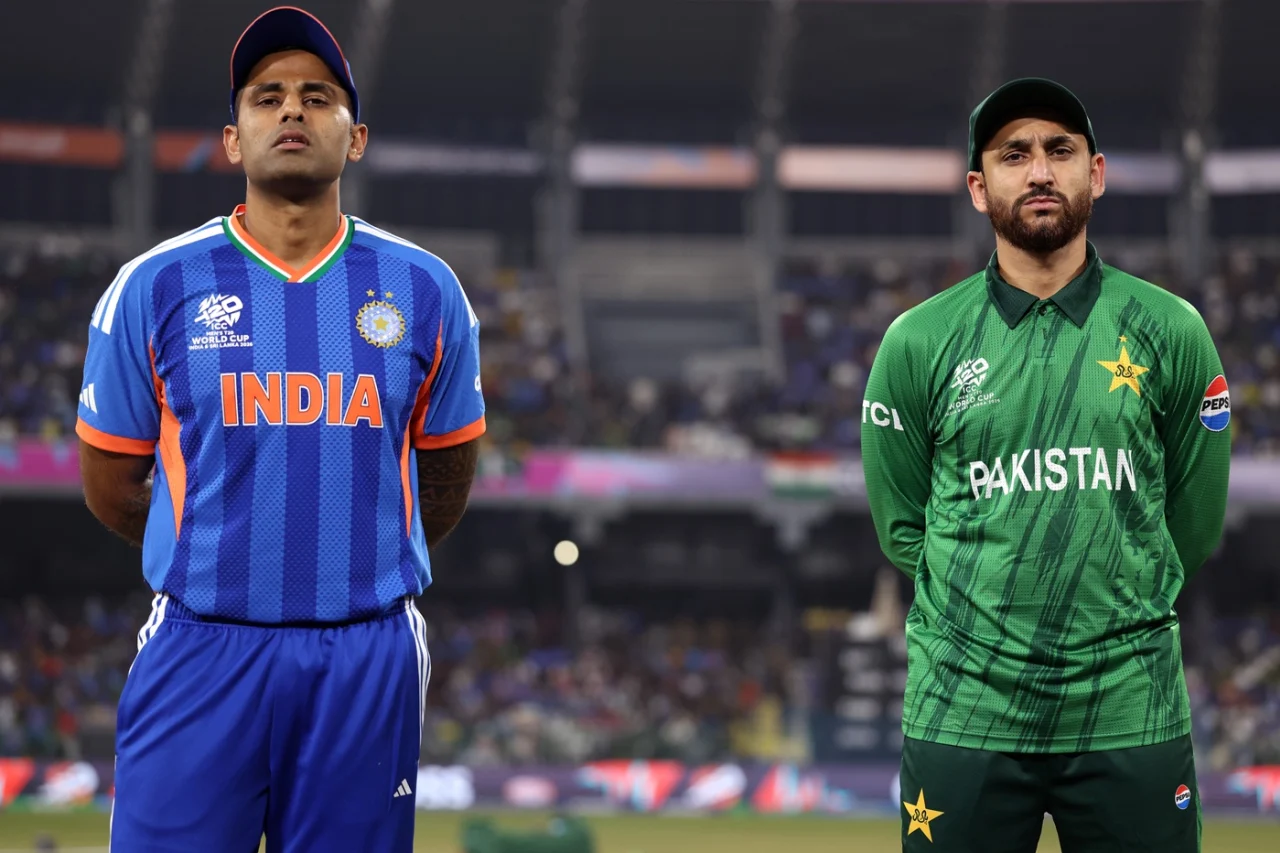
Suryakumar Yadav and Salman Agha did not shake hands at the toss [Cricinfo]

England face unexpected test of nerve in Italy showdown

Winless Afghanistan look to keep slim hopes alive against upbeat UAE

Showers expected in the Central, Western, Sabaragamuwa, Southern and Uva provinces and in Ampara and Batticaloa districts

Patali: Four out of 25 low-quality coal shipments caused Rs. 1,759 mn loss

Cardinal warns of ‘epidemic’ breakdown of family life in Lanka

Three suspects arrested in double murder of lawyer and wife in Thalangama

‘Dates have the highest sugar content to fight Coronavirus’

Sunday Island 27 December – Headlines

#SundayIsland 17th December – Headlines

Sunday Island – 28th March

Sunday Island Headlines – 21 March

Sunday Island – 21st February – Headlines
-
 Life style1 day ago
Marriot new GM Suranga
-
 Midweek Review5 days ago
A question of national pride
-

 Business5 days ago
Autodoc 360 relocates to reinforce commitment to premium auto care
-

 Features1 day ago
Monks’ march, in America and Sri Lanka
-
 Opinion4 days ago
Will computers ever be intelligent?
-
 Features1 day ago
The Rise of Takaichi
-

 Features1 day ago
Wetlands of Sri Lanka:
-
 Midweek Review5 days ago
Theatre and Anthropocentrism in the age of Climate Emergency