
Features
TRUMP: I COULD WIN CALIFORNIA AND NEW YORK IF JESUS – AND – GOD WOULD COME DOWN AS “ELECTION SCOREKEEPERS”


THE GREAT PROJECTOR
by Vijaya Chandrasoma
“The Great Dictator” (1940), the anti-war political satire, was the first black and white “talkie”, written, directed by and starring the incomparable Charlie Chaplin. Acclaimed as one of the greatest political satires/comedies ever made, it was based on a condemnation of Hitler and Mussolini, and their policies of authoritarianism and anti-Semitism that led to World War II.
Chaplin’s movie had a complementary ideological theme to George Orwell’s 1949 dystopian novel and cautionary tale, “1984”, which predicted what could happen if governments are allowed to manipulate facts to suit their narrative, providing an insight into the fearful choice faced by citizens living under an oppressive regime.
The Germans faced such a choice between authoritarianism and democracy in the 1930s. A choice they made based on the lies of a bigoted monster, Hitler, who, manipulating their patriotism, convinced them that Jews, the real enemy, had been planning the destruction of Germany since World War I. He persuaded them that The Final Solution, the genocide of Germany’s entire Jewish population, deemed to be vermin of impure blood, was the only answer. It was supposed to be an act of self-defense to preserve the glorious destiny of the Fatherland, the Master Race of Europe. The end, they were told, as savagely cruel as it was, justified the means. The tragedy is that many decent Germans pretended to be unaware of the horrors unfolding before their eyes.
Chaplin’s film was released in 1940, when the United States was at peace with Nazi Germany; a time when there was a wave of anti-Semitism in America, in accord with Hitler’s belief that Jews presented a threat to world peace and prosperity.
A fickle summary of the storyline of “The Great Dictator”, is used to draw a parallel with the Germany of the 1930s, and the imminent threat faced by America in 2024.
Chaplin, played the role of a lowly Jewish barber, known throughout the movie as The Barber. He bore a strong physical resemblance to Adenoid Hynkel (Adolf Hitler), the dictator of the imaginary fascist nation of Tomainia (Germany), also played by Chaplin. Hynkel, in collusion with Benzino Napaloni (Benito Mussolini), Dictator of Bacteria (Italy), was ruthlessly persecuting the Jews in Europe.
The climax of a complicated plot featured The Barber, impersonating Hynkel, making an impassioned speech to an adoring crowd of Hynkel supporters, announcing he had a change of heart. He exhorted his soldiers to shed their evil, murderous ways and fight for liberty, uniting Tomainia in the name of democracy.
Speaking as Hynkel, The Barber concluded his masterly epilogue thus:
“Then, in the name of democracy, let us use that power, let us all unite. Let us fight for a new world….To do away with national barriers, with greed, with hate and intolerance….Soldiers! In the name of democracy, let us all unite!”
That epilogue changed the course of Tomanian history. Hynkel supporters realized the dangers of the path they were treading. Forsaking the evil machinations of Dictator Hynkel, Tomainia continued to live in peace and harmony with all its citizens and neighbors.
The last scene in the movie shows Hannah, The Barber’s girlfriend, listening to his message of hope on the radio, saying that “The soul of man has been given wings, and at last he is beginning to fly. He is flying onto the rainbow, into the light of hope, into the future, the glorious future, that belongs to you, to me, and to all of us”. The film reaches its dramatic climax after the epilogue, when Hannah turns towards the brilliant sunlight, and says, “Listen”.
Unfortunately, the Germans didn’t listen. They made the wrong choice, believing the words of a bigoted madman, Hitler, plunging the world into the most violent military conflict in human history, a war that claimed the lives of 20 million combatants and at least 40 million civilians, including the genocide of six million Jews in Nazi gas chambers.
Today, we have a situation in the United States of America approaching the same choice that the mythical Tomainians faced in the 1930s. A situation where we, alas, have no Trump look-alike who can, like The Barber did in Tomainia, impersonate our own bigoted madman and save American democracy.
Wait! There’s hope. We may not need a look-alike or an impersonator. There’s every chance that Trump may destroy himself, at the rate he seems to be speeding towards lunacy/dementia, considering the nutjob nonsense he has been spewing recently. Like Jesus counting his votes! The day Jesus descends to earth, that’s the day Trump goes straight down to hell!
Seriously, though, this is not some drama-filled hyperbole predicting that the choice awaiting Americans next year will either see the continuation of our Great Experiment of Democracy, or plunge our society into the chaos that would have been the fate of the German people had Hitler prevailed in WW II. It’s just the plain, unadulterated truth.
(For aficionados of historical coincidences, Friedrich Trump, born in the Kingdom of Bavaria in Germany in 1869, was the patriarch of the Trump family, The Donald’s paternal grandfather. Born of humble stock, Friedrich too worked as a barber in Munich. He spread the lie that he was related to the Wittelsbach Dynasty, who ruled Bavaria at that time. He repeated this lie so often that his peers believed it, though the fact that he was as dumb as a rock, the village idiot, belied his claims to royalty. And even more coincidentally, he was exiled for the crime of dodging the military draft (bone spurs?) by the Bavarian government, and made his home in New York in the late 1880s.
Friedrich’s genius for transforming a lie into the truth, his cowardice in refusing to serve his country and his monumental stupidity have been the hallmarks of the Trump Dynasty, traits inherited in generous measure by The Donald).
Donald Trump won the presidency in 2016, exploiting the fears of the Christian white majority in the USA of rapid changes in the demographics of the nation, caused by the influx of legal and illegal immigrants, people of color, especially Latin Americans. These dark-skinned aliens are predicted to form the majority of America’s population by 2050, with the resultant erosion of privilege white Americans had enjoyed for centuries.
I am not going to detail the disastrous four years of the Trump administration; his tax cuts of $1.7 trillion which benefited only the super-wealthy; his immigration policies based on race and religion; his cruel policies of family separation of asylum seekers at the southern border, housed in overcrowded camps devoid of human amenities of hygiene and sustenance; his criminal mismanagement of the pandemic which caused avoidable deaths of over 600,000 Americans; and the economy he left adrift, with an explosive rise in the national debt of almost $7.8 trillion.
Nor am I going to dwell on the multiple felonies that Trump has been arrested and bailed, with a current score of 91 felonies in four separate jurisdictions.
The only fact that continues to amaze me is that, in spite of Trump’s obvious acts of corruption and criminal incompetence during his presidency; and subsequent crimes of fraud, sexual assault, sedition, obstruction of justice and espionage hanging over his head after his defeat in 2020; he still remains the prohibitive favorite for the Republican nomination for the 2024 presidency. The Party of Family Values and the Rule of Law tragically transformed into the modern version of Hitler’s Nazi Brownshirts. Swastikas and all.
But I will, very briefly, touch on recent public statements Trump made, which prove his attitude towards elections and abuse of power, and his evil genius for Projection, the old Nazi trick invented by Hitler’s Propaganda Minister, Joseph Goebbels, “accuse your enemy of the same crimes of which you are guilty”.
Last week, at a rally in Cedar Rapids, Iowa, addressing his Evangelist and white supremacist base, Trump made breathtaking statements about US elections, “that I would win even blue states like California and New York if Jesus Christ – and God – would simply come down and act as a scorekeeper for me”. When asked if he would be a dictator if he is reelected in 2024, he said, “Only for one day. I’ll only abuse power on the first day of my second term”.
And he made a Projection for the ages, almost Orwellian in its manipulative gaslighting, comparing himself to President Biden:
“If Joe Biden wants to make this race (for the presidency) a question of which candidate will defend our democracy and protect our freedoms, I say to Crooked Joe – and he is the most corrupt president we’ve ever had – we will win that fight, and win it very big.
“Joe Biden is not the defender of American democracy. Joe Biden is the destroyer of American democracy”.
These statements were met with with wild applause from his Evangelist and White Supremacist base.
The title of “Crooked, Corrupt Joe” has been bestowed upon President Biden by a convicted felon, arrested and on bail on 91 felonies! The mantle of “Destroyer of American Democracy”, again conferred on Biden by an indicted traitor, arrested and on bail for felonies of inciting an insurrection and espionage, who recently stated that he would terminate the constitution if elected – that’s pretty rich, even for Republicans turned Nazis.
Can Trump’s web of deceit and treachery succeed again? Of course it could, but only if Democrats don’t fight back, or keep fighting in ways that were honorable 20 years ago, but are obsolete now and destined to failure.
Democrats have not as yet realized that times have changed, that deception, lies, violence and death threats are now the new normal of election campaigns. If they continue taking knives to a gunfight, unless they stoop to somewhere near Trump’s level – plummeting to his depths is a human impossibility – and use all the criminal and treasonous ammunition they have against him and the Republican Party, they will be outwitted again, like they were in 2016.
The fourth Republican debate was held last Wednesday, which Donald Trump again did not attend. The participants were four Republican hopefuls who were all a distance behind Trump in the polls. The reason commonly given for Trump’s absence at these debates is that he has this huge lead over all his rivals. My opinion is that if he does attend, Republican candidates like Chris Christie, Nikki Haley, even Ron DeSantis will find the courage to attack Trump on his spectacular character flaws and crimes, even at the risk of antagonizing his base, perhaps gaining the support of moderate Republicans.
These are exactly Trump’s criminal and racist blemishes that Democrats should be shouting from the rooftops. There is no lack of ammunition: Trump’s despicable character, senile vacuity and treasonous crimes, the Republicans’ embrace of the white supremacist fears of the Great Replacement Theory, Abortion Rights and Contraception, Gun Control (especially after the 561st mass shooting in 2023 in Nevada last Wednesday), Voting Rights, Climate Change, LGBTQ rights and Gay Marriage, Taxation, Income and Wealth Inequality, the threat to Obamacare, Student Debt. All these rights and more will be under attack in a radical red MAGA (Make America Great Again) Republican administration.
These dangers to democracy under a Republican administration should be highlighted by every Democratic politician, at every available opportunity. And Democrats should not concentrate on winning just the presidency, they should aim at sweeping both Houses of Congress.
America is on the threshold of a struggle for its democratic life. And many decent Americans, like the Germans nearly a century ago, seem to be unaware of the dangers unfolding before their eyes. As Republican Liz Cheney wrote in her recent bestseller, Oath and Honor, “Americans are sleepwalking towards a dictatorship”.













 By Ramya Kumar
According to the Quality Assurance Council (QAC) of the University Grants Commission (UGC), quality assurance (QA) refers to “the means (i.e. the policies, attitudes, actions, procedures, etc.), by which an institution can guarantee with confidence and certainty, that the standards and quality of its educational provision are being maintained and enhanced”.
An expansive structure has been in place since 2005 to govern and implement QA processes within the state university system. The QAC is the focal point at the UGC that implements external reviews of state universities and institutes. Each university has its own Centre for Quality Assurance (CQA) tasked with performing QA in line with QAC directives. Faculties, in turn, have Internal Quality Assurance Cells (IQAC) performing their own QA; they are answerable to the CQA.
The big question is whether this all-encompassing top-down QA system, that in many ways undermines the internal dynamics of university governance, actually supports universities to enhance the quality of education. This article highlights some concerns.
Top-down check-box activities
The QAC conducts external reviews of universities and degree programmes. A review team appointed by the UGC (who may or may not have experience in the institution/programme in question) examines the self-evaluation report submitted by the said institution/programme. The team then conducts a site visit to verify the claims made in the university’s self-evaluation report, clarify issues identified during the desk review, and examine how QA procedures operate in practice. The team holds meetings with the university administration, members of the Council and Senate, Deans, Heads of Departments, academic and non-academic staff, students, and others. Following the visit, a draft report is submitted to the relevant institution/programme for comment before final publication. The reviewed institution/programme then prepares and publishes an action plan addressing the recommendations, with subsequent monitoring of progress.
There are some worthy QA initiatives under implementation, such as improving facilities for students with disabilities and strengthening mechanisms to address sexual- and gender-based violence. However, for the most part, QA activities have little to do with improving the quality of education. They are mostly preoccupied with monitoring faculty and department websites, digital transformation, student feedback, subject evaluation, course evaluation, peer evaluation, and, more recently, staff appraisal. These activities, which consume an inordinate amount of time—so precious at understaffed universities—have become check-box activities completed to generate evidence for the next review. Below is an excerpt of a conversation between two academics (1 and 2) that conveys how QA plays out at universities (reproduced with permission).
1: … .it’s like social media you know, like posting things on Facebook or twitter or Instagram. When people do a lot of social media, everything they do, they do thinking, “okay I’m going to post it in this way… this I have to put on my Instagram.” QA is a little like that… everything is considered in light of, “ah we can use this for the review, as evidence… for example very recently we were encouraged to have all the things that we do in our department in the faculty newsletter so then they can put in the review. Every little thing has to be noted down….
2: And with pictures and all…
1: At the very least it has to be written so that you have written evidence .. you can’t be doing something for the sake of doing something or because it is good for the department … and sometimes people tell me “oh yea that’s a good idea we can fit that under this x, y section of the review..”
2: Yea, and nobody really thinks about the actual outcome… whether it’s actually helping anyone..
1: I also find that a lot of the words that we used in different ways have now been co-opted to the QA discourse ..including quality.. I can’t actually say what I want as an “outcome”, for example, that the outcome of this workshop is that my students “think about” … then I am told “ah but no that’s not one of the Bloom’s taxonomy words, “think about”.…
2: And the worst part is these medical and agriculture people, these types of people go around spreading it like some kind of gospel!
1: Yea, this cookie cutter way of doing things, they think is the height of innovativeness or creativity, when actually it is so mundane … for me the most awful thing about it is like some fungus of mundanity has taken over through QA reviews.
2: yea, when you say QA, my mind closes off immediately and I stop listening…
Auditing everything but power
QA leaves out crucial aspects of university governance. For instance, there is no review or assessment of the “quality” of university administrations under Criterion 1 or the integrity of procedures governing the promotion of academic staff under Criterion 6 of the institutional reviews.
The majority in the Council—the university’s executive and governing body, which is responsible for selecting the Vice-Chancellor (VC)—are appointed in ad hoc fashion. Apart from the Ex-Officio members in the Council (VC, Deans, etc.), and the two members elected by the Senate, the remainder are appointed by the UGC with no formal consultation or vetting procedure. The VC appointment process described in UGC Circular No. 03/2023 exemplifies how an ostensibly technical process can become entangled in political sycophancy. The Registrar invites applications for the position of VC through advertisement. Applicants must submit a curriculum vitae, a statement of vision for the university and supporting documents. The University Council appoints a three-member Search Committee of senior academics to encourage “eminent persons” to apply, while the UGC appoints a former VC from another university to “observe” the selection process.
A Special Meeting of the University Council is convened. Candidates are interviewed and must make a presentation to the Council Members, followed by questions. Each Council member “gives marks” for seven prescribed criteria: strategic focus (20%), effective leadership (20%), holistic thinking/conceptual skills (10%), academic and research excellence (15%), personal integrity (10%), professional communication (10%) and managerial competence (15%). Marks are averaged, and the Council recommends three candidates to the UGC in rank order. The UGC-appointed observer separately submits a confidential report on the selection process.
This procedure is expected to guarantee quality, but does it? Applications are submitted to the Council Members, who have been appointed on questionable bases, and who are expected to review the applications and give scores, based on objective assessments. But, in reality, most Council Members are manipulated by VC candidates, who often have personal ties with them. The UGC-appointed observer usually has no genuine interest in the outcome. And there is no way for anyone to actually question the Council’s decision once it is made. Although the highest-ranked candidate may ultimately be appointed, the selection remains a political decision made by the President, who retains the discretion to appoint any one of the three.
External reviews also do not look into the promotions of academic staff, except to scrutinise whether there are policies and procedures in place to govern promotion. Academic staff may apply for promotion to Professor once they satisfy the prescribed eligibility requirements, which typically include the period of service, academic qualifications, research and publication achievements, teaching experience, and contributions to the university and wider community. Applications are evaluated against specified criteria, with research output and academic contributions assessed through documentary evidence and expert evaluation. Under the UGC’s scheme for Professors, two experts from outside the applicant’s institution assess specified aspects of research and knowledge dissemination. Again, beneath this technical process, which is externally evaluated, lies a problematic points-based scheme that can be manipulated and abused with impunity.
Rethinking university QA
Like the VC election process and the schemes of promotion for academic staff, QA reviews are open to manipulation. Before a review, there is a chaotic rush to complete evidence gathering and reporting. Academics leave all other work aside, including at times their teaching, to focus on completing documentation and preparing reports. The standardised criteria in the review manuals and scoring sheets often do not reflect differences in disciplines and institutional contexts. But this does not really matter because any serious problems experienced by institutions or programmes are hastily brushed under the carpet to conceal any evidence that could taint the review. The goal is to obtain an A or at least a B grade at whatever cost.
QA may result in positive change if it moves beyond top-down check-box activities towards internally designed and owned processes encompassing all aspects of university governance, led by departments and faculties, and supported by adequate resources. The current QA system needs to be dismantled and replaced by procedures that are accountable, not to the UGC, but to our students and the communities we serve.
(Ramya Kumar is attached to the Department of Community and Family Medicine, Faculty of Medicine, University of Jaffna)
. Kuppi is a politics and pedagogy happening on the margins of the lecture hall that parodies, subverts, and simultaneously reaffirms social hierarchies.

 Yes, Down Memory Lane, the beloved Sing-Along concert series that first struck a chord, way back in 1997, returns for its landmark 20th edition this Saturday, 17th October, at the beautiful Bolgoda Grand Resort, Moratuwa town centre.
Having celebrated its glorious 25th anniversary with the show in 2023, this milestone 20th concert promises to be even more special.
The organisers, the ever-popular Moratuwa Arts Forum, are pulling out all the stops to present yet another unforgettable evening, brimming with camaraderie, fellowship, and pure nostalgia.
Get ready for two-and-a-half hours of non-stop singing as veteran vocalists, from the Moratuwa Arts Forum, will take the stage to lead and inspire the happy audience to sing, sing and sing to their hearts’ content.
The repertoire? Absolutely magical, according to the organisers.
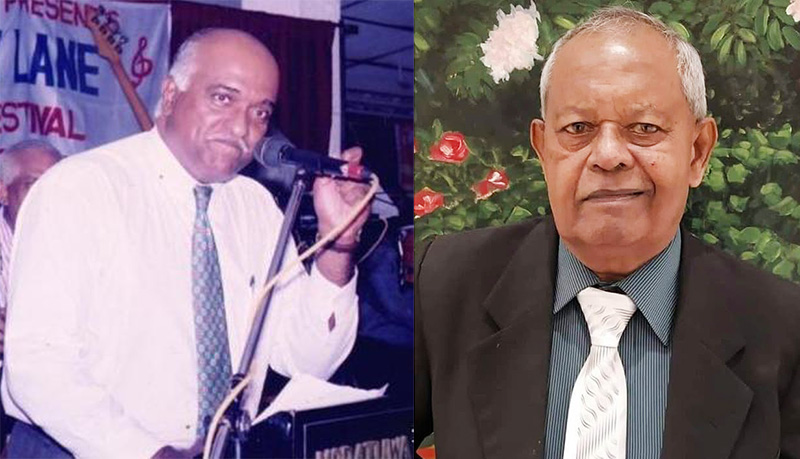
Veteran Arun Dias Bandaranaike: Will handle the evening’s proceedings / Priya Peiris: Event Conceptor
Around 40 golden oldies — from timeless English vintage evergreens and hits from the 50s to the 90s, to toe-tapping calypsos, soulful American plantation melodies, rousing cowboy and Dixieland favourites, aa well as cherished Sinhala standards. All to be sung with much gusto!
This year’s dedicated organising committee comprises Brian Coorey (Chairman), Priya Peiris (Event Conceptor), Hiran Fernando, Suranga Fernando, Viranjan Perera, Hemka Fernando and Neelesh Silva. Guidance and support comes from Moratuwa Arts Forum President Sarana Guneratne and Secretary Chandani Silva.
Adding his signature charm to the evening, as Master of Ceremonies, will be the veteran Arun Dias Bandaranaike.
Don’t miss this landmark celebration of music and memories!
For further details, contact Hiran Fernando on 0772636446 or WhatsApp 0783636446.
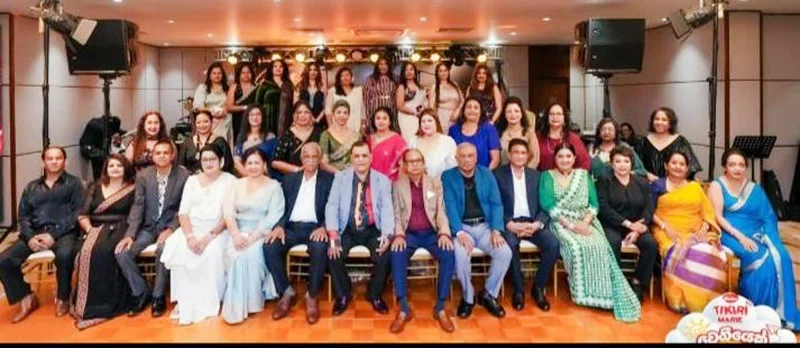
The stage was set, the lights were bright, and the air was filled with pure musical magic!
The Ernest Soysa Music Academy Musical Show 2026 was celebrated as a vibrant, soul-stirring evening of music, passion, and performance, showcasing the brilliant students of the academy. The grand celebration was hosted at the elegant Grand Monarch Hotel in Thalawathugoda.
More than just a concert, this annual programme serves as a cherished talent platform, highlighting the remarkable musical dedication, vocal abilities, and instrumental skills so lovingly nurtured at the Ernest Soysa Music Academy.
With their sheer versatility, confidence, and charm, 42 talented students of the Academy took centre stage in this grand show, captivating an audience of over 350 enthralled spectators.
Adding glitter to this spectacular evening, the spectators also had the rare opportunity of seeing beloved stars Edward Jayakody, Coreen Almeda, Ranil Mellawarachchi, Pradeep Darmadasa, Luke Hendricks and Tharanga Nelson in action!
The Ernest Soysa Music Academy is a premier music education institute, led by the veteran, and much-respected Sri Lankan musician, composer, and director, Ernest Soysa — a maestro who continues to inspire generations through the universal language of music.
A truly unforgettable evening that struck all the right chords!

HUTCH strikes five awards as the only telco honoured at SLIM DIGIS 2.6

Opp. Leader makes an intervention on behalf of Ven. Gnanasara

Quality assurance without quality enhancement: The irony of university QA

Nethmina takes five wickets as Mahinda rout Lumbini

Hayleys Fentons recognised at Satynmag Women Friendly Workplace Awards 2026

Nobel Peace Prize to Navanethem Pillay is reminder to Sri Lanka of unfinished commitments – NPC

‘Dates have the highest sugar content to fight Coronavirus’

Sunday Island 27 December – Headlines

#SundayIsland 17th December – Headlines

Sunday Island – 28th March

Sunday Island Headlines – 21 March

Sunday Island – 21st February – Headlines
-

 Features5 days ago
The Sri Lankan who made Scottish history
-

 Features7 days ago
Preventing grievances from becoming communal
-

 Sports5 days ago
Nissanka absence opens door for Sri Lanka’s young guns
-

 News6 days ago
Gnansara Thera to be assigned to prison printing section: Officials
-

 News4 days ago
NDB fraud Rs 60mn more than reported
-

 News4 days ago
Removing monk’s robes matter for Sangha to decide: Mahanayake Theras
-

 Features5 days ago
Future of Sri Lanka’s state university system: Should it be shut down and reopened?
-

 News6 days ago
OIC of FCID summoned before Maligakanda Magistrate