
Features
Trump and his tariffs: What can we do?


The never-ending soap opera of Trump and his tariffs continues to engross the world, with nations around the world wary of provoking or alienating Trump while awaiting the next Trumpian dictum which could make or break their economies. Trump likes to keep the world in suspense as to what final rates he would decide on. We cannot even be sure whether the threatened tariffs would ever be implemented as they have been postponed time and again since the beginning of April. Trump’s tariffs do take up some of the space in the local political scene with the government claiming the reduction from 44% (based on half the trade balance deficit) to 20% as a massive victory while the opposition is claiming that a lower rate could have been got if we had negotiated better or demeaned ourselves before Trump on bended knee with Ranil Wickremesinghe even suggesting that we appeal to Trump for mercy as we are stuck with the IMF programme.
What they don’t seem to understand is that Trump as The Island editor once pointed out “is impervious to reasoning and acts whimsically.” Furthermore, Trump is a bully and according to psychiatrist Robert Lifton, a solipsist (self-centered or selfish) which is worse than being a narcissist. A solipsist makes no attempt at faking interest in other people as he cannot really see them from his self-centred position. Trump wants to bully other nations to fashion their economic, international and even domestic policies into what he believes is best for the United States, his own fortune and his political and business friends, home and abroad.
Negotiating Tariffs – Does it work?
The trade balance between the US and Sri Lanka, on which Trump based his original 44% tariff on Lankan goods while being heavily weighted in our favour does not reflect the balance of payments situation between the two countries as it does not take into account the largely invisible financial trade – the dividends paid to US shareholders and companies, the interest paid on US dollar loans, payments to US based businesses like PayPal, Uber, Airbnb and Starlink, and for internet-based purchases, college and payments for other services in the US paid from Sri Lanka.
Every time you use Lanka Super or Havoline lubricants in your vehicle, travel or pick up food using Uber, book or let a room through Airbnb, buy a hotel room or air ticket through the internet, use Paypal or pay fees to an American college or even change Sri Lankan rupees into US dollars, you are contributing to the US economy but your payments are not reflected in the trade balance.
The so-called negotiations are also not carried out in good faith as Trump makes a unilateral final decision aimed at showing the US and the world that he is the master of the deal. Although he claimed that the US has gained from the deals he has made so far, the only signed agreement which has been made public so far has been with Britain and it does not seem to conform with his claims.
A reduction of tariffs for the European Union was based according to Trump on a promise of 600 million USD investment in the US. Some of the deals appear to smack of bribery. The 350 billion USD Korea plans to invest in the US will, according to Trump, be directed to any industry he chooses. Pakistan’s ‘massive oil resources’ which was unheard of until then is to be explored by a US company chosen by Trump and the huge UAE investment in crypto through companies close to the Trump family do not appear to be above board.
Trump also used tariffs as revenge to help his friends abroad like the threat of 50% tariff on some Brazilian goods as ‘they are subjecting former President Bolsonaro to a witch-hunt’ and so is the increase in tariffs on countries recognizing Palestine or criticizing the ethnic cleansing being carried out by Netanyahu. Trump is complicit with the ethnic cleansing and starvation in Gaza as it is aimed at providing Trump with a Gaza free of Palestinians that can be developed by Trump into a Riviera.
Actions of a plutocrat
People are made to believe that the USA is a bastion of democracy. However, its constitution itself prevents equal representation of people in its Senate. While California with a population of 39.5 million elects two members of the Senate, so does Wyoming with a population of 600,000. Washington DC, Puerto Rico, American Samoa and Guam although tax-paying territories of the US have no right to elect Senators. Since most of the smaller states mainly have a white population, they are better represented in the Senate. Thanks to gerrymandering black populations in many Southern states are less represented in the House as well.
Where the proportion of blacks in a state are such that they could elect two or three representatives, electorates are drawn carefully so that one electorate has a very high black population while blacks in all the other electorates are kept in a minority. Further, the Citizens United ruling of the Supreme Court has allowed unrestricted expenditure on election campaigns with wealthy donors and corporations permitted to make anonymous contributions to fund campaigns.
Total funding on mid-term election campaigns which stood at around 100 m. USD before Citizens United now exceed 1.5b. Elon Musk, we know spent a quarter of a billion dollars on the Trump campaign. These developments are moving the United States into a plutocracy, a government run by the wealthy and Trump’s economic policies are indeed weighted towards the wealthy.
The US government led the campaign to form the World Trade Organization (WTO) claiming it will bolster free trade. But Trump’s tariffs break all WTO rules. These tariffs unlike our duties and cess on imports do not treat all countries equally, the rate depending on his often lopsided view of the country and its policies.
The consequences of Trump’s tariffs on the world economy would be greater unemployment, a decrease in global trade and worldwide reductions in economic growth. But the tariffs will also lead to higher inflation in the US, loss of employment there and may even lead to a recession. Trump may be wary of this possibility as he keeps postponing the imposition of tariffs.
Their effect would be to lower his and his party’s approval ratings leading possibly to a loss of majorities in the Senate and the House in the mid-term. Trump may be able to live with this as the inbuilt 6-3 majority he has in the Supreme Court ensures the approval of all his actions although lower courts routinely go against him. There is however a possibility that Trump may rethink the tariff strategy if the political consequences in the mid-term are adverse.
Fighting Tariffs
While wealthier countries and those with larger populations have many strategies to alleviate the effects of tariffs, developing countries are in a tighter bind. China has decreased its number of factories after Covid boosted local demand, expanded its markets abroad, and invested heavily in Information Technology (IT) and Artificial Intelligence (AI). It has imposed reciprocal tariffs on the US and has restricted or delayed the export of rare earths to the US, creating problems for US industry.
Canada is reducing some of its imports like steel from the US and expanding its trade with the European Union. India appears to be ready to face any consequences and continues to buy Russian oil in spite of Trump’s threats. Brazil has refused to interfere in the Bolsonara case and President Lula da Silva has reminded Trump that he was elected President of the USA, not the emperor of the world.
Trump has also targeted BRICS because he is worried about its attempt to displace the US dollar with a new currency for trade among themselves. Apart from the US’s economic success, it is the role of the US dollar as the international currency of trade that has given the US its immense economic power.
Unite against Trump
A strategy that may succeed would be for the rest of the World to unite against Trump which may be easier when his economic policies prove disastrous for the US. The USA should be expelled from the WTO, which should redouble efforts at promoting free trade among other countries.
Trump’s high tariffs on BRICS members suggests that he is worried about the BRICS plan to develop a currency as an alternative to the dollar for international trade. However, none of the BRICS countries have a freely exchangeable currency and since the only currency which can displace the dollar today is the euro, BRICS members should promote the euro as an alternative to the dollar.
For years the US has warned the world of the dangers from Chinese IT services as their unrestricted penetration of the West would allow them to collect private data of citizens of other countries and use them to further the nefarious aims of ‘Communist’ China. This is probably a strategy to maintain the dominance of US companies in this field. The US has therefore routinely prevented the export of high tech IT equipment to China, but in spite of these restrictions Chinese companies have shown their superiority in many high-tech fields like IT, AI and battery technology.
If these Chinese companies are allowed to compete in a level playing field, they will put the Metas, the Googles, the Apples, the Microsofts and the Xs to shame. There is no difference between Chinese companies using our data and their US counterparts who too steal our data for sale to commercial enterprises. Countries outside the US should promote the use of Chinese high-tech products like Huawei and Baidu and make a truly competitive marketplace for high technology consumer goods in their countries.
However to develop a unified strategy against Trump, China and Russia should be magnanimous in settling the territorial disputes with their neighbours. Scrambling to maintain their rights to an uninhabited island in the South China sea is self-defeating as it promotes alienation and guarantees an American military presence in the neighborhood. China should also recognize Taiwan’s role in high technology and allow it to have an independent existence and partner it in its commercial ventures. Russia should negotiate with Ukraine in good faith and arrive at a fair settlement. These actions will provide the environment for closer collaboration of the countries opposing the US.
What Trump should realize is that no empire lasts forever, whether it be the Greeks the Romans, the Ottomans, the Austro-Hungarian or the British. Their collapse was hastened by internal problems of governance or the economy. Trump’s present policies threaten the continuance of US dominance in the world, which of course is not a bad thing for countries like ours.
(Vijaya Kumar is an Emeritus Professor of the University of Peradeniya and former Dean of the Faculty of Science)
by Vijaya Kumar ✍️


 ‘Adapt, shrink or die’ – thus runs the warning issued by the Trump administration to UN humanitarian agencies with brute insensitivity in the wake of its recent decision to drastically reduce to $2bn its humanitarian aid to the UN system. This is a substantial climb down from the $17bn the US usually provided to the UN for its humanitarian operations.
Considering that the US has hitherto been the UN’s biggest aid provider, it need hardly be said that the US decision would pose a daunting challenge to the UN’s humanitarian operations around the world. This would indeed mean that, among other things, people living in poverty and stifling material hardships, in particularly the Southern hemisphere, could dramatically increase. Coming on top of the US decision to bring to an end USAID operations, the poor of the world could be said to have been left to their devices as a consequence of these morally insensitive policy rethinks of the Trump administration.
Earlier, the UN had warned that it would be compelled to reduce its aid programs in the face of ‘the deepest funding cuts ever.’ In fact the UN is on record as requesting the world for $23bn for its 2026 aid operations.
If this UN appeal happens to go unheeded, the possibilities are that the UN would not be in a position to uphold the status it has hitherto held as the world’s foremost humanitarian aid provider. It would not be incorrect to state that a substantial part of the rationale for the UN’s existence could come in for questioning if its humanitarian identity is thus eroded.
Inherent in these developments is a challenge for those sections of the international community that wish to stand up and be counted as humanists and the ‘Conscience of the World.’ A responsibility is cast on them to not only keep the UN system going but to also ensure its increased efficiency as a humanitarian aid provider to particularly the poorest of the poor.
It is unfortunate that the US is increasingly opting for a position of international isolation. Such a policy position was adopted by it in the decades leading to World War Two and the consequences for the world as a result for this policy posture were most disquieting. For instance, it opened the door to the flourishing of dictatorial regimes in the West, such as that led by Adolph Hitler in Germany, which nearly paved the way for the subjugation of a good part of Europe by the Nazis.
If the US had not intervened militarily in the war on the side of the Allies, the West would have faced the distressing prospect of coming under the sway of the Nazis and as a result earned indefinite political and military repression. By entering World War Two the US helped to ward off these bleak outcomes and indeed helped the major democracies of Western Europe to hold their own and thrive against fascism and dictatorial rule.
Republican administrations in the US in particular have not proved the greatest defenders of democratic rule the world over, but by helping to keep the international power balance in favour of democracy and fundamental human rights they could keep under a tight leash fascism and linked anti-democratic forces even in contemporary times. Russia’s invasion and continued occupation of parts of Ukraine reminds us starkly that the democracy versus fascism battle is far from over.
Right now, the US needs to remain on the side of the rest of the West very firmly, lest fascism enjoys another unfettered lease of life through the absence of countervailing and substantial military and political power.
However, by reducing its financial support for the UN and backing away from sustaining its humanitarian programs the world over the US could be laying the ground work for an aggravation of poverty in the South in particular and its accompaniments, such as, political repression, runaway social discontent and anarchy.
What should not go unnoticed by the US is the fact that peace and social stability in the South and the flourishing of the same conditions in the global North are symbiotically linked, although not so apparent at first blush. For instance, if illegal migration from the South to the US is a major problem for the US today, it is because poor countries are not receiving development assistance from the UN system to the required degree. Such deprivation on the part of the South leads to aggravating social discontent in the latter and consequences such as illegal migratory movements from South to North.
Accordingly, it will be in the North’s best interests to ensure that the South is not deprived of sustained development assistance since the latter is an essential condition for social contentment and stable governance, which factors in turn would guard against the emergence of phenomena such as illegal migration.
Meanwhile, democratic sections of the rest of the world in particular need to consider it a matter of conscience to ensure the sustenance and flourishing of the UN system. To be sure, the UN system is considerably flawed but at present it could be called the most equitable and fair among international development organizations and the most far-flung one. Without it world poverty would have proved unmanageable along with the ills that come along with it.
Dehumanizing poverty is an indictment on humanity. It stands to reason that the world community should rally round the UN and ensure its survival lest the abomination which is poverty flourishes. In this undertaking the world needs to stand united. Ambiguities on this score could be self-defeating for the world community.
For example, all groupings of countries that could demonstrate economic muscle need to figure prominently in this initiative. One such grouping is BRICS. Inasmuch as the US and the West should shrug aside Realpolitik considerations in this enterprise, the same goes for organizations such as BRICS.
The arrival at the above international consensus would be greatly facilitated by stepped up dialogue among states on the continued importance of the UN system. Fresh efforts to speed-up UN reform would prove major catalysts in bringing about these positive changes as well. Also requiring to be shunned is the blind pursuit of narrow national interests.

 Hi! Great to be back after my Christmas break.
Thought of starting this week with egg white.
Yes, eggs are brimming with nutrients beneficial for your overall health and wellness, but did you know that eggs, especially the whites, are excellent for your complexion?
OK, if you have no idea about how to use egg whites for your face, read on.
Egg White, Lemon, Honey:
Separate the yolk from the egg white and add about a teaspoon of freshly squeezed lemon juice and about one and a half teaspoons of organic honey. Whisk all the ingredients together until they are mixed well.
Apply this mixture to your face and allow it to rest for about 15 minutes before cleansing your face with a gentle face wash.
Don’t forget to apply your favourite moisturiser, after using this face mask, to help seal in all the goodness.
Egg White, Avocado:
In a clean mixing bowl, start by mashing the avocado, until it turns into a soft, lump-free paste, and then add the whites of one egg, a teaspoon of yoghurt and mix everything together until it looks like a creamy paste.
Apply this mixture all over your face and neck area, and leave it on for about 20 to 30 minutes before washing it off with cold water and a gentle face wash.
Egg White, Cucumber, Yoghurt:
In a bowl, add one egg white, one teaspoon each of yoghurt, fresh cucumber juice and organic honey. Mix all the ingredients together until it forms a thick paste.
Apply this paste all over your face and neck area and leave it on for at least 20 minutes and then gently rinse off this face mask with lukewarm water and immediately follow it up with a gentle and nourishing moisturiser.
Egg White, Aloe Vera, Castor Oil:
To the egg white, add about a teaspoon each of aloe vera gel and castor oil and then mix all the ingredients together and apply it all over your face and neck area in a thin, even layer.
Leave it on for about 20 minutes and wash it off with a gentle face wash and some cold water. Follow it up with your favourite moisturiser.
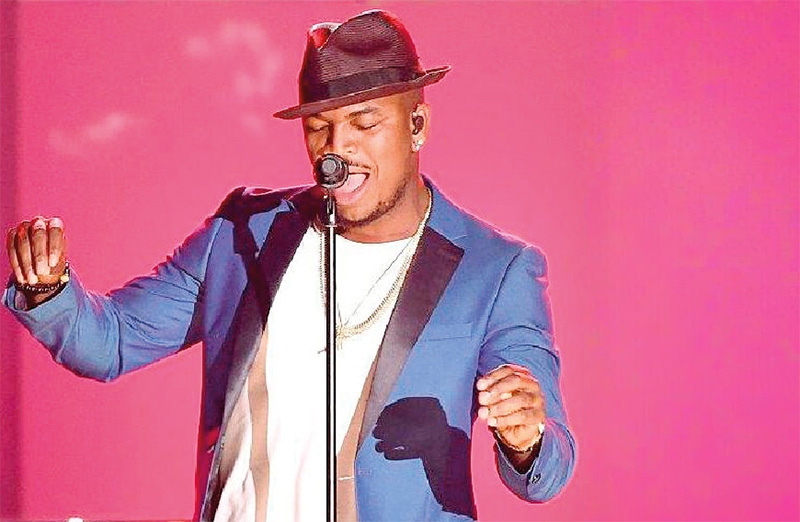
 Superlatives galore were used, especially on social media, to highlight R&B singer Ne-Yo’s trip to Sri Lanka: Global superstar Ne-Yo to perform live in Colombo this December; Ne-Yo concert puts Sri Lanka back on the global entertainment map; A global music sensation is coming to Sri Lanka … and there were lots more!
At an official press conference, held at a five-star venue, in Colombo, it was indicated that the gathering marked a defining moment for Sri Lanka’s entertainment industry as international R&B powerhouse and three-time Grammy Award winner Ne-Yo prepares to take the stage in Colombo this December.
What’s more, the occasion was graced by the presence of Sunil Kumara Gamage, Minister of Sports & Youth Affairs of Sri Lanka, and Professor Ruwan Ranasinghe, Deputy Minister of Tourism, alongside distinguished dignitaries, sponsors, and members of the media.
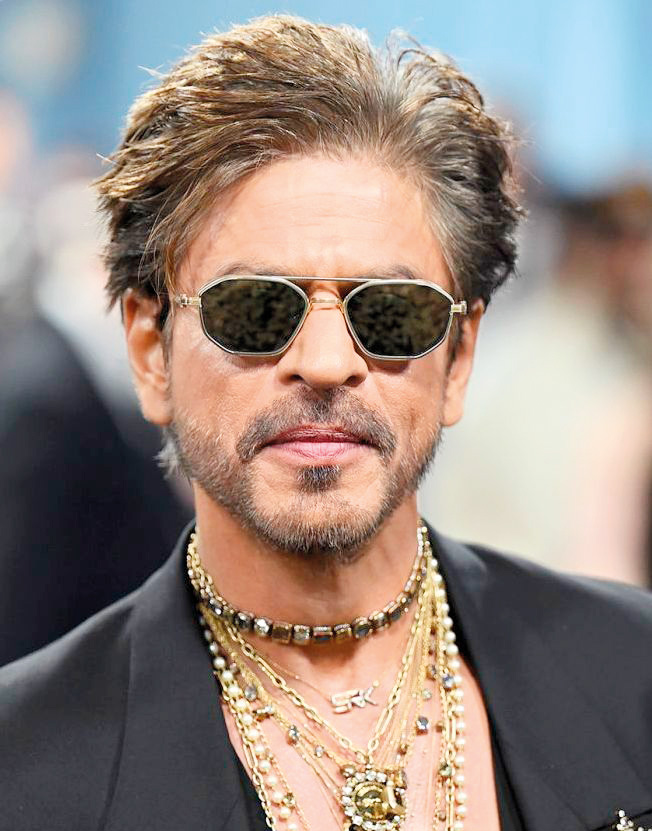
Shah Rukh Khan: Disappointed his fans in Sri Lanka
According to reports, the concert had received the official endorsement of the Sri Lanka Tourism Promotion Bureau, recognising it as a flagship initiative in developing the country’s concert economy by attracting fans, and media, from all over South Asia.

Nick Carter: His concert, too, was cancelled due to “Unforeseen circumstances
However, I had that strange feeling that this concert would not become a reality, keeping in mind what happened to Nick Carter’s Colombo concert – cancelled at the very last moment.
Carter issued a video message announcing he had to return to the USA due to “unforeseen circumstances” and a “family emergency”.
Though “unforeseen circumstances” was the official reason provided by Carter and the local organisers, there was speculation that low ticket sales may also have been a factor in the cancellation.
Well, “Unforeseen Circumstances” has cropped up again!
In a brief statement, via social media, the organisers of the Ne-Yo concert said the decision was taken due to “unforeseen circumstances and factors beyond their control.”
Ne-Yo, too, subsequently made an announcement, citing “Unforeseen circumstances.”
The public has a right to know what these “unforeseen circumstances” are, and who is to be blamed – the organisers or Ne-Yo!
Ne-Yo’s management certainly need to come out with the truth.
However, those who are aware of some of the happenings in the setup here put it down to poor ticket sales, mentioning that the tickets for the concert, and a meet-and-greet event, were exorbitantly high, considering that Ne-Yo is not a current mega star.
We also had a cancellation coming our way from Shah Rukh Khan, who was scheduled to visit Sri Lanka for the City of Dreams resort launch, and then this was received: “Unfortunately due to unforeseen personal reasons beyond his control, Mr. Khan is no longer able to attend.”
Referring to this kind of mess up, a leading showbiz personality said that it will only make people reluctant to buy their tickets, online.
“Tickets will go mostly at the gate and it will be very bad for the industry,” he added.

Machu Picchu train crash leaves one dead and dozens injured

I invite you to step into 2026 with renewed energy, hope, and determination – PM

Fairly heavy showers about 75 mm are likely at some places in the Central and Uva provinces and in Batticaloa and Ampara districts

National Audit Office reveals NHSL lapses

NPP’s CMC budget passed after four Opp. members switch allegiance

600MW hit to national grid as two Norochcholai units go offline

‘Dates have the highest sugar content to fight Coronavirus’

Sunday Island 27 December – Headlines

#SundayIsland 17th December – Headlines

Sunday Island – 28th March

Sunday Island Headlines – 21 March

Sunday Island – 21st February – Headlines
-
 News6 days ago
Street vendors banned from Kandy City
-

 Sports3 days ago
Gurusinha’s Boxing Day hundred celebrated in Melbourne
-

 News6 days ago
Lankan aircrew fly daring UN Medevac in hostile conditions in Africa
-
 News1 day ago
Leading the Nation’s Connectivity Recovery Amid Unprecedented Challenges
-

 Sports4 days ago
Time to close the Dickwella chapter
-

 Features6 days ago
Rethinking post-disaster urban planning: Lessons from Peradeniya
-

 Features2 days ago
It’s all over for Maxi Rozairo
-

 Opinion6 days ago
Are we reading the sky wrong?