
Opinion
Tools of liberation: Anagarika Dharmapala’s industrial vision

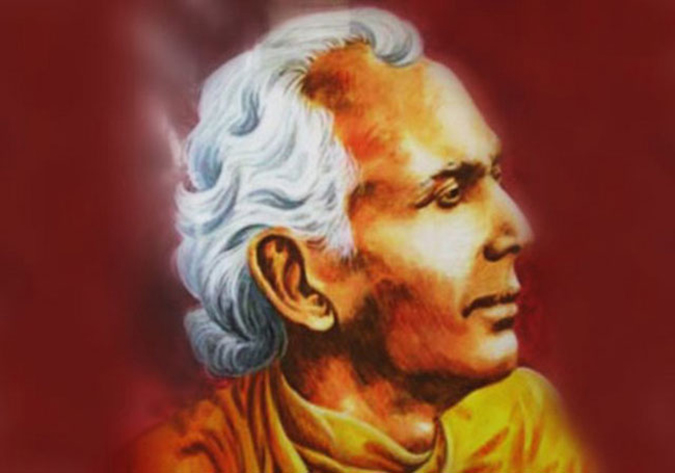
Of the many figures who shaped modern Sri Lanka, Anagarika Dharmapala (1864-1933) stands apart as a colossus of cultural and religious revival. He is most famously remembered for his pivotal role as a spiritual reformer and nationalist, in resuscitating Theravada Buddhism and Sinhalese nationalist sentiment. However, his contributions to industrial training and economic upliftment are equally profound, although often overshadowed. Less explored than his revivalism, a profoundly significant dimension of his work lies in his vision for industrial and economic self-sufficiency, which encompassed the material and vocational empowerment of the people, particularly in response to colonial economic structures that left local communities impoverished and dependent.
“We allow our cow to die”
Dharmapala believed that true independence was impossible without economic independence. His industrial philosophy was born from a stark diagnosis of the condition of his people under British rule. He observed a native population that had been systematically stripped of its confidence, skills, and economic agency. The colonial economy was designed to keep Ceylon as a supplier of raw materials (tea, rubber, and coconut) and a consumer of manufactured goods imported from Britain and food from elsewhere. “We allow our cow to die of starvation in our own field,” he said, “while we feed the cow in distant Switzerland or Denmark.”
This system, Dharmapala argued, created a state of parasitic dependency, enfeebling the people and eroding their traditional crafts and self-reliance. His famous exhortations were aimed at this psychological and economic malaise: “We are a lazy people; we are an ignorant people; we are a superstitious people.” This was not an insult but a call to awaken from this induced stupor and reclaim their inherent potential.
Dharmapala’s fervent advocacy for industrial development was deeply rooted in his own familial background, having as successful medium-scale entrepreneurs both his father, H. Don Carolis, and his maternal grandfather, LAP Dharmagunawardena. His father, in particular, founded a highly regarded furniture-manufacturing business that pioneered modern techniques, achieving such renown that it exported furniture across the globe. In 1904 Don Carolis established the modern mechanised Ceylon Steam Furniture Works in Slave Island, which incorporated the first wood-curing kiln in Sri Lanka.
Japanese manufacturing
This direct exposure to successful native enterprise profoundly shaped Dharmapala’s understanding of economic self-sufficiency, focusing his attention on the critical need for industrial growth as a foundation for national strength. This belief was powerfully reinforced during his first visit to Japan, where he witnessed first-hand the rapid modernisation of the first Asian country to industrialise, cementing his conviction that Ceylon’s path to independence and dignity depended on embracing a similar industrial and technical revolution.
Recognising the sophistication of Japanese manufacturing, Dharmapala sent his brother Edmund there to study its industrial and commercial methods. His family used his connections to the match industry in that country to develop their own match industry in Sri Lanka. In 1917 they launched the Ceylon Match Company, manufacturing the famous “Two Elephants” brand matches. Dharmapala’s nephew Kumaradas Moonesinghe served as its first managing director.
Dharmapala’s filled his editorials in The Sinhala Bauddhaya with exhortations to “wear local clothes” and to reject foreign luxuries, which he deemed responsible for the economic and spiritual impoverishment of the people. He associated foreign goods with moral decadence and weakness, while local production was tied to purity, strength, and national pride. Thus, his ideology had a comprehensive socio-economic outlook designed to use consumption as a tool for national liberation, pre-dating and paralleling the broader Swadeshi movement in India.
Rajagiriya
Dharmapala believed that economic independence required a population skilled in modern industries and crafts. Accordingly, he sent his own nephews overseas to study technical subjects. For instance, Rajasinghe (“Raja”) Hewavitarne went to Coventry Technical College to study engineering, gaining industrial training at the Humber car factory.
Shortly before his demise, at Dharmapala’s instigation, Don Carolis set up the Industrial Scholarship Trust, a programme to send young men to Japan to be trained in that country’s industrial best practices. The first, U.B. Dolapihilla, studied at the Tokyo Higher Technical School (now the Tokyo Institute of Technology) and returned in 1913, to preside over the Hewavitarne Weaving School in Rajagiriya.
Dharmapala bought Ananda Coomaraswamy’s Welikada mansion “Rajagiriya” (now known as “Obeysekera Walauwa”), which gave its name to the entire suburb. On its grounds, in 1912, his brothers Edmund and Simon established the Weaving School, one of the most tangible expressions of his industrial vision. The writer’s great-grandfather, Jacob Moonesinghe, served on the board.
This was not the first Hewavitarne industrial school. The family had already established a free Industrial School next to the works at Slave Island, where boys received training in carpentry. It is now no longer extant. The buildings which housed the, now largely forgotten, Hewavitarne Weaving School in Rajagiriya serve today as warehouse space for the Department of Textile Industries. However, they also remind us of Dharmapala’s vision.
Tuskegee
Dharmapala’s global outlook and strategic thinking are revealed by his admiration for the Tuskegee Institute, founded by Booker T. Washington in Alabama, in the United States. Renowned for its emphasis on industrial education for African Americans, Tuskegee combined academic instruction with hands-on training in agriculture, mechanics, and domestic sciences. Washington’s philosophy of “dignity in labour” and “self-help” resonated deeply with Dharmapala’s own ideals.
The institute demonstrated how marginalised communities could resist systemic oppression through education and enterprise. Dharmapala saw in it a model for Sri Lanka, a way to empowerment without waiting for political concessions from the British. He believed that, like African Americans in the post-slavery South, the natives needed institutions that could instil discipline, skill, and pride in productive labour.
Inspired in part by the example of the Tuskegee Institute, Dharmapala sought to integrate a comprehensive programme of industrial and vocational education into the broader struggle for national regeneration.
He championed tirelessly the idea that the youth of Sri Lanka should be trained in the very professions that powered a modern society, as engineers, carpenters, metalworkers, weavers, and printers. This was a radical shift away from the colonial education system, which produced primarily clerks and minor functionaries to serve the administrative machinery of the empire. He extended this thinking to India, establishing an Industrial School in Sarnath, Benares, with funding from the Hawiian Buddhist Mary Elizabeth Mikahala Robinson Foster.
Industry as Resistance
Dharmapala’s industrial efforts concerned resistance to colonial subjugation as well as economic development. By promoting local manufacture and vocational education, he challenged the colonial economy’s dependence on imported goods and foreign expertise. He recognised the hollowness of political or cultural freedom without economic agency. By planting the seeds of technical education and championing local industry, he sought to build a nation with not only spiritual and cultural confidence but also economically self-reliant and capable of standing on its own feet in the modern world.
This was not about recreating a mythical past but about equipping the people to compete and excel in the contemporary industrial world. His vision provided the foundational ethos for the later movements that would struggle for independence, making him a true prophet of both spiritual and industrial awakening.
The most concrete manifestation of this philosophy would be the establishment of technical schools and training centres, within a national policy prioritising skill development. While his grand vision for a vast network of such institutions only became a partial reality in his lifetime, he laid the critical groundwork for later developments in vocational education in Sri Lanka. When my late father, Anil Moonesinghe converted the Ceylon-German Training School into the Ceylon-German Technical Training Institute, he consciously followed in the footsteps of his forebear.
Dharmapala wanted Sri Lankan industries to be so advanced that they would eventually produce goods for export, reversing the colonial flow of trade. In an era of global economic uncertainty and postcolonial rebuilding, Dharmapala’s model remains strikingly relevant. His synthesis of spiritual values with industrial pragmatism offers a blueprint for holistic development, empowering society while strengthening national resilience.
The writer is a former Chair of the Ceylon-German Technical Training Institute, Vinod Moonesinghe is a descendant of Anagarika Dharmapala’s sister Engeltina Hewavitarne and her husband Jacob Moonesinghe. He is a convenor of the Asia Progress Forum.
By Vinod Moonesinghe

Although the Public Utilities Commission of Sri Lanka (PUCSL) has appropriately invited public consultation on the proposed electricity tariff revision from 27 February to 18 March, the online submission portal appears to contain a non-functioning submission tab. If this technical issue persists, it risks undermining the integrity and effectiveness of the entire consultation process. Consequently, I have chosen to present this letter openly for public consideration, including by the PUCSL.
Current geopolitical tensions in the Middle East underscore the urgent need for Sri Lanka to minimise its dependence on imported fossil fuels and prioritise the development of domestic renewable energy resources, including solar, hydro, and wind power. Such a transition is essential to securing a stable and independent energy supply. Regrettably, the Ceylon Electricity Board (CEB) appears to be moving in the opposite direction.
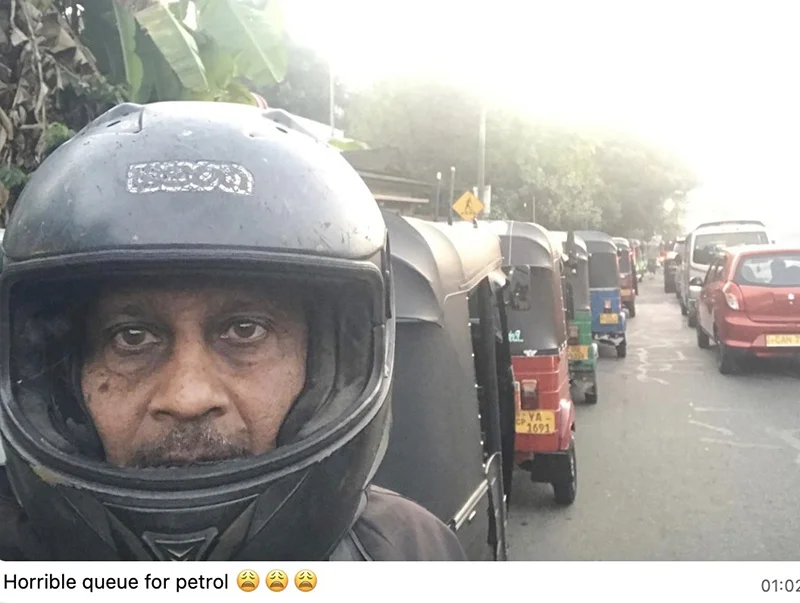
Promoting solar-powered electric vehicles supported by home-based renewable charging systems would strengthen national energy security and reduce pressure on imported fuel supplies. The fuel queues witnessed during periods of crisis, most notably in 2022, serve as a stark reminder of the risks associated with excessive dependence on external energy sources and the national anarchy that can follow.
As a small nation operating within a volatile global economy, Sri Lanka must remain as non-aligned and self-reliant as possible. Strengthening self-sufficiency in strategic sectors is critical to avoiding collateral damage amid escalating geopolitical rivalries among major powers. India has made steady progress along this path; Sri Lanka would be well-advised to do the same.
Raising electricity tariffs — a measure repeatedly adopted over the past decades to offset the high cost of fossil-fuel-based power generation — places an unfair burden on debt-ridden households and struggling businesses. Resorting once again to tariff increases, rather than addressing structural inefficiencies and fuel dependency, reflects a failure of long-term planning. The nation must instead pursue sustainable energy solutions that reduce costs over time.
As a debt-burdened country, Sri Lanka urgently requires pragmatic, forward-looking strategies that ease the pressure on citizens while strengthening resilience in times of geopolitical instability. Energy pricing is not a peripheral issue; it is a central pillar of economic stability and national security, demanding serious and immediate attention.
Established on 1 November 1969, the CEB was entrusted with the responsibility of generating and distributing electricity across the island while promoting social and economic development through the optimal use of national resources.
Recent developments suggest that the Ceylon Electricity Board has fallen short of these foundational objectives. Over the past two decades, electricity tariffs have been increased repeatedly under various justifications yet supply reliability has not consistently improved. The current proposed revision appears to perpetuate the same pattern: continued dependence on imported fossil fuels, directly contradicting the principle of optimally utilising national resources. This trajectory risks returning the country to recurring crises, including the prolonged fuel shortages and power cuts experienced in recent years.
Energy is not an ordinary commodity confined to a single sector; it affects every dimension of national life. High energy costs increase the cost of living by inflating expenses related to food production, transportation, manufacturing, and consumer goods. Ultimately, these costs are borne by citizens.
Moreover, elevated energy prices undermine national competitiveness by discouraging foreign investment and constraining local entrepreneurship, technological advancement, industrial expansion, and job creation. High-cost energy impedes national development.
Low-cost energy should therefore be formally adopted as a national policy objective. The CEB must adhere to its original mandate of optimising national resources for cost-effective electricity generation. Any deviation from this principle must be fully transparent and supported by clear, evidence-based justification.
Even in the sphere of renewable energy, concerns arise about the apparent preference for large-scale solar and battery storage projects that require substantial public funding. Previous claims of “grid instability” attributed to household rooftop solar generation were used to justify policy shifts. If electricity generated by rooftop solar during daylight hours was considered problematic, how would significantly larger solar installations differ in principle? Without systematic and transparent grid modernisation, such projects risk becoming costly stopgap measures rather than sustainable long-term solutions.
Poorly planned initiatives could once again expose the country to high delivery costs, reflected in elevated tariffs. They may also increase the risk of power disruptions due to battery limitations, spare-part shortages, infrastructure weaknesses, or maintenance failures. Sri Lanka has previously endured six- to ten-hour power outages, with severe economic and social consequences. The nation cannot afford a return to such instability.
It must also be recognised that rooftop solar installations, financed by homeowners — often through personal loans — have provided a crucial safety net for many families. By purchasing surplus energy from these “prosumers,” the system has functioned in a mutually beneficial manner for both households and the nation. Rather than discouraging decentralised generation, Sri Lanka should modernise its grid and meaningfully integrate citizen-led energy production. Short- and medium-term grid improvements could be facilitated through structured private-sector participation, including by prosumers themselves.
Globally, affordable energy underpins economic growth. Countries such as China, the United States, Norway, Brazil, and Canada have leveraged domestic energy resources to produce cost-effective power and accelerate development.
Sri Lanka must adopt a clear national policy centred on low-cost energy, fully utilising its natural endowments — solar, hydro, wind, and emerging technologies. Proposals prioritising imported fuels should be considered secondary and strictly transitional.
A nation that endures long queues for essential energy supplies cannot reasonably expect its citizens and businesses to remain productive and resilient. These realities are fundamentally incompatible.
Encouraging decentralised energy production would:
* Reduce the cost of living
* Improve national resilience
* Attract foreign investment
* Create employment
* Enhance export competitiveness
The people have entrusted the government with this responsibility. The time has come for a decisive, transparent, and forward-looking policy shift.
Chula Goonasekera
(cgoonase@sltnet.lk)
A concerned citizen

The purchase of substandard coal using a faulty tendering process has become news lately. This enormous financial loss to the country indicates the urgent need for the Government to pass stronger contract laws and have their proper implementation in Sri Lanka by professionals. It is recommended that “Model” contracts need to be drawn up as typical examples and these made available to governmental departments who may need to enter into similar contracts. Do not ask a busy manager to design a contract, a legal document from scratch! Perhaps a whole department should be set up to monitor (police?) government and local government administration of contracts under English Contract Law and contracts under the United Nations Convention for International Sale of Goods (CISG). Perhaps now, it seems that anyone in government can draw up a contract and design it to suit his own whims and fancies!
I suggest here models of typical contracts, useable for different cases are made available for anyone or any department required to enter into a contract to enable them, or at least assist them to first formulate, and draw up an effective contract which must have certain important clauses. Contract administrators and supervisors need to be well trained, motivated and independent in order to administer Government contracts as the law of Sri Lanka should demand.
Contract Management
In the West, mutually agreed contracts are considered legal agreements enforceable by law under a given jurisdiction. There is the initiator of the contract named the Owner and a Main Contractor who agrees to implement the work for a price consideration, and who may delegate part, or all of the work to sub-contractors.
Contracts must provide all the information required by a contractor to complete the work. Contract clauses must incorporate all foreseeable eventualities. For example, the acceptance, as agreed and signed between the contacting parties by the supplier or lead contractor, needs to have clauses that allow for design changes (change orders), additional time and the formulation of related costs and profit accordingly. Such ‘in progress’ changes have procedures which are given in clauses dealing with ‘change orders’ which require assessing the cost of the change order implementation. Change order management may best be done by a firm of Quantity Surveyors.
The main contractor agrees with the owner to supply labour, materials and specialist equipment to fulfil the terms of the agreement or contract for a price. Special tax concessions, customs clearances and other legal requirements can fall on the shoulders of the Owner, or as negotiated from the outset. All these matters need to be clarified from the outset of any contract.
Time is of the essence. The time value of money is always at the forefront of the contract manager’s mind. The work is usually expected to be carried out to a time frame set by the owner. Therefore, the implementation of an agreement should be set in an agreed time frame with easily defined milestones marking progress and marking when appropriate payments become due.
Of course, contract administrators must make payments only when the work is verified as satisfactorily completed at each of previously agreed stages of the contract. Usually, there are time limitations, with penalties for time overruns. Owners want their goods delivered on time and to meet all contractual specifications on quality and performance. There should be clauses stipulating quality and quantity guarantees and guarantees of remedial repairs, continuing service agreements to be settled before an official handover and signing on completion of a contract. Final payment should be withheld until the guarantee period has expired. Preparing for these events needs computers, foresight and experience.
Small contracts are usually managed by the owner, but large, multimillion dollar contracts may be administered by an independent organisation. A contract is enforceable by law, with stated financial penalties for failures to abide by the terms of the contract, but all is subject to “Force Majeure.” This is when progress of the work is seriously impeded or impossible due to events totally outside the control of the Subcontractor.
Contract implementation is a large area, well catered for by laws in the English language. This letter can only raise questions about the quality of contract administration in Sri Lanka. Unfortunately, so few legislators have sufficient knowledge of English, resulting in loopholes allowing manipulation which may result in Sri Lankan public having to pay through the nose, pay dearly for incompetent practice.
I can suggest these improvements, but my actual experience is that all my letters, in English, to officialdom go unanswered and ignored.
Roger. O. Smith

A systemic diagnosis of a fading legacy
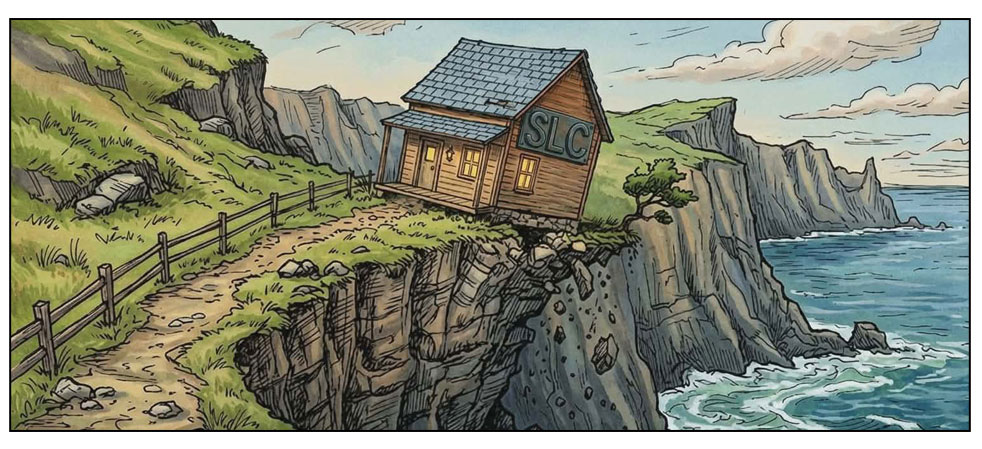
The outcome of the 2026 T20 World Cup, coupled with the trajectory of the sport in recent years, provides harrowing evidence that Sri Lankan cricket is suffering from a terminal malignancy.The Doomsday clock for Sri Lankan cricket has not just started ticking—it has reached its final hour.
Therefore this note is written to call the attention of the cricketing elite who love the sport.
The current state of affairs suggests a pathology so deep-seated that conventional remedies—be it revolving-door coaching changes or fleeting, opportunistic victories—can no longer arrest its spread.
What we are witnessing is not a mere slump in form or a temporary lapse in rhythm; it is a profound systemic collapse that threatens the very foundation of our national pastime.
The Illusion of Recovery: The “Sanath Factor” as Palliative Care:
Since late 2024, the appointment of Sanath Jayasuriya as Head Coach injected a much-needed surge of adrenaline into the national side.
Statistically, the highlights were historic: a first ODI series win against India in 27 years, a Test victory at The Oval after a decade, and a clinical 2-0 whitewash of New Zealand.
However, a data-driven autopsy reveals that these will be “palliative” successes rather than a cure.
Under Jayasuriya’s tenure, the team maintained a win rate of approximately 50 percent (29 wins in 60 matches).
While analysts optimistically labeled this a “transitional phase,” the recent T20 series against England and Pakistan exposed the raw truth: in high-pressure “crunch” moments, the team’s performance metrics—specifically Strike Rate (SR) and Fielding Efficiency—regress to amateur levels.
We are not transitioning; we are stagnating in a professional abyss.
The Scientific Gap:
Why India and Australia Lead
The disparity between Sri Lanka and global giants such as the BCCI and Cricket Australia (CA) is now rooted in High-Performance Science and Algorithmic Management.
Predictive Analytics & Biometrics
In Australia, fast bowlers utilise wearable sensors to monitor workload and biomechanical stress.
AI models analyse this data to predict stress fractures before they occur.
Sri Lanka, conversely, continues to cycle through injured pacemen with no predictive oversight.
Virtual Reality (VR) Training
While Australian batters use VR to simulate the trajectories of elite global bowlers, Sri Lankan players remain tethered to traditional net sessions on deteriorating domestic tracks.
Data-Driven Talent Identification:
India’s “transmission system” utilises automated data analysis across thousands of domestic matches to identify players who thrive under specific pressure indices.
In Sri Lanka, 85 percent of national talent still originates from just four districts—a statistical failure in talent scouting and geographic expansion.
Infrastructure vs. Intellect:
A Misallocation of Capital
Sri Lanka Cricket (SLC) boasts massive reserves, yet its investment strategy is fundamentally flawed.
Capital is funneled into “bricks and mortar”—grand stadiums and administrative buildings—rather than the human capital of the sport.
We build colosseums but fail to train the gladiators.
The domestic structure remains a “spin trap.”
By producing “rank turners” to suit club politics, we have effectively de-skilled our batters against elite pace and rendered our spinners ineffective on the flat, true wickets required for international success.
The Leadership Deficit:
A Failure of Succession Planning
The crisis of leadership post-Sangakkara and Mahela is a byproduct of poor “Succession Science.”
Australia maintains a “Culture of Continuity,” backing leadership even through lean periods to ensure stability.
India employs a rigid “Succession Roadmap,” ensuring the next generation is integrated into the system long before the veterans depart.
In contrast, SLC operates on a “carousel of convenience,” changing captains and coaches to distract from administrative failures.
This lack of imaginative management stems from a low literacy in modern Sports Governance.
From a philosophical perspective, our established cricketing traditions have failed to absorb the antithesis of the modern, hyper-professionalized global game.
As a result, a truly modern Sri Lankan brand of cricket has failed to materialise.
Instead, we are trapped in what is called a “Static Synthesis,” where the administration clings to the glories of 1996 and 2014 as a shield against the necessity of change.
This is not a transition; it is a refusal to evolve
We are witnessing the alienation of the sport from its people, where the “Master” (the administration) has become detached from the “Slave” (the grassroots talent and the fans).
The Verdict:
A National Emergency
The “cancer” in Sri Lankan cricket is a trifecta of political interference, irrational management, and a refusal to embrace the Fourth Industrial Revolution (AI, VR, and Big Data).
As someone who contributed to the formation of the Sri Lankan Professional Cricketers’ Association, I see the current trajectory as a betrayal of the players’ potential and the nation’s heritage.
Sri Lanka Cricket does not need another “review committee” or a new coach to act as a human shield for the board.
It needs a “Bitter Pill”—an aggressive, independent restructuring that prioritises scientific professionalisation over cronyism.
Without this, our cricket will remain at the bottom of the well, looking up at a world that has moved light-years ahead.
Shiral Lakthilaka
LLB, LLM/MA
Attorney-at-Law
Former Advisor to H.E. the President of Sri Lanka
Former Member of the Western Provincial Council
Executive Committee member of the Asian Social Democratic Political Parities

Free 14 day visa extension for visitors unable to depart Sri Lanka

US embassy in Dubai hit; Israel pounds Tehran, Beirut

Perera, Sugandika, Ranaweera take Sri Lanka to T20I series win over West Indies

Maldives Coast Guard Ship Huravee arrives in Colombo

New charges for son of Norway’s crown princess on trial for rape

US sends planes to evacuate nationals from Middle East as Iran conflict spreads

‘Dates have the highest sugar content to fight Coronavirus’

Sunday Island 27 December – Headlines

#SundayIsland 17th December – Headlines

Sunday Island – 28th March

Sunday Island Headlines – 21 March

Sunday Island – 21st February – Headlines
-

 Opinion5 days ago
Jamming and re-setting the world: What is the role of Donald Trump?
-
 Features5 days ago
An innocent bystander or a passive onlooker?
-
 Features2 days ago
Brilliant Navy officer no more
-
 Features6 days ago
Ratmalana Airport: The Truth, The Whole Truth, And Nothing But The Truth
-

 Opinion2 days ago
Sri Lanka – world’s worst facilities for cricket fans
-
 Business6 days ago
IRCSL transforms Sri Lanka’s insurance industry with first-ever Centralized Insurance Data Repository
-

 Business5 days ago
An efficacious strategy to boost exports of Sri Lanka in medium term
-
 Features3 days ago
Overseas visits to drum up foreign assistance for Sri Lanka