
Opinion
Threat of a Covid vaccine?


The media is full of cheers on the reported finding of a COVID-19 vaccine.
When the story broke out on Tuesday night, the BBC news presenter Mathew Amroliwala, was so excited about having to tell the world about this, with only a short line about it having to be kept in minus 80 degree temperature. This is said to be 90% effective.
Is this the finding of the great preventive against COVID 19? There is certainly much more thinking to be done. A responder on France 24 was very clear in telling that the Pfizer vaccine had not been studied by peers and the various sectors of science and research, to justify its claim for 90% effectiveness.
On another TV channel, a scientist from South Africa, who is engaged in research on vaccine production, was very clear that this would be of no use to Africa and most of Asia. It was best described as a vaccine that could not be brought to the people, but the people had to go to it.
Cocid-19 is spreading hugely the world over, The US has the highest infections and the highest numbers dead from it for any country. Let’s not forget that India stands second in infections, with a low death rate, but the Deepavali and other celebrations could change this picture.
The whole world is certainly in the search for an effective vaccine. Russia claims its own Sputnik vaccine, but it has not been able to control the huge spread of Covid in the current wave. China has claims to a vaccine, which is being tested in some other countries, but the world of Western Science has not given any approval to it.
So why is this huge media spotlight for this Pfizer vaccine? Why do not the key sections of the Western media think of this as the answer to Covid -19, although President Trump himself has not claimed it to be his promised solution to the Covid pandemic? Is he still thinking of swallowing some insecticides to cure Covid? Will some US pharmaceutical company produce a suitable insecticide for this, before president-elect Joe Biden is sworn in on January 20, next year.
It looks like the name Pfizer is the cause for this huge celebration by the western media. Pfizer has produced many drugs that have been of benefit to humans. These include blockbuster drug Lipitor (atorvastatin), used to lower LDL blood cholesterol; Lyrica (pregabalin) for neuropathic pain and fibromyalgia; Diflucan (fluconazole), an oral antifungal medication; Zithromax (azithromycin), an antibiotic; Viagra (sildenafil) for erectile dysfunction; and much more.
Pfizer has joined with a German pharmaceutical company in producing this new media hailed anti-COVID vaccine. It is useful to look at the real record of Pfizer, and its means of controlling the media and even medical profession, when judging the sudden hurrah for its COVID vaccine, which must be stored and delivered under 70 to 0 degrees Centigrade!
This company has paid many fines to authorities in the US and other countries too, for huge fraud in the marketing of its drugs. The US Department of Justice has brought many charges against it for criminal and civil liability arising from the illegal promotion of certain pharmaceutical products. It paid US$ 2.3 million, the largest health care fraud settlement in the history of the US Department of Justice.
It and its subsidiaries have pleaded guilty to a felony violation of the US Food, Drug and Cosmetic Act (FDA) for misbranding Bextra, as an anti-inflammatory drug, later ouled from the market in 2005. Pfizer promoted the sale of Bextra for several uses and dosages that the FDA specifically declined to approve due to safety concerns.
In addition, Pfizer has agreed to pay US$ 1 billion to resolve allegations under the False Claims Act that the company illegally promoted four drugs – Bextra; Geodon – an antipsychotic drug; Zyvox – n an antibiotic; and Lyrica – an anti-epiletic drug. It also caused false claims to be submitted to government healthcare programs, for uses that were not medically accepted.
 It also agreed to pay US$ 55 million in 2013, over the drug Protonix, having failed to warn people about the risk of kidney problems from this drug.
If that is part of the Pfizer record in the US, let’s go elsewhere. It had to pay compensation to Nigerian families affected by a controversial drug trial in 1996. It paid US$ 175,000 each to four families, after 11 children died and dozens were left disabled, after Pfizer gave them the experimental ant-meningitis drug – Trovan. This is well reported by BBC.
From Africa to Europe, for three years Pfizer Italy provided free cell phones, photocopiers, printers and televisions to doctors, arranged for vacations (such as ‘weekend in Gallipoli”, weekend with companion’ and ‘weekend in Rome”) in return for promises by doctors to recommend Pfizer products.
The New York headquarters of Pfizer has agreed to pay a total of US$ 60.2 million in penalties to settle documented charges of bribery. The Securities and Exchange Commision says that Prozer Italy employees went out of their way to “falsely” book the expenses under ‘misleading” labels like “Professional Training” and “Advertising in Scientific Journals”.
This penalty id roughly half a percent of the company’s annual profit that exceeded $10 billion a year on global sales of $67.4 billion in 2011.
For the interesting record, Italy was not the only country where Pfizer has been accused of bribing doctors and local officials. “Prizer took shortcuts to boost business in several Eurasian countries, bribing government officials in Bulgaria, Croatia, Kazakhstan and Russia to the tune of millions of dollars’, says the principal deputy assistant attorney general of the US Department of Justice, Criminal Division.
We in Sri Lanka are not wholly ignorant of how pharmaceutical companies use crooked and unlawful means to influence those in our medical profession, the organizations and institutions engaged in public health, as well as the political forces that take important decisions on the management of health services, and the availability of drugs, too.
We are just in the midst of a huge political and administrative debate on the matter, particularly over the tracing of COVID-19.
It is time to keep an open eye, locally and internationally, over Pfizer and any other COVID-19 vaccine or other treatment and handling of the pandemic. A vaccine that can be stored and delivered in our own temperatures – and not minus 80 C degreees – is also what we should be watchful of, whatever the global media says about it.


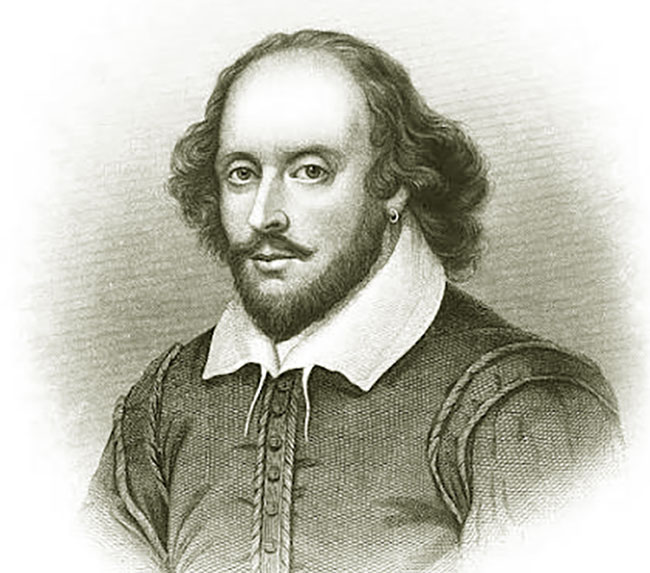
There seems to be a striking similarity between ancient Greece and modern Britain. Both countries remain paradoxes of history. Greece was a small city state constantly at war with neighbouring countries. It did not have a big army, but it had considerable sea power. However, Greece was a leading state over the whole of the Mediterranean. In fact, Greece was once a super power in the Western world.
Britain was very powerful in the 19th century. British justice was administered in Africa, India and Ceylon. British factories flourished in many countries and schoolchildren started reading R.L. Stevenson’s ‘Treasure Island’ and the works of Rudyard Kipling. What Ralph Waldo Emerson said in the 1850s is still valid today. He said, “If there’s one test of national genius universally accepted, it is success; and if there be one successful country in the universe for the last millennium, that country is England. It is the best of actual nations.”
In World War I, Britain faced a crushing defeat. Eventually, the British Empire was reduced to a Commonwealth. World War II shattered the image of Britain further. Although Britain lost much of its power, it continued to be an influential country. Even after achieving independence, India retained English as an official language. The British parliament system is well established in many Commonwealth countries. Some people still wonder how England still exercises its influence over the minds of men and women.
Staying power
There are many powerful countries in the world today such as the United States, Russia and China. Although England is not a super power, she has staying power. According to Oliver Wendell Holmes, a good part of greatness is simply being there. For that matter, England has been there for many centuries. So far no other country has been able to defeat her. As a result, sometimes we wonder whether we can have a world without England.
England has had an unwritten Constitution for a very long time. Other countries have emulated her political institutions. The British people have an established church with complete religious freedom. Although there are social classes in Britain, there has been no major clash among them. Unlike in many other countries, there are only two leading political parties in England. When the Labour Party is in power, the government is not subservient to labour. Similarly, when the Conservative Party is in power, the government is not conservative.
Most British colonies in the East including India and Ceylon did not sever the cultural and emotional links with Britain and retain them even after achieving independence. India became independent in 1947, but she decided to retain English as an official language. By doing so, India produced a number of English writers such as R.K Narayan. However, Ceylon did not give English any official status and treated it as a link language. As a result, students paid less attention to learning English. They were made to understand that everything can be done by learning Sinhala and Tamil. We have failed to produce English writers in the calibre of J. Vijayatunga who wrote ‘Grass for my feet.’
Politically shrinking
The United Kingdom is politically shrinking. However, its influence vibrates throughout the world. English has brought many nations together. There is a common understanding among countries that share the English language and literature. William Shakespeare’s dramas are staged in countries such as China where English is not an official language. People have come to the conclusion that English has become a broker of ideas and institutions.
England is not an aggressive country. However, if provoked, it can deliver a mortal blow to its enemy. British Prime Minister Margaret Thatcher showed her mettle as the iron lady. Britain held the fort against the might of Napoleon Bonaparte who ruled France. The country can still boast of a heavy moral credit. The British stick to their international agreements. The power of England draws mainly from its language. British people say ‘It’s right’ when it is right’. When it is not right, they say, ‘It’s not right.’ Meanwhile English occupies a pre-eminent place in world languages. All the research work in many parts of the world is available in English. You can learn any subject easily through English.
Apart from the language, people respect British standards which are technical specifications and quality benchmarks developed by the British Standards Institution. The United Kingdom’s independent national standards body was established in 1901. It maintains over 37,000 standards covering industries such as construction, manufacturing and technology ensuring safety and reliability.
British English
Standard British English is the variety of English that has undergone codification to the point of being socially perceived as the standard language associated with formal schooling, language assessment and official print publications. For historical reasons dating back to the rise of London in the ninth century, the form of language spoken in London and the East Midlands became the Standard English used in schools, universities, literature and law.
British English functions as one of the two major foundational and standard varieties of the English language alongside American English. It serves as a primary reference point for spelling and grammar. It acts as a global standard, and international institutions are often defined by specific pronunciation.
Most Sri Lankan doctors primarily move to England for postgraduate training, higher specialisation and better career prospects. They are driven by superior training infrastructure, world-class facilities and globally recognised qualifications.
To sum up, when you think of learning an international language, there is no alternative to English. If you wish to read literature, you cannot ignore eminent English dramatists and poets such as William Shakespeare and John Milton. Many leading Sri Lankans like S.W.R.D. Bandaranaike were Oxford University products. Therefore, English deserves to be made an official language in Sri Lanka.
By R.S. Karunaratne
The Department of Cultural Affairs has once again called authors, and publishers to lodge their entries for selection of the prestigious State Literary Awards 2026.The criteria and conditions required and notified in the public domain, makes it mandatory for the literary work to be printed and published prior to submission for consideration of the awards. There is absolutely no provision for writers to submit their work in Manuscript form.
Where does that leave the financially impoverished writers who are talented, creative and wish to submit a well edited typescript of their work as manuscript for consideration of the State Literary Awards? In a literary environment that encourages a proliferation of self-published books of all forms and features presented by vanity publishers who have their eye on the purse of the author than on literary merit and artistic excellence, it is easy to show that you are an ” established writer” by spending your cash abundantly towards glossy covered books which the printing industry and fawning publishers will lap up with greed.
Even the Gratiaen Prize in Sri Lanka, sponsored by world-renowned Michael Ondaatje allows for Manuscript entries together with published books. Significantly, the manuscript entries that win the prize are assisted to publish their work which is part of the winnings. Many a young, aspiring writer with little funds who won the Gratiaen Prize on merit, but had submitted their entry in manuscript form have been thereby encouraged to submit their work on merit basis only.
It is a fact that the Commonwealth Short Story Prize, a massive state-supported initiative across 56 nations accepts only unpublished short fiction. Further, several countries in the world have established national or state level literary prizes that specifically accept unpublished manuscripts to provide equity in discovering new talent and supporting national literature without bias or favour. In Australia, Jamaica, Philippines, major national awards organised by the State for literature, specifically accept unpublished manuscripts for consideration.
Let’s face the truth. The printing costs are escalating. There is little demand in Sri Lanka for literary work in the English Language in particular. Traditional Publishing where the literary work is reviewed and assessed for talent and creativity and thereafter published is seldom found. The reviews and critical analysis of literary works are rare. But publishers make a pile by pandering to the vanity of aspiring writers who have the financial clout to pay their way through to being featured in prestigious award ceremonies and accolades. Thereafter, their substandard works get a further fillip by bearing the label of “Won the State Literary Award for Literature”! It is a cycle of literary charlatans and their pimps in the publishing industry for whom the price that is paid for publishing and not Meritocracy is the sine-qua-non.
Is this the level playing field promised by the NPP Government and their Marxist protagonists? A government that was voted into power on the platform of affording fair opportunity and equality seems to discriminate in favour of the Haves against the Have- nots in the cultural department to say the least! Anil Fernando

English literature offers a rich heritage of wonderful ideas and thoughts. The reader can be intellectually uplifted. It brings refreshing new vistas and stimulating new ideas. However, this English literature has to be first introduced to the student in order to fire up his or her interest and be made aware of this rich source of culture. Students of basic English as a second language work hard and learn all the hum-drum mechanics of the language, for which they get tested and graded. But importantly, nae crucially, this should be followed up with intellectual rewards for the students’ efforts – which, of course, is the enjoyment of the works of literature of the many great writers in the English language. This is the great payoff, the great dividend for all their efforts but this, apparently goes missing.
One of the obvious reasons for the lack of “follow through” may be lack of time allocated in the curriculum – or, perhaps, more darkly, the teachers’ own lack of knowledge of the great range of good reading materials produced by the countless generations of literary geniuses who have gone before. Such writers have laid down for us a heritage of glorious literary works in books and essays, all of which are to be found in any good library. It is thought that much of this good literature ought to be introduced to all students of English, “full stop,” as part of developing a knowledgeable and cultured society. (Isn’t that what we want?) Reading English literature should bring an intellectual enrichment to all those willing to drink from this Bacchanalian horn of plenty.
It must be said finally, that it can be fairly expected that most young people, especially those learning English as a second language, are totally unaware of the many outstanding pieces of writing that propel English to stand tall amongst the rest. That is, students need to be first introduced to great writings and have a spark of interest ignited in these great works of literature.
For example, by being introduced to “Daffodils,” a short descriptive poem by William Wordsworth, the student can get some very pleasant ideas to think on.
Do not overlook Conan Doyle’s “Sherlock Holmes” detective stories, each one captivating the reader’s attention right to the end. It is by these short stories that the novice reader can first consolidate his power of reading.
For light reading Jerome K. Jerome’s book “Three Men in a Boat” is suggested. On one occasion he goes to the library suffering from a slight hay-fever (allergy) seeking a cure. He consults a book, “Lexicon of Pharmacology”, and recoils in horror as his symptoms fit most of those diseases described in the book! He concludes he cannot live much longer and staggers home to rest and recuperate! This is a well related tale in the book – although seemingly quite implausible!
Similarly, by having the poem meanings explained, e.g. “What is Life if Full of Care?” by William Henry Davis – how he regrets that we humans are always in a hurry, too busy to notice or see the delights of nature, and scenes of natural beauty, e.g., a young woman’s smile as she passes by; we have no time to make friends and even kiss her. Regrets! Explaining this to students would bring a certain intellectual insight.
John Keats’s poem, “Ode to Autumn” is another great work describing the ripening fruits of the autumn season and how nature as a living being, brings to fruition all the good things of a rural landscape quietly humming with warmth after a hot summer.
Again, it is likely necessary to explain to a young, Sri Lankan mind the meaning of the descriptive poetry found in this magnificent poem.
This is the real English to be tasted and then swigged at lustily in pleasure and satisfaction, not some writing airing historical grievances for children to study!
1970 British Cohort Study
It should be observed here that the ‘1970 British Cohort Study’ followed 70,000 people to examine various aspects of their lives. One result discovered was that if a young person reads a lot, it develops his/ her general intelligence no-matter his parents; it makes him smarter.
It was also noted that reading brings life-long benefits; it improves mood, it helps with social skills, increases empathy, reduces anxiety, protects against depression and slows brain decay, the study found.
But these days many young people never gain a great competence in reading English; the fear is that standards are falling. This is bringing poorer critical thinking, less depth of personality and less empathy for others which has the result of a more turbulent society.
People are urged to switch off their headphones and read more of what they like – try reading the newspapers!
Priyantha Hettige

US boards second tanker in Indian Ocean after tracking it from Caribbean

Motorbike raids on villages kill dozens in Nigeria

England face unexpected test of nerve in Italy showdown

Winless Afghanistan look to keep slim hopes alive against upbeat UAE

Showers expected in the Central, Western, Sabaragamuwa, Southern and Uva provinces and in Ampara and Batticaloa districts

Patali: Four out of 25 low-quality coal shipments caused Rs. 1,759 mn loss

‘Dates have the highest sugar content to fight Coronavirus’

Sunday Island 27 December – Headlines

#SundayIsland 17th December – Headlines

Sunday Island – 28th March

Sunday Island Headlines – 21 March

Sunday Island – 21st February – Headlines
-

 Life style1 day ago
Marriot new GM Suranga
-

 Midweek Review5 days ago
A question of national pride
-

 Features1 day ago
Monks’ march, in America and Sri Lanka
-

 Business5 days ago
Autodoc 360 relocates to reinforce commitment to premium auto care
-
 Opinion4 days ago
Will computers ever be intelligent?
-

 Features1 day ago
The Rise of Takaichi
-

 Features1 day ago
Wetlands of Sri Lanka:
-
 Midweek Review5 days ago
Theatre and Anthropocentrism in the age of Climate Emergency