
Features
The winter adventure In 16 countries – Part A


CONFESSIONS OF A GLOBAL GYPSY
By Dr. Chandana (Chandi) Jayawardena DPhil
President – Chandi J. Associates Inc. Consulting, Canada
Founder & Administrator – Global Hospitality Forum
chandij@sympatico.ca
ADVENTURE
My wife and I ushered in 1985 at a New Year’s Eve dinner dance held at the Hammersmith Hall in London. We were in high spirits because a couple of days later we planned to commence our longest international trip. Our ambitious plan was to visit 16 countries in the European Union, Eastern Europe with a quick visit to the African continent. Coach, train and ship tickets, as well as visas for all of the countries we planned to visit were in place.
Some of our friends who were at the dance, were amazed, as well as, confused by our travel plans and had a few comments. “Covering 16 countries in six weeks is an impossible undertaking!” “You guys are planning to visit too many places in the middle of a bad winter!” “Ideally, you need a week to cover one country. Why don’t you visit only six countries but cover those well?” they asked us. Our plan was different. We wanted to get a quick experience of many cities of importance and interest, within a vast area by travelling overland and when necessary, on a few ferries. We also planned to do a three-hour coach tour of each city, have at least one traditional meal in each country, meet local people and get a general feel of each destination in an economical, simple way.
Although my initial budget for the trip was £1,000, after more calculation we realised that we would need around £1,300 for the trip, without the cost of our meals. I was yet to find a full-time job after completing my master’s degree in England, in which I had invested all of my savings. My wife took six weeks unpaid leave from her job in London. I placed job interviews on a back burner until March 1985. The uncertainty of what the future held for us added to the sense of adventure on which we embarked in the middle of a brutal winter, armed with heavy, winter coats, lightly-packed backpacks and lots of optimism.
WALES
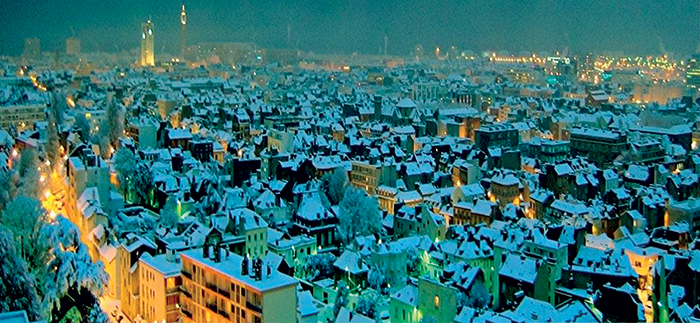
We started off on an early morning coach from Victoria Station in London and after three hours travel though the beautiful countryside, we reached Cardiff, the capital city of Wales. In 1985, the population of Wales was only 2.8 million or 5% of the population of the United Kingdom.
From the post-Roman period, a number of Welsh kingdoms were formed within present-day Wales. The Welsh launched several revolts against English rule in the early 15th century. In the 16th century, Henry VIII, himself of Welsh extraction, passed the Laws in Wales Acts aiming to fully incorporate Wales into the Kingdom of England in 1535. Under England’s authority, Wales became a part of the Kingdom of Great Britain in 1707 and then the United Kingdom of Great Britain and Ireland in 1801. The Welsh retained their language and culture despite heavy English dominance.
Cardiff
With 350,000 residents in 1985, Cardiff was relatively a small capital city. We were disappointed that no city bus tours were available in mid-winter. Once we reached the historic, Cardiff Castle, which boasted an impressive near 2,000-year history, we joined a conducted walking tour with a friendly Welsh tour guide. The Normans had expanded the original fort built by the Romans. During the English Civil Wars in the mid-17th century which led to the execution of King Charles I, the Cardiff Castle was held for some time by the Royalists (Cavaliers). After that it was taken over by the Parliamentarians (Roundheads) led by Oliver Cromwell, the only non-royal to rule the country.
Cardiff is a city of contrasts. A rich history, modern shopping centres, busy commercial centres and a variety of sports facilities made Cardiff interesting. We also visited St. David’s Cathedral and the City Hall of Cardiff which has been acclaimed as one of the finest, civic centres in Europe. I was a fan of Richard Burton, the world-famous Welsh actor who had passed away exactly five months prior to our visit to Wales. I was keen to visit his birthplace, Pontrhydyfen, which was about an hour from Cardiff by train, but our tight schedule did not permit that additional stop. “We need to stick to our plan”, my wife gently reminded me.
Swansea, Carmarthen and Fishguard Harbour
After an hour-long coach ride, we arrived at the second-largest city in Wales, Swansea, as the sun was setting. The city was quiet as the temperature was getting closer to zero. After dinner in Swansea, we took a late train to a small city, Carmarthen, where we spent a short time looking at the River Tywi (sometimes called the River Towy), the longest river in Wales. Although it was dark, some street lights and the sound of the running water helped us to get a slight feel of a great river.
We then took a midnight train to our last stop in Wales, Fishguard Harbour. There was not much to see at that time of the night. We were also feeling tired and cold. After a long wait we boarded a small ship and left the harbour around 3:00 am. After resting for four hours in the ship, we reached Ireland’s Rosslare Harbour.
IRELAND
Living in London since late 1983, I was exposed to the frequent, bomb attacks in England by the Irish Republican Army (IRA). That experience, and watching movies such as David Lean’s ‘Ryan’s Daughter’ instilled an interest in my mind about the history of Ireland.
Greek and Roman writers give some information about Ireland during the Classical period whe the island may be termed ‘Gaelic Ireland’. By the late 4th century AD Christianity had begun to gradually subsume or replace the earlier Celtic polytheism. Viking raids and settlement from the late eighth century AD resulted in an extensive cultural interchange, as well as innovations in military and transport. Many of Ireland’s towns were founded at this time as Viking trading posts.
The Norman invasion in the 12th century resulted in a partial conquest of the island and marked the beginning of more than 800 years of English political and military involvement in Ireland. Initially successful, Norman gains were rolled back over succeeding centuries as a Gaelic resurgence re-established Gaelic cultural pre-eminence over most of the country, apart from the walled towns and the area around Dublin.
Reduced to the control of small pockets of land, the English Crown did not make another attempt to conquer the island until the mid-15th century. This released resources and manpower for overseas expansion, beginning in the early 16th century. However, the nature of Ireland’s decentralized political organization into small territories, martial traditions, difficult terrain and climate and lack of urban infrastructure, meant that attempts to assert Crown authority were slow and expensive. The new Protestant faith was also successfully resisted by both the Gaelic and Norman-Irish. Henry VIII proclaimed himself King of Ireland in 1541 to facilitate the conquest.
During the 17th century, the division between a Protestant, landholding minority and a dispossessed, Catholic majority was intensified and conflict between them was to become a recurrent theme in Irish history. In the early 19th century, in the wake of the republican United Irishmen Rebellion, the Irish Parliament was abolished and Ireland became part of a new United Kingdom of Great Britain and Ireland, formed by the Acts of Union 1800.
Irish attempts to break away continued and eventually in 1922, after the Irish War of Independence, most of Ireland seceded from the United Kingdom. It became the independent, Irish Free State under the Anglo-Irish Treaty. The six, north-eastern counties known as Northern Ireland, remained within the United Kingdom, creating the partition of Ireland. Since 1949, the Republic of Ireland is the official description for the state. However, Ireland remains the constitutional name of the state.
Ireland also experienced other major challenges. The catastrophe of the Great Famine struck Ireland in the mid-19th century resulting in over a million deaths from starvation and disease. This caused a million refugees to flee the country, mainly to USA.
Rosslare Harbour
The first thing we did in Ireland was to have a full Irish breakfast. After consuming generous amounts of bacon, sausages, baked beans, eggs, mushrooms, grilled tomatoes, hash, toast, butter, marmalade and lots of tea, we decided to skip lunch and dinner on January 5, 1985. Our first impressions of Ireland were all pleasant. After leaving Rosslare Harbour, we chatted with a few friendly Irish in the train. They told us that both of us looked very different from their usual tourists. We enjoyed the scenic beauty of the route during our three-hour train ride from Rosslare Harbour to Dublin. Most parts were lush and green, in spite of the winter weather.
Belfast, 19 years Later
Our 1985 visit to Ireland was limited mainly to the South-East coast and Dublin. When I asked my wife, “Shall we do a quick visit to Northern Ireland, as well?”, she resisted citing IRA violence in Belfast. I had to wait for 19 more years, before I eventually, travelled to Northern Ireland. It was an unplanned trip, motivated by a last-minute invitation.
In 2004, after I was elected as the President of the largest, professional body for hospitality managers of the United Kingdom – Hotel & Catering International Management Association (HCIMA, now Institute of Hospitality), I was invited by various HCIMA chapters around the world to attend their events and deliver keynote addresses. I travelled to 17 countries in 2004 and 2005, as part of my duties as the President. The first invitation I accepted was from the HCIMA – Northern Ireland Branch.
From London, I flew to Belfast to deliver the keynote address at the 2004 Northern Ireland annual hotelier’s award gala and present the main awards to winning hoteliers. I found that people in both parts of Ireland to be equally hospitable, friendly and helpful. Unfortunately, the colonial acts by their neighbouring, larger island and the history have not been too kind to them.
Dublin
The capital and largest city of Ireland, Dublin’s population in 1985, was around 900,000 or 25% of the total population of Ireland. Dublin is a beautiful city situated on a bay on the east coast, at the mouth of the River Liffey. It is bordered on the south by the Dublin Mountains, a part of the Wicklow Mountains range. There was an archaeological debate regarding precisely when Dublin originated, first with a settlement established by the Gaels during or before the 7th century CE, and second, a Viking settlement.
As the small Kingdom of Dublin, the city grew, and it became Ireland’s principal settlement after the 12th century Anglo-Norman invasion of Ireland. The city expanded rapidly from the 17th century and briefly became the second largest city in the British Empire and the sixth largest in Western Europe after the Acts of Union in 1800. Following independence in 1922, Dublin became the capital of the Irish Free State.
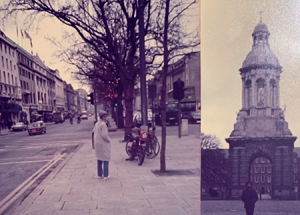
We managed to get an affordable room for £16 at Liffey House, a small guest house near the Dublin railway station. We were disappointed that the tourist information centre was closed and city coach tour were not operating till mid-January. Therefore, we explored the city without guided tours. Dublin was much larger than we expected and is a capital full of history and surprises.
We liked walking around Trinity College at the University of Dublin. It had been established in 1592 modelled after the collegiate universities of Oxford and Cambridge, and it was considered one of Europe’s elite institutions. We also walked around the city centre and along the famous O’Connell Street. Later we visited Christ Church Cathedral and the imposing St Patrick’s Cathedral, founded in 1191. The tour of Dublin was completed when we went to the Guinness Brewery.
After a couple of days in Dublin, we took a train back to Rosslare Harbour to board our ship to France. The ship had 300 cabins, but due to our strict budget, we settled for two reclining chairs to rest overnight. We sailed around 6:00 pm from a calm Irish Sea to a rough Atlantic Ocean on a gloomy and cold evening. We went to sleep early with the hope of a relaxing voyage of 415 miles.
We were rudely awoken around midnight due to jerks created by massive waves and freezing, Atlantic winter winds. With the waves becoming rougher, my wife became sea sick and was feeling very poorly. What crossed my mind while looking after her was whether we had made a bad decision in doing a long trip in the middle a brutal winter. Adding to our challenges, the captain of the ship announced that there would be a three-hour delay in reaching our first port in France, Le Havre. He blamed the bad weather and the storm for this long delay. We finally reached France after a rough 24 hours at sea.
FRANCE
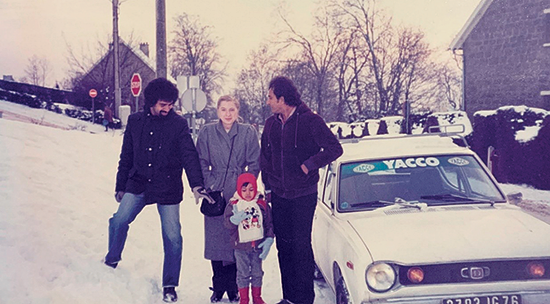
It was our fourth visit to France, but first visit to Le Havre. Owing to the inclement weather, we felt like we were entering a strangely different country. The port was covered with layers of snow turned to black ice. This caused another two-hour delay before the disembarkation.
Le Havre
This port, in terms of total traffic, is the second largest in France after Marseille, the largest, French container port. The city and port had been founded in the 16th century. In the 18th century it was notorious as a busy hub for the slave trade. On a positive note, Le Havre has multiple historic sites, which in later years, prompted the UNESCO to inscribe the central city of Le Havre as a World Heritage Site. We did not see any of these attractions as we arrived there late in the evening when the city was blanketed with a heavy snow fall.
Rouen
After a 50-minute train ride we arrived at our destination for the night, Rouen. It was our second visit to this small, historic city. We were warmly welcomed by our hosts, an uncle of mine, Tilak and his French wife and son. After a warm shower and a nice ‘home-cooked’ Sri Lankan dinner, we slept like tired babies for nearly 12 hours. Next morning, we drove around Rouen.
Paris
Due to the bad weather, all the trains were late, which is uncommon in Western Europe, where train services were usually efficient and punctual. The next day, we were happy to arrive in one of our favourite cities, Paris. With nearly nine million residents in 1985, Paris was a large capital city, yet maintained the charm of a smaller city in different parts of this well-planned metropolis. It was our fourth visit to Paris, but we felt that it was even prettier than before during a snow-covered evening. Paris looked like the winter wonderland.
Will continue in next week’s article: THE WINTER ADVENTURE IN 16 COUNTRIES – Part “B”,
with adventures in France, Portugal, Spain and Morocco…


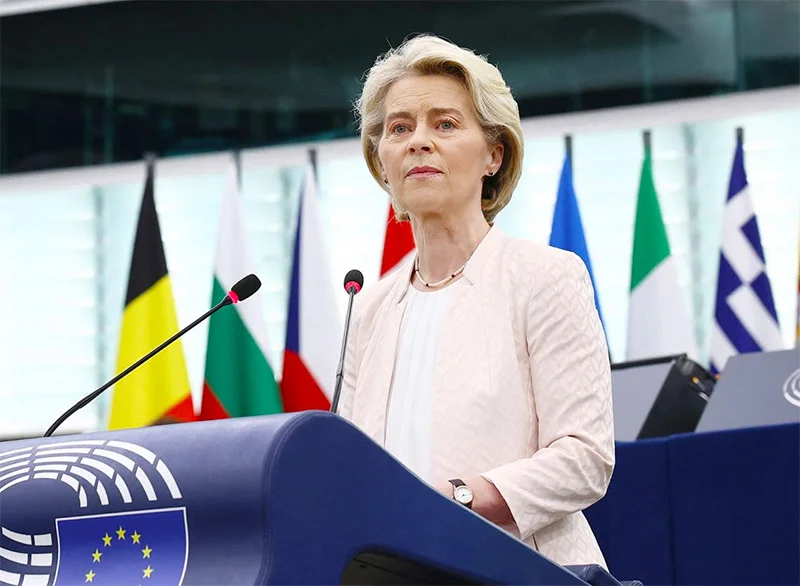
 European Commission President Ursula von der Leyen addressing the World Economic Forum in Davos, Switzerland on Tuesday put forward the EU’s viewpoint on current questions in international politics with a clarity, coherence and eloquence that was noteworthy. Essentially, she aimed to leave no one in doubt that a ‘new form of European independence’ had emerged and that European solidarity was at a peak.
These comments emerge against the backdrop of speculation in some international quarters that the Post-World War Two global political and economic order is unraveling. For example, if there was a general tacit presumption that US- Western European ties in particular were more or less rock-solid, that proposition apparently could no longer be taken for granted.
For instance, while US President Donald Trump is on record that he would bring Greenland under US administrative control even by using force against any opposition, if necessary, the EU Commission President was forthright that the EU stood for Greenland’s continued sovereignty and independence.
In fact at the time of writing, small military contingents from France, Germany, Sweden, Norway and the Netherlands are reportedly already in Greenland’s capital of Nook for what are described as limited reconnaissance operations. Such moves acquire added importance in view of a further comment by von der Leyen to the effect that the EU would be acting ‘in full solidarity with Greenland and Denmark’; the latter being the current governing entity of Greenland.
It is also of note that the EU Commission President went on to say that the ‘EU has an unwavering commitment to UK’s independence.’ The immediate backdrop to this observation was a UK decision to hand over administrative control over the strategically important Indian Ocean island of Diego Garcia to Mauritius in the face of opposition by the Trump administration. That is, European unity in the face of present controversial moves by the US with regard to Greenland and other matters of contention is an unshakable ‘given’.
It is probably the fact that some prominent EU members, who also hold membership of NATO, are firmly behind the EU in its current stand-offs with the US that is prompting the view that the Post-World War Two order is beginning to unravel. This is, however, a matter for the future. It will be in the interests of the contending quarters concerned and probably the world to ensure that the present tensions do not degenerate into an armed confrontation which would have implications for world peace.
However, it is quite some time since the Post-World War Two order began to face challenges. Observers need to take their minds back to the Balkan crisis and the subsequent US invasions of Afghanistan and Iraq in the immediate Post-Cold War years, for example, to trace the basic historic contours of how the challenges emerged. In the above developments the seeds of global ‘disorder’ were sown.
Such ‘disorder’ was further aggravated by the Russian invasion of Ukraine four years ago. Now it may seem that the world is reaping the proverbial whirlwind. It is relevant to also note that the EU Commission President was on record as pledging to extend material and financial support to Ukraine in its travails.
Currently, the international law and order situation is such that sections of the world cannot be faulted for seeing the Post World War Two international order as relentlessly unraveling, as it were. It will be in the interests of all concerned for negotiated solutions to be found to these global tangles. In fact von der Leyen has committed the EU to finding diplomatic solutions to the issues at hand, including the US-inspired tariff-related squabbles.
Given the apparent helplessness of the UN system, a pre-World War Two situation seems to be unfolding, with those states wielding the most armed might trying to mould international power relations in their favour. In the lead-up to the Second World War, the Hitlerian regime in Germany invaded unopposed one Eastern European country after another as the League of Nations stood idly by. World War Two was the result of the Allied Powers finally jerking themselves out of their complacency and taking on Germany and its allies in a full-blown world war.
However, unlike in the late thirties of the last century, the seeming number one aggressor, which is the US this time around, is not going unchallenged. The EU which has within its fold the foremost of Western democracies has done well to indicate to the US that its power games in Europe are not going unmonitored and unchecked. If the US’ designs to take control of Greenland and Denmark, for instance, are not defeated the world could very well be having on its hands, sooner rather than later, a pre-World War Two type situation.
Ironically, it is the ‘World’s Mightiest Democracy’ which is today allowing itself to be seen as the prime aggressor in the present round of global tensions. In the current confrontations, democratic opinion the world over is obliged to back the EU, since it has emerged as the principal opponent of the US, which is allowing itself to be seen as a fascist power.
Hopefully sane counsel would prevail among the chief antagonists in the present standoff growing, once again, out of uncontainable territorial ambitions. The EU is obliged to lead from the front in resolving the current crisis by diplomatic means since a region-wide armed conflict, for instance, could lead to unbearable ill-consequences for the world.
It does not follow that the UN has no role to play currently. Given the existing power realities within the UN Security Council, the UN cannot be faulted for coming to be seen as helpless in the face of the present tensions. However, it will need to continue with and build on its worldwide development activities since the global South in particular needs them very badly.
The UN needs to strive in the latter directions more than ever before since multi-billionaires are now in the seats of power in the principle state of the global North, the US. As the charity Oxfam has pointed out, such financially all-powerful persons and allied institutions are multiplying virtually incalculably. It follows from these realities that the poor of the world would suffer continuous neglect. The UN would need to redouble its efforts to help these needy sections before widespread poverty leads to hemispheric discontent.

 Hi! This week I’ve come up with tips to brighten up your skin.
* Turmeric and Yoghurt Face Pack:
You will need 01 teaspoon of turmeric powder and 02 tablespoons of fresh yoghurt.
Mix the turmeric and yoghurt into a smooth paste and apply evenly on clean skin. Leave it for 15–20 minutes and then rinse with lukewarm water
Benefits:
Reduces pigmentation, brightens dull skin and fights acne-causing bacteria.
* Lemon and Honey Glow Pack:
Mix 01teaspoon lemon juice and 01 tablespoon honey and apply it gently to the face. Leave for 10–15 minutes and then wash off with cool water.
Benefits:
Lightens dark spots, improves skin tone and deeply moisturises. By the way, use only 01–02 times a week and avoid sun exposure after use.
* Aloe Vera Gel Treatment:
All you need is fresh aloe vera gel which you can extract from an aloe leaf. Apply a thin layer, before bedtime, leave it overnight, and then wash face in the morning.
Benefits:
Repairs damaged skin, lightens pigmentation and adds natural glow.
* Rice Flour and Milk Scrub:
You will need 01 tablespoon rice flour and 02 tablespoons fresh milk.
Mix the rice flour and milk into a thick paste and then massage gently in circular motions. Leave for 10 minutes and then rinse with water.
Benefits:
Removes dead skin cells, improves complexion, and smoothens skin.
* Tomato Pulp Mask:
Apply the tomato pulp directly, leave for 15 minutes, and then rinse with cool water
Benefits:
Controls excess oil, reduces tan, and brightens skin naturally.
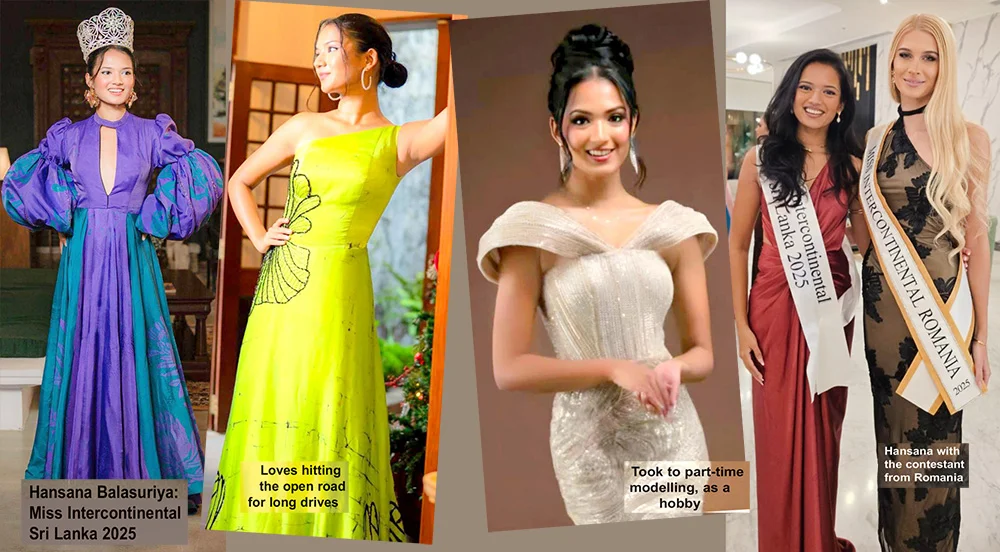
 That’s precisely what 25-year-old Hansana Balasuriya has in mind – shooting for the stars – when she was selected to represent Sri Lanka on the international stage at Miss Intercontinental 2025, in Sahl Hasheesh, Egypt.
The grand finale is next Thursday, 29th January, and Hansana is all geared up to make her presence felt in a big way.
Her journey is a testament to her fearless spirit and multifaceted talents … yes, her life is a whirlwind of passion, purpose, and pageantry.
Raised in a family of water babies (Director of The Deep End and Glory Swim Shop), Hansana’s love affair with swimming began in childhood and then she branched out to master the “art of 8 limbs” as a Muay Thai fighter, nailed Karate and Kickboxing (3-time black belt holder), and even threw herself into athletics (literally!), especially throwing events, and netball, as well.
A proud Bishop’s College alumna, Hansana’s leadership skills also shone bright as Senior Choir Leader.
She earned a BA (Hons) in Business Administration from Esoft Metropolitan University, and then the world became her playground.
Before long, modelling and pageantry also came into her scene.
She says she took to part-time modelling, as a hobby, and that led to pageants, grabbing 2nd Runner-up titles at Miss Nature Queen and Miss World Sri Lanka 2025.
When she’s not ruling the stage, or pool, Hansana’s belting tunes with Soul Sounds, Sri Lanka’s largest female ensemble.
What’s more, her artistry extends to drawing, and she loves hitting the open road for long drives, she says.
This water warrior is also on a mission – as Founder of Wave of Safety,
Hansana happens to be the youngest Executive Committee Member of the Sri Lanka Aquatic Sports Union (SLASU) and, as founder of Wave of Safety, she’s spreading water safety awareness and saving lives.
Today is Hansana’s ninth day in Egypt and the itinerary for today, says National Director for Sri Lanka, Brian Kerkoven, is ‘Jeep Safari and Sunset at the Desert.’
And … the all-important day at Miss Intercontinental 2025 is next Thursday, 29th January.
Well, good luck to Hansana.

Mechanism to be established involving university academics and experts for Education Reforms – President

New integrated framework to bring all stakeholders together to safeguard and rebuild Central highlands – President

ICC T20 World Cup Trophy tour in Sri Lanka launched under President’s patronage

Rasooli, Atal and Mujeeb seal Afghanistan series win

U – 19 World Cup: Afghanistan’s Nooristani Omarzai blows Tanzania away

U – 19 World Cup: Mayes’ 191 helps England crush Scotland

‘Dates have the highest sugar content to fight Coronavirus’

Sunday Island 27 December – Headlines

#SundayIsland 17th December – Headlines

Sunday Island – 28th March

Sunday Island Headlines – 21 March

Sunday Island – 21st February – Headlines
-

 Editorial4 days ago
Illusory rule of law
-
 News5 days ago
UNDP’s assessment confirms widespread economic fallout from Cyclone Ditwah
-
 Editorial5 days ago
Crime and cops
-
 Features4 days ago
Daydreams on a winter’s day
-

 Editorial6 days ago
The Chakka Clash
-
 Features4 days ago
Surprise move of both the Minister and myself from Agriculture to Education
-
 Features3 days ago
Extended mind thesis:A Buddhist perspective
-
 Features4 days ago
The Story of Furniture in Sri Lanka