
Sports
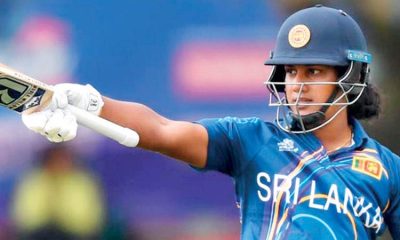
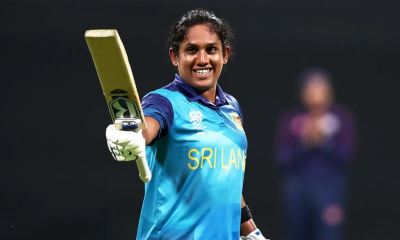
‘The sun will come up tomorrow’ – Chamari Athapaththu


It started with a sensational win over South Africa in the tournament opener and ended with a whimper as they were dismissed for their third-lowest total in T20Is. It’s fair to say Sri Lanka came, saw, conquered and then crashed out. For Chamari Athapaththu, it’s not a calamity.
“The world has not ended. The sun will come up tomorrow. I want to build a good team for the future. Today the feeling is not good but my focus is the next tour,” she said, still smiling, afterwards.
That Athapaththu can even talk about the next tour is a win for Sri Lanka. They went without fixtures between March 2020 and January 2022 and know what the effects of a prolonged absence from the game can do for a team’s momentum. Now, thanks to the first ever women’s FTP, they have visits from Bangladesh (which did not take place prior to the World Cup as initially scheduled) and New Zealand to look forward to, as well as a tour of England later this year. “The youngsters need some experience. They need to play more cricket in future,” Chamari said. “We have to play a lot of cricket against the top four teams.”
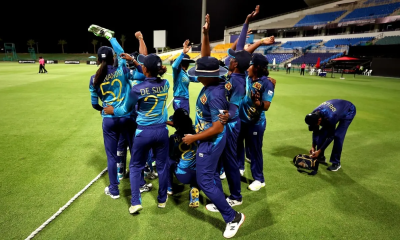
Chamari’s youngsters include under-19 captain Vishmi Gunaratne, who is only 16, offspinner Kavisha Dilhari, who has 10 more T20I caps to her name than her age of 22, and her opening partner, 24-year-old Harshitha Samarawickrama. All of them were excited about the prospect of reaching the semi-finals and anxious about beating New Zealand after losing to Australia, even if that result had been somewhat priced in.
“I’m not worried about the Australia games but I’m a little bit worried about today’s game,” she said. “It was a very crucial game for us and I felt some of the girls in my team put too much pressure on their shoulders. I think they didn’t handle that pressure very well.”
Sri Lanka’s nerves showed almost immediately. They missed a run-out chance that would have seen Bernadine Bezuidenhout dismissed for 7 and then dropped her on 19. She went on to score 32 and share in a 46-run opening stand with Suzie Bates that set up New Zealand’s innings. They also dropped Bates, on 37, as her 56 off 49 balls propelled New Zealand to a score above 160. In response, Sri Lanka were completely shell-shocked. They played their big shots too early and picked out fielders and once Athapaththu was dismissed, it became a procession as the last five wickets fell for 25 runs.
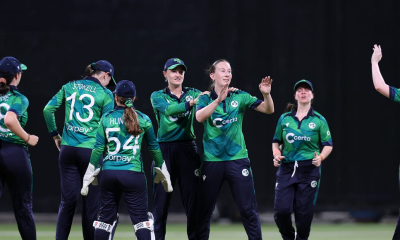
Their opposition knows exactly what that feels like. It was less than a week ago that New Zealand were bundled out for 67 – the second-lowest T20I total – two days after Australia had dismissed them for 76 to all but end their hopes of qualifying for the semi-finals. They were particularly distressed after their 65-run defeat to South Africa – a match that had the weight of a quarter-final attached to it – and captain Sophie Devine emphasised the need to figure out and discuss where things were going wrong. Athapaththu may be tempted to do the same but Amelia Kerr, who was part of Devine’s team’s talks, had some advice. “When there is emotion involved, sometimes you don’t know what to say and it’s better to review it the next day.”
When New Zealand did that, they came up with a mantra for their last two games: “be tougher when things get tough,” Kerr explained. “There was nothing wrong with the talent we have in this room, it was just to have that belief and be tough.”
That may work for New Zealand, who have a fairly developed professional structure as opposed to Sri Lanka, whom FICA’s annual global employment report said had “not professional structures”, and both Athapaththu and Kerr acknowledged the gap is growing.
Unsurprisingly, they both cited Australia as the benchmark and while Athapaththu zoned in on the domestic structure, Kerr looked at T20 franchise leagues that have made the difference. “Australia has a good domestic structure. They play a lot of cricket – domestic tournaments and schools tournaments,” Athapaththu said, while Kerr described the resources the Australian players have as “outstanding”.
But they also pointed to the growing prowess of India as a signal to the rest to speed up their development. “In terms of what we are seeing around the world, with the Hundred in England, the WBBL in Australia and now the WPL, it’s going to strengthen those countries a lot,” Kerr said. “We are heading in the right direction: our match fees being equal to the men, and it allows us to earn more money so we can train more. Most of us do cricket full-time which is only going to help our game. We are behind those countries but if all countries can get that opportunity it is going to help grow the women’s game.”
And for Athapaththu, that is especially significant for the other teams on the subcontinent, which could have just one representative – India – in the final four. “India has a good structure but in Pakistan, Sri Lanka and Bangladesh, we have to develop our structure,” she said.
Because she wants to be part of that process, Athapaththu herself has committed to at least another T20 World Cup – the next tournament is in Bangladesh in September/October 2024 – and perhaps even another 50-over tournament.
“I want to build a good team for Sri Lanka for the future, so that’s my goal,” she said. “I want to encourage the youngsters and be a role model. I always try to lead them from the front, so my target is playing another one or two years for Sri Lanka. That’s what I want to do.” (cricinfo)







by Reemus Fernando
Long jumper Madushani Herath and former national javelin record holder Sumedha Ranasinghe were among half a dozen athletes to have reached qualifying standads to make the national pool on day one of the Athletic Trials held at Diyagama today.
Former Nannapurawa MV, Bibila athlete Herath cleared a distance of 6.32 metres to win the long jump contest, some 18 centimeters clear of the target set for the first trial.
Distance runner Rasara Wijesuriya was more than one minute faster than the qualifying standard set for the 10,000 metres as she stopped the clock in 34:03.29 minutes. Her closest rival Nayana Sewwandi finished more than two minutes later.
Olympian Sumedha Ranasinghe cleared 75.50 meters (qualifying mark -75.00m) and was joined by R. Rathusan in that club with a distance of 75.36.
Minoli Fernando in the women’s high jump (1.76 m) and K.T. Mathumeethan in the men’s hammer throw (50.42m) were among the other athletes to make an impact reaching qualifying standars.
The selection trial is held with the aim of forming a national pool for this year’s Asian Games and the Commonwealth Games.

While Sri Lankan cricket begins another cycle of seething introspection, there is still business to be concluded in Colombo and Pallekele. New Zealand helped turn the home crowd against their own on Wednesday night and will be looking to confirm their own passage to the semi-finals – for the fourth time in the last five T20 World Cups – when they return to Khettarama to take on England, who are already through.
Looking on anxiously will be Pakistan, who shared the points with New Zealand when their Super Eight encounter was washed out and must consequently cling to the possibility of England making it three wins from three and then making up the net run rate deficit in victory over Sri Lanka (with the results margin from both games cumulatively needing to be around 0 runs, assuming the team batting first makes 180).
England’s campaign so far has turned the phrase “winning ugly” into an art form; the two-wicket triumph over Pakistan that sealed their semi-final spot was so defiantly slapdash it might well end up being nominated for the Turner Prize. The quest for the “perfect game” continues. Certainly, there is no danger of them peaking too early.
If there is one unsettling blot on their copybook so far, it is the continuing travails of Jos Buttler. His haunted look after dismissal for a fourth single-innings score in a row against Pakistan told the story of a horror campaign, but there is no sense yet that England are ready to pull the rug on their greatest white-ball batter of all time.
New Zealand are more in need of the win – even if a close-fought loss might do – but, after a dip at the 2024 World Cup when they were edged out in the first group stage by Afghanistan, they look back to their best as a high-functioning tournament side that always makes the best of the resources available to them.
They came into this World Cup with several players battling injury and illness; Michael Bracewell, a key allrounder in subcontinental conditions, was then ruled out without playing a game. But they have won four out of five completed games with Bracewell’s replacement, the unheralded Cole McConchie, one of stars of their come-from-behind win over Sri Lanka – a game in which their five spin-bowling options trumped the four that England are able to call on (assuming the cut to Jacob Bethell’s bowling hand has healed).
No one should be surprised to see them get the job done again. A New Zealand win would put them top of the group, and also end the uncertainty around the semi-final venues, with Mumbai and Kolkata locked in. Pakistan will be hoping desperately it’s not that straightforward.
While Buttler’s lack of form remains the main talking point, Harry Brook did everything he could to make sure the headlines were about him against Pakistan. At the prompting of Brendon McCullum, Brook elevated himself to No. 3 in the order – having dropped down to No. 5 before the World Cup – and the immediate results were spectacular. Having only done the job a handful of times before for Yorkshire and Northern Superchargers, and never at international level, he made full use of the opportunity for a fast start during the powerplay and was consequently more settled when it came to navigating middle-overs spin (his T20 weak spot). A maiden T20I hundred, from just 50 balls, suggests he should be locked in at first drop for the foreseeable.
Kiwis are all about the collective, with handy performance so far sprinkled around, but one area that might be cause for a smidge of concern is the New Zealand middle order. Partly that is down to the top four being so effective – openers Tim Seifert and Finn Allen are their leading run-scorers, closely followed by Glenn Phillips – and partly the abandoned game against Pakistan, which meant they went eight days without playing. Daryl Mitchell and Mark Chapman have both batted three times and missed the chance for middle time against Sri Lanka, before Mitchell Santner and McConchie produced the vital rescue act. New Zealand have discussed pushing Santner higher, but will likely stick with the incumbents in the expectation they will come good (or not be needed).
England have played the same XI five games in a row and – unless they were to suddenly change their thinking on Buttler, and parachute Ben Duckett in to open – seem likely to stick with that formula. Rehan Ahmed, Josh Tongue and Luke Wood are in the wings, in the event that they wish to test their bench strength.
England: (probable) Phil Salt, Jos Buttler (wk), Harry Brook (capt), Jacob Bethell, Tom Banton, Sam Curran, Will Jacks, Jamie Overton, Liam Dawson, Jofra Archer, Adil Rashid.
After adapting on the fly to seal such a comprehensive win over the home side, New Zealand are also expected to keep the same balance, with the two quicks and five spin options at their disposal. Jimmy Neesham could return if conditions demand another seam option.
New Zealand: (probable) Tim Seifert (wk), Finn Allen, Rachin Ravindra, Glenn Phillips, Daryl Mitchell, Mark Chapman, Mitchell Santner (capt), Cole McConchie, Matt Henry, Ish Sodhi, Lockie Ferguson.

India set up a virtual quarter-final against West Indies on Sunday with a comfortable win against Zimbabwe on a night that Abhishek Sharma scored his maiden World Cup fifty and India made a small tweak in their batting combination to unleash the second-highest total in T20 World Cups, going two past the 254 Zimbabwe conceded in their last match. Six men batted for India, their innings lasted 15 to 30 balls, and their strike rates ranged from 158.33 to 275. In all, they hit 17 sixes, the most for India in a single T20 World Cup innings.
Zimbabwe asked India to bat first expecting help for fast bowlers. Their reading of conditions was accurate, but the execution was much better from the much more experienced India bowlers, who kept them to 33 in five overs, post which there was hardly any way back.
Zimbabwe, now out of the tournament, dropped two costly catches, taking their tally in Super Eight to five in two matches after having missed just one in the whole first round. A defiant unbeaten 97 from Brian Bennett was the only consolation for them.
Samson breaks up left-hand cluster
India finally admitted their cluster of three left-hand batters at the top was giving offspinners a match-up to exploit, that Suryakumar Yadav was not going to be promoted to No. 3, and sacrificed some lower-order hitting of Rinku Singh to bring in Sanju Samson. Zimbabwe were anyway looking to open with their tall fast bowlers, both of whom Samson hit for sixes down the ground off the back foot in the first two overs. He eventually fell for just 24 off 15, but he was part of India’s biggest opening stand this tournament: 48 off 3.4 overs.
Unlike earlier matches, Abhishek neither charged at the quick bowlers nor gave away his stumps. It took him only three balls to unveil an inside-out drive over extra cover for four. It turned out to be a no-ball as well, and he sent the free hit for a straight four. Abhishek got to 33 off 13 in the powerplay as Zimbabwe refrained from using spin before the field spread out.
As soon as the powerplay ended, Sikandar Raza and Brian Bennett bowled two overs without a boundary to Abhishek and Ishan Kishan. Neither of them panicked, Ishan used power, Abhishek his feet, and both got past the hurdle.
It took only his 26 balls but Abhishek’s maiden World Cup fifty was the second-slowest of his 11 scores of 50 or above in T20Is.
Dropped catches hurt Zimbabwe
Had Zimbabwe held on two pretty straightforward chances, Kishan would have been dismissed for 26 off 19 and Suryakumar for eight off four. The duo ended up with 38 off 24 and 33 off 13. The innings was set up beautifully for Hardik Pandya and Tilak Varma to finish off.
The finishing kick
Hardik Pandya and Tilak Varma added an unbeaten 84 off 31 balls, hitting four sixes each, almost racing each other. Hardik was the only one that ended up with a fifty, but he had a headstart of 12 runs when Tilak came out to bat. Tilak was the quicker one, striking cleanly from the first ball, using space both in front of and behind square. Hardik mainly used power to go down the ground, and caught up with and went past Tilak with two sixes off the last two balls of the innings.
Early movement makes it a bridge too far for Zimbabwe
Arshdeep Singh conceded just one boundary in his first two overs, Hardik extracted appreciable seam movement with the new ball, and at 25 for 0 in four overs, Zimbabwe were looking at 14.5 per over to stay alive in the tournament.
Spinners strike
Axar Patel, left out for the last match because of an abundance of left-hand batters, took two balls to get a wicket, that of the left-hand batter Tadiwanashe Marumani. Varun Chakravarthy took to 19 his streak of taking at least one wicket in a T20I with the wicket of Dion Myers.
Bennett shines, cause for concern for India
In the end, India were comfortable victors by 72 runs, but they will not like that Varun went for 35 runs, conceding three sixes, and that their sixth bowler Shivam Dube had a terrible night out with 46 off two overs. Thanks to South Africa’s win over West Indies earlier in the day, India were under no pressure to secure a big win so they did experiment more than they usually would have.
Zimbabwe ended up getting 184 thanks largely to Bennett, who showed he had a higher gear in him after he went the first round scoring in the 130s without a single six. Here he hit six sixes and scored at 164.4. As the hundred approached, though, Arshdeep shut Zimbabwe out with three wickets in two overs, which also meant Bennett was starved of strike in the end. Arshdeep went past Jasprit Bumrah as India’s leading wicket-taker in T20 World Cups.
Brief scores:
India 256 for 4 in 20 overs (Sanju Samson 24, Abhishek Sharma 55, Ishan Kishan 38, Suryakumar Yadav 33, Hardik Pandya 50*, Tilak Varma 44*; Richard Ngarava 1-62, Blessing Muzarabani 1-42, Tinotenda Maposa 1-40, Sikandar Raza 1-29) beat Zimbabwe 184 for 6 in 20 overs (Brian Bennett 97*, Tadiwanashe Marumani 20, Sikandar Raza 31, Tony Munyonga 11; Arshdeep Singh 3-24, Varun Chakravarthy 1-35, Axar Patel 1-35, Shivam Dube 1-46) by 72 runs
[Cricinfo]

Madushani, Sumedha among athletes to reach qualifying standards

Can resourceful New Zealand lock in semi-final spot against already-qualified England?

Fair weather will prevail over most parts of the island

CEB engineers raise alarm over power sector stability

CB identifies 24 pyramid scams in Sri Lanka

Church urges patience, warns against interference with Easter attacks probe

‘Dates have the highest sugar content to fight Coronavirus’

Sunday Island 27 December – Headlines

#SundayIsland 17th December – Headlines

Sunday Island – 28th March

Sunday Island Headlines – 21 March

Sunday Island – 21st February – Headlines
-

 Features6 days ago
Why does the state threaten Its people with yet another anti-terror law?
-

 Features6 days ago
Reconciliation, Mood of the Nation and the NPP Government
-

 Features6 days ago
Victor Melder turns 90: Railwayman and bibliophile extraordinary
-

 Features5 days ago
LOVEABLE BUT LETHAL: When four-legged stars remind us of a silent killer
-
 Features6 days ago
Victor, the Friend of the Foreign Press
-

 Business5 days ago
Seeing is believing – the silent scale behind SriLankan’s ground operation
-

 Business5 days ago
Bathiya & Santhush make a strategic bet on Colombo
-

 Features6 days ago
Barking up the wrong tree