
Opinion
The Road from Gaza – II

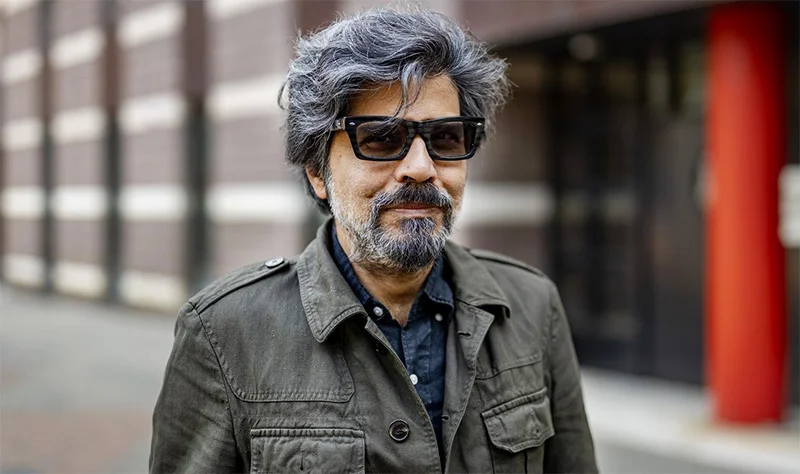
The World After Gaza by Pankkaj Mishra (Fern Press, London) 2025
(First part of this article appeared in The Island yesterday.)
In its early years Israel attempted to establish strong diplomatic, cultural and economic ties with the newly independent Asian and African colonies. But in the wake of the 1967 War these ties deteriorated and even collapsed as Israel was increasingly seen by the former Afro-Asian colonies as a Western-style colonial state. In 1975 the Organisation of African Unity said ‘the racist regime in occupied Palestine and the racist regimes in Zimbabwe and South Africa have a common imperialist origin.’ This was followed by the UN General Assembly equating Zionism with Racism. The following year John Vorster, the South African Prime Minister and a former Nazi supporter, was welcomed on a state visit to Israel.
Pankkaj Mishra deals sensitively with the dilemma of two fragile and enlightened Jews. The Austrian Jean Amery (1912-78), son of a Jewish father and a Catholic mother, was what at that time in Europe would be referred to as an ‘assimilated German Jew.’ Though named Hans Chaim Maier at birth, he grew up without a Jewish identity. But the terrible anti-Semitism of the interwar years changed his self-identity. He wrote, “being Jewish equates to feeling the burden of yesterday’s tragedy within oneself. I bear the number from Auschwitz on my left forearm.”
An existential connection with Israel was almost forced on him. So like many assimilated European Jews who survived World War II at the end of which only three million out of the continent’s nine-plus million pre-War Jews remained, Palestine seemed the only refuge for “all the humiliated and libelled Jews the world over.”
Amery was haunted by the prospect of Israel being militarily overpowered in a catastrophic war as well as its repression of the Palestinians and finally Right-ward drift that Israeli politics would take after Begin assumed office in 1977. The following year he committed suicide.
The other was Primo Levi (1919-87) an Italian Jew trained as a Chemist. He served in the armed resistance against the Nazis during World War II. An author of short stories, poems, a novel and essays he wrote Survival in Auschwitz. He committed suicide 1987.
Irgun – Hā Irgun Ha-Tzvaʾī Ha-Leūmī b-Ērētz Yiśrāʾel – the National Military Organization in the Land of Israel – was formed in 1931. Until his death in 1940, its leader was Vladimir Yevgenyevich Zhabotinsky (later Ze’ev Jabotinsky) a Russian Jew. The number of members of Irgun varied from a few hundred to a few thousand. But Jabotinsky’s influence survived his early death, his ideas being carried forward by Menachem Begin (Israel’s Prime Minister 1977–1983) and the son of his secretary Benzion Mileikowsky, Israel’s current Prime Minister Benjamin Netanyahu.
In 1942 Menachem Begin, a Polish Jew, enlisted in the Soviet Union with the Polish Armed Forces in the East, commanded by Gen Władysław Anders, which was later relocated to Palestine. On arrival Begin joined Irgun, which was reeling from the recent loss of its military commander David Raziel and ideologist Ze’ev Jabotinsky.
Jean Amery was a prolific writer and his works like The Limits of Solidarity (1977) and On Suicide: A Discourse on Voluntary Death (1999) expressed the torment of his experiences. He was a prophet who sensed the gathering storm and pleaded with Israel to “acknowledge that your freedom can be achieved only with your Palestinian cousins, not against them.” Aged sixty-five, and still living in Austria but “profoundly disturbed by reports of torture in Israel,” he finally committed suicide in Salzburg in 1978.
Mishra is of the opinion that Gaza may be “the defining event of the Twenty First Century!” He, unlike most other commentators openly poses what should be the critical question: Why is the West so supportive of the victims of war in Ukraine and opening their doors and purses to them, but so indifferent to the plight of the Palestinians? Indian-born Pankaj Mishra is brutal. “Palestine as George Orwell (author of Animal Farm and Nineteen Eighty-Four) pointed out in 1945, is a ‘colour issue.’”
This is glaringly reflected in US politics. In the words of James Baldwin, the Black American writer and civil rights activist, “the Jew is a White Man. When White Men rise up against oppression, they are heroes; when Black Men rise, they have reverted to their native savagery.”
Novelist Jurek Becker a German Jew said in 1977 “Jews in the Near East have established themselves as a master race and are practicing a kind of politics that I can only describe as predatory. And this became a reality in June 1982 when under Prime Minister Begin, Israeli soldiers and Lebanese Christian militia killed hundreds of men, women and children in Lebanese refugee camps. In the words of the French writer Jean Genet, “from one wall of the street to the other, the black and bloated corpses that I had to step over, were all Palestinian and Lebanese.” The Jewish writer Gunther Anders husband of Hannah Arendt, in an open letter lamented that “Israelis had obeyed Begin as blindly as the German people had obeyed Hitler!”
There was also intra racism. “Ben-Gurion had a low opinion of Jewish immigrants from Arab countries who faced racist discrimination from the country’s Ashkenazi ruling class of European ancestry.”
But even as Tel Aviv drew closer to Washington, Primo Levi insisted that “Israel came into being to serve an anti-imperialist function; hastening the collapse of British Colonialism…the Israeli Constitution is solidly constructed on a socialist and democratic base.”
Levi was one of the few who after being liberated from Auschwitz realised that the Shoah would spawn more bitterness, more hatred “an inexhaustible source of evil…the pathologies of survivalist nationalism (that) had infected the Yeshiva, the pre-state Jewish Community in Palestine.”
Primo Levi who by coincidence was visiting Auschwitz during the Lebanese massacre confessed that the “two experiences were superimposed in an agonising way. In 1984 not long before he committed suicide Levi wrote insisting that “the centre of gravity of the Jewish world must turn back, must move out of Israel and back to the Diaspora.”
Journalist Dorothy Thompson on a visit to Mandatory Palestine in 1945 realised that Zionist extremists were growing in influence. She would write: “This amounts to making anti-Semitists by appointment of everybody who either does not believe in Zionism or criticises any phase of Zionist or Israeli policy” (Commentary March 1950). And this is precisely what the Israeli Government is doing today!
As early as 1928 Hans Kohn who lived in Palestine and saw the reaction to the murder of two Arabs in Jerusalem cautioned that “we have degenerated in a horrible way due to our nationalism.” And in 1946 the Jewish political scientist Hannah Arendt, in a letter to philosopher Gershom Scholem – first professor of Jewish mysticism at the Hebrew University of Jerusalem – warned of the “danger that a consistent nationalist has no other choice but to become a racist.”
“Israel’s existence (was) reconceived in the 1960s as a preparation for another Shoah (so) continuous aggression seemed the only feasible solution to the Palestinian Question.” Marek Edelman the commander of the Warsaw Uprising in the Ghetto came to characterise Israel as “a chauvinist religious state where a Christian is a second-class citizen and a Muslim is third class!”
“The idea that Nazis are always present among us, especially among Arabs, was the beginning of an enduring trend in the Israeli nationalist narrative.” The focus of the early settlers, European Jews, on the Shoah experienced a setback in the 1960s. By then Jewish immigrants from Arab countries had suddenly become the majority in Israel. “Ben Gurion had never expected this demographic setback. Only after 1945 did he realise that in order to proclaim a Jewish state in Palestine with a Jewish majority he needed to deliver a million Jews from the Arab countries, a plan wholly alien to the original Zionist Programme…and to educate oriental Jews about the Shoah and European anti-Semitism (neither of which they were familiar with) – an imperfectly imagined community.” When the Oriental – meaning West Asian – Jew arrived in Palestine some were sprayed with insecticide by their European Jewish hosts!
In the US by the 1970s “Jews were the most educated and prosperous minority group and were increasingly irreligious.” While “fanatical American Protestants, long hostile to both Islam and Judaism, viewed Jews in Palestine as a precondition for the Second Coming (of Jesus Christ)…At the March for Israel in Washington in November 2023 Pastor John Hagee claimed that the Fuhrer had been instructed by God to help the Jews reach the Promised Land.”
Mishra Pankkaj concludes that “White Supremacy, historically exercised through colonialism, slavery, segregation, militarised border controls and mass incarceration has entered its most desperate and dangerous phase.” (To be continued)
Unattributed quotations taken from MISHRA, Pankkaj The World After Gaza (2025) Fern Press, London
By Jayantha Somasundaram


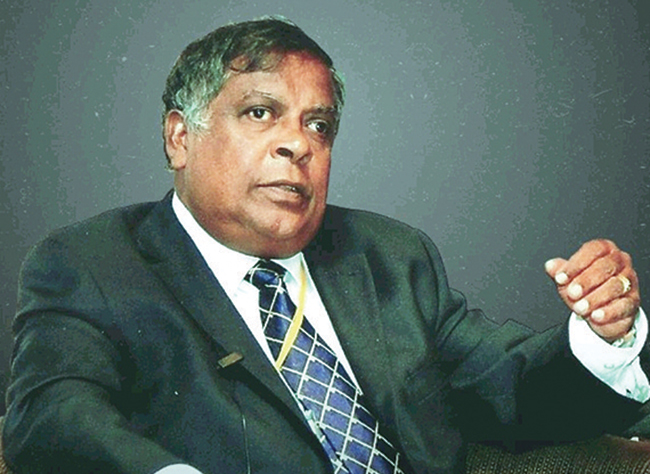
Mr. Tuli Cooray, former Deputy Director General of the Board of Investment of Sri Lanka (BOI) and former Secretary General of the Joint Apparel Association Forum (JAAF), passed away three months ago, leaving a distinguished legacy of public service and dedication to national economic development.
An alumnus of the University of Colombo, Mr. Cooray graduated with a Special Degree in Economics. He began his career as a Planning Officer at the Ministry of Plan Implementation and later served as an Assistant Director in the Ministry of Finance (Planning Division).
He subsequently joined the Greater Colombo Economic Commission (GCEC), where he rose from Manager to Senior Manager and later Director. During this period, he also served at the Treasury as an Assistant Director. With the transformation of the GCEC into the BOI, he was appointed Executive Director of the Investment Department and later elevated to the position of Deputy Director General.
In recognition of his vast experience and expertise, he was appointed Director General of the Budget Implementation and Policy Coordination Division at the Ministry of Finance and Planning. Following his retirement from government service, he continued to contribute to the national economy through his work with JAAF.
Mr. Cooray was widely respected as a seasoned professional with exceptional expertise in attracting foreign direct investment (FDI) and facilitating investor relations. His commitment, leadership, and humane qualities earned him the admiration and affection of colleagues across institutions.
He was also one of the pioneers of the BOI Past Officers’ Association, and his passing is deeply felt by its members. His demise has created a void that is difficult to fill, particularly within the BOI, where his contributions remain invaluable.
Mr. Cooray will be remembered not only for his professional excellence but also for his integrity, humility, and the lasting impact he made on those who had the privilege of working with him.
The BOI Past Officers’ Association
jagathcds@gmail.com
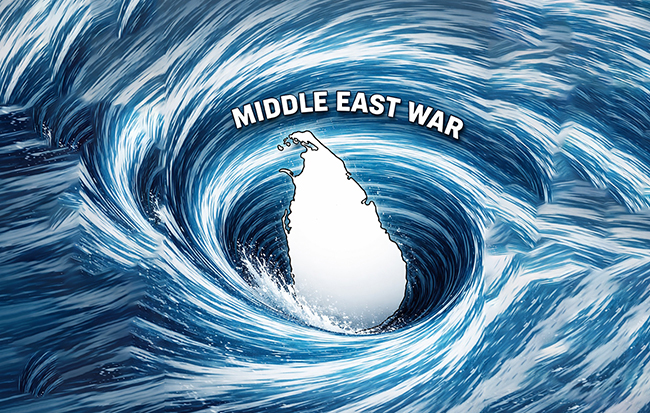
“As a small and open country, Singapore will always be vulnerable to what happens around us. As Lee Kuan Yew used to say: “when elephants fight, the grass suffers, but when elephants make love, the grass also suffers“. Therefore, we must be aware of what is happening around us, and prepare ourselves for changes and surprises.” – Prime Minister Lee Hsien Loong, during the debate on the President’s Address in Singapore Parliament on 16 May, 2018, commenting on the uncertain external environment during the first Trump Administration.
“When elephants fight, it is the grass that suffers”
is a well-known African proverb commonly used in geopolitics to describe smaller nations caught in the crossfire of conflicts between major powers. At the 1981 Commonwealth conference, when Tanzanian President Julius Nyerere quoted this Swahili proverb, the Prime Minister Lee Kuan Yew famously retorted, “When elephants make love, the grass suffers, too”. In other words, not only when big powers (such as the US, Russia, EU, China or India) clash, the surrounding “grass” (smaller nations) get “trampled” or suffer collateral damage but even when big powers collaborate or enter into friendly agreements, small nations can still be disadvantaged through unintended consequences of those deals. Since then, Singaporean leaders have often quoted this proverb to highlight the broader reality for smaller states, during great power rivalry and from their alliances. They did this to underline the need to prepare Singapore for challenges stemming from the uncertain external environment and to maintain high resilience against global crises.
Like Singapore, as a small and open country, Sri Lanka too is always vulnerable to what happens around us. Hence, we must be alert to what is happening around us, and be ready not only to face challenges but to explore opportunities.
When Elephants Fight
To begin with, President Trump’s “Operation Epic Fury”.
Did we prepare adequately for changes and surprises that could arise from the deteriorating situation in the Gulf region? For example, the impact the conflict has on the safety and welfare of Sri Lankans living in West Asia or on our petroleum and LNG imports. The situation in the Gulf remains fluid with potential for further escalation, with the possibility of a long-term conflict.
The region, which is the GCC, Iraq, Iran, Israel, Jordan, Syria and Azerbaijan (I believe exports to Azerbaijan are through Iran), accounts for slightly over $1 billion of our exports. The region is one of the most important markets for tea (US$546 million out of US$1,408 million in 2024. According to some estimates, this could even be higher). As we export mostly low-grown teas to these countries, the impact of the conflict on low-grown tea producers, who are mainly smallholders, would be extremely strong. Then there are other sectors like fruits and vegetables where the impact would be immediate, unless of course exporters manage to divert these perishable products to other markets. If the conflict continues for a few more weeks or months, managing these challenges will be a difficult task for the nation, not simply for the government. It is also necessary to remember the Russia – Ukraine war, now on to its fifth year, and its impact on Sri Lanka’s economy.
Mother of all bad timing
What is more unfortunate is that the Gulf conflict is occurring on top of an already intensifying global trade war. One observer called it the “mother of all bad timing”. The combination is deadly.
Early last year, when President Trump announced his intention to weaponise tariffs and use them as bargaining tools for his geopolitical goals, most observers anticipated that he would mainly use tariffs to limit imports from the countries with which the United States had large trade deficits: China, Mexico, Vietnam, the European Union, Japan and Canada. The main elephants, who export to the United States. But when reciprocal tariffs were declared on 2nd April, some of the highest reciprocal tariffs were on Saint Pierre and Miquelon (50%), a French territory off Canada with a population of 6000 people, and Lesotho (50%), one of the poorest countries in Southern Africa. Sri Lanka was hit with a 44% reciprocal tariff. In dollar terms, Sri Lanka’s goods trade deficit with the United States was very small (US$ 2.9 billion in 2025) when compared to those of China (US$ 295 billion in 2024) or Vietnam (US$ 123 billion in 2024).
Though the adverse impact of US additional ad valorem duty has substantially reduced due to the recent US Supreme Court decision on reciprocal tariffs, the turbulence in the US market would continue for the foreseeable future. The United States of America is the largest market for Sri Lanka and accounts for nearly 25% of our exports. Yet, Sri Lanka’s exports to the United States had remained almost stagnant (around the US $ 3 billion range) during the last ten years, due to the dilution of the competitive advantage of some of our main export products in that market. The continued instability in our largest market, where Sri Lanka is not very competitive, doesn’t bode well for Sri Lanka’s economy.
When Elephants Make Love
In rapidly shifting geopolitical environments, countries use proactive anticipatory diplomacy to minimise the adverse implications from possible disruptions and conflicts. Recently concluded Free Trade Agreement (FTA) negotiations between India and the EU (January 2026) and India and the UK (May 2025) are very good examples for such proactive diplomacy. These negotiations were formally launched in June 2007 and were on the back burner for many years. These were expedited as strategic responses to growing U.S. protectionism. Implementation of these agreements would commence during this year.
When negotiations for a free trade agreement between India and the European Union (which included the United Kingdom) were formally launched, anticipating far-reaching consequences of such an agreement on other developing countries, the Commonwealth Secretariat requested the University of Sussex to undertake a study on a possible implication of such an agreement on other low-income developing countries. The authors of that study had considered the impact of an EU–India Free Trade Agreement on the trade of excluded countries and had underlined, “The SAARC countries are, by a long way, the most vulnerable to negative impacts from the FTA. Their exports are more similar to India’s…. Bangladesh is most exposed in the EU market, followed by Pakistan and Sri Lanka.”
So, now these agreements are finalised; what will be the implications of these FTAs between India and the UK and the EU on Sri Lanka? According to available information, the FTA will be a game-changer for the Indian apparel exporters, as it would provide a nearly ten per cent tariff advantage to them. That would level the playing field for India, vis-à-vis their regional competitors. As a result, apparel exports from India to the UK and the EU are projected to increase significantly by 2030. As the sizes of the EU’s and the UK’s apparel markets are not going to expand proportionately, these growths need to come from the market shares of other main exporters like Sri Lanka.
So, “also, when elephants make love, the grass suffers.”
Impact on Sri Lanka
As a small, export dependent country with limited product and market diversification, Sri Lanka will always be vulnerable to what happens in our main markets. Therefore, we must be aware of what is happening in those markets, and prepare ourselves to face the challenges proactively. Today, amid intense geopolitical conflicts, tensions and tariff shifts, countries adopt high agility and strategic planning. If we look at what our neighbours have been doing in London, Brussels and Tokyo, we can learn some lessons on how to navigate through these turbulences.
(The writer is a retired public servant and can be reached at senadhiragomi@gmail.com)
by Gomi Senadhira

The introduction of the QR code–based fuel quota system can be seen as a timely and necessary measure, implemented as part of broader austerity efforts to manage limited fuel resources. In the face of ongoing global fuel instability and economic challenges, such a system is aimed at ensuring equitable distribution and preventing excessive consumption. While it is undeniable that this policy may disrupt the daily routines of certain segments of the population, it is important for citizens to recognize the larger national interest at stake and cooperate with these temporary measures until stability returns to the global fuel market.
At the same time, this initiative presents an important opportunity for the Government to address long-standing gaps in regulatory enforcement. In particular, the implementation of the QR code system could have been strategically linked to the issuance of valid revenue licenses for vehicles. Restricting QR code access only to vehicles that are properly registered and have paid their revenue dues would have helped strengthen compliance and improve state revenue collection.
Available data from the relevant authorities indicate that a significant number of vehicles—especially three-wheelers and motorcycles—continue to operate without valid revenue licences. This represents a substantial loss of income to the State and highlights a weakness in enforcement mechanisms. By integrating the fuel quota system with revenue license verification, the government could have effectively encouraged vehicle owners to regularise their documentation while simultaneously improving fiscal discipline.
In summary, while the QR code fuel system is a commendable step toward managing scarce resources, aligning it with existing regulatory requirements would have amplified its benefits. Such an approach would not only support fuel conservation but also enhance government revenue and promote greater accountability among vehicle owners.
Sariputhra
Colombo 05

National Namal Uyana Declared a ‘National Heritage of Sri Lanka’

Philippine transport strikers say Marcos Jr failing to control oil prices

One ant for $220: the new frontier of wildlife trafficking

Three Lebanese journalists killed in Israeli strike, say broadcasters

Showers will occur at a few places in the Sabaragamuwa province and in Colombo, Kaluthara, Galle, and Matara districts after 2.00 pm

War-linked power crunch pushes Lanka to four-day week

‘Dates have the highest sugar content to fight Coronavirus’

Sunday Island 27 December – Headlines

#SundayIsland 17th December – Headlines

Sunday Island – 28th March

Sunday Island Headlines – 21 March

Sunday Island – 21st February – Headlines
-

 News5 days ago
Senior citizens above 70 years to receive March allowances on Thursday (26)
-

 Features2 days ago
A World Order in Crisis: War, Power, and Resistance
-

 Features7 days ago
Trincomalee oil tank farm: An engineering marvel
-

 News3 days ago
Energy Minister indicted on corruption charges ahead of no-faith motion against him
-

 News4 days ago
US dodges question on AKD’s claim SL denied permission for military aircraft to land
-

 Features7 days ago
The scientist who was finally heard
-

 Business4 days ago
Dialog Unveils Dialog Play Mini with Netflix and Apple TV
-

 Sports3 days ago
SLC to hold EGM in April