
News
The revised Data Protection Bill now out


by Randima Attygalle
The Data Protection Bill which was presented to the Legal Draftsman’s Department for further amendments to some of the provisions in the original Draft Bill has been released.
The Information and Technology Agency of Sri Lanka (ICTA) has announced that several changes have been made to the substantive provisions of the original Draft Bill including re-arrangement of key provisions. The changes were based on the feedback of a number of stakeholders including the Central Bank of Sri Lanka, Attorney General’s Department and the Ministry of Justice.
The Chair of the Data Protection Drafting Committee and the Legal Advisor to ICTA, Jayantha Fernando notes that, further amendments to the Bill are, however, possible once the Draft Bill is presented to the Cabinet and published as a Bill.
The original Draft Bill was reviewed by the Attorney General (AG) for compliance with Article 77 of the Constitution and the preliminary observations of AG received by the Drafting Committee in July last year. The Drafting Committee’s responses to AG’s observations were also reviewed by the Independent Review Panel, Chaired by Justice K. T. Chitrasiri and this response was sent to the AG and the Legal Draftsman in October. This was followed by several consultations between the Legal Draftsman’s Department and the Drafting Committee, through November and December last year.
The draft legislation defines ‘data’ as ‘any data by which an individual is identifiable and this includes name, an identification number, location data and also factors specific to the physical, physiological, genetic, psychological, economic, cultural or social identify of an individual’. Data protection is the right of a person to ensure that their personal data is not used, exchanged or even maintained without their knowledge.
The draft legislation Fernando told the Sunday Island imposes several obligations on those who collect and process personal data (‘Controllers’ and ‘Processors’). A new set of rights is also given to citizens under this new legislation, which are known as ‘Rights of data subjects’.
“For instance, personal data could be collected only for a specified purpose and not for any other purpose that is incompatible with the said purposes. However, processing data in public interest, scientific or historical research will not be considered incompatible. Personal Data has to be processed in a manner to ensure appropriate security, including protection against accidental loss, destruction or damage,” explains Fernando.
Data Subject (individuals) will also have the right to withdraw his or her consent given to Controllers and will also have the right to rectify the data without undue delay. Further, the Data Subjects have been given the right to object to processing of their data. These rights of Data Subjects can be exercised directly by the individuals with the Controller.
In the modern digital era where data is often at risk, both at individual and organizational level, this legislation becomes very relevant in view of certain measures introduced in the latest version of the Bill, points out the senior legal expert.
“Accountability measures for processing of personal data are required by the law to be implemented by government departments, banks, telco’s, companies etc. as forming a self-regulatory mechanism, referred to as ‘Data Protection Management Programme in the Law. There is also the right of appeal by citizens to the Data Protection Authority against the decisions made by entities which refuse their requests under the Law.”
Requirement for ‘Data Protection Impact Assessments’ (DPIA) by those entities doing high risk processing, becomes relevant in the context of digital adoptions in different organizations where individual data is collected. The Bill also defines criteria for cloud hosting of data under the provisions governing cross-border data flows and includes safeguards when data is hosted out of the country. Furthermore, the Data Protection Authority is vested with powers to give directives to the government and the private sector entities processing personal data and impose penalties in the event of non-compliance. There is a right of appeal from these decisions to the Court of Appeal.
Although laws on data protection have been in force in many parts of the world for several years, data protection is still a new concept to us. The drafting Committee, as it Chair explains, has taken into account international best practices, such as the OECD Privacy Guidelines, APEC Privacy Framework, Council of Europe Data Protection Convention, EU General Data Protection Regulation and laws enacted in other jurisdictions such as the UK, Singapore, Australia and Mauritius. “We have also studied the laws enacted in the State of California as well as the Indian Bill, when formulating the draft legislation,” Fernando remarked.



Amidst ongoing accusations that the theft of USD 2.5 mn (nearly 1 bn Rupees) from the Treasury hadn’t been properly investigated, The Island learns that the relevant payments had been made to the actual creditor on the instructions of the Finance Ministry.
Confirming the inquiries made by us, authoritative sources said that payments had been made to several accounts through the US banks. Earlier, Sri Lanka released funds to fake foreign accounts in spite of warnings regarding the suspicions about the process.
The funds were part of a bilateral debt repayment to Australia with a settlement due in September 2025. The payment was part of a $ 22.9 million debt settlement.
The lapses occurred in the wake of far reaching changes regarding the debt management functions. In terms of a particular condition of the International Monetary Fund (IMF), Sri Lanka’s debt management functions that had been previously handled by the Central Bank were transferred to a new institution established under the General Treasury—the Public Debt Management Office (PDMO).
Sources said that regardless of the loss of USD 2.5 mn, Sri Lanka couldn’t have defaulted and therefore payments had been made.
Sources who closely followed the issue said that the government owed an explanation and public apology regarding the loss of USD 2.5 mn and how fresh payments were made.
Sources said that the USD 2.5 mn paid to fake accounts had been lost and could never be traced. CoPF Chairman Dr. Harsha de Silva has said that the NPP government has told the IMF that stolen USD 2.5 mn would be recovered from the public by introducing an amendment to the budget.
By Shamindra Ferdinando
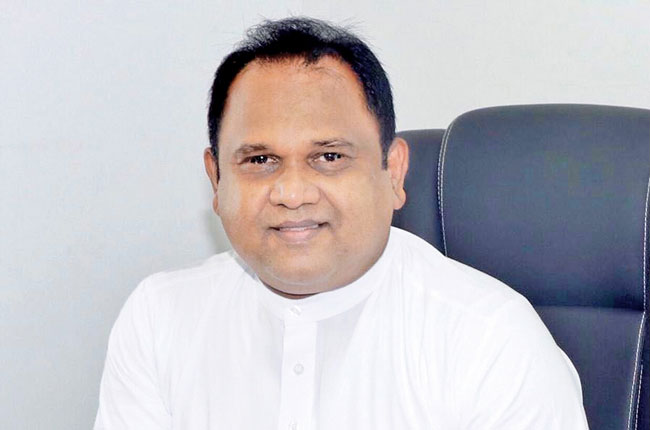
The Court of Appeal yesterday (18) postponed until June 25 the hearing of a petition filed by former Minister Nalin Fernando seeking the dismissal of an indictment brought against him by the Attorney General in connection with the controversial ‘Carrom Boards’ case.
The petition was taken up before a bench comprising Justices P. Kumararatnam and Pradeep Hettiarachchi.
Appearing for the petitioner, President’s Counsel Ali Sabry, instructed by Attorney-at-Law Ramzi Bacha, informed court that Fernando had already been convicted and sentenced to 30 years rigorous imprisonment in a case instituted by the Commission to Investigate Allegations of Bribery or Corruption (CIABOC) arising from the same incident.
Counsel argued that the Attorney General had subsequently filed a separate case based on the same set of charges and maintained that subjecting an accused person to a second prosecution for the same offence was contrary to law.
He submitted that preliminary objections on the issue had been raised before the Colombo High Court but were dismissed by the trial judge.
The petitioner has therefore sought a declaration from the Court of Appeal that the indictment filed by the Attorney General is unlawful and requested that the charges be set aside.
The court directed that the matter be called again on June 25, when the Attorney General is expected to present submissions on the petition.
The case stems from allegations that during the 2015 presidential election campaign, 14,000 carrom boards and 11,000 checkers boards were imported and distributed through Lanka Sathosa outlets for allocation to political offices of former President Mahinda Rajapaksa, resulting in an estimated loss of Rs. 39 million to the State.
Based on those allegations, the Attorney General has instituted proceedings against Fernando before the Colombo High Court under the Public Property Act.
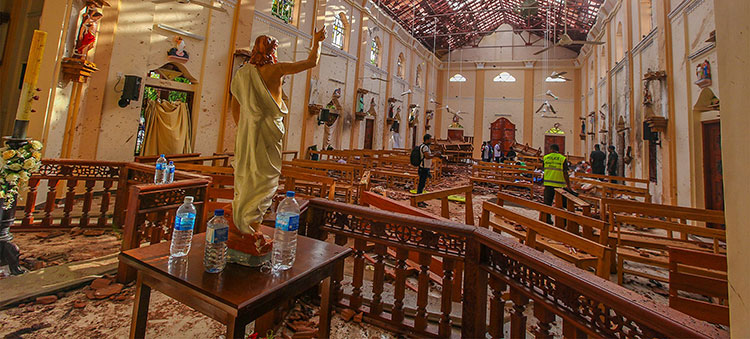
The UNP yesterday called on the government to clarify whether it had sought access to evidence and documents gathered during a United States investigation into the 2019 Easter Sunday terrorist attacks.
In a statement, the UNP has recalled that then Prime Minister Ranil Wickremesinghe requested the U.S. government to conduct a comprehensive investigation into the attacks immediately after they occurred, citing limitations in local investigative capacity. A similar request was also made during a telephone conversation with then U.S. President Donald Trump on April 22, 2019, the statement said.
According to the UNP, the Federal Bureau of Investigation (FBI) subsequently carried out an extensive investigation in collaboration with Sri Lankan agencies, including the Criminal Investigation Department (CID), Military Intelligence and the State Intelligence Service. The findings were later submitted to the Sri Lankan authorities and accepted by the relevant institutions.
The party noted that FBI Special Agent Merrilee R. Godwin had filed a 71-page affidavit before the U.S. District Court for the Central District of California in November 2020 following a two-year investigation. A criminal case was later instituted in Los Angeles naming suspects who had already been taken into custody in Sri Lanka.
Pointing out that material collected during the U.S. investigation remains in the possession of the FBI and the U.S. Department of Justice, the UNP has asked the government whether it formally requested access to those records after reopening investigations into the attacks.
The UNP has stressed the importance of making the documents available to Sri Lankan judicial authorities, arguing that they could assist efforts to establish the full circumstances surrounding the Easter Sunday attacks.

Cricket journalist and broadcast legend Qamar Ahmed dies aged 88

Stafanie Taylor, spinners help West Indies overcome Scotland threat

Showers will occur at times in the Western, Sabaragamuwa and North-western provinces and in Galle, Matara, Kandy and Nuwara-Eliya districts

Thirty-five killed as gunmen attack Niger’s biggest airport

Creditor receives USD 2.5 mn as Lankan public bears loss from theft of Treasury funds

Former Minister Nalin raises defence of double jeopardy

‘Dates have the highest sugar content to fight Coronavirus’

Sunday Island 27 December – Headlines

#SundayIsland 17th December – Headlines

Sunday Island – 28th March

Sunday Island Headlines – 21 March

Sunday Island – 21st February – Headlines
-

 News4 days ago
Release of 2025 O/L results likely to be delayed
-

 Sports4 days ago
Tharanga set for high-profile javelin clash in Ostrava
-

 Features5 days ago
Politics of protected species
-

 News3 days ago
Beijing Capital Airlines to resume flights to Colombo signalling boost to tourism
-

 News4 days ago
Theft of USD 2.5 mn from Treasury: CoPF accused of complicity in NPP cover-up
-

 News6 days ago
Commonwealth lawyers urge Lanka to uphold rule of law
-

 Opinion4 days ago
Decoding Trump’s 12.5% “Forced Labor Tariff” on Sri Lanka
-

 Opinion4 days ago
Palm leaf manuscripts of Sri Lanka – Part V