
Business
The Potential Impact of a Clean, Development-Focused Government on Sri Lanka’s Stock Market


BY Uddeepa Peiris
As Sri Lanka navigates through a complex political and economic environment, the need for a shift in governance has become more apparent. After years of economic challenges, corruption scandals, and political instability, the prospect of a political party coming to power with a commitment to zero corruption and high development potential is both timely and crucial. In the context of Sri Lanka’s current situation, such a transition could have far-reaching effects on the stock market, potentially leading to increased investor confidence, economic recovery, and long-term growth.
Increased Investor Confidence
Sri Lanka’s political climate has been marred by instability and allegations of corruption, leading to a loss of investor trust, both locally and globally. A new government that focuses on transparency, accountability, and anti-corruption measures would likely instill confidence in the financial markets. Transparency in governance and policy decisions would reduce uncertainty, which is one of the biggest deterrents to investment. For both foreign and domestic investors, a government that operates with integrity and clear objectives would lower perceived risks. This could lead to a surge in the Colombo Stock Exchange (CSE), as capital flows into a more secure environment.
Additionally, with reduced corruption, sectors that have suffered from cronyism or mismanagement could experience revaluation, as investors reward companies that operate efficiently and ethically. This could particularly benefit industries like manufacturing, banking, and telecommunications, where good governance is crucial for profitability.
Attracting Foreign Direct Investment (FDI)
Sri Lanka has immense potential to attract foreign direct investment, but its troubled political history has often repelled investors. A clean, development-driven government could significantly improve Sri Lanka’s attractiveness as an investment destination. If a new government prioritizes institutional reforms, strengthens the rule of law, and curbs corruption, global investors would likely see Sri Lanka as a promising emerging market.
Increased FDI inflows would not only help stabilize the country’s economy but would also drive the stock market upward. Sectors such as infrastructure, energy, technology, and tourism could see a substantial boost, as foreign investors channel funds into development projects. This would enhance economic productivity, provide jobs, and improve the overall business environment, contributing to a more vibrant stock market in the long run.
Boost to Key Sectors with High Development Potential
A government committed to development would likely focus on sectors that can spur economic growth, such as infrastructure, technology, renewable energy, and agriculture. Sri Lanka’s geographical position makes it a prime candidate for becoming a logistics hub in South Asia, but to realize this potential, significant infrastructure investments are required.
With a development-focused agenda, the government could unlock opportunities in construction, real estate, and transportation. These sectors could experience substantial growth, driving up stock prices for companies operating within these industries. At the same time, policies promoting technological advancement and innovation could benefit the IT sector and other tech-driven industries, further boosting market valuations.
Additionally, the tourism sector—one of Sri Lanka’s most vital industries—could benefit from stability and infrastructure improvements. After years of political turbulence, a period of stable governance and development could attract more tourists, strengthening hospitality and tourism-related stocks.
Improved Macroeconomic Indicators
For Sri Lanka, whose economy has faced severe headwinds, including inflation, debt crises, and a depreciating currency, a clean government could significantly improve macroeconomic conditions. Reduced corruption would likely result in better fiscal management, more efficient public spending, and the successful implementation of economic reforms.
As the economy stabilizes, corporate earnings could grow stronger, directly reflecting on stock market performance. Improved infrastructure, education, and healthcare would lead to a more productive workforce, creating a cycle of sustainable development. Furthermore, a stable currency and better control over inflation would create a favorable environment for both equity and debt markets, leading to higher market valuations.
Short-Term Volatility and Adjustment Period
Despite the long-term promise, the immediate impact of a political transition might include some short-term volatility. Investors often react cautiously to political changes, and there may be an adjustment period as the new government implements its policies. Companies that have benefited from corrupt practices or opaque systems may face a downturn as they lose their unfair advantages, leading to market realignment. However, this short-term instability is likely to give way to a more sustainable, growth-oriented market over time.
Revaluation of Sectors and Companies
The elimination of corruption would likely lead to a re-rating of certain sectors and companies. Industries or corporations that previously benefited from political patronage might lose market value as corrupt practices are weeded out. On the other hand, companies that have operated efficiently and ethically could see their valuations increase as they gain market share and investor trust. This would create a more level playing field in the stock market, rewarding innovation, productivity, and good governance.
Long-Term Market Boom and Sustainable Growth
If a new political party manages to maintain zero corruption and consistently prioritizes development, the long-term impact on Sri Lanka’s stock market could be profound. A stronger, more diversified economy would fuel corporate earnings and support sustained stock market growth. Key industries could experience a renaissance, creating wealth and job opportunities for Sri Lankans. Over time, as the country becomes more attractive to investors, Sri Lanka could transform into one of the region’s economic powerhouses, with a stock market reflecting the country’s potential for growth and prosperity.
Conclusion
In summary, if a new political party in Sri Lanka rises to power with a zero-tolerance policy on corruption and a strong development agenda, the potential impact on the country’s stock market would be transformative. Increased investor confidence, a surge in FDI, sectoral growth, improved macroeconomic conditions, and a more equitable market would set the stage for sustained economic recovery. While some short-term volatility might occur, the long-term outlook is likely to be overwhelmingly positive. Sri Lanka, with the right leadership, could unlock its full economic potential, paving the way for a stronger, more resilient stock market that reflects the country’s aspirations for growth and development.
Disclaimer:I am an independent author, and the views expressed in this article are solely my own. They are not affiliated with or influenced by any political party or organization.
Uddeepa Peiris is a seasoned Asset Management Professional with over twelve years of experience in investment management, portfolio management, and risk analysis. Now based in France, he remains actively involved in the financial sector, specializing in strategic planning and trade finance.


Ceylinco Life’s Ambalantota branch agent AIP Manjula has been named one of three global finalists for the prestigious Insurance Agent of the Year award at the 11th Asia Trusted Life Agents & Advisers Awards (ATLAA) 2026.
The recognition places a Sri Lankan insurance professional among the finalists in a regional field spanning South Asia, Southeast Asia, East Asia and the wider Asia-Pacific region.
Ceylinco Life said the achievement reflected the calibre and customer-focused approach of its agency force, while recognising Manjula’s professionalism and commitment to policyholders.
The award evaluates insurance agents on criteria extending beyond sales performance, including ethical conduct, client service, policy persistency, digital adoption, innovative practices and contributions to the insurance industry and community.
The awards are organised by Asia Advisers Network and Asia Insurance Review, with LIMRA as co-organiser. An independent judging and balloting process is monitored by KPMG as the official scrutineer. The judging panel comprises senior insurance executives, association presidents and industry experts from across the Asia-Pacific region.
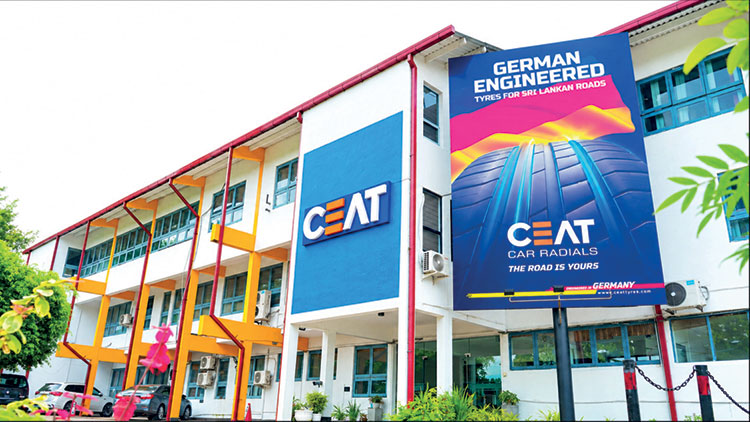
CEAT Kelani Holdings (CKH) has retained its National Long-Term Rating of ‘AA+(lka)’ with a Stable Outlook from Fitch Ratings for the sixth consecutive year, reflecting the company’s financial resilience and leading position in Sri Lanka’s pneumatic tyre market.
The ‘AA+(lka)’ rating, the second-highest on Fitch’s national scale, indicates a very strong capacity to meet financial commitments.
Fitch said CKH’s established market leadership and resilient financial profile remained key strengths, while noting its exposure to price-sensitive, cyclical and highly competitive markets.
The Stable Outlook reflects expectations that the company will maintain its market position despite rising input costs and increasing competition from imported tyres, while preserving adequate credit metrics during periods of weaker earnings and higher investment.
Fitch expects CKH’s established brand, extensive dealer network and adaptive pricing strategies to support its market position. Planned production facility upgrades are also expected to improve product quality, particularly in the radial tyre segment.
The rating agency expects near-term pressure on margins from higher raw material and energy costs but said the company’s low leverage and sound liquidity would provide a cushion.
CKH Chairman Chanaka De Silva said the rating reinforced the company’s focus on disciplined financial management, operational adaptability and long-term investment.

SLT-MOBITEL Enterprise, the enterprise services arm of Sri Lanka Telecom PLC, has launched its Premium Cloud service powered by Nutanix, aimed at helping Sri Lankan businesses modernise their IT infrastructure and accelerate digital transformation.
The service was unveiled at the Lanka Tech Summit 2026 held recently at ITC Ratnadipa, Colombo.
The Premium Cloud combines hybrid multi-cloud capabilities with enterprise-grade performance, enabling businesses to run mission-critical workloads, scale cloud deployments and strengthen business continuity through disaster recovery capabilities.
Hosted on SLT-MOBITEL’s Tier III data centre infrastructure, the platform is designed to provide enhanced security, reliability and flexibility while supporting the growing technology requirements of enterprises.
SLT-MOBITEL Enterprise said the platform would also support organisations seeking to adopt AI-ready capabilities and improve the management and performance of IT workloads.
A key feature of the launch was SLT-MOBITEL Enterprise joining the Nutanix Elevate Service Provider Program (NESPP), which the company said made it the first service provider in the region to join the programme.
Powered by Nutanix’s hybrid multicloud platform, the service enables application and data mobility across on-premises environments, public clouds and edge locations.
The company said the partnership combined Nutanix’s cloud technology with SLT-MOBITEL’s local expertise and support, strengthening its multi-cloud portfolio.

Buttler out of Oval decider as Lawrence earns ODI call-up

Showers will occur in the Western, Eastern, Uva and Sabaragamuwa provinces and in Galle, Matara, Kandy and Nuwara-Eliya districts.

Nor’easter brings flooding as New York and New Jersey declare emergency 2 hours ago

Trump rejects Iran deal to reopen Strait of Hormuz in seven days

Govt plans to hire 121,000 state workers, redistribute tax revenue

Parliament clears 22A amid protests

‘Dates have the highest sugar content to fight Coronavirus’

Sunday Island 27 December – Headlines

#SundayIsland 17th December – Headlines

Sunday Island – 28th March

Sunday Island Headlines – 21 March

Sunday Island – 21st February – Headlines
-

 News5 days ago
Mastermind Naufer Moulavi among 15 found guilty
-

 News7 days ago
Hatton youth protest against reported death sentence for Lankan in Saudi Arabia
-

 News7 days ago
Mahaweli rises as heavy rain triggers flood, landslide fears
-

 News6 days ago
Protest against setting up of cement factory in highly populated area near BIA
-

 Midweek Review5 days ago
Thileepan’s fast unto death: An authentic narrative that many missed
-
 Latest News4 days ago
Showers above 100 mm are likely at some places in the Western, Sabaragamuwa, Central and North-western provinces and in Galle and Matara Districts
-

 Editorial6 days ago
Trouble beginning in earnest
-
Editorial5 days ago
Big Bad Bills