
Features
The JRJ Personal and how he ran the show


by Sarath Amunugama
In the early Ceylon National Congress of which he and Dudley became joint Secretaries, JRJ was a committed rationalist while Dudley was typically less sure and a person who sometimes succumbed to his father’s admonitions. Largely to target Bandaranaike and his vacillating members of the Sinhala Maha Sabha which included Dudley and Sir John, JRJ sponsored a motion in the Ceylon National Congress that its members could not concurrently be members of other political formations.
This was opposed not only by Bandaranaike but also DS. Of all the young politicians it was only JRJ who categorically refused to join the Sinhla Maha Sabha. JRJ believed in the superiority of rationality and unflinching will. His heroes were Napoleon and Disraeli, both of whom rose to leadership because of their tactical skills and tenacity. He and his brother Harry would boast that they had read every book written about these two personalities.
Of all our Presidents it was JRJ who had a scholar’s interest in history. He had read widely and was well informed of the history of Buddhism and Sri Lanka. He once told me that he used to visit historical sites with Archeological Commissioner Senerat Paranavitana. His speeches were full of allusions to Buddhist and Sinhalese history. It is my interpretation that he looked on the Executive Presidency not only through western eyes but also as a form of leadership which had evolved through Sinhala kingship.
To him the President was the equivalent of the Sinhala ruler in his powers as well as benevolence and concern for the public good. Like the Sinhala ruler he wanted to be ‘A father to his people’ He told his listeners, including President Ronald Reagan, that he came from a long line of Sinhala rulers who wielded power for 2,500 years. It must be stated here however that this was exactly what the opposition was worried about. As NM Perera and Colvin R de Silva had said on many occasions, they could not agree to a concept of an omnipotent President, just as much as they had criticized the pre-modern social structures of feudalism and kingship.
Not surprisingly this was the same criticism levelled by French critics of the Gaullist constitution as creating “Le roi De Gaulle” – De Gaulle the King. In many ways De Gaulle and JRJ shared common characteristics. The sense of history, the idea that previous attempts at governance had failed, the need for a strong leader who was tried and tested who put the national interest above all, a leader who distanced himself from the ‘hoi poloi’ and instilled fear in his own ranks were common to both leaders.
They were both thought to be aloof but committed to the glory of a nation with a sublime history. Both said “trust me and not the institutions” which have failed. Ironically both men ran into organized oppositions which were ruthless and unsparing and had to unhappily retire to their personal homes and away from the hurly burly of politics which had been their fifes mission.
Nayaka Thuma
Political parties have evolved modes of addressing their leaders. The left called their leaders ‘comrades’ which was translated into Sinhala as `sahodarayas’ [brothers]. It led to cultural misunderstandings when sons and daughters of leaders began to address their parents as `sahodarayas’ at public meetings leading to peals of laughter of disbelief from the party faithful. Both DS and Bandaranaike were called ‘Lokka’ by their followers, usually out of their hearing. Mrs. B was universally and respectfully addressed as `Methiniya’.
But JRJ preferred to be addressed as ‘Nayaka Thuma’ which is the closest approximation to undisputed leader or ‘Der Fuhrer’. In his watch there could be only one leader and `Nayaka Thuma’ made sure that all, including the ambitious Premadasa who was a great wordsmith himself, got the message. After JRJ other UNP leaders used the same appellation but with less and less acceptance by the rank and file till under Ranil it became a word of abuse.
It was with supreme confidence that JRJ adapted Napoleon’s phrase to say that he ‘had rolled up the electoral map of Sri Lanka’. Even when he addressed President Reagan and his guests at a White House dinner, JRJ claimed that as Head of State he was in a line with an uninterrupted leadership of over 2,500 years. He did not say that USA had only just celebrated its bi-centennial.
JRJ always crafted his speeches. They were short and full of memorable phrases. He was the earliest to end his speeches with quotations from the Buddha’s teachings. Bandaranaike, like JRJ a convert to Buddhism from Anglican Christianity, never resorted to the use of Buddhist stanzas and imagery. He was at home with Western classics. Once JRJ told me that if you cannot convey your message in ten minutes, even an hour of speech time would be of no use.
He had no time for the Bandaranaike type of oratory. On several occasions when he addressed small groups, like corporation workers, he would effortlessly speak in English and I would translate it to Sinhala. He was a much better speaker in English than in Sinhala, though with his usual thoroughness he had taken Sinhala lessons early in his political career. We were amused when he continued to use Sinhala phrases of the thirties but were now out of vogue.
JRJ believed that the leader should be exemplary. Whether he believed in the concept of the Nietzschean superman or not, he elevated the role of the National leader who in his life style and political acumen dominates society He was an admirer of Gandhi and in his heroic period as Leader of the Opposition he tried to use Gandhian tactics such as Satyagraha, long marches and pujas in Temples and Kovils. But, also like Gandhi, he did not encourage obscurantism.
While accommodating political forays into religion he had contempt for superstition and rituals. One of his oft related stories was about how he was sworn in as President. In 1977, he said, he took oaths as Prime Minister as soon as possible as he did not want any disruption by SLFPers and leftists. He had no time to consult astrologers. In 1983 it was different. Menikdiwela had consulted the best astrologers and he took his oaths at the appointed time. The first term was trouble free, he said, but the astrologically ordained second term was a disaster.
So much for astrology. His Buddhism, which he studied diligently, was of the intellectual type based on the translations of the Pali Text Society which some social anthropologists have called ‘Euro Buddhism’. But he is the only leader I know who had donated extensive personal properties to the Sangha [an exception is Wijepala Mendis who donated his lands to the Sangha in memory of his son who committed suicide.]
Under JR’s watch no priest was allowed to contest for seats from the UNP. When senior monks came to discuss ethnic relations with him, he asked them to mind their own business just as he did not advise them on Sangha matters. It was the concept of ‘the national leader’ that animated his drive to abolish the 1972 Constitution and establish a new Constitution with wide powers of the Executive President. The Executive Presidency had flourished ever since, in spite of the monotonous pledge of every Presidential aspirant to abolish it. The ‘Chintanaya’ introduced by him facilitating an Open Economy remains the same under different catchy phrases in the manifestos of all would be Executive Presidents. The Executive Presidency itself still remains with added powers.
Two years after his death a newspaper asked me to reminisce about JRJ’s personality. I wrote the following article entitled `Thinking of JRJ’:
“Before 1983, even the casual caller at ‘Braemar’ in Ward Place was likely to find the door being opened for him by President Jayewardene himself. Then calling his big black dog to heel he would lead you with that characteristic shuffle of his feet to a little front office with a ‘swing door’.
“The first things that struck you about JRJ was his simplicity and neatness. Everything about him was unpretentious but neatly and methodically arranged. It stood in stark contrast to the vulgar displays of many of his ‘nouveau riche’ parliamentary colleagues. There is a saying that ‘old money never shows’. This was very true of JRJ. Visitors were taken aback when JRJ after politely inquiring whether you wanted tea or a cool drink would a little later shuffle towards you to serve the drink himself From time to time he would take his confidantes out onto his spacious garden where they would be served a choice whisky or a brandy.
“As President he would invite his close friends for dinner at his table in Queen’s House and linger over brandy and cigars reminiscing about great political figures. He admired D.S. Senanayake and would regale his young devotees with stories about the Old Man’s political acumen. One of his favourite stories was about how he and the young Turks of the Ceylon National Congress including Dudley, went to issue an ultimatum to Sir Don Baron Jayatillake at his residence and was so moved by the kindly old leader and his fatherly advice that they hastily aborted their plans.
“The ‘Wap Magula’ was one of JRJ’s brain waves which he drew from his readings of the ancient lore of Sri Lanka — another of his intellectual pursuits. During Dudley Senanayake’s first premiership, he arranged a ‘Wap Magula’ at which Sir Oliver Goonetillake, who was usually dressed in Saville Row clothes, was forced to step into a paddy field with a China silk sarong tucked between his legs. This naturally caused much mirth among the poor village farmers of Akmeemana where the ceremony was held. Sir Oliver had to endure the barbs of satirists like Tarzie Vittachi for the rest of his life for his unfamiliar sartorial transformation.
“The JRJ sponsored Wap Magula’ at Panduwasnuwara in 1978 was not much better. The Agriculture Minister EL Senanayake turned up in a sarong, banian, Nike tennis shoes and Gucci sunglasses. As soon as he set foot in the paddy field he sank up to his knees. There was pandemonium as ministers jostled to appear with JRJ in the news photos. They did not have a clue about ploughing and were thrashing about. The President however confidently handled the plough even though he was warned that the buffaloes might bolt because of the huge klieg lights flashed on them by the Government Film Unit.
“A week later a documentary film made of that ceremony was screened at ‘Braemar’ for the President’s friends. JRJ was mightily pleased when all agreed that he, at 73, had the best figure among the politicians who had stripped down to their loin cloths for the ‘Wap Magula’.
“One of JRJ’s great characteristics was that he was never excited or overawed by anything. Once he made up his mind he would go to the bitter end, come what may. He used to relate how an inner clique had tried to isolate him in the Dudley Senanayake cabinet. This group would meet beforehand and plan to humiliate him at Cabinet meetings. He was stripped of some of the departments in his ministry – particularly control of the media, as someone had carried tales that he was trying to build himself up in the public eye.
“Unperturbed JRJ had taken the ‘Time’ magazine to cabinet and was busy reading it while his ministerial colleagues waited in vain for him to speak, to begin their attack. When Lalith and Gamini left the Premadasa Cabinet he recalled this episode and advised them to remain within the government. They ignored his advice and faced many difficulties later.
“After the historic signing of the Indo – Sri Lanka Accord JRJ shuffled up to the microphone and looking Rajiv Gandhi straight in the eye said “We can forgive but we cannot forget”. But the trust that was soon built up between the two leaders was so strong that Rajiv threw caution to the winds and came to JRJ’s rescue by inducting Indian troops to the North and East thereby releasing Sri Lankan security forces to fight the JVP in the South.
“It is one of the supreme ironies of modern times in our country that had Rajiv not come to Sri Lanka and had he not been subjected to an attack by a JVP indoctrinated naval rating, India may not have intervened, and certainly not so swiftly, and thereby caught the JVP on the wrong foot. The JVP rating made a costly mistake. The JVP by turning to violence opened the door to Indian intervention which JRJ meant to be only an action of the last resort. A section of the UNP that stabbed JRJ in the back, after the Indo-lanka agreement was signed were also responsible for encouraging the JVP. During those days the President was at his stubborn best resolutely refusing to yield to communalism and going back on a pledge given to a neighboring country.
“Coming from a distinguished legal family one of his failings was that he looked on most problems in legal terms. This is a common failing of lawyers in Parliaments all over the world. Since they spend a lifetime preparing, presenting, and defending bits and pieces of legislation they think that changes and additions to the statute book solves all problems.
“Life is rarely like that. But the over dependence on the law and cynical interpretations of legal provisions led JRJ and his supporters to many undemocratic acts and to violations of human rights. Amendments to the constitution to solve parochial political issues led to the debasement of the Constitution and the Presidency. The cynical manipulation of power to harass Vijaya Kumaratunga and his hypocritical persecution of the left, including the JVP after the April disturbances, were examples of the abuse of executive authority. He also condoned the abuses of the army under ‘Bull’ Weeratunga in the north against the Tamil youth which hastened the militarization of the conflict and added to the bitterness of the combatants.
“One always sensed that ‘Papa knows best’ type of feeling when JRJ discussed constitutional issues. He knew that so called legal eagles and human rights activists who confronted him were his intellectual inferiors. ‘This was one aspect of his ego which was assiduously massaged by acolytes like Lalith and Gamini. This legal ambience in the cabinet was galling to Premadasa who was a realist brought up in the school of hard knocks. He too then went about saying “I also know the law”, since he was brought up in Hulftsdorp. Later he gave free rein to the military and para-military formations who battled the LTTE and the JVP.
“President Jayewardene’s death removes from the scene a dominant personality of post-independence Sri Lanka. He was a political giant in every way”.
Cabinet
It would be fair to say that JRJ had the most competent Cabinet of Ministers of modern times. As usual the new Prime Minster had been very thorough in his decision making. He first accommodated all the seniors who were Cabinet ministers in previous UNP governments. Premadasa, M.D.H. Jayawardene, Monty Jayawickreme, E.L. Senanayake, Mohamed and Hurulle were all thus accommodated. He also brought in party seniors who had helped him like Mathew, Hameed, Festus Perera, Jayasuriya and Wijetunga.
Having secured that flank he chose two technocrats Ronnie de Mel and Nissanka Wijeratne, both ex-CCS, to man key ministries-Finance for de Mel and Education for Wijeyaratne. Last, he inducted two young stars of the party, Gamini Dissanayake and Lalith Athulathmudali. They too were given plum portfolios. Everybody could see the logic of the leader’s decisions and there was little of the heartburn that usually follows the selection of cabinet ministers.
Another key factor was that JRJ was clearly ‘Primus inter pares’. While he acknowledged that the victory was a combined effort, ministers knew that he was supreme, having brought the UNP to a historic and unprecedented win which would have been unthinkable under the Senanayakes. He also made it known that he would not brook any underhand maneuvering which had been a regular feature of Sri Lankan party politics.
Later on, we will see that there was some dissatisfaction among his senior colleagues -M.D.H. Jayawardana, Gamini Jayasuriya and E.L. Senanayake. JRJ showed no mercy to them in asking for their resignation from their ministerial positions when disagreements came to the surface. But both sides stuck to the rules and the transitions took place in a civilized manner with JRJ writing to them to thank them for services rendered.
While the cabinet ministers were able and willing, several of them were highly ambitious and had no doubts about their fitness to succeed the Old Man who in his own words had “climbed to the top of the greasy pole” at the ripe age of 72. He was fighting fit and unfailingly followed every morning, a rigorous exercise regime tailored for the Canadian Air Force, but that did not prevent several of his Ministers nursing ambitions of succeeding him one day.
Their hopes were raised even before the 1977 election when JRJ, with no warning, held a straw poll to form a 10-man committee to manage the election campaign. Premadasa came first by a small margin. The surprise was Gamini Dissanayake’s performance coming a strong second, thus fueling his already vaulting ambition. Ronnie de Mel and Lalith Athulathmudali also made it to the group. It sent a clear signal to Premadasa and the party seniors that they would not have a cakewalk to the top. It also created a sense of competition among the front runners which simmered right through JRJ’s two terms and blew the party apart after Premadasa donned the mantle.
While this competition helped in running an efficient administration it must be recognized that it exacerbated tensions among the front runners. JRJ gave ear to them all and while not discouraging them did not overtly back any one of them either. He was a master at giving each of them hope, while not showing his hand in any way. To complicate matters there were two others outside this ring who believed that they had JRJ’s blessings to go to the top. One was Anandatissa de Alwis, a party grandee who managed both the political and personal entanglements of Sir John Kotelawala.
He was the kingpin of the UNP youth league in the early days and had been recruited by JRJ as his Permanent Secretary in the 1965 Dudley led administration. They were close friends and the leader’s unilateral decision to make him Speaker of the House did not please Ananda who wanted to be a Minister, preferably in charge of the old ministry in which he was Permanent Secretary. The other was Upali Wijewardene, JRJ’s cousin who had emerged as a clever and ambitious business magnate.
He wrapped himself in the mantle of a hero of the south because his mother and the source of his wealth came from a prominent family in the southern heartland. This was a direct affront to Ronnie de Mel, who also was burnishing his southern credentials as the representative for Devinuwara, the abode of Vishnu- the guardian god of the South. Vishnu is believed to be the only god who did not run away when the Buddha was threatened-by Mara.








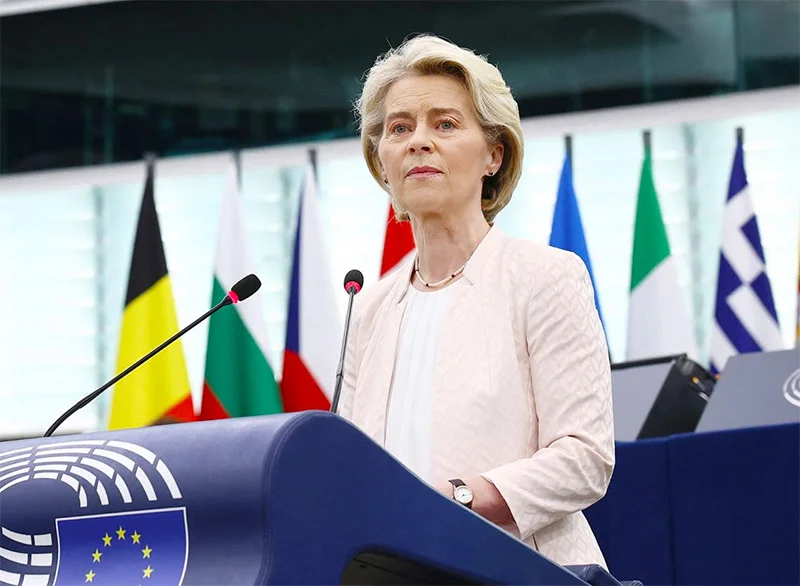
 European Commission President Ursula von der Leyen addressing the World Economic Forum in Davos, Switzerland on Tuesday put forward the EU’s viewpoint on current questions in international politics with a clarity, coherence and eloquence that was noteworthy. Essentially, she aimed to leave no one in doubt that a ‘new form of European independence’ had emerged and that European solidarity was at a peak.
These comments emerge against the backdrop of speculation in some international quarters that the Post-World War Two global political and economic order is unraveling. For example, if there was a general tacit presumption that US- Western European ties in particular were more or less rock-solid, that proposition apparently could no longer be taken for granted.
For instance, while US President Donald Trump is on record that he would bring Greenland under US administrative control even by using force against any opposition, if necessary, the EU Commission President was forthright that the EU stood for Greenland’s continued sovereignty and independence.
In fact at the time of writing, small military contingents from France, Germany, Sweden, Norway and the Netherlands are reportedly already in Greenland’s capital of Nook for what are described as limited reconnaissance operations. Such moves acquire added importance in view of a further comment by von der Leyen to the effect that the EU would be acting ‘in full solidarity with Greenland and Denmark’; the latter being the current governing entity of Greenland.
It is also of note that the EU Commission President went on to say that the ‘EU has an unwavering commitment to UK’s independence.’ The immediate backdrop to this observation was a UK decision to hand over administrative control over the strategically important Indian Ocean island of Diego Garcia to Mauritius in the face of opposition by the Trump administration. That is, European unity in the face of present controversial moves by the US with regard to Greenland and other matters of contention is an unshakable ‘given’.
It is probably the fact that some prominent EU members, who also hold membership of NATO, are firmly behind the EU in its current stand-offs with the US that is prompting the view that the Post-World War Two order is beginning to unravel. This is, however, a matter for the future. It will be in the interests of the contending quarters concerned and probably the world to ensure that the present tensions do not degenerate into an armed confrontation which would have implications for world peace.
However, it is quite some time since the Post-World War Two order began to face challenges. Observers need to take their minds back to the Balkan crisis and the subsequent US invasions of Afghanistan and Iraq in the immediate Post-Cold War years, for example, to trace the basic historic contours of how the challenges emerged. In the above developments the seeds of global ‘disorder’ were sown.
Such ‘disorder’ was further aggravated by the Russian invasion of Ukraine four years ago. Now it may seem that the world is reaping the proverbial whirlwind. It is relevant to also note that the EU Commission President was on record as pledging to extend material and financial support to Ukraine in its travails.
Currently, the international law and order situation is such that sections of the world cannot be faulted for seeing the Post World War Two international order as relentlessly unraveling, as it were. It will be in the interests of all concerned for negotiated solutions to be found to these global tangles. In fact von der Leyen has committed the EU to finding diplomatic solutions to the issues at hand, including the US-inspired tariff-related squabbles.
Given the apparent helplessness of the UN system, a pre-World War Two situation seems to be unfolding, with those states wielding the most armed might trying to mould international power relations in their favour. In the lead-up to the Second World War, the Hitlerian regime in Germany invaded unopposed one Eastern European country after another as the League of Nations stood idly by. World War Two was the result of the Allied Powers finally jerking themselves out of their complacency and taking on Germany and its allies in a full-blown world war.
However, unlike in the late thirties of the last century, the seeming number one aggressor, which is the US this time around, is not going unchallenged. The EU which has within its fold the foremost of Western democracies has done well to indicate to the US that its power games in Europe are not going unmonitored and unchecked. If the US’ designs to take control of Greenland and Denmark, for instance, are not defeated the world could very well be having on its hands, sooner rather than later, a pre-World War Two type situation.
Ironically, it is the ‘World’s Mightiest Democracy’ which is today allowing itself to be seen as the prime aggressor in the present round of global tensions. In the current confrontations, democratic opinion the world over is obliged to back the EU, since it has emerged as the principal opponent of the US, which is allowing itself to be seen as a fascist power.
Hopefully sane counsel would prevail among the chief antagonists in the present standoff growing, once again, out of uncontainable territorial ambitions. The EU is obliged to lead from the front in resolving the current crisis by diplomatic means since a region-wide armed conflict, for instance, could lead to unbearable ill-consequences for the world.
It does not follow that the UN has no role to play currently. Given the existing power realities within the UN Security Council, the UN cannot be faulted for coming to be seen as helpless in the face of the present tensions. However, it will need to continue with and build on its worldwide development activities since the global South in particular needs them very badly.
The UN needs to strive in the latter directions more than ever before since multi-billionaires are now in the seats of power in the principle state of the global North, the US. As the charity Oxfam has pointed out, such financially all-powerful persons and allied institutions are multiplying virtually incalculably. It follows from these realities that the poor of the world would suffer continuous neglect. The UN would need to redouble its efforts to help these needy sections before widespread poverty leads to hemispheric discontent.

 Hi! This week I’ve come up with tips to brighten up your skin.
* Turmeric and Yoghurt Face Pack:
You will need 01 teaspoon of turmeric powder and 02 tablespoons of fresh yoghurt.
Mix the turmeric and yoghurt into a smooth paste and apply evenly on clean skin. Leave it for 15–20 minutes and then rinse with lukewarm water
Benefits:
Reduces pigmentation, brightens dull skin and fights acne-causing bacteria.
* Lemon and Honey Glow Pack:
Mix 01teaspoon lemon juice and 01 tablespoon honey and apply it gently to the face. Leave for 10–15 minutes and then wash off with cool water.
Benefits:
Lightens dark spots, improves skin tone and deeply moisturises. By the way, use only 01–02 times a week and avoid sun exposure after use.
* Aloe Vera Gel Treatment:
All you need is fresh aloe vera gel which you can extract from an aloe leaf. Apply a thin layer, before bedtime, leave it overnight, and then wash face in the morning.
Benefits:
Repairs damaged skin, lightens pigmentation and adds natural glow.
* Rice Flour and Milk Scrub:
You will need 01 tablespoon rice flour and 02 tablespoons fresh milk.
Mix the rice flour and milk into a thick paste and then massage gently in circular motions. Leave for 10 minutes and then rinse with water.
Benefits:
Removes dead skin cells, improves complexion, and smoothens skin.
* Tomato Pulp Mask:
Apply the tomato pulp directly, leave for 15 minutes, and then rinse with cool water
Benefits:
Controls excess oil, reduces tan, and brightens skin naturally.

 That’s precisely what 25-year-old Hansana Balasuriya has in mind – shooting for the stars – when she was selected to represent Sri Lanka on the international stage at Miss Intercontinental 2025, in Sahl Hasheesh, Egypt.
The grand finale is next Thursday, 29th January, and Hansana is all geared up to make her presence felt in a big way.
Her journey is a testament to her fearless spirit and multifaceted talents … yes, her life is a whirlwind of passion, purpose, and pageantry.
Raised in a family of water babies (Director of The Deep End and Glory Swim Shop), Hansana’s love affair with swimming began in childhood and then she branched out to master the “art of 8 limbs” as a Muay Thai fighter, nailed Karate and Kickboxing (3-time black belt holder), and even threw herself into athletics (literally!), especially throwing events, and netball, as well.
A proud Bishop’s College alumna, Hansana’s leadership skills also shone bright as Senior Choir Leader.
She earned a BA (Hons) in Business Administration from Esoft Metropolitan University, and then the world became her playground.
Before long, modelling and pageantry also came into her scene.
She says she took to part-time modelling, as a hobby, and that led to pageants, grabbing 2nd Runner-up titles at Miss Nature Queen and Miss World Sri Lanka 2025.
When she’s not ruling the stage, or pool, Hansana’s belting tunes with Soul Sounds, Sri Lanka’s largest female ensemble.
What’s more, her artistry extends to drawing, and she loves hitting the open road for long drives, she says.
This water warrior is also on a mission – as Founder of Wave of Safety,
Hansana happens to be the youngest Executive Committee Member of the Sri Lanka Aquatic Sports Union (SLASU) and, as founder of Wave of Safety, she’s spreading water safety awareness and saving lives.
Today is Hansana’s ninth day in Egypt and the itinerary for today, says National Director for Sri Lanka, Brian Kerkoven, is ‘Jeep Safari and Sunset at the Desert.’
And … the all-important day at Miss Intercontinental 2025 is next Thursday, 29th January.
Well, good luck to Hansana.

Indonesian Naval Ship ‘KRI SULTAN ISKANDAR MUDA – 367’ arrives in Colombo

Royal Navy of Oman Ship ‘AL SEEB’ calls at Port of Colombo

Jacks out with illness as Sri Lanka bat against England

Mechanism to be established involving university academics and experts for Education Reforms – President

New integrated framework to bring all stakeholders together to safeguard and rebuild Central highlands – President

ICC T20 World Cup Trophy tour in Sri Lanka launched under President’s patronage

‘Dates have the highest sugar content to fight Coronavirus’

Sunday Island 27 December – Headlines

#SundayIsland 17th December – Headlines

Sunday Island – 28th March

Sunday Island Headlines – 21 March

Sunday Island – 21st February – Headlines
-

 Editorial5 days ago
Illusory rule of law
-
 News6 days ago
UNDP’s assessment confirms widespread economic fallout from Cyclone Ditwah
-
 Editorial6 days ago
Crime and cops
-
 Features5 days ago
Daydreams on a winter’s day
-

 Editorial7 days ago
The Chakka Clash
-
 Features5 days ago
Surprise move of both the Minister and myself from Agriculture to Education
-
 Features4 days ago
Extended mind thesis:A Buddhist perspective
-
 Features5 days ago
The Story of Furniture in Sri Lanka