
Features
The Gunner Platoon at Weerawila Down South in 1971 – combating the JVP Insurgency


A personal story as recalled by Capt F.R.A.B. Musafer 4th Regt SLA (Retd)
Background
The year 1971 was ushered in with a very pleasing political utterance to the public that the Army did not need guns but needed plowshares – agricultural machinery and tools to support the food drive. It was at a time when the Army, an essentially peacetime operation entrusted with the internal security of the country, had turned its attention to assist with national paddy cultivation and other agricultural projects countrywide.
With an estimated strength of around 8,000, the army was not a well equipped force by any means. It was frugal in outlook and dependent on existing resources. The military hardware was virtually hand-me-downs of the British Army and of World War II vintage. The bulk of the small arms in use were the old .303 Enfield rifles the rest were made up of light machine gun (LMG), sten gun (SMC) and the sterling sub machine gun (SMG) and the .38 Smith and Wesson pistols. The infantry units were being re-equipped with the 7.62 mm self loading rifle (SLR’s), a sophisticated and automated weapon in use by the British Army.
The Armoured corp was the glamour regiment equipped with Ferret scout cars and Daimler armoured cars that were impressive and operational. The Artillery regiment had four 76mm mountain guns gifted by Yugoslavia that were also operational, though the need for their use was considered far fetched. The regiment also had a battery of 3.7 inch anti-aircraft guns used for ceremonial gun salutes and a battery of 40mm Bofor anti-aircraft guns that were obsolete.
The army was subjected to a fair share of austerity as was the rest of the country; petrol was issued on a quota basis, the use of ammunition for training strictly monitored and some basic military essentials hard to come by.
The State of the Nation
In May 1970 the Sri Lanka Freedom Party under the leadership of Mrs Sirima Bandaranaike was swept into power with an overwhelming majority with the help of the left parties with whom the SLFP ran as a United Front (UF). The JVP, though not a political party, gave its support to the coalition as it was socialist in outlook and totally opposed to the capitalist ideologies of the United National Party.
The victory instilled in the people a new hope and they labeled it as the “Apey Anduwa” (Our Government) hoping that there would be an improvement to their lives. However as time progressed the hardships faced by the people did not appear to improve as the economic situation only worsened. Strict import and exchange control regulations were in place. Basic items such as bread, sugar, dhal and infant milk were rationed. Food, clothing and vegetables were expensive if not scarce. The transport of rice and chillies was prohibited. The cost of living had sky rocketed and the people feeling its effects were a disillusioned lot .
The Prelude
At the beginning of 1971 there were instances of bombs accidentally going off in various parts of the country predominantly in the Kegalle and Kandy districts. The roof of one of the buildings in the Peradeniya campus was damaged as a result of one of these explosions. Mixed signals were beginning to emerge that there was trouble brewing and the JVP, often dubbed the Che Guevara Movement, was behind the plans to initiate an armed insurrection. Intelligence gathered by the police revealed that the JVP was operating via a network of cells where members were indoctrinated by “Five Lectures” and directed to collect firearms and funds by robbing banks and individuals. Political rallies and clandestine meetings held by the JVP were gathering momentum and causing some serious concern to the government.
Around the beginning of March security around the Army cantonment at Panagoda was strengthened. Rumour was rife that there were elements of officers and soldiers sympathetic to the cause, if not members of the JVP. Extra precautions were taken to double the security of the arms and ammunition held in the camps. There was an air of suspicion and a lack of trust among the rank and file. There was also some concern that food and water was to be poisoned, so much so that the stray dogs in certain camps were fed before the troops.
In mid March a state of Emergency was declared with special powers of search without a warrant being entrusted to the Police. In conjunction with this the Army was to be deployed to assist the Police in search and cordon operations. Captain Satchi Ratnasabapathy from the Regiment of Artillery was sent to Hambantota to reconnoiter the area and liaise with the Police and Government Agent to assess the threats posed in the event of any actions initiated by the JVP that would disrupt the internal security of the region.
Meanwhile suspected high profile JVP activists and their leader Rohana Wijeweera were arrested and imprisoned in Jaffna. There was an assumption that the “Che Guevara” as they were referred to had plenty of sympathizers and supporters as there were several well attended, popular public meetings conducted in the Hambantota region. Intelligence reported that secret meetings of cell members were being held and basic military type training was being given to trusted cadres. JVP plans to collect weapons and raise funds by robberies etc were not taken seriously and pursued. The Hambantota/Tissamaharama district was considered to be a hotbed of JVP activity and identified as one of the most likely trouble spots in the island.
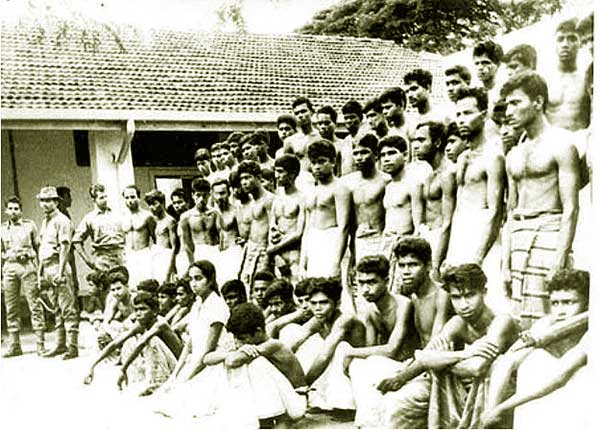
The deployment
At that time I was a lieutenant posted to 10 Battery at Trincomalee but was temporarily stationed at Panagoda in preparation for the Army inter-unit rugby tournament. On the evening of March 15 whilst at rugby practices I was summoned by the adjutant, Capt Siri Samarakoon, to his office where he told me in a voice dripping with sarcasm that I had won the lottery and was to take an IS (Internal Security) platoon and leave for Weerawila in the Hambantota district at the crack of dawn on March 17.
At the same time two artillery platoons from Trincomalee under the command of Capt Tissa Tillekeratne and Lt Lionel Balagalla were also to be deployed to Polonnaruwa and Hingurakgoda. There were other deployments to the Kegalle, Kandy, Anuradhpura and Moneragala districts from infantry and armoured corp detachments.
. On March 16 I was given my operational orders. I was also briefed by Capt Ratnasabapathy who assured me that based on local intelligence provided by the police he was of opinion that there was NO significant information of violent JVP activity in the Hambantota area but cautioned me about the wild elephants that roamed in the vicinity of the salt pans at night.
The platoon consisted of 31 men, which included three sergeants as section commanders and a cook. The platoon was armed with .303 rifles. A light machine gun (LMG) and three sterling sub machine guns (SMG) . As an officer I had the least effective weapon, a Smith and Wesson .38 calibre pistol that was more of a status symbol of authority. I was also issued with a sealed box of a thousand rounds of .303 ammunition with strict instructions not to break the seal unless absolutely necessary. It was also emphasized that I be very mindful of my personal security and that of the weapons at all times.
My transport was an old Willys jeep AY 3665 which on independence day parades looked very impressive, freshly painted with its windscreen down and hood taken off although it was patched up with paper and spray painted over to hide the rust and holes. There were three trucks detailed to carry the troops of which one would return to camp and the other, a new Indian five ton Tata Benz and a Beep (smaller version of a truck), to be used for operations. I was to be supplied with additional transport by the Government Agent Hambantota on my arrival in Weerawila.
On March 17 morning I left Panagoda at the crack of dawn having been bid farewell by Captain Noel Weerakoon who was the Battery commander of 11 Battery whose men I had taken charge of. He wished me “Good luck and God bless and take care of yourself “. Sadly it was a last farewell. He was killed in an ambush on April 8 at Ambewewa/Welioya. I think he was the first officer of the Army to be killed in action in this conflict and perhaps in the short history of the Ceylon Army.
The designated route was via Ratnapura and en-route we stopped at an army camp at Embilipitiya. The soldiers here had conveyed to some of the platoon that there were threats made of possible attacks on the camp via open postcards and were on extra guard duty.
Our base at Weerawila was to be the Old Tuberculosis hospital complex which had been uninhabited and abandoned. The GA and his staff had done their best to make this building habitable by restoring electricity and water.
The building we occupied, devoid of any furniture or fittings, was located in the middle of nowhere, isolated and off the main road and surrounded by dense overgrown shrub. In unfamiliar surroundings and not feeling secure I came to the conclusion that I could take no chances of being taken by surprise. The first thing I did was to disregard my orders and break the sealed box of ammunition and distribute some of it to the men and instruct them to keep their weapons by their side at all times.
Espirit de Corps and loyalty of the Regiment
It was a decision I made taking into consideration the utmost trust and loyalty of the soldiers under my command. “The Gunners” as those belonging to the regiment of artillery are generally referred to, were a close knit family (the gunner tribe) . Their loyalty and espirit de corps were always talked about in the army, best described in a message in the centenary celebrations of the Artillery in Sri Lanka in 1988 by the late Lt General Nalin Seniviratne, the commander of the army which said as follows:
“In the rich and colourful tapestry of Gunner history, an unbroken golden thread that runs across the entire fabric is that vibrant vitality of the Regiment, is their sense of unity and their espirit-de- corps “.
” Gunners are a unique family; in our family we the officers are very close to our men. The well being of our men has always been close to our hearts. We are proud of them,” as said by Lt Gen Hamilton Wanasinghe a gunner and a former Army commander would aptly describe the relationship we enjoyed. It was a unique bond between the officers and the men which made my decision so much easier at this time of great doubt and suspicion.
At Weerawila
Late in the evening two soldiers from the Ridiyagama farm that was being dismantled turned up and requested a guard. They too had received open postcards that their camp was to be attacked but had no weapons to defend themselves. I obliged by detailing two men. Unfortunately it became a daily assignment and was seen as a punishment chore. Weerawila was to be our home and operational base.
On March 18 I reported to The Government Agent Hambantota, Mr Sonny Goonewardene, who briefed me on the situation and reiterated that even though a state of emergency had been declared I was there only to assist the police and had no other powers. I was to work in liaison with the Assistant Superintendent of Police Tangalle, Mr Jim Bandaranayake who would coordinate my daily activities, in the absence of the ASP Hambantota. I was provided with two additional vehicles with civilian drivers to carry out my tasks.
The presence of the army in the Hambantota district may have intrigued the general public curious about why we were there. It was after a long time that the public had seen an army deployment in their locality and were perhaps bemused at the gun toting soldiers. The last time a military operation conducted in the Hambantota/ Tanamalwila area was in the late 1950’s named ‘Operation Ganja” where armoured cars and troops were used to destroy illicit ganja plantations in Tanamalwila and surrounding areas.
It was an operation made infamous for the unsuccessful legal action taken to prosecute Lt. Eustace Fonseka, a gunner officer, for the ill treatment meted out to the village headman of Hambegamuwa. who was alleged to be the mastermind and king pin of the ganja cultivation in the area. This operation was of a different nature.
Whilst we made our presence felt and were quite friendly the locals kept a fair distance from us wondering what the hell was going on.
Commencement of Operations /Searches
Initially we assisted the police traveling around the countryside in the military vehicles displaying our weapons which the police did not carry. We accompanied them to search homes of people suspected of involvement with the JVP. There was hardly any credible intelligence as most of our searches were more of a routine show of force and nothing else. There was no intimidation of the general public and not a single arrest was made in these joint operations.
One day when accompanied by the police sergeant at Walasmulla I observed that he was using these searches to intimidate some people whose political alliances were not the same as the govt in power. Every home and shop he took us into had a photograph of the former prime minister. It was not the first time this had happened but the continuation of this routine irked me.
This was not something that I could tolerate or an action that I could condone as it was in breach of my orders and furthermore the searches were fruitless. I contacted ASP Jim Bandaranayake and told him what was happening and that I was not prepared to assist the Police any further if this was all the intelligence they had.
Incidentally some months after the insurgency had been quelled the sergeant concerned was charged for the murder of some insurgents who were fleeing from army operations in the Sinharaja and Deniyaya areas being conducted by the army. They had been taken into custody by the police and on the pretext of being released shot and buried in a mass grave.
We continued to patrol and make our presence felt in Beliatta , Middeniya, Walasmulla, Ambalantota, Tangalle, Tissa, Kirinda and Hambantota with the assistance of the Police. We searched Wijeweera’s home in Tangalle occupied by his mother and sister. There were magazines titled ” Red China” and nothing else in this very clean and neatly kept house. This magazine was found in a number of places we searched including temples. His mother told us that she detested what her son was doing and had advised him to keep clear of politics. He had been arrested and imprisoned in Jaffna. They had a small poultry shed which I presumed gave them some sort of income.
Whilst there was very little of any material evidence to support an armed insurrection we did come across some very personal revelations. There was an instance when we found a diary of a person who had virtually kept a daily record of his sexual exploits in an affair with a girl across the road. The Kama Sutra may have been his manual. The sergeant who found the diary did not find the contents to his moral satisfaction darted across the road to the school nearby and divulged the contents to the head master. His audience showed no concern as perhaps they knew what had been taking place but were no doubt amused by the colourfully detailed narrative.
(To be continued next weekweek)









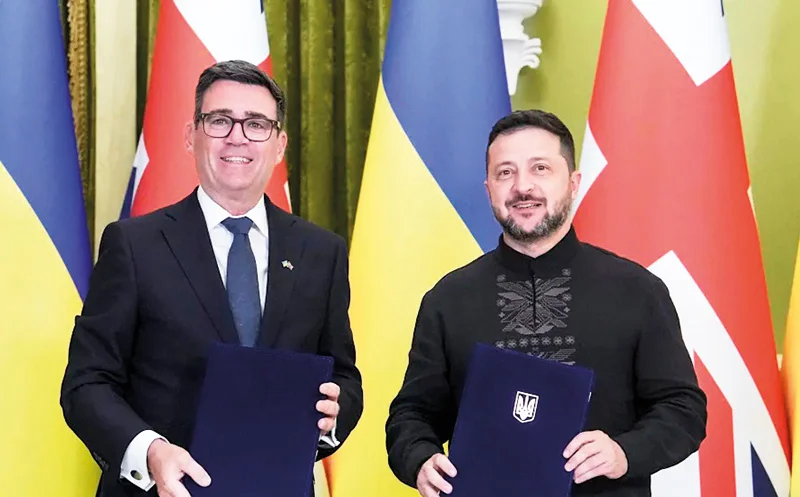
 The present offer by the UK to strengthen Ukraine’s defense capabilities in the missile technology field in particular comes as ‘a stitch in time’ and the initiative is also likely to be appreciated considerably by democratic opinion world wide for the possible morale-boosting effect it would have on Ukraine. Besides continuous arms support, the conviction that the world’s frontline democracies are behind it would prove a huge plus in Ukraine’s eyes in its grinding fightback against the Russian invasion.
While continued US support for Ukraine could not be considered ‘a given’ any more, British Prime Minister Andy Burnham’s words during a recent visit to Kyiv that the UK would stand by Ukraine ‘for as long as it takes’ is the kind of assurance that Ukraine needs at present. For, the conflict in Ukraine is essentially a war of liberation conducted by the latter against an invader and deeply at issue here is the upholding of International Law and its foundational concepts, such as national sovereignty and a nation’s right to political self-determination. The world of democracy is of the firm view that the latter ideals cannot be compromised, come what may.
The UK has its work cut out in this connection. It would find it difficult to convince the Trump administration that it should staunchly stand by Ukraine but it could campaign vigorously with the rest of the West and the EU fold in particular to unflaggingly support the embattled and over-run country.
Ukraine has shown an impressive adeptness in using drone technology in particular against her enemy and has even manufactured her own hardware in this respect but using the relevant blueprints handed over by the UK for the manufacture of more sophisticated cruise missiles, for instance, may prove financially difficult, going forward. It is left to be seen whether the UK and the rest of the West who are with Ukraine will continue to be with her, considering their own rising financial constraints.
The latter impediments could only multiply in the future. Oil, gas and energy prices are on the rise and the latter costs are glaringly reflected in kitchens and meal tables the world over. As we go along consumer discontent would steadily intensify and governments, East and West, would need to figure out with considerable rigour and foresight how such disaffection could be ably managed. Failing which, in most democratic societies, the chances are that publics would be out on the streets demanding that their grievances be redressed forthwith.
These rising concerns are reflected in a recent move by some EU governments to consider imposing what is described as ‘a windfall tax’ on the profits specified major oil companies operating within their shores have made in the wake of the US-Israel war on Iran. The rationale apparently is to use such tax earnings to cushion the rising cost of living of their publics and bolster the respective countries’ social expenditure.
In a recent letter to the president of the EU Council the EU governments referred to said, among other things, while drawing attention to the ‘discontent that is growing over the rising cost of living’: ‘A common approach’ is needed that ‘ensures those who profit from the crisis contribute their share to reducing the burden on the general population.’ Meanwhile, Oxfam with reference to the above development is on record as calling for a ‘permanent windfall tax of at least 50% on profits exceeding a 10% return on investment.’
Such are the rising economic pressures on the majority of Western governments. The question to be posed is how consistent they would be in their assistance to Ukraine if they decide consensually to stand by her. The soaring cost of living in the West compels the conclusion that there could be no guarantee that Western assistance to Ukraine, particularly in the defense and security fields, would be of a longstanding kind.
Of particular concern would be the fact that the weapons systems on offer from the UK to Ukraine could be increasingly costly to manufacture going forward. Besides they would need to be manufactured and put into action without delay.
However, these considerations should in no way deflect Ukraine’s supporters from the principled policy stance of defending her to the extent possible. Because at issue is the defense of International Law and the democratic system of government from their enemies; fascism and authoritarian rule.
While during World Wars 1 and 2 the US was with the major democracies of the West, this time around with regard to Ukraine, the US has chosen to be at cross-purposes with them. For instance, in relation to tariff matters and defense expenditure, in the NATO context, the US is pursuing a hard line which puts it at polar opposites with the West. Thus it is no longer possible to talk unreservedly of a ‘Western democratic alliance’. Put plainly, the cause of democratic development has been weakened.
A measure of relief for the supporters of Ukraine in the West could come by way of the upcoming mid-term polls in the US. If the Democratic Party fares well in them the pressure would be on the Trump administration to defer to opposition opinion at home, accommodate the best interests of Ukraine in its West European policy and perhaps even work towards a diplomatic solution to the Ukraine crisis in cooperation with Russia. Accordingly, the Democratic Party would need to put the Trump administration on the defensive, so to speak.
Until such time Ukraine’s Western supporters have no choice but to remain committed to it, ensure its steadfast defense against the invasion and work judiciously towards keeping the economic pressures at home in check.
Interestingly, at the present juncture in international politics the US could be said to be more weak than strong. For example, it has to some extent been militarily humbled by Iran; so much so it is resorting to economic means to keep Iran in check.
In keeping with this strategy, the US has launched ‘a new big wave of anti-Iran economic sanctions’ at the time of writing, aimed at cutting Iran away from all its major income sources. Some of these relate to digital assets, technology, gold, aviation and shipping. The hoped for result is the complete severance of Iran from the US dollar system.
However, while the UK and EU have no choice but to adhere to their policy of backing Ukraine, going forward they would need to dialogue more closely with the US and ensure that it cooperates with them on outstanding questions, such as Ukraine and the strengthening of democracy. The well being of the world is served when the latter aim is pursued.
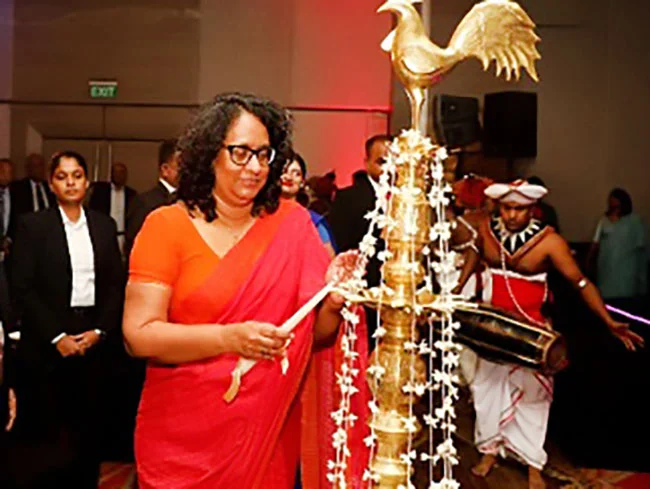
OPA 39th Annual Conference calls for Sri Lanka to move Beyond Recovery towards Sustainable Transformation
The Orgnisation of Professional Associations (OPA) successfully concluded its 39th Annual Conference, held recently at the Cinnamon Grand Colombo, under the theme “Envisioning Sri Lanka: Beyond Recovery”.
Held under the patronage of Jayantha Gallehewa, President of the OPA, with the leadership and guidance of Tisara De Silva, President-Elect and Chairman of the 39th Annual Conference, the Conference brought together leading professionals, academics, business leaders and representatives of the public and private sectors to deliberate on Sri Lanka’s next phase of national development.
The Inaugural Session, on August 2026, was graced by Prime Minister Dr. Harini Amarasuriya, as the Chief Guest; Andrew Patrick, British High Commissioner to Sri Lanka, as the Guest of Honour; and Murtaza Jafferjee, Chairman of the Advocata Institute, Sri Lanka, as the Keynote Speaker.
In her address, Prime Minister Dr. Harini Amarasuriya emphasised that overcoming the economic crisis alone should not be Sri Lanka’s ultimate objective, stressing that recovery must serve as the foundation for a broader economic and institutional transformation necessary for sustainable national progress. Reflecting on the difficult period experienced by the country, the Prime Minister noted that Sri Lanka had faced significant economic, social and institutional challenges, which had weakened public confidence and created uncertainty about the country’s future.
She stressed that “recovery only provides the foundation” and that Sri Lanka can move forward sustainably only by using that foundation to bring about meaningful transformation.
The Prime Minister observed that the theme of the OPA’s 39th Annual Conference, “Envisioning Sri Lanka: Beyond Recovery,” aptly encapsulated these national aspirations. She emphasised that Sri Lanka’s objective should not merely be to return to the conditions that existed before the crisis, but to forge a stronger national foundation characterised by robust institutions, a resilient economy, high-quality public services and an enabling environment in which every citizen has the opportunity to thrive.
She further underscored that Sri Lanka’s future development cannot be secured through economic growth and physical development alone. She emphasised that the effective mobilisation of the country’s knowledge, skills and professional expertise, is equally essential to achieving sustainable and inclusive national progress
The Technical Sessions held on 12 August 2026 brought together 19 distinguished experts and professionals representing academia, industry, banking and finance, public health, technology, management and business leadership. Their diverse expertise provided a multidisciplinary platform to examine the critical challenges, emerging opportunities and strategic choices that will shape Sri Lanka’s next phase of development, with particular emphasis on economic transformation, institutional strengthening, digitalisation, private-sector growth, human capital and sustainable development.
The deliberations were structured around four principal sub-themes: “Resilient Recovery and Sustainable Economic Development”; “Future Readiness: Innovation & Transformation”; “Policy for Impact: Advancing Equity, Sustainable Living, and National Well-Being”; and “Leadership, Governance and National Responsibility.”
Across these thematic areas, the sessions explored the structural reforms, institutional requirements and policy choices necessary to move Sri Lanka beyond economic stabilisation towards a more productive, competitive, resilient and inclusive economy. The discussions brought together diverse professional perspectives, enabling participants to examine national priorities through economic, technological, industrial, financial, social and governance lenses.
Particular emphasis was placed on the need to move beyond the diagnosis of problems towards pragmatic, evidence-based and implementable solutions. The deliberations recognised that sustainable national progress requires not only sound policies, but also effective institutions, professional competence, innovation, responsible leadership and the capacity to translate policy into tangible outcomes.
The sessions further underscored the importance of collaboration across sectors, recognising that Sri Lanka’s complex development challenges cannot be addressed in isolation. Stronger engagement among Government, private sector, professional associations, academia and civil society was identified as essential to fostering a coherent national response and ensuring that professional knowledge and expertise are effectively translated into policy and action.
Collectively, the Technical Sessions provided a substantive platform for knowledge exchange, critical reflection and forward-looking dialogue, reinforcing the OPA’s commitment to bringing the country’s professional expertise to bear on the task of building a resilient, innovative, equitable and prosperous Sri Lanka.
The OPA expressed its sincere appreciation to Prime Minister Dr. Harini Amarasuriya, the Chief Guest; Andrew Patrick, British High Commissioner to Sri Lanka and Guest of Honour; and Murtaza Jafferjee, Chairman of the Advocata Institute, Sri Lanka and Keynote Speaker, for their distinguished contributions to the Conference.
Much of what the 39th Annual Conference achieved would not have been possible without the leadership, commitment and generous contributions of Jayantha Gallehewa, President of the OPA; Tisara De Silva, President-Elect and Chairman of the 39th Annual Conference; Eng. Ravi Rupasinghe, General Secretary; Dharshana Wijemanne, Treasurer; Bhanu Wijayaratne, Convener & the Chairman of the Session Planning Committee of the 39th Annual Conference Committee, Past Presidents and Office Bearers; Presidents and representatives of Member Associations; members of the Executive Councils and General Forum; and the distinguished Session Chairmen, Resource Persons and professionals who shared their time, expertise and insights in pursuit of the Conference’s shared vision. The OPA remains immensely grateful to all those whose collective contributions enriched the 39th Annual Conference and strengthened its role as a meaningful platform for professional exchange, informed dialogue and national reflection.

 For Sri Lankans living 14,000 kilometres from home, the sound of home has never felt closer — and that’s thanks to one man and his band.
Since stepping into the spotlight, Gamini Hemalal and the Ceymphony Band have turned into the heartbeat of the Sri Lankan community in Toronto.
Their mission is simple: bring the music, bring the memories, bring the people together. And it’s working.
What turned out to be the talk-of-the-town was their intimate musical evening with Sri Lanka’s legendary crooner Sohan Weerasinghe.

Sohan Weerasinghe: Had
everyone on their feet at the
Angus Glen Golf Club, in
Toronto, Canada
It was a ‘full house’ long before the big date. Tickets vanished within days — demand was that overwhelming.
According to those who were there, it was a truly amazing evening. The hall was packed, the energy electric. Sohan didn’t just sing — he owned the stage.
With his velvet vocals, his charm, and that signature style, he had everyone on their feet. The ladies, especially, couldn’t get enough. No wonder they call him “The Ladies’ Man!”
One attendee summed it up perfectly:
“We had so much fun. It is truly a blessing to have our kids around us, enjoying these beautiful moments together. Thank you, Gamini Hemalal, for such a wonderful evening, with an amazing crowd and an incredible atmosphere. Your hard work and dedication truly made it a special night.
“We also need to say a big thank you to the Ceymphony Band for delivering such an outstanding performance. You all were absolutely amazing! Our entire family had a fantastic time, and we truly enjoyed every moment.

Ceymphony Band: Extremely popular in the scene in Toronto
“Wishing you all continued success. Keep up the amazing work, we can’t wait for the next.”
And the next is already on the cards: ‘Halloween Pissu Baila Party 2026,’ on Friday, 30th October, at the famous Angus Glen Golf Club.
Gamini promises a crazy night of baila, music, dancing and Halloween vibes with the Ceymphony Band. Action runs from 8:00 PM to 12:00 midnight, with plenty of prizes to be won.

Gamini Hemalal: Amazing work for the Sri Lankan community,
in Toronto, Canada
Gamini is also putting together a special event, connected with the 2027 Avurudu celebrations — ‘Avurudu Musical Show 2027,’ a uniquely styled musical Avurudu celebration … Ceymphony Band style.
It’s scheduled to be held on Saturday, 10th April, 2027, also at the Angus Glen Golf Club.
Through music, Gamini Hemalal and Ceymphony are doing what diaspora bands do best — they’re shrinking the distance between two worlds.
One baila beat at a time, one full house at a time, they’re making sure that even in Canada, Sri Lankans feel like home.
Yes, there is plenty of action, indeed, for the Sri Lankan community in Toronto, Canada.

US golfer Gogel gets six-month ban for betting

UAE’s Asif Khan handed 15-month ban for using a banned substance

Nepal-Tibet floods: What happened, what caused them and who is missing?

Showers above 50 mm are likely in the Western, Sabaragamuwa and North-western provinces and in Kandy, Nuwara-Eliya, Galle and Matara districts

Patali alleges NPP conspiring to put off elections indefinitely

August 15 Super Dvora tragedy: Search continues for missing officer’s body

‘Dates have the highest sugar content to fight Coronavirus’

Sunday Island 27 December – Headlines

#SundayIsland 17th December – Headlines

Sunday Island – 28th March

Sunday Island Headlines – 21 March

Sunday Island – 21st February – Headlines
-
 News6 days ago
Country’s first woman Surveyor General appointed
-
 Business5 days ago
SriLankan Airlines makes ShakthiSAT Mission possible for talented Sri Lankan student
-
 Features6 days ago
Medical education in Sri Lanka: Then and now
-
 Latest News6 days ago
Imran Khan moved to private hospital amid deteriorating health
-
 Latest News6 days ago
Government has declared 21, 22 and 23 August 2026 as national days of mourning
-
 Features4 days ago
My secondary schooling after Royal Primary
-

 Latest News5 days ago
Tharanga edges out Chopra in 88m javelin battle
-
 News6 days ago
22A: Opp. demands all available SC judges hear petitions