
Latest News
Tensions rise amid expectations of Iran retaliation against Israel

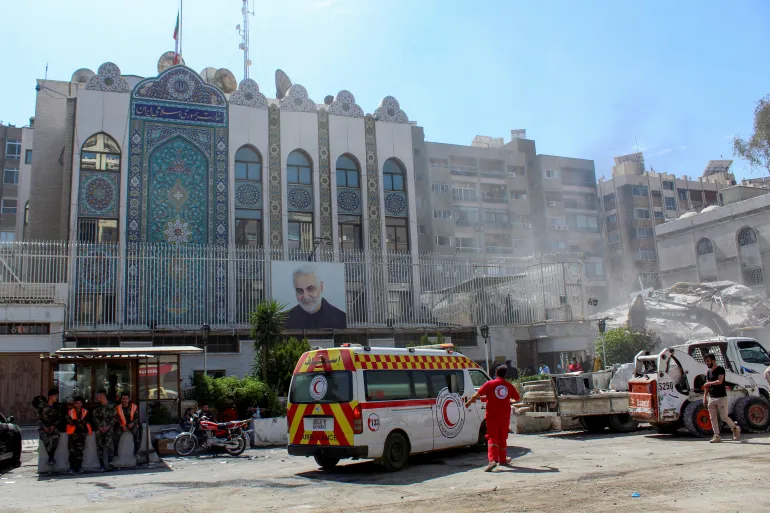
Iran’s mission to the United Nations has suggested that any Iranian military response to a deadly Israeli air raid on the Iranian consulate in Damascus could have been averted if the UN Security Council had denounced Israel’s attack.
The Iranian statement on Thursday comes amid a growing number of media reports that an Iranian attack on Israel or Israeli interests is imminent.
“Had the UN Security Council condemned the Zionist regime’s reprehensible act of aggression on our diplomatic premises in Damascus and subsequently brought to justice its perpetrators, the imperative for Iran to punish this rogue regime might have been obviated,” the Iranian mission said in a social media post.
Iran has promised to carry out a “decisive” response to the Israeli attack that killed seven members of its Islamic Revolutionary Guard Corps (IRGC), including two generals, in Damascus on April 1.
The Israeli assault and anticipated Iranian retaliation have raised fears of an all-out regional war in the Middle East amid the raging conflict in Gaza, intensifying tensions and a chorus of calls for de-escalation
Iranian Foreign Minister Hossein Amir-Abdollahian held phone calls with his Qatari, Saudi, Emirati, Iraqi and German counterparts.
Germany’s Foreign Minister Annalena Baerbock cautioned against further tensions during her talks with Amir-Abdollahian, Berlin said.
“Avoiding further regional escalation must be in everyone’s interest. We urge all actors in the region to act responsibly and exercise maximum restraint,” the German Federal Foreign Office said in a post on X.
German airline Lufthansa extended its suspension on flights to Tehran on Thursday, the Reuters news agency cited a company spokesperson as saying.
Russia also warned its citizens against travelling to the Middle East, especially Israel, the Palestinian territory and Lebanon.
The United States, which has forces stationed across the region, had warned Iran against attacking Israel, pledging support for its ally. “Our commitment to Israel’s security against these threats from Iran and its proxies is ironclad; let me say it again: ironclad,” US President Joe Biden said on Wednesday. “We’re going to do all we can to protect Israel’s security.”
A US official, who spoke to Al Jazeera Arabic on condition of anonymity, said Biden’s statement is not merely rhetorical, and the US would help intercept Iranian rockets or drones against Israel.
US Secretary of State Antony Blinken spoke via phone to Israeli Defence Minister Yogy Gallant on Wednesday.
“Secretary Blinken reiterated the United States’ support for Israel’s security and made clear that the US will stand with Israel against any threats by Iran and its proxies,” the US Department of State said in a statement.
Blinken also spoke to his Turkish, Chinese and Saudi counterparts, State Department spokesperson Matthew Miller said.
“We have been engaged in a series of contacts not just at his [Blinken’s] level – but other levels, too – to talk to foreign counterparts to send this really clear message to Iran that they should not escalate this conflict,” Miller said.
The New York Times reported, citing anonymous Pentagon sources that Michael E Kurilla, the top US general in the Middle East, was visiting Israel on Thursday to discuss the possible Iranian attack.
Later on Thursday, White House spokeswoman Karine Jean-Pierre reiterated that the US is committed to Israel’s security without providing details on how Washington would respond to an Iranian strike. “I want to be really careful. I am not going to get into operational procedures from here,” she told reporters.
Iran hawks in the US Congress have been calling for a strong response by Washington to any Iranian military move against Israel.
“Israel is under threat of imminent attack by Iran,” Republican Senator Tom Cotton wrote in a social media post. “President Biden needs to warn the ayatollahs immediately that the United States will back Israel to the hilt and the joint American-Israeli retaliation for any attack will be swift and devastating.”
Meanwhile, Israeli Prime Minister Benjamin Netanyahu appeared to issue a threat to Iran and other adversaries, saying that the country is prepared for “challenges in other arenas” beyond the war on Gaza. “We have determined a simple rule: Whoever harms us, we will harm them. We are prepared to meet all of the security needs of the State of Israel, both defensively and offensively,” Netanyahu said during a visit to an airbase in central Israel, according to his office.
The Israeli military has been attacking Iran-linked targets in Syria for years as Tehran deepened its military presence in the war-torn country.
But the attack on the Iranian diplomatic facility in Damascus earlier this month was seen as especially brazen. It garnered condemnations from across the Middle East and the rest of the world.
“The consulate and embassy offices in any country are considered to be the territory of that country. When they attack our consulate, it means they have attacked our territory,” Iranian Supreme Leader Ali Khamenei was quoted as saying by Mehr news agency.
“The Zionist regime made a mistake and must be punished and will be punished.”
(Aljazeera)







Latest News
Heavy showers above 100 mm are likely at some places in the Western, Sabaragamuwa, Southern, Central, and North-western provinces and in Anuradhapura district.
WEATHER FORECAST FOR 14 OCTOBER 2026
Issued at 05.30 a.m. on 14 October 2026 by the Department of Meteorology
Due to a low-level atmospheric disturbance persisting in the Bay of Bengal near Sri Lanka, cloudy skies and increased rainfall are expected to continue over the island.
Misty conditions can be expected at some places in the Sabaragamuwa, Central and Uva provinces during the early hours of the morning.
Showers or thundershowers will occur at times in the Northern, Eastern, Southern and Western provinces. Showers or thundershowers will occur in other parts of the island after 1.00 p.m.
Heavy showers above 100 mm are likely at some places in the Western, Sabaragamuwa, Southern, Central, and North-western provinces and in Anuradhapura district while fairly heavy showers above 75 mm are likely at some places in other areas of the island.
The general public is kindly requested to take adequate precautions to minimize damage caused by temporary localized strong winds and lightning during thundershowers.
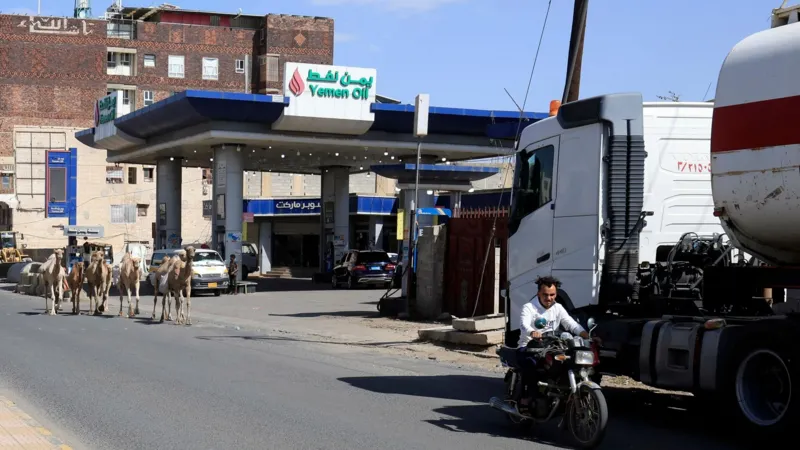
Missiles and drones have been intercepted over Riyadh after the Saudi-led coalition fighting in Yemen struck a fuel depot near the Houthi-controlled capital, Sanaa, its spokesperson says.
Maj Gen Turki al-Maliki said several projectiles targeting the Saudi capital and other cities were intercepted after the coalition carried out a strike on the Yemen Petroleum Company’s al-Sabaha facility on Tuesday night.
The Houthis warned they would target the airport and Aramco refinery in Saudi Arabia’s capital, Riyadh, and Aramco’s headquarters in the eastern city of Dammam.
Al-Maliki later said missiles targeting cities including Dammam had been intercepted, while shrapnel had fallen in a residential area in Dhahran.
It came as the Saudi cabinet, chaired by Crown Prince Mohammed bin Salman, said the Iran-backed group would “bear the consequences” of its recent deadly attacks on the kingdom.
Thirteen people were killed when a missile hit King Khalid International Airport in Riyadh on Saturday, while another person was killed in a similar attack there the following day.
On Tuesday, the coalition said its forces had destroyed three drones north of Riyadh.
The Houthis have said they are targeting airports, oil and gas facilities, and military bases in Saudi Arabia with missiles and drones in response to deadly Saudi strikes on territory that they control in western Yemen, including Sanaa.
The Saudi-led coalition has been providing air support for Yemeni pro-government forces mounting an offensive on Yemen’s Red Sea coast and several other front lines.

A correspondent for AFP news agency reported that queues formed at petrol stations in Sanaa on Tuesday afternoon following the coalition’s warning of an impending operation against the al-Sabaha oil facility, with many residents worried about shortages.
The Yemen Petroleum Company, which is run by the Houthis, issued a statement that sought to reassure them, saying the facility “does not contain any stock of petroleum products”.
The company also said it had “taken all necessary precautionary measures to address any emergency, ensuring the stability of the supply situation and the continued meeting of citizens’ needs in a normal manner”.
After al-Maliki confirmed the strike, first reported by Houthi media, explosions were heard over Riyadh and other Saudi cities, with al-Maliki reporting four missiles and two drones had been intercepted near the capital.
Yemen has been devastated by a civil war that began in 2014, when the Houthis ousted the internationally-recognised government from Sanaa. The conflict escalated in 2015, after the Saudi-led coalition of Arab states intervened in an attempt to restore the government’s rule.
A four-year-old informal ceasefire began to unravel in July, when the Houthis announced a “maritime embargo” against Saudi Arabia and began missile and drone attacks on Saudi airports, oil facilities and tankers in the Red Sea.
The Houthis said they were retaliating for what they call a Saudi blockade of their territory, as well as an air strike on Sanaa airport that they blamed on the kingdom.
The conflict escalated in September after the Houthis seized part of Yemen’s south-western Red Sea coast near the Bab al-Mandab Strait, a chokepoint for global shipping. Their advance contributed to a rise in oil prices following six months of war between the US, Israel and Iran.
US President Donald Trump said on Truth Social on Tuesday the Houthis were “behaving very badly… and purposefully trying to drive up Oil Prices”.
Speaking to reporters, he did not answer a question on whether he’d made a decision to help the Saudis retaliate against them, but said he “might” ask Turkish President Tayyip Erdogan to intervene.
Last week, pro-government forces said they had regained control of territory overlooking Bab al-Mandab after launching a major counter-offensive with the support of Saudi air strikes.
Hundreds of people have reportedly been killed in Yemen since August. The UN’s human rights office says they include at least 54 civilians, half of them children.
More than 216,000 people have also been displaced across the country, and suspected cholera cases have tripled in three weeks, rising from 217 to 647, according to the UN.
[BBC]
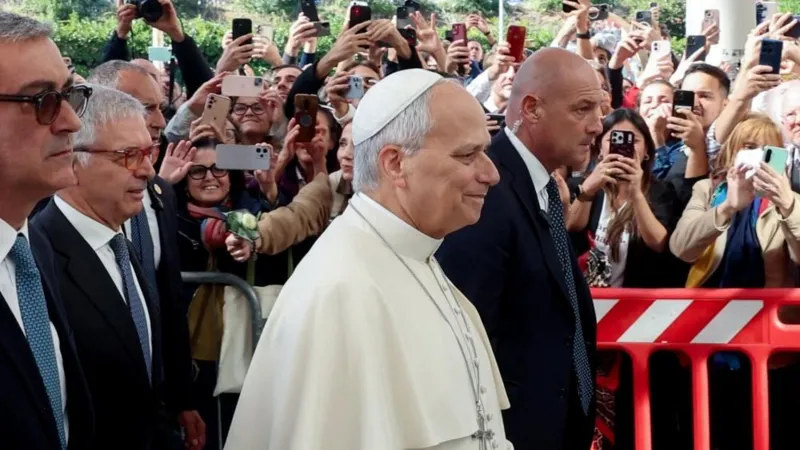
Pope Leo XIV has been diagnosed with lung cancer but had successful surgery to remove a lower lobe of his right lung, the Vatican has said in a medical bulletin.
The 71-year-old underwent a 90 minute surgery on Tuesday at Rome’s Gemelli Hospital and was subsequently diagnosed with lung adenocarcinoma.
“After the operation, the Pope awoke normally and returned after a brief period of observation to his room on the 10th floor,” the Vatican said in a statement.
The lump was first detected during what the Vatican has described as “routine checks”.
Earlier, large crowds gathered outside the hospital to greet the Pope, with some waiting for several hours.
They cheered greetings and well wishes as he passed, while he waved and smiled back through the lowered back window of his car.
He was then met by staff on the hospital steps. “I’m sorry,” one of them commiserated, to which the Pope gave a smile and a shrug. “We’re here for you,” he was assured.
In its statement, the Vatican said the whole lower lobe of the Pope’s right lung was removed “to ensure the procedure was radical”.
A Vatican source told Agence France-Presse news agency further tests were being carried out to see if there was any sign the cancer had spread.
It was Leo XIV himself who on Sunday announced news of his operation to the world, speaking from the balcony in St Peter’s Square after delivering the traditional Angelus blessing.
He said the nodule, or growth, on his lung was “contained” and had been found “at a very early stage”, but that doctors had advised him to have it removed.
Gemelli’s thoracic surgery team operated on the Pope, whose schedule has already been cleared until 20 October to give him time to recover.
Nodules are quite common and not necessarily cancerous, but after it was examined the medical team confirmed it was pulmonary adenocarcinoma, “as suspected by pre-operative tests”, the Vatican said.
The Vatican has stressed that the pontiff, who is generally thought to be fit, had no symptoms of infection or illness.

Cardinal Kikuchi Tarcisio Isao of Tokyo wrote on social media that he’d had an audience with Pope Leo on Monday, and said the pontiff felt “nothing wrong” physically.
He said the Pope had decided to check in for surgery as soon as possible because he was due to travel to Latin America in early November, and was keen to stick to that plan.
The trip is particularly significant because it includes a visit to Peru, where the pontiff was a missionary and then a Bishop for many years.
Despite all the reassurances, the news has shaken Catholics all over the world.
“Am I worried? Yes, because I certainly wasn’t expecting anything like this,” Vatican Secretary of State Cardinal Parolin told journalists on Tuesday.
He agreed that the news was like a “bolt from the blue”, but said the cardinals had been struck by the Pope’s “serenity” and were confident in his recovery.
Outside Gemelli Hospital, which has treated several popes and is home to a large statue of John Paul II, a few Catholics lingered after the pontiff was admitted.
Carla had come specially, wanting to be close.
“He seems calm, so we are calm too – even though illness is always unpleasant,” she told the BBC. “We will wait here and pray.”
[BBC]

Showers or thundershowers will occur at most parts of the island

Prison rules to be revised over monks’ attire

AC President recuses himself from hearing prison attire case pertaining to Gnanasara Thera

Court orders steps to obtain INTERPOL Red Notice against Basil

CID informs Fort Magistrate’s Court investigation into money laundering case against Namal completed

No force used to make Gnanasara Thera wear prison garb – Prisons

‘Dates have the highest sugar content to fight Coronavirus’

Sunday Island 27 December – Headlines

#SundayIsland 17th December – Headlines

Sunday Island – 28th March

Sunday Island Headlines – 21 March

Sunday Island – 21st February – Headlines
-

 News6 days ago
NDB fraud Rs 60mn more than reported
-

 News6 days ago
Removing monk’s robes matter for Sangha to decide: Mahanayake Theras
-

 News4 days ago
Sri Lanka escalates anti-graft drive with Shiranthi’s jailing
-
 News5 days ago
NPP govt. reminded of its responsibilities as US warship leaves Colombo
-
 Latest News5 days ago
Farhan, Sadaqat help Pakistan ace 183 chase to go 1-0 up
-
 News6 days ago
BHC, Colombo: “LTTE remains a proscribed org. in the UK”
-

 Latest News3 days ago
Farhan and Sadaqat help Pakistan seal series in style
-
 News4 days ago
Iranian ships stranded, Lanka fears US sanctions