
Sports
Stunning Chapman onslaught helps New Zealand make it 1-1

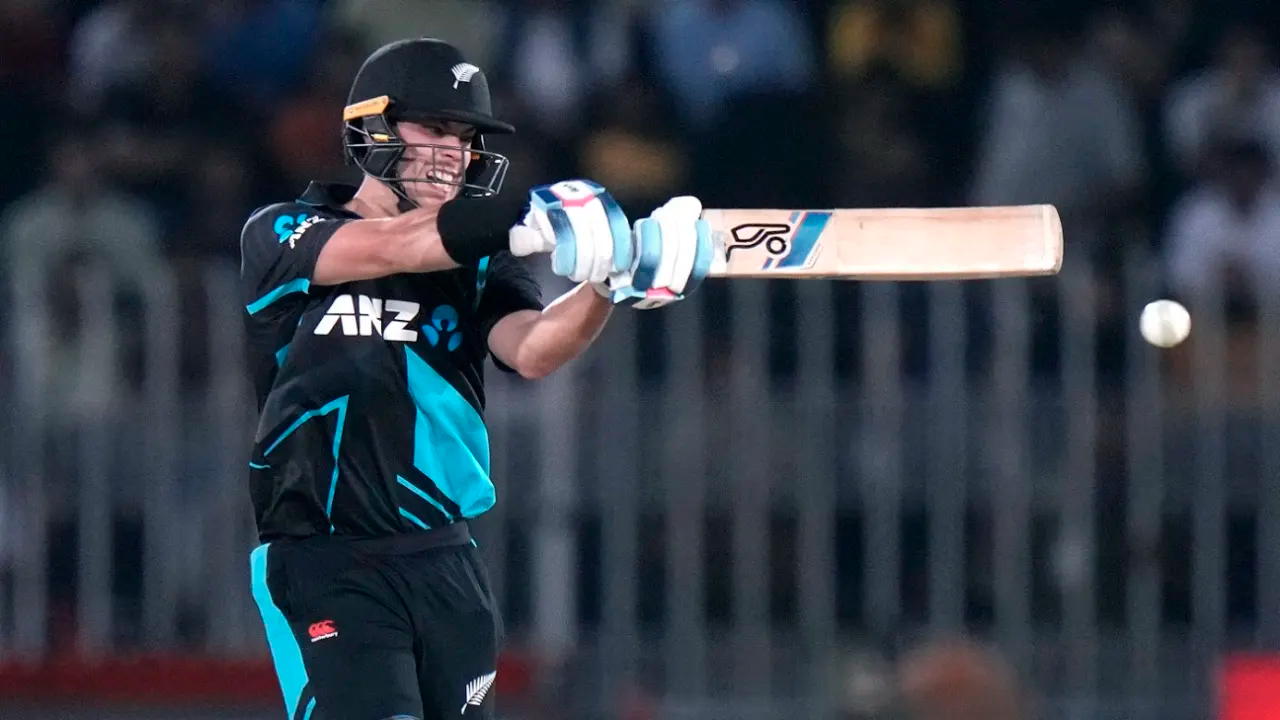
It doesn’t seem to matter who turns up for New Zealand each year; the series they play in Pakistan invariably turn out to be competitive. After a below-par performance in the second T20I, a Mark Chapman inspired New Zealand side brushed past Pakistan in the third to level the series up 1-1.
Chapman finished with a scintillating unbeaten 87 off 42 balls as he made light work of the 178 Pakistan had mustered, with the visitors getting there with ten balls and seven wickets to spare.
Chapman was New Zealand’s most impressive performer when a similarly understrength side visited in April 2023, and had little trouble picking up where he left off. New Zealand had begun brightly with the big-hitting Tim Robinson and Tim Seifert but lost both within the space of seven balls to Abbas Afridi and Naseem Shah respectively. At that point, with inexperience to follow and a battery of impressive bowling options for Babar Azam, the chase felt in severe danger of being railroaded off course.
But Chapman demonstrated that his ability extended beyond power hitting, as he set about taking apart the dangerous duo of Shadab Khan and Abrar Ahmed. He understood the target wasn’t imperious enough to require reckless slogging and manipulated the field to pick boundaries in three successive overs the two bowled. There was a fateful slice of fortune when Naseem fluffed a fairly simple chance off a miscued sweep, and it resulted in the batter going back into his shell for a stray Iftikhar Ahmed over.
The reprieve ended up costing Pakistan dearly. Iftikhar was shown no such respect when he came back on, smashed for a huge six back over his head and as Chapman steered New Zealand towards Pakistan’s total with chanceless inevitability, the flair in his game began to shine through, too. For he wouldn’t just get New Zealand to their target, but land a psychological blow by decimating their two prized fast bowlers.
Shaheen Shah Afridi was the first to bear the brunt, as two boundaries and a six in the 15th over brought the asking rate below nine. Babar brought his ace Naseem back in immediately, but a worse fate awaited him. A carved six, a carved four, a straight six, and a pulled four. That’s how his first four balls went, sealing Pakistan’s fate in a 23-run over that plunged the required rate to under a run a ball.
It’s perhaps obligatory to say at this point that Dean Foxcroft was an able understudy, but in truth, this was a one-man chase. Just two boundaries came off Foxcroft’s bat in a 117-run partnership, and while Foxcroft struggled to keep his strike rate over 100, Chapman would finish at more than double that. Pakistan will rightly reflect on the quality of their death bowling, but the fact all it took was a solo effort to hunt down what they managed raises the question about the adequacy of that first innings total.
Pakistan were put in to bat on a pitch Babar said was the typical batting-friendly strip Rawalpindi is known for, in stark contrast to Saturday’s surface. But the approach Pakistan took to setting a target befitting such a pitch was muddled, at best. Saim Ayub got the side off to his trademark flyer, but in Zak Foulkes, Ish Sodhi and Will O’Rourke, New Zealand kept finding bowlers to sneak in tight overs and stymie Pakistan’s momentum.
That was especially true once Ayub departed and Babar and Mohammad Rizwan came together two balls after the powerplay ended. Overs six to 11 saw New Zealand allow just 36 runs as the momentum Pakistan had built up faded, with Rizwan, in particular, unable to find the gaps he so cannily does in the powerplay. He would go off shortly after with a hamstring injury, while captain Michael Bracewell coaxed a false shot from the Pakistan captain to send him on his way.
Pakistan would meander for another couple of overs, but it was Shadab Khan’s introduction that injected purpose into Pakistan’s innings. By now, the run rate had slipped to 8.07, but a couple of boundaries of his first four balls set the wheels in motion for an innings where he flew to 41 off 20. Alongside Irfan Niazi, Pakistan began to blast their way back towards a competitive total. Perhaps cruelly for New Zealand, it was Bracewell, whose overs had reined Pakistan in so, who took the greatest flak during that whirlwind partnership as the pair smashed his final over for 19 runs.
Once more, though, New Zealand found a way to have the final say, with Jacob Duffy and Foulkes managing a pair of tight final overs that kept Pakistan below 180. Pakistan might have felt it was enough against an enfeebled New Zealand side, but as is often the case in T20 cricket, there are few hiding places for below par totals.
Brief scores:
New Zealand 179 for 3 in 18.2 overs (Tim Robinson 28, Tim Seifert 21, Mark Chapman 87*, Dean Foxcroft 31; Naeem Shah 1-44, Abbas Afridi 2-27) beat Pakistan 178 for 4 in 20 overs (Saim Ayub 32, Shadab Khan 41, Babar Azam 37, Mohammad Rizwan 22, Irfan Khan 30*; Jacob Duffy 1-39, Michael Bracewell 1-40, Ish Sodhi 2-25) by seven wickets
(Cricinfo)







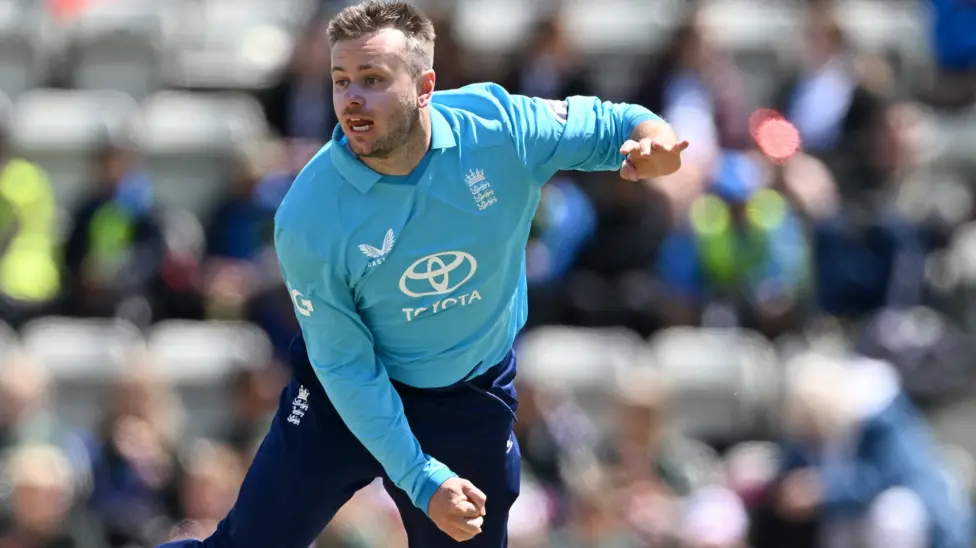
Leg-spinner Mason Crane could play for England for the first time in eight years after being recalled for the one-day international tri-series in Pakistan.
The 29-year-old won his only Test cap against Australia in Sydney in 2018 and is now given an opportunity in the series which also involves Sri Lanka next month.
Crane, who also played two T20 internationals in 2017, could also push his case in the fight to be England’s number one spinner in Test cricket.
Sam Curran and Adil Rashid both return after injuries, and uncapped pair James Coles and Henry Crocombe are included.
Jos Buttler is out with the hamstring injury he sustained last week, while Jacob Bethell is continuing his recovery from knee surgery.
Brydon Carse, who is under an investigation from the Cricket Regulator following an incident outside a nightclub in Derby in August, remains absent.
England are on a diet of white-ball cricket until three Tests in South Africa in December as they build up to the 50-over World Cup in southern Africa next year.
The tri-series in Pakistan involves the three teams taking part playing each other twice, with the top two advancing to the final. Following the trip to Pakistan, England play three one-day internationals and five T20s in Australia in November.
As England continue to shape their backroom staff following the arrival of Stephen Fleming as Test coach, Jeetan Patel, Mike Yardy, David Saker and Carl Hopkinson will assist white-ball head coach Brendon McCullum in Pakistan.
That means Marcus Trescothick, who took temporary charge of the Test team for the series against Pakistan in the home summer, misses the trip.
It is understood the make-up of the coaching staff is part of a plan to rotate the coaches – fielding coach Sarah Taylor and fast-bowling coach Tim Southee are also not going to Pakistan.
All of Trescothick, Taylor and Southee are likely to be part of England’s coaching team for other tours this winter.
England squad for tri-series in Pakistan:
Harry Brook (Yorkshire – captain), Gus Atkinson (Surrey), Sonny Baker (Hampshire), Tom Banton (Somerset), James Coles (Sussex), Jordan Cox (Essex), Mason Crane (Glamorgan), Henry Crocombe (Sussex), Sam Curran (Surrey), Liam Dawson (Hampshire), Ben Duckett (Nottinghamshire), Will Jacks (Surrey), Jamie Overton (Surrey), Adil Rashid (Yorkshire), Joe Root (Yorkshire), Josh Tongue (Nottinghamshire).
(BBC)

Sri Lanka won the toss and elected to bowl first in the Asian games semifinal clash against India.
Sri Lanka XI: Lasith Croospulle, Sineth Jayawardene, Sohan de Livera (wk), Ashen Bandara, Sahan Arachchige (c), Nuwanidu Fernando, Chamika Karunaratne, Wanuja Sahan, Tharindu Rathnayake, Binura Fernando, Vijayakanth Viyaskanth

England call up Crane and rest Archer for Pakistan series

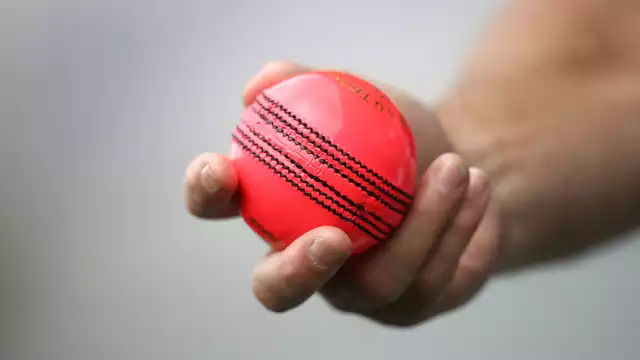
ICC introduces pink-ball daytime Test trial, new time-wasting penalties

Discussion on Anuradhapura Sacred City Development Plan

India enter Asian Games final after Kishan and Bumrah ride roughshod over Sri Lanka

I extend my heartfelt wishes to all the sons and daughters of our country for a Happy World Children’s Day – President

Sri Lanka bowl first in semi final clash against India

‘Dates have the highest sugar content to fight Coronavirus’

Sunday Island 27 December – Headlines

#SundayIsland 17th December – Headlines

Sunday Island – 28th March

Sunday Island Headlines – 21 March

Sunday Island – 21st February – Headlines
-

 Editorial6 days ago
Birth of a bad law
-

 News4 days ago
Police remove Thileepan statue in Jaffna
-

 Features7 days ago
Beyond traditional jobs: Why Sri Lanka needs to facilitate the gig economy
-

 News6 days ago
TIN mandatory for key transactions from Nov. 1
-
 Latest News7 days ago
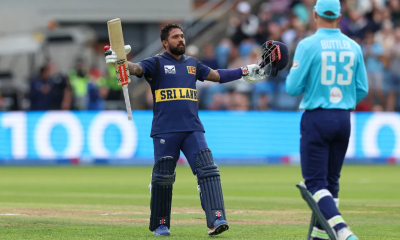
Kusal, Wellalage star as Sri Lanka defend 322 in Headingley thriller
-

 Features4 days ago
The 22nd Amendment, constitutional recovery and illiberal slippage
-

 Features4 days ago
Of foreigners as CEOs of Lankan ventures
-

 News4 days ago
Sajith rejects Jt. Opp. protest sabotage claim; SJB TU chief demands remedial action