
Features
STUDIES, EXAMS, STRIKES & TERRORISM IN THE UK

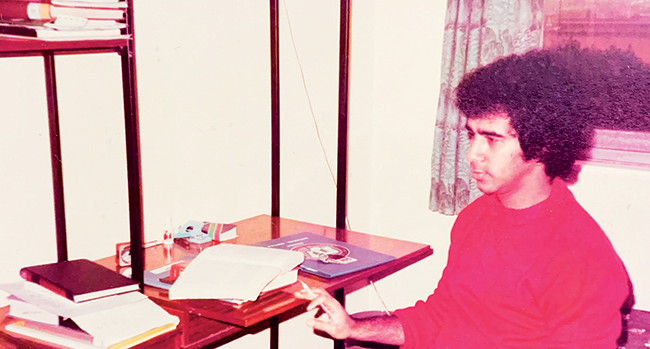
CONFESSIONS OF A GLOBAL GYPSY
By Dr. Chandana (Chandi) Jayawardena DPhil
President – Chandi J. Associates Inc. Consulting, Canada
Founder & Administrator – Global Hospitality Forum
chandij@sympatico.ca

Study Strategies
“Read these eight books on Hotel Management Accounting and Corporate Finance, cover to cover.” Professor Richard Kotas gave this direction to the graduate students in the M.Sc. program in International Hotel Management, at the University of Surrey (UoS), in the United Kingdom (UK). After the 1983 autumn semester mid-term tests, other professors followed suit with similar directions for their courses in Marketing Principles for Hotel Management, International Hotel Management Seminars, Quantitative Methods, Project Design and Analysis, Computer Applications, Organization Theory and Manpower Management etc. It was overwhelming! I quickly realised that I needed to develop a practical and effective strategy for my studies.
Some of my younger batchmates who were yet to gain any management experience, followed “reading cover to cover” directions literally. To me it did not sound doable. One marketing text book had over 700 pages! As none of my batch mates worked part-time, like I did, they all had more time for studies than I. So I settled for reading only the chapter summaries and figures and tables within book chapters.In order to acquire other shortcuts, I attended some non-mandatory ‘student success strategy’ sessions. These sessions provided some excellent study and exam strategies but were not well-attended. I immediately implemented the strategies I liked. Most of them worked well for me.

Exam Strategies
I spent a considerable amount of time at the university library analysing all old exam papers for some general courses in M.Sc. in Tourism Planning and Development, set by the same professors. I identified questions they repeated every year, in alternate years and occasionally. Based on that research, I guessed what questions could be included in the exams that I would sit.
After that I organized a M.Sc. study group of four like-minded students and assigned the most likely four questions, based on one question per graduate student basis. Each of us then became the expert on one question area per course. As the next step, we presented the answers developed by each expert, to each other. Then we debated and fine-tuned the four answers, which all four shared.
For our challenging courses such as Quantitative Methods, we made an appointment to meet each professor for a discussion. “Dr. Wanhill, the four of us are very nervous about your exam. We studied a lot and prepared some model answers to potential questions, but we still are not sure if we have done this well enough”, I told the senior lecturer who was teaching us Quantitative Methods.
Dr. Wanhill, a nice gentleman, was so impressed with our efforts that he said, “Come on chaps, don’t be nervous. Let’s go through all of your questions and answers.” He spent two hours coaching us and we guessed that the questions he spent more time in explaining were ‘sure exam questions’. This strategy helped us and four of us did well in the Quantitative Methods exams. It had been our worst course!
Implementing a tip from a ‘student success strategy’ session, I also spent time with each professor, prior to the final exam, inquiring what would be an ideal format for answering their questions at the exam. Some preferred essay type, a few liked point-form, and only one liked the idea of examples from my own career. I wrote the exams exactly the way they preferred, changing my style of answering to suit each professor. Applying my concept of ‘Personality Analysis’ and adjusting the way I communicated with each professor, proved to be beneficial.
I also learnt to invest about 30 minutes planning my answers at the beginning of each paper. I then planned to keep the last 30 minutes to review my four answers and fine-tune those before handing over my exam answer script at the last minute. With this strategy, I spent exactly 30-minutes per answer. To me, the answer plan and the time management were key elements for exam success.
After some debates about the effectiveness of ‘last minute studying’ prior to exams, I opted to adopt a concept of being at each day’s exam, right at the peak of my day. For this strategy, we first identified the number of hours each student can work without being tired. Most students were eight-hour people and a few were ten or twelve-hour people. Considering my multi-tasking work pattern in the previous years, I identified myself as a sixteen-hour person, which was rare. This meant that when the middle of an exam time was 10:00 am, I commenced my final revision studies on the same day of the exam, eight hours before that – at 2:00 am. As, at that time, I needed a maximum six hours of sleep to function well, I went to bed at 8:00 pm. This worked well for me.
When I sat one exam invigilated by Professor Richard Kotas, I could not believe my eyes. All four questions that my study group predicted were there. I had studied thoroughly the four model answers during the previous six hours since 2:00 am. “Chandi, why are you seated smiling, without answering the questions?” a baffled Professor Kotas asked me. “Sir, I am just planning my answers to these very difficult and unpredictable questions” I told him while trying to look worried. Although exam positions were not publicly announced, Professor Kotas indicated to me privately that I was overall first in both autumn and winter semester exams, something I had never achieved in my life prior to that.

Fight for Dissertation Topic
By early 1984, we began identifying topics for our dissertations, which had to be done ideally within a minimum of six months by students who had passed 10 exams over two semesters. Nine professors were assigned to supervise the nine students who were in my M.Sc. batch. When we commenced our one-on-one meetings with potential dissertation supervisors, we felt some pressure to align student dissertation topics with supervisors’ current research interests and publications.
The Head of the Department of the Hotel, Catering and Tourism Management at UoS at that time was Professor Brian Archer. He was an economist and an expert on tourism forecasting. “Ah, Chandi, I would like to suggest a dissertation topic ideal for someone like you. How about ‘Long-term tourism forecasting of South Asia?’ You can test exciting models, including mine, and even develop a new model!”, he suggested with a big and convincing smile. I simply hated that topic and had no interest in it.
I preferred to do research on a topic that would help the next stage of my career. After completing the M.Sc. program, I wanted to become the Food & Beverage Manager of a large, international five-star hotel. “I am thinking of something like, ‘Food and beverage management of British five-star hotels’ I announced to the dissatisfaction of Professor Archer. “That does not sound academically suitable for a master’s degree dissertation”, he said. I disagreed. When the university realized that I was determined to research and write on a practical subject, I was asked to make a convincing proposal to justify the suitability of my topic.
Although Professor Archer was disappointed with me on that occasion, he later became a good friend of mine. When I was the General Manager of the Lodge and the Village, Habarana, he stayed with me. He was a good chess player, and we played several games there. In later years, when he heard that I wish to do a Ph.D., he arranged an interview for me to be considered for a post of Lecturer at UoS, during my Ph.D. research. Unfortunately, as another professor in the selection committee did not support me with the same enthusiasm as Professor Archer, I did not get that job, but I re-joined UoS to do a M.Phil./Ph.D. in 1990.
After more negotiations in 1984, and revisions to my M.Sc. dissertation proposal, eventually, UoS approved a slightly modified topic for my research – ‘Food and beverage operations in the context of five-star London hotels’. Professor Richard Kotas became my dissertation supervisor. “Chandi, covering the whole of UK will be too much. Just focus on the 16 five-star hotels in London”, he suggested. I agreed and said that, “I will work or observe in all of these 16 hotels and interview the relevant managers. Kindly give me letters of introduction.” “Chandi, in addition, as the first step, you must read all books – cover to cover, and journal articles ever written in English about Food and beverage management and operations”, he suggested. I said, “Yes, Sir!” and did exactly that over a period of three months.
British Strikes
UK had strong unions and a culture of strikes. Some strikes affected me personally. One I remember clearly was towards the end of March in 1984, when the transport workers paralyzed London’s buses and subways. That strike was the first of a series of work stoppages in major British cities to protest Prime Minister, Margaret Thatcher’s proposals for local government changes. Cars and cyclists jammed roads in London as some 2.5 million people found alternate ways to work. Thousands walked while others jogged or hitch-hiked. My wife and I stayed at home without going to work.
On March 6, 1984, when I saw on the BBC TV news about a miners’ strike, I assumed that it was one of those strikes in UK which would last for a short period of time before a settlement. I was wrong. It was a major, industrial action within the British coal industry in an attempt to prevent colliery closures, suggested by the government for economic reasons. The strike was led by Arthur Scargill, the President of the National Union of Mineworkers (NUM) against the National Coal Board (NCB), a government agency. Opposition to the strike was led by the Conservative government of Margaret Thatcher that wanted to reduce the power of the trade unions. This strike lasted a year, and I eagerly waited to watch the TV news about it every evening until the strike finally ended in March, 1985.
Violent confrontations between flying pickets and police characterised the year-long strike which ended in a decisive victory for the Conservative government and allowed the closure of most of Britain’s collieries.
Many observers regarded this landmark strike as the most bitter industrial dispute in British history. The number of person-days of work lost to the strike was over 26 million, making it one of the biggest strikes in history. Thousands were arrested and charged, over a 100 were injured, and sadly, six lost their lives.
From that historic moment onwards, British unions were somewhat weakened. With the tough handling of the NUM strike, Margaret Thatcher consolidated her reputation as the ‘Iron Lady’, a nickname that became associated with her uncompromising politics and the tough leadership style. As the first female prime minister of UK, she implemented policies that became known as ‘Thatcherism’.
I spent the summer of 1979 in London soon after Margaret Thatcher became the Prime Minister of UK. On April 12, 1984, I served her dinner at a royal banquet held in honour of the Queen of England at the Dorchester. When she was ousted from the position of the Prime Minister after a cabinet revolt in 1990, I was living in London again. On November 28, 1990, I watched her final speech as the Prime Minister in the House of Commons, and leaving her office and residence in Downing Street in tears. A few years after that, I hosted her successor, John Major in my office at Le Meridien Jamaica Pegasus Hotel.
Terrorism
The civil war in Sri Lanka which commenced in July 1983 before we left for UK was getting worse. Although we thought that UK was peaceful, that country had its large share of terrorism, predominately in the hands of the Irish Republican Army (IRA). During my first stay in UK in 1979, I was shocked to see on TV that IRA claimed responsibility for the assassination of Admiral Lord Louis Mountbatten. As the supreme allied commander for Southeast Asia, he had commanded the British troops from his base in Ceylon during the latter part of World War II.
My first direct exposure to terrorism in UK was when I was working at Bombay Brasserie in Kensington, London. “Chandi, be careful, when going home today. Avoid the circle line and don’t go near Knightsbridge. IRA bombed Harrods!”, an Indian work colleague warned me. Harrods, world famous upmarket department store in the affluent Knightsbridge district, near Buckingham Palace, had been subject to two IRA bomb attacks earlier. Although the IRA had sent a warning 37 minutes before a car bomb that exploded outside Harrods on December 17, 1983, the area had not been evacuated. Due to this car bomb, six people died and 90 were injured. This was the 40th terrorist attack in UK since early 1970s.
On October 12, 1984, a powerful IRA bomb went off with deadly effect in the Grand Hotel in Brighton, England, where members of Britain’s Conservative Party were gathered for a party conference. IRA’s target was to assassinate the British Prime Minister and the other key members of her government. The bomb ripped a hole through several storeys of the 120-year-old hotel.
When the bomb went off just before 3:00 am, Margaret Thatcher was still awake at the time, working in her suite on her conference speech for the next day. The blast badly damaged her suite’s bathroom, but left its sitting room and bedroom untouched. She and her husband were fortunate to escape serious injury, although 34 people were injured and another five killed. The next day, when we watched her on TV delivering an excellent party conference speech with a brave face, I remarked to my wife, “She truly is a real Iron Lady!”
On October 31, 1984 when I was going to work at the Dorchester, I heard a loud celebration in some parts of London. Some Sikh men were lighting fire crackers while celebrating and distributing sweets and fruits to onlookers. I assumed that it must be a Sikh holiday event, but soon realised that they were celebrating an assassination. Indian Prime Minister Indira Gandhi had been assassinated at her residence in New Delhi, early morning that day, by her Sikh bodyguards.
I knew that five months prior to that day, Indira Gandhi had ordered the removal of a prominent orthodox Sikh religious leader and his rebel followers from the Golden Temple of Harmandir Sahib in Amritsar, Punjab. The collateral damage included the death of approximately 500 Sikh pilgrims. The military action on the sacred temple was criticized both inside and outside India. Indira Gandhi’s assassination sparked four days of riots that left more than 8,000 Indian Sikhs dead in revenge attacks. The world is a dangerous place to live in.


 The US armed forces invading Venezuela, removing its President Nicolás Maduro from power and abducting him and his wife Cilia Flores on 3 January 2026, flying them to New York and producing Maduro in a New York kangaroo court is now stale news, but a fact. What is a far more potent fact is the pan-global impotent response to this aggression except in Latin America, China, Russia and a few others.
Colombian President Gustavo Petro described the attack as an “assault on the sovereignty” of Latin America, thereby portraying the aggression as an assault on the whole of Latin America. Brazilian President Luiz Inácio Lula da Silva referred to the attack as crossing “an unacceptable line” that set an “extremely dangerous precedent.” Again, one can see his concern goes beyond Venezuela. For Mexican President Claudia Sheinbaum the attack was in “clear violation” of the UN Charter, which again is a fact. But when it comes to powerful countries, the UN Charter has been increasingly rendered irrelevant over decades, and by extension, the UN itself. For the French Foreign Minister, the operation went against the “principle of non-use of force that underpins international law” and that lasting political solutions cannot be “imposed by the outside.” UN Secretary General António Guterres said he was “deeply alarmed” about the “dangerous precedent” the United States has set where rules of international law were not being respected. Russia, notwithstanding its bloody and costly entanglement in Ukraine, and China have also issued strong statements.
Comparatively however, many other countries, many of whom are long term US allies who have been vocal against the Russian aggression in Ukraine have been far more sedate in their reaction. Compared to his Foreign Minister, French President Emmanuel Macron said the Venezuelan people could “only rejoice” at the ousting of Maduro while the German Chancellor Friedrich Merz believed Maduro had “led his country into ruin” and that the U.S. intervention required “careful consideration.” The British and EU statements have been equally lukewarm. India’s and Sri Lanka’s statements do not even mention the US while Sri Lanka’s main coalition partner the JVP has issued a strongly worded statement.
Taken together, what is lacking in most of these views, barring a negligible few, especially from the so-called powerful countries, is the moral indignation or outrage on a broad scale that used to be the case in similar circumstances earlier. It appears that a new ugly and dangerous world order has finally arrived, footprints of which have been visible for some time.
It is not that the US has not invaded sovereign countries and affected regime change or facilitated such change for political or economic reasons earlier. This has been attempted in Cuba without success since the 1950s but with success in Chile in 1973 under the auspices of Augusto Pinochet that toppled the legitimate government of president Salvador Allende and established a long-lasting dictatorship friendly towards the US; the invasion of Panama and the ouster and capture of President Manuel Noriega in 1989 and the 2003 invasion of Iraq both of which were conducted under the presidency of George Bush.
These are merely a handful of cross border criminal activities against other countries focused on regime change that the US has been involved in since its establishment which also includes the ouster of President of Guyana Cheddi Jagan in 1964, the US invasion of the Dominican Republic in 1965 stop the return of President Juan Bosch to prevent a ‘communist resurgence’; the 1983 US invasion of Grenada after the overthrow and killing of Prime Minister Maurice Bishop purportedly to ensure that the island would not become a ‘Soviet-Cuban’ colony. A more recent adventure was the 2004 removal and kidnapping of the Haitian President Jean-Bertrand Aristide, which also had French support.
There is however a difference between all the earlier examples of US aggression and the Venezuelan operation. The earlier operations where the real reasons may have varied from political considerations based on ideological divergence to crude economics, were all couched in the rhetoric of democracy. That is, they were undertaken in the guise of ushering democratic changes in those countries, the region or the world irrespective of the long-term death and destruction which followed in some locations. But in Venezuela under President Donald Trump, it is all about controlling natural resources in that country to satisfy US commercial interests.
The US President is already on record for saying the US will “run” Venezuela until a “safe transition” is concluded and US oil companies will “go in, spend billions of dollars, fix the badly broken infrastructure, the oil infrastructure, and start making money” – ostensibly for the US and those in Venezuela who will tag the US line. Trump is also on record saying that the main aim of the operation was to regain U.S. oil rights, which according to him were “stolen” when Venezuela nationalized the industry. The nationalization was obviously to ensure that the funds from the industry remained in the country even though in later times this did lead to massive internal corruption.
Let’s be realistic. Whatever the noise of the new rhetoric is, this is not about ‘developing’ Venezuela for the benefit of its people based on some unknown streak of altruism but crudely controlling and exploiting its natural assets as was the case with Iraq. As crude as it is, one must appreciate Trump’s unintelligent honesty stemming from his own unmitigated megalomania. Whatever US government officials may say, the bottom line is the entire operation was planned and carried out purely for commercial and monetary gain while the pretext was Maduro being ‘a narco-terrorist.’ There is no question that Maduro was a dictator who was ruining his own country. But there is also no question that it is not the business of the US or any other country to decide what his or Venezuela’s fate is. That remains with the Venezuelan people.
What is dangerous is, the same ‘narco-terrorist’ rhetoric can also be applied to other Latin American countries such as Columbia, Brazil and Mexico which also produce some of the narcotics that come into the US consumer markets. The response should be not to invade these countries to stem the flow, but to deal with the market itself, which is the US. In real terms what Trump has achieved with his invasion of Venezuela for purely commercial gain and greed, followed by the abject silence or lukewarm reaction from most of the world, is to create a dangerous and ugly new normal for military actions across international borders. The veneer of democracy has also been dispensed with.
The danger lies in the fact that this new doctrine or model Trump has devised can similarly be applied to any country whose resources or land a powerful megalomaniac leader covets as long as he has unlimited access to military assets of his country, backed by the dubius remnants of the political and social safety networks, commonsense and ethics that have been conveniently dismantled. This is a description of the present-day United States too. This danger is boosted when the world remains silent. After the success of the Venezuela operation, Trump has already upended his continuing threats to annex Greenland because “we need Greenland from the standpoint of national security.” Greenland too is not about security, but commerce given its vast natural resources.
Hours after Venezuela, Trump threatened the Colombian President Gustavo Petro to “watch his ass.” In the present circumstances, Canadians also would not have forgotten Trump’s threat earlier in 2025 to annex Canada. But what the US President and his current bandwagon replete with arrogance and depleted intelligence would not understand is, beyond the short-term success of the Venezuela operation and its euphoria, the dangerous new normal they have ushered in would also create counter threats towards the US, the region and the world in a scale far greater than what exists today. The world will also become a far less safe place for ordinary American citizens.
More crucially, it will also complicate global relations. It would no longer be possible for the mute world leaders to condemn Russian action in Ukraine or if China were to invade Taiwan. The model has been created by Trump, and these leaders have endorsed it. My reading is that their silence is not merely political timidity, but strategic to their own national and self-interest, to see if the Trump model could be adopted in other situations in future if the fallout can be managed.
The model for the ugly new normal has been created and tested by Trump. Its deciding factors are greed and dismantled ethics. It is now up to other adventurers to fine tune it. We would be mere spectators and unwitting casualties.

Sri Lanka is blessed with a large number of scenic waterfalls, mainly concentrated in the central highlands. These natural features substantially enhance the country’s attractiveness to tourists. Further, these famous waterfalls equally attract thousands of local visitors throughout the year.
While waterfalls offer aesthetic appeal, a serene environment, and recreational opportunities, they also pose a range of significant hazards. Unfortunately, the visitors are often unable to identify these different types of risks, as site-specific safety information and proper warning signs are largely absent. In most locations, only general warnings are displayed, often limited to the number of past fatalities. This can lead visitors to assume that bathing is the sole hazard, which is not the case. Therefore, understanding the full range of waterfall-related risks and implementing appropriate safety measures is essential for preventing loss of life. This article highlights site-specific hazards to raise public awareness and prevent people from putting their lives at risk due to these hidden dangers.
Flash floods and resultant water surges
Flash floods are a significant hazard in hill-country waterfalls. According to the country’s topography, most of the streams originate from the catchments in the hilly areas upstream of the waterfalls. When these catchments receive intense rainfalls, the subsequent runoff will flow down as flash floods. This will lead to an unexpected rise in the flow of the waterfall, increasing the risk of drowning and even sweeping away people. Therefore, bathing at such locations is extremely dangerous, and those who are even at the river banks have to be vigilant and should stay away from the stream as much as possible. The Bopath Ella, Ravana Ella, and a few waterfalls located in the Belihul Oya area, closer to the A99 road, are classic examples of this scenario.
Water currents
The behaviour of water in the natural pool associated with the waterfall is complex and unpredictable. Although the water surface may appear calm, strong subsurface currents and hydraulic forces exist that even a skilled swimmer cannot overcome. Hence, a person who immerses confidently may get trapped inside and disappear. Water from a high fall accelerates rapidly, forming hydraulic jumps and vortices that can trap swimmers or cause panic. Hence, bathing in these natural pools should be totally avoided unless there is clear evidence that they are safe.
Slipping risks
Slipping is a common hazard around waterfalls. Sudden loss of footing can lead to serious injuries or fatal falls into deep pools or rock surfaces. The area around many waterfalls consists of steep, slippery rocks due to moisture and the growth of algae. Sometimes, people are overconfident and try to climb these rocks for the thrill of it and to get a better view of the area. Further, due to the presence of submerged rocks, water depths vary in the natural pool area, and there is a chance of sliding down along slippery rocks into deep water. Waterfalls such as Diyaluma, Bambarakanda, and Ravana Falls are likely locations for such hazards, and caution around these sites is a must.
Rockfalls
Rockfalls are a significant hazard around waterfalls in steep terrains. Falling rocks can cause serious injuries or fatalities, and smaller stones may also be carried by fast-flowing water. People bathing directly beneath waterfalls, especially smaller ones, are therefore exposed to a high risk of injury. Accordingly, regardless of the height of the waterfall, bathing under the falling water should be avoided.
Hypothermia and cold shock
Hypothermia is a drop in body temperature below 35°C due to cold exposure. This leads to mental confusion, slowed heartbeat, muscle stiffening, and even cardiac arrest may follow. Waterfalls in Nuwara Eliya district often have very low water temperatures. Hence, immersing oneself in these waters is dangerous, particularly for an extended period.
Human negligence
Additional hazards also arise from visitors’ own negligence. Overcrowding at popular waterfalls significantly increases the risk of accidents, including slips and falls from cliffs. Sometimes, visitors like to take adventurous photographs in dangerous positions. Reckless behavior, such as climbing over barriers, ignoring warning signs, or swimming in prohibited zones, amplifies the risk.
Mitigation and safety
measures
Mitigation of waterfall-related hazards requires a combination of public awareness, engineering solutions, and policy enforcement. Clear warning signs that indicate the specific hazards associated with the water fall, rather than general hazard warnings, must be fixed. Educating visitors verbally and distributing bills that include necessary guidelines at ticket counters, where applicable, will be worth considering. Furthermore, certain restrictions should vary depending on the circumstances, especially seasonal variation of water flow, existing weather, etc.
Physical barriers should be installed to prevent access to dangerous areas by fencing. A viewing platform can protect people from many hazards discussed above. For bathing purposes, safer zones can be demarcated with access facilities.
Installing an early warning system for heavily crowded waterfalls like Bopath Ella, which is prone to flash floods, is worth implementing. Through a proper mechanism, a warning system can alert visitors when the upstream area receives rainfall that may lead to flash floods in the stream.
At present, there are hardly any officials to monitor activities around waterfalls. The local authorities that issue tickets and collect revenue have to deploy field officers to these waterfalls sites for monitoring the activities of visitors. This will help reduce not only accidents but also activities that cause environmental pollution and damage. We must ensure that these natural treasures remain a source of wonder rather than danger.
(The writer is a chartered Civil Engineer specialising in water resources engineering)
By Eng. Thushara Dissanayake ✍️

The year 2025 began with grim news. On 1st January, a baby elephant was struck and killed by a train in Habarana, marking the start of a tragic series of elephant–train collisions that continued throughout the year. In addition to these incidents, the nation mourned the deaths of well-known elephants such as Bathiya and Kandalame Hedakaraya, among many others. As the year drew on, further distressing reports emerged, including the case of an injured elephant that was burnt with fire, an act of extreme cruelty that ultimately led to its death. By the end of the year, Sri Lanka recorded the highest number of elephant deaths in Asia.
This sorrowful reality stands in stark contrast to Sri Lanka’s ancient spiritual heritage. Around 250 BCE, at Mihintale, Arahant Mahinda delivered the Cūḷahatthipadopama Sutta (The Shorter Discourse on the Simile of the Elephant’s Footprint) to King Devanampiyatissa, marking the official introduction of Buddhism to the island. The elephant, a symbol deeply woven into this historic moment, was once associated with wisdom, restraint, and reverence.
Yet the recent association between Mihintale and elephants has been anything but noble. At Mihintale an elephant known as Ambabo, already suffering from a serious injury to his front limb due to human–elephant conflict (HEC), endured further cruelty when certain local individuals attempted to chase him away using flaming torches, burning him with fire. Despite the efforts of wildlife veterinary surgeons, Ambabo eventually succumbed to his injuries. The post-mortem report confirmed severe liver and kidney impairment, along with extensive trauma caused by the burns.
Was prevention possible?
The question that now arises is whether this tragedy could have been prevented.
To answer this, we must examine what went wrong.
When Ambabo first sustained an injury to his forelimb, he did receive veterinary treatment. However, after this initial care, no close or continuous monitoring was carried out. This lack of follow-up is extremely dangerous, especially when an injured elephant remains near human settlements. In such situations, some individuals may attempt to chase, harass, or further harm the animal, without regard for its condition.
A similar sequence of events occurred in the case of Bathiya. He was initially wounded by a trap gun—devices generally intended for poaching bush meat rather than targeting elephants. Following veterinary treatment, his condition showed signs of improvement. Tragically, while he was still recovering, he was shot a second time behind the ear. This second wound likely damaged vital nerves, including the vestibular nerve, which plays a critical role in balance, coordination of movement, gaze stabilisation, spatial orientation, navigation, and trunk control. In effect, the second shooting proved far more devastating than the first.
After Bathiya received his initial treatment, he was left without proper protection due to the absence of assigned wildlife rangers. This critical gap in supervision created the opportunity for the second attack. Only during the final stages of his suffering were the 15th Sri Lanka Artillery Regiment, the 9th Battalion of the Sri Lanka National Guard, and the local police deployed—an intervention that should have taken place much earlier.
Likewise, had Ambabo been properly monitored and protected after his injury, it is highly likely that his condition would not have deteriorated to such a tragic extent.
It should also be mentioned that when an injured animal like an elephant is injured, the animal will undergo a condition that is known as ‘capture myopathy’. It is a severe and often fatal condition that affects wild animals, particularly large mammals such as elephants, deer, antelope, and other ungulates. It is a stress-induced disease that occurs when an animal experiences extreme physical exertion, fear, or prolonged struggle during capture, restraint, transport, or pursuit by humans. The condition develops when intense stress causes a surge of stress hormones, leading to rapid muscle breakdown. This process releases large amounts of muscle proteins and toxins into the bloodstream, overwhelming vital organs such as the kidneys, heart, and liver. As a result, the animal may suffer from muscle degeneration, dehydration, metabolic acidosis, and organ failure. Clinical signs of capture myopathy include muscle stiffness, weakness, trembling, incoordination, abnormal posture, collapse, difficulty breathing, dark-coloured urine, and, in severe cases, sudden death. In elephants, the condition can also cause impaired trunk control, loss of balance, and an inability to stand for prolonged periods. Capture myopathy can appear within hours of a stressful event or may develop gradually over several days. So, if the sick animal is harassed like it happened to Ambabo, it does only make things worse. Unfortunately, once advanced symptoms appear, treatment is extremely difficult and survival rates are low, making prevention the most effective strategy.
What needs to be done?
Ambabo’s harassment was not an isolated incident; at times injured elephants have been subjected to similar treatment by local communities. When an injured elephant remains close to human settlements, it is essential that wildlife officers conduct regular and continuous monitoring. In fact, it should be made mandatory to closely observe elephants in critical condition for a period even after treatment has been administered—particularly when they remain in proximity to villages. This approach is comparable to admitting a critically ill patient to a hospital until recovery is assured.
At present, such sustained monitoring is difficult due to the severe shortage of staff in the Department of Wildlife Conservation. Addressing this requires urgent recruitment and capacity-building initiatives, although these solutions cannot be realised overnight. In the interim, it is vital to enlist the support of the country’s security forces. Their involvement is not merely supportive—it is essential for protecting both wildlife and people.
To mitigate HEC, a Presidential Committee comprising wildlife specialists developed a National Action Plan in 2020. The strategies outlined in this plan were selected for their proven effectiveness, adaptability across different regions and timeframes, and cost-efficiency. The process was inclusive, incorporating extensive consultations with the public and relevant authorities. If this Action Plan is fully implemented, it holds strong potential to significantly reduce HEC and prevent tragedies like the suffering endured by Ambabo. In return it will also benefit villagers living in those areas.
In conclusion, I would like to share the wise words of Arahant Mahinda to the king, which, by the way, apply to every human being:
O’ great king, the beasts that roam the forest and birds that fly the skies have the same right to this land as you. The land belongs to the people and to all other living things, and you are not its owner but only its guardian.
by Tharindu Muthukumarana ✍️
tharinduele@gmail.com
(Author of the award-winning book “The Life of Last Proboscideans: Elephants”)

Heavy showers above 100 mm are likely at some places in the Northern province

De Klerk comes clutch as RCB steal last-ball thriller against Mumbai Indians

Speaker bars Parliamentary probe into Judicial Service Commission

Elephant calf killed in collision with lorry on Anuradhapura–Padeniya Road

Devananda granted bail

Opposition Leader asserts that Speaker’s ruling amounts to violation of Constitution and sovereignty of the people

‘Dates have the highest sugar content to fight Coronavirus’

Sunday Island 27 December – Headlines

#SundayIsland 17th December – Headlines

Sunday Island – 28th March

Sunday Island Headlines – 21 March

Sunday Island – 21st February – Headlines
-

 News4 days ago
Interception of SL fishing craft by Seychelles: Trawler owners demand international investigation
-
 News4 days ago
Broad support emerges for Faiszer’s sweeping proposals on long- delayed divorce and personal law reforms
-

 Opinion1 day ago
The minstrel monk and Rafiki, the old mandrill in The Lion King – II
-

 Features1 day ago
The Venezuela Model:The new ugly and dangerous world order
-

 News3 days ago
Prez seeks Harsha’s help to address CC’s concerns over appointment of AG
-

 News5 days ago
Private airline crew member nabbed with contraband gold
-

 Latest News2 days ago
Warning for deep depression over South-east Bay of Bengal Sea area
-

 News2 days ago
Indian Army Chief here