
Features
STUDIES, EXAMS, STRIKES & TERRORISM IN THE UK

CONFESSIONS OF A GLOBAL GYPSY
By Dr. Chandana (Chandi) Jayawardena DPhil
President – Chandi J. Associates Inc. Consulting, Canada
Founder & Administrator – Global Hospitality Forum
chandij@sympatico.ca
Study Strategies
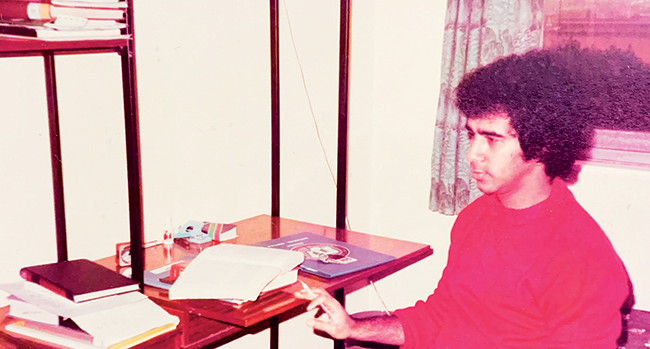
“Read these eight books on Hotel Management Accounting and Corporate Finance, cover to cover.” Professor Richard Kotas gave this direction to the graduate students in the M.Sc. program in International Hotel Management, at the University of Surrey (UoS), in the United Kingdom (UK). After the 1983 autumn semester mid-term tests, other professors followed suit with similar directions for their courses in Marketing Principles for Hotel Management, International Hotel Management Seminars, Quantitative Methods, Project Design and Analysis, Computer Applications, Organization Theory and Manpower Management etc. It was overwhelming! I quickly realised that I needed to develop a practical and effective strategy for my studies.
Some of my younger batchmates who were yet to gain any management experience, followed “reading cover to cover” directions literally. To me it did not sound doable. One marketing text book had over 700 pages! As none of my batch mates worked part-time, like I did, they all had more time for studies than I. So I settled for reading only the chapter summaries and figures and tables within book chapters.In order to acquire other shortcuts, I attended some non-mandatory ‘student success strategy’ sessions. These sessions provided some excellent study and exam strategies but were not well-attended. I immediately implemented the strategies I liked. Most of them worked well for me.
Exam Strategies
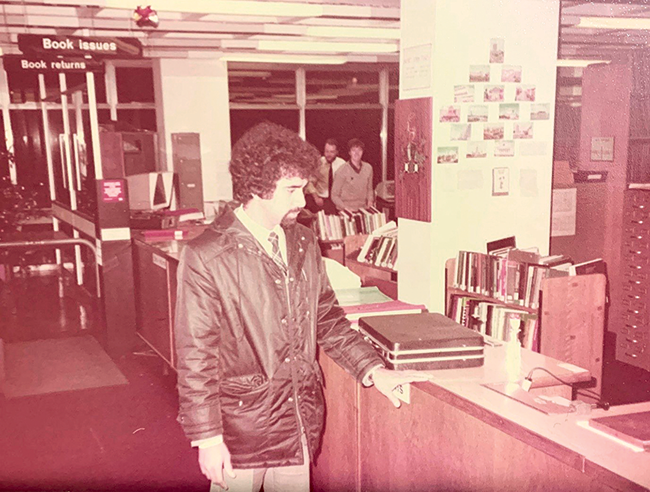
I spent a considerable amount of time at the university library analysing all old exam papers for some general courses in M.Sc. in Tourism Planning and Development, set by the same professors. I identified questions they repeated every year, in alternate years and occasionally. Based on that research, I guessed what questions could be included in the exams that I would sit.
After that I organized a M.Sc. study group of four like-minded students and assigned the most likely four questions, based on one question per graduate student basis. Each of us then became the expert on one question area per course. As the next step, we presented the answers developed by each expert, to each other. Then we debated and fine-tuned the four answers, which all four shared.
For our challenging courses such as Quantitative Methods, we made an appointment to meet each professor for a discussion. “Dr. Wanhill, the four of us are very nervous about your exam. We studied a lot and prepared some model answers to potential questions, but we still are not sure if we have done this well enough”, I told the senior lecturer who was teaching us Quantitative Methods.
Dr. Wanhill, a nice gentleman, was so impressed with our efforts that he said, “Come on chaps, don’t be nervous. Let’s go through all of your questions and answers.” He spent two hours coaching us and we guessed that the questions he spent more time in explaining were ‘sure exam questions’. This strategy helped us and four of us did well in the Quantitative Methods exams. It had been our worst course!
Implementing a tip from a ‘student success strategy’ session, I also spent time with each professor, prior to the final exam, inquiring what would be an ideal format for answering their questions at the exam. Some preferred essay type, a few liked point-form, and only one liked the idea of examples from my own career. I wrote the exams exactly the way they preferred, changing my style of answering to suit each professor. Applying my concept of ‘Personality Analysis’ and adjusting the way I communicated with each professor, proved to be beneficial.
I also learnt to invest about 30 minutes planning my answers at the beginning of each paper. I then planned to keep the last 30 minutes to review my four answers and fine-tune those before handing over my exam answer script at the last minute. With this strategy, I spent exactly 30-minutes per answer. To me, the answer plan and the time management were key elements for exam success.
After some debates about the effectiveness of ‘last minute studying’ prior to exams, I opted to adopt a concept of being at each day’s exam, right at the peak of my day. For this strategy, we first identified the number of hours each student can work without being tired. Most students were eight-hour people and a few were ten or twelve-hour people. Considering my multi-tasking work pattern in the previous years, I identified myself as a sixteen-hour person, which was rare. This meant that when the middle of an exam time was 10:00 am, I commenced my final revision studies on the same day of the exam, eight hours before that – at 2:00 am. As, at that time, I needed a maximum six hours of sleep to function well, I went to bed at 8:00 pm. This worked well for me.
When I sat one exam invigilated by Professor Richard Kotas, I could not believe my eyes. All four questions that my study group predicted were there. I had studied thoroughly the four model answers during the previous six hours since 2:00 am. “Chandi, why are you seated smiling, without answering the questions?” a baffled Professor Kotas asked me. “Sir, I am just planning my answers to these very difficult and unpredictable questions” I told him while trying to look worried. Although exam positions were not publicly announced, Professor Kotas indicated to me privately that I was overall first in both autumn and winter semester exams, something I had never achieved in my life prior to that.

Fight for Dissertation Topic
By early 1984, we began identifying topics for our dissertations, which had to be done ideally within a minimum of six months by students who had passed 10 exams over two semesters. Nine professors were assigned to supervise the nine students who were in my M.Sc. batch. When we commenced our one-on-one meetings with potential dissertation supervisors, we felt some pressure to align student dissertation topics with supervisors’ current research interests and publications.
The Head of the Department of the Hotel, Catering and Tourism Management at UoS at that time was Professor Brian Archer. He was an economist and an expert on tourism forecasting. “Ah, Chandi, I would like to suggest a dissertation topic ideal for someone like you. How about ‘Long-term tourism forecasting of South Asia?’ You can test exciting models, including mine, and even develop a new model!”, he suggested with a big and convincing smile. I simply hated that topic and had no interest in it.
I preferred to do research on a topic that would help the next stage of my career. After completing the M.Sc. program, I wanted to become the Food & Beverage Manager of a large, international five-star hotel. “I am thinking of something like, ‘Food and beverage management of British five-star hotels’ I announced to the dissatisfaction of Professor Archer. “That does not sound academically suitable for a master’s degree dissertation”, he said. I disagreed. When the university realized that I was determined to research and write on a practical subject, I was asked to make a convincing proposal to justify the suitability of my topic.
Although Professor Archer was disappointed with me on that occasion, he later became a good friend of mine. When I was the General Manager of the Lodge and the Village, Habarana, he stayed with me. He was a good chess player, and we played several games there. In later years, when he heard that I wish to do a Ph.D., he arranged an interview for me to be considered for a post of Lecturer at UoS, during my Ph.D. research. Unfortunately, as another professor in the selection committee did not support me with the same enthusiasm as Professor Archer, I did not get that job, but I re-joined UoS to do a M.Phil./Ph.D. in 1990.
After more negotiations in 1984, and revisions to my M.Sc. dissertation proposal, eventually, UoS approved a slightly modified topic for my research – ‘Food and beverage operations in the context of five-star London hotels’. Professor Richard Kotas became my dissertation supervisor. “Chandi, covering the whole of UK will be too much. Just focus on the 16 five-star hotels in London”, he suggested. I agreed and said that, “I will work or observe in all of these 16 hotels and interview the relevant managers. Kindly give me letters of introduction.” “Chandi, in addition, as the first step, you must read all books – cover to cover, and journal articles ever written in English about Food and beverage management and operations”, he suggested. I said, “Yes, Sir!” and did exactly that over a period of three months.
British Strikes
UK had strong unions and a culture of strikes. Some strikes affected me personally. One I remember clearly was towards the end of March in 1984, when the transport workers paralyzed London’s buses and subways. That strike was the first of a series of work stoppages in major British cities to protest Prime Minister, Margaret Thatcher’s proposals for local government changes. Cars and cyclists jammed roads in London as some 2.5 million people found alternate ways to work. Thousands walked while others jogged or hitch-hiked. My wife and I stayed at home without going to work.
On March 6, 1984, when I saw on the BBC TV news about a miners’ strike, I assumed that it was one of those strikes in UK which would last for a short period of time before a settlement. I was wrong. It was a major, industrial action within the British coal industry in an attempt to prevent colliery closures, suggested by the government for economic reasons. The strike was led by Arthur Scargill, the President of the National Union of Mineworkers (NUM) against the National Coal Board (NCB), a government agency. Opposition to the strike was led by the Conservative government of Margaret Thatcher that wanted to reduce the power of the trade unions. This strike lasted a year, and I eagerly waited to watch the TV news about it every evening until the strike finally ended in March, 1985.
Violent confrontations between flying pickets and police characterised the year-long strike which ended in a decisive victory for the Conservative government and allowed the closure of most of Britain’s collieries.
Many observers regarded this landmark strike as the most bitter industrial dispute in British history. The number of person-days of work lost to the strike was over 26 million, making it one of the biggest strikes in history. Thousands were arrested and charged, over a 100 were injured, and sadly, six lost their lives.
From that historic moment onwards, British unions were somewhat weakened. With the tough handling of the NUM strike, Margaret Thatcher consolidated her reputation as the ‘Iron Lady’, a nickname that became associated with her uncompromising politics and the tough leadership style. As the first female prime minister of UK, she implemented policies that became known as ‘Thatcherism’.
I spent the summer of 1979 in London soon after Margaret Thatcher became the Prime Minister of UK. On April 12, 1984, I served her dinner at a royal banquet held in honour of the Queen of England at the Dorchester. When she was ousted from the position of the Prime Minister after a cabinet revolt in 1990, I was living in London again. On November 28, 1990, I watched her final speech as the Prime Minister in the House of Commons, and leaving her office and residence in Downing Street in tears. A few years after that, I hosted her successor, John Major in my office at Le Meridien Jamaica Pegasus Hotel.
Terrorism
The civil war in Sri Lanka which commenced in July 1983 before we left for UK was getting worse. Although we thought that UK was peaceful, that country had its large share of terrorism, predominately in the hands of the Irish Republican Army (IRA). During my first stay in UK in 1979, I was shocked to see on TV that IRA claimed responsibility for the assassination of Admiral Lord Louis Mountbatten. As the supreme allied commander for Southeast Asia, he had commanded the British troops from his base in Ceylon during the latter part of World War II.
My first direct exposure to terrorism in UK was when I was working at Bombay Brasserie in Kensington, London. “Chandi, be careful, when going home today. Avoid the circle line and don’t go near Knightsbridge. IRA bombed Harrods!”, an Indian work colleague warned me. Harrods, world famous upmarket department store in the affluent Knightsbridge district, near Buckingham Palace, had been subject to two IRA bomb attacks earlier. Although the IRA had sent a warning 37 minutes before a car bomb that exploded outside Harrods on December 17, 1983, the area had not been evacuated. Due to this car bomb, six people died and 90 were injured. This was the 40th terrorist attack in UK since early 1970s.
On October 12, 1984, a powerful IRA bomb went off with deadly effect in the Grand Hotel in Brighton, England, where members of Britain’s Conservative Party were gathered for a party conference. IRA’s target was to assassinate the British Prime Minister and the other key members of her government. The bomb ripped a hole through several storeys of the 120-year-old hotel.
When the bomb went off just before 3:00 am, Margaret Thatcher was still awake at the time, working in her suite on her conference speech for the next day. The blast badly damaged her suite’s bathroom, but left its sitting room and bedroom untouched. She and her husband were fortunate to escape serious injury, although 34 people were injured and another five killed. The next day, when we watched her on TV delivering an excellent party conference speech with a brave face, I remarked to my wife, “She truly is a real Iron Lady!”
On October 31, 1984 when I was going to work at the Dorchester, I heard a loud celebration in some parts of London. Some Sikh men were lighting fire crackers while celebrating and distributing sweets and fruits to onlookers. I assumed that it must be a Sikh holiday event, but soon realised that they were celebrating an assassination. Indian Prime Minister Indira Gandhi had been assassinated at her residence in New Delhi, early morning that day, by her Sikh bodyguards.
I knew that five months prior to that day, Indira Gandhi had ordered the removal of a prominent orthodox Sikh religious leader and his rebel followers from the Golden Temple of Harmandir Sahib in Amritsar, Punjab. The collateral damage included the death of approximately 500 Sikh pilgrims. The military action on the sacred temple was criticized both inside and outside India. Indira Gandhi’s assassination sparked four days of riots that left more than 8,000 Indian Sikhs dead in revenge attacks. The world is a dangerous place to live in.

 It is obviously too early for an outpouring of joy over the seeming cessation of hostilities between the main antagonists in West Asia. While the prospect of there being a measure of calm in the region is being welcomed by considerable sections of the international community, what is ‘on the table’ currently is only a Memorandum of Understanding between the US and Iran to give peace a chance. The hard part in the peace effort remains to be achieved.
In the Middle East of today we have one of the most complex conflicts to break out in modern international politics and the observer would be naive in the extreme to expect a facile and early closure to the tangle. Yet, for the sake of the world’s publics who have been hurting badly in the prolonged hostilities one could only hope that the US-Iran MoU that is expected to be signed by the sides on Friday would lead eventually to a substantive peace. The world’s thanks are due to Pakistan in this connection for its sustained support in the peace drive.
While the sides have agreed to a ceasing of hostilities in the most general terms and have reached accord on the facilitation of uninterrupted oil and gas supplies to the rest of the world, for instance, the ‘devil will prove to be in the details’ in an envisaged comprehensive peace settlement. It is these details that would make or break peace if the negotiations go on in earnest.
Nevertheless, the details would need to be worked out consensually in a spirit of compromise with an eye to the greater good of the world community. Realpolitik or a narrow focus on solely the national interest among the protagonists, for example, would need to give way to a measure of humanity that would encompass within it a consideration of the overall well being of the world. In other words, it is statesmanship that would crucially matter.
The next few weeks would establish whether humanists are ‘asking for far too much’ when they broach the questions at issue in these terms. Yet it is essentially self interest and national security considerations of the first importance that drove the conflict from even prior to February this year and these questions would need to be taken up and resolved to the satisfaction of the US and Iran in the main if some headway is to be made towards a durable settlement.
The nuclear issue would prove to be the proverbial Gordian Knot. From a realistic viewpoint, Iran could not be expected to be without a potential nuclear deterrent in the face of perceived nuclear threats emanating for it from the West and Israel. In the short term, Iran would need to possess this deterrent to a measure, within a mutually agreed international legal framework maybe, until wide agreement is reached on the nuclear tangle. Specifically, Iran’s immediate threat perceptions with regard to her nuclear-powered rivals would need to be defused during initial negotiations.
Ideally it is a world free of nuclear weapons that must be aimed at but since this goal cannot be achieved in the near or medium terms, unfolding negotiations would need to ensure Iran’s absolute security in a world of powers that continue to swear by the nuclear deterrent, if it is to give up the suspected latter capability.
However, it is to the degree to which the present nuclear powers divest themselves of this capability that Iran could be put at ease on this score. Accordingly, it is nothing short of a complete elimination of nuclear weapons from the world that could dissuade keenly security conscious states from developing nuclear weapons of their own with a mass destruction capability.
This is the number one dilemma the international community needs to grapple with going forward and it is to the extent to which it resolves it that a nuclear weapons free world could be envisaged. No doubt, an uphill challenge.
Compelling Israel to support the present negotiatory process constitutes another grueling challenge for the US. Currently the Iranian position essentially is that a Middle East peace is inseparable from a normalization of the security situation in Lebanon. That is, the present Israeli attacks on the Hezbollah presence in Lebanon must cease if a comprehensive peace is to be realized in West Asia.
However, Israel is showing no signs of drawing back from its attacks on Hezbollah strongholds in Lebanon since the security of the Israeli state is being seen as threatened by the militant group. Co-opting Israel into the negotiatory effort therefore would turn out to be a matter of paramount concern for the US.
Moreover, elements in the rightist administration in Israel are seeing the current peace efforts as a ‘sell out’ to the enemies of Israel. They would have none of it. It is left to be seen how the US would be managing these virtual storm centres in the diplomatic process that could very well bring down the overall purported peace drive.
A recent pronouncement by US Vice President J.D. Vance points to yet another problem area in the US’ current peace overtures. He said that, ‘Regional peace and stability includes stopping the funding of terrorist organizations.’ He was obviously referring to the support extended by Iran to Hezbollah when he mentioned ‘terrorist organizations’ but he has given fresh life to the age-old conundrum of ‘Who is a terrorist?’ by these words.
To the Netanyahu government the Hezbollah and other militant organizations fighting Israel are ‘terrorists’ but from the viewpoint of the Iranian regime they are ‘freedom fighters’. This seemingly insurmountable definitional issue would not only stubbornly bedevil the peace effort but could even figure in bringing about its collapse, unless judiciously handled.
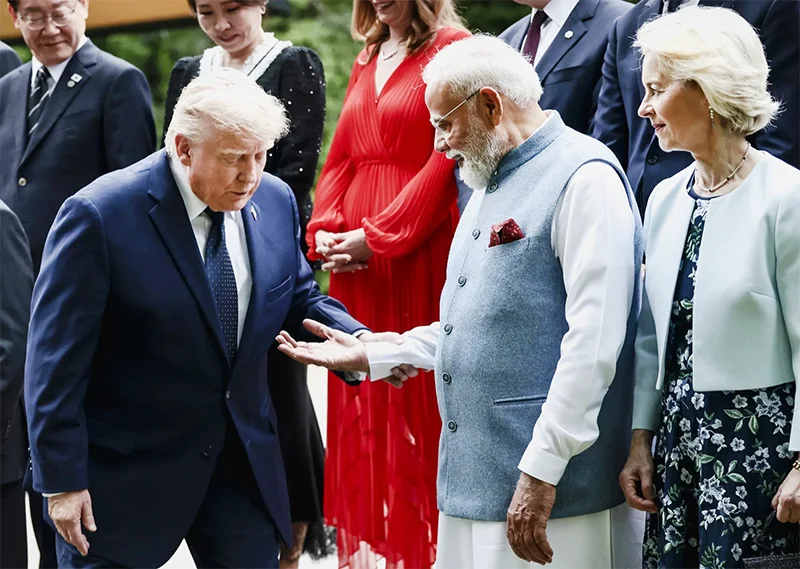
Thus, it’s the thorny details that need to be watched to keep the West Asian peace process afloat, once it gets going in earnest. There is no doubt that US President Trump would be receiving a considerable amount of support from the G7 in this historic peace undertaking and his personal appeals to the grouping currently meeting in France for continuous support are likely to elicit a positive response from it.
Likewise, Trump would need to appeal to also the BRICS countries if almost total global support is to be garnered for the peace drive in West Asia. BRICS’ solidarity with the US and the West is likely to carry considerable weight with Iran and other Eastern actors who are key to a sustained peace drive in the Middle East.
Features
Sri Lanka’s elephant paradox: Govt. counts tourism dollars while playing a dangerous numbers game: Expert

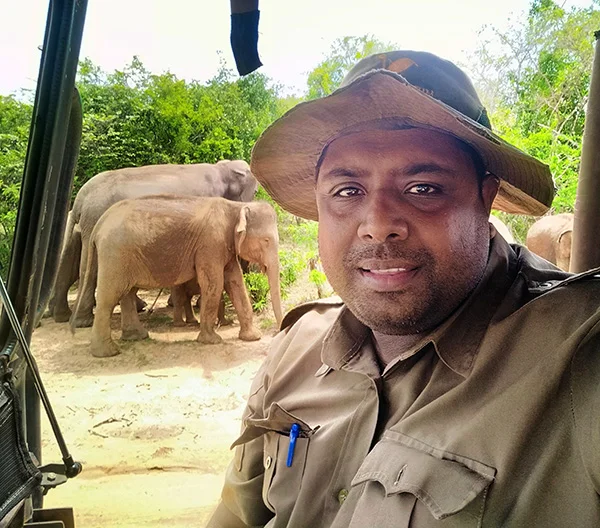
At a time when Sri Lanka is enjoying a resurgence in wildlife tourism, with elephants remaining the undisputed stars of the country’s national parks and one of its most marketable natural assets, elephant conservationist Supun Lahiru Prakash has sounded a stark warning: the nation is in danger of losing the very species that helps attract millions of tourism dollars while sustaining some of the island’s most important ecosystems.
Supun says repeated claims by authorities that Sri Lanka’s elephant population is increasing, despite the absence of a final survey report and amid continuing elephant deaths, risk creating a misleading narrative that could undermine conservation efforts and encourage retaliation against elephants.
According to Supun, the issue is not merely about numbers. It is about political priorities, scientific credibility and the future of one of Sri Lanka’s most iconic species.
“Repeatedly claiming that the elephant population is increasing appears to be an attempt to hide the Government’s inability to manage the rising annual elephant death rate and the complications of human-elephant conflict,” Supun said.
For decades, the Sri Lankan elephant has been a symbol of the country’s rich natural heritage. It is the centrepiece of wildlife tourism, drawing visitors from across the globe to national parks such as Yala, Udawalawe, Minneriya, Kaudulla and Wilpattu. International wildlife documentaries, tourism campaigns and social media promotions frequently place elephants at the heart of Sri Lanka’s nature tourism brand.
Yet, according to Supun, the country’s conservation policies do not reflect the value of the species.
“On one hand, the Government is enjoying increasing tourism revenue, and elephants remain one of Sri Lanka’s most important wildlife attractions. On the other hand, narratives are being promoted that could encourage retaliation against the very species that contributes significantly to the country’s tourism industry,” Supun said.
According to the First Countrywide National Survey of Elephants conducted in 2011, Sri Lanka had 5,879 elephants. However, official statistics show that 4,167 elephants died between 2012 and 2024.
Supun stressed that these figures represent only the deaths officially recorded by the Department of Wildlife Conservation.
“In a context where more than 70 percent of the country’s elephant population reported in 2011 has died within 13 years, it is difficult to accept claims that the population has increased,” Supun said.
The conservationist pointed out that elephants have the longest gestation period among land mammals and that scientific studies have reported increasing interbirth intervals among female elephants together with high calf mortality.
“When such biological realities are taken into consideration, claims of a dramatic increase in elephant numbers become difficult to understand,” Supun said.
Supun believes that repeated references to increasing elephant populations risk fuelling public hostility towards elephants, particularly among farming communities already affected by crop raids and property damage.
“Such claims can create the impression that elephant populations are exploding and thereby promote retaliation against elephants as well,” Supun said.
According to Supun, Sri Lanka’s elephant crisis cannot be understood solely through population estimates. The real issue lies in the country’s failure to address human-elephant conflict through long-term, science-based solutions.
Sri Lanka continues to record among the highest levels of human-elephant conflict in the world. Every year, hundreds of elephants and dozens of people lose their lives as competition for land and resources intensifies.
Despite the scale of the crisis, Supun says authorities continue to rely on strategies that have repeatedly failed.
Lahiru Prakash
These include driving elephants into protected areas, strengthening electric fences to confine them there and allocating additional manpower to maintain fencing systems.
Supun was also critical of several proposals that emerged from district-level discussions on conflict mitigation, including the sowing of paddy and corn using Air Force drones and the planting of fruit orchards within protected areas.
“Such proposals fail to address the real ecological and social dimensions of the conflict,” Supun said.
While welcoming reports that the Government intends appointing a national-level mechanism to tackle human-elephant conflict, Supun said the challenge required intervention at the highest level of government.
“Given the gravity, complexity and geographical spread of human-elephant conflict, appointing any committee other than a Presidential Task Force is not useful,” Supun said.
He argued that a Presidential Task Force chaired by either the President or the Secretary to the President would be better positioned to overcome the bureaucratic delays and institutional fragmentation that have hindered previous efforts.
Supun also stressed the urgent need to restore and protect elephant corridors and home ranges that allow elephants to move safely across landscapes.
He cited the Koholankala elephant corridor in Hambantota as one example where removing obstacles could help reduce conflict while improving habitat connectivity.
At the same time, Supun questioned policies that permit the allocation of forest lands in areas identified by environmental assessments as crucial elephant ranges and movement corridors.
“The opening of elephant corridors and the protection of elephant home ranges must be carried out scientifically and consistently if they are to succeed,” Supun said.
Beyond tourism, Supun emphasised the ecological importance of elephants.
“Elephants are ecosystem engineers. Through their feeding habits and movements, they help maintain habitats that support numerous other species. In many ways, they create safer and healthier environments for wildlife,” Supun said.
According to Supun, protecting elephants means protecting entire ecosystems and the biodiversity upon which Sri Lanka’s wildlife tourism industry depends.
“By protecting elephants, we are also protecting the biodiversity that makes Sri Lanka one of the world’s premier wildlife tourism destinations,” Supun said.
As Sri Lanka seeks to expand tourism earnings and strengthen its reputation as a wildlife destination, Supun believes the country faces a defining choice: continue with policies that have failed to stem elephant deaths and human-elephant conflict, or embrace a science-based conservation strategy that safeguards both people and wildlife.
Without a fundamental shift in policy and political will, Supun warned, Sri Lanka risks losing not only one of its most iconic species but also the ecological and economic benefits that elephants continue to provide.
“The suffering of both farmers and elephants will only intensify unless meaningful action replaces rhetoric,” Supun said.
By Ifham Nizam

Back-to-back victory for Colombia
 Katherine Castaño of Colombia claimed the Top Model of the World 2026 crown, securing a historic back-to-back victory for her country. Angelica Sanchez of Puerto Rico was named first runner-up, and Eunice Deza of the Philippines finished as second runner-up.
Katherine was crowned by outgoing titleholder Natalia Garizabal Vera of Colombia.
Several special category awards, and subsidiary titles, were also presented during the Top Model of the World 2026 pageant.
These awards recognised excellence in modelling, peer support, and regional representation.
Primary Subsidiary Titles

Sri Lanka’s Netalie Withanage: Top 16 at
the grand finale
Miss Globe 2026: Valentina Tabares (Ecuador) — Awarded to the contestant who perfectly balances fashion modelling with traditional beauty queen qualities.
Queen of Europe 2026: Mia Danielle Williams (United Kingdom) — Given to the highest-ranking candidate from a European nation.
Special Awards Recognition
Audience Iconic Award: Charly (Dominican Republic) — Won via the official public online vote, granting her a fast-track direct entry into the Top 6.
Exotic Model of the World: Angel Emeka (Nigeria) — Awarded for exceptional editorial presence and strong runway performance.
Best Body Award: Thailand — Voted directly by fellow contestants at the Flow Spectrum Hotel. The highest-ranking runners-up for this category included Zambia, South Africa, Colombia, and Ghana.

Angelica Sanchez (Puerto Rico): 1st Runner-up
Final Placement
Winner: Katherine Castaño (Colombia)
1st Runner-Up: Angelica Sanchez (Puerto Rico)
2nd Runner-Up: Eunice Deza (Philippines)
Top 6 Finalists: Included contestants from the Dominican Republic, Romania, and Germany.
The pageant, known for focusing on professional modelling careers over just beauty, brought together 36 models from around the globe for two weeks of runway, photoshoots, and cultural events.
Sri Lanka’s Netalie Withanage walked among 36 of the world’s best and powered her way into the Top 16 at the grand finale.

Kane double fires England past Croatia in World Cup thriller

G7 leaders to boost Ukraine air defences, tighten sanctions on Russia

Discussion on Sri Lanka Customs’ contribution for National Export Development Plan

Gill and Kishan hundreds carry India past 400 and to victory

Arnautovic scores penalty as Austria beat World Cup debutants Jordan 3-1

Ghana beat Panama 1–0 in chaotic, charged World Cup Group L match

‘Dates have the highest sugar content to fight Coronavirus’

Sunday Island 27 December – Headlines

#SundayIsland 17th December – Headlines

Sunday Island – 28th March

Sunday Island Headlines – 21 March

Sunday Island – 21st February – Headlines
-
 News6 days ago
CIABOC summons Yoshitha over his participation in British Navy training programme
-

 News3 days ago
Release of 2025 O/L results likely to be delayed
-

 News6 days ago
Justice Minister responds to social media claims he represented Easter Sunday ringleader
-

 Sports3 days ago
Tharanga set for high-profile javelin clash in Ostrava
-

 Features4 days ago
Politics of protected species
-

 News3 days ago
Theft of USD 2.5 mn from Treasury: CoPF accused of complicity in NPP cover-up
-

 News5 days ago
Commonwealth lawyers urge Lanka to uphold rule of law
-

 News2 days ago
Beijing Capital Airlines to resume flights to Colombo signalling boost to tourism