
Business
Strong economies need strong banks: Building the system Sri Lanka’s next decade will need

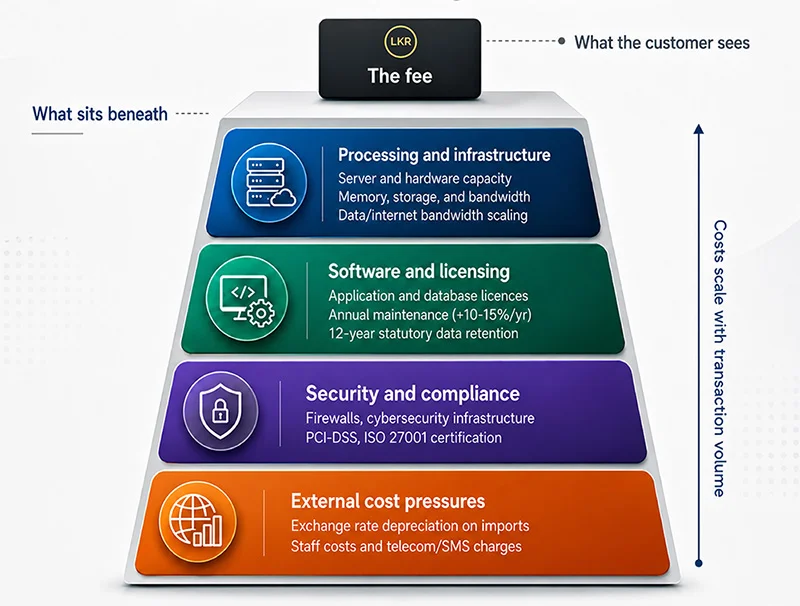
The IMF, in its successive reviews of Sri Lanka’s recovery programme, has consistently emphasized that a sustained recovery requires a sound banking sector. This in turn means a sector capable of channeling credit into the productive economy, mobilizing savings, and facilitating investment, all of which represent the most critical needs of the nation.
That observation deserves attention, because it cuts against a public conversation now under way about whether banking profitability in Sri Lanka reflects value created or value extracted. The question is fair.
Banks intermediate the savings of citizens into the credit that builds the economy, while serving as the nexus of connectivity to global banking networks. This in turn facilitates the international trade and global payments on which Sri Lanka’s economic recovery hinges. The relationship between bank performance and national performance is direct, and should be carefully scrutinized.
The value beneath the surface
Such a surface-level reading, however, misses some key factors. First, what banking strength delivered through the crisis. When sovereign default came in 2022, no Sri Lankan depositor lost their savings. There were no withdrawal restrictions of the kind seen in Lebanon, Argentina or Cyprus.
Trade finance lines kept essential imports moving when foreign currency was scarce. While efforts were made to mitigate its total impact, Domestic Debt Optimisation (DDO) in 2023 was also absorbed by banks at material cost to their own balance sheets. This sensitive fiscal restructuring was made possible because the banking sector was strong enough to take the hit. A weakly capitalised system could not have done any of this.
Net Interest Margins (NIM) are another misunderstood factor. Where on the surface, Sri Lankan banks appear to be earning high NIM, this narrow view misses the outsized tax burden placed on the Sri Lankan banking industry, which is among the largest contributors to state revenue, paying corporate income tax, VAT on financial services, and other levies totaling in excess of 50%.
In HNB’s case, for every rupee retained as profit after all taxes in FY2025, approximately a rupee was paid to the state. That contribution is appropriate for the current moment. But it means the margin which appears wide in headline terms is substantially narrower once the state’s share is accounted for. In such an environment, a high NIM is necessary to continue operating while maintaining the strength and stability needed to face future headwinds.
Most importantly, the banking sector materially expanded private sector credit through 2025. Against the Government’s Rs. 95 billion MSME financing programme, several private banks including HNB deployed at or above their full allocations within the window.
At HNB, the loan book grew by approximately 30% over the financial year, with non-performing loan ratios improving over the same period. Far from retreating from the real economy, this represents capital being actively deployed into productive sectors at scale. This in turn helped to cushion the worst impacts of the successive crises that hit the Sri Lankan economy 2019 onwards.
Why a strong banking system matters now more than ever
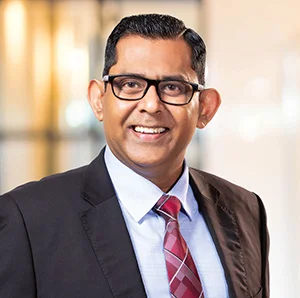
Damith Pallewatta
Strong economies require strong banks. The question Sri Lanka now faces is how to channel the strength of its banking sector to accelerate the next phase of recovery. As an industry our first priority is to rebuild access to development funding.
Twenty-five to thirty years ago, Sri Lankan banks had access to long-tenor concessional funding through development institutions, which allowed on-lending to priority sectors at lower rates. Those channels need to be reactivated.
The most direct route to cheaper SME credit is not a regulatory cap on lending rates, which would compress credit supply. Instead, we must seek to engage further with long-tenor concessional funding lines through partners such as the ADB, the IFC, the World Bank, the EU, KfW, and JICA.
Banks lend at rates that reflect their cost of funding. With funding cost reduce, the lending rate follows, and that is ultimately what will provide the grassroots of the Sri Lankan economy with the affordable capital they require to shift from recovery to revitalisation.
Our second priority is digital infrastructure and inclusion. Sri Lanka’s digital payments ecosystem is still scaling, well short of advanced economies and regional peers. That matters for the public conversation about fees. Even India’s UPI, often cited as a zero-cost model, processed 228 billion transactions in 2025 against an operating shortfall of around USD 1 billion in FY24, and Indian regulators are now actively debating tiered fees to keep the platform viable.
The reality is that zero-cost digital payments have not proven sustainable anywhere at scale across time. Because even though digital payments offer banks a much lower operating cost than a physical banking model, they do come with a substantial cost to establish, scale up, secure, maintain, and improve.
While digital banking delivers efficiency gains over time, the assumption that each additional transaction costs progressively less overlooks the realities of regulated financial infrastructure. Processing capacity, cybersecurity, compliance certification, and software licensing all carry costs that grow with transaction volume. Annual maintenance contracts escalate at 10-15% every year, and exchange rate depreciation raises the cost of imported technology. The path to lower per-transaction costs is real, but it requires sustained investment, and that investment must be funded.
Much of what appears as a bank fee also includes pass-through cost from international card networks and domestic payment infrastructure, with the bank’s own margin a small share. The path to lower fees runs through scale, and that scale requires sustained investment from all stakeholders.
Regulatory evolution is another key priority. Sri Lanka built a regulatory framework appropriate to crisis containment. The next phase needs frameworks calibrated for sustainable credit expansion: priority sector guidance, risk-weighted incentives for productive lending, and supervisory engagement that treats credit growth as part of the public good rather than only as a source of risk. Other emerging-market central banks have shown how this can be done without compromising stability.
At the same time, the trust customers place in their banks is earned daily, and as an industry, we should hold ourselves to the highest standards. Fee disclosure, grievance mechanisms, and the quality of service to retail and small business customers are areas where the sector can and should do more, and where my own institution is committed to continuous improvement.
A multi-pronged approach to progress
These focus areas must form a core part of our industry’s transformation agenda over the next decade, and each of them requires a banking sector that is well-capitalised and operationally strong. A weakly capitalised sector could not absorb concessional development funding at scale. It could not invest in inclusive digital infrastructure. It could not extend the kind of patient credit a recovery requires.
The country that emerged from sovereign default in 2023 is not the country Sri Lanka is meant to be. In the early 2000s, this was one of South Asia’s most promising emerging economies, with the human capital, geographic position, and institutional foundations to compete with any peer in the region.
The crisis may have interrupted that trajectory, but it did not erase it. How our industry moves forward will play a pivotal role in how rapidly we are able to recover, and build resilience in a new and extremely volatile moment in the global economic landscape.
The institutions that will carry that ambition forward have to be strong enough to bear the weight of it. Banks are among them. The question is not whether Sri Lanka can afford a strong banking sector. It is whether Sri Lanka can build the renewed economy it deserves without one.
By HNB MD/CEO, Damith Pallewatte



Samagi Spice Exports (Pvt) Ltd is set to introduce SPICEUP, a new Sri Lankan beverage brand, at its grand launch on Saturday 17 October 2026 at the University of Ruhuna, Matara.
With a history dating back to 1969, Samagi Spice is taking a new step in its business journey by expanding beyond traditional spice exports into value added consumer products.
Through SPICEUP, the company aims to connect Sri Lanka’s internationally recognized cinnamon heritage with contemporary beverage innovation, creating a distinctive identity in the country’s beverage market.
The SPICEUP range will feature a variety of products, including Original, Cream Soda, Power, GO, Cool, Burn, Memo+ and Zingy. Designed to offer consumers a range of refreshment experiences, the products will be available in two packaging formats: cans and plastic bottles, catering to different consumer preferences and occasions.
At the heart of the initiative is the potential of true Ceylon cinnamon as a value-added ingredient in the beverage industry. Rather than limiting cinnamon to its traditional uses, SPICEUP seeks to explore new opportunities for bringing this iconic Sri Lankan spice into everyday consumer experiences.
The initiative also highlights the broader potential of transforming the country’s agricultural resources into innovative products with commercial value.
The launch ceremony will be attended by legendary Sri Lankan cricketer Sanath Jayasuriya as the Chief Guest, alongside representatives from the Export Development Board (EDB), Industrial Development Board (IDB), Cinnamon Research Academy and other industry stakeholders.
A major highlight of the occasion will be the official unveiling of the SPICEUP product range, followed by the launch of the brand’s official website. The event will also feature the signing of a Memorandum of Understanding (MoU) between Samagi Spice Exports and the University of Ruhuna, marking an important step towards strengthening collaboration between industry and academia.
The proposed collaboration will provide a platform for future research, product innovation and value addition involving true Ceylon cinnamon. By bringing together business expertise and university-based knowledge, the initiative aims to support the development of innovative, value-added products and contribute to Sri Lanka’s potential in international markets.
With its roots in the country’s spice industry and its ambitions in the beverage sector, SPICEUP is poised to begin a new chapter in Samagi Spice’s journey—one that seeks to bring the distinctive identity of Ceylon cinnamon to a new generation of consumers.

Business
Indian business leader urges SL entrepreneurs to tap into India’s rapidly expanding consumer market


By Sanath Nanayakkare
Speaking at the Sri Lanka Economic and Investment Summit 2026, T. Krishnakumar, Chief Executive Officer of Reliance Consumer Products Ltd (RCPL), emphasised that local enterprises can unlock substantial economic benefits by strategically aligning with India’s booming consumer base.
Addressing business leaders and policymakers at the Shangri-La Hotel in Colombo, Krishnakumar highlighted that geographical proximity and rich cultural ties provide a natural foundation for deeper commercial collaboration.
He noted that instead of viewing bilateral trade narrowly, regional partnerships should act as conduits to build robust, scalable enterprises capable of plugging into wide-reaching regional value chains.
“For Sri Lankan exporters dealing in traditional staples as well as value-added goods, accessing India’s rising middle class presents a phenomenal growth window,” he said.
Drawing insights from Reliance Consumer Products’ rapid expansion – which scaled efficiently to thousands of employees and multi-billion-dollar metrics – Krishnakumar stressed that modern corporate success relies on disciplined execution, localised consumer understanding, and smart technology integration.
Furthermore, he underscored that while rapid growth is critical, businesses must consistently anchor their models in affordability and consumer trust.
Concluding his address at the summit, the RCPL chief noted that pairing regional trade integration with resilient business practices and predictable regulatory frameworks will be vital as Sri Lanka transitions firmly toward accelerated economic development.
Addressing the Summit during a subsequent fireside chat, President Anura Kumara Dissanayake underscored that a core concern currently being targeted by the government is developing a critical mass of local entrepreneurs equipped to engage with international enterprise counterparts.
Business
SriLankan Airlines wins prestigious SATA 2026 Visitors’ Choice Award for Leading International Airline

SriLankan Airlines has once again been honoured with the prestigious Visitors’ Choice Award for Leading International Airline at the South Asian Travel Awards (SATA) 2026, reaffirming its continued recognition in the regional travel and tourism industry. The airline, which has received this award in previous years, was the only international airline to be recognised in this category at this year’s event. The 10th anniversary edition of the awards ceremony was held earlier this month at Hotel Barcelo Nasandhura in Male, Maldives.
Recognised as one of the key events on the Maldivian tourism and travel industry calendar, SATA celebrated its 10th anniversary on a grand scale, bringing together prominent industry stakeholders, including Government Ministers, distinguished dignitaries, diplomats and senior representatives from leading airlines and their respective head offices.
Commenting on the achievement, Dimuthu Tennakoon, Head of Commercial, SriLankan Airlines, stated, “We are honoured to receive this recognition at the South Asian Travel Awards 2026. Being named the Leading International Airline in the Visitors’ Choice Awards once again is a meaningful acknowledgement of our commitment to serving our passengers and strengthening our presence in the region. This award inspires us to continue enhancing the travel experience we offer and to build stronger connections with the markets and communities we serve.”
Complementing its commitment to service excellence, SriLankan Airlines offers an extensive flight network with convenient connections to destinations across the globe. In South Asia, the airline operates nearly 130 flights each week to 15 destinations across India, Pakistan, the Maldives, Nepal, and Bangladesh. With schedules thoughtfully designed to suit the needs of travellers, SriLankan Airlines provides seamless connectivity for those visiting Colombo for business or leisure, as well as passengers travelling onwards to destinations worldwide.

Iyer to lead in last two New Zealand ODIs, Kushagra earns maiden call-up

Pope pictured for first time since surgery and cancer diagnosis

Qatar announces ‘massive’ solar plant project in Lebanon

Samagi Spice Exports to launch Ceylon Cinnamon based beverage range

Asian Cup in Saudi Arabia could be postponed by a year amid Houthi attacks

Houthi missile attack on Yemeni presidential palace kills five, minister says

‘Dates have the highest sugar content to fight Coronavirus’

Sunday Island 27 December – Headlines

#SundayIsland 17th December – Headlines

Sunday Island – 28th March

Sunday Island Headlines – 21 March

Sunday Island – 21st February – Headlines
-

 News6 days ago
Sri Lanka escalates anti-graft drive with Shiranthi’s jailing
-

 News7 days ago
NPP govt. reminded of its responsibilities as US warship leaves Colombo
-

 Latest News5 days ago
Farhan and Sadaqat help Pakistan seal series in style
-

 News6 days ago
Iranian ships stranded, Lanka fears US sanctions
-

 Latest News4 days ago
Nissanka’s return headlines Sri Lanka’s Test squad against Pakistan
-

 News7 days ago
Interdicted top House official Kularatne receives special recognition in Mexican Parliament
-

 Features5 days ago
Intake 16: 45 years of duty and honour
-

 News5 days ago
Malwathu Chapter issues statement on talks with President over Gnanasara Thera’s robes