
News
Sri Lanka to acquire 2mn Sinopharm doses in June, 400,000 Sputnik V in July


Sri Lanka will receive two million doses of the Sinopharm COVID-19 vaccine in June, with 400,000 more doses of the Russian Sputnik V expected next month, officials said.
The Sinopharm manufacturer in China has agreed to send a million doses on June 6 followed by another million three days later, State Minister Channa Jayasumana said in an interview by the government information department on June 2.
Sri Lanka has received 1.1 million doses of Sinopharm so far as donations from the Chinese government.
Sri Lanka has made agreements to purchase 13 million doses of the Chinese vaccine by end 2021, the minister said.
The first dose of Sinopharm has been administered to 797,205 Sri Lankans as of June 1, official data shows.
Sri Lanka has also received 65,000 doses of the Russian Sputnik V vaccine so far and, according to Jayasumana, authorities are expecting a reply from Russia regarding the next consignment by June 3.
Sri Lanka expects to purchase 14 million doses of the Russian vaccine as well by end 2021. Health authorities have administrated first dose to 44,189 as of June 1.
The US-based Pfizer Inc too have agreed to provide five million doses of the Pfizer-BionTech vaccine this year, with a consignment of 300,000 to 400,000 expected to arrive in July, he said.
Meanwhile, the World Health Organisation (WHO) approved the other China-manufactured COVID-19 vaccine Sinovac for emergency use on June 1. Following the announcement, Jayasumana said, Sri Lanka can expect Sinovac to be administered in Sri Lanka as well over in a few weeks’ time.
Sri Lanka has come to an agreement with the manufacturer and is also considering producing the vaccine in the country, he said.
Sri Lanka is also looking to purchase the single-shot Johnson & Johnson vaccine, and discussions have been held with the Janssen Pharmaceutical Companies of Johnson & Johnson in this regard, the minister said.
According to Gavi, the global vaccine alliance, the J&J vaccine is a viral vector vaccine. This means it uses a virus – in this case, a version of an adenoviruses – which causes mild cold or flu symptoms in people. The company has modified this virus to include DNA that codes for the spike protein on the SARS-CoV-2 virus. This spike protein is one of the virus’ identifying features for immune cells, and what the virus uses to weasel its way into our cells.
The adenovirus works its way into cells like a virus normally would, but then injects the genetic material for the spike protein instead. Cells read that DNA to make copies of the spike protein, which then trigger an immune reaction.
In a trial with 43,783 participants across the US, Latin America, and South Africa, the vaccine prevented about 66% of Covid-19 cases. The company found evidence of some immunity in participants two weeks after they got the shot, which appeared to strengthen over time. It also protected against 85% of moderate-to-severe COVID-19 cases – the kinds that would lead someone to seek medical attention – and has so far presented complete protection from death due to COVID-19, international reports noted.
The US government has already ordered 100 million doses of Janssen’s vaccine, the reports said.
Jayasumana said vaccine producers have only agreed to deal with state regulatory bodies and will not come into any agreement with the private sector entities.
“No one can purchase the vaccine from anywhere. Only the State Pharmaceutical Corporation in Sri Lanka has the authority to deal with vaccine manufacturers,” he said, in response to allegations that several requests by the private sector to import vaccines have been turned down.
However, the minister said, the SPC has held discussions with several organisations who presented themselves as vaccine providers.
“Some of these companies were container operation businesses, or were in the logistics business or some other business. They have been producing the vaccine for the black market,” said Jayasumana.
“They were not even able to provide the vaccine’s details,” he added.
Meanwhile, Sri Lanka is still on the lookout for some 600,000 more doses of the AstraZeneca vaccine to be administered as the second dose.
However, with the Covid 19 cases rising in India, Indian government imposed restrictions on the Serum Institute of India (SII) on exporting vaccines.
“We were in an agreement with SII and they said they will provide the vaccines on specific days,” said Jayasumana.
“However, with the condition worsening in India we decided to take a precautionary step and stop giving the first dose after giving it to 925,242,” he added.
(ECONOMYNEXT)


A discussion to review the potential impacts of the anticipated El Niño phenomenon and the preparedness plans of relevant institutions to address its effects was held this morning (11) at the Presidential Secretariat under the patronage of President Anura Kumara Dissanayake.
The meeting was attended by representatives of the Department of Meteorology, the Department of Irrigation, the Central Environmental Authority, Mahaweli Authority of Sri Lanka, the Disaster Management Centre, Vidulijanana Lanka (Pvt) Ltd and the National System Operator (Pvt) Ltd, among other relevant institutions.
Extensive discussions were held on the possible impact of the anticipated El Niño conditions on the country’s food security, drinking water supply and energy sector, as well as the immediate measures required to effectively manage these sectors.
Particular attention was given to current reservoir water levels and the measures required managing potential pressure on agriculture, drinking water supply and energy generation. Officials also briefed the President on the preparedness plans already in place to mitigate any adverse effects.
Officials noted that the expected El Niño conditions are likely to resemble those experienced during 2016–2017. They further stated that water management plans have been formulated accordingly and that steps have already been taken to commence the 2026 Yala season approximately one and a half months earlier than usual.
Special attention was also focused on ensuring an uninterrupted electricity supply over the upcoming months, maintaining agricultural activities and safeguarding food security. The President instructed relevant officials to prepare and submit detailed plans to ensure adequate electricity generation, the provision of water required for the forthcoming cultivation season and the protection of drinking water resources.
President Dissanayake observed that, just as Sri Lanka had successfully managed challenges arising from Cyclone Ditwah and the conflict situation in the Middle East, the country possesses the capacity to effectively address this global challenge as well. The President expressed confidence that with proper planning and timely implementation, Sri Lanka would be well positioned to respond to any eventuality.
Among those present were Secretary to the President Dr. Nandika Sanath Kumanayake, Senior Additional Secretary to the President Kapila Janaka Bandara, Director General of the Department of Meteorology A. L. K. Wijemannage, Director General of the Department of Irrigation Kithsiri Weligopolage, Director General of the Mahaweli Authority of Sri Lanka H. M. K. K. Herath, Chairman of the Central Environmental Authority Professor Tilak Hewawasam, Acting Director General of the Disaster Management Centre Brigadier D. D. G. A. Jayawardena and several senior officials representing the relevant institutions.
(PMD)
Latest News
New Sasakawa Memorial Sri Lanka–Japan Cultural Centre reflects enduring friendship between Sri Lanka and Japan – PM

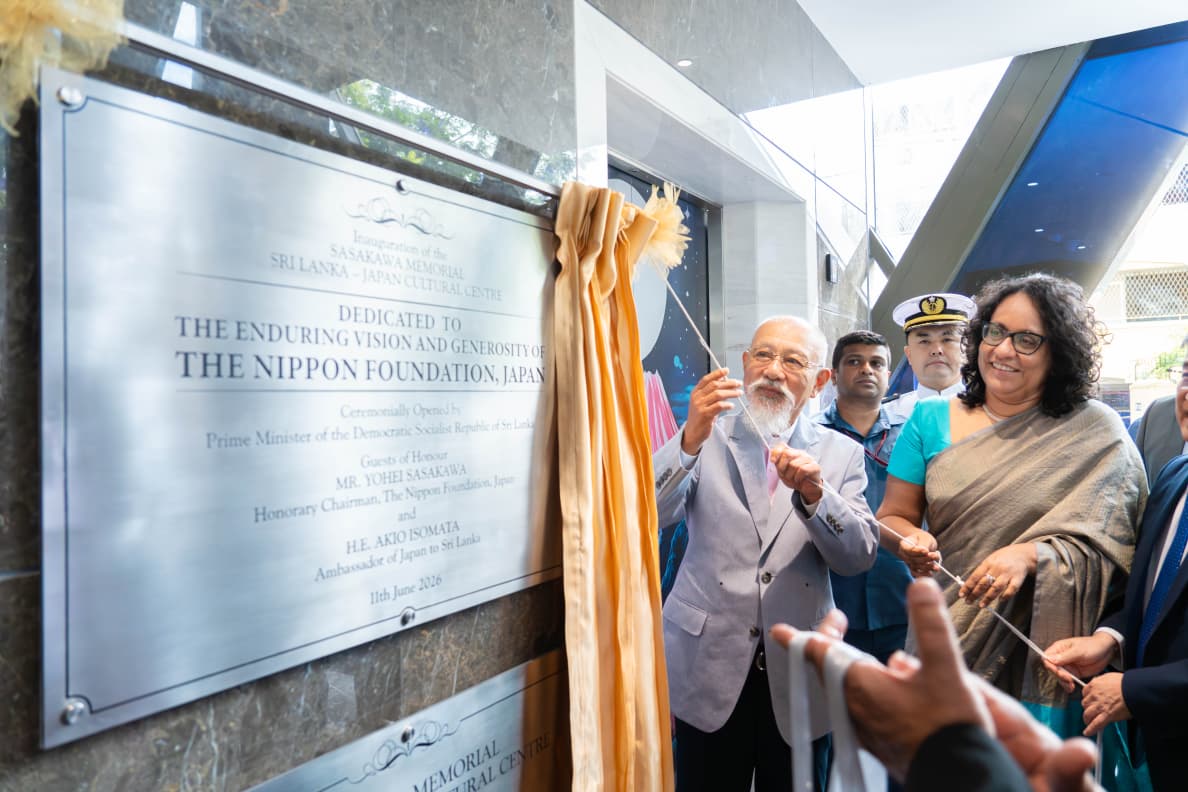
Prime Minister Dr. Harini Amarasuriya participated at the ceremonial opening of the new Sasakawa Memorial Sri Lanka–Japan Cultural Centre today [11th of June 2026].
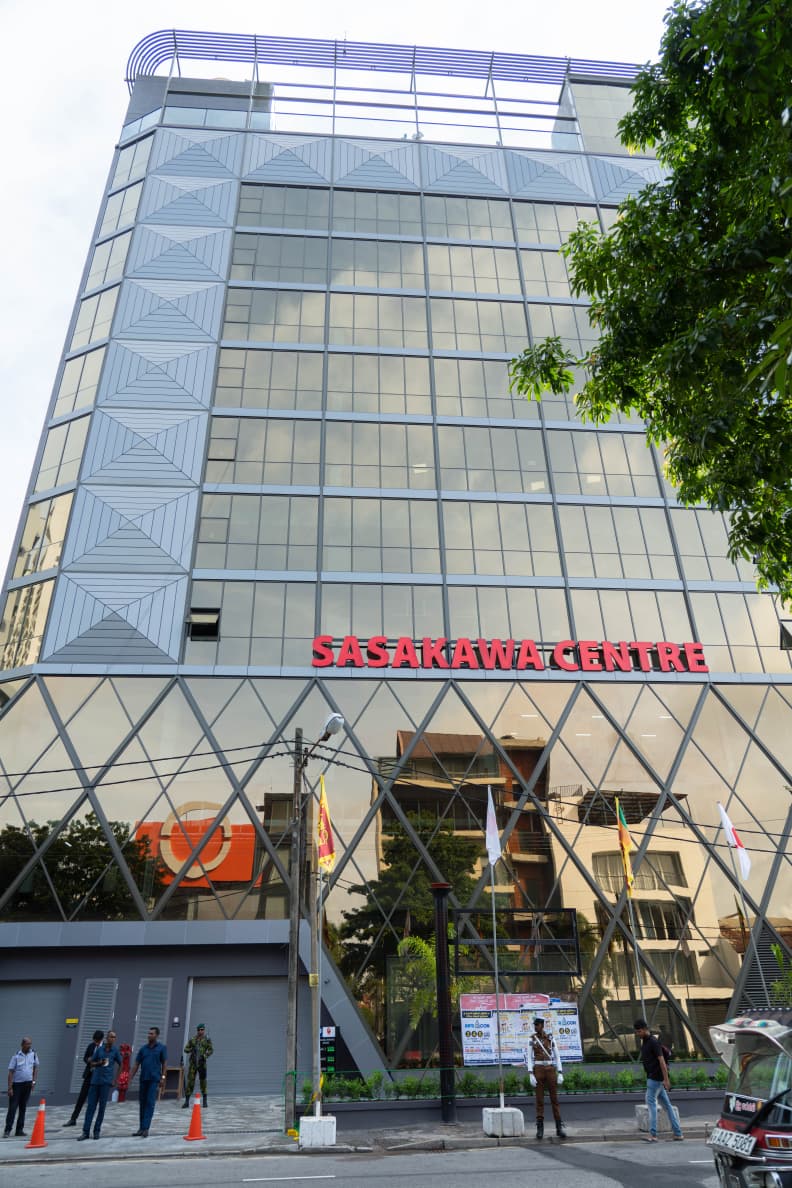
The cultural centre, commissioned by the Sasakawa Memorial Sri Lanka–Japan Cultural Centre Trust and situated at No. 85, Ward Place, Colombo 07, is a landmark development designed to promote cultural exchange, education, professional training and bilateral cooperation between Sri Lanka and Japan.
The New Sasakawa Centre was ceremonially opened by the Ambassador of Japan to Sri Lanka Akio ISOMATA, Minister of Fisheries, Aquatic and Ocean Resources, Ramalingam Chandrasekar, Minister of Buddhasasana, Religious and Cultural Affairs, Hiniduma Sunil Senevi, Yohei SASAKAWA, Chairman of The Nippon Foundation, Japan, Premalal Fernando, Chairman, Sasakawa Centre Trust. The Prime Minister unveiled the inaugural plaque.
Following the occasion Memorandum of Understanding was signed between the Ministry of Defence and Sasakawa Peace Foundation in the presence of Prime Minister Dr. Harini Amarasuriya and Yohei SASAKAWA, Honorary Chairman.
Addressing the occasion, Prime Minister Dr. Harini Amarasuriya stated, that the friendship between Sri Lanka and Japan is enriched by a long history of cultural and spiritual connections and that the societies are connected through a deep appreciation of nature, culture, learning, and community.
Highlighting the longstanding contribution of the Sasakawa Centre, the Prime Minister stated that it has played an invaluable role in promoting Japanese language education and strengthening mutual understanding between the people of Sri Lanka and Japan. She expressed confidence that the new Centre would emerge as a dynamic platform for cultural exchange, educational cooperation, and meaningful people-to-people engagement.
The Prime Minister stated that, at a time of increasing global uncertainty, partnerships based on mutual respect, shared values, and a commitment to peace are more important than ever. She reaffirmed that Sri Lanka and Japan remain committed to dialogue, international cooperation, and s rules-based international order that promotes peace, prosperity, and human dignity.
The occasion was attended by the Ambassador of Japan to Sri Lanka Akio ISOMATA, Minister of Fisheries, Aquatic and Ocean Resources, Ramalingam Chandrasekar, Minister of Buddhasasana, Religious and Cultural Affairs, Hiniduma Sunil Senevi, Yohei SASAKAWA, Chairman, The Nippon Foundation, Japan, Premalal Fernando, Chairman, Sasakawa Centre Trust and Diplomatic core, distinguished guests.

[Prime Minister’s Media Division]
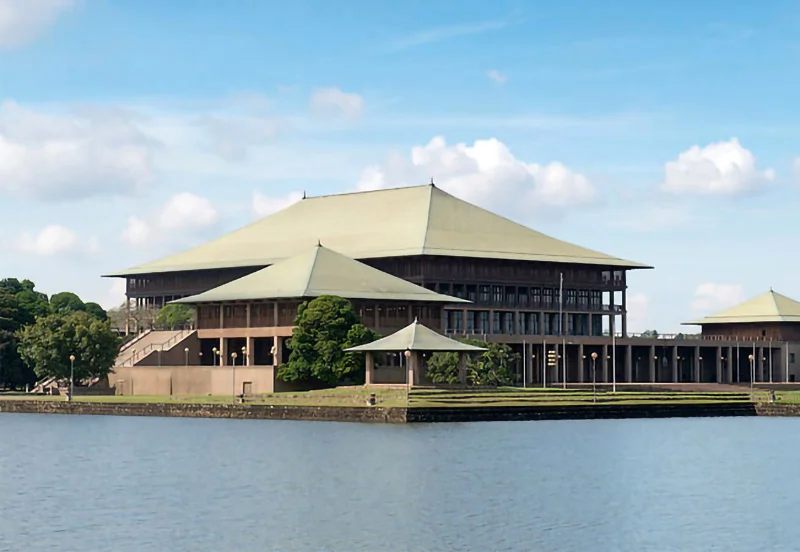
Easter Sunday carnage:
Investigations into the 2019 Easter Sunday terror attacks will not be halted due to protests, demonstrations or Satyagraha campaigns, Minister of Public Security Ananda Wijepala told Parliament yesterday (10), while alleging that investigators had gathered sufficient evidence to establish the involvement of former State Intelligence Service (SIS) Director, retired Major General Suresh Sallay, in a conspiracy linked to the attacks.
Making a special ministerial statement in the House, the Minister said that evidence uncovered during ongoing investigations indicated that Sallay had prior knowledge of the planned attacks and related extremist activities before the coordinated bombings that claimed more than 270 lives and injured hundreds of others, on April 21, 2019.
Wijepala claimed that three weeks before the attacks, Sallay had deployed four Muslim individuals to gather intelligence, including information on the number of worshippers attending mass at a church in Negombo.
According to the Minister, the principal individual among the four had been identified by witnesses to the CID as an ISIS extremist and had subsequently gone missing following the Easter Sunday attacks.
“There is evidence suggesting that Major General Sallay met the informant who had tipped off Army Intelligence regarding the attacks at a hotel in Colombo,” Wijepala said.
The Minister maintained that investigators had uncovered evidence indicating that Sallay had taken steps to prevent the disclosure of information that could have revealed crucial details relating to the attacks and the events leading up to them.
Referring to allegations that Sallay had been subjected to inhumane treatment while in custody, Wijepala rejected such claims, describing them as false and misleading.
He told Parliament that the former intelligence chief had been afforded all facilities and privileges due to a primary suspect under the law, including unrestricted access to legal counsel.
“The Magistrate personally visited Sallay to ascertain his health and wellbeing. At no stage did he complained of any inhumane treatment. Neither has he lodged complaints with any other relevant authority in that regard,” the Minister said.
Wijepala also disclosed that Sallay had thus far declined to provide investigators with the passwords to his laptop computer and mobile phone, a move he described as an attempt to obstruct the investigative process.
“He is acting in a manner that hinders the progress of investigations,” the Minister alleged.
The Public Security Minister maintained that the government remained committed to uncovering the full truth behind the Easter Sunday attacks and bringing all those responsible before the law, irrespective of their status or position.
Emphasising that the investigation would continue without interference, Wijepala said attempts to exert pressure through public protests or Satyagraha campaigns would not influence the course of the inquiry.
“The investigations into the Easter Sunday attacks will not be halted by any protests or Satyagraha,” he said.
By Saman Indrajith

President chairs discussion on potential El Niño impacts and institutional preparedness

New Sasakawa Memorial Sri Lanka–Japan Cultural Centre reflects enduring friendship between Sri Lanka and Japan – PM

Ja’Kobe Tharp breaks world 110m hurdles record in Eugene

Canada introduces bill to ban social media for children under 16

Lutkenhaus, 17, upsets Olympic champion Wanyonyi in Oslo

An Everest guide’s miraculous survival raises questions for tourism industry

‘Dates have the highest sugar content to fight Coronavirus’

Sunday Island 27 December – Headlines

#SundayIsland 17th December – Headlines

Sunday Island – 28th March

Sunday Island Headlines – 21 March

Sunday Island – 21st February – Headlines
-
 Features7 days ago
Power crept into the Sangha and is now tearing it apart
-

 Features7 days ago
Kondachchi wind farm and battery storage project to boost energy security, says Power Ministry Secretary
-
 News4 days ago
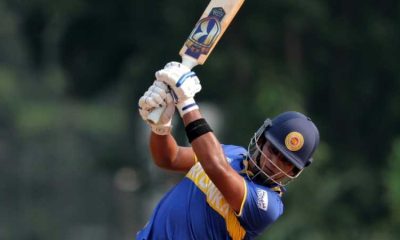
Women’s T20 World Cup 2026 warm-up: Chamari Athapaththu’s 94 helps Sri Lanka beat Pakistan
-

 Features7 days ago
Saudi Arabia sets new benchmark in Hajj management as 1.7 million pilgrims complete sacred journey
-

 News6 days ago
Asst. Manager, security officer arrested over Rs 30 mn snatch at Horana PB branch
-

 Editorial4 days ago
Probe Sallay’s complaint
-

 News5 days ago
Lankan-Canadian inducted to Toronto Sports Hall of Fame
-
 News2 days ago
Local firms move millions of dollars overseas for phantom imports: Govt.