
News
Sri Lanka on alarming path towards recurrence of grave human rights violations – UN report

GENEVA (27 January 2021) – A new UN report published on Wednesday warns that the failure of Sri Lanka to address past violations has significantly heightened the risk of human rights violations being repeated. It highlights what it calls worrying trends over the past year such as deepening impunity, increasing militarization of governmental functions, ethno-nationalist rhetoric, and intimidation of civil society.
Nearly 12 years after the armed conflict in Sri Lanka ended, impunity for grave human rights violations and abuses by all sides is more entrenched than ever, with the current Government proactively obstructing investigations and trials, and reversing the limited progress that had been previously made, states the report, mandated by UN Human Rights Council resolution 40/1.
The report urges enhanced monitoring and strong preventive action by the international community, warning that “Sri Lanka’s current trajectory sets the scene for the recurrence of the policies and practices that gave rise to grave human rights violations.”
Among the early warning signals the report highlights are: the accelerating militarization of civilian governmental functions, reversal of important constitutional safeguards, political obstruction of accountability, exclusionary rhetoric, intimidation of civil society, and the use of anti-terrorism laws.
Since 2020, the President has appointed at least 28 serving or former military and intelligence personnel to key administrative posts, the report states. Particularly troubling are appointments of senior military officials who were implicated in United Nations reports in alleged war crimes and crimes against humanity during the final years of the conflict. These include Shavendra Silva as Army Chief in August 2019 and Kamal Gunaratne as Secretary to the Ministry of Defence in November 2019.
The government has created parallel military task forces and commissions that encroach on civilian functions, and reversed important institutional checks and balances, threatening democratic gains, the independence of the judiciary and other key institutions, the report says.
The report also documents a pattern of intensified surveillance and harassment of civil society organisations, human rights defenders and victims, and a shrinking space for independent media. More than 40 civil society organizations have reported such harassment from a range of security services – including the Criminal Investigation Department, Terrorist Investigation Division and State Intelligence officials.
“The High Commissioner urges the authorities to immediately end all forms of surveillance, including intimidating visits by State agents and harassment against human rights defenders, lawyers, journalists, social actors and victims of human rights violations and their families, and to refrain from imposing further restrictive legal measures on legitimate civil society activity,” the report states.
It warns that despite the Government’s stated commitment to the 2030 Agenda, Tamil and Muslim minorities are being increasingly marginalized and excluded in statements about the national vision and Government policy. Divisive and discriminatory rhetoric from the highest State officials risks generating further polarization and violence. Sri Lanka’s Muslim community is increasingly scapegoated, both in the context of COVID-19 and in the wake of the Easter Sunday attacks of April 2019.
The report notes that Sri Lanka’s armed conflict emerged against the backdrop of progressively deepening discrimination and marginalization of the country’s minorities, particularly the Tamils. Grave human rights violations and abuses committed by all parties have been documented in successive UN reports, including extrajudicial killings, enforced disappearances, arbitrary detention, torture and sexual violence affecting Sri Lankans from all communities.
Numerous commissions of inquiry appointed by successive governments have failed to credibly establish truth and ensure accountability for the violations, the report notes. The Government has now appointed a new commission of inquiry to review the findings of previous commissions, but its membership lacks diversity and independence, and its terms of reference do not inspire confidence it will produce any meaningful result.
A Presidential Commission of Inquiry to investigate alleged “political victimisation” of public officials, security forces and others has undermined police investigations and court proceedings related to several high profile human rights and corruption cases.
One former chief of the Criminal Investigation Division, who led investigations into several emblematic human rights cases, has been arrested while another inspector from the Division left Sri Lanka, fearing reprisals for his lead investigative role in several emblematic cases, and now faces criminal charges.
“While the criminal justice system in Sri Lanka has long been the subject of interference, the current Government has proactively obstructed or sought to stop ongoing investigations and criminal trials to prevent accountability for past crimes,” the report states.
UN High Commissioner for Human Rights Michelle Bachelet stressed that the failure to deal with the past continues to have devastating effects on tens of thousands of family members from all communities who persist in seeking justice, reparations – and the truth about the fate of their loved ones.
“I urge the international community to listen to the determined, courageous, persistent calls of victims and their families for justice, and heed the early warning signs of more violations to come,” Bachelet said, calling for resolute measures by UN Member States.
“Given the demonstrated inability and unwillingness of Government to advance accountability at the national level, it is time for international action to ensure justice for international crimes. States should also pursue investigations and prosecution in their national courts – under accepted principles of extraterritorial or universal jurisdiction – of international crimes committed by all parties in Sri Lanka,” Bachelet said.
“States can consider targeted sanctions, such as asset freezes and travel bans against credibly alleged perpetrators of grave human rights violations and abuses.” Sri Lanka’s contributions to UN peacekeeping operations must be kept under review, the High Commissioner added. Bachelet also urged the Council to support a dedicated capacity to collect and preserve evidence for future accountability processes.
The High Commissioner stressed that Sri Lanka will only achieve sustainable development and peace if it effectively addresses systemic impunity and ensures civic space.
“The failure to do so carries with it the seeds of repeated patterns of human rights violations and potential conflict in the future,” she said.
In preparing the report, the UN Human Rights Office sent detailed questions to the Government and received written responses, followed by a substantive virtual meeting with Government representatives on 7 January 2021. The Government also commented on the report.
The report will be formally presented to the Human Rights Council on 24 February, followed by an interactive dialogue.

The Judicial Service Association (JSA), which represents the country’s magistrates and district judges, has unanimously adopted a resolution opposing the government’s proposed extension of the retirement age of superior court judges.
The resolution was passed at a special general meeting held at the Kaduwela Magistrate’s Court premises, attended by 65 magistrates and district judges from across the country.
The meeting was convened following the resignation of JSA President Pasan Amarasena, who stepped down in protest over the holding of the meeting.
According to the resolution, all members present voted in favour of opposing the proposed extension of the retirement age of Supreme Court and Court of Appeal judges.
Amarasena resigned after facing criticism for unilaterally expressing support for extending the retirement age of the Chief Justice. Following his resignation, JSA Secretary Suranga Munasinghe issued a statement to members rejecting the allegations contained in Amarasena’s resignation letter.
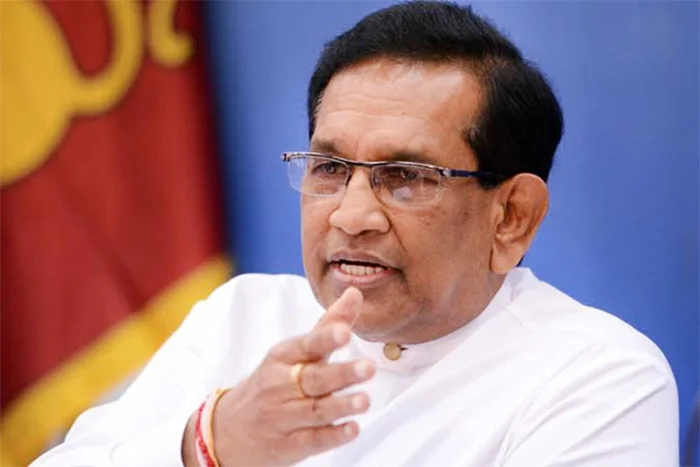
Meanwhile, former Health Minister Dr. Rajitha Senaratne claimed the government’s attempt to extend the tenure of superior court judges was aimed at securing their support in pursuing what he described as a campaign of political revenge against Opposition members.
Addressing a meeting at the Sri Lanka Freedom Party headquarters on Darley Road, Colombo, Senaratne argued that if the government’s justification was to retain experienced judges and avoid vacancies, similar retirement age extensions should also be granted to other professions, including university academics.
“The judges themselves have now unanimously opposed the government’s move, as reflected in the outcome of the Judicial Service Association’s special general meeting at Kaduwela,” he said.
by Chaminda Silva
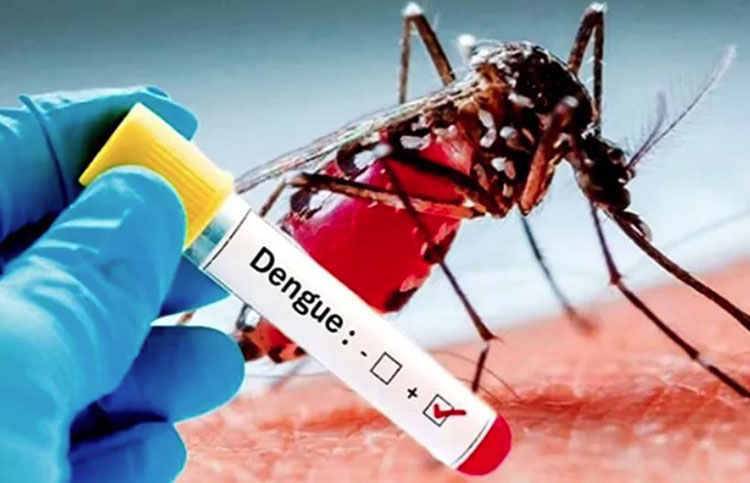
Mosquito larvae density in Sri Lanka’s Western Province has increased significantly, making the next two weeks an extremely high-risk period for dengue transmission, according to Consultant Physician Dr. Ananda Wijewickrama, a member of the Expert Committee on Dengue Management.
Speaking during a television programme, Dr. Wijewickrama warned that based on the current trend of dengue transmission, the situation could become more serious than the country’s 2017 dengue outbreak.
He said hospitals in the Western Province have already exceeded their capacity due to the sharp increase in patient admissions, with some facilities being forced to accommodate two or even three patients in a single hospital bed.
Also speaking during the programme, Prof. Neelika Malavige of the University of Sri Jayewardenepura said early signs of the current outbreak had been visible as far back as December and January.
“We could already see indications of this in December and January. With the current changes, the trend is not encouraging. We usually see an increase in dengue cases during the Southwest Monsoon period from May to July, and again during the Northeast Monsoon from November to January. When such conditions are expected, we need to be prepared in advance. After that, from February to April, we experienced extremely high temperatures, and mosquito breeding tends to slow down during periods of excessive heat,” she said.
Professor Malavige also noted that three dengue vaccines have been approved in various countries and are currently being used in several Asian nations, including Indonesia, the Philippines, Thailand, Vietnam and Malaysia.
“However, there are many factors Sri Lanka would need to consider before introducing a dengue vaccine. It would not have an immediate impact on reducing an epidemic. The vaccine requires two doses, and it takes time for immunity to develop after vaccination. However, for people who have previously been infected with dengue, the vaccine has shown very good effectiveness,” she said.
Sri Lanka has so far reported 66,064 dengue cases this year, while the death toll has risen to 46.
A total of 10,685 cases were reported during the first nine days of July alone, including 1,030 new infections reported yesterday.
Of the total number of cases, 52.7% have been reported from the Western Province. Gampaha District has now overtaken Colombo District as the area recording the highest number of dengue infections.
Meanwhile, amid the heightened risk, special dengue control operations involving members of the armed forces were carried out today in several parts of the country.
by Pradeep Prasanna Samarakoon
The second reading of the 2027 Appropriation Bill will be presented in Parliament on November 12, the Ministry of Finance announced.
The Ministry said the Bill will be published in the Government Gazette on September 18 and presented for its first reading in Parliament on October 7.
The draft Appropriation Bill for 2027, which sets out the proposed expenditure allocations for each Ministry, is scheduled to be submitted to the Cabinet for approval on September 14.
According to the Ministry, the second reading debate on the Budget will be held from November 13 to 20, while the Committee Stage debate is scheduled from November 21 to December 14.

Qatar’s Father Emir Sheikh Hamad bin Khalifa Al Thani laid to rest in Doha

Brendon McCullum removed from post as England Men’s Test coach

Yastika century, seamers put India on the brink of historic win at Lord’s

Showers will occur in the Sabaragamuwa, Western and North-western provinces and in Kandy, Nuwara-Eliya, Galle and Matara districts.

JSA opposes move to extend retirement ages of superior court judges

Next two weeks critical as dengue risk soars

‘Dates have the highest sugar content to fight Coronavirus’

Sunday Island 27 December – Headlines

#SundayIsland 17th December – Headlines

Sunday Island – 28th March

Sunday Island Headlines – 21 March

Sunday Island – 21st February – Headlines
-
 News4 days ago
Herath warns prospective migrant workers not to get fleeced by racketeers
-

 Midweek Review6 days ago
Unexpected focus on ‘pieces of tin’ worn by military men
-
 Features2 days ago
Prison riots and politics: NPP’s biggest challenge and Sri Lanka’s biggest opportunity
-

 Editorial3 days ago
What’s the world coming to?
-
 Latest News7 days ago
Nyamhuri and Ngarava stun Bangladesh by defending 141
-
 Foreign News4 days ago
Tensions erupt in Indian state after 11-year-old raped and murdered
-
 Features4 days ago
Devanesan Annan – in Memoriam
-
 News5 days ago
Negombo Prison riot: Ensuring protection of prisoners fundamental responsibility of the state – UN