
Sports
Sri Lanka back in the game after reducing England to 69 for five

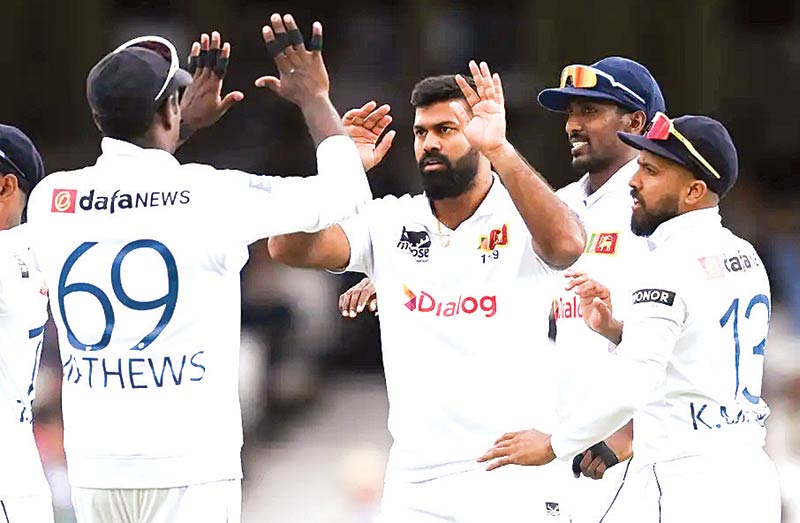
Rex Clementine in London
It’s been such a prolific performance by young Kamindu Mendis on his maiden tour to England and he notched up yet another fifty in Sri Lanka’s first innings of the third Test at The Oval. The 25-year-old had never played any sort of cricket in England – ‘A’ team, Under-19 or league cricket, but he has batted like Virat Kohli.
Kamindu had posted a hundred at Old Trafford followed by a sparkling 74 at Lord’s where he ran out of partners. Then came the 64 yesterday giving further evidence that this guy is the future of Sri Lankan cricket.
There were good support from others like captain Dhananjaya de Silva (69) and Pathum Nissanka (64) but the team management would be hoping that former captains Angleo Mathews and Dimuth Karunaratne along with Kusal Mendis will deliver.
Mathews after five innings has scored just one fifty and so has Karunaratne while Kusal Mendis after three innings put together hasn’t scored 50 runs. Interestingly Milan Ratnayake has scored more runs than the big three.
They have one more innings to come good and if they do, Sri Lanka could finish off the tour on a high.
Dhananjaya and Kamindu produced 127 runs for the sixth wicket providing some resistance.
Josh Hull produced the breakthrough when he tempted the captain with a short ball and he attempted to pull but only managed to top edge it to Shoaib Bashir at fine leg.
 Kamindu’s resistance ended when Chris Woakes found the outside edge and the catch was smartly snapped up at the slips.
There was not much resistance from the tail as Sri Lanka were shot out for 263 giving England a lead of 62 runs.
England lost Ben Duckett and Ollie Pope before lunch with the captain falling in the last over before the break.
After the break, Sri Lanka dismissed Joe Root, Dan Lawrence and Harry Brook to bounce back into the game. With England’s lead just 131, the tourists are still in the game. A target of 200 shouldn’t be too demanding.
Sri Lanka had never been whitewashed in England before and it remains to be seen whether they will return home with that record unbroken.
More importantly, there are also points in the World Test Championship up for grabs. Sri Lanka started the series placed fourth in the WTC but have now slipped down to seven following losses at Old Trafford and Lord’s.





Time was when Sri Lanka used to produce captains who were admired across the world; leaders who were ahead of their time and commanded respect wherever the game was played. In the early years of the IPL, several Sri Lankans were entrusted with franchise captaincy roles and they handled those responsibilities with distinction.
In recent years, however, captains in this part of the world have often been appointed more on seniority than exceptional leadership qualities. The roots of the problem may well lie in school cricket itself. From Under-13 level onwards, you often see captains being shouted instructions ball-by-ball from the boundary line. Coaches are effectively captaining sides from the dressing room and that is hardly a healthy phenomenon.
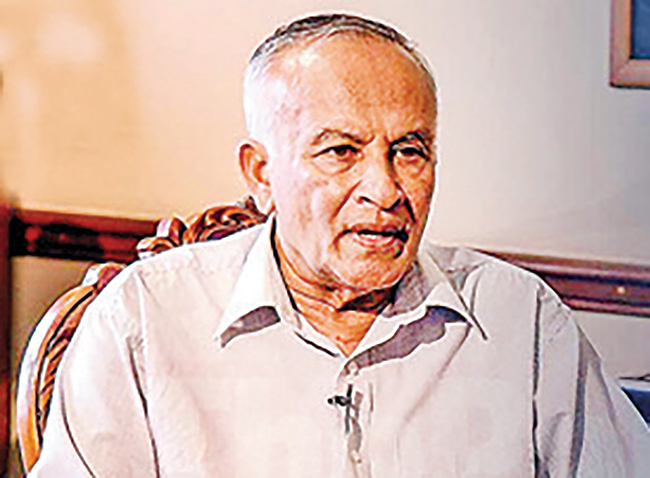
The issue came into sharp focus recently when Sri Lanka Cricket acknowledged that measures need to be taken to educate school coaches. Sunday Island spoke to former Sri Lanka captain Anura Tennekoon, who had some fascinating views on the subject.
Tennekoon captained Sri Lanka in the 1975 and 1979 World Cups and is regarded as one of the finest batsmen produced by the country. He also served the game in several administrative capacities, functioning as selector, national team manager, Secretary of the Board and CEO of Sri Lanka Cricket.
“You can’t develop captains overnight. You have to let them take decisions, make mistakes and then learn from them. I have seen coaches sending down instructions after every ball from the boundary rope and it is extremely disappointing to watch. This is not how you develop leaders,” Tennekoon told Sunday Island.
“You have to monitor the system. Maybe you ask the umpires to keep an eye on things or appoint observers. Maybe you deduct points if it keeps happening after a warning. If it still continues, then you take drastic measures,” Tennekoon added.
The former captain felt the development of young leaders would be severely hindered if coaches continued to make most of the decisions from the dressing room.
“Coaches themselves are under pressure because if they don’t win games, their jobs are at stake. But preventing captains from developing is a very serious issue,” Tennekoon said.
“There were hardly any coaches during our time. There was only a master-in-charge who looked after discipline and coached us and gave advice when required. The captain handled all the planning and execution with some support from the vice-captain and senior players. Games were far more interesting because captains made bold declarations in pursuit of outright victories. You hardly see that anymore.”
“You need captains brave enough to take decisions. Even if you lose, that’s fine because captains learn valuable lessons from defeat. Today, the first instinct seems to be to secure a draw. Winning becomes secondary. The approach now is safety first and if an opportunity to win comes later, then perhaps you go for it.”
Tennekoon recalled a recent big match where one side was heavily favoured while the opposition were rank underdogs.
“But cricket is a funny game and things don’t always go according to script. The underdogs were on top and had a genuine chance to win. Yet they still settled for a draw because they wanted to play safe. If you play three-day cricket or even five-day cricket with that mindset, you are inevitably going to end up with dull draws. It feels as if losing a game is treated as the end of the world and that is rubbish,” he remarked.
“You should teach young cricketers to play with positive intent. If you approach cricket negatively, the game becomes boring. Neither the players nor the spectators will enjoy it. You should never kill the spirit of this great game.”
Sri Lanka Cricket’s current administration appears keen to address the issue. This week, the board invited all Division One and Division Two school coaches for a workshop conducted by Head Coach Garry Kirsten. More such sessions are expected to be held regularly.
“I am very happy with the appointment of Eran Wickramaratne to head cricket. He has a proven track record in many fields and is deeply passionate about the game. I am also pleased to see three former cricketers, who are respected globally, involved in the process. I am confident they will put structures in place that can deliver results.”
“We need to give them time and support them wholeheartedly if we want to see meaningful change,” Tennekoon concluded.
by Rex Clementine
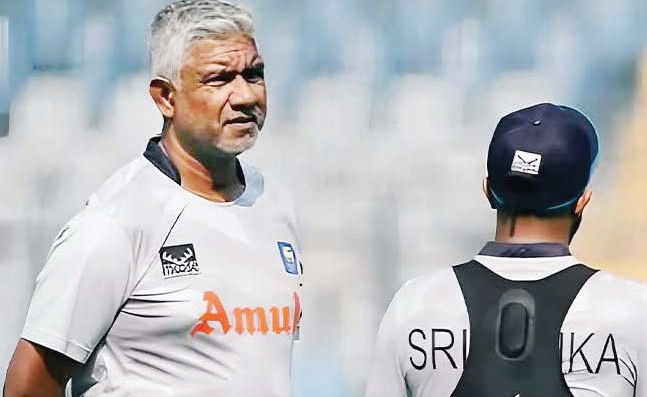
Even before the public could fully grasp the reasons behind his removal as Chairman of Selectors, Pramodya Wickramasinghe was back in the headlines, armed with yet another batch of conspiracy theories, this time over Sri Lanka’s squad for the West Indies tour. Conspiracy theories, of course, are not exactly unfamiliar territory for the former medium pacer. And make no mistake, there will be plenty more down the road. But what Pramodya says these days needs to be taken not merely with a pinch of salt, but perhaps with the entire salt shaker.
For much of the last decade, Pramodya has hovered around selection committees, most often as chairman. He presided over Sri Lanka’s disastrous 2023 World Cup campaign in India and was promptly shown the door. Under Upul Tharanga, the team at least appeared to be moving in the right direction. Then, just as another World Cup loomed around the corner, Pramodya made a dramatic return to centre stage. What followed was absolute mayhem.
The captain was removed. Combinations were shuffled like a deck of cards at a casino. Communication was non-existent. And Sri Lanka ended up making a complete mockery of a World Cup campaign where, as co-hosts, they were expected to reach the semi-finals. Instead, the whole thing resembled a reality show with no script and too many directors.
Interestingly, while the current selection panel has largely retained the squads picked by Pramodya’s committee, they have appointed Kamindu Mendis as vice-captain, a move that actually makes cricketing sense, which in itself must feel refreshing to Sri Lankan fans.
Kamindu is among the few genuine all-format players Sri Lanka possess at present and grooming him gradually for leadership is sensible planning rather than throwing darts blindfolded and hoping one lands on the board.
Pramodya’s claim that they were grooming Dunith Wellalage for leadership ahead of the next World Cup fits neatly alongside several of his other selection decisions; baffling and difficult to explain with a straight face.
There is no doubt Dunith possesses leadership qualities and may well captain Sri Lanka one day. But there is one rather inconvenient detail. He is not yet a certainty in the playing eleven. Furthermore, the next World Cup will be played in South Africa, where conditions traditionally favour seam-bowling all-rounders rather than spin-bowling all-rounders. One wonders whether Wellalage will even make the final squad of 15 for those conditions. So much for long-term vision and cricketing acumen.
There was a time when respected former cricketers politely declined invitations to become selectors, understanding the role required restraint, balance and clarity of thought. Under the current administration, however, there appears to be renewed enthusiasm among stakeholders to genuinely rebuild the game and both Sri Lanka Cricket and the Sports Ministry deserve credit for bringing in a fresh selection panel.
The task ahead is hardly straightforward. Together with Head Coach Gary Kirsten, they now have the responsibility of dragging Sri Lankan cricket back onto the right track after years of confusion, inconsistency and self-inflicted wounds.
It is also encouraging to see respected cricketing minds like Kumar Sangakkara, Roshan Mahanama and Sidath Wettimuny coming together to help steer the game forward. Cheap shots from individuals like Pramodya, who, frankly, has been part of the problem rather than the solution, should not distract from the rebuilding process now underway.
by Rex Clementine

Following five weeks of high-octane schoolboy rugby, the Dialog Schools U19 Rugby League 2026 has officially concluded its thrilling first round. The final group standings have paved the way for a highly competitive second round, dividing the country’s leading rugby-playing schools into the Cup, Plate and Bowl Championships beginning in June.
In Group 1, Trinity College emerged as the most dominant outfit in the tournament, completing an unbeaten campaign with five wins from five matches. They topped the table with a maximum 30 points and an impressive points difference of +190. Isipathana College comfortably secured second place with 24 points.
Group 2 saw another unbeaten run, this time from St. Peter’s College, who finished on top with 29 points. Wesley College followed in second place with 24 points to confirm their place among the Cup Championship contenders.
The closest battle came in Group 3 where Zahira College and Royal College finished level on points with identical 4-1 records and 25 points each, setting up an exciting second round in the Cup segment.
Second round promises fireworks,
The Cup Championship will feature Trinity, Isipathana, St. Peter’s, Wesley, Zahira and Royal in a round-robin contest to determine the country’s top school rugby side.
The Plate Championship will feature S. Thomas’ College, St. Joseph’s College, Ananda College, Thurstan College, Sri Sumangala College and St. Anthony’s College.
The Bowl Championship will include Kingswood College, DS Senanayake College, Science College, Mahanama College, Prince of Wales College and Lumbini College.

Sangha reform drives stymied from within: CBK

Court orders arrest of Basil

Dayasiri raises alarm over ‘coal cartel’, flags national security risks

Coal procurement probe: Statements to begin next week

Colombo Uni Alumni to felicitate Dr. Kumari Jayawardena

Sampath Bank becomes first in Lanka to integrate PayPal withdrawals

‘Dates have the highest sugar content to fight Coronavirus’

Sunday Island 27 December – Headlines

#SundayIsland 17th December – Headlines

Sunday Island – 28th March

Sunday Island Headlines – 21 March

Sunday Island – 21st February – Headlines
-
 News6 days ago
Police probe underway to ascertain links between criminals deported from UAE and local politicians
-

 News5 days ago
Easter Sunday carnage: Court told Maulana’s statement cannot be accepted without cross-examination
-
 Opinion5 days ago
Undermining the democratic political framework
-
 News5 days ago
UK passport holder hiding here wants to have deportation order rescinded to leave without blemish
-

 News1 day ago
IMF urges Lanka not to meddle with exchange rate
-

 Features2 days ago
The Division Bell Mystery
-

 News6 days ago
Dickoya double murder suspect arrested
-
 Midweek Review4 days ago
Israeli-US aggression won’t go unanswered -Iranian Ambassador