
Latest News
South Korea’s President Yoon arrested over short-lived martial law attempt


South Korean investigators have arrested South Korea’s impeached President Yoon Suk-yeol over accusations of insurrection for briefly imposing martial law in a move swiftly overturned by the country’s National Assembly.
“The Joint Investigation Headquarters executed an arrest warrant for President Yoon Suk-yeol today [January 15] at 10:33 am [01:30 GMT],” the authorities said in a statement on Wednesday.
In a prerecorded video message released after his arrest, Yoon said he had made the decision to submit to questioning over his failed martial law bid to avert “bloodshed”.
“I decided to respond to the Corruption Investigation Office,” Yoon said, adding that he did not accept the legality of the investigation but was complying “to prevent any unfortunate bloodshed”.
South Korean investigators and police used ladders to climb into Yoon’s residential compound after they were initially blocked by the Presidential Security Service, which barricaded the entrance using vehicles, according to reports.
Thousands of people, including supporters, had gathered outside Yoon’s home, while a group of lawmakers from the governing conservative People Power Party and Yoon’s lawyers had also attempted to prevent the arrest inside the residential compound, the reports said
After the arrest, Yoon’s presidential motorcade was seen leaving his hillside residence with police escorts. A vehicle apparently carrying Yoon later arrived at the Corruption Investigation Office for High-Ranking Officials in the nearby city of Gwacheon.

The standoff at Yoon’s presidential residence came just hours after he failed to appear for the first hearing in his impeachment trial over his short-lived imposition of martial law on December 3.
Patrick Fok, reporting for Al Jazeera from Seoul, said an estimated 1,000 police officers were involved in the arrest operation at the president’s residence and Yoon would now face questioning.
“The corruption investigation office can hold him for a maximum of 48 hours. They then need to decide, at that point, whether or not to apply for a warrant to detain the president,” Fok said.
“It is not clear whether or not that will be necessary, but of course, it has been very difficult to get to this point,” he said.
Yoon was not present at the opening of his impeachment trial on Tuesday and South Korea’s Constitutional Court had said that they needed him to be present, Fok said. “Now that he has been arrested, perhaps he will show up in court tomorrow,” he added.
The operation on Wednesday was the second attempt by investigators to arrest Yoon. An earlier failed attempt ended after an hours-long standoff with his security team inside the presidential compound at the beginning of January.
Since then, Yoon had remained inside his hillside villa in Seoul for weeks in an effort to evade arrest. He also failed to show up for his impeachment trial on Tuesday morning, leading to the hearings being adjourned minutes after they had begun.
The impeached president’s lawyers had said that he would not attend the impeachment hearing, adding that he would be prevented from expressing his position freely due to authorities’ ongoing attempts to detain him.
The trial is being held after South Korea’s National Assembly voted on December 14 to impeach Yoon, after he imposed martial law in a surprise late-night address on December 3, 2024.
[Aljazeera]

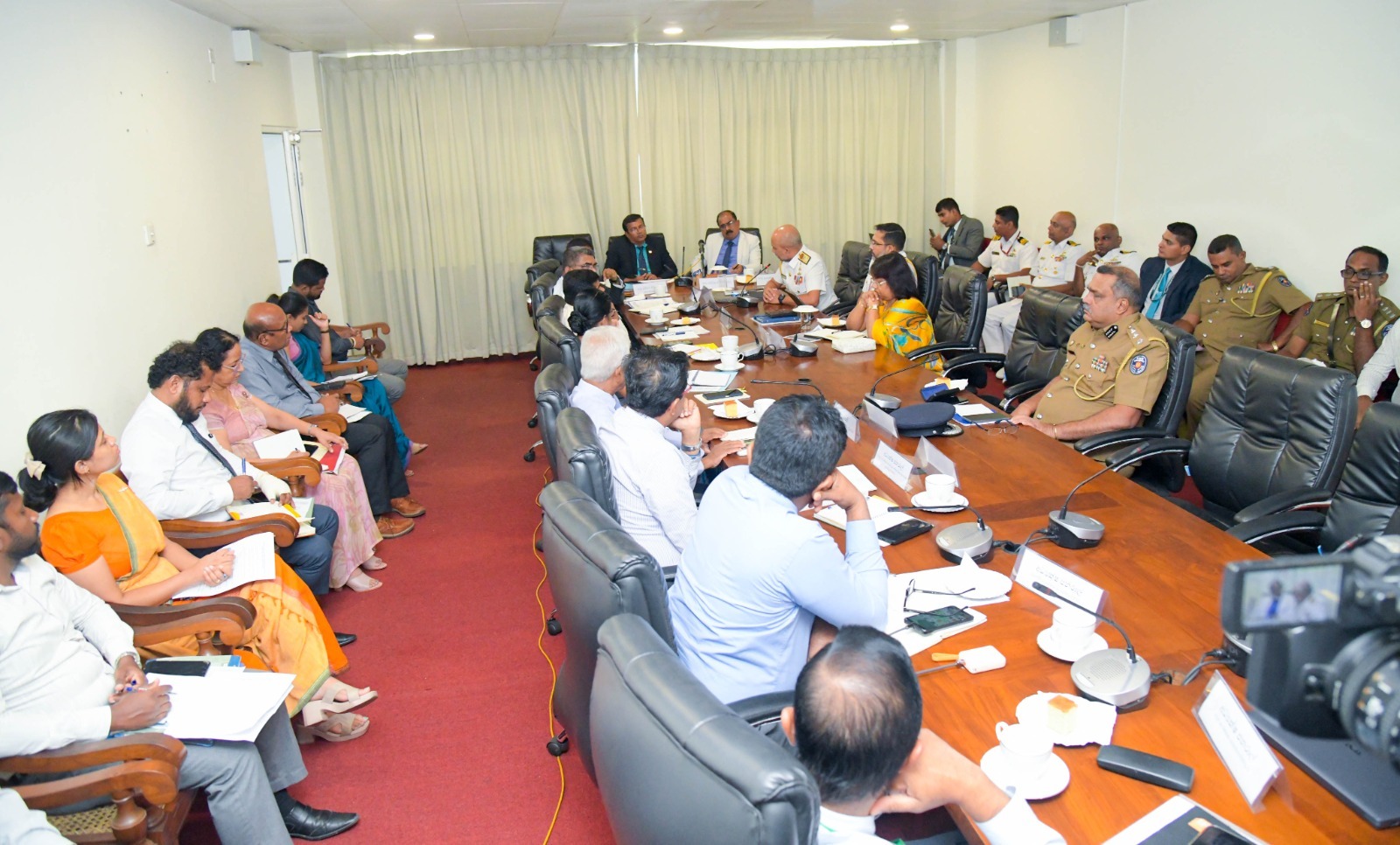
Taking a decisive step towards safeguarding Sri Lanka’s maritime heritage, a high-level discussion was held today (18) at the Ministry of Environment.
Jointly chaired by the Deputy Minister of Environment Anton Jayakody and Deputy Minister of Defence Aruna Jayasekara, the meeting focused on the urgent need to prevent environmental pollution and protect the coastal waters around the northern seas and their adjacent islands.
The discussion was attended by senior naval officers, Secretary to the Ministry of Environment K.R. Uduwawala, Chairman of the Marine Environment Protection Authority (MEPA) Samantha Gunasekara, Director General of the Coast Conservation and Coastal Resource Management Department Prof. Turny Pradeep Kumara, and Conservator General of Forests along with several other officials from the Department of Wildlife Conservation and the Ministry of Environment, and the senior ecologists from IUCN.
The discussion placed a strong emphasis on enhancing environmental threats and accelerating the declaration of new Marine Protected Areas (MPAs) in the northern region. Officials emphasized that protecting this marine zone is crucial for conserving biodiversity, securing the livelihoods of local fishing communities, and enhancing Sri Lanka’s strategic maritime profile on the global stage.
Primary attention was drawn to the severe ecological destruction caused by Illegal, Unreported, and Unregulated (IUU) fishing. The Ministers highlighted the grave threats these unlawful activities pose to both marine biodiversity and the economic stability of local fishermen, stressing the immediate need for comprehensive surveillance and stricter enforcement mechanisms. Furthermore, extensive discussions took place on how to divest a strategic destructive fishing practices—such as dynamite fishing, unauthorized spearfishing, and the use of banned fishing gear—which inflict irreversible damage on fragile coral reef systems and endangered fish species.
The meeting also addressed infrastructure and governance gaps within fishing harbors, identifying the lack of proper management and formal regulatory mechanisms as key vulnerabilities. As a progressive step forward, suitable islands and surrounding marine zones in the Northern Province have been identified for official declaration as Marine Protected Areas. It was clarified that establishing these MPAs will not restrict the livelihoods of local communities; instead, they are designed to protect and promote sustainable fishing and eco-tourism. Moving forward, these protected zones will be developed into premier eco-tourism destinations, creating new economic opportunities for the region. Ultimately, declaring these Marine Protected Areas will bring international recognition and strategic importance to Sri Lanka’s northern islands. By establishing these zones, Sri Lanka aligns itself strongly with global biodiversity commitments, showcasing its role on the international stage as a responsible custodian of the Indian Ocean’s rich marine resources.
During this discussion, it was proposed to establish a working group comprising experts from the Ministry of Tourism, the Ministry of Fisheries, the Ministry of Defence, the Ministry of Environment, and the Ministry of Justice to implement a joint mechanism for protecting the country’s coastal and marine resources, with the Ministry of Environment taking the lead in this initiative.
This conservation initiative marks yet another milestone in the country’s ongoing journey toward achieving a sustainable biosphere and an evergreen future.
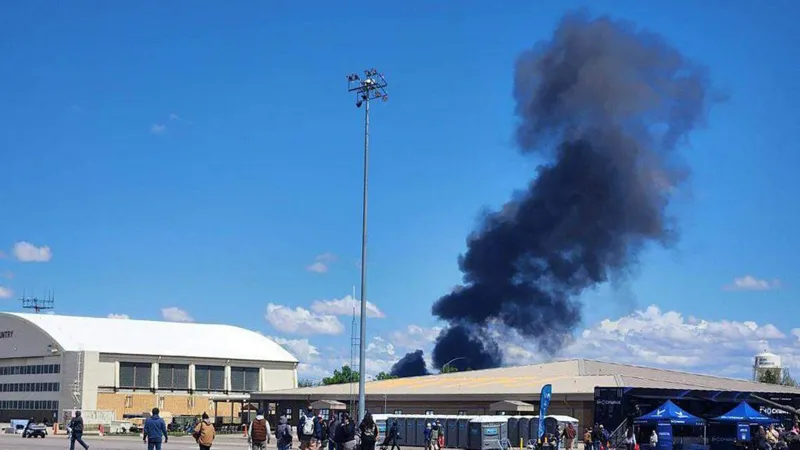
Four crew members are in stable condition after two fighter jets collided mid-air during a US air show, officials say.
All the aircrew safely ejected from US Navy EA18-G jets that were performing an aerial demonstration when they crashed, a US Navy spokesperson told the BBC’s US partner CBS News. It is unclear if they were injured.
The dramatic incident happened on Sunday, during the second and final day of the Gunfighter Skies air show, 2 miles (3.2km) northwest of Idaho’s Mountain Home Air Force Base.
A fire erupted and the base was briefly locked down as the rest of the air show was cancelled. An investigation is underway.
“The aircrew involved in the incident are in stable condition,” Mountain Air Force Base Gunfighters said in statement posted on social media on Sunday.
“Thank you to all our guests for your patience and compassion, which has allowed us to quickly and safely respond to the incident,” the statement said.
Cmdr Amelia Umayam told CBS the crew members were being checked by medical personnel
Umayam said the EA-18G Growlers were assigned to an electronic attack squadron from Washington state. The US Navy says each of those jets cost about $67m (£50.3m).
Kim Sykes of Silver Wings of Idaho, which helped organise the air show, told a local CBS affiliate that no-one at the military base was hurt.
The Gunfighter Skies air show was last held in 2018, when a glider pilot died in an accident.
The BBC has contacted the air force base and event organiser for comment.
[BBC]
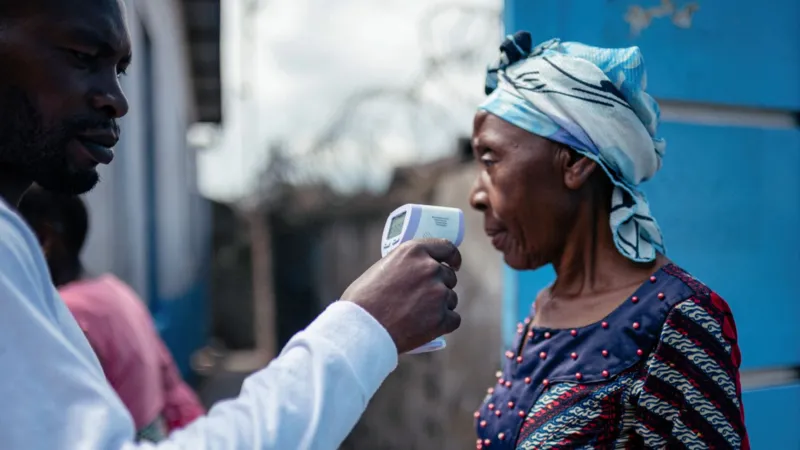
The World Health Organization (WHO) has declared an Ebola outbreak in the Democratic Republic of Congo a public health emergency of international concern.
The agency said the outbreak in DR Congo’s eastern Ituri province, which has seen around 246 suspected cases and 80 deaths reported, does not meet the criteria of a pandemic emergency.
But it warned it could potentially be “a much larger outbreak” than what is currently being detected and reported, with significant risk of local and regional spread.
The current strain of Ebola is caused by the Bundibugyo virus, the health agency said, for which there are no approved drugs or vaccines.
Early symptoms include fever, muscle pain, fatigue, headache and sore throat, and are followed by vomiting, diarrhoea, a rash and bleeding.
The WHO said there are now eight laboratory-confirmed cases of the virus, with other suspected cases and deaths across three health zones including Bunia the capital of Ituri province, and the gold-mining towns of Mongwalu and Rwampara.
One case of the virus has been confirmed in the capital Kinshasa, believed to be in a patient returning from Ituri.
The WHO said that the virus has spread beyond DR Congo, with two confirmed cases reported in neighbouring Uganda. Ugandan officials said a 59-year-old man who died on Thursday had tested positive.
In a statement, the Ugandan government said the patient who died was a Congolese citizen whose body had already been returned to DR Congo.
A laboratory has also confirmed an Ebola case in the eastern city of Goma, currently controlled by the M23 rebels, the AFP news agency reported on Sunday.
At least six Americans have been exposed to Ebola in DR Congo, and one has displayed symptoms but none have been confirmed to have been infected, the BBC’s US partner CBS reports, citing sources.
The US government was reportedly trying to transport them out of the country, possibly to a military base in Germany, STAT News reports.
The US Centers for Disease Control and Prevention (CDC) said it planned to send more staff to DR Congo and Uganda, while the US Embassy in DR Congo issued a health alert reminding citizens not to travel to Ituri province.
The BBC has contacted the CDC for comment.
The WHO said the ongoing security situation and humanitarian crisis in DR Congo, combined with high population mobility, the urban location of the hotspot, and the large number of informal healthcare facilities in the region increased the risk of spread.
[BBC]

Steps initiated to safeguard Sri Lanka’s Maritime Heritage

Fighter jet crews parachute safely after collision at US air show

WHO declares Ebola outbreak in DR Congo an international emergency

Trump warns ‘clock is ticking’ for Iran as peace progress stalls

Axar, Ashutosh, Starc keep Delhi Capitals’ playoffs hopes alive

Venkatesh, Rasikh take Royal Challengers Bengaluru into IPL 2026 playoffs

‘Dates have the highest sugar content to fight Coronavirus’

Sunday Island 27 December – Headlines

#SundayIsland 17th December – Headlines

Sunday Island – 28th March

Sunday Island Headlines – 21 March

Sunday Island – 21st February – Headlines
-
 News6 days ago
Ex-SriLankan CEO’s death: Controversy surrounds execution of bail bond
-
 Features2 days ago
Sri Lankan Airlines Airbus Scandal and the Death of Kapila Chandrasena and my Brother Rajeewa
-
Features7 days ago
High Stakes in Pursuing corruption cases
-
 Features7 days ago
When University systems fail:Supreme Court’s landmark intervention in sexual harassment case
-
 News3 days ago
Lanka’s eligibility to draw next IMF tranche of USD 700 mn hinges on ‘restoration of cost-recovery pricing for electricity and fuel’
-
 Midweek Review6 days ago
A victory that can never be forgotten
-
 News2 days ago
Kapila Chandrasena case: GN phone records under court scrutiny
-
 Features4 days ago
Mysterious Death of United Nations Secretary General Hammarskjöld