
Latest News
New government must uphold press freedom, says press freedom collective

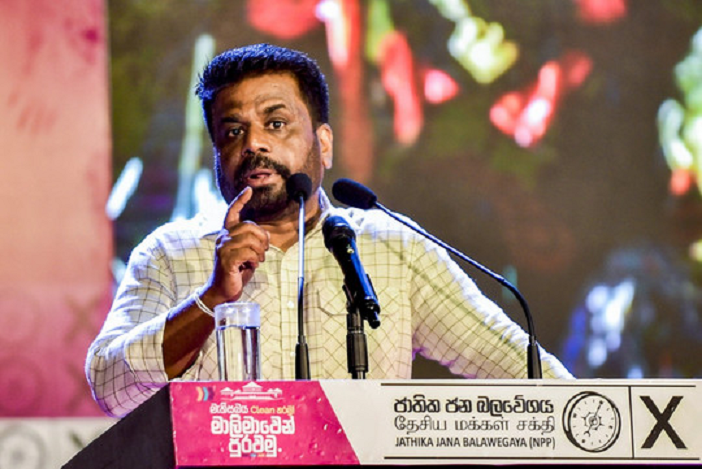
A coalition of trade unions, media advocacy groups, and journalist representative bodies have urged the newly-elected government of President Anura Kumara Dissanayake to uphold press freedom and challenge a culture of impunity for crimes against journalists in Sri Lanka. The International Federation of Journalists (IFJ) joins its affiliates, the Federation of Media Employees and Trade Unions (FMETU), the Sri Lanka Working Journalists Association (SLWJA), and the Free Media Movement (FMM), in stressing the historic importance of this transition and urging Dissanayake and the ruling National People’s Power (NPP) coalition to stand by their commitments in service of democracy, the media, and justice.
Following Sri Lanka’s Parliamentary and Presidntial elections in 2024, a coalition of 25 civil society organisations, unions, and media bodies, including the IFJ, FMETU, FMM, and SLWJA, called on the ruling NPP coalition and President Dissanayake to uphold press freedom and human rights in Sri Lanka through their terms in office.
The letter comes as Sri Lanka’s media community commemorates Black January, an annual remembrance of colleagues killed and disappeared between 2004 and 2010, with those responsible escaping with impunity in a vast majority of cases. Other attacks on the press, including harassment, abductions, intimidation, and assault continue to be met with inaction from authorities, if state forces are not directly responsible. In a report from the Office of the United Nations High Commissioner for Human Rights (OHCHR), a lack of accountability for historic and current human rights violations was identified as a significant impediment to human rights in Sri Lanka.
In the NPP’s election manifesto, the coalition criticised what it described as a partisan mass-media, announcing its plans to safeguard the professional integrity of journalists. In its principles, the coalition committed to remove sections of the controversial 2024 Online Safety Act impacting freedom of expression, while reviewing existing media legislation with a focus on press freedom.
Securing over 70 per cent of seats in November’s parliamentary elections, the NPP campaign promised to deliver sweeping reforms, including the enactment of a new constitution and legal reform amid the ongoing impacts of the country’s worst financial crisis. The election marks a significant departure from Sri Lanka’s recent political history, which has been dominated by the Rajapaksa political dynasty.
In the joint letter, the 25 organisations called on the new government to:
-
Reopen or initiate impartial and swift investigations to ensure accountability in cases of violence against the press under previous governments;
-
Ensure that law enforcement agencies end the harassment and intimidation of journalists;
-
Repeal the Online Safety Act;
-
Repeal the Prevention of Terrorism Act;
-
Amend the Parliamentary (Powers and Privileges) Act;
-
Amend the Personal Data Protection Act; and
-
Establish an independent, self-regulatory media commission.
The FMETU said: “Journalists In Sri Lanka often practice self-censorship due to fear of reprisals. This can lead to underreporting of important stories and a lack of critical coverage of the Government.”
The SLWJA said: “After the current government assumed power, there was widespread hope for a new era of freedom of speech and expression in Sri Lanka. However, these hopes are rapidly diminishing. The SLWJA urges the government to honour its commitments to safeguard media freedom and ensure the protection of journalists. Immediate steps must be taken to repeal oppressive legislation and foster an environment where the fundamental right to freedom of expression is respected and upheld.”
The FMM said: “The Free Media Movement commends President Dissanayake and the National People’s Power for their stated commitment to fostering a free and independent press in Sri Lanka. At this critical juncture, we urge the president to translate these commitments into concrete actions by ensuring justice for crimes against journalists, repealing repressive laws like the Online Safety Act, the draconian Prevention of Terrorism Act, and fostering an environment where journalists can work without fear of harassment or intimidation.”
The IFJ said: “The IFJ and its affiliates stand resolute in their defence of press freedom and accountability for Sri Lanka’s media. Justice for the families of colleagues killed, disappeared, or subject to other violence and attacks cannot be delayed any further, and the new Dissanayake government must ensure that it addresses the failings of its predecessors to combat impunity. At the same time, the NPP coalition must uphold democracy and commit to creating a media landscape free of laws affecting the fundamental freedoms of expression and the press.”
[IFJ]

In the recent past, factors such as population growth, expansion of development activities, and deforestation in Sri Lanka have resulted in the loss of traditional migratory routes and the destruction of habitats of wild elephants.
Consequently, a continuous and rapid escalation of the human-elephant conflict has been observed over a long period, spanning 19 out of the 25 districts and 134 out of the 341 Divisional Secretariat Divisions in the country.
According to the wild elephant census conducted in 2024, the wild elephant population in the country is estimated to be approximately 7,450. It is reported that the human-elephant
conflict accounts for a significant number of human fatalities and wild elephant deaths annually.
Furthermore, over a thousand incidents of property damage caused by wild elephants are recorded each year.
Although a ‘National Action Plan to Mitigate Human-Elephant Conflict in Sri Lanka’ was formulated in 2020, the dynamics of the current human-elephant conflict have evolved substantially since then, necessitating the formulation of a new national action plan.
Accordingly, the Cabinet of Ministers approved the proposal presented by the Minister of Environment to take the necessary steps to draft a new National Action Plan for Human-Elephant Conflict Management.
Latest News
Cabinet green light to host 21st Steering Committee Meeting of the Cooperative Aviation Security Programme – Asia Pacific and the 14th Regional Aviation Security Coordination Forum – Asia and Pacific Regions from 23 – 26 June in Sri Lanka
Hosting the 21st Steering Committee Meeting of the Cooperative Aviation Security Programme – Asia Pacific and the 14th Regional Aviation Security Coordination Forum – Asia and Pacific Regions in Sri Lanka
An invitation has been extended to Sri Lanka to host two major regional aviation security summits: the 21st Steering Committee Meeting of the Cooperative Aviation Security Programme – Asia Pacific (CASP-AP) and the 14th Regional Aviation Security Coordination Forum (RASCF).
The Steering Committee of the Cooperative Aviation Security Programme – Asia Pacific serves as the primary decision-making body for the International Civil Aviation Organization’s (ICAO) cooperative aviation security program in the Asia-Pacific region.
Sri Lanka is scheduled to assume the chairmanship of the said Steering Committee for the 2026-2027 term during this summit.
The Regional Aviation Security Coordination Forum for the Asia and Pacific regions serves as a regional platform to deliberate on emerging threats, the implementation of ICAO Standards and Recommended Practices (SARPs), capacity-building activities, and coordination among member states and international
organizations.
Approximately 80 delegates, including representatives from 41 member states, international organizations, and observers, are expected to participate in these two summits.
Accordingly, the Cabinet of Ministers approved the proposal presented by the Minister of Ports and Civil Aviation to host the 21st Steering Committee Meeting of the Cooperative Aviation Security Programme – Asia Pacific on the 23rd and 24th of June 2026, and the 14th Regional Aviation Security Coordination Forum – Asia and Pacific Regions on the 25th and 26th of June 2026 in Sri Lanka.
Latest News
Committee to examine the feasibility of operating all functions related to the Employees’ Provident Fund and the Employees’ Trust Fund under an integrated governance framework
The Cabinet of Ministers approved the proposal presented by the Minister of Labour to appoint a Committee comprising Senior Officials to examine the feasibility and submit recommendations on bringing all operations of the Employees’
Provident Fund and the Employees’ Trust Fund under an integrated governance framework managed by a tripartite board representing the Government, employers, and employees.
This initiative aims to align with international best practices while ensuring comprehensive legal and financial security for the assets of the members

Report on the Final Budgetary Condition (Annual Report) – 2025 submited to parliament
Cabinet nod to accept increased Loan Grant provided by the Asian Development Bank under Policy Based Loan Facilities – 2026
Submission of Revenue Protection Order Prepared under the Provisions of the Revenue Protection Act No. 19 of 1962 to the Parliament for its approval.
Resettlement of unauthorized settlers affected by the Land Acquisition process for the implementation of Phase III of the Baseline Road Extension Project
Cabinet approves project to modernize school hostel facilities during the 2026–2028 period at an estimated cost of Rs. 1,008 million
New National Action Plan for Human-Elephant Conflict Management to be drafted

‘Dates have the highest sugar content to fight Coronavirus’

Sunday Island 27 December – Headlines

#SundayIsland 17th December – Headlines

Sunday Island – 28th March

Sunday Island Headlines – 21 March

Sunday Island – 21st February – Headlines
-
 News5 days ago
CIABOC summons Yoshitha over his participation in British Navy training programme
-
 News7 days ago
Local firms move millions of dollars overseas for phantom imports: Govt.
-
 Midweek Review7 days ago
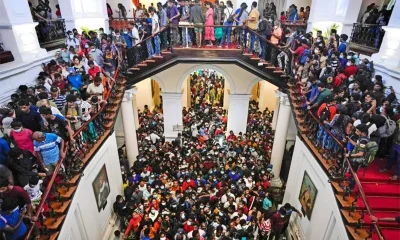
July 09: An inexcusable overall security failure and exceptional contingency plan
-

 Sports2 days ago
Tharanga set for high-profile javelin clash in Ostrava
-

 News4 days ago
Commonwealth lawyers urge Lanka to uphold rule of law
-

 News5 days ago
Justice Minister responds to social media claims he represented Easter Sunday ringleader
-

 Features3 days ago
Politics of protected species
-

 News7 days ago
AI raises concerns over arrest of Sallay and rapper under PTA