
News
Sombre mood reigns in London, beyond as UK mourns Queen Elizabeth


People gather outside Buckingham Palace and other royal sites across the UK as a 10-day mourning period begins for the queen.
(Al Jazeera) Britain has begun a 10-day mourning period for Queen Elizabeth II, with bells tolling around the country and 96 gun salutes planned in London – one for each year of the late monarch’s life. Hundreds of people arrived overnight to leave flowers outside the gates of Buckingham Palace, the monarch’s London home, or simply to pause and reflect.
Some people wept when officials carried a notice confirming the queen’s death to the wrought-iron gates on Thursday.
Al Jazeera’s Jonah Hull, reporting from outside Buckingham Palace, said: “It is going to take a long time for this news to sink in … But on this first full day of mourning, crowds are again gathering outside Buckingham Palace as they will at other royal sites.
“The sombre reality of it all reflected very much on the nation’s newspapers this morning. These very heavy commemorative editions [were printed]. The Sun says ‘We loved you Ma’am’. The Daily Mail says ‘Our hearts are broken’,” he said.
In Balmoral, Scotland, people have also been paying tributes at the castle where the queen passed away.
Al Jazeera’s Rob Matheson, reporting from outside Balmoral Castle, said: “They have been carrying flowers and personal notes. One of the notes read: ‘Thank you for your service, your dedication … you have been a source of inspiration and a calming figure.'”
Everyday politics were put on hold, with MPs set to pay tribute to the monarch in parliament over two days, starting at noon.Many sporting and cultural events were cancelled as a mark of respect, and some businesses – including Selfridges department store and the Legoland amusement park – shut their doors.On his first full day of duties on Friday, King Charles III, Britain’s new king, prepared to meet with Prime Minister Liz Truss and address his nation.
He spent much of his 73 years preparing for the role, taking the throne in an era of uncertainty for both his country and the monarchy itself.Truss and other senior ministers are expected to attend a remembrance service at St Paul’s Cathedral in London on Friday.Charles, who became the monarch immediately upon his mother’s death, will then be formally proclaimed king at a special ceremony on Saturday.
After a vigil in Edinburgh, the queen’s coffin will be brought to London, and she will lie in state for several days before her funeral in Westminster Abbey.
‘God save the King’
As the second Elizabethan Age came to a close on Thursday, the BBC played the national anthem, God Save the Queen, over a portrait of the monarch in full regalia as her death was announced.The flag over Buckingham Palace was lowered to half-mast. And in the one of the first of many shifts to come, the anthem played on Friday was God Save the King.
The effect of Elizabeth’s loss will be huge and unpredictable for Britain. She helped stabilise and modernise the monarchy across decades of enormous social change, but its relevance in the 21st century has often been called into question.
The public’s abiding affection for the queen had helped sustain support for the monarchy during the family’s scandals, but Charles is nowhere near as popular.
Mariam Sherwani, 31, Londoner, said: “It’s the queen, she looks like my grandma. She kind of feels like that as well. My mum’s first thing was, you know, Charles can never replace her, you know, and that makes sense.
“On the other hand as tenants living together, my flatmates were saying this is going to affect the way we live. Economically. It’s already tough, it’s going to get tougher. It just feels really weird,” she added.
Charles called his mother’s death “a moment of the greatest sadness for me and all members of my family”, adding: “I know her loss will be deeply felt throughout the country, the Realms and the Commonwealth, and by countless people around the world.”



Former first lady Shiranthi Rajapaksa, wife of former President Mahinda Rajapaksa was produced before the Hulftsdorp court, after being arrested by officers of the Commission to Investigate Allegations of Bribery or Corruption (CIABOC) and produce
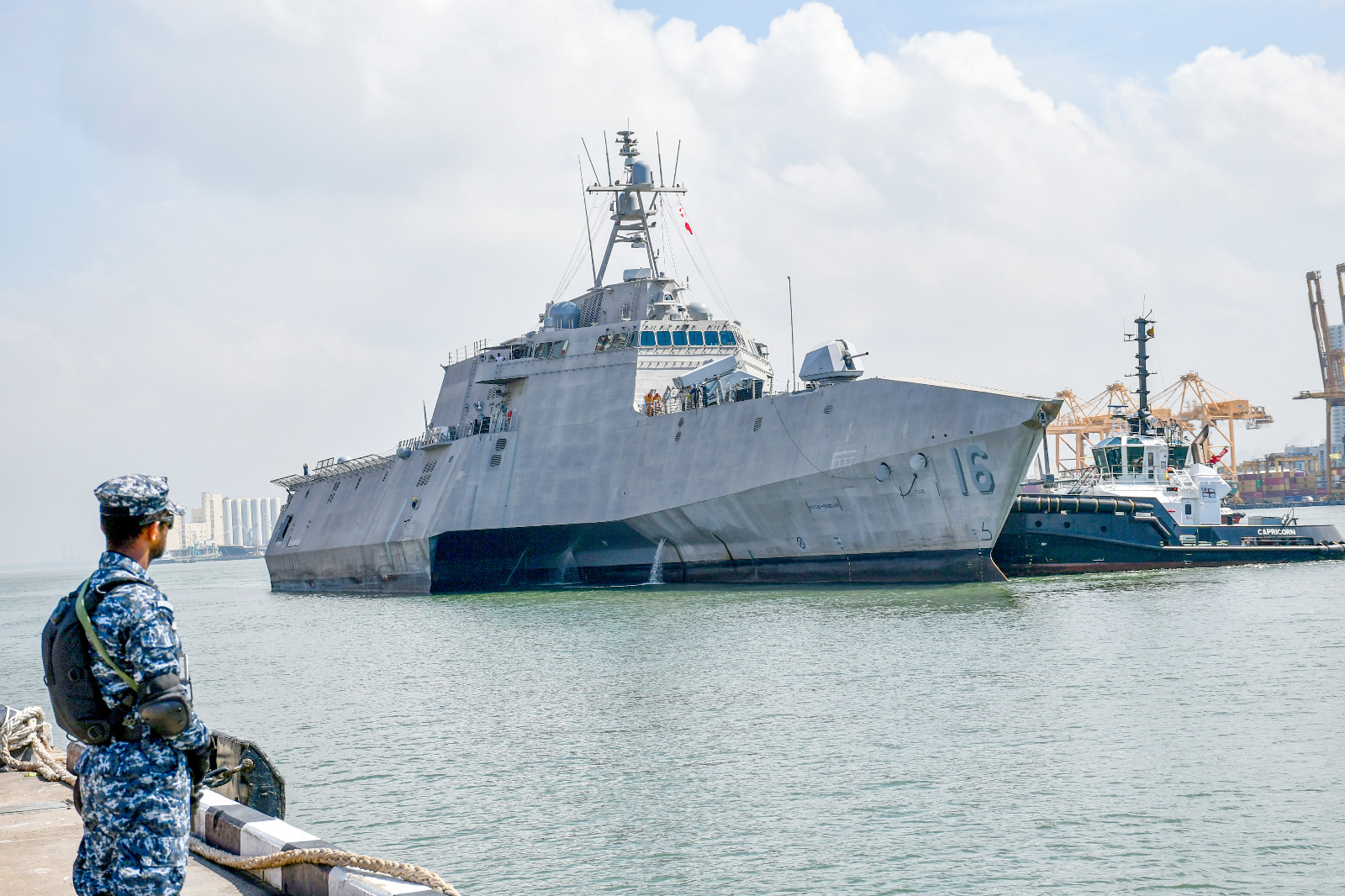
The U.S. Navy ship USS Tulsa (LCS 16) arrived at the Port of Colombo this morning, 7 October 2026 for replenishment purposes.
The visiting ship was welcomed by the Sri Lanka Navy in accordance with naval traditions.
The 127.7-metre-long platform is a Littoral Combat Ship commanded by Commander BM Wanier. Commissioned on 16 February 2019, USS Tulsa has since been in service with the US Navy.
The ship previously made a port call in Sri Lanka on 27 August 2025.

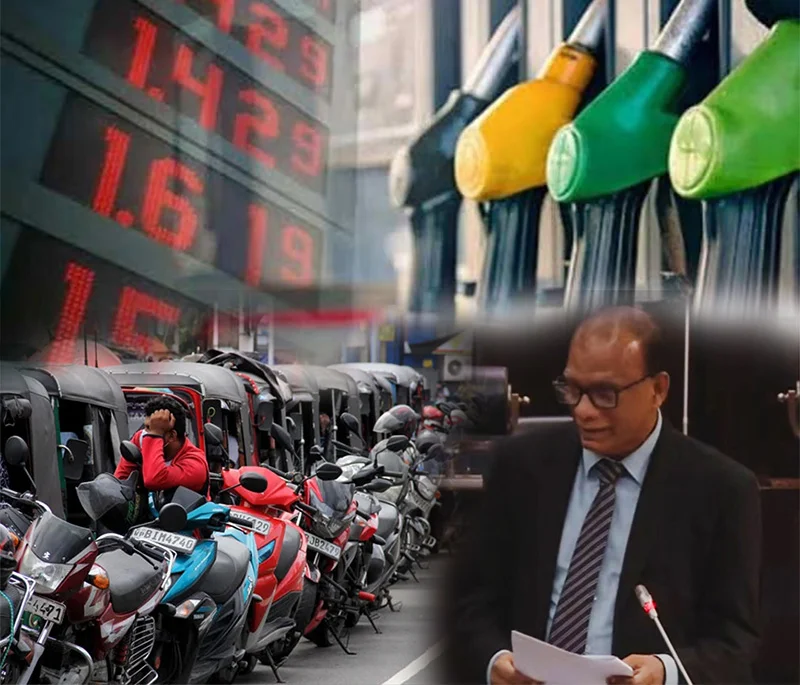
Govt. tells fuel distributors to maintain stocks to ensure uninterrupted supplies
by Saman Indrajith and Norman Palihawadane
The government had instructed private fuel distributors to maintain minimum stocks and ensure uninterrupted supplies to the market, Energy Minister Anura Karunathilaka told Parliament yesterday (06).
Karunathilaka said the Ministry of Energy Secretary had notified the relevant companies of the requirement, following a reduction in supplies by some private distributors, amid higher international fuel prices.
The Minister said private companies had informed the government that they were facing losses because international prices had risen while fuel was being sold, locally, at prevailing prices. As a result, some companies had reduced the volumes released to the market.
The reduced supplies had increased the burden on the Ceylon Petroleum Corporation (CPC), whose share of the diesel market had risen from about 54% to 82%, the Minister said.
“The CPC currently holds an 82% share of the market,” he said, adding that it had increased its supplies, compared with February, to compensate for the reduction by private distributors.
Karunathilaka said the government could not, under the existing agreements with private companies, specify the quantities they should supply to individual filling stations. However, it could require them to maintain minimum stocks in the country.
The Minister said the Energy Ministry had already instructed companies that had failed to maintain the required stocks to take steps to prevent supply disruptions.
The Minister attributed the queues reported at some filling stations to reduced supplies from private distributors, as well as normal variations in fuel distribution. He also said demand for CPC fuel had increased because private companies generally did not provide fuel to dealers on credit, while the CPC offered a three-day credit facility.
“We expect that, as the Ceylon Petroleum Corporation takes on this additional burden, the problem will ease to some extent by Wednesday or Thursday,” Karunathilaka said.
He said instructions had also been issued to increase supplies to CPC filling stations. A special discussion on the issue is scheduled for today (07), with officials of the Energy Ministry and CPC expected to participate,
along with President Anura Kumara Dissanayake.
Meanwhile, Petroleum Dealers’ Association officials have called for an early solution to the supply issue. Association Chairman D.V. Shantha Silva said queues had been reported at many filling stations, mainly those operated by private distributors.
He said the situation was not due to an overall shortage of fuel, but was linked to reduced orders by Lanka IOC, Sinopec and R.M. Parks amid concerns over losses incurred on fuel sales.
The Ceylon Petroleum Private Tanker Owners Association has urged motorists to refrain from panic buying, saying there was no nationwide disruption to fuel supplies.
The government earlier increased fuel prices and introduced a per-litre diesel subsidy following concerns raised by distributors over rising international prices.

Former first lady Shiranthi Rajapaksa arrested by CIABOC

U.S. Navy ship USS Tulsa arrives in Colombo for replenishment visit

Smriti Mandhana appointed India captain across formats

Ronaldo apologizes for Portugal walkout; says Jesus broke promise

Showers in the Western, Sabaragamuwa, Central, Uva, North-western and Southern provinces and in Anuradhapura and Mannar districts

Fuel crunch looms

‘Dates have the highest sugar content to fight Coronavirus’

Sunday Island 27 December – Headlines

#SundayIsland 17th December – Headlines

Sunday Island – 28th March

Sunday Island Headlines – 21 March

Sunday Island – 21st February – Headlines
-

 News7 days ago
US-assisted ‘Ice’ detection: NPC to examine IGP’s move to transfer drug-busting team
-

 Editorial6 days ago
Colombo Port drug bust: The plot thickens
-

 Editorial7 days ago
Drug busting, transfers and trust deficit
-

 Features4 days ago
The first woman in the foreign service or Ceylon Overseas Service it was then called
-
 News7 days ago
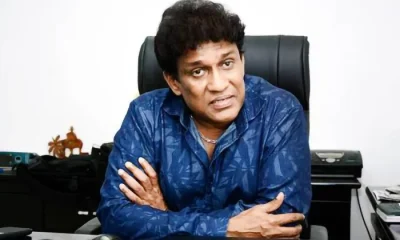
Sri Lankan facing death penalty in Saudi Arabia: Mano G appeals to Crown Prince
-

 Editorial5 days ago
Fuelling discontent and protest
-

 News3 days ago
Geneva takes up Sallay’s case and govt. ignores opportunity to answer accusations
-

 Latest News5 days ago
Tharindu Rathnayake, bowlers secure Asian Games Bronze for Sri Lanka