
Business
Social media rant investigated

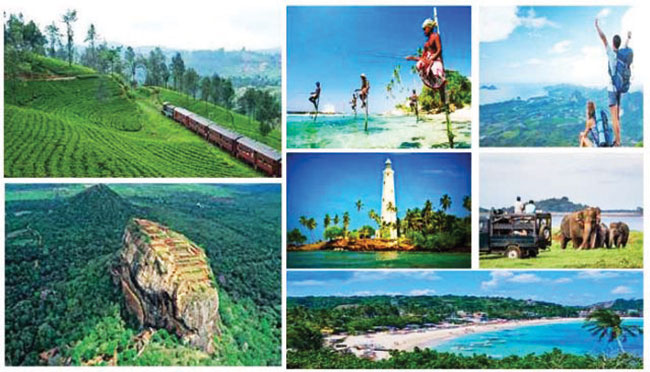
Sri Lanka Tourism ensures trade service standards
Sri Lanka Tourism on inquiring deeply into, the widely circulated YouTube video by a US Tourist, claiming that his pre-booked rental vehicle not being available on arrival at the Bandaranaike International Airport led him in frustration to cancel his tour of the Island and return to Istanbul, finds that the passenger didn’t make any effort to contact the car rental company on arrival in Sri Lanka.
Recognizing the importance of ensuring that every single visitor to the country is warmly welcomed and treated to the high standards of visitor expectations and leave with memorable experiences that Sri Lanka Tourism is proud of, an in-depth inquiry was carried out. In a detailed report from the car rental company it is stated that the booking for transportation had been made via a third-party website and was in fact for the 6th of October 2021 and not the 7th of October 2021, on which date Mr. George, the tourist, arrived in the country. The inquiry revealed that the car rental company had sent a representative who had spent the day within the airport on 6th October, awaiting the traveller and had gone back to the base station which is located just 5 minutes from the airport terminal.
Tourism industry veterans find it strange that a visitor fluent in English, on arrival, did not contact the car rental company, from which he had booked transport which also has a vehicle station within five minutes from the airport terminal, and request for an alternative vehicle or in any other way try to request assistance from within the airport. The visitor also had the opportunity to speak to any one of the staff of the car rental companies, that have counters that are manned 24 hours, for the convenience of visitors arriving without prearranged transport and who would have gladly assisted him to proceed to his chosen accommodation and location. The irony is this visitor seems to be a seasoned traveller coming from San Francisco via Mexico City, Cancun, Istanbul and Maldives to Sri Lanka.
Nevertheless, Sri Lanka Tourism has taken due note of this complaint and urges industry partners and stakeholders of the importance of keeping their teams refreshed on service standards and work ethic that we must always deliver to, both local and foreign, travellers an experience that is in keeping with their expectations.
On 1st October Sri Lanka Tourism announced a relaxed, bubble free experience for fully vaccinated travellers arriving in the country with a negative PCR test taken 72 hours prior to embarkation. It was also announced that unvaccinated children travelling with vaccinated parents below the age of 12 years will not require an on-arrival PCR test. This ease in protocols has created a surge in interest in Sri Lanka as a destination of choice which has resulted in an increase in arrivals.
Sri Lanka Tourism is committed to creating an environment where travellers leave with memorable experiences yearning to return to the Island. Now the country is open to international visitors with all industry stakeholders poised and ready to welcome travellers to Sri Lanka — a destination long known as a treasure trove of possibilities waiting to be discovered.
(Sri Lanka Tourism)


Sri Lanka’s tourism industry is posting arrival numbers that many destinations would envy, yet it is increasingly troubled by a disconcerting trend: the country is welcoming record numbers of visitors, but tourism earnings are struggling to keep pace.
In May, Sri Lanka recorded its highest-ever monthly increase in tourist arrivals, welcoming 145,745 visitors, a 10% rise from a year earlier. However, tourism revenue fell 5.1% year-on-year to US$155.7 million, according to official data. For the first five months of 2026, earnings declined 12% to US$1.36 billion, despite continued growth in arrivals.
“These figures highlight a growing challenge for a country that depends heavily on tourism as a source of foreign exchange: attracting more tourists is no longer enough. The bigger question is how much they spend once they arrive,” a leading hotelier told The Island Financial Review.
“After being battered by the 2019 Easter Sunday attacks, the COVID-19 pandemic, and the 2022 economic crisis, Sri Lanka recorded a historic 2.36 million visitors in 2025. Authorities are now targeting 3 million arrivals in 2026. But beneath those anticipated numbers lies a more complicated story,” he said.
Elaborating further, he noted: “Tourism revenue reached roughly US$3.2 billion in 2025; only marginally higher than the previous year, despite a 15% jump in arrivals. More tellingly, earnings remain significantly below the levels achieved in 2018, when visitor numbers were comparable. So, the decline in average tourist spending has become impossible to ignore.”
According to official surveys, average daily tourist expenditure has been revised downward to approximately US$148 per day, compared with previous estimates exceeding US$170.
Referring to this trend, he added: “Destinations such as the Maldives attract substantially higher per-visitor spending through luxury tourism, premium experiences, and high-end accommodation. The debate should increasingly revolve around whether Sri Lanka is pursuing the right tourism model.”
For years, the country focused on boosting arrival numbers through aggressive marketing campaigns, Instagram influencer partnerships, and social media promotions. As a result, Sri Lanka may now be attracting too many budget-conscious travellers while failing to draw those seeking immersive, higher-value experiences rooted in the nation’s natural and cultural assets. “Are we grappling with the tension between ‘high-volume tourism’ and ‘high-value tourism’?” he asked. “Sri Lanka must encourage longer stays, diversify experiences beyond beaches and cultural sites, and develop premium offerings in wellness, eco-tourism, adventure, luxury rail, culinary, and wildlife sectors if it hopes to increase per-visitor spending.”
An inbound travel operator concurred, stating that the future should depend less on bringing in more people and more on attracting the right mix of travellers.
Against this backdrop, Sri Lanka appears to be intensifying efforts in key source markets. One of the most notable initiatives took place recently in Moscow, where Deputy Tourism Minister Prof. Ruwan Ranasinghe led a delegation to the sixth “Let’s Travel International Tourism Forum.” Discussions with Russian officials focused on direct flights, simplified visa procedures, destination promotion, and stronger bilateral tourism cooperation.
Russian travellers have become increasingly important to Sri Lanka’s tourism sector. Russia consistently ranks among the island’s top source markets, alongside India and the United Kingdom. In early 2026 alone, tens of thousands of Russian visitors arrived in Sri Lanka, underscoring the market’s growing significance. The Moscow forum also signalled a broader strategy: expanding beyond traditional hubs and reaching travellers across multiple Russian regions.
“The island’s beaches, wildlife reserves, ancient cities, tea-country landscapes, and wellness traditions already provide a strong foundation, and Sri Lanka has largely solved the problem of attracting visitors. Its next challenge is more difficult: transforming a popular destination into a high-value one. That will require investment in infrastructure, premium tourism products, transport connectivity, destination management, and visitor experiences that encourage travellers to spend more and stay longer,” the inbound operator said.
Tourism Minister Vijitha Herath recently told parliament that the current revenue figures reflect more accurate measurement methodologies rather than a collapse in spending. Referring to this, the hotelier said,” While that may be a technically valid assertion, it does little to mask a far more pressing reality: Sri Lanka is no longer attracting the high-spending travellers it once did. The data, when viewed alongside declining average daily expenditure and stagnant overall earnings, points to a structural shift in the country’s visitor profile, one that favours volume over value. Until Sri Lanka recalibrates its tourism strategy to prioritise quality over quantity, it risks becoming a destination that everyone visits but few truly invest in.”
By Sanath Nanayakkare

Climate resilience is no longer an environmental concern on the periphery of policymaking but a critical economic imperative that will determine Sri Lanka’s future competitiveness, export performance, investment attractiveness and long-term growth prospects, leading development agencies and private-sector leaders warned at a high-level forum titled Sri Lanka Climate Summit in Colombo recently.
With climate shocks becoming increasingly frequent and costly, experts said that Sri Lanka must urgently strengthen climate-resilient infrastructure, reform key utility sectors, modernise its data systems and improve access to global climate financing if it hopes to sustain economic recovery and attract investment.
The discussion brought together representatives from multilateral institutions, development agencies and the private sector, who argued that climate adaptation should be viewed not as a financial burden but as one of the largest economic opportunities available to emerging economies.
Addressing the forum, Asian Development Bank (ADB) Country Director for Sri Lanka, Shannon Cowlin, said countries with stronger economic fundamentals are better positioned to absorb climate shocks and recover faster.
“Climate resilience is not only about infrastructure. It is also about macroeconomic resilience. Countries that maintain sound economic management can respond more effectively when disasters occur,” she said.
Referring to Sri Lanka’s recent response to Cyclone Ditwa, Cowlin noted that the country’s economic reforms and recovery programme had significantly improved its ability to manage the disaster compared with previous years.
The ADB highlighted the importance of ongoing reforms in the energy and water sectors, particularly efforts to establish cost-reflective tariffs that would enable utilities to maintain and upgrade critical infrastructure.
“We cannot expect financially distressed utilities to invest adequately in resilience,” she cautioned.
The bank is currently preparing emergency assistance financing to support post-cyclone recovery efforts while embedding internationally recognised “Build Back Better” principles into reconstruction programmes.
Rather than merely restoring damaged assets, future investments will focus on strengthening roads, drainage systems and other public infrastructure to withstand increasingly severe weather events.
Dilmah chairman and Chief Executive Officer Dilhan Fernando warned that climate change represents a direct threat to Sri Lanka’s export competitiveness, especially for premium products such as Ceylon Tea and Ceylon Cinnamon.
“Adaptation is simply another word for survival,” Fernando said.
He observed that rising temperatures, changing rainfall patterns and increasingly unpredictable weather events are beginning to challenge the environmental conditions that have historically given Sri Lankan agricultural products their global reputation.
“The planet has already warmed by more than 1.3 degrees Celsius. Scientists project warming levels approaching three degrees, which would create environmental conditions not experienced for millions of years, he said.
Fernando warned that climate pressures could significantly affect both production volumes and product quality in the tea sector.
“We speak about achieving 400 million kilograms of tea production. Given the climate extremes we are witnessing today, we need to question whether such targets remain realistic in the long term,” he said.
He also highlighted a growing commercial challenge emerging from international markets.
The European Union’s new sustainability and supply-chain regulations are expected to impose stricter environmental compliance requirements on exporters, potentially affecting market access for companies unable to demonstrate sustainable production practices.
“These developments are not simply regulatory requirements. They represent a structural transformation in global trade and consumer expectations,” Fernando said.
However, he argued that businesses should approach climate adaptation as a strategic growth opportunity rather than a compliance exercise.
By Ifham Nizam

Sri Lanka Insurance Corporation General Limited (SLICGL), the nation’s trusted leader in general insurance, has been recognised as Sri Lanka’s No. 1 Most Loved General Insurance Brand in 2026.
The prestigious honour, awarded by LMD – The Voice of Business, demonstrates the deep trust, confidence, and lasting relationships customers continue to place in SLICGL. It is clear evidence of the company’s continued commitment to service excellence, innovation, and reliability in protecting lives and businesses throughout the country.
As SLICGL continues to command the industry, it remains dedicated to protecting lives, supporting communities, and delivering trusted insurance solutions nationwide. The achievement also celebrates the dedication of employees, sales teams, business partners, and stakeholders whose collective efforts have strengthened the brand and nurtured long‑term customer relationships.
The recognition reinforces SLICGL’s position as the country’s leading force in the insurance sector, motivating the organisation to enhance products, services, and customer experiences, maintaining the highest standards for all touchpoints.
Today, the bond thrives on consistent delivery. SLICGL remains the undisputed market leader in Sri Lanka’s general insurance industry, with a 20.2% market share and a Gross Written Premium of Rs. 30.3 billion in 2025. During the year, the company settled Rs. 12.3 billion in insurance claims and benefits, including in the aftermath of Cyclone Ditwah, standing by policyholders when it mattered most. Its motor solutions arm, Motor Plus, retained its place as the country’s number one motor insurer.

Munoz sends Colombia into World Cup knockouts with 1-0 win over DR Congo

Animal Welfare Draft Bill to be Gazetted
Legal provisions on marking voters using indelible ink during elections removed

Showers will occur in the Western, Sabaragamuwa and North-western provinces and in Galle, Matara, Kandy and Nuwara-Eliya districts

Court vacancy row throws Parliament into turmoil; sittings disrupted

Climate, pollution, forest loss now hitting economy: BASL chief

‘Dates have the highest sugar content to fight Coronavirus’

Sunday Island 27 December – Headlines

#SundayIsland 17th December – Headlines

Sunday Island – 28th March

Sunday Island Headlines – 21 March

Sunday Island – 21st February – Headlines
-

 News6 days ago
Creditor receives USD 2.5 mn as Lankan public bears loss from theft of Treasury funds
-

 News5 days ago
Creditor not yet paid
-

 News5 days ago
Consumers bearing 22% tax burden despite 18% VAT claim: Dr. Harsha de Silva
-

 Opinion7 days ago
Beyond diagnosis: A strategic design for 7% growth by 2029 (Part I)
-

 Features4 days ago
Nanda Pethiyagoda Wanasundara as three generations of family saw her
-

 Opinion6 days ago
SriLankan Airbus struck by lightning
-

 Features3 days ago
Sri Lanka developing independent hydrographic capabilities
-

 Latest News3 days ago
Sooryavanshi thumps fastest List A fifty as India A win tri-series