
News
SL joins American Georgia State University’s global Cosmic Ray Muon Detector network


Sri Lanka became the very first country (outside the USA) to deploy Georgia State University’s (GSU) Cosmic Ray Muon Detector. Sri Lanka now becomes GSU’s first international member as a part of its ongoing deployment plan for a global muon detector network and hosts a detector each at two strategic locations – Badulla, hosted at the University of Uva Wellassa campus, and Colombo, hosted at the University of Colombo campus, according to a press release issued by Prof. Unil Perera of GSU.
These two detectors have started logging data since end of March, and the data is being shared between the campuses and communicated to a central repository, managed by the GSU team in Atlanta, Georgia. The data from the detectors consists of raw muon counts (flux) sampled at one-minute intervals, which will be comprehended with meteorological data from open data sources and meteorology department collaborations. These datasets, along with the datasets generated by the entire network of muon detectors that have been deployed and those that will be deployed in near and far future, will be made available for free access to promote climate and other inter-disciplinary research across the globe.
Cosmic rays are high energy particles moving through space at nearly the speed of light and are one of the few direct samples of matter from outside our solar system. Most cosmic rays are protons (i.e., ionized hydrogen nuclei) with galactic origins. Other cosmic ray particles include gamma rays, electrons, neutrinos, and heavier elements. Protons could be deflected by magnetic fields making it hard to determine their origin.
Discovered in 1912, many things about cosmic rays remain a mystery more than a century later. Cosmic ray radiation has been blamed for causing electronics problems in satellites and other machinery. Earth’s magnetic field and atmosphere shield the planet from 99.9 percent of the radiation from space. However, for people outside the protection of Earth’s magnetic field, space radiation becomes a serious hazard. A previous Mars rover mission during its 253-day cruise revealed that the radiation dose received by an astronaut on even the shortest Earth-Mars round trip is equivalent to receiving a whole-body CT scan every five or six days.
This cosmic ray detector network deployment in Sri Lanka was spearheaded by GSU and led by computer scientist and engineer Dr. Ashwin Ashok (Associate Professor, Computer Scientist), nuclear/particle physicist Dr. Xiaochun He (Regents’ Professor, Physics and Astronomy), and device and biomedical physicist A. G. Unil Perera (Regents’ Professor, Physics and Astronomy). The team visited Sri Lanka to set up two cosmic ray muon detectors at the Faculty of Applied Sciences, Uva Wellassa University (UWU) in Badulla, and the Department of Physics at the Faculty of Science at the University of Colombo (UOC). Professor Jagath Pitawala and Dr. Rasanga Samaraweera (a former GSU graduate) will lead the project at UWU. Prof. Upul Sonnadara, Dr. Kithsiri Jayananda, and Mr. Deshitha Wickramarathna will be the lead team working at UOC on the project. The cost of the detectors, associated electronics and travel costs were borne by GSU, with an agreed official memorandum of understanding (MoU) and a material transfer agreement (MTA). The participants (including the researchers) will have access to the worldwide data and will be equal partners of the network of scientists studying the effects of the variation of muon flux with exogenous parameters such as elevation, time of the year and ambient temperature and pressure.
At present GSU has five cosmic ray detectors installed in the USA, three in Atlanta at the GSU main campus, another at Mount Wilson, California (GSU Chara Array cite) and at the Hard Labor Creek Park Observatory, (another GSU observatory in Rutledge, GA). In addition to the two detectors in Sri Lanka, the next stage of international installations is planned for a subset of countries in Asia and Europe. The main goal of the project at the near-term is to install more detectors at collaborating institutions worldwide and to study the variations of cosmic ray muon flux which are associated with the regional weather patterns and with the changes in space weather. The long-term goal is to install detector(s) in every country in the world and to use the network for several interdisciplinary studies which include space and terrestrial weather monitoring, public health (related to cosmic ray radiation), and other practical applications based on cosmic ray particle studies.
GSU is a “research one-R1” public University in the USA (recognized as one of the most research-intensive institutions by the Carnegie Classifications with at least 20 research or scholarship-based doctoral degrees and spend at least $5 million on research each year) and the nation’s second most innovative university in the US (US News and World Report) with more than 250 different majors and 35 different PhD programmes, has a fruitful connection with Sri Lanka. GSU has graduated more than 30 Sri Lankan students with Physics doctorates in addition to several doctorates in Computer Science, Biology, Chemistry, etc. Several of those GSU doctorates, particularly from Physics, are working as productive faculty members at several Sri Lankan universities and other reputed research laboratories around the globe.
Professor Unil Perera, a UOC alumni, who was also the graduate Director of Physics at GSU from 1995-2012, had established several joint programmes GSU, IIT Chennai and IFS, Hanthana and with UOC. GSU proudly and cordially welcomes this research collaboration and hopes to pursue these ties for a long term and further the cordial USA-Sri Lanka relationship.



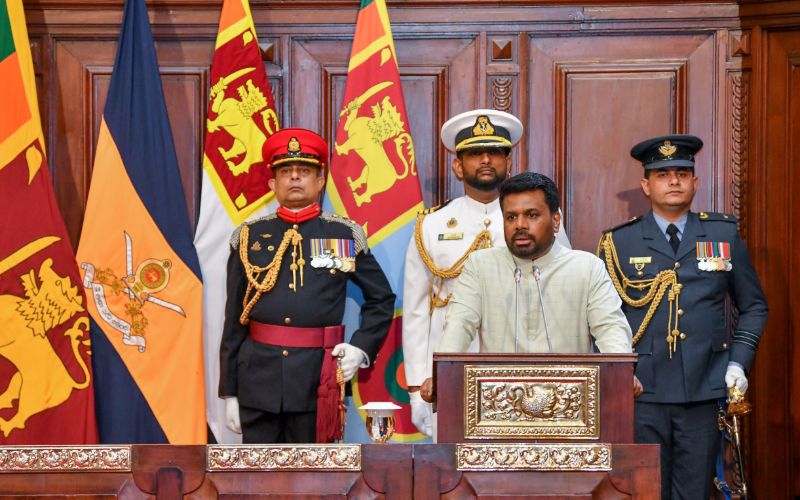
The presentation of the “Vishishta Seva Vibhushana” medals, awarded in recognition of the distinguished service rendered by senior officers of the regular forces of the Sri Lanka Army, Navy and Air Force, was held this afternoon (30) at the Presidential Secretariat under the patronage of President Anura Kumara Dissanayake.
The President stated that the senior officers of the three Armed Forces receiving the “Vishishta Seva Vibhushana” medals today have made an exceptional contribution to the country and its people. He noted that they remained committed to their duties and accountable for their responsibilities regardless of whether it was day or night, whether weather conditions were favourable or adverse, or whether their lives were at risk. He emphasised that the country needs a public service of this nature today.
The “Vishishta Seva Vibhushana” medal, established as an award under a proclamation issued by the President, is a distinguished honour. It is awarded only to officers of the three Armed Forces who have completed at least 25 years of continuous service and have maintained a commendable service record, and in accordance with regulations established by the President through a notification published in the Gazette regarding its conferment, forfeiture or restoration.
A total of 57 serving and retired officers of the three Armed Forces were presented with the “Vishishta Seva Vibhushana” medals by the President.
Following the presentation, the President joined the medal recipients for a group photograph.
The full speech delivered by President Anura Kumara Dissanayake on the occasion is as follows:
“We have a special appreciation for you as a group of officers who have demonstrated a strong sense of responsibility and accountability. As the most senior officers of the three Armed Forces, you are receiving one of the most important and distinguished honours today. You have earned this honour in recognition of the exceptional contribution you have made throughout a significant part of your lives towards safeguarding our motherland and its people. We are deeply grateful to you for the outstanding service you have rendered in protecting the country and its people.
As the most senior officers who have served in the three Armed Forces, you have played an exceptional role for more than 25 years, including during the highly complex periods of armed conflict faced by our country and during other natural disasters. I know that you carried out these responsibilities with greater commitment, endurance and risk than an ordinary public servant. Your wives and family members also played an exceptional role in supporting you throughout your discharge of these social responsibilities. They stood behind you and provided the strength and support you needed while you made immense sacrifices and faced considerable risks. We must also extend our special appreciation to them for the significant role they played in supporting you.
One of the major challenges we face as a Government today is the lack of a strong public service. The public service has suffered a significant decline. We are all aware, to varying degrees, of the reasons that have contributed to this situation. If we are to move forward as a country, we need a strong public service. The contribution you have made as public officials towards strengthening the public service has been exceptional. As the most senior officers of the three Armed Forces, you have played a significant role in serving the public service. You remained committed to your duties. You did not consider whether your duties had to be performed during the day or at night, under favourable or adverse weather conditions, or in situations where your lives were at risk. You remained committed to your duties and accountable for your responsibilities. We need a public service of this nature. As a group that has demonstrated responsibility and accountability, we have a special appreciation for you.
If our country has experienced setbacks on many fronts, overcoming these challenges and moving forward requires people who have the resilience to endure them. You are receiving this distinguished “Vishishta Seva Vibhushana” honour today as a group that has faced the challenges encountered throughout your careers and made an exceptional contribution towards overcoming them.
A common challenge we face as a country is establishing professionalism. We can create positions and professions. However, the question remains as to whether an individual has attained the required professional standard in the discharge of their duties. Today, these 57 officers have been selected from among the many officers of the three Armed Forces as those who have demonstrated such professionalism. This is essential to our public service. You have set important examples towards restoring the public service.
There is also a concern regarding discipline within our public service and society. All of us must have the ability to maintain self-discipline. This is extremely important if we are to move forward as a country. Public servants work within the public service in the course of their duties, while in their everyday lives, they live and interact with wider society. In such circumstances, how do we maintain self-discipline? Many countries have progressed not merely through laws and regulations, but through the self-discipline developed by their people.
Society is exposed to many forms of irregularities and anti-social activities. In such an environment, how do we maintain self-discipline? If we are able to maintain self-discipline regardless of the external environment, even when it is contrary to such values, that is extremely important.
It is true that the “Vishishta Seva Vibhushana” award recognises your service. It is also true that, as President, I and the State honour you. However, this should no longer be regarded as something personal. This is not merely a medal or recognition that you have received. It should be regarded as a social responsibility. Only then can you become an example to your children, neighbours and relatives. You can also become an example to your institution. Only then can we rebuild our public service and society, which are facing a serious decline, and provide an example for others to follow. Therefore, I believe that the medal you receive in recognition of your distinguished service will serve as a foundation for our society to move in a new direction”.
Deputy Minister of Defence, Major General Aruna Jayasekara (Retired), Secretary to the President Dr Nandika Sanath Kumanayake, Secretary to the Ministry of Defence, Air Vice Marshal H. S. Sampath Thuyacontha (Retd) and senior officials, including the Commanders of the three Armed Forces, were also present.
[President’s Media Division]
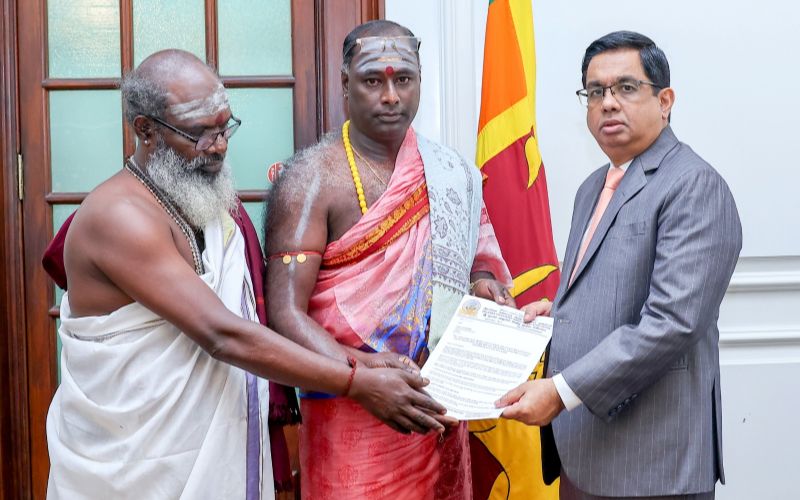
The Kandyan Hindu Priests’ Association of Sri Lanka has submitted a memorandum to President Anura Kumara Dissanayake, requesting the necessary government intervention to secure the release of Sivarasa Anojan, who has been sentenced to death in Saudi Arabia.
Accordingly, the memorandum was handed over to Dr Nandika Sanath Kumanayake, Secretary to the President, at the Presidential Secretariat this afternoon (30), by the General Secretary of the Kandyan Hindu Priests’ Association of Sri Lanka, Dr Siva Sri Velu Suresh Sharma Kurukkal.
Dr Nandika Sanath Kumanayake, Secretary to the President, pointed out that the necessary government intervention to secure the release of Sivarasa Anojan is already being carried out.
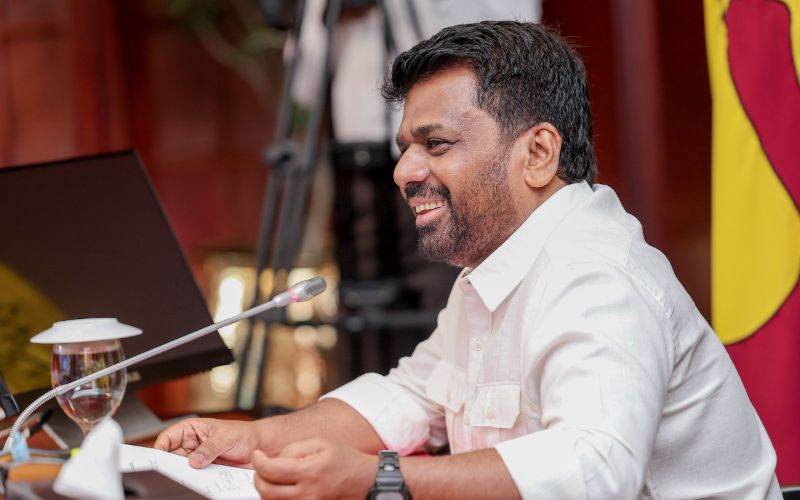
President Anura Kumara Dissanayake instructed officials to establish a mechanism to actively engage parents in protecting children from the drug menace. He emphasised that protecting children from this menace depends more on strong parent-child relationships than on the law alone. He also stressed the need to directly educate parents on the seriousness of the drug menace and how to monitor their children’s behaviour.
The President issued these instructions while participating in a meeting of the “A Nation United” National Steering Committee, established to eradicate the drug menace from the country, held this morning (30) at the Presidential Secretariat.
The President also highlighted the need for a trusted individual to provide guidance to parents if their children are at risk of being exposed to drug use. He noted that parents generally seek the assistance of a teacher or religious leader in such situations. Accordingly, he instructed officials to develop a systematic programme to provide reliable guidance, taking this into consideration. He also pointed out the need for special training if teachers are to be involved in this programme.
The President further emphasised the need to strengthen the programme being implemented to dismantle the distribution networks linked to the drug trade.
It was also noted that the number of forensic reports completed daily has increased following the expansion of facilities and improved efficiency at the Government Analyst’s Department. A total of 8,000 forensic reports related to drugs were completed during September alone. Data entry activities have also been strengthened with the assistance of Navy personnel. It was further revealed that the improved efficiency in obtaining forensic reports has enabled a significant number of persons remanded in custody for drug-related offences to be released on bail, thereby helping to reduce prison overcrowding.
The President also instructed officials to refer the new Bill on drug control, which has been presented to Parliament, to the Committee in the first week of October, obtain approval and take steps to have it passed by Parliament by the third week of October.
Discussions were also held on developing a centralised digital system and software linking the Police, the Government Analyst’s Department, the Department of Prisons and the judicial system. The President instructed officials to discuss the matter with the Secretary to the Ministry of Defence and other relevant officials and take steps to address the practical issues involved.
The President also inquired into the measures taken to facilitate the direct submission of expert reports and Government Analyst’s reports to the courts by email, in accordance with the Act No. 07 of 2025. He also reviewed the measures taken to fill vacancies in the Legal Draftsman’s Department.
Programmes implemented in international schools to combat the drug menace and their effectiveness were also reviewed.
The President also highlighted the need to develop social media programmes targeting the younger generation to raise awareness of the dangerous consequences of drug use.
Discussions were also held on the drug-related challenge spreading in the Northern and Eastern regions following the war, and the programmes being implemented to address this challenge.
The President also highlighted the importance of maintaining the 1818 hotline, introduced to provide information on drug trafficking, distribution and related illegal activities and conducting a publicity programme on the response to information received through the 1818 hotline to strengthen public confidence in the service.
The President also reviewed the progress of the rehabilitation process, including measures to increase the capacity of rehabilitation centres.
The Maha Sangha, including Most Venerable Narampanawe Ananda Thera, the Anunayake of the Asgiri Chapter, Most Venerable Waleboda Gunasiri Thera, Anunayake of the Ramanna Maha Nikaya and Most Venerable Kuppiyawatte Bodhananda Thera, together with members of the clergy, including Reverend Nishantha Fernando, Sri Velu Suresh Sharma Kurukkal, Muththusamy Alagesan Kurukkal and Sheikh Mohamed Arkam Nooramith Moulavi, also participated in the occasion.
Secretary to the President Dr Nandika Sanath Kumanayake, Senior Additional Secretary to the President Roshan Gamage, Secretary to the Ministry of Defence, Air Vice Marshal Sampath Thuyacontha (Retd), Secretary to the Ministry of Public Security Ravi Seneviratne, Secretary to the Ministry of Public Administration, Provincial Councils and Local Government S. Aloka Bandara, Secretary to the Ministry of Justice and National Integration Ayesha Jinaseena, other ministry secretaries, government officials, the Inspector General of Police, and representatives of the security forces, including the Commanders of the three Armed Forces, Members of the “A Nation United” National Steering Committee were also present.
[PMD]

What happened on diverted Flydubai flight from Dubai to Tel Aviv?

“Vishishta Seva Vibhushana” medals presented under President’s patronage

Hindu Priests Seek State Intervention for Sivarasa Anojan

“A Nation United” National Steering Committee meets under President’s Chairmanship

PM declares open 2nd Day of National AI Expo 2026

Waste management and recycling to receive priority in the 2027 Budget – PM

‘Dates have the highest sugar content to fight Coronavirus’

Sunday Island 27 December – Headlines

#SundayIsland 17th December – Headlines

Sunday Island – 28th March

Sunday Island Headlines – 21 March

Sunday Island – 21st February – Headlines
-

 Latest News7 days ago
Showers above 100 mm are likely at some places in the Western, Sabaragamuwa, Central and North-western provinces and in Galle and Matara Districts
-

 Editorial7 days ago
Crimes punished and unpunished
-

 Features6 days ago
Beyond traditional jobs: Why Sri Lanka needs to facilitate the gig economy
-

 Editorial5 days ago
Birth of a bad law
-

 News3 days ago
Police remove Thileepan statue in Jaffna
-
 Latest News6 days ago
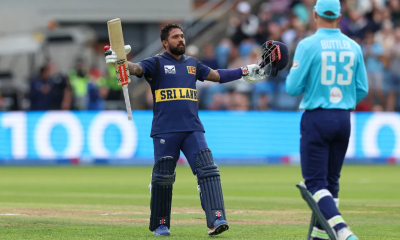
Kusal, Wellalage star as Sri Lanka defend 322 in Headingley thriller
-

 News5 days ago
TIN mandatory for key transactions from Nov. 1
-

 News7 days ago
IMF: Sri Lanka on course for 2027 market return