
News
SJB belatedly defends 2017 Foreign Exchange Act, rejects Justice Minister’s claim of funds ‘parked’ overseas

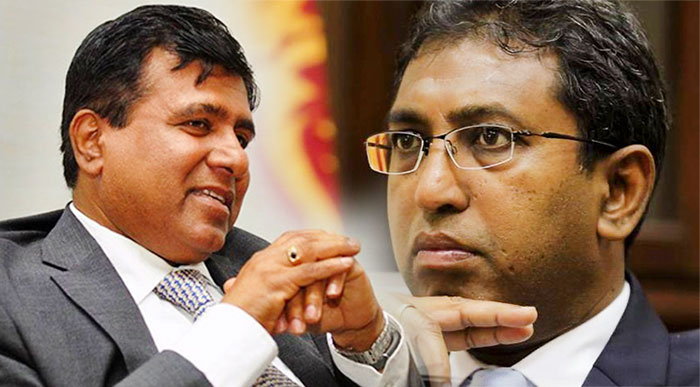
By Shamindra Ferdinando
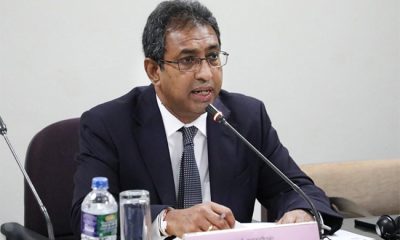
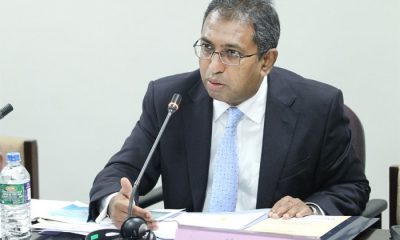
Top SJB spokesman Dr. Harsha de Silva on Monday (20) dismissed Justice Minister Dr. Wijeyadasa Rajapakshe’s claim that well over USD 56.5 bn had been parked overseas by some exporters.
Dr. de Silva also contradicted claims made by rebel SLPP MPs Vasudeva Nanayakkara, Wimal Weerawansa and Gevindu Cumaratunga on the matter.
The Justice Minister and rebel SLPP MPs have declared that the enactment of Foreign Exchange Act No 12 of 2017 had led to the current situation.
Appearing on the live political programme Salakuna on Hiru, the Colombo District lawmaker said that such accusations were nothing but a joke. One-time Economic Reforms and Public Distribution State Minister de Silva declared that it was nothing but a made-up story.
The SJB lawmaker said so when Hiru anchor Chamuditha Samarawickrema asked whether the Yahapalana government contributed to the current crisis by doing away with the time-tested Exchange Control Act No 24 of 1953. Samarawickrema pressed for an answer pointing out that Harsha de Silva and SJB leader Sajith Premadasa were among 94 MPs who voted for the new law whereas 18 voted against.
A section of the UNP registered SJB as a political party, in early 2020, ahead of the general election held in Aug of the same year.
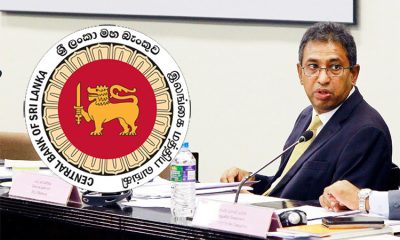
Governor of the Central Bank Dr. Nandalal Weerasinghe, too, has on several occasions raised concerns over the failure on the part of exporters to bring back proceeds.
Samarawickrema said that according to Minister Rajapakse the actual figure could be as much as USD 100 bn though official records were lower.
Dismissing the Justice Minister’s declarations, MP de Silva questioned the recent claim made by the former President of the Bar Association that export proceeds amounting to USD 8 bn hadn’t been repatriated last year. There was no basis for the Justice Minister’s claim on USD 8 bn as well as the previous declarations on over USD 50 bn being held overseas, MP de Silva said, adding that the total amount of exports were USD 12 bn last year.
Accusing some lawmakers of propagating lies, the former UNPer challenged them to reveal where even USD one bn was held.
Referring to leaked Panama Papers and Pandora Papers beginning April, 2016 and Oct 2021, respectively, MP de Silva said they disclosed the amounts parked overseas. “I won’t say funds hadn’t been parked. Thieves are everywhere. Some under invoice. Others over invoice. There are people who park money abroad. The funds mentioned in Panama Papers are part of the total amount of money stashed overseas.”
MP de Silva firmly denied that Sri Lanka engaged in large scale export business. There was absolutely no basis of claim regarding USD 56.5 bn, MP de Silva said.
Asked whether Justice Minister lied in this regard, MP de Silva insisted that this figure couldn’t be accepted under any circumstances.
Responding to Samarawickrema’s query whether the new law contributed to the bankruptcy, MP de Silva said that it was meant to pave the way for Sri Lankans to set up businesses abroad. The economist said that Sri Lankans should be allowed to invest overseas the way foreign companies did here. The former State Minister named several such investments made by Sri Lankans.
Dr. de Silva dismissed claims that the Capital Account hadn’t been opened. Utilization of funds had to be approved by the Central Bank on a case-by-case basis.
At the onset of the programme, Dr. de Silva said that the SJB accepted the general direction of President Ranil Wickremesinghe’s budget. One-time Wickremesinghe deputy on economic affairs?? during the yahapalana government, lawmaker de Silva said that SJB is comfortable with the budget in spite of concerns.









An Australian woman has given birth to rare, naturally-conceived identical quadruplets after a pregnancy described as “extremely high risk” by the Royal Brisbane and Women’s Hospital.
The four girls, who were delivered via caesarean section at 28 weeks and four days on 14 July, were monozygotic quadruplets – where a single fertilised egg splits into four embryos.
The hospital said the girls’ mother, 34-year-old Jenitar Na’amoana, and her husband Jortham, already had four children and were taken by “immense surprise” when told to expect quadruplets.
Dr Alexa Bendall, who cared for the mother from the start of her pregnancy, estimated identical quadruplets occur “at one in every 15 million pregnancies” and said “but to share the same placenta – this is unheard of”.
Bendall, who is a maternal foetal medicine specialist and obstetrician, said such a pregnancy was very high-risk, with the hospital admitting Na’amoana as an inpatient at 25 weeks so she could be monitored.
“We always said that if we could get her to 28 weeks, we would be doing well,” Bendall said.
“So the fact that we’ve got four beautiful, healthy babies born at 28 weeks and four days is incredible and we’re very happy to be a part of it,” she added.
“Jenitar has taken everything in her stride from day one… she has somehow dodged every complication and risk for both herself and her babies,” Bendall said.
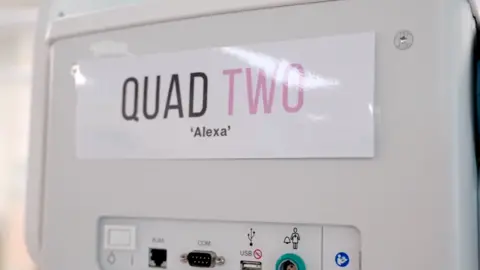
The newborn girls have been named Emily, Harriet, Catherine, and also Alexa, after Alexa Bendall, who described it as “a beautiful tribute”.
The babies will stay in the hospital’s neonatal intensive care unit until they grow to full term and are “currently doing extremely well”, Bendall added.
The parents’ other children are between one and 10 years old and the mother has recently launched an online fundraising campaign to help buy a van with at least 10 seats.
In a message alongside the fundraiser, which has already received over A$37,000 (£19,261) in donations, Na’amoana wrote: “Our four precious miracles have arrived safely, and while our hearts are overflowing with gratitude, the reality of caring for four newborns at once has brought challenges we never could have imagined.”
Naturally conceived quadruplets are extremely rare, with doctors estimating the odds at about one in 700,000 births.
(BBC)

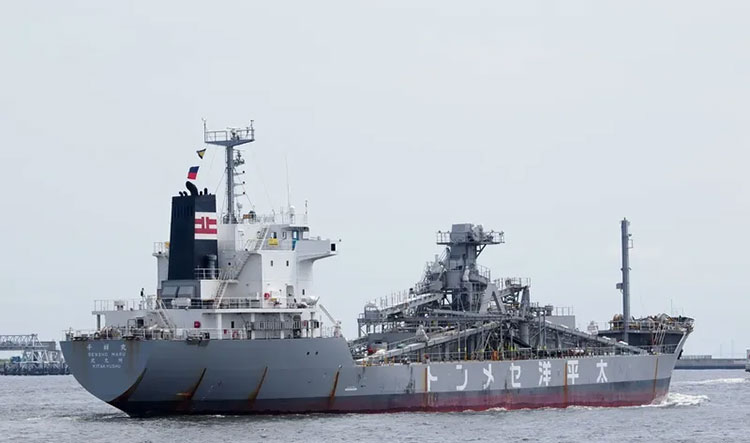
… bribe giver departs Colombo port
The Merchant Shipping Secretariat (MSS) is investigating a complaint received from the Captain of an Indonesian flagged vessel Sensho that he had to pay an official USD 5,000 bribe to facilitate what our sources called port state control inspection.
Sources said that the cement carrier arrived at the Colombo Port, on Friday, and departed after having passed the rigorous inspection. Responding to queries, sources said that after paying the bribe, the vessel’s Captain has lodged complaints with MSS and the Commission to Investigate Allegation of Bribery or Corruption (CIABOC).
In spite of the government’s high profile anti-corruption drive there seemed to be fresh cases, sources said, adding that MSS had received a comprehensive complaint. The vessel had departed Colombo for Jeddah, sources said.
“The issue at hand is whether there have been unreported cases of MSS personnel receiving bribes,” sources said, acknowledging that the Captain, instead of immediately bringing the demand for USD 5,000 bribe to the MSS, had paid it and departed Colombo. (SF)
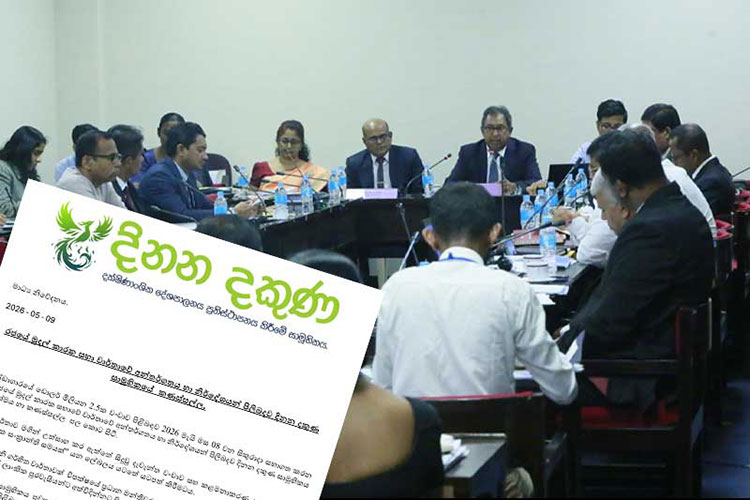
An opposition political group, styled as Dinana Dakuna, has accused the Committee of Public Finance (COPF) of protecting the masterminds behind the USD 2.5 mn theft from the Treasury.
Commenting on the recent COPF report on the theft, the group has alleged that the all-party parliamentary grouping made an attempt to shift the blame to the Central Bank as part of a cover-up. It has described the COPF report as a deliberate attempt to suppress the truth.
The group said that the COPF conveniently asserted that the theft took place due to the inexperience of officers concerned, thereby diverting the attention from those who perpetrated it.
An alleged attempt to portray the collapse of the administrative set-up that led to the USD 2.5 mn theft as a human resource problem, has also been questioned by Dinana Dakuna.

Rare identical quadruplets born in Australia

Showers will occur in the Western, Sabaragamuwa and North-western provinces and in Kandy, Nuwara-Eliya, Galle and Matara districts

Merchant Shipping Secretariat probes bribery scandal

Theft of USD 2.5 mn: Dinana Dakuna claims COPF trying to protect mastermind

COPF chief slams security sticker scam

CAA urged to protect soap users

‘Dates have the highest sugar content to fight Coronavirus’

Sunday Island 27 December – Headlines

#SundayIsland 17th December – Headlines

Sunday Island – 28th March

Sunday Island Headlines – 21 March

Sunday Island – 21st February – Headlines
-
 Business2 days ago
‘Giving up was never an option’: The fisherman who fought back after losing millions in SL
-
 Features2 days ago
Two memorable excerpts from a former SLAF commander’s memoir
-
 Latest News3 days ago
Davis cup Asia/Oceania Group IV 2026 to be held in Colombo from 20th to 25th July
-
 Features2 days ago
Erdoğan’s New Republic
-
 Life style2 days ago
Taste of the Swiss Alps comes to Colombo
-
 Features6 days ago
Dirty Money
-

 News3 days ago
Dengue outbreak gallops ahead: Infections surpasses 73,455, leaving 50 dead
-
 News3 days ago
Evidence recorded in money laundering case against Yoshitha Rajapaksa