
Editorial
Sirisena’s revolution

Wednesday 23rd December, 2020
Former President Maithripala Sirisena maintains a very low profile, but he is in the news again. He has waxed eloquent, at a recent virtual symposium under the theme, Shared values and Democracy in Asia’, on what he considers his contribution to the strengthening of democracy in Sri Lanka on his watch as the President. Some of his claims have attracted heavy criticism in social media.
Sirisena never misses an opportunity to claim that it was his desire to bring about good governance that made him break ranks with the Rajapaksa government in 2014, beat then President Mahinda Rajapaksa in the presidential race the following year and help install the UNP-led yahapalana administration after bringing down the UPFA government. This claim, not to put too fine a point on it, is a mistruth. He is on record as having said that when he was a minister in the UPFA government, he did his best to dissuade President Rajapaksa from advancing the presidential election, which was due in 2016. He has also claimed that he left the Rajapaksa regime to save democracy. How can he reconcile these two contradictory statements? If Sirisena had succeeded in persuading President Rajapaksa to complete his second term without opting for a snap presidential election, the Rajapaksa government would have lasted another year or so; Sirisena would not have had any qualms about being in that administration, which he later condemned as a repressive regime. One may recall that Sirisena voted for the 18th Amendment, which vested unbridled powers in the executive presidency, did away with the presidential term limit, and enabled President Rajapaksa to bulldoze his way through during his second term.
What really drove Sirisena to break ranks with the Rajapaksa government, in 2014, was not any desire to protect democracy but his frustration; he had been eyeing the premiership. There were others with prime ministerial ambitions, and he was convinced that he would not be able to achieve his goal. Had he been appointed the Prime Minister, he would not have left the UPFA government in 2014.
Sirisena was lucky to win the presidency, but he did not whittle down powers in that position of his own volition. The 19th Amendment came into being because the then Prime Minister Ranil Wickremesinghe wanted to consolidate his power in the yahapalana government; he was instrumental in having the executive presidency stripped of vital powers and the presidential term reduced to five years. Sirisena only consented to the UNP’s project for want of a better alternative. He was too dependent on the UNP for his political survival to offer resistance. In 2018, he made a mockery of his commitment to upholding democracy by joining forces with the very Rajapaksas, whom he had condemned as a bunch of self-seeking politicians ruining democratic institutions, to topple the yahapalana government. His plan to win over the SLFP dissidents in the Joint Opposition/SLPP and run for President (in 2019) fell through owing to the collapse of the hurriedly formed government, which lasted only 52 days. The Easter Sunday terror strikes, etc., ruined his chances of seeking a second term. Ironically, Mahinda, who as the President did not appoint Sirisena the PM, had to serve as the PM under the latter albeit for a few weeks!
Sirisena, who deserted the Rajapaksas while being a Cabinet minister as he was unable to achieve his prime ministerial goal, won the presidency, went all out to destroy the Rajapaksas politically, is now back in a Rajapaksa government as an ordinary MP. Worse, his party, the SLFP, voted with the SLPP to do away with the 19th Amendment, which he used to flaunt as his biggest achievement in politics. He and his betes noires have proved that they have no sense of shame, and act out of expediency rather than principle.



Saturday 23rd May, 2026
SJB MP Mujibur Rahman has alleged in Parliament that on the eve of the announcement of a 50% customs duty surcharge on vehicle imports, Letters of Credit (LCs) for 1,782 vehicles had been opened by three close associates of President Anura Kumara Dissanayake. Previously, the Opposition claimed that the number of LCs opened on that day exceeded 4,000.
Rahman said the number of LCs opened during the week prior to the announcement of the surcharge mounted to 4,000. The government and the Opposition have locked horns over the issue. It has also been claimed in some quarters that some other vehicle importers also benefited from inside information.
It may not be fair to level sweeping allegations against all vehicle importers. They watch foreign exchange rates, particularly the depreciation of the rupee, global issues and trends, and respond accordingly without the benefit of inside information. When the rupee began to tumble, some vehicle importers may have expected the government to resort to drastic measures, such as import restrictions, to manage the situation. It is natural that traders place bigger orders when the rupee shows signs of continuous weakening. Vehicle importers are no exception.
When it became clear that the rupee free fall would last for a while, vehicle importers may have opened more LCs. That is the name of the game in the business world. It is a gamble, though. If the West Asia conflict goes away by any chance, with the global oil markets stabilising and prices returning close to the pre-war levels, the rupee will rally and the vehicles, imported during the rupee depreciation, may not fetch the desired prices and the importers may not get the expected returns on their investment in such an eventuality. Even ordinary consumers react in a similar manner and stock up on goods that are expected to be in short supply. Most filling stations hide their stocks on the eve of monthly fuel price revisions, for the trend is for the fuel prices to increase in this country. They have no need for inside information to do so. They go by market trends and act with impunity to profiteer. Some of them also place bigger fuel orders towards the end of every month, expecting price increases.
However, the possibility of some vehicle importers having benefited from their political connections and received inside information about the customs duty surcharge in advance cannot be ruled out. Even Budget secrets are leaked to some businesses in this country. Financiers of successive governments have earned billions of rupees in profit by hoarding cigarettes in the run-up to Budgets that increased tobacco prices. Political leaders are known to work hand in glove with business leaders.
As for the allegation that the incumbent government leaked information about the duty surcharge to its cronies, what needs to be examined is whether there were unusually large vehicle orders placed in the run-up to the announcement of the surcharge, and whether the importers concerned are known to have links to the ruling coalition. If only a few vehicle importers who backed the JVP-NPP election campaigns placed huge vehicle orders just days before the surcharge was imposed, it could raise questions of favouritism. A graph showing the number of vehicles imported by leading traders, especially the ones with political links, during the past month may reveal unusual patterns, if any.
Now that the Opposition has levelled a very serious allegation against the government and some companies, the burden is on it to support its claim with facts and figures. The government ought to make all necessary information available if it has nothing to hide.
Friday 22nd May, 2026
The depreciation of the rupee continues, and the government is accused of making only half-hearted attempts to arrest it. The UNP has said the country is facing a very serious issue due to the uncontrolled tumble of the rupee, and during the 20 months since the current administration assumed office, the exchange rate has moved from around Rs. 292 at the time former President Ranil Wickremesinghe handed over office to around Rs. 354 against the US dollar. It has attributed the current situation to the JVP-NPP government’s failure to continue economic policies introduced by the previous administration and pointed to what it describes as a lack of a clear economic plan and failure to strengthen foreign reserves. According to the UNP, these factors have contributed to the rising value of the US dollar. The SLPP-UNP government was lucky that it did not face a global oil price hike and increasing shipping costs.
However, the Joint Apparel Association Forum (JAAF) has argued that the depreciation of the Sri Lankan rupee should be examined in the context of global pressures, such as increasing world oil prices and shipping costs. The rupee depreciation should not be interpreted as a sign that Sri Lanka’s economy is underperforming, JAAF has said. It has been pointed out that the Sri Lankan rupee has depreciated by 4.8% against the US dollar, the Indian rupee by 6.4%, the Nepalese rupee by 6.2% and the Indonesian rupiah by 5.2%.
The JAAF statement reflects the global economic reality, but Sri Lanka’s situation is more serious than that in many other countries. Sri Lanka is still recovering from an economic crisis. The government will have to go beyond imposing a 50% customs duty surcharge on vehicle imports to curtail the forex outflow, strengthen the rupee and shore up foreign currency reserves.
President Anura Kumara Dissanayake has urged the public to cut down on fuel consumption and help boost the country’s foreign currency reserves and arrest the rapid depreciation of the rupee. But they have already cut down on fuel consumption due to soaring oil prices.
President Dissanayake has claimed that a litre of diesel costs as much a Rs. 720, and a government subsidy on diesel amounts to Rs. 100 a litre. If a litre of diesel costs Rs. 720, as the President claims, are the private fuel retailers incurring huge losses by selling diesel at the current price (Rs. 392 a litre)? Is the Ceylon Petroleum Corporation overpaying for fuel? The increasing national fuel bill and the country’s forex woes cannot be blamed on the fallout from the West Asia crisis alone. True, the Iran conflict and the closure of the Hormuz chokepoint have driven the world oil prices up. However, the huge rise in Sri Lanka’s fuel bill from USD 98 million in February to a projected USD 522 million in May, as the President says, is also due to a massive increase in the use of diesel, etc., to operate the oil-fired power plants to compensate for the generation loss caused by substandard coal at the Norochcholai power complex.
With the government struggling to maintain an uninterrupted power supply by burning costly diesel, scheduled power cuts may not be far away. The Opposition has told Parliament that unofficial power cuts are already underway.
The national fuel bill no doubt must be curtailed, but there are other avenues that the government should explore to arrest the rupee’s tumble. Exporters have gained from the depreciation of the rupee, which they themselves have to take responsibility for to some extent. It has been alleged that Sri Lanka is deprived of most export proceeds due to various rackets. Exporters unlawfully park foreign exchange abroad. This practice is linked to exchange control violations, tax evasion, capital flight and, in some cases, even trade-based money laundering. Common methods used by unscrupulous exporters to avoid the repatriation of most export proceeds include the following as we have reported over the years, quoting experts: under-invoicing exports, over-invoicing imports, keeping proceeds abroad through offshore entities, use of “open account” arrangements, multiple invoicing and phantom shipments. Some fraudsters use hawala or informal settlement systems. The media has exposed these malpractices over the years, but in vain.
These export-related rackets have prompted many countries to require exporters to repatriate export proceeds within a relatively short period, submit shipping and banking documentation, and convert part or all export earnings into local currency. Sri Lanka has adopted some of these methods but no government has had the courage to go the whole hog to ensure compliance, for exporters have huge slush funds to bankroll election campaigns. The JVP-NPP government must get tough with the errant exporters who resort to malpractices and deprive the country of much-needed forex. Ensuring the repatriation of export proceeds in a proper manner is half the battle in breaking the back of the forex problem.
The need for a holistic approach to rupee depreciation cannot be overstated, but stringent measures are necessary to curb the outflow of foreign currency.

Thursday 21st May, 2026
The annual Commemoration of War Heroes was held on Tuesday, and President Anura Kumara Dissanayake, in his address, pledged to fulfill the aspirations of those who had made the supreme sacrifice for the country. He said they had laid down their lives in the hope that their sacrifices would help build a better country. Last year, he drew criticism for avoiding the term ‘war heroes’ when referring to the fallen military personnel, but he used it on Tuesday. However, that commemorative event was like a play without its protagonist. All former war-winning military commanders were there, but ex-President Mahinda Rajapaksa’s absence was conspicuous. When Foreign Minister Vijitha Herath was asked, at Tuesday’s post-Cabinet media briefing, why Mahinda had not been invited to the commemoration, he said no political leaders had been invited. This claim is based on flawed logic.
Mahinda is not just a political leader; he is a former war-winning President and Commander-in-Chief. He and his family politicised and monopolised the war victory, misruled the country and bankrupted the economy, betraying the trust people reposed in them. But the fact remains that it was his unwavering leadership for the war that made the defeat of the LTTE possible. According to Article 33 of the Constitution, it is the President who declares war or peace. Military commanders merely follow orders from the President and Commander-in-Chief. If Mahinda had buckled under western pressure, the war would have ended prematurely and terrorism would have continued to plague the country.
Mahinda did not give in to pressure from the UK, the EU and the US during the final battle in 2009. British Foreign Minister David Miliband and his French counterpart Bernard Kouchner rushed here in a bid to pressure President Rajapaksa to suspend military operations before the decapitation of the LTTE and open an escape route for Prabhakaran. They even tried to visit the war zone. They were not given permission to do so because their presence there would have compelled the government to stop military operations. The Rajapaksa government also denied a visa to Swedish Foreign Minister Carl Bildt, who wanted to join Miliband and Kouchner to save the LTTE leadership.
If Mahinda had bowed down to western powers and left the war unfinished, it would have been impossible to defeat terrorism; the LTTE would have recovered from military setbacks, acquired drone capability, etc., with the help of the western powers, driven by geopolitical interests and the so-called vote bank politics.
Time was when mothers and fathers did not travel together in buses and trains lest their children should be orphaned in case of LTTE bomb attacks. They also had to guard their children’s schools. The LTTE massacred civilians, especially in villages adjacent to the areas under its control. In the North and the East, people were deprived of their franchise, and democratic dissent was suppressed brutally. Forcible child conscription, extortion and political killings were rampant in those parts of the country while the LTTE was around. That reign of terror ended 17 years ago.
So, all those who were instrumental in defeating LTTE terrorism should be honoured. They include the war-time Presidents and defence ministers, members of the armed forces including their commanders, especially those who served during Eelam War IV, the police, and the Civil Defence Force members.
Having demonised the Rajapaksa family, the JVP-NPP government may have decided against inviting Mahinda to the Commemoration of War Heroes to avoid the embarrassment of President Dissanayake having him as a special guest. It is also possible that the government thought Mahinda’s presence would eclipse President Dissanayake. Be that as it may, the JVP leaders cannot deny that they enabled Mahinda to secure the presidency in 2005 and do what he did thereafter. The SLFP did not back Mahinda in the presidential race, and the then President Chandrika Bandaranaike Kumaratunga did her best to queer the pitch for him to settle political scores albeit in vain. The JVP came to his rescue, and led his presidential election campaign from the front. One may recall that the present-day JVP leaders, especially President Dissanayake and Minister Herath, touted Rajapaksa’s election manifesto, Mahinda Chinthanaya, as a panacea, with the same zeal as street vendors. Videos of their snake-oil sales talk, as it were, from Mahinda’s election platform in 2005 are available in the digital realm. So, they can claim part of the credit for Mahinda’s leadership for the successful war on terror, and similarly part of the blame for his alleged wrongdoing should also fall on them.
There is no way the JVP-NPP government can justify the exclusion of Mahinda from the list of guests at the War Heroes’ Commemoration.

Tulsi Gabbard to resign as US director of national intelligence

SpaceX launches massive Starship V3 rocket on test flight

Everest record holder warns of Nepal danger as two Indian mountaineers die

Angkrish Raghuvanshi ruled out of IPL 2026 with concussion, finger fracture

Sunrisers Hyderabad win big but Royal Challengers Bengaaluru, Gujarat Titans seal top two spots

Flood warning issued to the Aththanagalu Oya basin extended until 0600AM on Monday [25]

‘Dates have the highest sugar content to fight Coronavirus’

Sunday Island 27 December – Headlines

#SundayIsland 17th December – Headlines

Sunday Island – 28th March

Sunday Island Headlines – 21 March

Sunday Island – 21st February – Headlines
-
 Features6 days ago
Sri Lankan Airlines Airbus Scandal and the Death of Kapila Chandrasena and my Brother Rajeewa
-
 News6 days ago
Kapila Chandrasena case: GN phone records under court scrutiny
-
 News6 days ago
Rupee slide rekindles 2022 crisis fears as inflation risks mount
-
 Features3 days ago
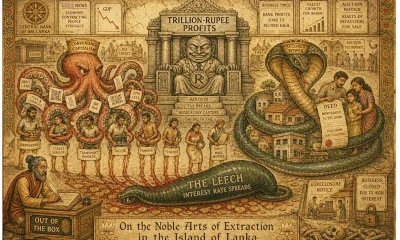
Octopus, Leech, and Snake: How Sri Lanka’s banks feast while the nation starves
-
 Business6 days ago
Expansion of PayPal services in Sri Lanka officially announced
-
 News2 days ago
Steps underway to safeguard Sri Lanka’s maritime heritage
-
 News6 days ago
Court orders further arrests in alleged USD 42 Mn NDB fraud case
-
 Opinion2 days ago
Murder of Ehelepola family, Bogambara Wewa and Sightings of Wangediya