
Opinion
Shrinkflation: Is it ethical?


By Eng. Thushara Dissanayake
Sri Lanka is facing its worst ever economic crisis, which has affected everyone. Essential commodities such as fuel and pharmaceuticals are in short supply. Inflation is rising sharply and there are speculations by the economists that it could reach a hyperinflationary level if the money printing by the government is continued in the way it is done at present. The cost-push inflationary situation is further aggravated by the rising fuel prices in the global market. In contrast, the organic fertiliser drama, which was an utter failure, has led to a massive food shortage, and let us hope it would not end up in a famine.
Prices of all consumer products are continuously on the rise owing to an increase in the costs of raw materials, energy, labour, and transportation. When consumers find it hard to purchase their essentials with the fixed amount of money they have what would be the consequences? They will prioritise their requirements and some items will drop out from their list depending on individual decisions and choices. If the prices go up further the consumers will not only refrain from buying some items but also reduce the quantity they regularly buy. In such a situation what are the options producers have to sell their products? There will be lesser chances for them to follow popular promotional strategies like volume discounts, bundle pricing, etc.
Though not new, a recent trend to market the products has been to resize the packaged product downward, which is known as “shrinkflation”, a term said to be coined by the British economist Pippa Malmgren in 2009. Literally, it is selling the smaller package at the same price as according to behavioral economics more people are sensitive to price rather than package weight or volume.
A few decades ago, laundry soaps came as bars and many consumers were unable to buy a whole bar. During those times, merchants, used to cut the soap into small pieces using a thread and sold them at prices proportional to the volume. In terms of the product quantity, shrinkflation follows a similar principle and one advantage is that you can afford to buy a well-rapped final product avoiding any embarrassment. Nowadays, many products like soap, toothpaste, milk powder, etc. are following the shrinkflation strategy. However, it is a tough task for the consumer to track the change in the quantity of the product.
Is there anything wrong or fraudulent in this marketing strategy if product price and package weight or volume are clearly shown? In this respect, it would not be illegal. Still, one would say that this is a deceptive strategy as only a literate smart shopper can make the right decision whether to buy it or not as it needs some arithmetic calculations to find the price per unit weight or volume. However, it is very unfair if we expect the consumers to spend time in this scrutinizing process considering their fast-paced lifestyles. Hence, the question is whether business ethics crash in when a marketer follows the “shrinkflation” strategy.
On the contrary, package up-sizing is another promotional strategy followed by many marketers which is the opposite of shrinkflation. In this case, marketers offer more quantity for the same price. However, the notable difference here is that many marketers inform the consumers about this quantity increase either by advertising or highlighting it on the package itself. In contrast, shrinkflation may sound like cheating to many consumers as marketers engage in this practice in silence where they conceal the fact that they charge the same price or more for less product quantity. Probably the consumers are frustrated and would switch to substitute products of competitors or unpackaged generic products at the expense of brand loyalty.
Inflation estimates of the country are based on the consumer price index which is based on the increase in the cost of a basket of retail goods and services for a particular period. If items considered in the basket do not have specified weights and volumes shrinkflation affects the inflation statistics as the estimated inflation figure is less than the actual inflation.
On the positive side, as only the products’ size is reduced but not the price, the customers would find the product to be affordable. Most importantly shrinkflation strategy will help companies to maintain their profitability. In conclusion, companies are not bound to offer their products in the same quantity and it is the consumers’ decision whether to buy them or not. However, we have to take the question of whether the marketers have to be more open with consumers during the shrinkflation process in light of business ethics.

Opinion
Need to consult, compromise and reach optimal common ground on critical issues of national interest
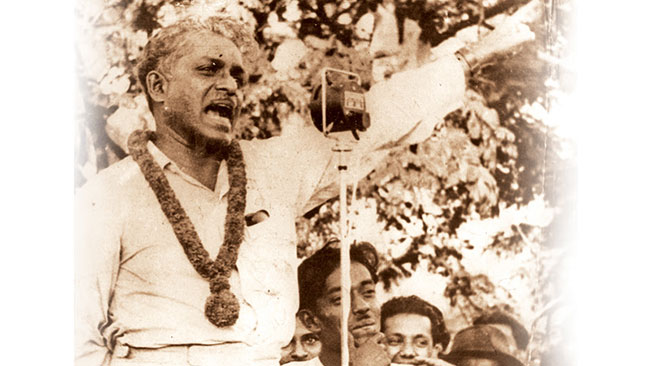
Delivering the keynote address at the 54th Memorial of the late Minister Philip Gunawardena, former Foreign Secretary HMGS Palihakkara, called for a culture of consensus on key public policy issues in the country as the way forward from recovery to sustainable growth in a world of deepening violence and diminishing cooperation.
Excerpts.
Today, we gather to honour and remember the late Hon. Philip Gunawardena—virtually a household name to my generation, fondly known to the ordinary folks just as Philip ‘Mathithuma’- a leader whose life was woven into the very fabric of Sri Lanka’s struggle for justice, dignity, and independence.
Philip Gunawardena was not merely a political leader; he was a visionary, a reformer, and a fearless voice for the common people. While he was an iconic figure and a staunch socialist, he remained a pragmatic modernist as well. This, obviously, is quite a complex and difficult political binary to maintain. As history has it, he did acquit himself doing it. At a time when speaking truth to power demanded immense courage, he stood unwavering. He believed deeply that a nation’s strength lies not in privilege, but in equality—in uplifting farmers, workers, and the forgotten voices of society. The famous Paddy Land Act and the concept of Apex Cooperative Bank which later transformed into the present-day Peoples Bank and many other public policy and institutional creations are emblematic of his deep knowledge of the economic challenges and his holistic approach to development.
On the other hand, others saw Philip demonstrating hard-nosed pragmatism, not a naïve ideological bent.
Dr. Sarath Amunugama, a friend and a public servant turned politician said of Philip:
“On Socialism itself Philip had a different perspective – You talk of Socialism. You cannot socialise poverty. You can only socialise plenty. And if people cannot work, if they cannot produce, you cannot have Socialism.” *
The volume being launched today contains Philip Gunawardena’s speeches and initiatives, documents in great detail the drive and substance he deployed to deliver social justice and economic outcomes to those working classes.
He was aptly called the “Father of Socialism” in Sri Lanka, even lionised as the Boralugoda Sinhaya. But titles and appellations alone cannot capture the spirit of the man. People were captivated not only by the inimitable force of his articulation and commitment but perhaps equally or even more, by substance and cogency of his argument.
He was a bridge between the ideal and the actionable.
In my official work overlap with his capacity as the Minister of Industries in the 1960s, I personally experienced Minister Philip’s ability to refurbish concepts in relation to ground realities. His work in land reform and his commitment to social justice were not abstract ideas—they were real, tangible efforts to improve lives and reshape the nation’s future. The analysis Philip presented and prescriptions he passionately advocated, in both legislative and policy realms, are touched upon in good detail here in this book being launched today. I must say it is a trove for a researcher.
Beyond his public life, Philip Gunawardena was a man of conviction and principle. He carried with him a profound sense of responsibility to his people, and he never wavered from his beliefs, even when it came at great personal cost. That is a legacy not easily measured, but deeply felt.
Today, as we reflect on his life, we are reminded that true leadership is not about power, but about purpose. It is about working tirelessly for the greater good of the Nation State and its people while standing firm in one’s values
Philip’s words -more importantly his deed- brought into sharp relief a truism prevalent in divisive politics
esp. here in Sri Lanka. It is that while blinkered politicians build opinions, only true leaders can build consensus. The former does it for parochial transactional gain the latter does it for strategic and sustainable national gain.
Philip of course was emblematic of the latter.
The decision by Philip to join the ‘National Govt’ of Dudley Senanayake was a much debated but little understood affair. – Optics were basically reduced to a celebrated Socialist icon joining a gentle Capitalist to form a
National Government. It was inevitably a controversial move. Equally, it was also a bold manifestation of that consensus building spirit. More so because his decision was predicated on his unwavering support for a fundamental human right- the freedom of expression, and opposition to nationalisation of the free press- a fundamental tenet of the democratic-socialist binary. Leave aside the unfinished or open-ended debate about democracy or socialism. Philip was signalling that consensual statecraft is the way forward for the nation’s progress and prosperity of its people. The motto was that what is best ideologically should not stand in the way of what is consensually good for the nation and the common man. When Philip famously said that I will work with the ‘Devil or even his grandmother if that brings about common good’, he in a way articulated the inherent quality of consensus on key public policy matters like the press freedom and other foundational things.
That certainly is the interpretation in my Book!
Consensus is not about making any or all contending parties absolutely happy about the issue at hand- it is about dispensing managed unhappiness among all parties in order to advance a common cause benefitting the people at large. It is the ‘equitable distribution of reasonable unhappiness’ among all parties concerned. When that occurs, consensus happens. It is the most potent algorithm to produce win-win solutions in human relations within or among states.
This is a great lesson in statecraft and public policy making for present day politicians in our country who seem to quarrel like street vendors on a rainy day, on all issues. They have thus reduced the grave responsibility of democratic governance to a trivial zero-sum formula of the Government proposing and the Opposition opposing most of the time- if not all the time! They are either unable or unwilling to explore and reach a consensual middle ground to advance the national interests on a host of public policy issues ranging from economic reforms, security and foreign policies, the rule of law, accountability, reconciliation and so on.
All issues are thus a game for the govt toppling game.
This is a lesson for some of the current crop of politicians in this country who easily conflate polemics with substance and verbiage with eloquence.
All this ignores the national interest of building consensus as opposed to building polarisation for vote winning.
May I express the hope that all of us, especially those involved in that dreadful art form called politics in this country, revisit the thought processes of Philip Gunawardena documented in this volume to understand that compromise and consensus is possible in this country- especially on key public policy issues that profoundly touch our fundamental national interests.
Speaking of a culture of consensus the likes of Philip Gunawardena advocated in eloquent words and courageous deeds more than half a century ago, let me conclude with a brief comment on their relevance and resonance with the inventory of sri Lanka’s foreign policy and diplomacy challenges.
We all know that Sri Lanka’s overriding national priority in recent times was and remains the process of recovery from a crippling economic crisis and dovetailing it into a sustainable growth pathway. For this we must carefully prepare ourselves to prudently navigate the critical gauntlet of 2028 when we have to resume debt repayment- a challenge looming larger and larger every single day. Especially so in a world convulsed by violent conflict and economic and financial disruption like what is unfolding in West Asia right now. The violent spiral that has peaked there now will impact our foreign relations and recovery effort in most profound ways. If one is serious about making our recovery and growth stable and sustainable in this volatility, it must therefore be firmly anchored in a domestic political consensus on economic reform and foreign policy framework that is programmed towards three things:
– first, liberate the indispensable economic reforms from the destructive politics of government toppling,
– second, insulate us from the adversities of the ongoing geopolitical violence,
-third, guide us towards securing opportunities for our economic interests in this evolving geopolitical vortex.
Of course, the ‘prime-mover’ responsibility of this common ground building process lies with the government which has an unprecedented and strong voter’ mandate to do it. It must therefore stop acting as if it is still in an election campaign mode and must take cognizance of the fact that they are governing now. The Opposition must understand too that their job is not to oppose everything that the govt proposes and that they are the ‘shadow govt.,’ in the best traditions of parliamentary democracy. They must therefore stop acting like a shadow of the Opposition bent on Govt toppling game 24/7 but behave like a true ‘shadow government’ promoting consensus until the voters in due course do the regime change, when necessary.
Both sides should therefore consult, compromise and reach optimal common ground on critical issues of vital national interest. If our politicians don’t embrace a culture of consensus on such public policy issues of foundational importance, yet another crisis will embrace us in due course, perhaps sooner than they expect. Templates of statesmanship provided by the likes of Philip to reach consensual grounds through informed and timely compromises shedding ideological or parochial interests, might come in handy here.
In memoriam of PHILIP GUNAWARDENA, 26 March 2026. National Library Auditorium

The ongoing case pertaining to Minister of Energy, Kumara Jayakody has become a key bone of contention for President Anura Kumara Dissanayake and his government with the public. The government has proven beyond a shadow of a doubt that it will look after its own at any cost. It is not that Jayakody has been proven guilty yet. And he may not be. But this matter is also about public perception and the government’s rhetoric on zero tolerance on corruption.
In the case so far, Jayakody has been served indictments by the Colombo High Court on 27 March 2026, based on charges filed by the Commission to Investigate Allegations of Bribery or Corruption pertaining to a situation between 2014 to 2016 when he was the Procurement Manager of the state-run Ceylon Fertilizer Company. He is accused of influencing the procurement process resulting in financial losses to the tune of Rs. 8.86 million to the country’s coffers.
The Minister is of course innocent until proven guilty. But this is not only a matter of law or procedure, but also of ethics and the optics of ethical conduct. Against the backdrop of the anti-corruption drive of the current government, it should have been simple enough for Jayakody to resign from his ministerial portfolio and formally remove himself from parliamentary proceedings until the case was resolved. However, given that accountability in Sri Lankan politics has been effectively eliminated since the 1970s, this kind of voluntary action is hardly expected. Therefore, the government itself could have called for his resignation until his case was resolved by the courts one way or the other. This has also not happened. While there may be nothing illegal, the optics do not look ‘clean’. It has given ammunition to the country’s ragtag opposition and cause for anxiety to those who remain sympathetic to the government and supported its ascent to office.
The president and the government bigwigs have been historically vocal when it comes to zero tolerance of corruption. But it is also clear, the president’s public reactions to Jayakody’s indictment, mirrored by his colleagues in the government have been characterised more by what might be called ‘procedural adherence’ rather than the immediate removal of the minister allowing the case to resolve itself and more importantly, cementing public confidence and depriving the ostensibly future-less opposition avoidable ammunition. The president and the government have shown yet again, their inability to understand ethics and optics when it comes to friends. This said, we must concede that the levels of corruption in the country have decreased significantly in recent times. According to Transparency International’s ‘Transparency of International Corruption Perceptions’ Sri Lanka’s corruption index has improved to 107 in 2025 from 121 in 2024.
It is also clear, compared to the JR Jayewardene, R Premadasa, Mahinda Rajapaksa and Ranil Wickremesinghe eras, the government so far has created space for ‘judicial independence’. It is precisely in this context that the government’s own narrative has been presented. That is, a sitting cabinet minister has been indicted by a state commission, and the court date has been fixed for early May 2026, while the Minister is out on bail. The argument is, this indicates that the law is applied equally to all.
The more vocal public apologists for the government have argued that as the alleged corruption case took place over ten years ago – at a time Jayakody was not a Minister or part of the current government – those actions should not reflect on his current performance or the integrity of the present government.
It is truly unfortunate that supporters do not see that such blind faith and loyalty can only harm the government in the long term, as it has the potential to paint them in the same colour as already delegitimised former regimes. The bottom line is that an indictment in the High Court, irrespective of when the alleged crime occurred, should disqualify an individual from holding public office, under the ‘highest standards of integrity’ promoted by the National People’s Power that constitutes the present government. In my view, it remains an interim measure that the government should take until the case is concluded. Again, this is part and parcel of ethics, optics and upholding public trust and not the cold facts of law or procedure.
The present events bring to mind another case involving ethics and optics early in the government’s tenure. The then Speaker Asoka Ranwala who was forced to resign in December 2024 after his claims to have a PhD from Japan’s Waseda University turned out to be fiction. That by all accounts was an outright lie. Ranwala is yet to show his certificates as promised. Though he was forced to resign as Speaker due to massive public outrage at the time, he still remains a Member of Parliament. My argument then was that he should be removed from parliament, too, because he lied about his qualifications during the entire election process and then, as Speaker. But the government protected its man by allowing him to retain his parliamentary seat when to keep him in the position of the Speaker attracted considerable public disapproval. The criterion was, that he is a friend, as is Jayakody. Clearly, this logic is dictated by the almost omnipresent Orwellian logic that “some animals are more equal than others”, especially when they serve in the NPP government.
This inaction and its atrocious public performance do not inject confidence into the government’s slogan of ‘system change’. One cannot pick and choose principles when they suit them and discard them when they are not convenient.
While the government walks open-eyed into yet another avoidable scandal, I can only leave it with the following words on ethics by Albert II, the Prince of Monaco (2005 -): “I want to place morality, honesty and ethics at the centre of my government’s preoccupations, of its councilors or all the principality’s decisions.”
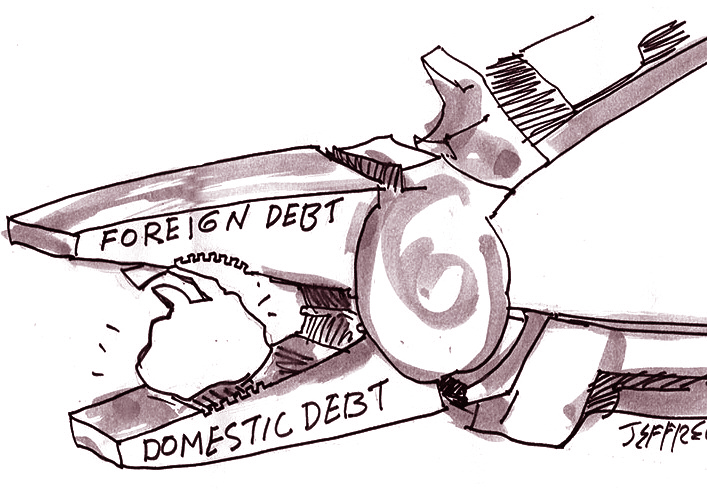
This article presents a quantitative and critical analysis of the volume, composition, and utilization of public debt in Sri Lanka during the period 2024–2026. In general discourse, attention is primarily focused on the size of debt alone. However, this article reveals a broader economic reality by examining the interconnections among debt sources, patterns of utilisation, and repayment capacity.
In particular, when factors such as high debt-to-national-income ratios, limited revenue-generating capacity, and a heavy reliance on recurrent expenditure are considered together, Sri Lanka’s debt problem appears not merely as a numerical issue, but as the outcome of a systemic imbalance. Furthermore, the article highlights that external factors—such as geopolitical instability in the Middle East—are likely to further intensify these challenges.
1. Introduction
During the period from September 2024 to March 2026, a multi-layered discourse has emerged regarding the volume of debt obtained by the Government of Sri Lanka and the manner in which it has been utilised. Within these discussions, particular attention has been given to the increase in debt levels. While this is a valid and necessary concern, it is essential not to accept the issue at face value, but rather to analyze it critically within a broader economic context.
The primary focus should not be limited to the narrow question of “how much debt has the government borrowed?” but should instead extend to a broader set of questions: “from where has this debt been obtained, for what purposes has it been used, and what is the country’s capacity to repay it?” In other words, a complete and accurate understanding of the economic picture can only be achieved by analysing the interconnections among debt volume, utilization, and revenue-generating capacity.
Within this context, it is estimated that by the end of 2023, Sri Lanka’s total public debt stood between LKR 27–30 trillion (Central Bank of Sri Lanka, 2023; IMF, 2024). At the same time, the debt-to-GDP ratio is observed to be in the range of 110%–128%, while the burden of debt servicing relative to government revenue remains at a high level of approximately 60%–70%. In addition, the revenue-to-GDP ratio stands at only around 8%–10%, which is considered a structural fiscal weakness (World Bank, 2023).
Against this backdrop, it becomes evident that during the period 2024–2026, Sri Lanka is not on a path of deleveraging, but rather in a transitional phase centered on debt restructuring and economic stabilisation. Therefore, this article seeks to provide a deeper and more comprehensive understanding by analyzing not only the size of debt, but also its utilisation, structure, and policy implications.
2. Total Public Debt as at End-2023
As at the end of 2023, Sri Lanka’s total public debt is estimated to be between LKR 27–30 trillion. The debt-to-GDP ratio exceeds the commonly accepted safe threshold of 70% and remains within the range of 110%–128% (CBSL, 2023; IMF, 2024). In addition, the burden of debt servicing relative to government revenue is at a very high level, in some instances reaching approximately 60%–70% of revenue. At the same time, government revenue as a percentage of GDP stands at only around 8%–10%, which is below the required level for emerging economies.
When these indicators are considered together, a clear imbalance emerges between the rising debt burden and the country’s limited revenue-generating capacity.
Furthermore, the composition of debt and external economic linkages intensify this vulnerability. It is estimated that approximately 40%–45% of total debt is external, making the country highly sensitive to exchange rate fluctuations. Moreover, imports account for around 25%–35% of GDP, while exports remain at only about 20%–22%, resulting in a trade deficit and increasing the demand for foreign exchange (World Bank, 2023).
Consequently, external debt repayments depend heavily on export earnings and foreign employment income. Under these conditions, new borrowing often appears to be used for servicing existing debt, thereby creating a debt cycle that does not contribute to long-term economic growth.
Therefore, Sri Lanka’s debt problem should not be understood merely as a numerical issue, but rather as a manifestation of a deep structural imbalance among revenue capacity, economic structure, and patterns of debt utilisation.
3. Debt Situation During the 2024–2026 Period
An analysis of Sri Lanka’s debt utilisation patterns during the period 2024–2026 clearly indicates that new borrowing has been used primarily not to generate economic growth, but to manage existing debt and support short-term stabilisation.
Under the International Monetary Fund program, a significant portion of the funds obtained has been directed toward debt servicing, interest payments, and requirements related to debt restructuring (IMF, 2024). In addition, based on the composition of government expenditure, a high proportion is allocated to recurrent expenditure, while capital expenditure remains relatively limited. Typically, nearly 70% of total government expenditure is directed toward recurrent expenditure, while capital expenditure accounts for around 20%–30% (CBSL, 2023).
This pattern of utilisation demonstrates that borrowing is being used to sustain existing fiscal pressures rather than to enhance revenue-generating capacity. In particular, the use of new borrowing to repay existing debt (debt rollover) further reinforces a debt cycle, thereby constraining long-term economic growth. Moreover, the import-dependent economic structure and shortages in foreign exchange further reduce the efficiency of debt utilisation.
Accordingly, during the period 2024–2026, Sri Lanka’s borrowing can be characterized not as growth-oriented borrowing, but rather as survival-oriented borrowing. This clearly represents a significant challenge to long-term economic stability.
4. Future Challenges
An analysis of Sri Lanka’s current economic condition clearly indicates that the country has not yet fully emerged from the crisis. It is not in a phase of debt reduction, but rather has entered a stage of debt restructuring and stabilisation. Total public debt remains at a high level, and a debt-to-GDP ratio exceeding 100% raises serious concerns regarding debt sustainability.
Although debt restructuring has been implemented under the International Monetary Fund program, it primarily serves as a short-term relief measure, and a comprehensive long-term solution has yet to be achieved. Furthermore, the fact that new borrowing is largely used for debt rollovers and short-term economic stabilization indicates that the country remains in a debt stabilisation stage.
Moreover, the current pattern of debt utilization and the overall economic structure further deepen future challenges. A significant portion of borrowed funds is directed toward servicing existing debt, financing recurrent government expenditure, and maintaining short-term stability, thereby limiting productive investment. At the same time, despite efforts to increase government revenue, the high burden of debt servicing and expenditure levels constrain fiscal space.
In terms of foreign exchange, reliance on export earnings and foreign employment income, combined with an import-dependent economic structure, continues to expose the country to external economic risks.
Within this context, ongoing geopolitical instability in the Middle East represents an additional source of pressure for an import-dependent economy such as Sri Lanka. In particular, volatility in fuel prices, security risks along key maritime routes, and potential impacts on foreign employment income could weaken the country’s foreign exchange position and overall economic stabilisation process.
In effect, the interaction between internal economic imbalances and external instability creates a condition of double vulnerability for Sri Lanka.
Despite positive signals such as declining inflation, exchange rate stabilization, and support from the International Monetary Fund, economic growth remains weak, private investment is low, and cost-of-living pressures persist. These conditions confirm that significant and complex policy challenges lie ahead.
The interaction of internal imbalances and external instability creates a condition of double vulnerability for Sri Lanka.
5. Conclusion Remarks
This analysis demonstrates that Sri Lanka’s current debt situation is not merely a numerical issue, but the outcome of a deep systemic imbalance among economic structure, public financial management, and policy decisions. During the period 2024–2026, the country is not on a path of debt reduction, but rather in a stabilisation phase based on debt management and restructuring.
New borrowing is largely used not to generate economic growth, but to manage existing fiscal pressures. This further intensifies the imbalance between the quality of debt utilisation and the country’s revenue-generating capacity.
However, when one reads between the lines of these figures and reports, many unspoken realities become evident. Decisions related to borrowing and its utilisation are closely linked to policy priorities, political objectives, and the quality of governance. Therefore, analysing numbers alone is insufficient; it is essential to critically examine the decisions, priorities, and responsibilities that lie behind them.
Accordingly, moving forward requires not only controlling the volume of debt, but also transforming the manner in which it is utilised and the policy decision-making framework that underpins it. Only through productive investment, revenue growth, and strong public financial management can Sri Lanka transition from a debt-dependent economy to one characterised by stable and sustainable long-term growth.
In conclusion, Sri Lanka’s debt narrative is not merely a story of numbers—it is a comprehensive reflection of the country’s economic decisions, patterns of utilisation, and often unspoken priorities.
References
Central Bank of Sri Lanka (CBSL) (2023) Annual Report 2023. Colombo: Central Bank of Sri Lanka.
International Monetary Fund (IMF) (2024) Sri Lanka: Debt Sustainability Analysis and Program Review. Washington, DC: IMF.
Ministry of Finance (2026) Sri Lanka Government Debt Report: September 2024 – March 2026. Colombo: Ministry of Finance, Sri Lanka.
World Bank (2023) Sri Lanka Development Update: Restoring Stability and Growth. Washington, DC: World Bank.
International Energy Agency (IEA) (2023) Sri Lanka Energy Profile. Paris: IEA.
by Professor Ranjith Bandara

Trump threatens ‘hell’ for Iran over Hormuz Strait as deadline approaches

Tim David, Rajat Patidar inflict bruising defeat on Chennai Super Kings

Shami sets up Lucknow Super Giants victory before Pant fifty takes them home

Showers or thundershowers will occur at several places in the Northern, Eastern, North-central, Central and Sabaragamuwa provinces and in Puttalam, Galle and Matara districts after 2.00 p.m.

Sun directly overhead Beruwala, Gurulubadda, Rakwana, Godakawela, Udawalawe and Thanamalwila at about 12:13 noon today (06)

Heat Index at Caution Level in the Western, Sabaragamuwa, Southern, Eastern, North-western, Northern and North-central provinces and in Monaragala district

‘Dates have the highest sugar content to fight Coronavirus’

Sunday Island 27 December – Headlines

#SundayIsland 17th December – Headlines

Sunday Island – 28th March

Sunday Island Headlines – 21 March

Sunday Island – 21st February – Headlines
-

 News5 days ago
2025 GCE AL: 62% qualify for Uni entrance; results of 111 suspended
-

 Features2 days ago
Ranjith Siyambalapitiya turns custodian of a rare living collection
-

 News7 days ago
Tariff shock from 01 April as power costs climb across the board
-

 News2 days ago
Global ‘Walk for Peace’ to be held in Lanka
-
 Business6 days ago
Hour of reckoning comes for SL’s power sector
-

 Editorial5 days ago
Search for Easter Sunday terror mastermind
-

 Features7 days ago
Seychelles … here we come
-

 Opinion7 days ago
Sri Lanka has policy, but where is the data?