
News
Sabry denies China caused SL debt crisis

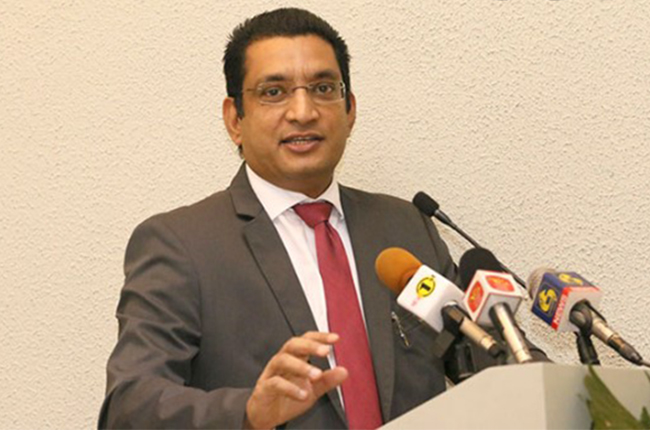
Foreign Minister Ali Sabry, PC, has dismissed assertions that China caused the current economic crisis here.The Minister made Sri Lanka’s position clear in an interview with WION’s diplomatic correspondent Sidhant Sibal. Asked whether Minister Sabry believed that the current economic crisis is due to China, its policy of debt crisis, the Minister has said: No, I don’t agree with that, which is a western phrase. We don’t agree with that. The Chinese never came and forced us to take money. Actually, we have gone and sought funds and they have respected that and invested in our country. They are the biggest investor in our country, we don’t agree with that phrase. Having taken the money we have put them into proper use or who so ever we can get in return is the issue for Sri Lankans, therefore we don’t associate with that kind of phrase, actually Chinese have been good friends for us and they have been the biggest investor in the country post conflict.
Commenting on Sri Lanka’s ties with China, WION quoted Sabry as having said: “Our relationship with Beijing is very strong for a long period of time, they have been our close friend. This year we have celebrated 70 years of economic ties with them, beginning with the Rubber Rice pact, we exported rubber to them and imported rice. So ours is a strong relationship and basically it has been a commercial relationship, economic relationship where they have come and invested heavily in Sri Lanka during a difficult period of time for us and during the 26 years of the conflict, during the last few years, Chinese supported us with supply of arms to get rid of the threat from one of the most ruthless terrorist organizations, the LTTE and in order to bring back peace to our country. In that context we have had a very good relationship with them. Sri Lanka always follows the dynamic, neutral foreign policy where we would want everyone to be a friend of Sri Lanka and enemy to none. That is our foreign policy, that is our relationship, so given this dynamic, we would continue the same thing but taking India’s sensitivities and security concerns to heart because that is very important for us.”
WION: How has the talks been with the IMF and has India played a role in facilitating the talks? I believe this is the 17th bailout you are trying to secure.
Ali Sabry: I started the negotiations with them, and they have studied, and staff-level agreement has been reached, prior action before the EFF, extended fund facility, we have agreed on. We have agreed and implemented some of those things. The EEF facility is for 2.9 billion, and the moment the IMF gets involved, it infuses confidence in the system, ADB, World Bank all come on the table, and we probably will be able to return to the money market, so that is why it is so important. India, had actually provided us with a lifeline during the most crucial time of our history, in terms of economy and those credit lines kept us going for a long period of time. I remember, when I was in Washington, your Finance Minister Sitharaman led your group and supported us in our discussion with the IMF and they have continued to do so. So it is important and Indian support is very critical to us. India has played a great role in supporting the neighbour in the most difficult time of its history.
WION: Why didn’t China offer financial assistance, as India did, during the recent crisis?
Ali Sabry: The Chinese also supported us just before the particular period of time, they also provided us with some financial facilities and credit line, also they did provide us some soft arrangement to bolster our reserves at the central bank, apart from that some humanitarian assistance also. We hope China will step up in providing us with debt restructuring assurances, along with India so that we can go to the IMF and resolve the matter once and for all and get back to the recovery path. So, it’s important for all creditors and all investors that Sri Lanka recovers and recovers fast. The longer the debt gets suspended, the longer it takes to recover. It is bad for all the creditors and investors; everybody understands that, including China.
WION: Has China offered to restructure…
Ali Sabry: We are still in discussions for that, they have been cooperative and part of the common platform where we share information, recently in Washington. They also took part on the virtual platform. So China, India, Paris club, and Japan are all cooperating with us, so we are in the final stage of trying to get the debt restructuring and assurances. We are hopeful all countries and all our friends will not let us down.
WION: Have you asked for more Indian support.
Ali Sabry:Not really, right now our economy has stabilized to some extent and we should be able to manage ourselves. Right now, we have reached out to India and the rest of the world, it’s not for aid or any more loans but basically investments. We are working with Indians and Indian companies and the government to work together in various areas for mutual interests, so that investment comes into the country and it will be beneficial for both Indians and Sri Lankans.






Approval has been granted at the Cabinet meeting held on 22.07.2024 to publish the draft bill of State Assets Management Act in the government gazette notification and thereby present it to the Parliament for its concurrence.
However, the draft bill couldn’t be passed in Parliament as a result of the Parliament being dissolved in the month of October 2024.
Thereafter, the draft bill was subject to further inspection by a
committee appointed which comprised of officials and authorities on the subject.
The said Committee has recognized the amendments to be made and a fundamental draft has been prepared including the proposed amendments.
Accordingly, the Cabinet of Ministers approved the resolution furnished by the President in his capacity as the Minister of Finance, Planning and Economic Development to suspend further activities regarding the draft bill of State Assets Management Act published in the extraordinary gazette of 02.08.2024, and to direct the Legal Draftsman to prepare a draft bill based on the fundamental draft prepared by the subject specialists’ committee.
Considering the compliance of the Cooperative Societies’ operations with the concurrent socio – economic circumstances as well as the changes in the common law, the requirement of amending the Cooperative Employees Commission Act No. 12 of 1972 has been recognized.
A fundamental draft including proposed amendments based on the experience gained by that Commission as well as the opinions and proposals of Cooperative societies, their director board members, cooperative employees and other interested parties has been prepared.
Accordingly, the Cabinet of Ministers granted approval to the resolution furnished by the Minister of Trade, Commerce, Food Security and Cooperative development to provide instructions to the Legal draftsman to prepare a draft bill to amend the Cooperative Employees Commission Act No. 12 0f 1972, based on the said fundamental draft.
Latest News
Dilki Wathsala Marambage appointed as Director General of the Department of Technical Education and Training

The Cabinet of Ministers granted approval to the proposal forwarded by the Prime Minister in her capacity as the Minister of Education, Higher Education and Vocational Education to appoint Mrs. Dilki Wathsala Marambage to the post of Director General of the Department of Technical Education and Training.

Cabinet approves redrafting of State Assets Management Act
Cooperative Employees Commission Act No. 12 of 1972 to be amended
Dilki Wathsala Marambage appointed as Director General of the Department of Technical Education and Training
Declaration of Naakolagane Sanctuary under the Fauna and Flora Protection Ordinance
Cabinet approves transfer and maintenance of selected roads presently under PC’s and Local Authorities to the RDA
Obtaining financial facilities for the Water Supply and Sanitation Improvement Program (Sub-program 2) from the ADB

‘Dates have the highest sugar content to fight Coronavirus’

Sunday Island 27 December – Headlines

#SundayIsland 17th December – Headlines

Sunday Island – 28th March

Sunday Island Headlines – 21 March

Sunday Island – 21st February – Headlines
-

 Features6 days ago
The Sri Lankan who made Scottish history
-

 Sports6 days ago
Nissanka absence opens door for Sri Lanka’s young guns
-

 News5 days ago
NDB fraud Rs 60mn more than reported
-

 News7 days ago
Gnansara Thera to be assigned to prison printing section: Officials
-

 News5 days ago
Removing monk’s robes matter for Sangha to decide: Mahanayake Theras
-
 News7 days ago
OIC of FCID summoned before Maligakanda Magistrate
-

 Features6 days ago
Future of Sri Lanka’s state university system: Should it be shut down and reopened?
-
 News6 days ago
Shiranthi R remanded until 13 Oct.