
Sports
Rugby offers valuable lessons on empathy


By A Special Sports Correspondent
Rugby union is a sport that has blended well with the Sri Lankan sports community for over 145 years. From the days when the first international rugby match was played in a 1907 (Between Ceylon and the visiting All Blacks) the game has spread its tentacles; thanks to the untiring efforts of many dedicated rugby administrators.
When that first rugby international was played in Colombo, the All Blacks were reprimanded for playing against a nation which wasn’t affiliated with the world rugby governing body. That was when Ceylon knew that they had to enter the larger rugby world. For that purpose the Ceylon Rugby Football Union was formed in 1908.
Whenever Sri Lanka has entertained thoughts of engaging the world its performances have been great. From the time the British represented us in sport to the times when rugby’s elite from Colombo did the honours in wearing the national jersey, Sri Lanka’s rugby was taken seriously by the world rugby fraternity. But this is not the case in present times where Sri Lanka is fighting hard to earn a promotion to the Asia Rugby Championship.
Back during the good times of rugby in Sri Lanka the Annual General Meeting of Sri Lanka Rugby (SLR) was held in an atmosphere of camaraderie. There was no such campaigning for votes and the next man in line for the presidency was pushed up automatically to head this sports body, governing the interest of rugby in Sri Lanka. That changed in later years and the ‘games’ played to become president of SLR became ugly as political matters are discussed and deals are struck in the island’s election scene.
Rugby too spread laterally and the game was embraced by parties, clubs and schools which couldn’t maintain the glorified standards of the sport played with the oval shaped ball. One of the unwritten laws of the game that’s often broken is players and officials being unable to shake hands and make up after a dispute.
Rugby matches are played in hostile atmospheres. The win at any cost rule is promoted akin to how ambition is embedded in the minds of A’ Level students, who strive to enter university. We’ve seen this hostility being present in school matches and that’s not a place where we should see this kind of behavior spreading its roots. For the record, Kandy has been a hotspot for rugby violence in the schools scene during the last couple years. This elbows out attitude can then be seen continuing to club rugby as well. During the past two seasons Kandy SC pulled out of the knockout tournament citing differences in the choice of venue by SLR for that stage of the domestic tournament.
Strangely rugby is introduced to schoolchildren at a young stage, but one wonders whether sportsmanship is also embedded into them. Most schools start rugby for kids at age 10 or below that. Children are naturally friendly and like to mingle with the opposing team members. But we’ve seen coaches who are under pressure channeling some that negative energies to their chargers; often the boys in one team told to be unfriendly to the other team well before the game starts. We saw this kind of behavior out in the open before the year 2022 schools’ knockout final began.
Kids must be taught to take up victory and defeat in the same spirit. Rugby is evenly spread these days in terms of setting up fixtures for teams. There were times in the good old days when lesser known schools could only dream of having a fixture against teams like Royal, Trinity, St. Thomas’ and Isipatana. Now these popular rugby playing schools are forced to accommodate games against less popular schools in their fixture list; largely to be entitled to the label ‘Division 1’ rugby playing school. This ‘label’ is given to schools by the Sri Lanka Schools Rugby Football Association; a sports organization which is run by a bunch of schoolmasters who don’t really know the length and breadth of a rugby field.
Despite all that, school rugby is cherished for all its ‘colors’ and different cultures. School rugby is a ‘stage’ where great lessons in empathy are taught. We saw last season, how a referee officiating in a school game was quick enough to hold on to a player, who was about to collapse. This incident took place when the game was to be restarted with a scrum. It was a great lesson on empathy because the players of both teams were focused on the scrum that was going to take place and if not for the referee that player would have had a nasty fall.
SLR must also conduct programmes for schools and be involved in the inter-school rugby scene. People with a rugby background and knowledge of the game must be roped into serve the game at school level. There was a time when younger school players emulated their older ‘big brothers’ who played rugby at school. Now that emulating ‘thing’ is out of fashion; because every individual wants to be the best version of himself and there are enough tools around to achieve that goal. But still, rugby’s past heroes can have an influence on the players, referees, coaches and administrators. Rugby, overall, has potential to influence a community and remind everyone that ‘no one is bigger than the game’.


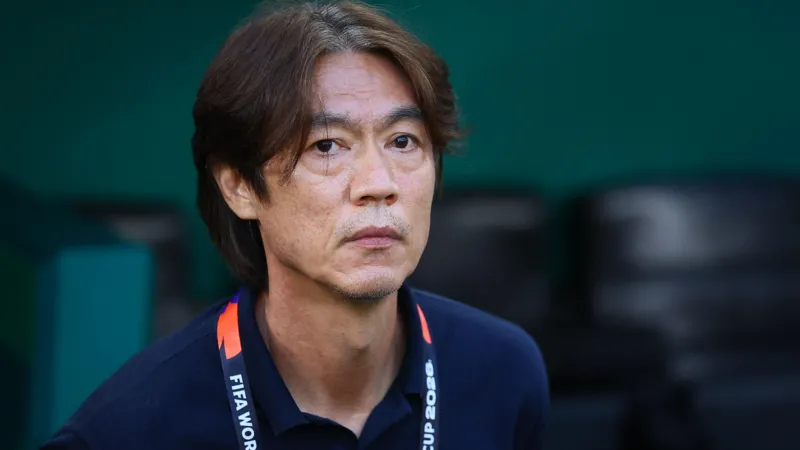
Hong Myung-bo has resigned as head coach of South Korea’s men’s national football team after they failed to advance to the World Cup knockout stage.
The team had hoped they could still qualify for the next round of the tournament as one of the best third-placed teams, but that hope was quashed on Saturday.
The early exit has prompted widespread criticism at home, with President Lee Jae Myung calling for an investigation into reasons behind the team’s disappointing performance.
Hong apologised to fans on Sunday and said the responsibility “rests entirely with me as head coach”.
Ranked 32nd in FIFA’s men’s rankings and led by star player Son Heung-min, South Korea recorded two losses and one win at the World Cup, finishing behind Mexico and South Africa, who are ranked 15th and 60th respectively.
Criticism had mounted quickly after the team’s last match with South Africa on Thursday, which South Korea lost 1-0.
The defeat left them third in Group A. It still gave them hope to qualify for the next round under a new rule introduced with this tournament’s expansion from 32 to 48 teams, which allows the eight best third-placed teams in the group stage to progress to the knockout round. But on Saturday, they were knocked out because of the other teams’ final scores.
Fans blame Hong, who has been coaching the team for the past two years. On Monday, the national team’s official fan club Red Devils issued a statement calling on Hong to “kneel before the entire nation and leave the football world forever”.
Announcing his resignation at a news conference in Mexico on Sunday, Hong said that “we didn’t deliver the results that our fans expected”.
“Even though I am leaving the national team, I am not abandoning Korean football altogether,” Hong said. “I will cheer for the national team from the bottom of my heart and hope that the team will be trusted and loved by the people once again.”
The announcement came after President Lee said that he felt “not just confusion but utter bewilderment at the unexpected outcome”.
In a post on X, Lee said that the early exit of the team “appears to be a failure of organisation and personnel”.
“When favouritism and cronyism take precedence over competence in selecting a commander, the result is as predictable as fire burning paper,” he said.
Hong’s appointment to the head coach post was controversial from the start. The former defender was a hero of South Korea’s 2002 World Cup success, having captained the team to a historic semi-final finish. But when he led the team as a coach in 2014, they failed to advance beyond the group stage – or win a single match.
When Hong was appointed to the same job again in 2024, it was met with harsh uproar. Many football fans criticised the appointment as football association’s old guards giving the top job to their friend, as the KFA passed on a few foreign-born candidates who had undergone a rigorous vetting process.
On Sunday, Hong said that “accepting the job was not an easy choice”. “I cannot say every decision has been the right one, but I can tell you that I have made every decision with Korean football in mind,” he added.
South Korea police say that they are watching for security threats at Incheon Airport and other locations after a death threat was made online against Hong on his return to Korea over the weekend, local media reported.
[BBC]
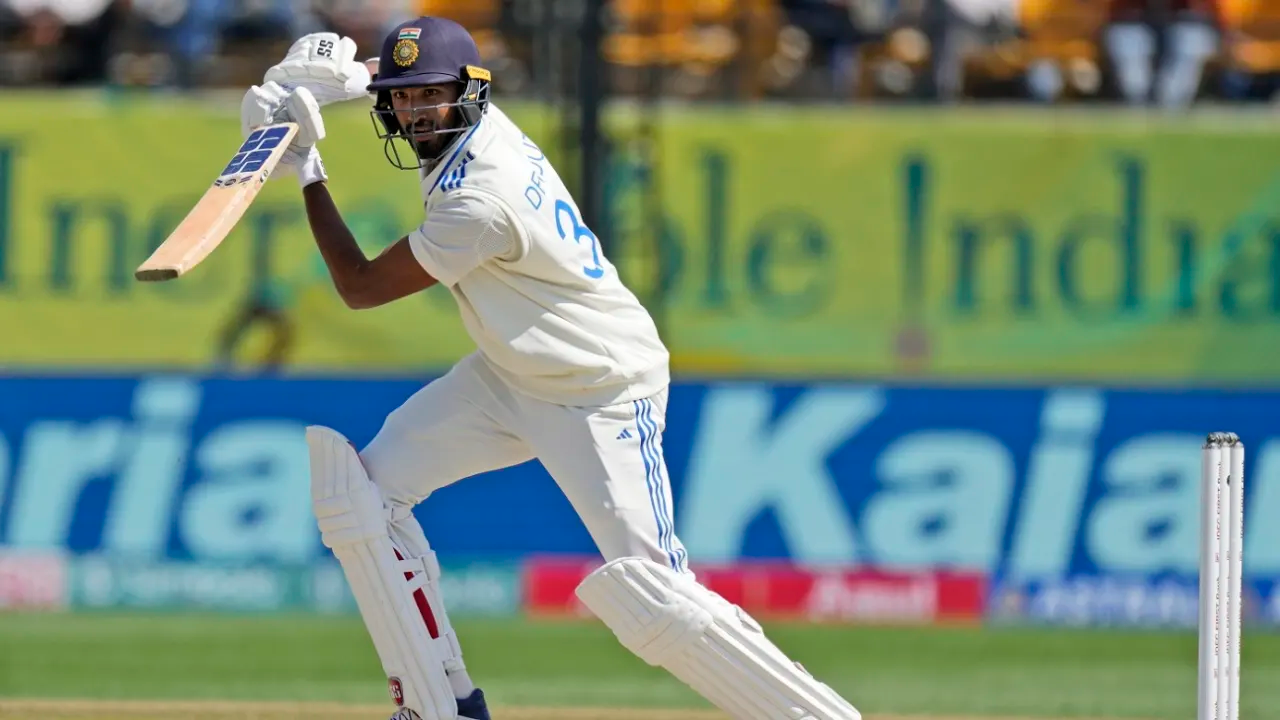
Devdutt Padikkal’s half-century and left-arm spinner Dilum Sudeera’s five-wicket haul were the highlights on day four as the first unofficial Test between India A and Sri Lanka A petered to a draw.
India A declared for the second time in the game after setting Sri Lanka A a target north of 300, but were only able to take two wickets in the 15 overs they managed to get in.
India began the day on 48 for no loss and a lead of 170, although B Sai Sudharsan had retired hurt on the third day. Padikkal and Aayush Pandey added 42 runs on the fourth morning before Sudeera removed the latter for 38 for his first wicket. Two balls later, Ravindu Fernando trapped Ruturaj Gaikwad for 1 off 2.
Padikkal went on to make 67 in a knock laced with five boundaries before Sudeera struck in consecutive overs to remove him and Jurel. Shaik Rasheed and Harsh Dubey then added 47 runs for the fifth wicket before Dubey was caught behind off Chamika Gunasekara. Sudeera then snared Rasheed, Saransh Jain and Auqib Nabi in the next over, when India A decided to declare 311 runs ahead. Sudharsan did not return to bat for India A.
Sri Lanka A’s openers had brisk and solid start, but it slightly came apart when Nabi cleaned up Pawantha Weerasinghe for 20 off 19 in the fifth over and Dubey trapped Niroshan Dickwella lbw.
Nuwanidu Fernando and Ashen Bandara then saw the day out, with India A unable to inflict any further damage.
Scores:
India A 452 for 6 dec in 111.4 overs (Sai Sudharsan 132, Dhruv Jurel 141*, Shaik Rasheed 63; Chamika Gunasekara 3-84, Dilum Sudeera 2-143) and 189 for 8 dec in 57 overs (Devdutt Padikkal 67; Dilum Sudeera 5-49) vs Sri Lanka A 330 in 101.4 overs (Nuwanidu Fernando 84, Ashen Bandara 70, Sahan Arachchige 72; Auqib Nabi 4-58) and 70 for 2 (Pawantha Weerasinghe 20; Auqib Nabi 1-18, Harsh Dubey 1-25). Match ended in a draw
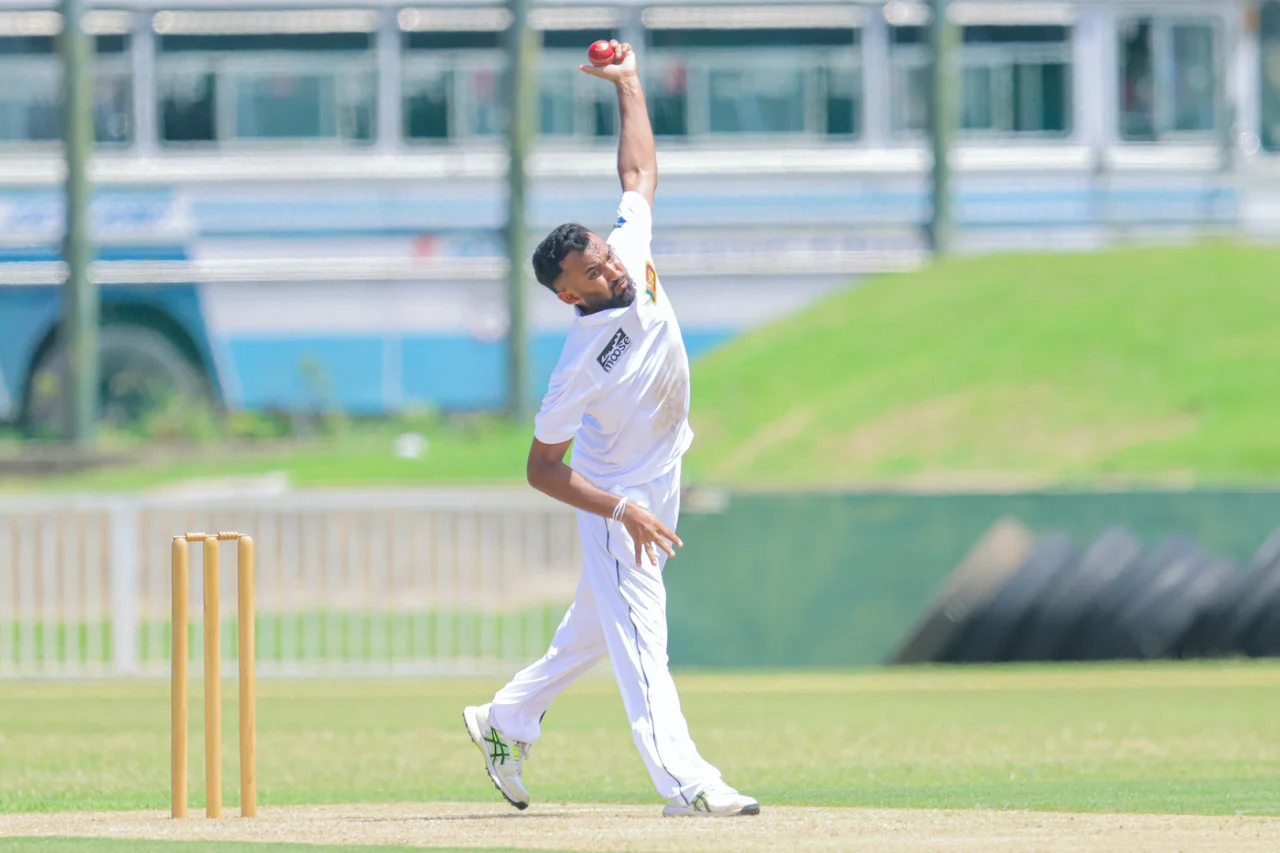
Dilum Sudeera captured five wickets [Cricinfo]
[Cricinfo]
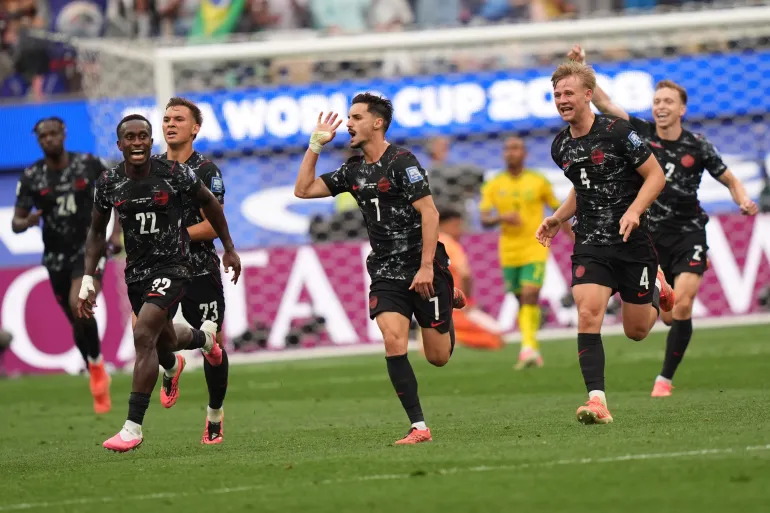
Canada beat South Africa 1-0 thanks to a stoppage-time strike by Stephen Eustaquio from distance to reach the FIFA World Cup last 16 for the first time in their history.
Eustaquio received the ball on the edge of the South Africa penalty area and hammered it past diving goalkeeper Ronwen Williams in a thrilling conclusion to the first knockout-round match of the tournament on Sunday.
South Africa, who had seemed content to play for extra time and a possible penalty shootout, made a few furious but unsuccessful attempts to level before the final whistle as the sun broke through the clouds at Los Angeles Stadium.
Canada will next face either the Netherlands or Morocco on July 4 in Houston for a place in the quarterfinals.
“It’s about the two years we’ve been together,” Canada coach Jesse Marsch told the team in a huddle after the final whistle.
“Think about how we talked about sticking to the plan – you guys showing your character. You guys are Canadian heroes here.”
Chances were scarce in a cagey first half, with little to separate the sides, who were both playing in the knockout rounds for the first time.
Canada’s best opening came just before half-time when a corner sparked a scramble in the South Africa box. Moise Bombito sent a header goal-wards, which was cleared off the line by Aubrey Modiba, before Tajon Buchanan’s close-range effort struck Williams in the chest.
Moments later, Richie Laryea went down in the area, prompting Canadian appeals for a penalty, but the decision not to award a spot kick stood after a VAR review, prompting loud boos from Canada’s red-clad army of supporters dominating the stands.
Marsch continued to protest as the teams left the field at half-time, with Bombito appearing to urge him away from the referee.
Frustration for Canada only grew early in the second half, as South Africa appeared in no rush to press the issue.
Canada had another chance just before the second-half hydration break, when Tani Oluwaseyi’s shot hit the keeper, and Jonathan David was unable to head the ricochet home, thanks to an excellent defensive effort by Mbekezeli Mbokazi to clear the ball.
Eustaquio dedicated the win to “all Canadians” when he spoke to reporters after the match.
“I think it was an amazing goal. When I shot, I thought everyone shot with me. Everyone added a little power to it when it went into the back of the net.
” It started when we came out of group stage. Belief is a big part of it. We will now get either Netherlands or Morocco. Anything can happen. If we keep working like we are doing, we might even win it.”
[Aljazeera]

South Korea football coach quits as president calls for probe into World Cup loss

Europe’s heatwave linked to 1,300 deaths, WHO says, as Germany hits record 41.7C

Padikkal fifty, Sudeera five-for before India A, Sri Lanka A settle for draw

“May this sacred Poson Festival illuminate every heart with compassion, loving-kindness and wisdom”- President

Canada score late to beat South Africa and reach last 16 at World Cup 2026

Tector and Moondra headline Ireland’s historic series sweep against India

‘Dates have the highest sugar content to fight Coronavirus’

Sunday Island 27 December – Headlines

#SundayIsland 17th December – Headlines

Sunday Island – 28th March

Sunday Island Headlines – 21 March

Sunday Island – 21st February – Headlines
-

 News13 hours ago
LAWASIA warns against ad hoc initiative to increase judges’ retirement ages
-
 Opinion7 days ago
Ranasinghe Premadasa: The man who would not take ‘No’ for an answer
-
 News2 days ago
Another 1,132 Sri Lankan Personnel to be deployed for United Nations Peacekeeping Missions
-

 Opinion6 days ago
Sri Lanka’s national security: Justice, reconciliation, and forward-looking vigilance
-

 News6 days ago
US Assistant Secretary of State for South and Central Asian Affairs meets President
-

 News4 days ago
Kelaniya emerges as highest ranked Lankan uni in Times Higher Education Sustainability Impact Ratings
-
 Opinion5 days ago
A triumph for Pakistan’s skilled diplomacy at Iran-US talks
-

 Editorial7 days ago
FCID’s big catch