
Sports
Rugby at Royal and Summa

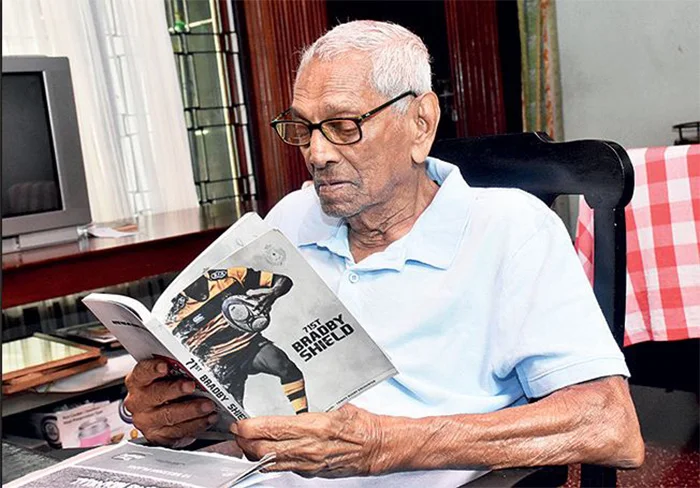
Summa Navaratnam passed away on October 19, 2023. May 21, 2025 marks his 100th birth anniversary. My first interactions with Mr. Summa Navartnam was in 1977 when he was coaching the Royal College 1st XV and we were attending under-17 practices. We had just entered Royal College from Royal Junior School after passing the 1976 NCGE examination. The under-17 coach was Air Vice Marshal Harry Gunathilake but Summa didn’t hesitate to teach us a few tricks of the trade while in the grounds. When we grew up to be 1st XV players ourselves (1979 and 1980), he became a close mentor and coach to us. And as we moved on in life, we slowly turned into friends.
Around 2010, when he wanted to formalise the Summa Navaratnam Royal Junior Rugby Academy with its own constitution and so on, he entrusted that task to me. This work brought us closer, and I soon became his de facto physician. It enhanced our conversations and interactions. I realised this was an extraordinary man, whose values and life experiences should not go waste. Here are some things he has told me.
Royal in the 1940s
The year was 1939, when World War II started after Germany’s invasion of Poland drove Great Britain and France to declare war against Hitler. It was also the year that Royal appointed Mr. E.L Bradby as its principal, a name that resonates so loudly in the school’s rugby discourse now. Royal was not the school of today, with thousands of students. It was only in 1940 that its roll passed 625 students.This was also the year when Summa, at 14-years-old, started playing rugger. After seeing him run, the House rugger captain asked him to come for rugger practices and to join the House team. All students of Royal belonged to four Houses at the time: Hartley, Harward, Marsh and Boake (Reed House came to being in 1970). Summa played for Boake House. Inter-House events are among colleagues and are often stepping stones to represent the Royal and compete with other schools. Summa also represented his House and the school in boxing.Summa was an athlete before he became a rugby player. He had demonstrated his speed as a sprinter when he ran in events as under-12, then under-13 and under-14. Summa recalls a year when he was also the most senior rugger player in the House team. Athletics was in the third term and rugger was in the second term. So he was able to take part both in athletics as well as in rugby for school starting in 1940, a practice he continued till 1943.
That year was the pinnacle of Summa’s performances at Royal. He was the Boake House captain, the House boxing captain, as well as the House athletics captain. He was also the House rugger captain and captained Royal College in the second game against Trinity. Summa humbly claimed that, “I was made captain as the captain of the first leg, C.O Foenander, got injured.” This was the year when the tournament was split into two legs and Royal beat Trinity in both. In the 22 matches played between Trinity and Royal from 1920 and 1944, Royal had won only three games–one in 1941, and the two legs in 1943 during Summa’s senior year.
Summa recalled that, in 1943, Royal won both games and that, in 1944, we lost both. It was in 1945 that the Bradby Shield was given. According to Summa, Principal Mr. Bradby wanted to award the shield in 1944 itself: “He thought most players who played in 1943 would be there. But out of the 20 odd boys who came for practice, 15 left and moved on in their careers. You see, when one person leaves, being friends, they all leave together.” Many of those boys went to university and some ended up as doctors. Royal was left with just five experienced players and that, too, three regulars and two reserves. “So he decided to hold it for another year, instead of getting thrashed,” Summa said. Mr. Bradby was right. Royal lost to Trinity 15:0 in the first leg and 17:0 in the second. So the Bradby shield came to be awarded for the first time in 1945.”Because of the war, only Trinity continued to play rugger,” Summa reminisced. “That is one reason why the Bradby shield was awarded, to keep that enthusiasm going. Before the war in 1940 and 41, we played St Peter’s, Zahira and Trinity. Those were the only four schools playing.” In 1942 and 1943, Summa could remember only Royal playing against Trinity. At the time, Ceylon was badly affected by the war.
College Colours
Royal College has inherited the English tradition of awarding Colours to students in school who have excelled in annual sports activities. This is considered the greatest recognition the school awards to sportsmen. Receiving Colours in one sport is enough to make you a hero, not only during one’s school career, but throughout life among the Royal College community. As much as receiving a prize at the Royal College prize-giving is a dream of the academically inclined Royalists, earning Royal College Colours is the dream of every sportsman.
Summa received Colours in not just one sport but three: athletics, rugger and boxing. He played cricket for the school but did not excel in it. Summa also took part in most other games for Boake House. For instance, he distinctly remembers playing tennis for the House team.
Summa said he coached Royal College from 1973 to 1983, at a stretch. He got the support of others such as Malik Samarawickrema and Dr. Fred Perera. Before that, too, he had coached Royal, on and off. He also remembered coaching Isipatana, St Peter’s and Wesley College, from time to time. Summa did not give up athletics after staring club rugby. “I ran till 1953 and broke the record in 1952,” he said.
When asked what he remembered of school days’ rugby, Summa spoke of 1941 when Royal for the first time beat Trinity (RC 11:TCK 3). He was humble enough to also say how Trinity got three points in the 1941 game: “I became the offender by holding on to the ball. So they gave a penalty against me and they put it over. We also beat St. Peter’s before that, five-nil or three-nil.” And he recalls a match against Zahira where, “We played Zahira College, Maradana. It was a tough fight, almost blowing each other. Two Aldens played in that match. Eric Alden was fullback and Hugh Alden was centre-three-quarter. But when we won and we came back, our bicycle tires were deflated! After beating Zahira, our tires were punctured! Zahira was the last match.”
Golden decade
The first golden decade of Royal rugby is considered to be 1971 to 1980. The Royal boys managed to keep the Bradby Shield for seven out of those 10 years. That is, three out of 10 from 1951-1960; four out of 10 between 1961-1970; four out of 10 between 1981-1990; and three between 1991 to 2000. The contributions of Summa’s predecessor, Mahesh Rodrigo, and my own coaches such as Malik Samarawickrema and Dr. Fred Perera, are most gratefully noted.
Summa’s coaching stint from 1973 to 1983 was special to him. It was in 1976 that Royal under Manik Veerakumar was unbeaten during the season and scored a mammoth 36:0 win against Trinity in the Brady first leg and 25:6 win in the second. The era 1978 to 1980 is the golden triennium of Royal rugby where they beat Trinity three years in a row [in 1980, under the captaincy of Sujanthakumar] for the first time since the beginning of the series in 1920. This record was broken only in 2004, when Royal consecutively retained the Bradby Shield for four years, under the captaincy of E.L. Dissanayake. Previously, Trinity had won six Bradbys in a row from 1952 to 1957. Trinity College dominated the early years of schools’ rugby in Sri Lanka, including the Royal-Trinity games. For example, between 1920 and 1944, they won 19 of 22 games, while Royal clinched only three.
Summa remembered three stints coaching senior rugby football at Royal. His name comes up as the Royal rugby coach as early as 1953 in the school’s archival documents. The master-in-charge of rugby was M.T Thambapillia at the time. The first leg played in Bogambara was captained by T.S. Almeida where Royal lost to Trinity 13:0. The loss of the second leg by just three points (3:0) demonstrated the ability of Summa to learn fast and adapt, a characteristic that I believe he has passed onto us. In 1954, he brought in F.D Waldock to assist him. Summa’s name next appears as the Royal coach in 1967 and 1968, followed by the golden decade, 1973 to 1983.
When asked about his final stint as Royal coach, Summa recalled that, “It started in 1973 and went on till 1983. I would have carried on if I hadn’t gone to America. After a break, I came back as rugby coordinator in Bulla’s year. If you look at his book, it will be there.” Bulla is the nickname for Mr. C.R de Silva, the Bradby-winning captain of Royal College in 1968 who later became one of Sri Lanka’s most respected Attorney-Generals and a Chairperson of the Royal Rugby Football Advisory and Management Committee.
In our many conversations, Summa Sir referred to Mr. Quentin Israel as the great coach of S. Thomas College and Mr. Berty Dias as a great coach from Trinity. They were competitors, yet good friends. He also spoke of Mr. Chalkie White, an Englishman who contributed significantly to improving the standards of rugby in schools. Summa had much regard for Bertie Dias, who is remembered by the old boys of Trinity as a skilled rugby player, coach and referee. He is considered as one of the finest sportsmen Trinity produced in the 1950s and was not only a rugby Lion but was a fine hockey player, boxer and top athlete.
The Great Royal 1976 Bradby Win
Summa Navaratnam’s best team was 1976. Royal won the 1st leg of the Bradby 36:0 and the second leg 25:6.
“Berty Dias was coaching Trinity and Kavan Rambukwella had just returned from Japan,” he narrated. “In 1976, Berty was replaced by Kavan Rambukwella for the second match because Royal had beaten Trinity 36:0. This match was to be played in Bogambara. During the first few minutes of the match starting, Kemal Dean scored for Trinity. Berty Dias would go to Bogambara and watch the Trinity boys practising from afar, through a binocular. Prof. Kemal Deen is now a surgeon. I went to see him for a consultation (and he did not charge me), and he told me this when I met him.”
Kavan has coached CR & FC and Police and Summa knew that his first tactic would be to remove the fly half. “Be hard on the fly half,” he explained. “That is, tackle him hard. So we preplanned a ploy to counter this. My instructions to our fly half was to give the ball out very fast and even put the hands up and run, showing that he has no ball. The idea was for him not to get tackled hard and injured. I used to tell Ching, our scrum half, in the first few minutes, you keep passing the ball out fast, do not do anything, and for the ball to go out to the corner, away from the centre. We did not want injuries to take place,”
“Once the initial threat is passed, and the opposite player is beaten, the ploy was for the player to run on his own and score,” he said. “We scored three tries like that. I remember well, as I introduced that ploy. So we changed the game and beat TCK 25:6 in Bogambara. That was a good year.” Running on your own, generally, was almost prohibited by Summa, except when you have beaten your opponent and the path is clear. He always stressed that “rugby was a team game where 14 men helped the 15th to score”.
The boys of 1980
Another memorable year for Summa was 1980. This is the team Summa probably kept most contact with during the last decade of life, Sujanthakumar’s year. It was a good team. We won both Bradby Shield games. Malik Samarawickrema and Dr. Fred Perera helped in a major way to focus on the game. Summa’s job was to strengthen individual player skills. Suku as he fondly called, is still an ardent supporter of Summa’s Rugby Academy.
This was the year I was the hooker. I clearly remember Summa Sir getting us to come half-an-hour before the scheduled practice time. He got me to train “hooking” with both my legs. The hooker usually throws the ball at lineouts and the ball has to be dead straight. Before practices, Summa would get us to draw 7, 9, and 11-yard spots on the ground away from the goal post, aim and hit the ball on the post at crossbar level. We had to get seven, or so, out of 10 throws to hit the post right in the middle to avoid Summa’s characteristic “che…che… che” remark.
Another technique Summa taught me was to kick properly— to drop the ball onto your foot rather than lob it up. I was never a kicker at Royal, although I had to take on that role when playing for Medical School and for Law College. Summa also advised me to “do your specialist job well before taking on other general responsibilities.” Therefore, at school rugby, I focused totally on my job as the hooker. My task in the scrum was to get the ball to the others in my team and in the lineouts, to throw the ball straight. Loose play came second. Summa had taught me that possession is everything, and that I had to get the ball to the second-row jumper without overthrowing. I also had to win the ball put into the scrums. “Hundred percent lose heads and at least a few tights heads at critical times,” he would say.
The magnanimity of Summa sir’s legacy in rugby is far beyond the words that a brief article in a Bradby souvenir can capture. If there is one thing we can do to express our gratitude to him or repay the debt we owe him, it is to help in every way the Summa Navaratnam Junior Rugby Academy he started, to thrive to enable young children to just enjoy playing the game!
by Sri Jawa Jayawardena


The Lanka Premier League (LPL) 2026 will officially commence on July 17 with a rematch of the 2024 final, which was the last time the LPL was held, featuring reigning champions Jaffna and 2024 runners-up Galle.
The tournament opener is set to take place under the SSC lights in Colombo – a venue that hosted its inaugural T20I during this year’s T20 World Cup. The game is scheduled to begin at 7.30pm, though the venue will also host an official opening ceremony to launch the 2026 season ahead of the fixture.
The finalised tournament timeline will see the competition run from July 17 through August 8. Previously, SLC had announced the tournament will start on July 10, its matches played across four international venues.
The SSC will host five matches in total from July 17-19, before the action moves to Dambulla, then Kandy, and finally back to Colombo – this time at the R. Premadasa Stadium – for the knockout stages and final. There will also be a reserve day for the final, on August 9.
The 2026 edition will feature five teams representing Jaffna, Colombo, Kandy, Galle, and Dambulla. While the official franchise names and corporate ownership structures remain unannounced, SLC is expected to release the finalised team identities and brand details in the lead-up to the tournament.
The player registration portal, meanwhile, has been open since May 8 and will close on May 20. While direct signings can take place until May 22, the deadline for registration for all categories remains May 20.
While the previous two seasons hosted an auction, this year will see the return of a draft, set for June 1.
This change means that no player retention will be allowed from previous seasons, setting the stage for a significant shake up in squad composition. Each team will need to have a minimum of 18 members in their squad, with a further provision to add two local players, taking the squad limit to a maximum of 20.
In order to boost homegrown participation, SLC has announced that two local Emerging U-23 players must be present in each squad, with at least one named in a team’s starting XI. There must also be four overseas players in the playing XI at any given time.
The player registration guidelines had briefly sparked controversy on social media after an initial draft of the guidelines had listed a minimal count of 250,000 social media followers as a mandatory requirement for a registering Icon and Star category players – the two highest player categories. However, SLC has since removed that requirement.
LPL also kept a strong focus on ensuring player media engagement, with match fee penalties ranging from 5% to 50% for failure to meet the media and fan engagement requirements.
[Cricinfo]
Latest News
Cummins, Kishan, Klaasen power Sunrisers Hyderabad into playoffs; Chennai Super Kings not out yet

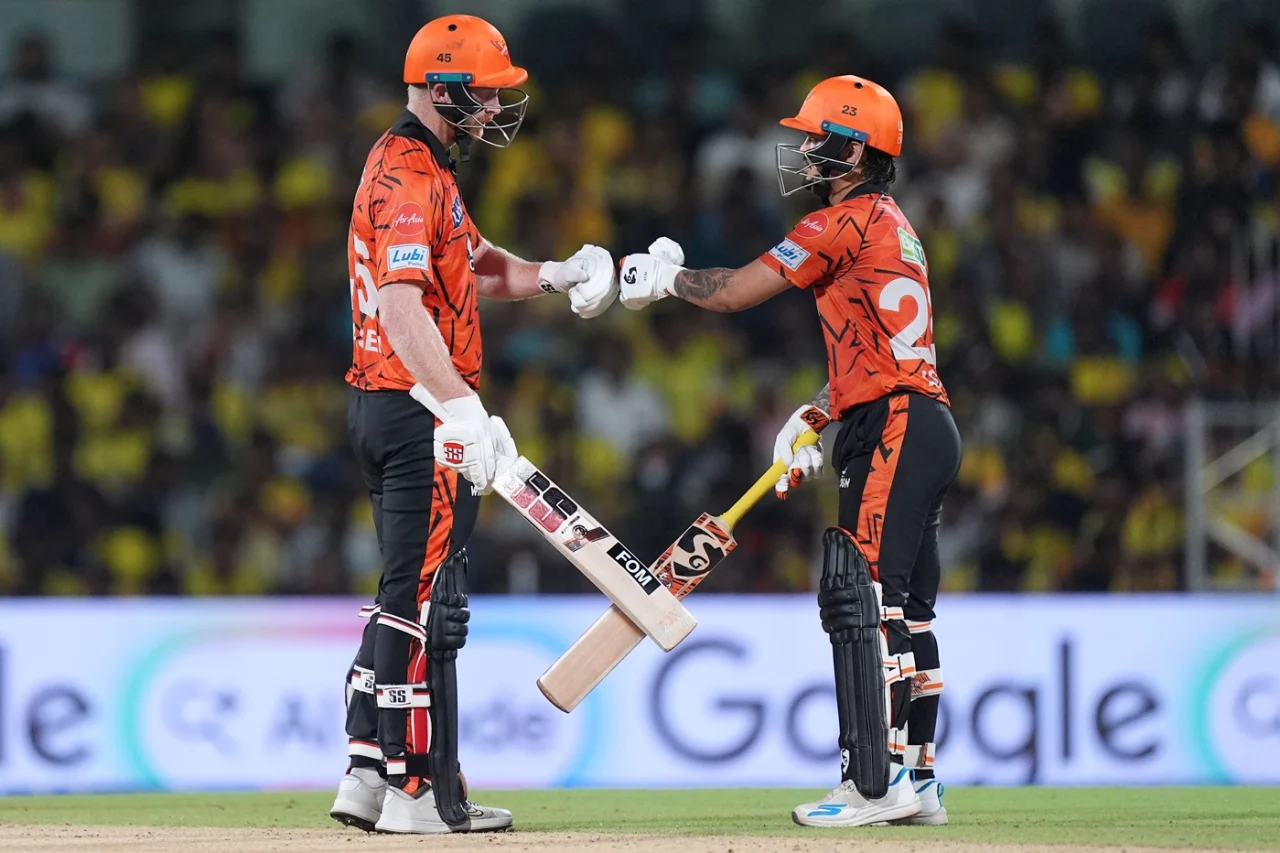
Sunrisers Hyderabad (SRH) have qualified for the IPL 2026 playoffs, taking Gujarat Titans with them. Chennai Super Kings (CSK), meanwhile, are on the brink of elimination. MS Dhoni made it to the ground for the first time this season, but his calf injury continued to keep him on the sidelines. His team fought all the way through, trying to defend a total of 180, but a fifty from Ishan Kishan and utter brilliance from Heintich Klassen won out in the end.
Rutraj Gaikwad was 9 off 11 at the end of the powerplay. He became the second batter this season to come through the first six overs with no boundaries after Lucknow Super Giants’ Arshin Kulkarni in the game against Royal Challengers Bengaluru on May 7.
It doesn’t appear as if Gaikwad is out of form. He is CSK’s second-highest run-getter. Just that he seems to be in denial about the way runs are scored in the powerplay in this IPL. With the field up, other openers are thinking boundaries all the time. He wants to get set and then go. It’s old school and that method, on Monday, gave him 15 in 21 balls – the lowest contribution by an opener at the time of his team’s 100.
On a pitch designed to neutralise bowlers of his pace, Pat Cummins picked up 3 for 28 in four overs. He nailed his match-up with Sanju Samson (one wicket for 23 runs in 20 balls in the IPL) and repeatedly went into the pitch with slower balls to add Kartik Sharma and Gaikwad into his back pocket. Led by the SRH captain’s example, Sakib Hussain took pace off for 18 of his 24 deliveries and finished with 2 for 34. These balls were sticking in the pitch and not coming onto the bat. It made setting up to play shots difficult.
Dewald Brevis walking out to bat is a spectacle all on its own, when he takes a knee just before entering the field. It’s clearly got something to do with his faith, but out here, it’s seen as a hero entry. As the main man marking himself out as the main man. Except coming into this game, he had a strike rate of 122.22. It was the sixth-lowest of all batters this season to have faced at least 50 balls.
SRH allowed only two boundaries in the five overs from nine to 13. CSK needed something from their star boy and finally he delivered. Hitting Nitish Reddy for a four and a six in the 14th over set him on his way to make 44 off 27. Confident in his cross-bat shots, he set himself up for the slow short ball and kept cutting and pulling them into the boundary.
At 17.5 overs, when Brevis was dismissed by Eshan Malinga, he, Samson and Kartik had scored 103 off 59, with 10 fours and seven sixes. Gaikwad, Urvil Patel and Shivam Dube had scored 54 off 52 with three fours and three sixes.
A third of CSK’s first seven overs were dot balls. Forty of SRH’s first 53 runs came in boundaries. The start of the chase was all about two teams pushing each other waiting for one of them to break.
Spencer Johnson and Mukesh Choudhary pushed the speed gun up to 140 kph and above, the polar opposite of what SRH’s quicks did, but they kept Travis Head and Abhishek Sharma in check and eventually got one of them out.
In between innings, CSK coach Stephen Fleming was deep in conversation with Akeal Hosein. A little bit of lip-reading suggested they were talking about how a left-arm spinner could succeed against left-hand batters. Hosein seemed to say he wanted to take the ball away from Abhishek and Head and Kishan first, and then bring one back to hit the stumps. It didn’t quite work out that way but he did get rid of Abhishek two balls into the match-up to lift CSK’s hopes.
A straight-bat push nearly resulted in his wicket but the ball dropped short of Hosein. Klaasen responded to that with a reverse sweep for four. Noor saw the change in stance and pulled out at the start of his next over. The next ball, Klaasen could have been dismissed for 18, had Johnson held on to a tough catch at deep square leg.
Once again, shrugging away the near-miss, Klaasen clattered Noor to the boundary. Klaasen dominated spin and finished with 47 off 26. He had a strike rate of 181 and was in control of 81% of the balls he faced. Those numbers should not have been possible on a pitch that was slow and a bit low. The impact he had on the game was apparent when Samson and Urvil had send-offs for Klaasen.
Batting in Klaasen’s slipstream was fun for Kishan. He brought up fifty off 37 balls. It wasn’t a fluent innings and that almost made it more special. He was so determined not to give it away and so alert when the bad ball came. Any time he had the chance to use his fast hands and whip stuff off his pads, he took them. He played the kind of innings that is important in the context of a season; a performance that says he may not be at his best but is still a threat.
Brief scores:
Sunrisers Hyderabad 181 for 5 in 19 overs (Abhishek Sharma 26, Ishan Kishan 70, Heinrich Klaasen 47, Nitish Kumar Reddy 11, Salil Arora 10*; Mukesh Choudhary 2-36,Anshul Kamboj 1-46, Noor Ahmad 1-40, Akeal Hosein 1-21) beat Chennai Super Kings 180 for 7 in 20 overs (Sanju Samson 27, Rutraj Gaikwad 15, Urvil Patel 13, Kartik Sharma 32, Dewald Brevis 44, Sjivam Dube 26. Prashant Veer 11; Praful Hinge 1-37, Pat Cummins 3-28, Eshan Malinga 1-26, Sakib Hussain 2-34) by five wickets
[Cricinfo]
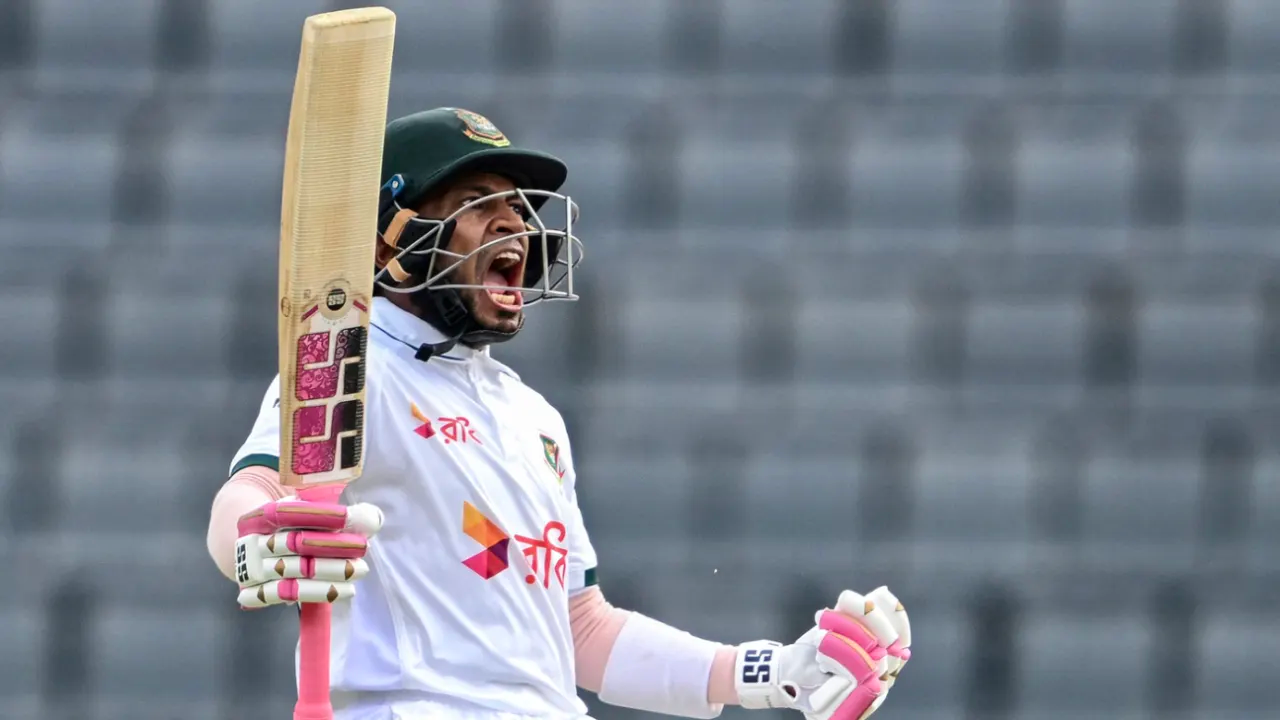
Mushfiqur Rahim’s 14th Test century headlined Bangladesh’s dominance on the third day of the Sylhet Test. His knock and fifties from Litton Das and Mahmudul Hasan Joy helped Bangladesh set a target of 437.
Pakistan batted two overs before the umpires called off play due to bad light. The openers Abdullah Fazal and Azan Awais didn’t open their accounts as both Taskin Ahmed and Shoriful Islam tested them in their respective overs.
The story of the day, however, was Mushfiqur’s 233-ball stay, adding 123 with Litton for the fifth wicket, and 77 runs for the seventh wicket with Taijul Islam. Mushfiqur struck twelve fours and one six during his knock, which was his third century in the second innings of a Test match, coming at a tricky period for Bangladesh when they had to bat well to keep themselves ahead of the game.
He followed his usual formula of getting set by playing the ball close to his body, before finding boundaries around the wicket. Cover drives, square-cuts and slog-sweeps were accompanied by hard hits down the ground and the pulls through midwicket.
Mushfiqur’s innings finally ended with roughly 35 minutes left on the third day; he was the last Bangladesh wicket to fall, in the 103rd over.
Pakistan’s best period on the third day was the first 45 minutes. Shahzad troubled captain Najmul Hossain Shanto, before trapping him lbw for 15. Litton, fresh off his first-innings century, was free-flowing even in seaming conditions. He gave Bangladesh a bit of breathing room with a few boundaries in the first session.
Litton was lucky too, surviving an easy run out when Babar Azam couldn’t hit the stumps from short midwicket. On 38 at the time, he was stranded halfway down the crease after a mix-up with Mushfiqur. Offspinner Sajid Khan also dropped Litton when he was on 56, off his own bowling. Litton continued to time the ball quite easily, until his upper-cut reached Saud Shakeel at fly-slip off Hasan Ali. He made 69 with five fours, off 92 balls.
Litton now has three occasions of a hundred and fifty in a Test, the most by a Bangladeshi wicketkeeper-batter. Later, Taijul contributed with 22 off 51 balls, with two fours, both stylishly struck, as he supported Mushfiqur during their seventh-wicket partnership. Mehidy Hasan Miraz fell to a beauty from Shahzad, but otherwise, Bangladesh kept things in their control on the third day.
Brief scores:
Pakistan 232 and 0 for 0 (Abdullah Fazal 0*, AzanAwais 0*) need 437 runs to win vs Bangladesh 278 and 390 (Mahmudul Hassan Joy 52, Mushfiqur Rahim 137, Litton Das 69; Khurram Shahzad 4-86, Sajid Khan 3-126)
[Cricinfo]

At least 100 dead in Ebola outbreak in DR Congo, official says

Trump says he called off new Iran attack at request of Gulf states

Lanka Premier League returns after two years, opener set for July 17

Cummins, Kishan, Klaasen power Sunrisers Hyderabad into playoffs; Chennai Super Kings not out yet

Mushfiqur ton, Litton and Joy fifties set Pakistan 437

Showers will occur at times in the Western, Sabaragamuwa, Central, North-western, Northern and Southern provinces and in Anuradhapura district

‘Dates have the highest sugar content to fight Coronavirus’

Sunday Island 27 December – Headlines

#SundayIsland 17th December – Headlines

Sunday Island – 28th March

Sunday Island Headlines – 21 March

Sunday Island – 21st February – Headlines
-
 News6 days ago
Ex-SriLankan CEO’s death: Controversy surrounds execution of bail bond
-

 Features2 days ago
Sri Lankan Airlines Airbus Scandal and the Death of Kapila Chandrasena and my Brother Rajeewa
-

 News3 days ago
Lanka’s eligibility to draw next IMF tranche of USD 700 mn hinges on ‘restoration of cost-recovery pricing for electricity and fuel’
-
 Midweek Review6 days ago
A victory that can never be forgotten
-
 News2 days ago
Kapila Chandrasena case: GN phone records under court scrutiny
-

 Opinion5 days ago
Electricity tariffs have skyrocketed: Can further increases be prevented?
-
 Features4 days ago
Mysterious Death of United Nations Secretary General Hammarskjöld
-

 News2 days ago
Rupee slide rekindles 2022 crisis fears as inflation risks mount