
News
Row around Lanka’s holiest tree shows how fake news travels


(Al Jazeera) When social media was inundated with rumours that Sri Lanka’s holiest tree was being harmed by 5G mobile signals, Colombo’s cash-strapped government pulled out all the stops.President Ranil Wickremesinghe dispatched a high-powered team of experts to the 2,300-year-old Sri Maha Bodhi tree in the sacred city of Anuradhapura.
The team included the head of the telecom regulator, his technical chief and the director of the National Botanical Gardens, along with university professors and district administrators.Several visits were made, surveys were carried out, and the centuries-old tree was examined and monitored before a conclusion was reached: there were no 5G signals in the area in the first place.
The episode highlighted the speed with which fake news travels in Sri Lanka – but even more so, it illustrated the reverence in which the country holds the Sri Maha Bodhi.
The tree is believed to have been grown from a cutting of the bodhi tree in India that sheltered the Buddha when he attained enlightenment more than 2,500 years ago.It is both an object of worship and a symbol of national sovereignty on the majority Buddhist island of 22 million people.
The first claims it was under threat appeared on a local website: 5G radiation from towers near the tree was supposedly turning its leaves black, and it was at “great risk” of eventually shedding them all and dying.Memes were shared widely on Facebook and WhatsApp groups, and a television presenter repeated the theories on his YouTube channel.
The chief monk of the Bomaluwa Temple that houses the tree in Anuradhapura, 200km (125 miles) north of Colombo, was accused of taking bribes from phone operators to let them set up 5G base stations nearby.
“I am not a scientist, nor a botanist, so I raised the issue with the president in February,” monk Pallegama Hemarathana, 68, said. “He immediately appointed a panel of experts.”
“The government and the Buddhists will do whatever it takes to protect the Sri Maha Bodhi.”
There are four older base stations within 500 metres (1,640 feet) of the tree, but Telecommunications Regulatory Commission Director General Helasiri Ranatunga said there was “no 5G coverage in the sacred area as rumoured”.
Radiation in the area was well below World Health Organization thresholds, he said, and botanical experts had ruled there was no threat from existing 2G, 3G or 4G coverage.
The panel did, however, recommend banning mobile phone use to preserve the temple’s tranquility, he added.
While there are already signs in place to that effect, they are widely ignored by the hordes of visitors to the site.
At the moment, fresh heart-shaped, purple-green leaves are sprouting on the tree.Botanically a “ficus religiosa” – also known as a “bo” – the tree is worshipped by thousands of Buddhists daily as a symbol of the “living Buddha”.
Comparatively small despite its long history, it is propped up by 10 gold-plated iron supports and dwarfed by another bodhi a short distance away.First-time visitor G Kusumalatha travelled 400km from Walasmulla with more than 60 other pilgrims to pay homage to the sacred tree.
“I feel ecstatic to be so close to the Sri Maha Bodhi,” she said, thanking the “good karma” that had given her the opportunity.
But no one is allowed within an arm’s length.The original tree in India is said to have died centuries ago.Its Sri Lankan descendant was the scene of an attack in March 1985 by separatist Tamil Tigers, who killed more than 120 people.
Since then, the tree has been provided with airport-style security, with visitors going through metal detectors and pat-downs. It is surrounded by two gold-plated fences and protected round the clock by monks, police and armed troops.Several men are also deployed to clap their hands and chase away squirrels, birds and monkeys that could threaten the tree.Sashika Neranjan, 39, visited the site recently with his extended family.







News
Cabinet aporives recruitment of Nursing Instructors for Nursing Schools under the Ministry of Health and Mass Media on Contract Basis

There are 17 nursing schools under the Ministry of Health and Mass Media including the postgraduate primary nursing school.
There are 142 vacancies in the posts of Grade I / Special Grade Nursing Officer (Education) as on 31.03.2026 in those schools while 24 officers are to be promoted to the special grade on 31.12.2025 owing to the vacancies existing in the post of Special
Grade Nursing Officer (Education). Therefore, the number of vacancies is to be 166.
In addition, there are 24 vacancies in the post of Special Grade Nursing Officer (Education).
Although at present action has been taken to upgrade the nursing schools to nursing colleges and upgrade the nursing diploma course to nursing degree course, no action has been taken so far to carry out recruitment for the training relevant to the appointment for the post of Grade I / Special Grade Nursing Officer (Education).
Accordingly, the Cabinet of Ministers granted approval to the resolution furnished by the Minister of Health and Mass Media to recruit retired nursing instructors and nursing instructors who served in the nursing schools belonging to the three armed forces and are retired or have resigned legitimately from service to the post of Grade I / Special Grade Nursing Officer (Education) on contract basis.
Latest News
Signing agreement for the establishment of BIMSTEC Technology Transfer Facility in Sri Lanka
It has been decided to establish a BIMSTEC technology transfer facility in Sri Lanka by entering into a Host Country Agreement at the second leaders’ summit of BIMSTEC (Bay of Bengal
Initiative for Multi-Sectoral Technical and Economic Cooperation) held in New Delhi, India, in 2008, with the objective of enhancing regional cooperation.
The relevant cooperation agreement was signed by the member countries at the 5th BIMSTEC summit on 30-03-2022 in Colombo.
The prime objective of this technology transfer facility is to provide technology, capacity building, and management of intellectual property for the micro, small, and medium-scale
enterprises of the BIMSTEC member countries.
According to the cooperation agreement, an agreement should be entered into between Sri Lanka, as the host country, and BIMSTEC Secretariat for formalizing the legal status, privileges, and immunities of the technology transfer facility.
The drafted agreement has received the relevant institutional approval and legal clearance.
Accordingly, the Cabinet of Ministers has approved the resolution furnished by the Minister of Science and Technology to sign the proposed agreement.
News
The cabinet approves agreement on mutual legal cooperation in criminal matters between the Republic of Sri Lanka and the Republic of Korea
Approval has been granted at the cabinet meeting held on 11-12-2023 to sign an agreement between the Republic of Korea and the Government of Sri Lanka regarding mutual cooperation
in criminal matters.
However, according to the aforementioned approval, the relevant agreement could not be signed between both parties.
Through this agreement, opportunities will be provided
for mutual assistance to other countries in handing over judicial documents and collecting evidence for the use of criminal case matters.
Accordingly, the Cabinet of Ministers has approved the resolution provided by the Minister of Justice and National Integration to sign an agreement between the Republic of Korea and the Government of Sri Lanka to cooperate in criminal matters.

Cabinet aporives recruitment of Nursing Instructors for Nursing Schools under the Ministry of Health and Mass Media on Contract Basis
Signing agreement for the establishment of BIMSTEC Technology Transfer Facility in Sri Lanka
The cabinet approves agreement on mutual legal cooperation in criminal matters between the Republic of Sri Lanka and the Republic of Korea

Misbah-ul-Haq resigns as Pakistan selector after Test squad upheaval
Amendment of the Quarantine and Prevention of Diseases Ordinance No. 3 of 1897
Cabinet approves donation of USD One Million to the Government of Nepal

‘Dates have the highest sugar content to fight Coronavirus’

Sunday Island 27 December – Headlines

#SundayIsland 17th December – Headlines

Sunday Island – 28th March

Sunday Island Headlines – 21 March

Sunday Island – 21st February – Headlines
-

 News5 days ago
Eight politicians in drug kingpin probe
-

 Features3 days ago
“Wrap Me Up in My Blazer”— A Gentlemanly Bradby Reminiscence
-

 Business5 days ago
Sri Lanka opens up: A new season of direct connectivity
-
 Features7 days ago
Insights from Chieftains of Uva: Genealogy of two Kandyan Families – Part II
-

 Features5 days ago
Redefining ageing in Sri Lanka
-
 Latest News6 days ago
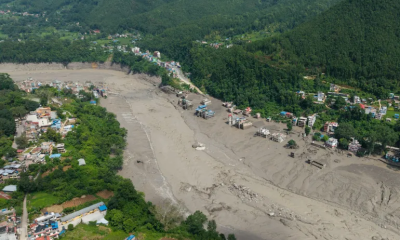
Nepal-Tibet floods: What happened, what caused them and who is missing?
-

 Editorial7 days ago
Warning of power cuts: El Niño and corruption
-

 Features7 days ago
Export diversification: Missing the wood for the trees – Part I