
Sports
Rohit Sharma: The Indian captain who lost cricket World Cup but won hearts

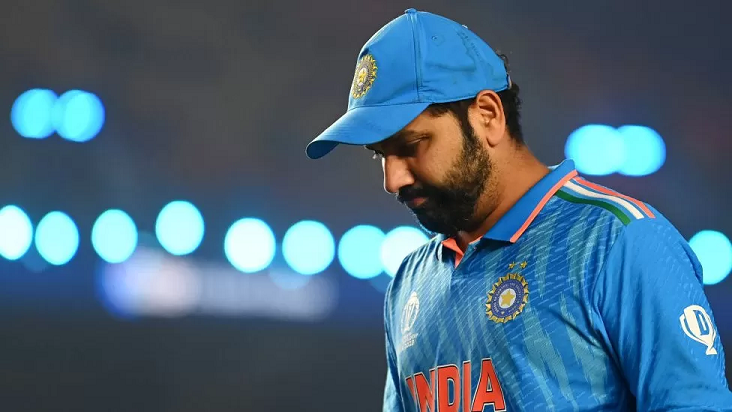
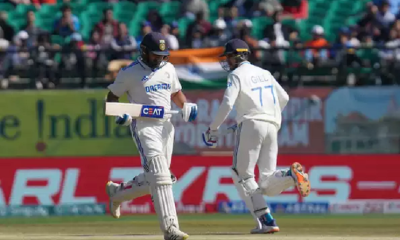
Millions of Indians cried along with cricket captain Rohit Sharma on Sunday as he walked off the field, trying to hold back his tears.
His team had just lost the cricket World Cup final to Australia, prolonging India’s painful wait for the glory since 2011.
This was arguably his best shot at winning the coveted trophy – he will be 40 years old in 2027, when the tournament will be held next. In theory, Rohit could still play in the next World Cup and give it another try. But the pain of losing at home is likely to linger for a long time.
When India won the trophy in front of an overjoyed crowd in Mumbai in 2011, Rohit was not part of the team. He has been vocal about his disappointment at his exclusion at the time. It would have been poetic justice if he had won on Sunday, not just playing in a home World Cup but also leading his side – that wasn’t meant to be.
But a discussion of just the final will not give you the complete Rohit Sharma story from this World Cup. Look closer and you will see a player who was absolutely sure about his ability to play selfless and fearless cricket in the tournament.

As an opener, he was expected to give his side a flying start and take the wind out of the opposition’s attack. He did that effortlessly. Even in the final, he got off to a fast start. At one point, India were scoring at the rate of 10 runs per over.
Some former Indian cricketers have criticised Rohit for losing his wicket to a rash shot in the finals. They argue that it was the match’s turning point.That may well be true but by then, Rohit had already done what he did in so many matches earlier – he had set up a platform for others to build the innings on. But after he departed, the other batters just choked in front of a spirited and tactical Australia bowling attack.
Let’s rewind a bit.
In the group stages, Pakistan set a target of 191 for India to chase. It looked like a sub-par total but then Pakistan had a dangerous bowling attack including Shaheen Afridi, Haris Rauf and Hasan Ali.
Matches between arch-rivals Pakistan and India are a sporting spectacle but they also put players under extreme pressure.
Rohit led from the front and scored a brisk 86 off 63 deliveries, effectively ending Pakistan’s hopes of winning the game. He scored more than 40 runs seven times in the tournament, converting three of them into half-centuries. One could argue that he failed to turn these brisk starts into big scores.
But that would be an oversimplification. As he mentioned in different press conferences, every player in the team had clearly defined roles, and his was to be the destructor.
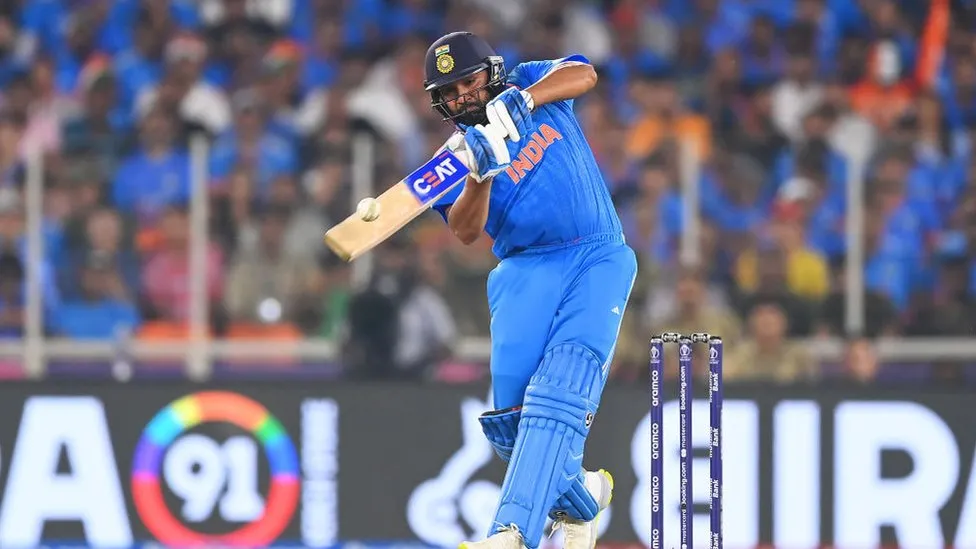
India didn’t lose any match until the finals and their success hugely relied on Rohit’s spirited starts which allowed time and pace to players like Virat Kohli, Shubman Gill, KL Rahul and Shreyas Iyer to take the matches deep and put big totals on the board.
Rohit could have easily slowed down after reaching the 40s for bigger scores but that simply wasn’t his role. He was tasked to pace his innings according to the conditions, regardless of where his personal score stood.
India’s dominating batting line-up also allowed him to play freely. He knew that the batters who followed him were more than capable of putting the opposition under pressure.
While Rohit the batter has been a revelation in this tournament, his leadership deserves equal praise. His approach as a batter also inspired his crafty tactics as a captain. He earned the respect and trust of his team-mates and support staff, including head coach Rahul Dravid.
His bowling changes and fielding placements were astute and well-timed. When Pakistan were scoring at a brisk pace, he brought Mohammed Siraj back into the attack. Siraj had previously leaked 76 runs against Afghanistan and failed to pick up a wicket. A good captain knows his strategy well, but a great captain knows his players even better.
Babar Azam and Muhammad Rizwan had put together a stand of 81and were threatening to take the game away until Siraj broke their partnership.

Rohit also stood firmly behind his players when India were not doing well. He agreed with Dravid’s strategy of believing in the process and not letting results affect the team.
But sporting triumphs don’t happen in a vacuum.
The coach-captain duo worked hard in the background for almost two years with an eye on the World Cup. India entered the final undefeated, a result of their patient and astute planning.
Rohit backed players like Iyer, KL Rahul and Suryakumar Yadav when they were not doing well, and they repaid their captain’s faith with match-winning performances in the World Cup.
The loss in the final would hurt Rohit, his team and Indian cricket fans for a long time. But it takes nothing away from the captain’s achievements.
He truly is the unsung hero of the tournament and could still make it to India’s World Cup squad four years later. It may sound difficult but then sporting glories are all about making impossible dreams come true.
Rohit will surely heal, rebuild and come back stronger because he knows no other way. But for now, the World Cup trophy is still painfully out of his grasp.
(BBC)







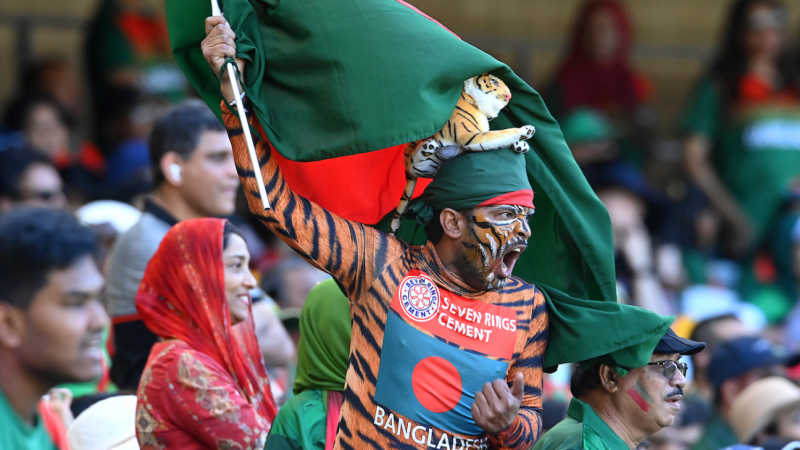
The Bangladesh government has banned the broadcast of IPL 2026 in the country as a response to the BCCI’s decision to pull Mustafizur Rahman out of the tournament.
A statement from the ministry of information and broadcasting said that it had “noted that no reason was communicated for the decision behind Mustafizur Rahman’s exclusion [from the IPL]” and that the development had “caused distress among the people of Bangladesh”. The decision had been taken “in public interest”, it said.
The statement was signed by the ministry’s assistant secretary Firoz Khan.
TV channels and streaming platforms have broadcast the IPL in Bangladesh since its inception in 2008. This is also the first time that the Bangladesh government has banned the telecast of an international cricket tournament, anywhere in the world.
On Saturday, Kolkata Knight Riders (KKR), the team that bought Mustafizur at the IPL auction in December, released him following instructions from the BCCI. The BCCI did not specify a reason – its secretary Devajit Saikia mentioned “recent developments” and did not elaborate.
Over the past few days, Indian spiritual and political leaders had criticised KKR and their owner Shah Rukh Khan for including Mustafizur in their line-up at a time when, according to reports, Hindu minorities are being attacked in Bangladesh. Relations between the two countries have deteriorated since.
Bangladesh are already petitioning the ICC to shift their T20 World Cup matches out of India. No decision has been made on that front yet. The original schedule has Bangladesh opening their campaign against West Indies at Eden Gardens in Kolkata on February 7.
Dr Asif Nazrul, who is currently the sports adviser to the Bangladesh government, said on Saturday evening that the IPL shouldn’t be shown in Bangladesh. Following that post on social media, the country’s information adviser Syeda Rizwana Hasan said any decision to stop broadcasting IPL in Bangladesh would be taken after reviewing the legal basis and thoroughly examining the relevant procedures.
Later on Sunday evening, the BCB confirmed that it has written to the ICC seeking relocation of Bangladesh’s T20 World Cup matches from India, likely to Sri Lanka, the other hosts of the tournament. They have reportedly also written to the BCCI seeking an explanation about Mustafizur’s withdrawal.
While there has been an unspoken ban in the IPL on players from Pakistan for many years now, several Bangladesh players have taken part in the tournament. Mustafizur was the only one picked by a team for the upcoming season, and has been an IPL regular since 2016, with Shakib Al Hasan (KKR and Sunrisers Hyderabad) the other prominent import from the country. Both of them have experience winning the title too.
Abdur Razzak (Royal Challengers Bengaluru), Mohammad Ashraful (Mumbai Indians), Mashrafe Mortaza (KKR), Tamim Iqbal (the now-defunct Pune Warriors India) and Litton Das (KKR) are the others from Bangladesh who have been a part of the IPL in previous years. The new season begins on March 26.
(Cricinfo)

Under 19 Cricket
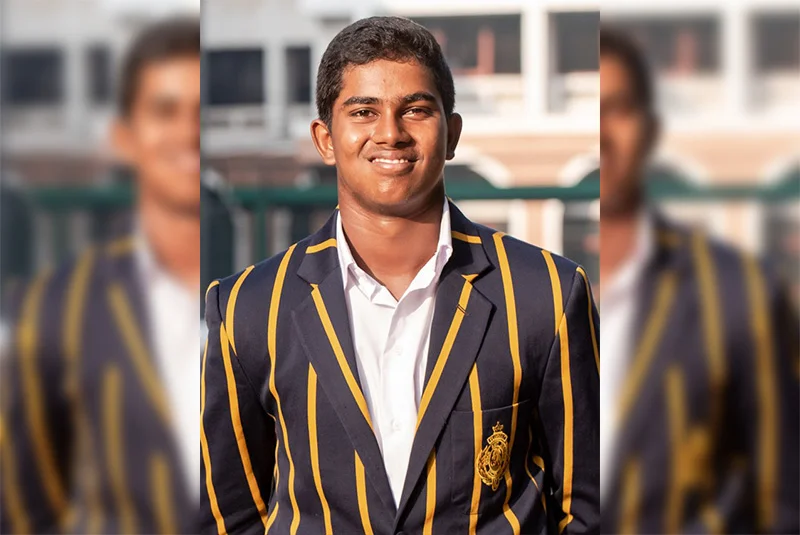
Rehan Peiris produced his best batting performance of the season, a valuable 125, as Royal amassed 347 against St. Peter’s on day one of the Under 19 Division I tier ‘A’ match at Bambalapitiya on Monday.
At Asgiriya, Mahanama bowlers produced a dominant performance against Trinity.
Trinity were six wickets down for 43 runs at one stage before Praveen Mithila and Santhosh Kritheekshan made vital contributions for them to post 153 runs.
While five half centuries powered St. Joseph’s to 344 runs against St. Sebastians’ at Moratuwa, Nalanda struggled to post 226 against Prince of Wales at Campbell Place as Nadul Aponso picked up six wickets for the visitors.
Day one Scores
Royal 347, St. Peter’s 54/2 at Bambalapitiya
Scores
Royal 347 all out in 80 overs (Rehan Peiris 125, Thevindu Wewalwala 20, Manuth Dasanayake 71, Himaru Deshan 58; Thenura Dissanayake 2/74, Janith Panditharathne 6/103)
St. Peter’s
54 for 2 in 10 overs (Sehandu Sooriyaarachchi 2/07)
Mahanama bowlers dominate at Asgiriya
Scores
Trinity
153 all out in 52.3 overs (Praveen Mithila 47, Santhosh Kritheekshan 34; Geeth Sandaruwan 3/33, Thenuja Rashmin 3/35, Venura Kaveethra 2/34)
Mahanama
5 for 1 in six overs
Nadul’s six wickets restrict Nalanda at Campbell Place
Scores
Nalanda 226 all out in 79 overs (Nadul Jayalath 25, Santhul Wijerathna 46, Nemindu Akmeemana 27, Osanda Pamuditha 66, Dunitha Anusara 40; Nadul Aponso 6/53, Nethul Anuhas 4/67)
Prince of Wales
50 for no loss in 16 overs (Palingu Perera 24n.o., Suwas Fernando 25n.o.)
Five half centuries proppel Joes to 344 at Moratuwa
Scores
St. Joseph’s
344 all out in 79.1 overs (Yenula Danthanarayana 74, Aveesha Samash 52, Rishma Amarasinghe 90, Chethina Kavinda 70, Dilpa Ruwanaka 28; Koshendra Fernando 5/115, Shenash Hashein3/51, Navinu Fernando2/65)
St. Sebastians’ 37 for 3 in 13 overs (Nushan Perera 2/06)
by Reemus Fernando

After two heartbreaks, it was third time lucky for Desert Vipers as they broke the final hoodoo, defeating MI Emirates by 46 runs to claim their maiden ILT20 title in Dubai.
The win was headlined by captain Sam Curran, who held the Vipers innings together with an unbeaten 74 off 51 balls. He was helped by Max Holden (41 off 32) and Dan Lawrence (23 off 15) as Vipers notched up an impressive 182 for 4 in their 20 overs.
MIE never got their chase going, losing wickets at regular intervals. Naseem Shah was at his fiery best, picking up 3 for 18 in his four overs, while Usman Tariq curbed the runs in the middle overs, returning 2 for 20. David Payne also picked up 3 for 42, all three of his wickets coming in an over, as MIE were bowled out for 136 in 18.3 overs. It was fitting that the most consistent team of the season took home the title.
Vipers’ win means that ILT20 has now had a different winner in each of the first four seasons – Gulf Giants, MIE, Dubai Capitals and now Vipers.
Fakhar Zaman didn’t take time to go after Shakib Al Hasan, depositing him over wide long-on second ball of the innings. MIE were sloppy with their fielding, and both Fakhar and Jason Roy cashed in. After Fakhar collected a boundary off first ball off AM Ghazanfar, Roy hit left-arm quick Muhammad Rohid for back-to-back fours as Vipers raced to 34 for 0 after three overs. But Fazalhaq Farooqi helped MIE hit back with a double-wicket opening over.
Roy first flat-batted a short-of-a-length delivery straight to short midwicket before Farooqi cleaned up Fakhar with a peach of an inducker that pitched just outside off and swung back in breaching the opener’s defenses. Curran took five balls to get off the mark but closed out the powerplay in style with three straight fours off Farooqi as Vipers reached 59 for 2 in six overs.
While Holden took his time to settle, Curran kept the scorecard ticking. He pulled offspinner Tajinder Singh twice through midwicket before guiding Kieron Pollard past short third. Holden, going just about a run-a-ball, found his groove as well as he took Tajinder inside out over covers and then planted him over long-on as Vipers raced past 100 in the 12th over.
Mystery spinner Arab Gul broke the 89-run third-wicket stand by accounting for Holden but Lawrence ensured the momentum wasn’t lost. He smoked Gul over covers second ball before Curran reached his fifty off 39 balls as Vipers eyed a late push. That came via a 21-run 18th over with Curran and Lawrence sending Romario Shepherd over the fence three times. Vipers collected 46 runs off the last four overs to breach the 180-mark.
Muhammad Waseem, MIE’s star of the ILT20, started the chase briskly. He clubbed Payne over deep midwicket, while Andre Fletcher sent fast bowler Khuzaima Tanveer straight down the ground for six. Though Fletcher fell, mistiming Naseem to deep midwicket, Waseem kept going. He pulled Naseem through midwicket and then edged Curran past the wicketkeeper. But a flurry of wickets dented MIE’s chase.
Naseem struck for the second time when his pacy indipper had Tom Banton’s bat turning in his hand for a simple catch to Curran at mid-on for 7. Tanveer then got the prized scalp of his countryman Waseem, who in a bid to steer the ball fine, could only manage a thick edge to the wicketkeeper as MIE stumbled to 46 for 3 in six overs. Tariq then got into the act, sending back Sanjay Krishnamurthi. Having managed just 2 off 8, Krishnamurthi tried to pull Tariq over deep midwicket but could only manage a miscue and Hassan Nawaz completed a stunning diving catch low to his right.
With the required rate touching close to 11, it was down to the two experienced heads Shakib and Pollard to try and conjure some magic. They added 60 off 45 balls, but Vipers maintained their lines, not giving much away on a surface which had something for the bowlers throughout. With the required rate almost 14 at the start of the 16th over, Shakib tried to haul Tariq over long-on but failed to generate enough power with Tanveer doing the rest.
Pollard fell six balls later and with that went MIE’s chances of a second title. Payne picked up three wickets in an over before Tanveer closed the chase, sparking wild celebrations in the Vipers dugout. MIE lost their last six wickets for just 22 runs in 3.3 overs to go down in a heap.
Brief scores:
Desert Vipers 182 for 4 in 20 overs (Fakhar Zaman 20, Janson Roy 11, Sam Curran 74*, Max Holden 41, Dan Lawrence 23; Fazalhaq Farooqi 2-33, Arab Gul 1-14) beat MI Emirates 136 in 18.3 overs (Muhammed Waseem 26, Andre Fletcher 10, Shakib Al Hasan 36, Kieron Pollard 28, Tajinder Singh 12; Naseem Shah 3-18, Davi Payne 3-42, Khuzaima Tanveer 2-22, Usman Tariq 2-20) by 46 runs
(Cricinfo)

Venezuela’s abducted leader, Nicolas Maduro, and wife appear in NYC court

Showers about 100 mm are likely at some places in Uva province and in Nuwara-Eliya, Matale, Polonnaruwa, Batticaloa and Ampara districts

Advisory for low pressure area over South-east Bay of Bengal Sea area

US raid on Venezuela violation of UN Charter and intl. law: Govt.

Ban on foreign research vessels: FM promises decision within two months

Broad support emerges for Faiszer’s sweeping proposals on long- delayed divorce and personal law reforms

‘Dates have the highest sugar content to fight Coronavirus’

Sunday Island 27 December – Headlines

#SundayIsland 17th December – Headlines

Sunday Island – 28th March

Sunday Island Headlines – 21 March

Sunday Island – 21st February – Headlines
-

 News1 day ago
Private airline crew member nabbed with contraband gold
-

 News3 days ago
Health Minister sends letter of demand for one billion rupees in damages
-

 News6 days ago
Leading the Nation’s Connectivity Recovery Amid Unprecedented Challenges
-

 Opinion5 days ago
Remembering Douglas Devananda on New Year’s Day 2026
-

 Latest News1 day ago
Curran, bowlers lead Desert Vipers to maiden ILT20 title
-

 News6 days ago
Dons on warpath over alleged undue interference in university governance
-

 Features1 day ago
Pharmaceuticals, deaths, and work ethics
-

 News1 day ago
Bellana says Rs 900 mn fraud at NHSL cannot be suppressed by moving CID against him