
Opinion
Rise against state repression: A call to the people

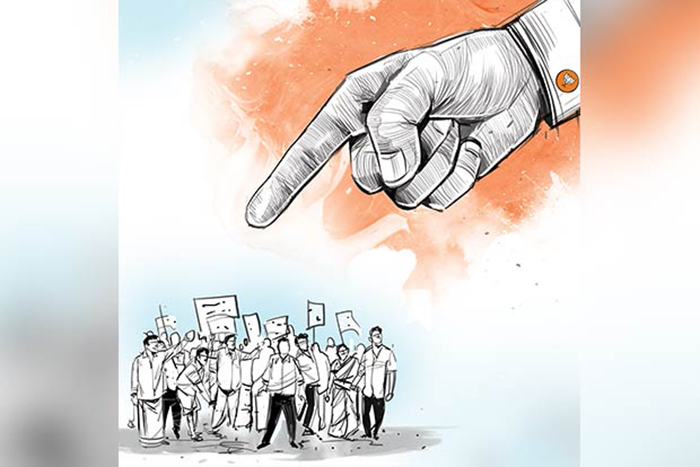
2022 has seen the most dramatic uprising of people against the government’s tyrannical rule since independence. Amidst a devastating economic crisis, the people raised their voices against corruption, misrule and economic mismanagement, demanding greater democracy. Instead of heeding the people’s call for change in the political culture and economic accountability, the government has responded with repression. The state’s crackdown on protesters is intended to prevent the expression of public dissatisfaction with the administration, as well as the austerity measures it has imposed which are causing tremendous hardship and suffering.
We, the undersigned, call on the government to acknowledge the sovereignty of the people, to cease its persecution of protestors, and ensure the civil, political and economic rights of all citizens, especially of marginalised and vulnerable communities. The multiple, interconnected political and economic crises confronting us now cannot be resolved through a move towards greater authoritarianism but by the people’s continued involvement in the democratic space that has been created and by an administration willing to engage with its citizens.
The Security State
From its inception, state security and its repressive arms were key to the functioning of the Sri Lankan postcolonial state. The insurgencies in the south and the rise of militancy in the north and east, the protracted war that lasted almost 30 years, were used to legitimise the repressive arms of the state. The all-powerful executive presidency (1978) compounded matters by densely concentrating executive powers in one office, enabling swift authorisation of questionable laws and actions.
In 1979, the Prevention of Terrorism Act (PTA) was introduced, giving the government sweeping powers to arrest anyone without a warrant on the hazy grounds of their engaging in “unlawful activities” and detain them for up to 18 months without being produced before a court, and often incarcerating them for decades without a fair trial. Presented, debated and enacted in parliament within a single day, the PTA was a “temporary” measure to purportedly stem the tide of Tamil militancy. It was complemented by several other organised forms of repression. In addition to the Criminal Investigation Department (CID), units like the police Special Task Force (STF), and the Terrorist Investigation Division (TID), paved the way for increased securitisation and militarisation of the state. In the long years of the war and unrest, militarisation seeped into the fabric of society.
Post War and Post Easter Bombings
The template for what we see today was shaped during the post-war years as well, as the state continued to target minorities. Instead of pursuing genuine reconciliation and power-sharing, the state reinforced its military apparatus in the north and east. This has allowed the retention of High Security Zones, preventing people from returning to their homes and livelihoods, and enabled land grabbing that is rationalised in the name of security or development. In the aftermath of the Easter bombings of April 2019, in which some 270 people lost their lives, anti-terror campaigns targeted Muslim youth. Terror and fear seized the Muslim community as they came under attack by the repressive arms of state security. The PTA was to arbitrarily arrest and confine persons known and unknown, on very flimsy charges. The arrest and detention of Hejaaz Hizbullah and Ahnaf Jazeem are only two cases in point of how the PTA is used in a gross violation of all concerns of justice.
An earlier development in this regard has drawn insufficient public attention. In compliance with UN Security Council Resolution No. 1373 calling on member states to take measures to curb terrorist activity, the Sri Lankan state drew up a list of names in 2020, identifying 300-odd persons as terror suspects. The overwhelming majority of those named in the list are Muslim and Tamil. Some were already behind bars during the period in which they are suspected of having engaged in suspicious activity. Persons included in the list undergo untold difficulties: they no longer enjoy access to their financial assets and have no indication of when they may expect to have such access again. They cannot seek legal redress because their financial assets are barred to them. They have trouble securing or holding on to employment due to the disrepute of being included in the list. They live under constant surveillance, with the threat of potential punitive measures despite the absence of any evidence of misconduct.
Bureau of Rehabilitation Bill
The Bureau of Rehabilitation Bill is the most recent in a series of laws that seek to sanction repression by the state and must not be viewed in isolation, but in the totality of a process we understand as securitisation of the state. The broad reach of the Bill allows for sending into compulsory detention “drug dependent persons, ex-combatants, members of violent extremist groups and any other group of persons” without necessarily citing sufficient cause for such action.
Even though the Supreme Court has ruled that “certain provisions” of the Bill are unconstitutional such as the reference to ‘ex-combatants’ and ‘any other persons’, the criminalisation of drug dependency that seems to be considered unproblematic suggests that the law itself should not be accepted without questioning. Its draconian features allow virtually any person to be sent into detention and it does not specify the procedure by which claims of drug abuse, past involvement in armed activity, and violent extremism may be reasonably established. It leaves space for the criminalisation of democratic activism that has characterised our recent past. The Bill in its entirety should be struck down.
The Current Moment of Repression
Today, person after person is being arrested and detained. The lens of surveillance has dramatically turned to those who are deemed central to the people’s movement of the Aragalaya. Those who have stood up to state violence, including students, are being picked off the streets and sent away, into the dark corners of detention.
We are staring into the gaping mouth of a police state. We have to reclaim our voice, and rise against all acts of repression and all legal manoeuvres that are designed to silence dissent, resistance and democratic action. This is the task at hand, where we citizens must reclaim the democratic space to put an end to authoritarian repression. It is through democratic participation, through dialogue, protests and the vote, that the tremendous economic and political crisis can be addressed in the interests of all the people of Sri Lanka.
Signed:
Ranil Abayasekara, formerly University of Peradeniya
Udari Abeyasinghe, University of Peradeniya
Asha L. Abeyasekera, formerly University of Colombo
M.M. Alikhan, University of Peradeniya
Liyanage Amarakeerthi, University of Peradeniya
Fazeeha Azmi, M. I., University of Peradeniya
Crystal Baines. formerly, University of Colombo
Navaratne Bandara Formerly University of Peradeniya
Visakesa Chandrasekaram, University of Colombo
Erandika de Silva, University of Jaffna
Nadeesh De Silva, the Open University of Sri Lanka
Nirmal Dewasiri, University of Colombo
Kanchuka Dharmasiri, University of Peradeniya
Priyan Dias, Emeritus Professor, University of Moratuwa
Avanka Fernando, University of Colombo
Priyantha Fonseka, University of Peradeniya
Savitri Goonesekere, Emeritus Professor, University of Colombo
Camena Guneratne, Open University of Sri Lanka
Dileni Gunewardena, University of Peradeniya
Farzana Haniffa, University of Colombo
Shyamani Hettiarachchi, University of Kelaniya
Gayathri Hewagama, Visiting Lecturer, University of Peradeniya
Charudaththe B. Illangasinghe, University of the Visual and Performing Arts
Prabhath Jayasinghe, University of Colombo
Theshani Jayasooriya, University of Peradeniya
M. W. A. P. Jayatilaka, Retired, University of Peradeniya
Barana Jayawardana, University of Peradeniya
Pavithra Jayawardena, University of Colombo
Ahilan Kadirgamar, University of Jaffna
Anushka Kahandagamage, formerly University of Colombo
Pavithra Kailasapathy, University of Colombo
Maduranga Kalugampitiya, University of Peradeniya
A. K. Karunarathne, University of Peradeniya
Madara Karunarathne, University of Peradeniya
Chulani Kodikara, Visiting Lecturer, Faculty of Graduate Studies, University of Colombo
Pradeepa Korale Gedara, University of Peradeniya
Savitri Nimal Kumar, University of Peradeniya
Ramya Kumar, University of Jaffna
Shamala Kumar, University of Peradeniya
Vijaya Kumar, Emeritus Professor, University of Peradeniya
Amal Kumarage, University of Moratuwa
Aminda Lakmal, University of Sri Jayewardenepura
Rohan Laksiri, University of Ruhuna
Abdul Haq Lareena, Sabaragamuwa University
Hasini Lecamwasam, University of Peradeniya
Kamala Liyanage, Professor Emerita, University of Peradeniya
Nethmie Liyanage, University of Peradeniya
Sachini Marasinghe, University of Peradeniya
Tharinda Mallawaarachchi, University of Colombo
Sudesh Mantillake, University of Peradeniya
Prabha Manuratne, University of Kelaniya
Mahim Mendis, Open University of Sri Lanka
Rumala Morel, University of Peradeniya
Sitralega Maunaguru, retired formerly Eastern University of Sri Lanka
Kethakie Nagahawatte, University of Colombo
Sabreena Niles, University of Kelaniya
M. A. Nuhman, formerly University of Jaffna
Gananath Obeyesekere, formerly University of Peradeniya
Ranjini Obeyesekere, formerly University of Peradeniya
Arjuna Parakrama, University of Peradeniya
Sasinindu Patabendige, University of Jaffna
Pradeep Peiris, University of Colombo
Kaushalya Perera, University of Colombo
Nicola Perera, University of Colombo
Ramindu Perera, The Open University of Sri Lanka
Ruhanie Perera, University of Colombo
Sampath Rajapaksa, University of Kelaniya
Ramesh Ramasamy, University of Peradeniya
Harshana Rambukwella, The Open University of Sri Lanka
Rajitha Ranasinghe, University of Peradeniya
Rupika Subashini Rajakaruna, University of Peradeniya
Aruni Samarakoon, University of Ruhuna
Athula Siri Samarakoon, The Open University of Sri Lanka
Dinesha Samararatne, University of Colombo
Unnathi Samaraweera, University of Colombo
T. Sanathanan, University of Jaffna
Samitha Senanayake, formerly University of Peradeniya
Kalana Senaratne, University of Peradeniya
Anusha Sivalingam, University of Colombo
H. Sriyananda, Emeritus Professor, the Open University of Sri Lanka
Sivamohan Sumathy, University of Peradeniya
Hiniduma Sunil Senavi, University of Sabaragamuwa
Esther Surenthiraraj, University of Colombo
V. Thevanesam, Emeritus Professor, University of Peradeniya
Dayapala Thiranagama, formerly University of Kelaniya
Mahendran Thiruvarangan, University of Jaffna
Deepika Udagama, University of Peradeniya
Ramila Usoof, University of Peradeniya
Jayadeva Uyangoda, Professor Emeritus in Political Science, University of Colombo
Vivimarie Vanderpoorten, Open University of Sri Lanka
Ruvan Weerasinghe, University of Colombo
Nira Wickramasinghe, formerly, University of Colombo
Ranjit Wijekoon, formerly University of Peradeniya
Dinuka Wijetunga, University of Colombo

Opinion
From the Lecture Hall to the Global Market: How Sri Lankan students are mastering the “Gig Economy”


Have you ever wondered how a university student, between heavy textbooks and late-night study sessions, manages to earn a professional income in US dollars? It sounds like a dream, but for thousands of Sri Lankans, it’s becoming a daily reality through online freelancing.
A recent study published in the Ianna Journal of Interdisciplinary Studies has pulled back the curtain on this digital revolution. By interviewing 21 successful student freelancers across Sri Lanka, researchers have mapped out exactly what it takes to turn a laptop and an internet connection into a thriving career.
The Rise of the “Earn-as-you-learn” Era
In Sri Lanka, the number of online freelancers has exploded from about 20,000 in 2016 to over 150,000 today. While our traditional education system often focuses on preparing students for 9-to-5 office jobs , these students are diving into the “Gig Economy” a digital marketplace where they sell specific skills, like graphic design or programming, to clients all over the world.
The Secret Sauce for Success
So, what makes some students succeed while others struggle? The research found that it isn’t just about being good at coding or design. Success comes down to six “Core Pillars”:
· A Growth Mindset: The digital world moves fast. Successful students don’t just learn one skill; they are constantly updating themselves to ensure they don’t become “outdated”
· The Balancing Act:
How do they handle exams and clients? They don’t use a magic wand; they use strict time management. Many work late into the night (from 6 p.m. to midnight) to accommodate international time zones.
· The Power of “Hello”:
Since most clients are in the USA or UK, strong English and clear communication are vital. It’s about more than just talking; it’s about negotiating prices and building trust.
· Proactive Problem Solving:
Successful freelancers don’t wait for things to go wrong. They update their clients regularly and fix issues before they become headaches.
Why This Matters for Sri Lanka
Right now, our universities don’t always teach “how to be a freelancer”. This study suggests that if we integrate freelancing modules and mentorship into our degree programs, we could significantly reduce graduate unemployment. It’s a way for students to gain financial independence and bring much-needed foreign currency into our economy while still in school.
You Can Do It Too
If you’re a student (or the parent of one), the message is clear: the global market is open for business. You don’t need to wait for graduation to start your career. With a bit of flexibility, a willingness to keep learning, and a proactive attitude, you can transition from a learner to an earner.
The Research Team Behind the Study
This groundbreaking research was conducted by a dedicated team from the Department of Business Management at the SLIIT Business School (Sri Lanka Institute of Information Technology). The authors of the study include:
· Lihini Niranjana Dasanayaka
· Thuvindu Bimsara Madanayake
· Kalana Gimantha Jayasekara
· Thilina Dinidu Illepperuma
· Ruwanthika Chandrasiri
· Gayan Bandara
by Ruwanthika Chandrasiri

In an article titled “India shaping-up as model ‘swing state” (The Island 29.01.2026) Lynn Ockersz says, “Besides, this columnist would go so far as to describe India as a principal ‘Swing State.’ To clarify the latter concept in its essentials, it could be stated that the typical ‘Swing State’ wields considerable influence and power regionally and globally. Besides they are thriving democracies and occupy a strategic geographical location which enhances their appeal for other states of the region and enables them to relate to the latter with a degree of equableness. Their strategic location makes it possible for ‘Swing States’ to even mediate in resolving conflicts among states”.
A ‘swing state’, as in elections, should be able to decisively influence the final outcome. In the context in which India is recognised as a ‘swing state’ the final outcome should first be regional and then, if possible, extend to the rest of the world. And the desirable outcome must entail regional peace, cordial relations and economic stability which would constitute the most vital needs for any part of today’s world. Military power should not feature in the equation, for more often than not, such power is used to brow beat into submission the weak and the poor.
India no doubt is growing fast to be a global economic power and militarily also it is way ahead of the region. Its democracy, in the sense that democracies are measured in today’s world, also may be as the columnist says “thriving”. However, periodical elections, however fair they could be, should not be the sole criterion to judge democracy. If democracy cannot solve the problem of inequality it may lose its credibility as a mode of good governance. As a means of finding who rules, the system may be satisfactory but the other vital components of democracy, such as equitable wealth distribution, if lacking, the system may not serve its purpose.
Inequality in India is among the highest globally, with the top 1% owning nearly 40% of national wealth and the top 10% holding roughly 65% of total wealth and 58% of income. While the economy grows, the bottom 50% receives only 15% of the income. This disparity, driven by wealth concentration and low female labour participation, persists across class, caste, and gender. The income gap between the top 10% and the bottom 50% remained stable, with no significant reduction in inequality over the last decade.
India ranks very low in gender parity (127 out of 146 countries in the Global Gender Gap Report 2023). Female labour force participation is very low, at 15.7% (though government data suggests 41.7% by including agriculture and unpaid work). Women earn significantly less than men, working 53 hours per week compared to 43 for men. Inequality is intensified by existing social divides based on caste, religion, region, and gender. Access to healthcare is limited for many, with 63 million people pushed into poverty annually due to costs. Approximately 74% of India’s population could not afford a healthy diet in 2023. Roughly 64% of the total Goods and Services Tax (GST) in India comes from the bottom 50% of the population, whereas only 4% comes from the top 10% (Global Inequality Report 2024).
This sad state may not be the fault of democracy but the economic system of all so called democratic countries. The other three countries, Indonesia, South Africa and South Korea, that the columnist has named as suitable to be ‘swing states’ are no better. Neoliberalism and democracy are increasingly viewed by critics as an “evil nexus” or a destructive pairing, where the logic of the free market—privatisation, deregulation, and austerity—subverts the principles of democratic self-governance and social equality.
However, my main argument concerns the more important qualities that a country must possess to qualify as a ‘swing state’; the capacity to lead from the front in campaigning for peace and cordiality in the region. In this regard India fails miserably. The past with regards to good neighbourliness, where mighty India is concerned, tells a sad story. How it tried to solve the ethnic problem in Sri Lanka may be etched in the minds of those who lived in that era. The “parippu-drop” followed by gun-boat diplomacy saved the LTTE enabling it to continue with its murderous terrorism aimed at dividing the country. It was India who provided the initial “infra-structure” for training of terrorists who waged a thirty year war in Sri Lanka, committing brutal genocide against the Sinhalese and Muslims and not sparing the Tamils as well. India did not lift a finger to stop the bloodletting. Then it rammed the 13th A down our throats as a solution to the problem but did not keep to its terms and conditions which required it to disarm the LTTE. 13th A hangs over our head like the Sword of Damocles and India doesn’t fail to remind us about it from time to time. And we are burdened with the white elephant of provincial councils. Moreover, evidently India continues to interfere in our internal affairs, apparently colluding with the US, it may have had a hand in the regime change in Sri Lanka in 2022 (Shamindra Ferdinando, The Island, 04.02.2026). Another matter that appears to be perniciously secretive is that the Indian government doesn’t want the Sri Lankan government to reveal to its people the contents of the defence agreement it has entered into with the latter, as if people didn’t matter !
Now that tiny Sri Lanka is weakened and pliable after suffering multiple crises, India comes to its aid at the slightest mishap, very much like the hero who comes to the rescue of the damsel in distress, seemingly competing with other suitors. It doesn’t want the damsel to fall into the arms of China, given its geopolitical beauty.
Take the case of the other neighbours of India, does it have the capacity to swing, for instance, Pakistan into at least a position of less animosity. And what about its eastern neighbour, Bangladesh? They can’t even play cricket. Relations between India and Bangladesh, are currently under severe strain as of early 2026, driven by the ousting of former Prime Minister Sheikh Hasina, who has been given asylum in India to the chagrin of Bangladesh. Tensions are high due to attacks on diplomats, stalled visa services, water disputes, and alleged interference. The unresolved sharing of the Teesta River and other transboundary rivers remains a major contention, with Bangladesh accusing India of managing these to its detriment. Concerns exist in New Delhi regarding Bangladesh strengthening ties with other nations like Pakistan, seen as a shift away from Indian influence (Altaf Moti, 2026).
Coming back to the conflict with its western neighbour Pakistan, since the 1947 partition, both countries have claimed Kashmir, a region inhabited by a majority Muslim population but initially ruled by a Hindu Maharaja, leading to wars in 1947, 1965, and 1999. India accuses Pakistan of supporting militant groups in Kashmir, a claim Pakistan denies, which has frequently led to military escalations, such as the 2019 Pulwama incident and 2025 strikes. The Indus Waters Treaty is under strain, with potential for conflict over control of water resources. Both nations are nuclear-armed, raising international concerns about regional stability. Recent tensions included increased cross-border firing, drone warfare, and suspected militant attacks in Kashmir, leading to retaliatory missile strikes. The conflict remains a major geopolitical issue, with tensions frequently escalating due to nationalist sentiment and a lack of diplomatic progress (Britanica, 2026).
Another matter of relevance is that India-Pakistan-Afghanistan relations are defined by a complex, triangular, and competitive dynamic. Following the 2021 Taliban takeover, India has adopted a pragmatic, security-focused approach, delivering humanitarian aid to Afghanistan via Iran to circumvent Pakistan. Meanwhile, Pakistan-Afghanistan ties have deteriorated over border disputes, prompting Kabul to seek warmer relations with India as a counterweight to Islamabad. Without formally recognising the Taliban, India has re-established a technical mission in Kabul to secure its interests, monitor anti-India groups, and maintain developmental influence, which directly challenges Pakistan’s historical influence in the region. Is such manoeuvring of regional relations a virtue of a ‘swing state’!
Paradoxically, India is developing a special friendship with the murderous regime of Netanyahu in Israel focussing on defence and anti-terrorism. Indian prime minister is planning to visit Israel towards the end of this month which would obviously boost the image and credibility of a ruler who has committed genocide of the Palestinians. The barb no doubt is intended to prick Pakistan. Could such a country bring peace to the region, which it must if it is to qualify as a ‘swing state’.
India seems to have good relations with its northern neighbour, little Nepal, though minor but persistent issues remain. Disputes, notably regarding the Kalapani-Limpiyadhura-Lipulekh area, have caused tensions. Nepal has, from time to time, requested, a revision of the 1950 Treaty, viewing it as unbalanced. Growing influence of other foreign powers (particularly China) in Nepal poses a strategic challenge for India.
The other northern neighbour, the giant, is a different kettle of fish. India has fought several wars with China and there are frequent border skirmishes. The rivalry between these two giants is second only to that between the US and China. The war for markets, influence and hegemony between these countries may one day tear the world apart.
India seems to be having border disputes with most of its neighbours. Fortunately, we have no common border with it but there is Katchatheevu, on which they have recently made a claim.
India being the big brother must take the initiative to resolve the disputes it has with its neighbours and work towards lasting peace in the region. The inability to do so reflects, more than the external factor, the internal depravity that plagues its politics. One has only to listen to its political leaders during election times to gauge the depth of racism they descend to in order to swing the votes. This phenomenon is more evident in their own ‘swing states’. This racism cannot be confined to its borders, it has to cross the borders and be projected to the neighbourhood, if the politicians are to appear to be truly patriotic. Thus, the border disputes and acrimony continue.
If peace, cordiality and economic stability are the desirable goals for the region – one cannot think of anything more important than these – India may not be the ‘swing state’ that could give leadership to the struggle that would finally bring these qualities to the region.
by N. A. de S. Amaratunga
Globalisation exposes weakness and failed governance; and invites intervention – A message to all inept governments everywhere
The government of Burkina Faso has shattered the illusion of party politics, dissolving every political party in the nation. Its justification is blunt: parties divide the people, fracture sovereignty, and allow corrupt elites to hijack the sacred powers that belong to the citizenry.
This is not an aberration. It is the recurring disease of fragile states. Haiti, Somalia, Sudan, Venezuela, Sri Lanka—their governments collapse under the weight of incompetence, leaving their people abandoned and their sovereignty hollow. These failed states do not merely fail themselves; they burden the world. Their chaos spills across borders, draining the strength of nations that still stand.
Globalisation does not forgive weakness. It exposes it. And as global opinion hardens, a new world order is taking shape—one that no longer tolerates decay. The moment of rupture came when US President Donald Trump seized Nicolás Maduro from his Venezuelan hideout and dragged him to face justice in America.
Predictably, the chorus of populists cried “oil!” They shouted about imperialism while ignoring the rot of Maduro’s failed government and his collapse in legitimacy. But the truth is unavoidable: if Venezuela had been competently governed, Trump would never have had the opening to topple its leadership. Weakness invited conquest. Failure opened the door.
Singapore offers the perfect counterexample. It is perhaps the best-governed nation on earth, and for that reason it is untouchable. Strong governance is the only true shield of sovereignty. Without it, sovereignty is a brittle shell, a flag waving over ruins.
Trump’s precedent will echo across continents. China, Russia, India—regional powers are watching, calculating, preparing. The message is unmistakable: Sovereignty is conditional. It is not guaranteed by history or by law. It is guaranteed only by strength, by competence, by the will to govern effectively.
This is the revolutionary truth: nations that fail to govern themselves will be governed by others. The age of excuses is over. The age of accountability has begun. Weak governments will fall. Strong governments will endure. And the people, sovereign and indivisible, will demand leaders who can protect their destiny—or see them replaced by those who can.
By Brigadier (Rtd) Ranjan de Silva
rpcdesilva@gmail.com

Mighty India meet multicultural USA in polarised World Cup

At least 31 killed, dozens wounded in Islamabad mosque blast

The SSC finally steps out of the sunshine and into the floodlights

SAARC journalists meet in New Delhi

Governor of Gujarat met with Sri Lanka PM to discuss exposition of Devnimori Relics

India chase sixth Under-19 World Cup title, England their first since 1998

‘Dates have the highest sugar content to fight Coronavirus’

Sunday Island 27 December – Headlines

#SundayIsland 17th December – Headlines

Sunday Island – 28th March

Sunday Island Headlines – 21 March

Sunday Island – 21st February – Headlines
-

 Business7 days ago
Hayleys Mobility ushering in a new era of premium sustainable mobility
-

 Business4 days ago
SLIM-Kantar People’s Awards 2026 to recognise Sri Lanka’s most trusted brands and personalities
-
 Business7 days ago
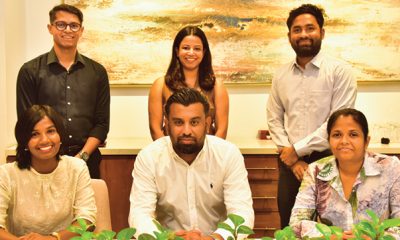
Advice Lab unveils new 13,000+ sqft office, marking major expansion in financial services BPO to Australia
-

 Business7 days ago
Arpico NextGen Mattress gains recognition for innovation
-
 Business6 days ago
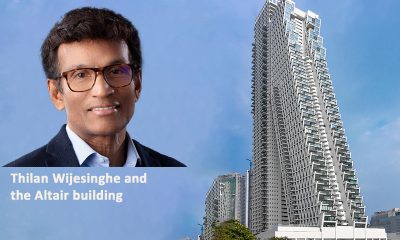
Altair issues over 100+ title deeds post ownership change
-

 Editorial7 days ago
Govt. provoking TUs
-

 Business6 days ago
Sri Lanka opens first country pavilion at London exhibition
-

 Business5 days ago
All set for Global Synergy Awards 2026 at Waters Edge