
Opinion
Is India a ‘swing state’? A response


In an article titled “India shaping-up as model ‘swing state” (The Island 29.01.2026) Lynn Ockersz says, “Besides, this columnist would go so far as to describe India as a principal ‘Swing State.’ To clarify the latter concept in its essentials, it could be stated that the typical ‘Swing State’ wields considerable influence and power regionally and globally. Besides they are thriving democracies and occupy a strategic geographical location which enhances their appeal for other states of the region and enables them to relate to the latter with a degree of equableness. Their strategic location makes it possible for ‘Swing States’ to even mediate in resolving conflicts among states”.
A ‘swing state’, as in elections, should be able to decisively influence the final outcome. In the context in which India is recognised as a ‘swing state’ the final outcome should first be regional and then, if possible, extend to the rest of the world. And the desirable outcome must entail regional peace, cordial relations and economic stability which would constitute the most vital needs for any part of today’s world. Military power should not feature in the equation, for more often than not, such power is used to brow beat into submission the weak and the poor.
India no doubt is growing fast to be a global economic power and militarily also it is way ahead of the region. Its democracy, in the sense that democracies are measured in today’s world, also may be as the columnist says “thriving”. However, periodical elections, however fair they could be, should not be the sole criterion to judge democracy. If democracy cannot solve the problem of inequality it may lose its credibility as a mode of good governance. As a means of finding who rules, the system may be satisfactory but the other vital components of democracy, such as equitable wealth distribution, if lacking, the system may not serve its purpose.
Inequality in India is among the highest globally, with the top 1% owning nearly 40% of national wealth and the top 10% holding roughly 65% of total wealth and 58% of income. While the economy grows, the bottom 50% receives only 15% of the income. This disparity, driven by wealth concentration and low female labour participation, persists across class, caste, and gender. The income gap between the top 10% and the bottom 50% remained stable, with no significant reduction in inequality over the last decade.
India ranks very low in gender parity (127 out of 146 countries in the Global Gender Gap Report 2023). Female labour force participation is very low, at 15.7% (though government data suggests 41.7% by including agriculture and unpaid work). Women earn significantly less than men, working 53 hours per week compared to 43 for men. Inequality is intensified by existing social divides based on caste, religion, region, and gender. Access to healthcare is limited for many, with 63 million people pushed into poverty annually due to costs. Approximately 74% of India’s population could not afford a healthy diet in 2023. Roughly 64% of the total Goods and Services Tax (GST) in India comes from the bottom 50% of the population, whereas only 4% comes from the top 10% (Global Inequality Report 2024).
This sad state may not be the fault of democracy but the economic system of all so called democratic countries. The other three countries, Indonesia, South Africa and South Korea, that the columnist has named as suitable to be ‘swing states’ are no better. Neoliberalism and democracy are increasingly viewed by critics as an “evil nexus” or a destructive pairing, where the logic of the free market—privatisation, deregulation, and austerity—subverts the principles of democratic self-governance and social equality.
However, my main argument concerns the more important qualities that a country must possess to qualify as a ‘swing state’; the capacity to lead from the front in campaigning for peace and cordiality in the region. In this regard India fails miserably. The past with regards to good neighbourliness, where mighty India is concerned, tells a sad story. How it tried to solve the ethnic problem in Sri Lanka may be etched in the minds of those who lived in that era. The “parippu-drop” followed by gun-boat diplomacy saved the LTTE enabling it to continue with its murderous terrorism aimed at dividing the country. It was India who provided the initial “infra-structure” for training of terrorists who waged a thirty year war in Sri Lanka, committing brutal genocide against the Sinhalese and Muslims and not sparing the Tamils as well. India did not lift a finger to stop the bloodletting. Then it rammed the 13th A down our throats as a solution to the problem but did not keep to its terms and conditions which required it to disarm the LTTE. 13th A hangs over our head like the Sword of Damocles and India doesn’t fail to remind us about it from time to time. And we are burdened with the white elephant of provincial councils. Moreover, evidently India continues to interfere in our internal affairs, apparently colluding with the US, it may have had a hand in the regime change in Sri Lanka in 2022 (Shamindra Ferdinando, The Island, 04.02.2026). Another matter that appears to be perniciously secretive is that the Indian government doesn’t want the Sri Lankan government to reveal to its people the contents of the defence agreement it has entered into with the latter, as if people didn’t matter !
Now that tiny Sri Lanka is weakened and pliable after suffering multiple crises, India comes to its aid at the slightest mishap, very much like the hero who comes to the rescue of the damsel in distress, seemingly competing with other suitors. It doesn’t want the damsel to fall into the arms of China, given its geopolitical beauty.
Take the case of the other neighbours of India, does it have the capacity to swing, for instance, Pakistan into at least a position of less animosity. And what about its eastern neighbour, Bangladesh? They can’t even play cricket. Relations between India and Bangladesh, are currently under severe strain as of early 2026, driven by the ousting of former Prime Minister Sheikh Hasina, who has been given asylum in India to the chagrin of Bangladesh. Tensions are high due to attacks on diplomats, stalled visa services, water disputes, and alleged interference. The unresolved sharing of the Teesta River and other transboundary rivers remains a major contention, with Bangladesh accusing India of managing these to its detriment. Concerns exist in New Delhi regarding Bangladesh strengthening ties with other nations like Pakistan, seen as a shift away from Indian influence (Altaf Moti, 2026).
Coming back to the conflict with its western neighbour Pakistan, since the 1947 partition, both countries have claimed Kashmir, a region inhabited by a majority Muslim population but initially ruled by a Hindu Maharaja, leading to wars in 1947, 1965, and 1999. India accuses Pakistan of supporting militant groups in Kashmir, a claim Pakistan denies, which has frequently led to military escalations, such as the 2019 Pulwama incident and 2025 strikes. The Indus Waters Treaty is under strain, with potential for conflict over control of water resources. Both nations are nuclear-armed, raising international concerns about regional stability. Recent tensions included increased cross-border firing, drone warfare, and suspected militant attacks in Kashmir, leading to retaliatory missile strikes. The conflict remains a major geopolitical issue, with tensions frequently escalating due to nationalist sentiment and a lack of diplomatic progress (Britanica, 2026).
Another matter of relevance is that India-Pakistan-Afghanistan relations are defined by a complex, triangular, and competitive dynamic. Following the 2021 Taliban takeover, India has adopted a pragmatic, security-focused approach, delivering humanitarian aid to Afghanistan via Iran to circumvent Pakistan. Meanwhile, Pakistan-Afghanistan ties have deteriorated over border disputes, prompting Kabul to seek warmer relations with India as a counterweight to Islamabad. Without formally recognising the Taliban, India has re-established a technical mission in Kabul to secure its interests, monitor anti-India groups, and maintain developmental influence, which directly challenges Pakistan’s historical influence in the region. Is such manoeuvring of regional relations a virtue of a ‘swing state’!
Paradoxically, India is developing a special friendship with the murderous regime of Netanyahu in Israel focussing on defence and anti-terrorism. Indian prime minister is planning to visit Israel towards the end of this month which would obviously boost the image and credibility of a ruler who has committed genocide of the Palestinians. The barb no doubt is intended to prick Pakistan. Could such a country bring peace to the region, which it must if it is to qualify as a ‘swing state’.
India seems to have good relations with its northern neighbour, little Nepal, though minor but persistent issues remain. Disputes, notably regarding the Kalapani-Limpiyadhura-Lipulekh area, have caused tensions. Nepal has, from time to time, requested, a revision of the 1950 Treaty, viewing it as unbalanced. Growing influence of other foreign powers (particularly China) in Nepal poses a strategic challenge for India.
The other northern neighbour, the giant, is a different kettle of fish. India has fought several wars with China and there are frequent border skirmishes. The rivalry between these two giants is second only to that between the US and China. The war for markets, influence and hegemony between these countries may one day tear the world apart.
India seems to be having border disputes with most of its neighbours. Fortunately, we have no common border with it but there is Katchatheevu, on which they have recently made a claim.
India being the big brother must take the initiative to resolve the disputes it has with its neighbours and work towards lasting peace in the region. The inability to do so reflects, more than the external factor, the internal depravity that plagues its politics. One has only to listen to its political leaders during election times to gauge the depth of racism they descend to in order to swing the votes. This phenomenon is more evident in their own ‘swing states’. This racism cannot be confined to its borders, it has to cross the borders and be projected to the neighbourhood, if the politicians are to appear to be truly patriotic. Thus, the border disputes and acrimony continue.
If peace, cordiality and economic stability are the desirable goals for the region – one cannot think of anything more important than these – India may not be the ‘swing state’ that could give leadership to the struggle that would finally bring these qualities to the region.
by N. A. de S. Amaratunga

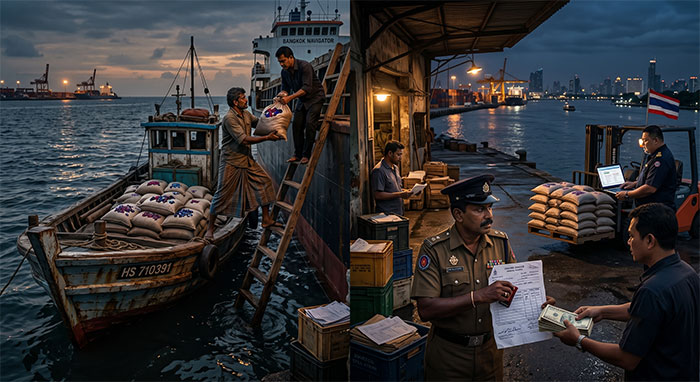
A Case Study on Sri Lanka-Thailand Trade
In March 2026, a Washington-based think tank, Global Financial Integrity (GFI), released its report on “Trade-Related Illicit Financial Flows in Developing Asia” for the 2013–2022 period. The report calculates the possible misappropriation of 20.51% of Sri Lanka’s total trade value through trade misinvoicing.
A calculation of Sri Lanka’s exports to Thailand in 2024, using the same GFI methodology, shows a possible misappropriation of 207% of the export value by Sri Lankan exporters and Thai importers
The phrase “plunder of Sri Lanka” normally refers to resource extraction through violent foreign invasions with swords and guns. This article is not about them. This article focuses on a more discreet and genteel version of plunder through illicit financial flows and the stashing of foreign exchange earnings offshore through trade misinvoicing.
What is Trade Misinvoicing?
Trade misinvoicing is the fraudulent recording of key invoice information for the purpose of facilitating illicit cross-border financial flows. One of the easiest ways to identify possible misinvoicing is the study of “mirror trade” data, that is, the comparative analysis of partner-country trade data with Sri Lankan trade data. If this flags discrepancies (value gaps), those are indicators of misinvoicing. These gaps could be due to overinvoicing imports, underinvoicing exports, or phantom imports.
Overinvoicing imports occurs when Sri Lankan importers and their foreign counterparts artificially inflate invoice prices for goods. The importer remits foreign currency abroad to settle the bogus invoice amount in full, and the surplus cash is subsequently split or retained in offshore accounts.
Similarly, underinvoicing exports happens when exporters ship high-value goods (for example, gems) out of Sri Lanka but state a considerably lower price on the customs invoice and the importer pays the low price through official channels. Then the actual market balance is paid directly into foreign bank accounts.
Phantom imports occur when bogus companies are set up to execute telegraphic transfers to foreign suppliers under the pretext of importing goods, which never physically enter Sri Lanka. The recently uncovered large-scale foreign exchange fraud totalling around US$85 million linked to fictitious imports revealed by the Public Security Minister Ananda Wijepala is an example of phantom imports. However, what he revealed was just the tip of the iceberg. The annual loss from overinvoicing imports and underinvoicing exports is much larger and may be as high as US$ billion or higher.
So, whenever value gaps occur in mirror data, they should be treated as risk indicators. If the gaps are significantly large, then the authorities should immediately investigate the relevant invoices with the partner countries to find out the reasons for the disparities.
Misinvoicing in Sri Lanka
In 2017, the Washington, D.C.-based think tank Global Financial Integrity (GFI) released a landmark investigative report exposing massive gaps in Sri Lanka’s trade data due to trade misinvoicing during the period 2005–2014. The estimated amount that may have been misappropriated during the period is US$36.83 billion. This report received wide publicity in Sri Lanka. It is not clear if the authorities had initiated any investigations into this foreign exchange hemorrhage. In March 2026 the GFI released its report on “Trade-Related Illicit Financial Flows in Developing Asia” for the 2013–2022 period. The report calculates Sri Lanka’s trade value gap at 20.51% of total trade.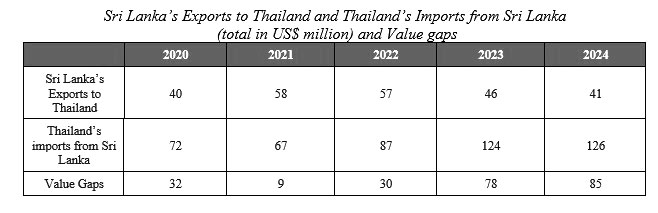
Underinvoicing in Sri Lanka – Thailand Trade
Why a case study on Sri Lanka – Thailand Trade?
Thailand is a relatively small export market for Sri Lanka and ranks 47th as an export destination. As per Sri Lankan customs data, in 2024 Sri Lanka’s total exports to Thailand were valued at US$ 41 million. However, according to Thai customs data, in 2024 Thailand’s imports from Sri Lanka were valued at US$ 126 million. This is a value gap of US$ 85 million. That is a massive 207% value gap… ten times larger than the global average for Sri Lanka. As the table below illustrates, these large value gaps have been growing over the years. (See Table)
A closer look at the data would reveal that the largest value gaps are under gemstones (HS 710391). It is common knowledge that the Sri Lanka–Thailand gem trade suffers from prevalent underinvoicing, resulting in millions of dollars in lost export revenue. Yet, it appears that Sri Lanka Customs and the National Gem and Jewellery Authority (NGJA) have not intervened to curtail this practice. One may argue that the trade ministry, the NGJA, or the customs do not routinely analyse mirror data. However, as Thailand is the third-largest market for Sri Lankan gems, the NGJA should have a very good knowledge of that market, including Thai customs statistics. In-depth analysis of Thai customs data is also a main responsibility of the Sri Lanka embassy in Bangkok.
Sri Lanka-Thailand Free Trade Agreement (SLTFTA)
In addition to that, Sri Lanka commenced negotiations for the Sri Lanka-Thailand Free Trade Agreement (SLTFTA) in 2018. After multiple rounds of negotiations covering trade in goods, services, investments, and customs cooperation, both nations officially signed the SLTFTA in February 2024. While preparing for these multiple rounds of negotiations, Sri Lankan trade negotiators and the embassy in Bangkok should have extensively analysed the Thai customs data. They should have also known Sri Lanka’s export data like the back of their hands. Then, didn’t they discover these massive discrepancies in data sets? If they did, did they address them during the negotiations?
Whatever happens, the gaps keep growing.
So, now it is time for the appropriate agencies to start investigating these enormous value gaps … after all, a massive US$ 85 million, 207% value gap is simply not loose cash.
(The writer can be reached at enadhiragomi@gmail.com) )
By Gomi Senadhira
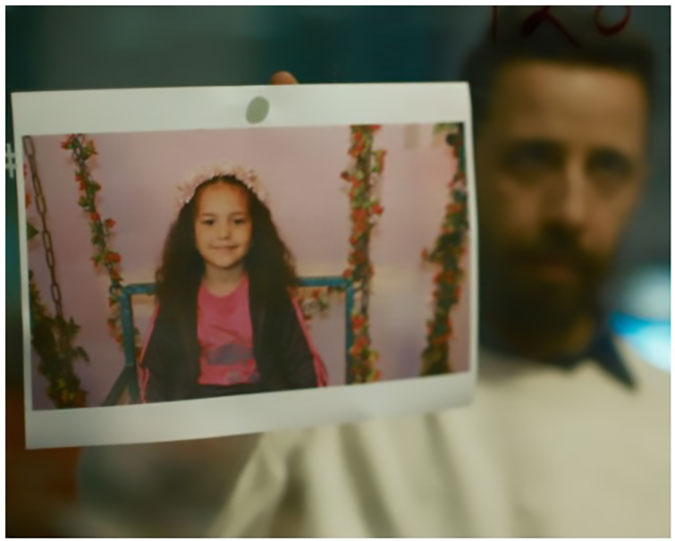
“May their hard hearts soften towards you”- Voice on the phone to Red Crescent team trying to save Hind Rajab
Nothing really prepares one for the intense experience, for that is what it was, of sharing in the helpless anguish of the Palestine Red Crescent team at the emergency call centre in Gaza, making frantic efforts to rescue the 5 year old girl trapped for several hours in a car among the corpses of 5 members of her family, gunned down by members of the Israeli Defense Force. Nor was it easy to hear the pleas of the little girl, begging to be rescued in her sweet, child’s voice for hours on the phone, as the feature film dramatizing her last hours, played the original recordings of her voice made at the emergency call center, interspersed with actors playing the roles of the desperate Red Crescent team. After that searing encounter, deep reflection is an inevitable compulsion.
8 Minutes too far
Hind Rajab’s story was already well known, from the moment the Red Crescent call centre released the voice recordings on social media, in an attempt to pressure the Israeli authorities into giving a safe route for the ambulance to reach the child, hiding in a bullet riddled car. The distance between the closest ambulance and the child was 8 minutes, according to calculations of the call center. More than two hours later, they were still pleading for approval for a safe route, to ensure this ambulance crew wouldn’t join the rest of the names of more than a dozen rescue workers on their wall, killed by the Israeli forces while on rescue missions.
The feature film “The Voice of Hind Rajab” depicting those last hours of Hind Rajab’s precious life, premiered in Colombo at the Platinum Screen, Majestic City, sponsored by the Embassy of the State of Palestine, the Sri Lanka Committee for Solidarity with Palestine and Ceylon Theatres (Pvt) Ltd, on the 18th of June 2026.
Hind Rajab, the 5 year old Palestinian girl was murdered in Gaza in January 2024. The film, produced by Brad Pitt and Joaquin Phoenix among others, won several awards: The Silver Lion Grand Jury Prize at the Venice International Film Festival, CICT_UNESCO Enrico Fulchignoni Award, Audience Award at the San Sebastian Film Festival, and Audience Award for International Feature at the Middleburg Film Festival, as well as the Main Prize (Brussels section) at the One World Festival.
The system vs Red Crescent
In the film, the vantage point is that of the members of the Palestinian Red Crescent emergency call center team who were involved in the exchange with the little girl as she lay hidden in the car, after her cousin, another little girl a few years older, was killed while on the phone to them minutes earlier. The older girl said that there were tanks next to the car and that they were shooting at her. They heard the shots, then she fell silent.
Miraculously, Hind survived that spell of shooting, and the team was able to be in contact with her while they tried to get a rescue team to reach the car in which she was hiding. The family was in compliance with an Israeli order to vacate that area of Gaza where they lived and was on their way out when their car was attacked, killing most of the occupants, except for two girls. Their only hope for survival was the Red Crescent emergency response center.
What unveils in the film is the unbearable emotional rollercoaster the members of the Red Crescent team go through, as their humanity is repeatedly tested against the requirements of a brutally lopsided, oppressive system of administrative authority which is structured with layer upon layer of permissions, approvals, co-ordinations which delay and hamper their efforts to respond urgently to an emergency.
In a story that holds tragedy within tragedy, an accumulation of hopeless despair, some of the issues of the impossible conditions of existence of the people of Gaza are laid bare. As individual members of the Red Crescent team respond to these events, their own hearts are broken by the predicament of little Hind Rajab, as they helplessly promise they would come to her aid, desperately hoping they would be able to live up to their promise. Rana, a female member of the team, keeps her talking until Rajab herself says she is dying. Rana, overcome with grief, gets her to repeat a verse from the Holy Quran, with little Hind doing so beautifully and fluently. She urges Rana to come soon to save her, which Rana knows by then, is an impossible request.
The daily encounter with the conditions of a heartless occupation come alive, as the supervisor at Red Crescent bends over backwards to comply with the list of rules and regulations even to allow an ambulance crew 8 minutes away to save a child, in a convoluted process with arbitrary decisions at each stage. As the team continues the calls to get approvals, a safe route and coordination with the IDF, a doctor at the other end of the phone hearing that permission had still not been granted says with resignation, “May their hard hearts soften towards you”.
A knife’s edge
The dramatisation of the day’s events shows the knife’s edge their nerves have to balance on, with a younger employee’s patience and tolerance of an unfair system reaching their limits in the face of the callous disregard by the system of a little girl begging to be saved. The staff at Red Crescent survive the stress by having a trained counsellor on hand, to help them deal with the deaths while on the phone to victims. The counsellor herself is finally called upon to keep little Hind company in her last minutes, teaching her to breathe deeply while imagining her favourite places.
The tragedy is that their unrelenting efforts including the release of all tapes of the little girl appeals uploaded to social media eventually succeeded in getting a safe route for the ambulance to get to her, but still failed to complete the mission to save her. The ambulance itself was shot at when it got to within 50 meters of the car which held Hind Rajab still alive, killing both rescue workers and destroying the vehicle. The logic of a hostile occupation over the Palestinian population took its predictable course, having granted permission to arrive at the site, the rescue ambulance was nevertheless attacked, simply because the occupation force could, despite every effort to stick to the rules by the Red Crescent.
The younger man’s impassioned indictment of his law-abiding supervisor at one moment shouting “We are still occupied because of men like you!” as the supervisor continued to comply with every impossible rule set upon them even at the cost of delaying the rescue effort, revealed the churning depths of a subterranean sea of emotion an occupied people must endure, keeping it controlled in survival mode until it bubbles up in tidal waves of frustration and anger. The young man who was unable to hide his emotions that day, was reportedly arrested subsequently and was killed by the occupying authorities.
Not without consequence
It is impossible not to be shocked at the bullet riddled ambulance and the totally destroyed car shown at the end of the movie. For 12 days there was no news of what happened to the girl or where the car was, until the IDF left the area. Then they found her, with the other bodies, with almost three hundred bullets in Hind Rajab. Whatever those conducting atrocities may think at the time they celebrate such “triumphs” over innocents, such continued conduct clearly impairs their humanity.
The story being told from the perspective of the Red Crescent employees, brings home the fact that these are every day traumas borne by the people of Palestine, not isolated incidents of excesses. There were young people at the Majestic Cinema who were sobbing in shocked empathy. How is it that year after year, the Palestinians bear these tragedies, as their country keeps getting smaller and smaller, their lands taken over, their buildings destroyed, and their history reduced to patches of hopelessness in a sea of gray rubble?
We have watched it together with the rest of the world for decades. Some of our own leaders have prevented or tried to prevent, and even punished those who couldn’t be prevented from speaking out against the injustices carried out in broad daylight against the Palestinian people. Fortunately, they do not represent most of the people of Sri Lanka. The Security Council held an emergency session this week, called by all 10 non-permanent members and supported by 4 of the permanent members, to debate the prevention of humanitarian aid to Gaza. One permanent member didn’t sign it.
Given the current global dynamics facilitating a peace agreement, at least in the form of an MoU, between Iran and the United States, one can only hope that things will change and one day sooner than later, all members of the Security Council will speak with one voice on the situation of Palestine, and that the courage of the film makers and all those involved in its creation will be rewarded with justice for the incredibly resilient people of the State of Palestine. May their hard hearts soften towards the long-suffering Palestinian people, innocent civilians caught up in an unending war, who in helping each other have retained their humanity in the most trying of circumstances, while their occupiers are rapidly losing theirs.
by Sanja de Silva Jayatilleka

Children are the future of every nation, and the values they learn during childhood shape the society they will eventually lead. In Sri Lanka, where family traditions, respect for elders, and social responsibility have long been important cultural values, the way children are raised remains a topic of great interest. In recent years, many parents and educators have moved away from traditional forms of punishment and embraced more child-friendly approaches to discipline. While protecting children from physical and emotional harm is essential, an important question arises: can a child who grows up without any form of punishment or consequences become a threat to Sri Lankan society?
To answer this question, it is necessary to understand the difference between punishment and discipline. Punishment is often associated with penalties imposed for wrongdoing, while discipline refers to teaching children self-control, responsibility, and respect for rules. Modern child psychology generally discourages harsh physical punishment because it can cause fear, anxiety, and resentment. However, completely removing consequences for inappropriate behavior may create a different set of problems.
Sri Lankan society has traditionally emphasized discipline within the family. Parents, grandparents, and teachers have often played active roles in guiding children’s behavior. Respect for elders, obedience, and good manners have been considered important virtues. While some traditional disciplinary methods may no longer be acceptable, the underlying principle of teaching accountability remains relevant.
A child who never faces consequences for wrongdoing may struggle to understand the boundaries that exist in society. For example, if a child is allowed to insult others, damage property, or ignore rules without correction, they may develop the belief that their actions have no consequences. Such attitudes can become problematic when the child enters school, the workplace, or the wider community.
Sri Lankan schools already face challenges related to student discipline. Teachers often report difficulties in managing classrooms where some students refuse to follow instructions or respect school regulations. When children are not taught accountability at home, educational institutions may find it harder to maintain a productive learning environment. This can affect not only the individual student but also classmates whose education is disrupted.
Another concern is the development of entitlement. A child who is never told “no” may come to believe that personal desires should always be fulfilled. In a society where cooperation and mutual respect are essential, such attitudes can lead to conflicts with peers, teachers, employers, and even family members. Sri Lanka’s social fabric depends heavily on community relationships, and individuals who fail to respect others can weaken these bonds.
The influence of social media and modern technology has added another dimension to this issue. Today’s children have access to information and entertainment on an unprecedented scale. Without proper guidance and consequences, some may misuse technology, engage in cyberbullying, spread misinformation, or develop unhealthy habits. Parents who avoid setting limits may unintentionally expose children to risks that affect both personal development and social well-being.
The workplace offers another example of why accountability is important. Sri Lanka’s economic development depends on a workforce that is disciplined, responsible, and capable of working with others. Employers value punctuality, respect, and professionalism. Individuals who grow up without learning responsibility may find it difficult to meet these expectations, affecting both their personal success and the productivity of organizations.
However, it is equally important not to interpret this argument as support for harsh punishment. Research has shown that excessive physical or emotional punishment can have serious negative effects on children. Fear-based parenting may produce obedience in the short term but can damage confidence, trust, and mental health in the long term. Therefore, the solution is not stricter punishment but more effective discipline.
Positive discipline provides a balanced alternative. It involves setting clear rules, explaining expectations, and applying fair consequences when those rules are broken. For instance, if a child neglects schoolwork, they may lose certain privileges until responsibilities are fulfilled. If they damage property, they can be required to help repair or replace it. Such consequences teach accountability while preserving the child’s dignity.
Sri Lankan parents, teachers, and community leaders all have a role to play in nurturing responsible citizens. Families should create environments where children feel loved and supported but also understand that actions have consequences. Schools should encourage character development alongside academic achievement. Religious and community organizations can reinforce values such as honesty, compassion, and respect for others.
A balanced approach is especially important in a rapidly changing society. As Sri Lanka continues to modernize and integrate with the global community, young people must learn not only their rights but also their responsibilities. Freedom without responsibility can lead to selfishness, while discipline without compassion can lead to fear. The challenge is to find the middle ground.
A punishment-free child can become a concern for Sri Lankan society if the absence of punishment also means the absence of discipline and accountability. Children who never learn consequences may struggle to respect rules, authority, and the rights of others. However, harsh punishment is not the answer. The most effective approach combines love, guidance, clear boundaries, and fair consequences. By raising children who understand both freedom and responsibility, Sri Lanka can build a future generation that strengthens society rather than threatens it.
Saumya Aloysius
(An essayist, children’s writer and freelance writer who holds a Master’s Degree in Sociology from the University of Kelaniya)

Largest ever cocaine bust in Australia after police raid underground bunker

Mohamed Salah scores as Egypt beat New Zealand for first World Cup win

Lamine Yamal scores first World Cup goal as Spain thrash Saudi Arabia

Shahidi sanctioned for running on the pitch during Chennai ODI

Kapp’s 81* seals South Africa’s come-from-behind win against India

Belgium see red in goalless World Cup draw with Iran in Los Angeles

‘Dates have the highest sugar content to fight Coronavirus’

Sunday Island 27 December – Headlines

#SundayIsland 17th December – Headlines

Sunday Island – 28th March

Sunday Island Headlines – 21 March

Sunday Island – 21st February – Headlines
-

 News6 days ago
Beijing Capital Airlines to resume flights to Colombo signalling boost to tourism
-
 Features5 days ago
Killing of Colombo’s ancient trees — a warning on UN’s World Desertification Day – 17 June
-

 News3 days ago
Creditor receives USD 2.5 mn as Lankan public bears loss from theft of Treasury funds
-

 News2 days ago
Creditor not yet paid
-
 News2 days ago
Consumers bearing 22% tax burden despite 18% VAT claim: Dr. Harsha de Silva
-

 Opinion4 days ago
Beyond diagnosis: A strategic design for 7% growth by 2029 (Part I)
-

 Opinion6 days ago
Fifty years after Soweto uprising
-
 News5 days ago
India provides military stores worth USD 5.5 mn to SL